
Description
About the Song
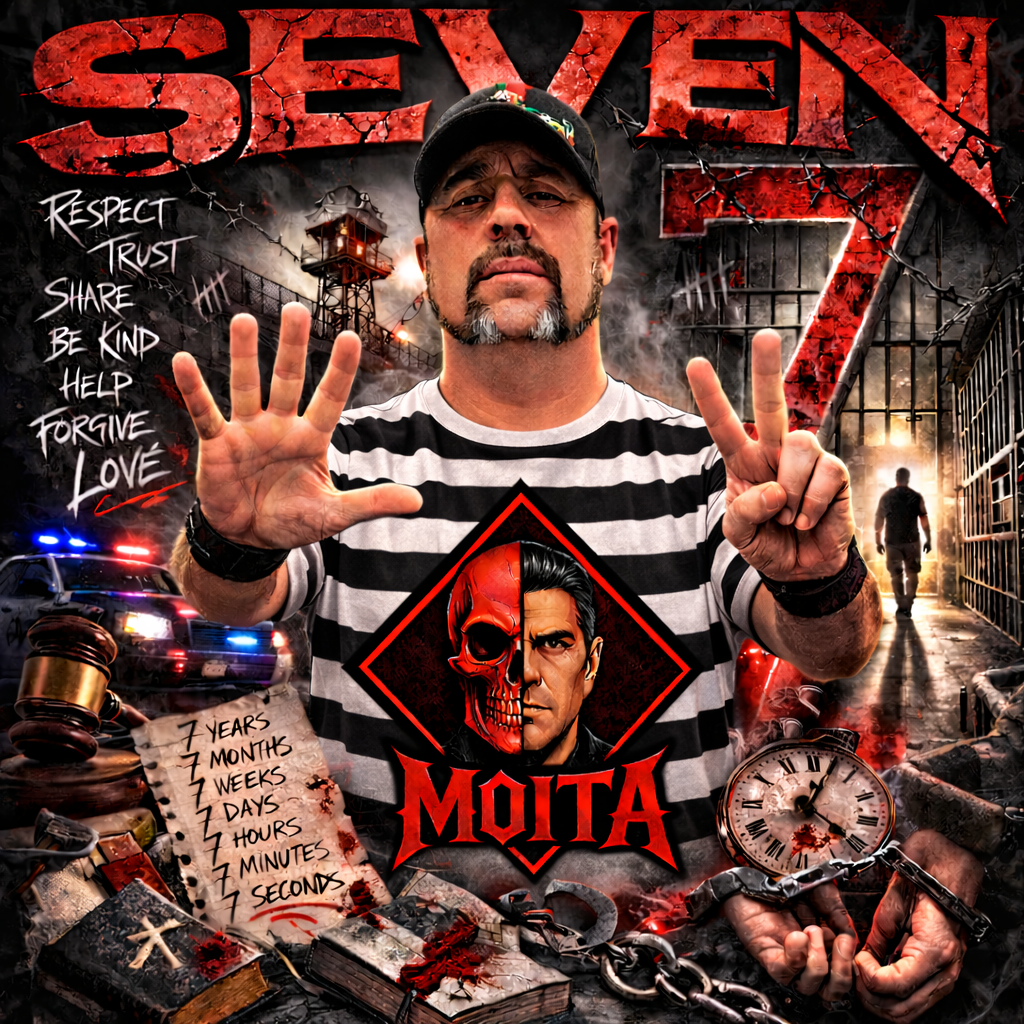
SEVEN
Category
Life Experience • Redemption • Reflection • Personal Growth • Consequences
Primary Emotion
Redemption
Also Fits
Hope • Regret • Justice • Personal Responsibility • Resilience • Second Chances • Human Nature • Forgiveness
What This Song Is About
Seven is about how quickly a life can change and how long it can take to rebuild it. It explores the weight of mistakes, the search for hope, and the realization that every person has the ability to choose a different path. The number seven becomes more than a number—it becomes a symbol of reflection, growth, and the journey from regret toward redemption.
Rather than focusing on one specific event, the song uses the repeated appearance of seven to connect moments of failure, lessons learned, and the values that ultimately become more important than the mistakes themselves. It reminds us that while one decision can change everything, one decision can also begin putting everything back together.
The Story Behind the Song
This song was born inside a jail cell.
Not because seven years were actually served, but because of a single number painted on a cell.
Cell Number 7.
During my incarceration, that cell became my entire world. The days were long, the nights were longer, and time often felt as though it had stopped moving altogether. Although I spent almost three years behind bars, there were moments when it felt like I had been there forever. In my mind, seven became the number that represented that feeling.
Lying on the lower bunk, I would often stare at the underside of the bed above me. Most people might have filled that space with anger, bitterness, or words they wanted the world to hear. I made a different choice.
I began writing positive thoughts connected to the number seven.
I knew one day I would leave that cell, and someone else would take my place. Whoever that person was, I never wanted them to look up and see messages of hatred or hopelessness. Life had already brought enough pain into that room. I didn’t want to leave any more behind.
Instead, I wanted to leave hope.
That simple decision became the foundation for this song. Every new idea connected to the number seven seemed to grow naturally from the one before it. Before long, the number had become more than the number on a jail cell. It had become a way of telling a much larger story about consequences, choices, redemption, and the possibility that even after our darkest moments, we can still become better people.
Why This Song Fits MOITA
MOITA has always been about telling honest stories that lead to meaningful conversations. Seven does exactly that.
It isn’t a song that glorifies crime, prison, or punishment. It doesn’t ask for sympathy, nor does it pretend that life is free from consequences. Instead, it asks a far more important question:
What do you do after your life changes?
Some people allow their mistakes to define them forever.
Others learn from them.
The song explores that difference. It reminds us that our worst moments do not have to become our permanent identity and that the values we choose after hardship often matter more than the hardship itself.
Like every MOITA song, this one begins with music but reaches far beyond it. It invites readers to think about responsibility, forgiveness, resilience, hope, and the incredible ability people have to rebuild themselves, even when they believe everything has been lost.
Read This First
Many listeners will assume Seven is simply about the number itself.
It isn’t.
The number is a thread that ties together memories, emotions, regrets, lessons, and hope. Some events described in the song are drawn from real experiences. Others are presented through symbolism to express what those experiences felt like rather than to create a literal timeline.
The result is a song about every person who has ever wished they could go back and change one decision, one moment, or one mistake.
More importantly, it is about discovering that while we cannot rewrite yesterday, we can still decide who we become tomorrow.
FULL LYRICS
SEVEN
I have lived life and walked with seven sins. I went from place to place committed crimes cops caught up with me seven times I was convicted. I went in front of a judge. He gave me seven sentences all the amount to seven years seven months seven weeks seven days seven hours seven minutes seven seconds seven times I searched for a sign.
I did so much in my life and I made a mess of things
So I was left with seven choices seven things I should have done seven more to think about seven signs that left me out. I had seven friends that said good luck. I did seven years till seven lies had seven good cries. I ran seven times so I can hide then I said seven words that changed my life.
I aged seven years, seven months, seven weeks seven days seven hours seven minutes seven seconds just to make sense of all my seven sins
Now I got seven chances to change my life seven favors I will provide
I had seven dreams to give me hope seven miracles that I will share with everyone and on a seventh day that heavens guided me towards the light seven times I heard the word love is a good way to live by
The truth is out there seven more reasons for me to learn I see all the seven signs that helped me stay alive
I did so much in my life and I made a mess of things
So I was left with seven choices seven things I should have done seven more to think about seven signs that left me out. I had seven friends that said good luck. I did seven years till seven lies had seven good cries. I ran seven times so I can hide then I said seven words that changed my life.
On the seventh day, I made seven wishes seven times I said help me on my quest seven times I said for crying out loud, I will confess the seven sins made me feel ashamed
And seven more to help me help everyone else seven times I was put to a test. My seven deeds made me a better man. I will say it seven more times so you understand.
I did so much in my life and I made a mess of things
So I was left with seven choices seven things I should have done seven more to think about seven signs that left me out. I had seven friends that said good luck. I did seven years till seven lies had seven good cries. I ran seven times so I can hide then I said seven words that changed my life
Respect
Trust
Share
Be kind
Help
Forgive
Love
It took me seven years, seven months, seven weeks seven hours seven minutes that it only takes less than seven seconds to make a mistake That can change your whole life
It took less than seven seconds for the world to erase me
SECTION ONE
LYRIC JOURNEY
PART 1
I have lived life and walked with seven sins.
That is where the whole journey begins.
I am not opening this song by pretending I lived a perfect life. I am doing the opposite. I am admitting right away that I made mistakes, that I crossed lines, and that some of those choices followed me for a long time.
The word walked matters to me because those sins were part of my life, but they were never meant to become the rest of my life.
That is an important difference.
A person can walk with something without having to carry it forever.
I went from place to place committed crimes cops caught up with me seven times I was convicted.
There is nothing pretty about that line.
It is meant to sound direct because that part of life was direct. You make decisions. Those decisions create consequences. Eventually something catches up with you.
The seven is where the song begins turning reality into the world I created inside Cell Number 7.
I was not literally convicted seven times. I did not serve seven years. The song is not a court record.
Seven became the language I used to tell the story.
That number was all around me because I was living inside Cell Number 7. After enough time in a place like that, a number can become much more than something painted on a door. It can begin representing where you are, how long you feel you have been there, what you are thinking about, and how badly you want your life to become something different.
I went in front of a judge. He gave me seven sentences all the amount to seven years seven months seven weeks seven days seven hours seven minutes seven seconds seven times I searched for a sign.
This is where I deliberately stretch time.
Seven years.
Seven months.
Seven weeks.
Seven days.
Seven hours.
Seven minutes.
Seven seconds.
I spent almost three years incarcerated, not seven.
But there were times when three years did not feel like three years.
When your freedom is gone, time becomes strange.
People on the outside can look at a calendar and say a year is a year. Inside, you can experience that year completely differently. A day can feel longer because you know what tomorrow is going to look like before tomorrow even arrives. The routines repeat. The doors repeat. The sounds repeat. The walls do not move.
When I wrote seven years, I was writing the feeling of time, not trying to change the facts of my life.
Cell Number 7 felt like a lifetime.
That is why everything keeps multiplying through seven.
Then the line reaches seven seconds.
That matters because the song is already preparing something that will not fully reveal itself until the very end.
Years and seconds are going to meet each other.
One can represent how long you live with the consequences.
The other can represent how quickly the thing that caused those consequences can happen.
But I was not ready to say that yet.
At this point in the song, I was still searching.
Seven times I searched for a sign.
When you are sitting in a jail cell, you have a lot of time to look backward.
You replay conversations.
You replay decisions.
You think about people.
You think about things you should have done differently.
Sometimes you even start looking for meaning in things you would never have noticed before.
That happened with the number seven.
I did not sit there one day and decide I was going to study the number seven and turn it into a song.
It happened naturally.
I was in Cell Number 7.
I slept on the lower bunk.
The underside of the upper bunk was right above me.
That became my writing space.
I started putting down thoughts connected to seven. I wanted those thoughts to stay positive because I knew something very simple.
I was not going to be the last person who ever slept in that bunk.
Eventually somebody else was going to lie where I was lying.
They were going to look at the same ceiling.
They were going to stare at the same underside of that bunk.
They might be angry.
They might be scared.
They might be ashamed.
They might be completely lost.
I had no idea who that person would be, and I probably would never meet them.
But I knew I did not want to leave that person more negativity.
There is already enough of that inside a jail.
I did not want somebody looking up and finding hatred that I had left behind.
So when I searched for signs, I was also creating them.
Not only for myself.
Maybe for the next person too.
I did so much in my life and I made a mess of things
That sentence is probably one of the most honest sentences in the entire song.
There is no seven in it.
There does not need to be.
For one moment, the number disappears and the person underneath the idea speaks.
I made a mess of things.
I think almost everybody reaches a point in life where they can say that about something.
Maybe not crime.
Maybe not jail.
Maybe it is a marriage.
A friendship.
Money.
Family.
Addiction.
Pride.
Anger.
A decision made too quickly.
Words that should never have been said.
Opportunities that were thrown away.
The details change from person to person, but regret has a familiar voice.
I was hearing that voice very clearly.
So I was left with seven choices seven things I should have done seven more to think about seven signs that left me out.
Now the counting becomes reflection.
Seven choices.
That is looking backward at the roads I took and the roads I did not take.
Seven things I should have done.
That is regret speaking.
Anybody can look intelligent after something has already happened. We can all sit years later and explain exactly what we should have done.
Living correctly in the moment is much harder.
That is why mistakes have such power.
We often recognize the right answer after we have already lived the wrong one.
Seven more to think about.
That is what happens when there is nowhere to run from your own mind.
You think.
Then you think again.
Then something you thought you had settled comes back.
You examine it from another direction.
That can destroy a person if all they do is feed themselves anger.
It can also teach a person if they are willing to be honest.
Seven signs that left me out.
Sometimes the signs were probably there and I did not see them.
Sometimes we only recognize a warning after we have already passed it.
That is one of the things life teaches in a hard way.
The sign does not always disappear because we ignored it.
Sometimes we are the ones who kept moving.
I had seven friends that said good luck.
That line sounds simple, but friendship changes when your circumstances change.
When everything is going well, it can feel like you know everybody.
When things collapse, the room gets smaller.
Some people remain.
Some disappear.
Some do not know what to say.
Some may care but stay away.
And sometimes all anybody has left to offer you is good luck.
That does not necessarily make them bad people.
Life becomes complicated when somebody you know goes to jail.
People have their own families, problems, fears, opinions and responsibilities.
The song does not stop to judge them.
It simply remembers them.
I did seven years till seven lies had seven good cries.
Again, the seven years are not literal.
The feeling is.
The lies and the cries belong to another part of reflection.
Lies can come from many directions.
The lies people tell us.
The lies we tell other people.
The lies we tell ourselves because the truth is harder to live with.
Sometimes the most dangerous one is the last kind.
You can convince yourself you are fine when you are not.
You can convince yourself everybody else is the problem.
You can convince yourself nothing needs to change.
Eventually reality has a way of getting through.
Sometimes it arrives through tears.
I called them seven good cries because crying is not always weakness.
Sometimes it is the moment when all the things you have been holding finally come out.
There are moments when a person needs that.
I ran seven times so I can hide then I said seven words that changed my life.
Running does not always mean your feet are moving.
I had spent enough of my life running in other ways.
You can hide inside excuses.
You can hide inside anger.
You can hide behind people.
You can blame the world.
You can blame circumstances.
You can blame every person who ever hurt you.
Some of those things may even be true.
People do hurt us.
Systems can fail.
Other people can make decisions that affect our lives.
But eventually you are still left with yourself.
That is the person you have to face.
Then I said seven words that changed my life.
At this point in the song, I do not tell you what those seven words are.
That is deliberate.
The journey is not ready for them yet.
I wanted the listener to carry that question forward.
What could seven words possibly be that would change a man’s life?
The answer is coming.
But before I could reach those words, I still had more of my own life to walk through.
SECTION ONE
LYRIC JOURNEY
PART 2
I aged seven years, seven months, seven weeks seven days seven hours seven minutes seven seconds just to make sense of all my seven sins
This is where the song moves from serving time to feeling time.
I use the word aged because that is what it felt like.
There is a difference between getting older and feeling yourself age. Everybody gets older. The clock takes care of that whether we think about it or not. Feeling yourself age is different. That can happen when you have too much time to think, when you are carrying stress, when your world has become smaller, and when your mind keeps returning to the same questions.
Again, these numbers are not a literal record of how long I was incarcerated.
Seven years.
Seven months.
Seven weeks.
Seven days.
Seven hours.
Seven minutes.
Seven seconds.
I am taking the number that surrounded me and stretching it across every measurement of time I could think of.
That is what Cell Number 7 had become in my head.
Seven was no longer painted on a door.
It was becoming part of the way I was measuring my life.
Just to make sense of all my seven sins.
That is the real destination of the line.
Making sense of things.
There is a difference between remembering what happened and understanding why it happened.
You can remember every detail and still learn absolutely nothing.
Understanding requires harder questions.
Why did I make that decision?
Why did I ignore something I knew was wrong?
Why did I react the way I did?
What was I looking for?
What did I think I was proving?
What did it cost?
What could I have done differently?
Those questions are not comfortable because eventually excuses stop working.
At the beginning of the song I say I walked with seven sins.
Now I am trying to understand them.
That is movement.
I am not at redemption yet.
I am at recognition.
Now I got seven chances to change my life seven favors I will provide
That word now changes everything.
Until this point, much of the song has been looking backward.
Now I am looking forward.
Seven chances to change my life.
The same number that represented the cell begins representing possibility.
That was important to me.
I could have used seven for nothing but punishment.
Seven crimes.
Seven convictions.
Seven sentences.
Seven mistakes.
Seven regrets.
If I had done that for the entire song, I would have created exactly what I refused to leave underneath that bunk.
Negativity.
That was never the purpose.
The whole reason I was writing positive thoughts above where I slept was because I wanted seven to become something better than the number of a cell.
So the language begins changing.
Chances.
Favors.
Dreams.
Miracles.
Hope.
Love.
Learning.
Signs of life.
The cell has not changed.
The mind inside it has.
Seven favors I will provide.
Now the direction is outward.
Earlier I was thinking about what happened to me and what I had done.
Here I begin thinking about what I can do for somebody else.
That may sound like a small change in the lyric, but it is a major change in the journey.
When you are hurting, it is easy for your entire world to become about your own pain.
What happened to me?
Why am I here?
Who abandoned me?
Who lied?
Who hurt me?
How much longer do I have?
Those questions are understandable, but if you live inside them forever, they become another kind of cell.
Helping somebody else can break that pattern.
It reminds you that you still have something to give.
I had seven dreams to give me hope seven miracles that I will share with everyone
Dreams are different when your physical world has become very small.
A dream can travel somewhere your body cannot.
You can imagine what you will do when you get out.
You can think about people you love.
You can think about things you still want to create.
You can think about becoming somebody different from the person who entered that place.
Hope does not need much room.
That is something I learned.
A person can be surrounded by concrete and steel and still have a mind capable of going somewhere else.
Seven miracles that I will share with everyone.
I did not mean miracles only as impossible things falling out of the sky.
Sometimes what feels miraculous is simply discovering that something good can still come out of a terrible period of your life.
A thought can become a song.
A book can change the way you see something.
A conversation can stay with you.
A stranger can teach you something without realizing it.
A person can discover a part of themselves they never knew existed because life finally forced them to sit still long enough to find it.
I was writing.
I was thinking.
I was watching.
I was learning.
I was taking things that happened around me and turning them into songs.
Seven itself came from that process.
Something as ordinary as a cell number became a way of looking at an entire life.
That is the kind of miracle I could share.
Not pretending the bad never happened.
Taking something from it that might have value to somebody else.
And on a seventh day that heavens guided me towards the light
This is where faith enters the journey more openly.
I did not want the song to become a sermon.
That is not what Seven is.
But when somebody is searching for meaning, questions about faith naturally appear.
Why am I still here?
Is there a reason?
Is anybody listening?
Can I be forgiven?
Can I forgive myself?
Can somebody who has made a mess of things still become useful to other people?
Those are not questions that belong only to religion.
They are human questions.
But for someone who believes there may be something greater than himself, those questions can become spiritual too.
The seventh day carries a meaning that existed long before my song. In the biblical creation story, the seventh day becomes a day of rest. Across different traditions and cultures, seven has accumulated meanings connected with completion, spirituality and good fortune.
I knew seven already carried all of that history.
But none of that is why I originally chose it.
My seven was on a cell.
That is what I keep coming back to.
The strange thing is that once I started following that number, I discovered how many other doors it could open.
A number I met through confinement could also point toward rest.
A number attached to punishment could become connected to hope.
A number on a door could become a way of looking toward light.
Seven times I heard the word love is a good way to live by
This line is intentionally simple.
Love is a good way to live by.
There are thousands of books trying to explain how people should live.
There are religions, philosophies, laws, rules and entire systems built around human behaviour.
Then there is this simple word.
Love.
That does not mean being weak.
It does not mean accepting everything people do to you.
It does not mean having no boundaries.
It does not mean pretending terrible things are acceptable.
Love can include telling somebody the truth.
Love can include walking away.
Love can include forgiveness without allowing someone to hurt you again.
Love can include helping someone when there is nothing in it for you.
The reason the word matters here is because the song started with sins.
I am slowly searching for what belongs on the other side of them.
The truth is out there seven more reasons for me to learn I see all the seven signs that helped me stay alive
The truth is out there.
I like that line because I do not claim I have all of it.
I am still looking.
Seven more reasons for me to learn.
That is important.
A person can spend years defending what they already believe, or they can remain curious enough to admit there are things they still do not understand.
Jail gave me time to think, but time by itself does not make anyone wise.
You can sit somewhere for years and learn nothing.
Learning requires participation.
You have to look.
You have to listen.
You have to read.
You have to question yourself.
Sometimes you have to admit that something you believed was wrong.
I see all the seven signs that helped me stay alive.
The signs are different now.
Earlier I had seven signs that left me out.
Now I am seeing signs that helped me stay alive.
That change matters.
The outside world did not suddenly become perfect.
My past had not disappeared.
The cell door had not magically opened.
What changed was what I was looking for.
At the beginning I could see what I had lost.
Now I could also see what remained.
That is what hope can do.
It does not erase reality.
It changes what you are able to see inside reality.
Then the chorus returns.
I did so much in my life and I made a mess of things
The words are the same.
But they do not sit in the same place anymore.
The first time I said them, they came after crime, conviction, sentencing and searching for a sign.
Now they come after chances, favors, dreams, miracles, light, love, truth and learning.
So when I admit again that I made a mess of things, the admission no longer feels like the end of the story.
It feels like the beginning of responsibility.
I can admit what I did without believing that is all I will ever be.
So I was left with seven choices seven things I should have done seven more to think about seven signs that left me out.
Those regrets are still there.
Growth does not erase memory.
I still know there were choices I should have made differently.
I still know there were things I should have done.
I can still think about the signs I missed.
The difference is that I am no longer standing only inside those regrets.
I had seven friends that said good luck. I did seven years till seven lies had seven good cries.
The friends are still part of the memory.
The lies are still there.
The cries still happened.
Nothing from the first chorus has been rewritten.
That is important because redemption should never require pretending the past was something other than what it was.
I ran seven times so I can hide then I said seven words that changed my life.
And there they are again.
The seven words.
The song still does not reveal them.
By now they carry more weight because we have travelled farther.
The first time they appeared, they sounded like something that might rescue me.
Now they begin sounding like something I might have to live by.
But before I can finally say them, there is one more part of the journey I have to face.
I have admitted the mistakes.
I have searched for signs.
I have found hope.
Now comes confession, shame, testing, and the question that matters after somebody says they want to change.
What are you going to do with that change?
SECTION ONE
LYRIC JOURNEY
PART 3
On the seventh day, I made seven wishes seven times I said help me on my quest seven times I said for crying out loud, I will confess the seven sins made me feel ashamed
By this point in the song, seven has travelled a long way.
It began as the number of a cell.
Then it became time.
Then choices.
Regrets.
Friends.
Lies.
Dreams.
Miracles.
Signs.
Now it becomes wishes and a request for help.
On the seventh day, I made seven wishes.
A wish is different from a plan.
A plan says I know where I am going and how I am going to get there.
A wish admits that I want something I may not know how to reach yet.
There were plenty of things I could wish for while incarcerated. Freedom would be the obvious one. Anybody sitting behind a locked door thinks about getting to the other side of it.
But freedom by itself does not solve everything.
You can open a door and still carry the same mind through it.
That became more important to me.
If I eventually walked out and remained exactly the same person inside, what had I really learned?
That is where the next words come in.
Seven times I said help me on my quest.
I used the word quest because changing your life is not one decision followed by a perfect straight road.
It is a journey.
You can mean what you say today and struggle tomorrow.
You can understand one mistake and still have another part of yourself you have not figured out.
You can want to forgive and still feel angry.
You can want to trust and still remember betrayal.
You can want to become better without knowing exactly what better is supposed to look like.
Sometimes you need help.
There was a time when I probably would have thought asking for help made a person look weak.
Life has a way of changing definitions.
There are situations where refusing help is not strength at all. It is pride.
Seven times I said for crying out loud, I will confess the seven sins made me feel ashamed.
There is frustration in that line.
For crying out loud.
It sounds like somebody who has gone around the same thoughts enough times and finally wants to get them out.
I will confess.
That does not necessarily mean sitting in front of somebody and listing seven specific sins.
The confession is already happening through the song.
I made mistakes.
I made a mess of things.
I made choices I should have made differently.
I ran.
I hid.
I cried.
I searched.
I wanted to change.
That is the confession.
Then I use a word that can be dangerous if a person lives inside it too long.
Ashamed.
Guilt and shame can feel similar, but they can take you in very different directions.
Guilt can say, I did something wrong.
Shame can become, I am wrong.
That difference matters.
If all you believe is that you are permanently bad, there is not much room left for growth. You begin thinking change is pointless because your identity has already been decided.
I did not want Seven to end there.
The song acknowledges shame because shame was part of the journey.
But I was not going to build a home inside it.
And seven more to help me help everyone else seven times I was put to a test.
There is that idea again.
Help me help everyone else.
Earlier I said seven favors I will provide.
Now the thought becomes stronger.
It is no longer only about receiving another chance.
It is about what I can do with that chance.
That connects directly back to the underside of that bunk.
I could not control who would sleep there after me.
I could not know their story.
I could not know whether they were guilty, innocent, frightened, angry, young, old, lost, or simply trying to survive another night.
But I could control what I left for them to find.
That was a small thing.
Sometimes small things are all we have.
I could have left anger scratched above their head.
I chose not to.
I wanted to leave something positive.
Maybe they never read it.
Maybe somebody cleaned it away.
Maybe another person eventually covered it.
I do not know.
That was never the point.
The point was the decision I made while writing it.
I did not want my pain to become somebody else’s pain.
That thought reaches far beyond a jail cell.
People pass things to each other every day.
Anger gets passed on.
Fear gets passed on.
Humiliation gets passed on.
A person gets treated badly at work and goes home angry. Somebody at home receives that anger even though they had nothing to do with what happened.
A parent carries wounds from childhood and, without realizing it, passes some of them to a child.
A person who has been betrayed begins distrusting somebody who has never betrayed them.
Pain travels.
But so does kindness.
One person can interrupt the chain.
That does not mean they can repair everything.
It means they can decide what they personally refuse to pass forward.
That is what the bunk represented to me.
Seven times I was put to a test.
Everybody gets tested differently.
Some tests happen in public.
Some happen when nobody is watching.
The second kind may tell us more about who we really are.
It is easy to say you believe in kindness when life is treating you well.
It is harder when you are angry.
It is easy to talk about forgiveness when nobody has done anything serious to you.
It is harder when you have something real to forgive.
It is easy to talk about hope when you can see the future clearly.
It is harder when you are staring at concrete walls.
The test is whether the things you say you believe still mean something when believing them becomes difficult.
My seven deeds made me a better man.
This is one of the places where the song finally starts answering the opening line.
At the beginning I walked with seven sins.
Now I have seven deeds.
The number did not change.
What I attached to it did.
That is the entire journey of Seven in miniature.
Seven can carry the mistakes.
Seven can also carry what comes after them.
The song does not claim that a few good deeds erase everything bad a person has ever done.
Life does not work like a scoreboard.
You cannot hurt somebody and then perform enough good acts to make the hurt disappear.
Becoming better is not about balancing an account.
It is about direction.
What am I doing now?
What am I learning?
How am I treating people?
What am I leaving behind?
Am I repeating the same behaviour or changing it?
That is how I understand becoming a better man.
Not perfect.
Better.
There is a big difference.
Perfect gives people an excuse to quit because nobody can reach it.
Better gives you somewhere to go.
I will say it seven more times so you understand.
By now the repetition of seven has almost become stubborn.
That is intentional.
I keep returning to it because that is how the song was created.
I was surrounded by seven.
I was writing seven.
I was thinking seven.
Every new idea challenged me to find another positive direction for the same number.
Seven could have become a gimmick very easily.
I did not want that.
I wanted every return to the number to push the thought somewhere else.
From sins to sentences.
From sentences to signs.
From signs to choices.
From choices to chances.
From chances to dreams.
From dreams to miracles.
From miracles to love.
From shame to helping.
From sins to deeds.
The number stays still while the person moves.
Then the chorus comes back for the final time.
I did so much in my life and I made a mess of things
Nothing about the first sentence has changed.
I still made the mess.
The journey does not erase that.
But after everything we have travelled through, the sentence means something different now.
At the beginning it sounded like a man looking at the damage.
Now it sounds like a man who has looked at the damage long enough to understand that staring at it forever will not repair anything.
So I was left with seven choices seven things I should have done seven more to think about seven signs that left me out.
The choices remain.
The things I should have done remain.
The thoughts remain.
The missed signs remain.
That is part of living with consequences.
Changing does not mean forgetting.
Sometimes remembering is what keeps you from repeating the same thing.
I had seven friends that said good luck. I did seven years till seven lies had seven good cries.
By the third time through these words, they have become almost like checkpoints.
We have been here before.
But we are not the same person who arrived here the first time.
That is what I wanted from the repeated chorus.
The lyrics stay exactly where they are.
The journey around them changes.
I ran seven times so I can hide then I said seven words that changed my life
This time the song does not make you wait.
We have reached the words.
Respect
That comes first for a reason.
Respect for other people.
Respect for yourself.
Respect for boundaries.
Respect for consequences.
Respect does not require agreement.
You can disagree with somebody and still recognize their humanity.
You can walk away from somebody without trying to destroy them.
You can be angry without deciding another person is worthless.
Respect is where a lot of other things begin.
Trust
Trust is harder.
It takes time to build and almost no time to damage.
Sometimes the person you need to learn to trust again is yourself.
Can I trust myself to make a better decision?
Can I trust myself not to run?
Can I trust myself to recognize the signs I ignored before?
Trust does not mean becoming naive.
It means understanding that a life without any trust becomes another kind of isolation.
Share
You can share money.
You can share food.
You can share knowledge.
You can share time.
You can share a story.
Sometimes sharing what you learned from your worst experience can stop somebody else from making the same mistake.
That is part of why I write songs like this.
If I keep every lesson locked inside myself, it ends with me.
If I put it into a song, somebody I will never meet may hear it.
Be kind
Two simple words.
They sound almost too simple until you think about how different the world would be if people actually practiced them when it was inconvenient.
Kindness is easy when you like somebody.
The real test is what happens when you do not.
Being kind does not mean allowing people to walk over you.
It means refusing to become cruel simply because cruelty is available.
Help
This word has been moving through the song for a while.
Help me on my quest.
Help me help everyone else.
Now it stands alone.
Help.
Sometimes we are the person giving it.
Sometimes we are the person who needs it.
A good life probably requires learning how to do both.
Forgive
This may be one of the hardest words in the seven.
Forgiveness does not mean saying nothing happened.
It does not mean removing accountability.
It does not require putting yourself back into the same situation.
Sometimes forgiveness is simply deciding that what happened will not control every remaining day of your life.
And sometimes the person we struggle most to forgive is ourselves.
Love
That is where the seven words end.
The song has already told us that love is a good way to live by.
Now it becomes the final word.
Not prison.
Not crime.
Not conviction.
Not shame.
Love.
The journey began with seven sins.
It arrives at seven words.
Respect.
Trust.
Share.
Be kind.
Help.
Forgive.
Love.
Those are not seven words I expect anybody to master perfectly.
I certainly do not.
They are directions.
They give me somewhere to point myself.
That matters because the song still has one final lesson left.
After all the years, months, weeks, days, hours and minutes I have been counting, I am about to return to the smallest measurement in the song.
Seconds.
And that is where Seven finally reveals why time has been following us from the beginning.
SECTION ONE
LYRIC JOURNEY
PART 4
It took me seven years, seven months, seven weeks seven hours seven minutes that it only takes less than seven seconds to make a mistake That can change your whole life
Everything in the song has been moving toward this thought.
I started with seven sins.
I moved through crimes, convictions, sentences, choices, friends, lies, tears, dreams, miracles, wishes, tests and deeds.
I kept measuring things with seven because Cell Number 7 gave me the idea and because that number became the thread I could use to hold all these thoughts together.
Now the measurements of time return one last time.
Seven years.
Seven months.
Seven weeks.
Seven hours.
Seven minutes.
Then less than seven seconds.
The difference between those two sides of the line is the point.
A person can spend years living with something that happened in seconds.
That is one of the hardest truths in the entire song.
We sometimes imagine that the biggest changes in life must come from big moments that slowly build toward us.
They do not always.
Some arrive almost instantly.
A person loses their temper.
A driver looks away from the road.
Somebody sends a message they cannot take back.
Someone says something in anger that changes a relationship.
A person makes a decision without thinking about what happens after it.
The action can be incredibly short.
The consequences may not be.
That is why I wanted years and seconds standing beside each other.
The years represent the weight afterward.
The seconds represent how quickly the door can close.
When I say it took me seven years, seven months, seven weeks, seven hours and seven minutes, I am still not giving the reader a literal account of the time I spent incarcerated.
I did not spend seven years in jail.
I spent almost three.
That truth matters because I do not want the symbolism of the song to become false autobiography.
Seven years belongs to the song.
Cell Number 7 belongs to my life.
The feelings behind it belong to my life too.
There were moments when that cell felt like I might as well have been serving seven years. When your freedom is gone, you do not experience time the same way you do when you can simply get in your vehicle, visit somebody, walk outside, decide where you want to eat, or go wherever you want to go.
Ordinary freedom becomes extraordinary when you do not have it.
Things people barely notice become things you think about.
A door opening.
Fresh air.
Privacy.
Going somewhere because you decided to go there.
Seeing the people you want to see.
Choosing when the day begins and what you will do with it.
That is part of what those exaggerated measurements are carrying.
The line is not asking the reader to calculate a sentence.
It is asking the reader to feel the distance between a moment and its consequences.
Less than seven seconds.
Think about how short that really is.
By the time you stop and seriously consider what you are about to do, those seconds may already have passed.
That is why learning to create space between emotion and action matters.
Anger wants speed.
Fear wants speed.
Panic wants speed.
Pride can want speed.
Sometimes the smartest thing a person can do is create a few seconds where there were none before.
Do not answer immediately.
Do not swing.
Do not send it.
Do not drive angry.
Do not make the decision while your emotions are making it for you.
Give yourself another seven seconds.
The song never says those exact words, but after walking through the whole journey, that possibility is sitting inside the idea.
If less than seven seconds can help destroy something, perhaps seven seconds of thought can sometimes protect it.
Not always.
Life is too complicated for guarantees.
But sometimes.
That is enough reason to think about it.
There is another side to those seven seconds too.
The song has spent a lot of time looking at mistakes, but quick decisions are not only destructive.
It can take seconds to say I am sorry.
Seconds to say I need help.
Seconds to decide not to retaliate.
Seconds to pick up a telephone.
Seconds to tell somebody you love them.
Seconds to decide you are going to walk away instead of making the situation worse.
Seconds to help somebody who has fallen.
Seconds to choose kindness when being cruel would have been easier.
The amount of time is not what decides whether a moment is important.
Sometimes the shortest moments carry the longest consequences.
That is what I learned to see differently.
I had all that time inside to think about moments that happened much faster.
That imbalance stays with you.
You can spend months asking yourself about something that took seconds.
Why did I do that?
Why did I say that?
Why didn’t I stop?
Why didn’t I see what was coming?
Why didn’t I choose differently?
The past never answers those questions by changing itself.
Eventually the questions have to serve another purpose.
What am I going to do differently next time?
That is where reflection becomes useful.
Otherwise regret is just a room you keep returning to.
Seven was never supposed to leave the listener trapped in that room.
The whole song has been trying to find the door.
That is why the seven words arrive before the final lesson.
Respect.
Trust.
Share.
Be kind.
Help.
Forgive.
Love.
Those words give the journey somewhere to go.
Without them, the ending would only say be careful because life can destroy you quickly.
That would not be enough.
I wanted something more from the song.
I wanted the same number that represented confinement to become connected with possibility.
That was exactly what I had been doing underneath the upper bunk.
I could look at Cell Number 7 as nothing except a place where my freedom had been taken away.
Or I could use seven.
I could work with it.
I could challenge my mind with it.
I could keep asking myself what else seven could represent.
I could leave something positive where somebody else might find it.
I could turn a number on a cell into a song.
That does not make incarceration good.
I would never pretend it does.
It means something good can sometimes be created inside something bad.
There is a difference.
We do not have to be grateful for every painful thing that happens to us in order to learn from it.
Sometimes the lesson is simply what we choose to do afterward.
Then the final lyric arrives.
It took less than seven seconds for the world to erase me
I wanted that line at the end because there is nowhere else to go after it.
The whole song has been talking about what happened inside me.
This line suddenly looks outward.
The world.
It is a heavy word because when your life changes publicly, it can feel as if everything you were before disappears.
People may know one event and believe they know the entire person.
A charge can become a name.
A conviction can become an identity.
A mistake can become the first thing people remember.
The life before it can disappear from the conversation.
The good you did can disappear.
The work you did can disappear.
The people you helped can disappear.
Your history can suddenly be reduced to one chapter.
That is what erased means here.
It does not mean I physically disappeared.
It means there are moments when you feel as though the person you were has been replaced by what happened to you.
That feeling is not limited to incarceration.
Somebody can experience it after losing a career.
After a public mistake.
After a divorce.
After bankruptcy.
After an accusation.
After addiction becomes known.
After one terrible decision.
After any event that causes the world around them to start seeing the event before seeing the human being.
But Seven does not end by asking the world to pretend nothing happened.
I do not want that.
Responsibility matters.
Truth matters.
Consequences matter.
What I question is whether one moment should be allowed to erase everything else a human being has ever been and everything they may still become.
That question is bigger than me.
How long should a person remain identical to the worst chapter of their life?
When somebody genuinely changes, do we allow room for that change?
What does a second chance actually mean if we never stop looking at the first mistake?
And what responsibility does the person asking for that second chance have to prove through their actions that the change is real?
Those questions do not have easy answers.
I do not think they should.
The song does not finish by giving the reader a verdict.
It finishes with the cost of a moment.
Less than seven seconds.
That is all it can take.
The strange part is that Seven itself became proof of something else.
The world may erase you in seconds.
Rebuilding takes longer.
Sometimes much longer.
You rebuild through what you do repeatedly.
How you treat people.
What you create.
What you learn.
Whether you take responsibility.
Whether you help instead of hurt.
Whether the things you say about changing eventually become visible in the way you live.
There is no seven-second shortcut for that.
Maybe that is why those seven words matter so much to me.
Respect.
Trust.
Share.
Be kind.
Help.
Forgive.
Love.
They are simple words.
Living them is the longer sentence.
And maybe that is the real journey of Seven.
The number started on a jail cell.
I took it with me through every mistake, every regret, every question and every hope I could fit inside the song.
I turned seven sins toward seven chances.
Seven lies toward seven truths I still wanted to find.
Seven cries toward seven dreams.
Seven tests toward seven deeds.
And finally seven words.
The cell gave me the number.
What I did with the number was my choice.
That is where the song ends for me.
Not with Cell Number 7.
With the choice of what I was going to leave behind for whoever came next.
SECTION TWO
THE STORY
Every song has a beginning.
Some begin with a melody.
Some begin with a memory.
Seven began with a number.
When people hear this song for the first time, many will naturally assume that the number seven was chosen because of its place in religion, mythology, or superstition. Throughout history, seven has often been called a lucky number. It appears in stories, beliefs, and traditions all over the world.
That isn’t where this song came from.
It came from a jail cell.
More specifically, Cell Number 7.
For a long period of my life, that small room became my entire world. Steel doors, concrete walls, routines that never seemed to change, and days that often blended together until time almost lost its meaning. Anyone who has lived in an environment where every day looks like the one before understands how differently time can feel. Hours can seem endless, while months disappear before you even realize another season has passed.
I spent almost three years incarcerated, but there were days when it felt much longer. The number on that cell door slowly became more than a number. It became a symbol of where I was in life and a reminder that every person eventually reaches a place where they have to decide what comes next.
One detail from that time has stayed with me more than almost anything else.
I slept on the lower bunk.
When I looked up, I saw the underside of the bed above me. It was simply a piece of wood, but over time it became something much more. Instead of treating it as another part of the cell, I started using it as a place to collect ideas. Every thought connected somehow to the number seven. One idea led to another, and before long the song began to take shape.
I made one promise to myself while I was writing.
I would not leave behind hatred.
I knew that one day someone else would sleep in that same bed. I never wanted another person to lie there, look up, and read words filled with anger, bitterness, or despair. Prison already carries enough darkness. There was no reason for me to leave more behind.
So I chose a different path.
Every sentence I wrote was meant to point toward hope instead of hopelessness. If a stranger ever read those words, maybe they would pause for a moment. Maybe they would think differently about their own future. Maybe they would realize that even inside a place built to punish people, it is still possible to choose kindness over bitterness.
That simple decision became the heartbeat of Seven.
As the ideas grew, the song became much larger than the cell itself. The repeated number wasn’t there to impress anyone. It became the thread that connected everything together. Seven choices. Seven dreams. Seven miracles. Seven chances. Seven words that could guide a better life.
The song also reflects an important truth about storytelling. Not every number in the lyrics is meant to be taken literally. I did not spend seven years in prison. I used seven because it captured what the experience felt like. Sometimes emotional truth tells a story more honestly than a calendar ever could. The events, the emotions, and the lessons are real. The number became the language through which those experiences could be understood.
As the writing continued, something unexpected happened.
The song slowly stopped being about prison.
It became about life.
Everyone has moments they wish they could take back. Everyone has made decisions they wish they had handled differently. Everyone has wondered how things might have turned out if they had chosen another path. Prison simply gave me a place where there were no distractions from those thoughts. Whether we are sitting alone in a cell or alone in our own homes, reflection asks the same difficult questions.
Who have I been?
Who do I want to become?
What will I leave behind when I move on?
Those questions became far more important than the number itself.
By the time Seven was finished, it was no longer a song about a jail cell. It had become a song about redemption, responsibility, hope, and the realization that while one moment can change your life forever, every day after that is another opportunity to decide what kind of person you want to be.
SECTION THREE
LYRIC EXPLORATION & UNDERSTANDING
Part One – Walking Through the Song
The first words immediately establish that this is not a celebration of crime. They are a confession.
“I have lived life and walked with seven sins.”
The choice of the word walked is important. The song doesn’t say the sins defined the narrator forever. It says they walked together for a time. That leaves room for change. We all carry things we wish we hadn’t done or decisions we wish we could take back. The opening invites readers to think about their own lives before they judge someone else’s.
The story then moves quickly into the consequences.
“I went from place to place committed crimes, cops caught up with me”
There is no attempt to hide from responsibility. The lyrics don’t blame fate or luck. They acknowledge that actions have consequences. That honesty is what gives the song credibility. Redemption means very little if someone refuses to admit where they have been.
Then the song begins repeating the number that holds everything together.
“Seven sentences, seven years, seven months, seven weeks, seven days, seven hours, seven minutes, seven seconds”
On the surface, it sounds like a sentence being handed down in court. Beneath that, it reflects how time changes inside difficult circumstances. When life falls apart, time is measured differently. A few minutes can feel endless. A few years can feel like a lifetime.
The final line of that opening movement changes the direction of the song.
“Seven times I searched for a sign.”
That single sentence tells us something has changed. The narrator is no longer running from life. He is looking for meaning within it.
The chorus becomes the emotional centre of the song.
“I did so much in my life and I made a mess of things”
Most people know what it feels like to look back and wish they had handled something differently. That is why the chorus works. It is deeply personal, but it is also universal.
The list that follows feels almost like someone sitting alone, replaying life in their mind.
“Seven choices”
The roads that were taken.
“Seven things I should have done”
The opportunities that slipped away.
“Seven more to think about”
The conversations that never stop inside our own heads.
“Seven signs that left me out”
The moments we only understand after they have already passed.
The song then becomes even more personal.
“I had seven friends that said good luck.”
That line quietly asks another question.
Who stays when life becomes difficult?
Real friendship is rarely measured when everything is going well. It is measured when your world begins to fall apart.
The next lines become increasingly emotional.
“Seven lies had seven good cries.”
Every lie has a cost. Sometimes we tell lies to others. Sometimes we tell them to ourselves. Eventually both require tears because reality always catches up.
“I ran seven times so I can hide”
Running is not always physical. People hide inside work. Inside addiction. Inside anger. Inside pride. Inside silence. The song reminds us that no matter where we run, we eventually meet ourselves again.
Then comes one of the most important turning points.
“Then I said seven words that changed my life.”
The song never tells us exactly what those seven words were.
Instead, it allows every listener to imagine their own.
For one person they might be an apology.
For another they might be “I need help.”
For someone else they may simply be “I want to start over.”
That mystery makes the lyric stronger because it belongs to every listener.
The second verse quietly changes direction.
Instead of counting punishment
It begins counting hope.
“Now I got seven chances”
The language changes from regret to opportunity.
“Seven favors”
Giving instead of taking.
“Seven dreams”
Looking forward instead of backward.
“Seven miracles”
Recognizing blessings that may have once gone unnoticed.
Then one of the most uplifting moments arrives.
“Seven times I heard the word love is a good way to live by.”
The song isn’t pretending that love erases consequences.
It suggests something more realistic.
Love changes the direction of the person living those consequences.
The third movement becomes almost like a confession.
“Seven times I said help me on my quest”
There is strength in admitting we cannot always carry life alone.
Then the song openly acknowledges shame.
“The seven sins made me feel ashamed.”
Shame can either destroy a person or become the beginning of growth.
The difference lies in what happens next.
The next lyric answers that question beautifully.
“And seven more to help me help everyone else.”
That may be the biggest transformation in the entire song.
The focus is no longer on surviving.
It becomes helping.
That is often how genuine change looks.
The song reaches its emotional conclusion with seven simple words.
Respect.
Trust.
Share.
Be Kind.
Help.
Forgive.
Love.
These become the opposite of everything that came before. They are not merely words. They are principles. The narrator has stopped counting mistakes and started counting values.
Finally, the song delivers its most unforgettable lesson.
“It took me seven years, seven months, seven weeks, seven hours, seven minutes, that it only takes less than seven seconds to make a mistake that can change your whole life.”
Almost the entire song measures life in long stretches of time.
Then, in one sentence, everything collapses into seconds.
That contrast is what makes the ending so powerful.
The closing line leaves the listener in silence.
“It took less than seven seconds for the world to erase me.”
Whether someone has experienced prison, a tragic accident, a false accusation, a terrible decision, or simply one life-changing moment, the message remains the same.
A lifetime can change almost instantly.
The journey back is much longer.
Part Two – Documentary Exploration
The beauty of Seven is that it begins with one number but opens the door to much bigger questions. Throughout history, seven has appeared in cultures, religions, mathematics, music, astronomy, literature, and everyday life. Whether people think of the seven days of the week, the seven colours of the rainbow, or the many traditions that give seven special meaning, the number has often represented completion, reflection, or a new beginning.
In this song, however, seven is not important because history says it is. It is important because one ordinary jail cell transformed it into something deeply personal. That reminds us that meaning is often created by experience rather than by tradition. A number, a place, a song, or even a simple object can become unforgettable because of what happened there.
The song also raises an important question about how people change. Society often remembers someone for the worst thing they have ever done. Human beings, however, are more complicated than a single chapter of their lives. Some people repeat the same mistakes forever. Others choose to confront them, accept responsibility, and build something better from them. The difference is not found in the mistake itself but in what happens afterward.
Another theme running quietly beneath the lyrics is the way time is experienced. Psychologists have long observed that emotional circumstances change our perception of time. Fear can make seconds feel like minutes. Isolation can make months feel endless. Moments of happiness can seem to disappear almost instantly. The timeline in Seven reflects that emotional reality. It is less about counting days than about expressing what those days felt like.
The final lesson belongs to everyone.
Every person alive has made a decision they wish they could take back. Sometimes it happens in anger. Sometimes in fear. Sometimes in carelessness. Sometimes because we simply didn’t think before we acted. The consequences may last years, while the decision itself lasted only a few seconds.
That is why the final lyric resonates so deeply.
It reminds us that our choices are powerful.
But it also reminds us of something equally important.
If a few seconds can change a life for the worse, then another few seconds can begin changing it for the better. A sincere apology. A decision to ask for help. An act of forgiveness. A promise to do better. Great transformations rarely begin with dramatic moments. They often begin with a single choice.
And sometimes, that choice takes less than seven seconds to make.
SECTION FOUR
REFLECTION
There is a tendency to believe that life is divided into two kinds of people.
The good.
And the bad.
Reality is rarely that simple.
Most people carry chapters they are proud of and chapters they would rather forget. Some mistakes become public. Others remain private. Some people pay for them in a courtroom. Others pay for them silently for the rest of their lives.
Seven is not asking us to ignore consequences. In fact, it reminds us that every action has them. What the song asks instead is a more difficult question.
What happens after the consequences?
When the punishment is over…
When the headlines disappear…
When everyone else has moved on…
Who do you choose to become?
That question belongs to all of us.
You do not have to spend time behind bars to understand regret. You do not have to stand before a judge to know what it feels like to wish you could go back and make a different decision. Every life contains moments we would rewrite if we could.
The truth is that none of us can.
The past does not negotiate.
It does not offer refunds.
It does not give us the opportunity to relive yesterday.
What it does offer is perspective.
Sometimes the hardest lessons become the ones that shape us into better people. Pain has a way of stripping away excuses and forcing us to look honestly at ourselves. That process is uncomfortable, but it is often where real growth begins.
One of the most powerful images behind this song isn’t found in the courtroom or even in the lyrics.
It’s found beneath a prison bunk.
A man, sitting in a jail cell, chooses to write messages of hope instead of messages of hate for a stranger he will probably never meet.
That decision says something profound about human nature.
Even in places built around punishment, people still have the freedom to choose what they leave behind.
Every day we leave something behind.
Sometimes it’s anger.
Sometimes it’s kindness.
Sometimes it’s fear.
Sometimes it’s hope.
The people who cross our paths may never remember our names, but they often remember how we made them feel. We rarely realize how much influence we have over someone else’s day, someone else’s confidence, or even someone else’s future.
The seven words at the end of this song are not complicated.
Respect.
Trust.
Share.
Be Kind.
Help.
Forgive.
Love.
They are simple enough for a child to understand.
Yet they are difficult enough that many adults spend a lifetime trying to live by them.
Perhaps that is why they matter.
The final line of the song leaves us with one last thought.
It takes only a few seconds to make a decision that can change a life forever.
That truth should not make us afraid to live.
It should encourage us to slow down before we act, think before we speak, and remember that every choice carries the possibility of shaping tomorrow.
No matter where your own story has taken you, today is still another page.
You cannot rewrite the chapters behind you.
But you are still holding the pen for the chapters ahead.
MOITA
WHERE EVERY SONG TELLS A STORY
EVERY SONG TEACHES SOMETHING
SECTION FIVE
MOITA’S DOCUMENTARY & LEARNING CENTER
The song may have ended, but the questions it raises do not.
One of the goals of the MOITA Library is to encourage curiosity long after the music stops. Seven explores choices, consequences, redemption, forgiveness, justice, hope, and the incredible ability people have to rebuild their lives. If this song made you stop and think, the following resources can help you continue that journey.
🏛 Official Resources
Correctional Service Canada (CSC)
Learn how Canada’s federal correctional system works, including rehabilitation programs, education, employment training, mental health services, and community reintegration. Understanding what happens after sentencing helps explain why rehabilitation matters just as much as punishment.
Department of Justice Canada
Explore information about Canada’s justice system, sentencing principles, victims’ rights, restorative justice, and the legal process. It provides valuable context for understanding how justice seeks to balance accountability with fairness.
🎥 Documentaries
Documentaries about wrongful convictions, rehabilitation, restorative justice, and life after prison offer a human perspective that statistics alone cannot provide. They remind us that every inmate, victim, correctional officer, judge, and family member has a story that deserves to be understood before it is judged.
📖 Educational Articles
Read about decision-making, guilt, shame, resilience, forgiveness, and personal growth. Psychology researchers continue to study why people make harmful decisions, what helps people change, and why some individuals successfully rebuild their lives while others remain trapped by their past.
📚 Books
Books written by former inmates, correctional professionals, psychologists, and philosophers provide powerful insight into responsibility, redemption, forgiveness, and second chances. Reading different perspectives encourages a more balanced understanding of justice and human behaviour.
🎙 Podcasts
Podcasts featuring judges, lawyers, correctional officers, psychologists, criminologists, victims, and people who have rebuilt their lives after incarceration provide honest conversations about crime, punishment, recovery, and hope. Listening to many voices often reveals that life is rarely as simple as headlines suggest.
🧠 Research Studies
Research in criminology, neuroscience, and behavioural psychology explores how trauma, environment, addiction, childhood experiences, education, and personal choices influence behaviour. These studies help explain why preventing crime often begins long before a crime is ever committed.
🌐 Interactive Learning
Many universities, justice organizations, and educational institutions offer free online courses covering criminal justice, ethics, psychology, conflict resolution, restorative justice, and leadership. These courses allow anyone to continue learning regardless of their background.
❤️ Support Resources
If you or someone you know is struggling after incarceration, facing addiction, dealing with trauma, or trying to rebuild life after a major setback, reaching out for support is a sign of strength, not weakness. Community organizations, counsellors, peer support groups, employment services, and family resource centres can provide practical help during difficult transitions.
🏛 Museums
Museums dedicated to law, policing, corrections, and human rights provide historical perspective on how justice systems have changed over time. They also remind us that societies continue to evolve as they learn from both successes and failures.
🎓 Universities
Many universities publish free lectures and research on ethics, psychology, sociology, criminology, philosophy, neuroscience, and human behaviour. These subjects connect naturally to the questions raised throughout Seven and encourage readers to think beyond simple answers.
📜 Archives
Historical archives reveal how justice systems, prisons, sentencing practices, and rehabilitation programs have changed over generations. Looking at the past helps us understand how today’s systems developed and where future improvements may still be needed.
Related MOITA Songs
If Seven spoke to you, you may also enjoy exploring these songs from the MOITA Library:
- No Cops Allowed – A deeply personal reflection on incarceration, justice, and the lasting impact of events that changed a family’s life.
- Silent Whistle – Inspired by prison life, where silence often meant survival and every action carried consequences.
- I’m Your Librarian – Based on working as a prison librarian, revealing that even behind bars, education and knowledge can offer hope.
- Lonely No More – An honest look at isolation, emotional survival, and finding the strength to move forward.
- Fading Life – A reflection on loss, resilience, and discovering meaning through life’s darkest moments.
Every song opens another door.
Every question leads to another lesson.
The more we understand people, the better equipped we are to understand ourselves.
Curiosity has no finish line.
Keep asking questions.
Keep learning.
Keep growing.






Reviews
There are no reviews yet.