
Description
About the Song
SONG TITLE
OH MOTHER
CATEGORY
Primary Emotion:
Love
Also Fits:
Gratitude, Sacrifice, Strength, Family
WHAT THIS SONG IS ABOUT
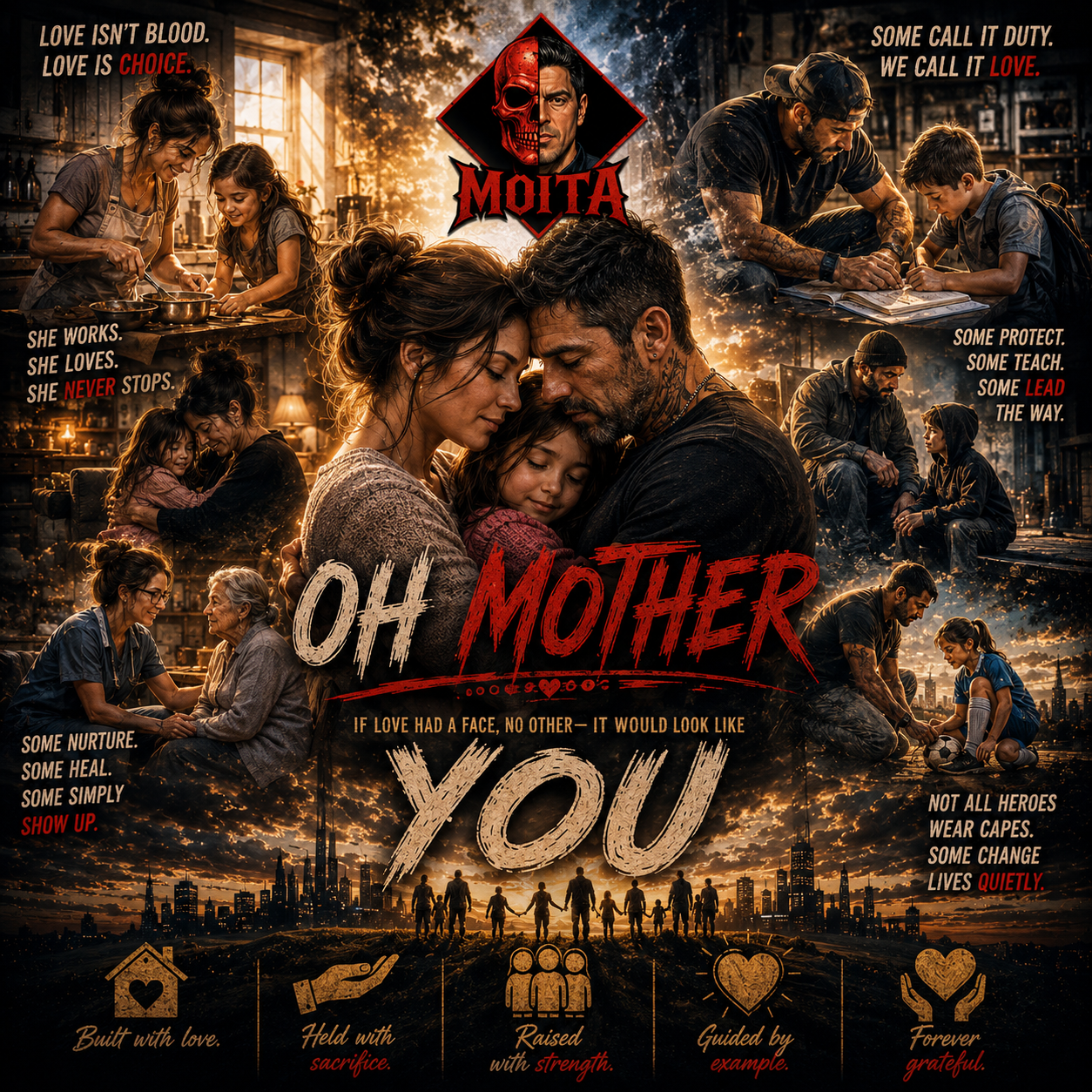
OH MOTHER is about the kind of love children often receive long before they understand what it costs.
When we are young, we see the food on the table, the clothes on our backs and the person who is always there. We do not see the worry behind it. We do not hear the thoughts running through a parent’s mind late at night. We do not know what they gave up so we could feel safe.
We simply live inside the life they created for us.
Years later, we begin to understand.
We remember the cupboards that were sometimes full and sometimes nearly empty. We remember the long working days. We remember the tired hands, the quiet strength and the way one person somehow kept an entire family moving forward.
That is where this song lives.
It is about looking back and finally seeing what was there all along.
THE STORY BEHIND THE SONG
I remember my mother raising us on her own.
She did everything she could, every single day. She worked long and hard so we would never have to feel that we were going without. No matter how difficult life became, she found a way to put food on the table, keep a roof over us and make our home feel secure.
What stands out to me most is that she did not complain.
She carried the pressure without placing it on us. She protected us from worries we were too young to understand. She could be exhausted and still make time. She could be struggling and still make us feel that everything was going to be all right.
As children, we did not always recognize that as sacrifice. It was simply our life. We believed meals appeared because it was time to eat. We believed the lights stayed on because that was what lights did. We believed someone would always be there because she always was.
We did not see the calculations behind every dollar.
We did not see the things she went without.
We did not see how often she may have been afraid.
We saw a mother.
Looking back, I see something much greater.
I see one person doing the work of two. I see someone becoming the provider, protector, comforter, disciplinarian and steady hand of the family. I see a woman carrying responsibilities that would have overwhelmed many people, yet still finding enough strength to give us love.
The first idea behind OH MOTHER goes back about thirty-three years. I originally wrote words for my mother inside a Mother’s Day card. At the time, I was trying to tell her what she meant to me in the best way I knew how.
Those words stayed with me.
Life eventually gave them a deeper meaning.
As I grew older, I understood more about what she had done. I also saw the same kind of sacrifice in my own brother, who raised three children by himself. He did not spend his time making excuses. He did what needed to be done. He became the person his children could depend on, day after day.
Watching him made me understand that this story was larger than my mother alone.
It was the story of the single parent.
The mother who must also become the father.
The father who must also become the mother.
The one person who carries the full responsibility of a household while trying to make sure the children never feel the full weight of it.
That kind of parenting asks more from a person than most people ever see.
A single parent does not get to divide the worry at the end of the day. There may be no second income to fall back on, no one else to take over when exhaustion sets in and no partner beside them when a difficult decision has to be made.
They still have to get up.
They still have to go to work.
They still have to make dinner.
They still have to listen, guide, comfort, protect and somehow prepare their children for the world.
They may be frightened, but they must create safety.
They may be freezing, but they make sure their children feel warm.
They may need new clothes themselves, but they are already thinking about how quickly their children will grow out of the ones they have.
They may want to give their children the world while quietly knowing they cannot afford it.
That is the reality behind this song.
WHY I WROTE THIS SONG
I wrote OH MOTHER because some forms of love deserve to be recognized while people are still here to hear it.
Too many sacrifices happen quietly.
There is no audience when a parent skips a meal.
There is no applause when they work another shift.
There is no public celebration when they hide their fear so their children can sleep peacefully.
Most of the important moments happen inside ordinary days.
A lunch is packed.
A bill is paid.
A child is comforted.
A problem is solved.
Another morning begins.
From the outside, it may not look extraordinary. From inside that family, it can mean everything.
I wanted this song to honour the people who kept going without recognition. I wanted it to speak for the children who may not yet understand what is being done for them and for the adults who now look back wishing they had said thank you more often.
I also wanted to challenge the narrow idea that the word mother can describe only one role performed by one kind of person.
Sometimes the person a child looks up to as a mother is their father.
Sometimes it is a grandparent.
Sometimes it is an older sibling.
Sometimes it is another person who stepped forward when nobody else did.
The title is OH MOTHER, but the heart of the song belongs to every person who became everything a child needed.
WHY THIS MATTERS TO ME
This song matters to me because it began with my own mother.
She was not an idea I created for a song. She was the person who lived this story.
She raised us.
She worked.
She sacrificed.
She made time.
She made things work when there was no easy reason they should have worked.
The older I became, the more I understood that the life we experienced as children did not happen by accident. It existed because she kept building it, one day at a time.
There is gratitude in this song, but there is also regret.
It is the regret many people carry when they finally understand a parent’s sacrifice after years have already passed. We wish we had noticed more. We wish we had asked more questions. We wish we had understood that the tired person standing in the kitchen was doing far more than preparing a meal.
She was holding a family together.
OH MOTHER is my way of going back to that Mother’s Day card and finishing what I was trying to say all those years ago.
WHY THIS SONG FITS MOITA
MOITA is built from real life, and this song could not be more real.
It comes from my mother, my family, my brother and the single parents I have watched carry responsibilities most people never fully recognize.
This is not a story about perfect people.
It is about people who keep showing up.
It is about love that is measured through action rather than speeches. It is about strength that does not need to announce itself. It is about sacrifice that may remain invisible until the children grow old enough to understand it.
That is why this song belongs inside MOITA.
The music carries the emotion, but the story reveals the life behind it.
READ THIS FIRST
Before reading the lyrics, think about the person who made your childhood feel safer than it really was.
Think about the person who solved problems before you knew those problems existed.
Think about the meals, the rides, the clean clothes, the advice, the discipline, the protection and the countless ordinary things that may have required extraordinary effort.
You may have called that person Mom.
You may have called that person Dad.
You may have called them by another name entirely.
Whatever you called them, this song is for the person who stood between you and the hardest parts of life.
Some people will hear OH MOTHER and think of someone they can still thank.
Others will hear it and wish they had one more chance.
Either way, listen closely.
This is more than a song about motherhood.
It is a recognition of the single parent who became an entire family’s foundation.
FULL LYRICS
OH MOTHER
I don’t think I ever said this the way I should’ve.
Back then, I didn’t see it.
I just lived in it.
Now I understand.
Mother Hubbard in the kitchen light
Hands worn down but your heart still fights
You made a home out of broken days
Turned empty plates into better ways
We didn’t see what it took from you
All the silent things you pushed through
Every crack you covered with love
While we were growing, you rose above
You never asked, you never ran
You gave your life to make us stand
You held us together when we fell apart
Built this family piece by heart
Every tear you never showed
Every weight you carried alone
We were blind but now we see
What you gave so we could be
If love had a face, no other
It would look like you, Oh Mother
Cupboards full or cupboards bare
Didn’t matter, you were there
Long nights we’ll never know
How far you had to bend, not break, just grow
We took it all like it was free
Never saw the cost beneath
Now we stand and finally say
We owe you more than words can pay
We’ll carry forward what you gave
Try to be strong, try to be brave
You held us together when we fell apart
Built this family piece by heart
Every tear you never showed
Every weight you carried alone
We were blind but now we see
What you gave so we could be
If love had a face, no other
It would look like you, Oh Mother
Some called you mom
Some called you dad
But you were everything we had
You held us together through it all
Every rise, every fall
And if we become anything worth remembering
It’s because you gave us everything
We were blind but now we see
What you gave so we could be
If love had a face, no other
It would look like you, Oh Mother
SECTION ONE
LYRIC JOURNEY
PART 1
“I don’t think I ever said this the way I should’ve.
Back then, I didn’t see it.
I just lived in it.
Now I understand.”
That is where this song begins.
Not with anger.
Not with blame.
Not with a speech trying to make my mother into something larger than life.
It begins with an admission.
I did not fully understand what I was looking at when I was young.
I knew my mother worked hard. I knew she was always there. I knew food appeared on the table, clothes appeared when we needed them, and somehow the family kept moving forward.
But knowing those things happened is not the same as understanding what they required.
As a child, I lived inside the life she created.
I did not stand outside it and study how it worked.
I did not see the nights when she may have been worried about money.
I did not see the calculations behind every bill.
I did not ask what she went without so we would have what we needed.
I simply trusted that life would continue because she kept making it continue.
That is what the opening means when I say, “I just lived in it.”
I lived inside her sacrifice without having the experience to recognize it as sacrifice.
Years later, I began seeing those same memories differently.
A meal was no longer only a meal.
It was evidence that she had found a way.
A warm home was no longer something that simply existed.
It was evidence that somebody had carried the responsibility of keeping it together.
A mother standing in the kitchen was no longer an ordinary picture from childhood.
It became the image of one person doing the work of two.
That is why the final line of the opening matters.
“Now I understand.”
I cannot go back and become the child who noticed everything.
I cannot return to those years and ask the questions I know enough to ask now.
All I can do is speak from the understanding that came later.
That is what OH MOTHER is.
It is the thank you that grew larger with time.
“Mother Hubbard in the kitchen light”
The first image places my mother in the kitchen.
That was not accidental.
For many families, the kitchen becomes the centre of everyday life.
It is where meals are made.
It is where people gather.
It is where school days are discussed.
It is where bills may be opened after the children have gone to bed.
It is where a parent can stand alone for a few minutes and think about everything that still needs to be done.
The reference to Mother Hubbard carries the memory of the old nursery rhyme and the empty cupboard.
Children may hear that rhyme as something playful.
Adults understand that an empty cupboard is not playful at all.
An empty cupboard means decisions.
It means stretching what remains.
It means wondering how many meals can be created from what is left.
It means trying to prevent children from noticing there may not be enough.
By placing Mother Hubbard in the kitchen light, I am bringing childhood innocence and adult hardship into the same room.
The child sees the familiar kitchen.
The adult looking back sees the pressure that may have been standing there too.
“Hands worn down but your heart still fights”
Her hands tell one part of the story.
Hands show work.
They show years of cooking, cleaning, lifting, carrying, washing, fixing and doing whatever the day demanded.
They show the physical cost of keeping a household moving.
But worn hands are only half of the line.
The heart is what kept those hands moving.
A body can become tired.
A person can feel defeated.
There can be mornings when getting up feels harder than it should.
Love still says the children need you.
That does not mean a parent never feels exhausted or overwhelmed.
It means they continue even while feeling those things.
My mother was not made of steel.
She was human.
She became tired.
She worried.
She had her own fears.
The strength was not that she never felt pressure.
The strength was that she kept loving us while carrying it.
That is what I mean by a heart that still fights.
“You made a home out of broken days”
A house is something people live inside.
A home is something people create.
A house can have walls, a roof and furniture and still feel cold.
A home can have very little and still feel safe because of the person holding it together.
Broken days can mean many things.
Financial pressure.
Exhaustion.
Disappointment.
Loneliness.
Fear.
The absence of another parent.
The feeling of having too much responsibility and not enough help.
My mother had to take whatever each day brought and turn it into something we could live inside without feeling defeated by it.
She could not remove every problem.
No parent can.
What she could do was prevent those problems from becoming the only thing we felt.
That is an important difference.
Children do not need a perfect childhood.
They need somewhere they feel loved.
They need someone who keeps showing up.
They need a place where hardship does not erase belonging.
My mother created that place.
“Turned empty plates into better ways”
This line continues the image of the kitchen, but it also widens it.
An empty plate can mean hunger.
It can mean there is not enough.
It can mean a parent has to become creative because the family still needs to eat.
Some parents learn how to stretch almost nothing into a meal.
They learn which bill can wait a few more days.
They learn how to make old clothes last longer.
They learn how to turn disappointment into a lesson without making the children feel ashamed.
That kind of resourcefulness is rarely celebrated.
Nobody gives an award to the parent who somehow made three meals out of what should have made one.
Nobody applauds the mother who quietly decides she is not hungry so her children can eat more.
Nobody sees the father who says he does not need a new coat because the children have already outgrown theirs.
Those decisions disappear into everyday life.
The children receive the result without seeing the private calculation behind it.
That is what happened to us.
We saw the meal.
We did not see what it took to create it.
“We didn’t see what it took from you”
This is where the song begins admitting the cost more directly.
Children see what parents give.
They do not always see what the giving removes.
Sleep.
Time.
Energy.
Opportunities.
Personal dreams.
Financial freedom.
Peace of mind.
A parent may willingly give those things because they believe their children are worth it.
That does not mean the cost was not real.
My mother had a life beyond being our mother.
She had her own thoughts, hopes, disappointments and needs.
As children, we did not always think about that.
To us, she was Mom.
We did not yet understand the woman inside that role.
We did not understand how much of herself may have been placed aside so the family could keep moving.
That realization arrived later.
It is one of the reasons gratitude and regret sit beside each other inside this song.
I am grateful for everything she gave.
I also wish I had understood more while she was still here.
“All the silent things you pushed through”
Not every struggle is discussed at the family table.
Some parents carry problems quietly because they do not want their children carrying them too.
They may be frightened about money and still ask how school went.
They may be exhausted and still prepare dinner.
They may feel alone and still become the person everyone else depends on.
Silence can hide many things.
It can hide worry.
It can hide pain.
It can hide the feeling that there is no one available to take over.
For a single parent, silence can become part of survival.
There may be nobody beside them at the end of the day to share the full truth.
Nobody to say, “I will handle this one.”
Nobody to divide the fear when a child is sick.
Nobody to share the responsibility when work becomes uncertain.
They push through because the children still need a parent tomorrow morning.
That is the silence I am speaking about.
Not the absence of struggle.
The absence of complaint.
“Every crack you covered with love”
No family moves through life without cracks.
Arguments happen.
Money becomes tight.
People become tired.
Mistakes are made.
Plans fail.
Fear enters.
The purpose of love is not to pretend those cracks do not exist.
Love helps prevent the cracks from destroying everything around them.
My mother could not guarantee an easy life.
She could give us the feeling that we still belonged to something strong.
She could create stability even while her own life may not have felt stable.
She could make the family feel whole while privately carrying the broken parts.
That is why love becomes something active in this line.
It is not simply a feeling inside her.
It is what she used to hold things together.
“While we were growing, you rose above”
Children are always moving forward.
They are growing out of clothes.
Moving through school.
Developing personalities.
Making mistakes.
Becoming more independent.
While all of that is happening, somebody is doing the work that allows it to happen.
We were growing because she kept creating room for us to grow.
She rose above whatever pressure was trying to pull the family down.
That does not mean every day was perfect.
It means the difficulties did not become the final definition of our childhood.
We remember a mother who was there.
That is what she accomplished.
“You never asked, you never ran”
This is the first time the song becomes very direct about commitment.
She never asked for applause.
She did not keep a record of everything she did so she could present it to us later.
She did not demand that we understand sacrifices we were too young to understand.
She simply continued.
The second half of the line matters just as much.
She never ran.
There were probably days when anybody would have understood the desire to escape the pressure for a while.
There were probably moments when everything felt too heavy.
But children still needed her.
She stayed.
That is one of the clearest definitions of love I know.
Not a promise spoken during an easy moment.
A decision repeated during difficult ones.
“You gave your life to make us stand”
This does not mean her life had no value beyond her children.
It means she invested so much of herself into giving us a foundation.
She worked so we could stand.
She sacrificed so we could stand.
She protected us from worries so we could stand.
She created a home from broken days so we could stand.
The people we eventually became did not appear from nowhere.
Someone helped build the ground beneath us.
This line recognizes who did that work.
“You held us together when we fell apart”
The chorus begins with the central truth of the song.
Families do not remain together automatically.
The people inside them can become frightened, angry, discouraged or divided.
Life can place pressure on every relationship.
Sometimes there is one person who keeps calling everyone back toward the centre.
My mother was that person.
Holding a family together does not always mean stopping every argument.
Sometimes it means making sure people return after the argument.
Sometimes it means creating traditions that keep everyone connected.
Sometimes it means refusing to allow pride, hardship or exhaustion to become stronger than the family itself.
When we fell apart, she did not always repair everything with a speech.
She kept being there.
Presence can hold more together than people realize.
“Built this family piece by heart”
The expected phrase would be “piece by piece.”
I changed it to “piece by heart” because effort alone does not build a family.
Duty can keep a household functioning.
Love turns it into something more.
Every meal.
Every ride.
Every difficult conversation.
Every moment of discipline.
Every act of forgiveness.
Every time she stood up again after feeling tired.
Those became the pieces.
Her heart was what placed them together.
“Every tear you never showed”
Children often imagine their parents do not cry because they rarely see it.
The truth may be that the crying happened somewhere else.
In the bedroom.
In the bathroom.
In the car.
Late at night when the house was quiet.
Some parents hide tears because they believe the children need them to remain strong.
That can be an act of protection, but it also means much of their pain is carried alone.
Years later, we begin realizing those tears must have existed.
The absence of seeing them does not mean the absence of suffering.
It means she protected us from part of the cost.
“Every weight you carried alone”
This is where the chorus fully recognizes the single parent.
The weight was not divided equally between two people.
There was no guarantee somebody else would step in.
The responsibility belonged to her because the children still needed a life.
Money.
Food.
Shelter.
Discipline.
Comfort.
Decisions.
Fear.
The future.
She carried all of it.
The word “alone” does not mean nobody ever helped.
It means the final responsibility kept returning to one person.
That is a different kind of pressure.
A single parent may receive advice from many people, but at the end of the night, they are still the one who must decide what happens next.
“We were blind but now we see”
The chorus now returns to the admission from the beginning.
We were blind, but not because we did not care.
We were blind because we were children.
We saw the life she gave us.
We did not see the price she paid.
Adulthood changed that.
Responsibility changed that.
Watching other parents struggle changed that.
Seeing my brother raise three children alone changed that.
Time opened our eyes.
“What you gave so we could be”
She did not sacrifice only so we could survive another day.
She sacrificed so we could become something.
So we could grow.
So we could have choices.
So we could build lives of our own.
The people we became carry evidence of what she gave.
Every strength we developed did not come only from ourselves.
Some of it came from watching her continue.
“If love had a face, no other
It would look like you, Oh Mother”
This is the emotional destination of the first chorus.
Love is often discussed as an idea.
This line gives it a person.
A face.
A history.
Worn hands.
A kitchen light.
An empty cupboard turned into a meal.
A frightened parent who still created safety.
If I had to explain what love looked like during those years, I would not begin with a definition.
I would point to my mother.
That is what the chorus finally says.
Love did not arrive as something perfect or glamorous.
It arrived tired.
It arrived carrying groceries.
It arrived after a long day of work.
It arrived worried about money.
It arrived and still found enough strength to ask whether we were all right.
That was the face of love I knew.
That was my mother.
SECTION ONE
LYRIC JOURNEY
PART 2
“Cupboards full or cupboards bare
Didn’t matter, you were there”
The second verse begins by returning to the kitchen.
That is no coincidence.
The kitchen has already become the symbol of everyday life in this song. It is where sacrifice became invisible because it happened so often.
The line does not say the cupboards were always full.
It does not pretend life was always comfortable.
Instead, it admits something honest.
Sometimes there was plenty.
Sometimes there was very little.
The important part was never what sat on the shelf.
The important part was who stood in front of it.
Children remember many things from their childhood, but one memory becomes stronger than almost anything else.
Who was there.
Years later, very few people remember every birthday present.
They do remember who tucked them into bed.
Who waited up when they were late.
Who showed up at school.
Who sat beside them when they were sick.
Presence becomes one of the greatest gifts a parent can ever give.
This lyric recognizes that.
The cupboards changed.
The economy changed.
Life changed.
She remained.
“Long nights we’ll never know”
This is one of the most honest lines in the entire song because it admits there are parts of our parents’ lives we will never fully understand.
No matter how many conversations we have.
No matter how old we become.
No matter how much we appreciate them.
There are nights that belonged only to them.
Nights spent worrying.
Nights trying to make impossible decisions.
Nights wondering whether tomorrow would be easier.
Children are supposed to sleep.
Parents often lie awake.
That difference says everything.
As children, we never knew what happened after we fell asleep.
We never knew whether bills were spread across the kitchen table.
We never knew whether tears appeared after the lights were off.
We never knew whether exhaustion finally caught up with the person who looked so strong all day.
Some stories are never told.
Some sacrifices remain private forever.
That is why I wrote, “We’ll never know.”
It is not an exaggeration.
It is acceptance.
Some acts of love disappear quietly into history.
“How far you had to bend, not break, just grow”
There is an important difference between bending and breaking.
Breaking means something can no longer continue.
Bending means adapting without giving up.
Single parents become experts at adapting.
Plans change.
Money changes.
Jobs change.
Children change.
Problems arrive without warning.
If a parent refused to bend, the family would struggle to survive.
Instead, they learn.
They adjust.
They become stronger in ways they never expected.
That does not mean they enjoy every challenge.
It means they refuse to let every challenge become the end of the story.
Growth is rarely comfortable.
Most people grow because life gives them no other choice.
Looking back now, I can see my mother growing through situations she never asked for.
She kept changing because we needed her to.
She became whatever the family required at that moment.
That is an extraordinary thing to ask of one human being.
Many single parents spend years becoming people they never imagined they would have to become.
They become mechanics.
Financial planners.
Teachers.
Counsellors.
Nurses.
Taxi drivers.
Protectors.
Comforters.
Sometimes all before breakfast.
That constant adaptation is what this lyric honours.
“We took it all like it was free”
This is not a criticism of children.
It is simply the truth.
Children should not have to calculate the cost of being loved.
They should not feel guilty every time a meal appears or a new pair of shoes is bought.
Parents want their children to feel secure.
That security often hides the work behind it.
As children, we accepted everything because that is what children naturally do.
We believed home would always be there.
We believed food would always arrive.
We believed our mother would always solve whatever problem appeared.
That trust is beautiful.
It is also the reason gratitude sometimes arrives much later.
As adults, we begin paying bills ourselves.
We begin working long days ourselves.
We begin worrying about our own families.
Suddenly childhood memories begin changing.
We realize those meals were never free.
Those clothes were never free.
Those opportunities were never free.
Somebody paid for them.
Often with money.
Sometimes with sleep.
Sometimes with postponed dreams.
Sometimes with years of carrying pressure alone.
Only then do we begin seeing the true cost of what once seemed ordinary.
“Never saw the cost beneath”
This line continues naturally from the one before it.
The word “beneath” matters.
The sacrifice was underneath everything.
Underneath every meal.
Underneath every Christmas.
Underneath every school trip.
Underneath every ordinary day.
Children see the surface.
Parents carry what lies beneath it.
That hidden foundation is rarely noticed until adulthood.
It reminds me of construction.
People admire the finished building.
Very few stop to think about the foundation hidden below the ground.
Without that foundation, everything above it eventually collapses.
Families are very similar.
Most people notice birthdays, celebrations and holidays.
Few notice the invisible work that makes those moments possible.
Parents become the foundation.
The strongest foundations are usually the least visible.
“Now we stand and finally say”
This line marks an important turning point.
The song began with one person looking back.
Now that voice becomes “we.”
That change is significant.
Gratitude is no longer private.
It becomes something shared.
Brothers.
Sisters.
Children.
Anyone who grew up inside that home.
All of us eventually arrive at the same realization.
Now we understand.
Now we finally have the words.
Now we finally recognize what was happening all those years ago.
There is something beautiful about finally saying thank you.
There is also sadness.
Because many people discover those words only after time has already passed.
That is one of the quiet messages inside this song.
Do not wait.
If someone who carried your childhood is still here, tell them.
Do not assume they already know.
People deserve to hear appreciation while they are still able to smile at it.
“We owe you more than words can pay”
There are some debts that cannot be measured.
You cannot calculate what a childhood is worth.
You cannot calculate the value of feeling safe.
You cannot calculate what unconditional love changes inside a person.
No amount of money can repay a parent who gave decades of their life raising a family.
Words matter.
This entire song proves that.
But even words have limits.
Sometimes “thank you” feels too small.
Sometimes “I love you” feels incomplete.
Sometimes we wish language itself were bigger.
That is where this lyric lives.
It accepts that there are sacrifices so great they can never truly be repaid.
The best we can do is recognize them.
“We’ll carry forward what you gave”
The second pre-chorus shifts the song away from memory and toward responsibility.
Gratitude should not end with saying thank you.
Real gratitude changes behaviour.
If our parents taught kindness, we carry kindness forward.
If they taught perseverance, we carry perseverance forward.
If they showed us generosity, we become generous.
In many ways, the greatest thank you we can ever give our parents is becoming people they would be proud to recognize.
That becomes their legacy.
Not something written on a gravestone.
Something living inside the people they raised.
Parents leave much more than photographs.
They leave values.
Habits.
Character.
Ways of treating other people.
Those things continue long after they are gone.
That is one of the greatest forms of immortality any person can achieve.
“Try to be strong, try to be brave”
Notice the wording.
It does not say, “We are strong.”
It says, “Try.”
That one word makes the lyric feel honest.
None of us succeeds every day.
None of us becomes our parents overnight.
We all struggle.
We all become tired.
We all question ourselves.
Trying is enough.
The song is not asking us to become perfect.
It is asking us to continue the effort.
To continue loving.
To continue showing up.
To continue building families that become places of safety for the next generation.
Sometimes bravery is not something dramatic.
Sometimes bravery is simply getting up tomorrow morning and continuing.
That is exactly what my mother did.
That is exactly what my brother did while raising his three children.
That is exactly what millions of single parents continue doing today.
The chorus now returns.
Its words have not changed.
But we have.
We have travelled from childhood into adulthood.
From innocence into understanding.
From receiving love without recognizing its cost to finally seeing the life that stood behind every act of kindness.
The chorus no longer feels like admiration alone.
It feels like gratitude.
It feels like respect.
It feels like the words I wish every parent who sacrificed in silence could hear while they are still here to hear them.
SECTION ONE
LYRIC JOURNEY
PART 3
The chorus returns.
The words have not changed.
“You held us together when we fell apart.
Built this family piece by heart.
Every tear you never showed.
Every weight you carried alone.”
The first time we heard these words, they introduced us to the person standing at the centre of the family.
Now they carry greater emotional weight because of everything the second verse has revealed.
We now understand more about those empty cupboards.
We understand more about the long nights.
We understand more about what it meant to bend without breaking.
The chorus no longer introduces sacrifice.
It confirms it.
That is exactly why the chorus does not need another long explanation.
The journey has already deepened its meaning.
The song has done that work for us.
“We were blind but now we see.
What you gave so we could be.”
Those words now feel less like an observation and more like a confession.
Many of us have experienced that moment.
A memory from childhood suddenly returns years later, but we see it through adult eyes.
Perhaps we remember our mother saying she was not hungry.
At the time we believed her.
Years later we realize she probably wanted us to eat first.
Perhaps we remember our father saying everything would be all right.
Years later we realize he had no idea how everything was going to work out.
He simply refused to let us carry that fear.
Growing older changes old memories.
The events stay the same.
The understanding becomes different.
That is exactly what happens inside this song.
“If love had a face, no other.
It would look like you, Oh Mother.”
The chorus finishes exactly where it should.
Not with a dramatic speech.
Not with impossible promises.
Simply by giving love a face.
Every listener will place a different face inside that lyric.
Some will picture their mother.
Others will picture their father.
Some will think about a grandmother.
Others a grandfather.
An aunt.
An uncle.
A foster parent.
An older brother or sister.
Someone stepped into the role of protector.
Someone became the safe place.
That is who this lyric belongs to.
The music now becomes quiet.
The song stops moving outward.
Instead, it turns inward.
“Some called you mom.
Some called you dad.
But you were everything we had.”
For me, this is the emotional heart of the entire song.
Everything before this moment prepares us for it.
The song begins as a tribute to my own mother because that is where the story honestly begins.
She raised us on her own.
She showed me what sacrifice looked like long before I understood it.
That truth never changes.
But as the years passed, I also watched my brother raise three children by himself.
I watched another parent carry responsibilities that most people never fully appreciate.
The details were different.
The love was the same.
That is when I realized this song could never belong only to mothers.
It had grown into something larger.
The title remained OH MOTHER because that was where the journey began.
The heart of the song had become every person who stepped into that role.
The bridge acknowledges something many children already know.
Families are not all built the same way.
Some children are raised by one parent.
Some by grandparents.
Some by relatives.
Some by guardians.
Some by people who never expected to become parents but chose love over convenience.
Life rarely follows the perfect picture we sometimes imagine.
Children are not asking for perfect.
They are asking for someone who stays.
Someone who protects.
Someone who keeps showing up.
That is why this bridge is so important.
It removes every barrier created by titles.
Mom.
Dad.
Grandma.
Grandpa.
Guardian.
Those words matter.
The love behind them matters even more.
“But you were everything we had.”
There is tremendous honesty inside that one sentence.
It does not claim life was perfect.
It does not claim every problem disappeared.
It simply recognizes that one person became the centre holding everything together.
Sometimes people hear the phrase “everything we had” and immediately think about money.
That is not what this lyric is saying.
It is talking about security.
Hope.
Guidance.
Comfort.
Protection.
Belonging.
Those things cannot be bought.
Children measure wealth differently than adults do.
A child who feels safe often believes they have everything.
A child who knows someone will come home believes the world is stable.
A child who knows someone will listen carries confidence into adulthood without even realizing where it came from.
Many parents spend years wondering whether they did enough.
The truth is that children often remember the simplest things.
The ride home after school.
The conversation before bed.
The hand that held theirs crossing the street.
The hug after a difficult day.
The parent who stayed.
Those memories become part of who we are.
That is what this bridge celebrates.
Not perfection.
Presence.
The song now prepares for its final chorus.
We have travelled from childhood innocence.
To adult understanding.
To recognizing sacrifice.
To recognizing that love is not limited by titles.
Everything now leads naturally toward the song’s final destination.
The final chorus no longer asks us to look backward.
It quietly begins asking us what we will do with everything we have just learned.
SECTION ONE
LYRIC JOURNEY
PART 4
The final chorus arrives with a different feeling.
Nothing about the melody tells us we have reached the end as clearly as the emotion does.
Everything the song has been building toward now comes together.
“You held us together through it all.
Every rise, every fall.”
Earlier in the song, we heard about being held together when the family fell apart.
Now the picture becomes wider.
Life was never only difficult.
There were good days too.
Birthdays.
Christmas mornings.
School concerts.
Laughter around the dinner table.
Family photographs.
Little victories that probably felt ordinary at the time.
Those moments existed because someone was quietly doing the work that allowed them to happen.
The lyric doesn’t pretend life was only hardship.
Real families experience both joy and struggle.
The strongest parents help their children celebrate the highs while also protecting them through the lows.
That is what “every rise, every fall” acknowledges.
A lifetime is never made from only one emotion.
It is built from thousands of moments stitched together.
Some happy.
Some painful.
Some unforgettable.
Some that seemed ordinary until years later.
The parent standing at the centre of those moments becomes part of every memory, whether they realize it or not.
“And if we become anything worth remembering—
It’s because you gave us everything.”
This is the destination the entire song has been travelling toward.
Earlier, the song thanked the parent.
Now it recognizes something even deeper.
The greatest gift a parent leaves behind is not money.
It is not a house.
It is not possessions.
It is themselves.
Every lesson.
Every value.
Every example.
Every sacrifice.
Every conversation.
Every act of kindness witnessed by a child.
Children learn far more from what parents live than from what parents say.
If they grow into honest people, someone showed them honesty.
If they become compassionate, someone demonstrated compassion.
If they become dependable, someone lived dependability in front of them.
Parents are constantly teaching, even when they do not realize they are teaching.
That is why this lyric feels so powerful.
It understands that the person raising the child never truly disappears.
Part of them continues inside the people they helped shape.
In many ways, this is the greatest legacy anyone can leave.
Not something engraved in stone.
Something living.
Something carried forward into another generation.
The chorus now returns one final time.
“We were blind but now we see.
What you gave so we could be.”
By now these words no longer sound like regret.
They sound like gratitude.
The journey has completed itself.
The child who lived inside the sacrifice has become the adult who finally recognizes it.
That recognition cannot change the past.
It can change the future.
Understanding often changes how we live from this moment forward.
Perhaps we become more patient with our own parents.
Perhaps we become more patient with ourselves.
Perhaps we begin thanking people before it is too late.
Perhaps we become better mothers.
Better fathers.
Better grandparents.
Better guardians.
Better human beings.
That is the quiet hope inside these words.
“If love had a face, no other.
It would look like you, Oh Mother.”
The song ends exactly where it should.
It does not search for bigger words.
It does not try to become louder.
It returns to the simplest truth it has discovered.
Love is easiest to recognize when we see it lived.
For me, I saw it in my mother.
I also saw it later in my brother raising his three children.
I have seen it in countless single parents who quietly continue carrying responsibilities that most people never fully notice.
This song began with one woman.
It ends by honouring everyone who became that kind of person in someone else’s life.
That is why the title remains so personal while the message becomes universal.
The lyrics are finished.
The journey, however, is not.
If the song has done its job, most readers will not immediately think about my mother.
They will think about their own.
Or the person who became that place of safety in their life.
They may remember someone who packed lunches before sunrise.
Someone who worked two jobs.
Someone who skipped buying things for themselves so their children could have what they needed.
Someone who stood alone because there was nobody else to stand beside them.
Those memories are different for every reader.
The emotions are remarkably similar.
That is one of the reasons music can connect complete strangers.
We hear someone else’s story and unexpectedly recognize our own.
OH MOTHER is not asking us to feel guilty for what we failed to notice as children.
Children are not meant to carry adult burdens.
The song asks something much simpler.
Notice now.
If the person who carried your childhood is still here, tell them what they mean to you.
Do not assume they already know.
Do not assume there will always be another opportunity.
If they are no longer here, honour them by carrying forward the best parts of what they gave you.
Become the kind of person who creates safety for someone else.
Become the kind of person who shows up.
Become the kind of person who quietly gives more than they take.
That is how love continues.
That is how one generation blesses the next.
Looking back, I realize this song started long before I wrote the lyrics.
It started in my mother’s kitchen.
It continued inside a Mother’s Day card more than three decades ago.
It grew every time I understood another sacrifice I had missed as a child.
It grew again watching my brother raise his children on his own.
Eventually all those moments found each other inside one song.
That is why OH MOTHER means so much to me.
It is not simply about remembering.
It is about understanding.
Sometimes understanding arrives years later.
Sometimes it arrives when we become parents ourselves.
Sometimes it arrives after we lose the very person we wish we could thank.
Whenever it arrives, it changes us.
If this journey leaves you wanting to put the song on again, but this time hearing different things than you heard the first time, then these lyrics have completed their journey.
And if, after listening, you decide to pick up the phone, knock on someone’s door, give a hug, or simply say “thank you,” then this song has travelled far beyond music.
It has become part of someone’s life.
That has always been the purpose behind MOITA.
The song tells the story.
The journey helps us understand why it matters.
SECTION TWO
THE STORY
OH MOTHER began about thirty-three years ago with a Mother’s Day card.
At the time, I was not trying to write a song. I was trying to say something to my mother that I probably did not say often enough in everyday life.
I wanted her to know that I saw her.
Maybe I did not understand everything she had done for us yet, but something inside me already knew that her strength deserved more than an ordinary Mother’s Day message.
Those first words stayed with me.
Years passed. Life happened. I became older, experienced more responsibility myself and began to understand what those words were really trying to say.
That simple message inside a card eventually became OH MOTHER.
A CHILD’S VIEW OF HOME
When you are a child, you rarely understand how a home stays together.
You wake up and there is breakfast.
You come home and there is something to eat.
You need clothes and somehow clothes appear.
You need a ride, advice, protection or comfort, and someone finds a way to provide it.
You do not see the planning behind any of it.
You do not know whether there was enough money that week.
You do not know which bill had to wait.
You do not know if your mother ate less so there would be more for everyone else.
You do not know how tired she was when she came home.
You only know that she was there.
That was my experience growing up.
My mother raised us on her own. She carried the full responsibility of keeping the family going, and she did it without making us feel like a burden.
We never went without food.
That does not mean life was easy.
It means she made sure the difficulty reached her before it reached us.
That is one of the greatest things a parent can do, and it is also one of the easiest things for a child to miss.
THE THINGS SHE NEVER SAID
My mother did not sit us down and explain every sacrifice.
She did not make a list of what she had given up.
She did not remind us every day that she was doing the work of two people.
She did what needed to be done.
There is something powerful about that kind of silence.
It does not mean there was no pain.
It does not mean there was no exhaustion.
It means she refused to place adult worries onto the shoulders of her children.
She may have had nights when she did not know how everything would be paid.
She may have gone to bed worrying about the next day.
She may have felt alone in decisions that should have been shared.
But when morning came, she got up and continued.
That was the part we saw.
We saw the person who kept moving.
We did not always see what it cost her.
WORKING SO WE WOULD NEVER FEEL WITHOUT
My mother worked hard.
She did not work because she was chasing praise or recognition. She worked because her children needed a life.
She made sure there was food.
She made sure there was shelter.
She made sure the family continued moving forward.
What makes that even more meaningful to me now is that she still made time for us.
It would have been understandable if exhaustion had taken everything from her. It would have been understandable if she had come home with nothing left to give.
But somehow, she still found something.
That is what parents often do.
They give from places that already feel empty.
They find patience after a long shift.
They listen while carrying their own worries.
They create a feeling of safety even when they do not feel safe themselves.
That is not weakness.
That is strength in one of its purest forms.
WHEN UNDERSTANDING COMES LATER
There are things we only understand after we have lived long enough to recognize them.
As a child, I saw my mother doing what mothers did.
As an adult, I began to see a woman carrying more than one person should have had to carry alone.
I began to understand the difference between having enough and making enough happen.
I understood that food on the table did not mean there was no struggle.
It meant someone had fought to make sure the struggle did not win.
That realization changes the way you remember your childhood.
Ordinary moments stop looking ordinary.
A meal becomes evidence of sacrifice.
A warm house becomes evidence of planning.
A parent showing up becomes evidence of love.
You begin looking back at things you accepted without question, and suddenly you see the person behind them.
That is when gratitude becomes deeper.
It is also when regret can begin.
You wonder whether you thanked them enough.
You wonder whether they knew you appreciated them.
You wonder whether you could have done more to make their life easier.
OH MOTHER carries both of those emotions.
It carries gratitude for what was given and regret that the full meaning was not always understood at the time.
SEEING THE SAME STRENGTH IN MY BROTHER
Years later, I saw a similar story through my brother.
He raised three children by himself.
Once again, I saw one person accepting the full responsibility of a family.
No complaints.
No excuses.
No waiting for someone else to solve the problem.
He did what had to be done.
Watching him helped me understand my mother on another level.
The details were different, but the commitment was the same.
Get up.
Go to work.
Take care of the children.
Handle the problems.
Make the decisions.
Keep the family moving.
Do it again tomorrow.
People sometimes talk about single parents as though their story is defined by what is missing.
I see it differently.
Their story is often defined by what one person somehow manages to provide.
They may not be able to replace every person or fill every absence, but they can still become the foundation a child builds a life upon.
My brother showed me that motherhood is not only a title connected to gender.
Sometimes being a mother means being the person who gives a child comfort, stability, protection and unconditional love.
Sometimes a father must become that person too.
SOME CALLED YOU MOM, SOME CALLED YOU DAD
The most important turn in OH MOTHER comes when the song widens beyond my own mother.
Some called you Mom.
Some called you Dad.
But you were everything we had.
That idea is the heart of the entire story.
The song honours mothers, but it also recognizes that life does not always arrange families into simple roles.
A child may be raised by a single father.
A grandmother may become the mother of the home.
An older sister may take on responsibilities long before she should have to.
A grandfather, aunt, uncle, foster parent or guardian may become the person a child trusts more than anyone else.
The name of the role matters less than the love inside it.
The title OH MOTHER is not meant to exclude anyone.
It is meant to honour the person who became the emotional centre of a child’s life.
The person who made a home feel like home.
THE PRIVATE LANGUAGE OF SACRIFICE
Single parents often carry thoughts they never say out loud.
I would give you the world if I could afford it.
They feel warmth even when I am freezing.
They will grow out of those clothes before I can afford new ones.
Those thoughts represent the private calculations behind everyday parenting.
A child sees a winter coat.
A parent sees the cost, the weather, the next growth spurt and the money that still has to cover food and rent.
A child sees dinner.
A parent sees what was left in the cupboard, how many days remain until payday and whether there will be enough for tomorrow.
A child sees a birthday gift.
A parent may see extra hours worked, something personal they decided not to buy or another bill delayed for a little longer.
This does not mean children should grow up feeling guilty for being cared for.
That is not the message.
The message is that love often performs difficult work quietly.
Recognizing that work later in life can create respect, gratitude and understanding.
THE IMPORTANCE OF A SINGLE PARENT
A single parent can change the entire direction of a child’s life.
That importance cannot be measured only by income, possessions or whether every day was perfect.
It is measured through presence.
A child who knows someone will come home has something important.
A child who knows someone will listen has something important.
A child who knows they are loved even when life is difficult has something important.
Single parents often provide stability while living with very little stability of their own.
They are expected to earn money, manage a household, guide behaviour, provide comfort, make major decisions and prepare their children for the future.
There may be no one beside them to say, “I will take over tonight.”
There may be no second opinion when a child is sick.
There may be no second income when work slows down.
There may be no one to share the fear when something goes wrong.
Still, they continue.
That continued presence matters.
It teaches children what commitment looks like.
It teaches responsibility.
It teaches endurance.
It teaches that love is not only something people say.
Love is something people repeatedly do.
A SINGLE PARENT IS STILL HUMAN
It is easy to describe a single parent as strong and forget that strength has limits.
They become tired.
They make mistakes.
They lose patience.
They worry.
They sometimes feel that nothing they do is enough.
They may question themselves while everyone around them assumes they have everything under control.
Calling someone strong should never become an excuse to ignore their needs.
The strongest parent still needs support.
They need understanding.
They need someone to ask how they are doing and wait long enough to hear the real answer.
They need family, friends, employers and communities that respect what they are carrying.
They need people who understand that missing work for a sick child is not a lack of commitment.
They need affordable childcare.
They need time.
They need dignity.
Most of all, they need to know that the work they are doing matters, even when nobody applauds it.
THE CHILD WHO UNDERSTANDS LATER
OH MOTHER is written from the perspective of someone who grew up and finally saw the complete picture.
That is why the song begins quietly.
There is no need to shout at the beginning.
The emotion comes from admitting something many people recognize.
I did not understand then.
I understand now.
That sentence can carry an entire lifetime.
It can hold appreciation.
It can hold sadness.
It can hold guilt.
It can hold love.
It can hold the wish that we could return to an ordinary day and see it properly for the first time.
Maybe we would notice how tired our mother looked.
Maybe we would ask whether she had eaten.
Maybe we would help without being asked.
Maybe we would say thank you and mean far more than the words usually mean.
We cannot always return to those moments.
We can only decide what we do with the understanding we have now.
FROM A CARD TO A SONG
The fact that OH MOTHER began inside a Mother’s Day card matters to me.
A card is small.
It is personal.
It is written directly to one person.
A song can reach thousands of people, but this one never lost the feeling of that original message.
At its centre, it is still a son speaking to his mother.
It is still an attempt to say:
I remember.
I understand more now.
I know you carried things I never saw.
I know the life we had came from what you were willing to give.
Thank you.
The song became larger because the story is shared by many families.
But it never stopped belonging to her.
WHY THE STORY HAD TO BECOME A SONG
Some feelings remain unfinished until they find the right form.
The Mother’s Day card carried the beginning.
Life added the rest.
My mother’s sacrifices gave the words their foundation.
My brother’s experience raising three children helped widen the meaning.
Time gave me the understanding I did not have when I was younger.
The song brought all of those pieces together.
OH MOTHER had to exist because there are people doing this work right now who may feel invisible.
There are single mothers lying awake trying to solve tomorrow.
There are single fathers preparing lunches before the sun comes up.
There are grandparents raising another generation.
There are guardians who stepped forward when a child needed someone.
There are people freezing so their children can feel warm.
There are people going without so the children in their care do not have to.
Most of them will never have songs written about them.
OH MOTHER is for them.
It is also for the children who may not understand yet.
One day, they might.
When they do, I hope they remember to look back with gratitude.
More importantly, I hope they look at the person still standing in front of them and say what needs to be said while there is still time.
SECTION THREE
LYRIC EXPLORATION
Some songs ask questions.
Some songs tell stories.
OH MOTHER does something different.
It gives a voice to something many people feel but struggle to say out loud.
The older we become, the more we begin to understand that love is not always spoken. Very often, it is demonstrated through ordinary moments that never seem extraordinary until we look back years later.
That is the emotional journey this song follows.
It begins with not knowing.
It ends with understanding.
That simple journey is what gives the song its power.
THE SPOKEN INTRODUCTION
“I don’t think I ever said this the way I should’ve…
Back then, I didn’t see it…
I just lived in it…
Now I understand…”
Before the first verse even begins, the song tells us exactly where we are.
This isn’t a child speaking.
This is an adult looking back.
The opening isn’t filled with guilt. It isn’t trying to create sympathy. It’s an honest admission that many of us eventually make.
As children, we rarely understand the lives our parents are living.
We understand our own scraped knees, our own friendships, our own worries about school.
Meanwhile, our parents are worrying about rent, groceries, bills, work, health and whether there will be enough left at the end of the month.
Those two worlds exist under the same roof, yet they often never meet until the child becomes an adult.
Those opening lines immediately invite the listener into that realization.
MOTHER HUBBARD IN THE KITCHEN LIGHT
One of the strongest choices in the song is using “Mother Hubbard.”
Most people recognize Mother Hubbard from the old nursery rhyme about the cupboard being bare.
By borrowing that image, the lyric quietly connects childhood innocence with adult reality.
Children often know the rhyme.
Adults understand what an empty cupboard can actually mean.
The kitchen is another important image.
It is often called the heart of the home.
Meals happen there.
Conversations happen there.
Homework gets done there.
Problems get discussed there.
For many families, the kitchen becomes the place where life quietly unfolds.
Putting your mother in that setting immediately creates familiarity.
Almost everyone can picture it.
Even listeners whose childhood looked completely different can recognize that feeling.
“HANDS WORN DOWN BUT YOUR HEART STILL FIGHTS”
This line says everything about strength without ever using the word.
The hands tell us about work.
Years of lifting.
Cleaning.
Cooking.
Driving.
Working overtime.
Doing laundry.
Fixing problems.
The heart tells us why none of it stopped.
Physical strength eventually becomes limited.
Love often refuses to quit.
That balance between exhaustion and determination runs through the entire song.
It also reflects something I witnessed in my own mother.
She became tired.
She became worn down.
She kept going anyway.
“YOU MADE A HOME OUT OF BROKEN DAYS”
A house and a home are not the same thing.
A house is a building.
A home is something people create.
This lyric recognizes that difficult circumstances do not automatically prevent someone from creating love, security and belonging.
Broken days can mean financial hardship.
Loneliness.
Stress.
Loss.
Disappointment.
Fear.
Any combination of life’s struggles.
The lyric never needs to define which one.
Most listeners will naturally fill in that space with experiences from their own lives.
That makes the song personal for every family that hears it.
“TURNED EMPTY PLATES INTO BETTER WAYS”
This line isn’t just about food.
It represents resourcefulness.
Some parents somehow stretch very little into enough.
They make simple meals feel special.
They find joy where money cannot.
They teach gratitude without giving speeches.
Many children never realize how creative their parents had to become simply to make life work.
This lyric honours that quiet creativity.
“WE DIDN’T SEE WHAT IT TOOK FROM YOU”
For me, this may be one of the most important lines in the song.
Children usually see what parents give.
They rarely see what parenting takes away.
Sleep.
Energy.
Opportunities.
Dreams placed on hold.
Personal time.
Financial freedom.
Peace of mind.
Parents often give these things willingly because they believe their children are worth it.
The children usually discover that truth much later.
That realization is the emotional turning point of the song.
“EVERY CRACK YOU COVERED WITH LOVE”
No family is perfect.
Every family develops cracks.
Arguments.
Financial struggles.
Illness.
Stress.
Fear.
Uncertainty.
Parents cannot erase every problem.
What many of them do is prevent those problems from breaking the family apart.
Love becomes the thing that fills the spaces where life begins to fracture.
That image is both simple and incredibly powerful.
“YOU NEVER ASKED, YOU NEVER RAN”
The pre-chorus contains only two short ideas, but together they define responsibility.
Nobody forced this parent to continue loving.
Nobody guaranteed success.
Nobody promised appreciation.
Still, they stayed.
That is commitment.
It reminds us that real love is measured far more by consistency than by words.
THE CHORUS
The chorus is built around one central truth.
“You held us together when we fell apart.”
Everything before this line prepares us for it.
Everything after it grows from it.
Families rarely stay together because life is easy.
They stay together because someone keeps holding the pieces.
Sometimes that work is shared.
Sometimes one person carries almost all of it.
This song recognizes that reality.
“Built this family piece by heart” is another important phrase.
Most people would expect “piece by piece.”
Changing one word changes the entire meaning.
Families are not only built through effort.
They are built through love.
The phrase becomes memorable because it quietly surprises the listener.
“EVERY TEAR YOU NEVER SHOWED”
Children do not always see their parents cry.
Many parents intentionally hide those moments.
Not because they never hurt.
Because they are trying to protect the children from carrying adult burdens.
Years later, many sons and daughters realize those tears existed even though they never witnessed them.
That understanding often creates enormous respect.
“IF LOVE HAD A FACE”
Every song usually has one line that becomes its emotional signature.
For OH MOTHER, this is that line.
Love is invisible.
You cannot hold it.
You cannot photograph it.
You cannot measure it.
The lyric gives love a face.
Not because one person owns love, but because one person became the clearest example of it.
That image stays with the listener long after the song ends.
VERSE TWO
The second verse shifts from childhood memories toward adult reflection.
“Cupboards full or cupboards bare”
Once again, the cupboard becomes more than furniture.
Sometimes there was plenty.
Sometimes there wasn’t.
The point is not the amount.
The point is that the parent remained constant regardless of circumstances.
“Didn’t matter—you were there.”
That is the true measure of parenting.
Presence.
Children remember who was there.
Long after they forget toys or gifts, they remember who showed up.
“WE TOOK IT ALL LIKE IT WAS FREE”
This is one of the most honest admissions in the song.
Children are supposed to depend on their parents.
There is nothing wrong with that.
The lyric isn’t criticizing children.
It is recognizing that appreciation often arrives years after understanding.
Only adulthood teaches many of us what those sacrifices actually cost.
THE BRIDGE
“Some called you mom.
Some called you dad.
But you were everything we had.”
This bridge completely expands the meaning of the song.
Until this point, listeners naturally picture a mother.
Now the song opens its arms wider.
It acknowledges every single parent who became both roles.
It also embraces grandparents, guardians and anyone else who stepped forward when life demanded more than one person should have to carry.
This moment is deeply personal to me because I watched my own mother raise us alone, and later I watched my brother raise three children by himself.
Different lives.
Different circumstances.
The same courage.
That is why this bridge belongs exactly where it does.
It changes the song from one family’s story into something millions of families can recognize.
THE FINAL CHORUS
The last chorus is no longer about surviving childhood.
It is about legacy.
“And if we become anything worth remembering.
It’s because you gave us everything.”
This isn’t saying children succeed because parents are perfect.
It says that the foundation built through sacrifice continues living through the people those children become.
Every lesson.
Every value.
Every act of kindness.
Every moment of resilience.
Those things travel from one generation into the next.
That is how a parent’s influence outlives them.
WHY THIS SONG RESONATES
Almost everyone has someone who stood between them and life’s hardest moments.
Some call that person Mom.
Some call that person Dad.
Some remember a grandmother.
A grandfather.
An aunt.
An older brother.
An older sister.
A foster parent.
A guardian.
The details change.
The feeling stays the same.
Someone loved them enough to carry more than they should have had to carry.
That is why OH MOTHER reaches beyond one family.
It reminds us that gratitude should not wait until memories are all we have left.
The greatest gift this song can give is not simply reminding someone to appreciate the past.
It is encouraging them to appreciate the people who are still here today.
Sometimes the most important words we will ever speak are also the simplest.
Thank you.
I love you.
I understand now.
When those words are spoken while someone can still hear them, they become far more valuable than flowers placed on a grave or tears shed after the opportunity has passed.
If this song inspires even one person to pick up the phone, knock on a parent’s door, give them a hug or simply say the words they have been meaning to say for years, then it has accomplished something far greater than entertaining an audience.
It has become part of someone’s life.
That is exactly what I hope every MOITA song will do.
SECTION FOUR
REFLECTION
There comes a point in almost everyone’s life when the roles begin to reverse.
The people who once held our hands begin to walk a little slower.
The people who always seemed to have the answers begin asking us for help.
The people we believed could carry the weight of the world begin to show us they are human after all.
For many of us, that realization comes far later than it should.
As children, we naturally believe our parents will always be there. We assume there will always be another birthday, another family dinner, another chance to say the things we keep putting off until tomorrow.
Life has a way of reminding us that tomorrow is never guaranteed.
That is one of the reasons I wanted to write OH MOTHER.
Not to make anyone feel guilty.
Not to make anyone sad.
But to encourage something that too often gets delayed.
Gratitude.
We live in a world where we often celebrate the biggest moments.
Graduations.
Weddings.
Promotions.
Championships.
Retirement.
Yet some of the greatest achievements never receive a ceremony.
A single parent working two jobs so their children can stay in the same school.
A mother skipping meals without telling anyone because there wasn’t enough for everyone.
A father learning to braid his daughter’s hair because there was no one else to do it.
A grandparent stepping back into parenthood after believing that chapter of life was over.
Those moments rarely make the news.
They rarely receive awards.
But they change lives.
When I think about my own mother, I don’t remember expensive gifts or perfect circumstances.
I remember consistency.
I remember knowing she would be there.
I remember someone who carried more responsibility than I understood at the time.
Looking back now, I realize that what felt ordinary to me was extraordinary because of what it demanded from her.
I also think about my brother raising three children on his own.
Watching him reminded me that love does not belong to one gender.
Strength does not belong to one gender.
Sacrifice does not belong to one gender.
Children do not remember whether love came from a mother or a father.
They remember that someone was there.
That someone listened.
That someone protected them.
That someone refused to give up on them.
If this song leaves you thinking about your own childhood, I hope it also encourages you to look at it from your parent’s side of the story.
What did they carry that you never knew about?
What dreams did they postpone?
What fears did they hide?
What worries did they keep to themselves so you could simply be a kid?
Sometimes the greatest act of love is allowing children to enjoy childhood without carrying adult burdens.
Many parents do exactly that.
Their children may never fully know what was happening behind the scenes.
And maybe that’s the point.
Love often does its best work quietly.
If your mother is still here, tell her what she means to you.
If your father became both parents, tell him.
If your grandmother, grandfather, guardian, aunt, uncle or another person stepped into that role, let them know what they gave you.
Do not wait until words have to be spoken to a photograph.
If the person who raised you is no longer here, remember them by living the values they worked so hard to teach you.
Carry their kindness into your own family.
Carry their work ethic.
Carry their compassion.
Carry their resilience.
In that way, part of them continues through you.
That may be the greatest thank you we can ever give.
As I continue building the MOITA Library, I hope songs like this remind us that life’s greatest stories are not always found in extraordinary events.
Sometimes they are found in ordinary kitchens.
Ordinary work boots.
Ordinary paycheques.
Ordinary hugs.
Ordinary conversations.
And ordinary people who quietly become extraordinary because someone they love depends on them.
Thank you for spending your time with me and with this story.
Time is one of the few things none of us can replace, and I never take it for granted when someone chooses to spend part of theirs here.
If OH MOTHER reminded you of someone who changed your life, then perhaps the song has already done exactly what it was meant to do.
MOITA
WHERE EVERY SONG TELLS A STORY
EVERY STORY TEACHES SOMETHING
SECTION FIVE
MOITA DOCUMENTARY & LEARNING CENTRE
WHEN ONE PERSON BECOMES A FAMILY
OH MOTHER begins with one family, but its story belongs to millions.
Around the world, single parents wake up every morning carrying responsibilities that would normally be shared between two people. They prepare breakfasts, pack lunches, earn a living, help with homework, comfort sick children, attend school events, pay bills, solve problems and somehow find enough energy to do it all again the next day.
Most of that work happens quietly.
There are no cameras.
No applause.
No audience.
Just a parent making another decision because someone they love depends on them.
THE HIDDEN COST OF PARENTING
People often measure parenting by what children receive.
A meal.
A birthday present.
A warm home.
Clean clothes.
A ride to school.
A hug after a difficult day.
What children rarely see is what made those moments possible.
The overtime shift.
The postponed purchase.
The missed vacation.
The sleepless night.
The worry over money.
The fear of making the wrong decision.
Many parents quietly exchange pieces of their own comfort so their children never have to experience the full weight of those struggles.
That sacrifice is rarely visible, but it is often remembered later in life when those children become parents themselves.
WHY CHILDREN SEE THINGS DIFFERENTLY
Childhood is supposed to feel safe.
That is one of the greatest gifts a parent can give.
Children are meant to explore, learn, laugh and grow without carrying the burdens of adulthood.
Because of that, many children never realize how much work is happening behind the scenes.
That is not selfishness.
It is trust.
Children trust that someone will be there.
They trust that tomorrow will come.
They trust that the people raising them will find a way.
Only later do many of us realize just how hard those people worked to earn that trust every single day.
THE STRENGTH OF A SINGLE PARENT
Being a single parent is about much more than raising a child alone.
It is about making countless decisions without someone to share the responsibility.
It is about being both comfort and discipline.
It is about celebrating successes while quietly carrying fears that nobody else sees.
It is about continuing even when exhaustion says to stop.
Strength is often misunderstood.
Many people think strength means never feeling overwhelmed.
Real strength is continuing despite feeling overwhelmed.
That is the kind of strength this song celebrates.
LOVE IS A VERB
One of the greatest lessons behind this song is that love is not measured only by words.
Love is measured by actions repeated over time.
Love is waking up early.
Love is going to work when you are exhausted.
Love is sitting beside a child who is afraid.
Love is making sure someone else eats first.
Love is showing up again tomorrow.
Those actions rarely appear dramatic, but over the course of years they build families, shape character and change lives.
WHAT CHILDREN OF SINGLE PARENTS OFTEN CARRY FORWARD
Many adults raised by a devoted single parent discover that they inherited far more than memories.
They inherited resilience.
They learned responsibility.
They learned empathy.
They learned how to appreciate hard work.
They learned that love is demonstrated through commitment, not convenience.
Even when childhood was difficult, those lessons often become the foundation for the families they build themselves.
That may be one of the greatest legacies a parent can leave behind.
QUESTIONS WORTH ASKING
After listening to OH MOTHER, take a few moments to think about your own story.
Who was the person who protected your childhood?
What sacrifices do you understand now that you never noticed before?
Have you ever thanked them for the ordinary things that turned out to be extraordinary?
If you are a parent yourself, what lessons do you hope your children will one day remember?
Sometimes the most meaningful conversations begin with questions that have no simple answers.
RELATED MOITA SONGS
If OH MOTHER connected with you, you may also enjoy exploring other songs in the MOITA Library that focus on family, gratitude, resilience and the people who shape our lives. Each song approaches those ideas from a different perspective, but together they tell a larger story about what it means to love, lose, learn and keep moving forward.
CONTINUE EXPLORING
If this song has encouraged you to learn more about parenting, family relationships and child development, these are excellent places to begin:
- The parenting and family resources provided by your local public health authority can offer practical guidance for families at every stage of life.
- University departments that study child development, psychology and family relationships provide research explaining how early support shapes children throughout their lives.
- Community organizations that support single parents offer valuable information about the challenges families face and the ways communities can make a meaningful difference.
You may also want to explore books, documentaries and interviews about:
- The emotional development of children.
- The psychology of gratitude.
- Resilience in families.
- The history of Mother’s Day and Father’s Day.
- The role grandparents and extended family play in raising children.
- The experiences of single mothers and single fathers from different cultures around the world.
Every family has a different story.
Every parent has a different journey.
Every child remembers different moments.
The more we understand those stories, the more compassion we develop for one another.
That is one of the reasons this song exists.
And that is one of the reasons MOITA exists.
MOITA






Reviews
There are no reviews yet.