
Description
About the Song
SONG TITLE
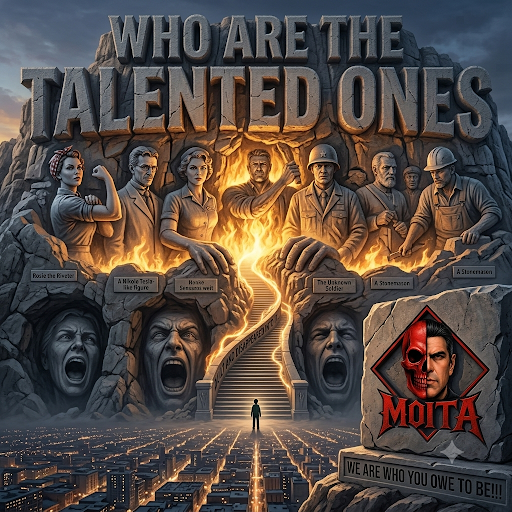
WHO ARE THE TALENTED ONES
CATEGORY
Human Contribution
PRIMARY EMOTION
Purpose
ALSO FITS
Strength
Humility
Respect
Gratitude
WHAT THIS SONG IS ABOUT
Who are the talented ones?
Most people answer that question by naming someone famous.
They think about singers, actors, athletes, inventors, business leaders, or people whose names have been repeated so many times that the world already knows their accomplishments.
I wanted to look somewhere else.
I wanted to look at the people whose names were never recorded.
The workers who built roads, bridges, homes, railways, cities, machines, hospitals, schools, farms, and everything else society depends on.
The thinkers who spent years chasing ideas that other people laughed at.
The inventors who were called foolish before their ideas became normal.
The musicians and writers who created something powerful without ever standing on a major stage.
The people who contributed to the world and still managed to remain humble.
This song is for them.
It is not meant to take anything away from successful or famous people. Many of them have worked extremely hard and deserve recognition.
The question is whether fame should be the only way we measure talent.
I do not believe it should.
Some of the most talented people who ever lived may have completed their work, helped their communities, raised their families, shared their knowledge, and died without the world ever learning their names.
Their work remained.
Their names disappeared.
That does not make their contribution smaller.
In many ways, it makes their humility even greater.
THE STORY BEHIND THE SONG
I have spent most of my life around people who knew how to build things.
I worked in construction, landscaping, trucking, railroads, and around heavy equipment. I have seen what human beings can create with their hands, their minds, and years of experience.
I have watched people look at bare ground and see a finished road before the first machine ever moved.
I have watched operators shape land with a level of control that most people would never understand unless they sat beside them.
I have seen mechanics listen to a machine for a few seconds and know what was wrong.
I have seen workers solve problems without computers, instructions, applause, or anyone standing nearby to congratulate them.
When the job was finished, people drove over the road, entered the building, used the system, or enjoyed the finished property without ever wondering who made it possible.
That is part of where this song came from.
There is talent everywhere, but we have trained ourselves to notice only the talent that is placed in front of us.
We notice the person standing on the stage.
We do not always notice the people who designed the stage, built it, wired it, transported it, tested it, cleaned it, and made certain it was safe.
We notice the completed invention.
We do not see the years of failure that came before it.
We notice the song that becomes famous.
We do not hear the thousands of songs written by people who never received the opportunity to be heard.
I started thinking about all the people who changed the world without becoming part of its public history.
Some contributed through physical labour.
Some contributed through science.
Some contributed through engineering.
Some contributed through medicine, music, writing, farming, teaching, caregiving, or simply passing valuable knowledge to another person.
Many of them never asked for a monument.
They did what needed to be done and moved forward.
That humility deserves respect.
WHY I WROTE THIS SONG
I wrote this song because talent has become too closely connected to attention.
People sometimes assume that the person receiving the most applause must be the most talented person in the room.
Life has taught me otherwise.
Some people are extremely good at being seen.
Other people are extremely good at doing the work.
Those are not always the same people.
I wanted to write something that praised contribution rather than popularity.
I wanted the construction worker to hear it.
I wanted the inventor working alone to hear it.
I wanted the person writing songs in a room with no audience to hear it.
I wanted the teacher who changed one student’s life to hear it.
I wanted the mechanic, farmer, nurse, caregiver, engineer, artist, scientist, labourer, and quiet problem-solver to hear it.
I wanted people who have spent their lives giving something useful to the world to know that their value does not depend on whether anyone placed their name on a wall.
There is also something personal inside this song.
I have always respected the ability to create, repair, improve, and solve problems.
Long before MOITA existed, I was taking things apart, building tools, experimenting with equipment, and asking whether something could be done differently.
I did not always have formal education behind me.
A great deal of what I learned came from curiosity, work, mistakes, observation, and refusing to stop thinking.
That taught me something important.
Talent does not always arrive with a certificate.
It does not always speak perfectly.
It does not always come from the expected place.
Sometimes it is standing beside you covered in dirt, grease, dust, or sweat.
Sometimes it is sitting quietly in a room filled with people who never think to ask what that person knows.
WHY THIS MATTERS TO ME
Respect matters to me.
I know what it feels like when people judge intelligence or ability by education, appearance, position, or the way someone speaks.
I also know how much knowledge can exist inside people who are rarely asked for their opinion.
A person can have limited schooling and still understand machinery, land, construction, people, business, survival, and creativity at an extraordinary level.
A person can struggle to explain an idea and still be capable of creating something brilliant.
A person can remain unknown and still leave the world better than they found it.
That is why this song does not ask, “Who are the famous ones?”
It asks, “Who are the talented ones?”
There is a difference.
The talented ones are not one group.
They are not one profession.
They are not one generation.
They are not one level of society.
They are the people who gave something meaningful.
They are the people who solved a problem.
They are the people who created opportunities for others.
They are the people who used what they had and left something useful behind.
The greatest part is that many of them remained humble.
They did not need to remind everyone of what they had done.
Their work spoke for them.
WHY THIS SONG FITS MOITA
MOITA exists because I believe creativity and human experience deserve to be preserved.
This song fits MOITA because it looks beyond appearances and asks people to reconsider how they measure worth.
That question appears throughout my writing.
Who gets noticed?
Who gets ignored?
Who receives credit?
Who does the work?
Who decides what talent looks like?
MOITA is also built from the belief that creativity belongs to the person directing the tools.
Whether someone is holding a hammer, operating a machine, writing a lyric, designing a bridge, repairing an engine, or using new technology, the tool does not create the purpose.
The human being does.
“WHO ARE THE TALENTED ONES” celebrates that human ability.
It praises people without pretending they were perfect.
It respects success without worshipping fame.
It honours the people whose names we know and the millions whose names we never will.
Most importantly, it reminds us that contribution does not disappear simply because recognition never arrived.
READ THIS FIRST
Before reading the lyrics, think about the world around you.
Think about the road beneath your vehicle.
Think about the building you are standing in.
Think about the electricity, water, machinery, medicine, music, knowledge, and technology you use every day.
Someone imagined those things.
Someone designed them.
Someone built them.
Someone repaired them.
Someone improved them.
Someone taught the next person how to continue.
You may never know their names.
That does not mean they were not talented.
It may mean their talent became so deeply woven into everyday life that we stopped noticing it.
This song asks us to notice again.
FULL LYRICS
WHO ARE THE TALENTED ONES
Who are the talented ones
The ones you see
Or the ones who built everything
and disappeared into it
Hands worn down, carrying the load
Turning dirt into living roads
No one there to say their name
Still the world stands on what they made
Brick by brick, they shaped the days
Lit the dark in quiet ways
No reward, no need to show
Just did the work, and let it go
No applause
Still they gave it all
WHO ARE THE TALENTED ONES?!
WE ARE! WE ARE!
THE ONES WHO GAVE — AND LET IT GO!
LET IT GO! LET IT GO!
THE ONES WHO BUILT — YOU’LL NEVER KNOW!
NEVER KNOW! NEVER KNOW!
WE ARE THE FIRE — YOU NEVER SAW!
WE ARE THE HANDS — WITHOUT APPLAUSE!
WE ARE THE VOICES — NEVER HEARD!
BUT WE CHANGED EVERYTHING — WITHOUT A WORD!!!
Locked away with a restless mind
Chasing truths no one could find
They questioned things we passed on by
Saw the future before our eyes
Called insane for what they’d say
Still we live it all today
Every answer we hold tight
Started as their lonely fight
They stood alone
So we could know
WHO ARE THE TALENTED ONES?!
WE ARE! WE ARE!
THE ONES WHO GAVE — AND LET IT GO!
LET IT GO! LET IT GO!
THE ONES WHO BUILT — YOU’LL NEVER KNOW!
NEVER KNOW! NEVER KNOW!
WE ARE THE FIRE — YOU NEVER SAW!
WE ARE THE HANDS — WITHOUT APPLAUSE!
WE ARE THE VOICES — NEVER HEARD!
BUT WE CHANGED EVERYTHING — WITHOUT A WORD!!!
A broken voice, a bleeding string
Turning pain into everything
Words that hit where nothing could
Making silence understood
No big stage, no spotlight glow
Still their truth began to grow
One small line, one simple tone
Can make a soul feel less alone
Not every giver gets seen
Not every change is known
But every spark they left behind
IS LIVING IN OUR BONES!!!
WHO ARE THE TALENTED ONES?!
HEY! — HEY! — HEY!
NOT THE NAMES YOU ALWAYS SEE!
HEY! — HEY! — HEY!
THE ONES WHO BUILT — AND WALKED AWAY!
HEY! — HEY! — HEY!
LEFT IT ALL — FOR US TODAY!!!
WE DON’T NEED — TO BE KNOWN!
WE DON’T NEED — A NAME IN STONE!
WE DON’T NEED — THE WORLD TO SEE!
WE ARE WHO — YOU OWE TO BE!!!
WHO ARE THE TALENTED ONES?!
WE ARE! WE ARE!
THE ONES WHO GAVE — AND LET IT GO!
LET IT GO! LET IT GO!
THE ONES WHO BUILT — YOU’LL NEVER KNOW!
NEVER KNOW! NEVER KNOW!
WE ARE THE FIRE — YOU NEVER SAW!
WE ARE THE HANDS — WITHOUT APPLAUSE!
WE ARE THE VOICES — NEVER HEARD!
BUT WE CHANGED EVERYTHING — WITHOUT A WORD!!!
So next time you ask
Who are the talented ones
Look around
SECTION ONE
LYRIC JOURNEY
PART 1
Every song begins somewhere.
Some begin with an answer.
Some begin with a memory.
This one begins with a question.
Not because I already knew the answer, but because I wanted all of us to stop for a moment and think about something we rarely question.
Who are the talented ones?
That question sounds simple until you honestly ask yourself how you would answer it.
Most of us have been taught the answer without even realizing it. We think about people whose names we already know. We think about celebrities, famous musicians, athletes, inventors, successful business leaders, people who appear in documentaries, magazines, history books, and television interviews.
We naturally think about the people everyone else points toward.
But the song immediately interrupts that way of thinking.
“Who are the talented ones
The ones you see
Or the ones who built everything
and disappeared into it”
Those opening lines are not attacking success or fame.
There is nothing wrong with either one.
Many well-known people earned every bit of recognition they received.
The question is much deeper than that.
What happens to the people who never became famous?
What happens to the people whose work became so successful that nobody even thinks about the people who created it anymore?
That thought has stayed with me for years.
I have spent my life around construction sites, heavy equipment, trucking, railroads, machinery, landscaping, and people whose intelligence rarely appeared in newspapers. Some of the smartest people I have ever met wore work boots instead of suits. Some could solve problems that would leave highly educated people completely lost.
Yet outside their own industry, hardly anyone knew who they were.
That always fascinated me.
We often confuse visibility with ability.
They are not the same thing.
Someone can be seen by millions and possess incredible talent.
Someone else can possess the same level of talent and remain almost completely unknown.
The song asks us to consider both people before deciding who deserves the title.
The words “built everything and disappeared into it” became one of the foundations of the entire song because they describe something that happens all around us every day.
Think about the room you are sitting in.
Someone designed it.
Someone measured it.
Someone poured the concrete beneath it.
Someone framed the walls.
Someone installed the wiring.
Someone connected the plumbing.
Someone manufactured every tool used to build it.
Someone designed the machines that produced the materials.
Someone transported everything to the site.
Most of those people will remain completely unknown to you.
Yet they are part of your everyday life.
Their work surrounds you.
Their names do not.
That is what it means to disappear into what you created.
You become invisible while your contribution continues living.
The song does not ask us to feel sorry for those people.
Many of them would not want sympathy.
It asks us to respect them.
That is something entirely different.
“Hands worn down, carrying the load
Turning dirt into living roads”
Now the song leaves the question behind for a moment and gives us our first real picture.
Hands.
Not faces.
Not awards.
Not titles.
Hands.
There is something honest about hands because they cannot pretend.
They tell stories without speaking.
A person’s hands often reveal years of work, years of learning, years of mistakes, years of solving problems.
I have always admired skilled hands.
Hands that know exactly how much pressure to apply.
Hands that can operate a machine with unbelievable precision.
Hands that can repair an engine simply by understanding what they are hearing.
Hands that have learned through experience instead of theory alone.
There is intelligence inside those hands.
Not because the hands think.
Because the mind behind them has spent years teaching them what to do.
The line about turning dirt into living roads comes directly from the world I know.
Most people drive on a finished road.
Very few people ever witness the thousands of decisions that happen before the first vehicle drives across it.
A road begins as an idea.
Then comes surveying.
Planning.
Drainage.
Earthmoving.
Grading.
Compaction.
Material selection.
Weather.
Safety.
Adjustment after adjustment after adjustment.
The finished road almost looks inevitable.
It is anything but inevitable.
It exists because people with knowledge turned bare ground into something that connects entire communities.
That is talent.
Not because somebody applauded it.
Because somebody knew how to do it.
“No one there to say their name
Still the world stands on what they made”
These lines quietly shift the emotion.
The first images celebrated the work itself.
Now we recognize something else.
Recognition never arrived.
History remembers a few names.
Life was built by millions.
Entire neighbourhoods exist because unknown crews spent months or years creating them.
Hospitals save lives because countless workers built them correctly.
Bridges hold because thousands of careful decisions were made before anyone drove across them.
Most of the people responsible have already gone home.
Many have already passed away.
Yet every day we continue trusting what they left behind.
There is something beautiful about that.
A contribution does not stop mattering because people forgot who made it.
Sometimes the greatest compliment is that the work became so dependable nobody even notices it anymore.
Think about electricity.
Water.
Sewage systems.
Railroads.
Communication networks.
The buildings where children learn.
The hospitals where lives are saved.
The farms that feed entire countries.
None of these exist because of one famous individual.
They exist because generation after generation contributed another piece.
Most of those pieces were placed by people the rest of us will never know.
The song wants us to notice them.
Not out of guilt.
Out of gratitude.
“Brick by brick, they shaped the days
Lit the dark in quiet ways”
These lines broaden the picture.
The song is no longer only talking about physical construction.
It is talking about civilization itself.
Almost nothing important arrives fully formed.
A city grows one building at a time.
Knowledge grows one discovery at a time.
Families grow one generation at a time.
Trust grows one conversation at a time.
Character grows one decision at a time.
Everything meaningful is built gradually.
Brick by brick.
That is one reason I love that image.
It reminds us that greatness is usually much slower than people imagine.
We celebrate the finished building.
We forget the years that came before it.
We celebrate the successful company.
We forget the failures.
We celebrate the finished song.
We forget the years spent learning how to write one honest line.
The people in this song understood something important.
Real contribution rarely happens overnight.
It happens through consistency.
Through showing up.
Through continuing.
Through doing good work even when nobody is paying attention.
Then comes one of my favourite thoughts in the verse.
“Lit the dark in quiet ways.”
Not everyone changes the world by making headlines.
Some change it by solving one problem.
Some by teaching one child.
Some by comforting one frightened person.
Some by fixing one machine that allows hundreds of other people to continue working.
Some by writing one sentence that stays with another human being for the rest of their life.
Light does not always arrive dramatically.
Sometimes it arrives quietly.
Sometimes the quiet lights last the longest.
“No reward, no need to show
Just did the work, and let it go”
These lines are not saying appreciation is unnecessary.
People deserve appreciation.
They deserve respect.
Honest work deserves recognition.
What these lines admire is something different.
Purpose.
There are people whose greatest satisfaction comes from knowing the work was done properly.
Once it is finished, they move to the next challenge.
They are not constantly looking backward asking whether enough people noticed them.
The work itself mattered.
That kind of attitude has always earned my respect.
I have met people like that throughout my life.
They never introduced themselves by listing accomplishments.
They simply knew what they were doing.
When a problem appeared, they solved it.
When the solution was finished, they carried on.
There is confidence inside that kind of humility.
Not insecurity.
Not arrogance.
Just quiet confidence.
That may be one of the purest forms of talent there is.
The verse now reaches its natural resting place.
The work has been done.
The builders have stepped back.
The roads remain.
The buildings remain.
The ideas remain.
The contribution remains.
The people quietly continue with their lives.
The song slows down with them.
“No applause
Still they gave it all”
Those two short lines carry enormous weight because they summarize everything we have just walked through.
No audience.
No celebration.
No headlines.
Still they gave everything they had.
That is where the first part of the journey naturally comes to rest.
The song has introduced its question.
It has shown us the builders.
It has shown us the quiet contributors.
Now it is ready to answer its own question for the very first time.
That answer begins with the chorus.
SECTION ONE
LYRIC JOURNEY
PART 2
The silence after those two lines is important.
“No applause.
Still they gave it all.”
The song has earned that pause.
Not because it wants to be dramatic, but because those words describe millions of lives.
Think about how much of human history has been carried forward by people who never expected anyone to clap for them.
Parents who worked long hours so their children could have opportunities they never had.
Teachers who stayed after school to help one struggling student.
Nurses who finished exhausting shifts and returned the next day.
Tradespeople who repaired something in the middle of the night because other people depended on it.
Farmers who worked through weather they could not control.
Volunteers who quietly gave their time because someone needed help.
Most of those moments happened without applause.
They still mattered.
That is why these two lines are so important.
They remind us that recognition and value are not the same thing.
The absence of applause has never meant the absence of purpose.
Then the song explodes.
“WHO ARE THE TALENTED ONES?!
WE ARE! WE ARE!”
That answer surprises people.
You might expect the song to begin naming famous inventors, respected scientists, brilliant artists or historical figures.
Instead, it says something much bigger.
“We are.”
That is not arrogance.
It is inclusion.
The song refuses to leave talent sitting on a pedestal.
Instead, it brings it back down into everyday life where it has always belonged.
For a long time, many people have believed talent belongs to a special group.
The gifted.
The chosen.
The exceptional few.
I have never looked at it that way.
Yes, some people possess extraordinary abilities that most of us will never have.
History proves that.
But contribution is much wider than exceptional ability.
Every person has the potential to contribute something meaningful.
The mechanic who keeps emergency vehicles running contributes.
The caregiver who stays beside someone during the hardest days of their life contributes.
The songwriter who writes one lyric that helps another person survive contributes.
The neighbour who quietly checks on an elderly couple contributes.
The worker who notices a safety problem before someone gets hurt contributes.
The chorus gives those people a voice.
It says they belong inside the definition too.
“The ones who gave and let it go.”
The song returns immediately to the idea that giving is more important than being remembered.
That line has become more meaningful to me the longer I have lived.
When we are younger, many of us naturally dream about recognition.
We imagine success.
We imagine achievement.
We imagine hearing people say our name.
There is nothing wrong with those dreams.
But life slowly teaches another lesson.
The work itself begins to matter more.
If something you created continues helping people years after you are gone, that is a remarkable legacy.
Whether people remember your name becomes a much smaller question.
The bridge still carries traffic.
The song still comforts someone.
The lesson still guides another generation.
The machine still solves the problem it was designed to solve.
The contribution keeps living.
That is what matters.
“The ones who built you’ll never know.”
There is sadness inside that line.
There is also gratitude.
Every generation inherits knowledge from people whose names have disappeared.
We speak languages we did not invent.
We use mathematical systems developed centuries before we arrived.
We benefit from medicine created through generations of research.
We drive on roads built by crews we will never meet.
We live inside communities shaped by thousands of unknown decisions.
The song reminds us that history is much larger than the names printed in books.
Most progress happened because ordinary people kept doing extraordinary work.
“WE ARE THE FIRE YOU NEVER SAW!”
Fire is one of the oldest symbols of human determination.
A fire can begin quietly.
At first it is almost invisible.
Only a small spark.
Given enough time, it becomes impossible to ignore.
Ideas work that way.
So does creativity.
So does determination.
Many important contributions begin long before anyone notices them.
Someone spends years learning a trade.
Someone writes hundreds of songs before anyone hears one.
Someone experiments with a design that fails over and over again.
Someone keeps asking questions that everybody else has stopped asking.
From the outside nothing appears to be happening.
Inside, the fire keeps burning.
The world usually notices only after the result appears.
It rarely witnesses the years that produced it.
That unseen fire deserves recognition too.
“WE ARE THE HANDS WITHOUT APPLAUSE!”
The song returns to hands because they have become the symbol of contribution.
Hands build.
Hands repair.
Hands create.
Hands comfort.
Hands guide.
Hands teach.
Hands rescue.
Hands hold.
Hands write.
Hands plant.
Hands lift.
Hands protect.
The longer I worked around skilled trades, the more respect I developed for people whose hands had learned something extraordinary.
A great operator can almost feel the machine become an extension of the body.
A great carpenter can see finished work inside rough material.
A great mechanic hears sounds other people cannot hear.
A great musician can communicate emotion without saying a single word.
Hands tell us what years of experience have accomplished.
This chorus gives those hands the recognition they may never have received.
Not because they demanded it.
Because they earned it.
“WE ARE THE VOICES NEVER HEARD!”
This line moves away from physical work and into another kind of contribution.
Some people are unheard because nobody gave them an opportunity.
Others because they lived before society was ready to understand them.
Others because they doubted themselves.
Others because they simply lacked the connections that open doors.
Being unheard does not mean having nothing worth saying.
History reminds us of that repeatedly.
Many important ideas were ignored before they were accepted.
Many artists were appreciated only after they died.
Many writers filled notebooks that nobody read until years later.
Even outside history, ordinary life shows us the same thing.
Some of the wisest people speak quietly.
Some of the most thoughtful people are rarely the loudest voice in the room.
Sometimes the world misses remarkable people simply because it never stopped long enough to listen.
That thought has always stayed with me.
“BUT WE CHANGED EVERYTHING WITHOUT A WORD!!!”
At first that sounds impossible.
How can someone change everything without saying anything?
The answer has been unfolding since the opening line.
By building.
By creating.
By repairing.
By teaching.
By discovering.
By helping.
Action speaks long after words disappear.
A bridge does not need to introduce itself.
A hospital does not announce the names of every worker who built it.
A road does not explain how difficult it was to construct.
The contribution speaks on behalf of the people who made it possible.
That is one of the strongest ideas in the entire song.
Words matter.
Songs matter.
Ideas matter.
But eventually they must become action.
Action is where contribution becomes real.
The chorus ends with tremendous energy, but the story does not stay there.
It could have.
Many songs would simply repeat that emotional high.
Instead, this song immediately changes direction.
It leaves the builders behind for a moment and turns toward another group of people whose contributions are often misunderstood.
The restless thinkers.
The people who saw possibilities before the rest of the world was ready to see them.
That next journey begins with one simple image.
“Locked away with a restless mind.”
SECTION ONE
LYRIC JOURNEY
PART 3
The energy of the chorus fades, and the song changes direction.
It is no longer standing among roads, buildings, machinery and skilled hands.
Now it walks into a much quieter place.
“Locked away with a restless mind”
There are different ways to understand those words.
Some people will picture someone sitting alone in a room.
Others may think of an inventor surrounded by notebooks and unfinished ideas.
Some may think about a scientist working long after everyone else has gone home.
Some may think about an artist who cannot stop creating.
For me, those words also carry something personal.
There were years of my life when I was physically isolated. During that time, my body was confined, but my mind refused to stop moving. Questions kept coming. Songs kept coming. Ideas kept coming.
That taught me something I never forgot.
You can confine a person.
You cannot always confine curiosity.
A restless mind is both a gift and a burden.
People often admire creativity when they see the finished result.
They rarely see what it feels like to live with it.
A restless mind does not always know how to switch off.
It notices details other people pass by.
It asks questions that refuse to disappear.
It keeps turning ideas over from different angles, searching for something that feels true.
Sometimes that is exciting.
Sometimes it is exhausting.
Sometimes it keeps you awake when everyone else is sleeping.
The song honours that kind of mind because history has always moved forward through people who refused to stop asking questions.
“Chasing truths no one could find”
The choice of the word “chasing” matters.
Truth is not always waiting in plain sight.
Sometimes it hides behind years of failure.
Sometimes it survives inside questions that everyone else has stopped asking.
Every meaningful discovery begins with uncertainty.
Nobody begins with proof.
They begin with curiosity.
A question becomes another question.
A mistake leads to another attempt.
An unexpected result opens an entirely new direction.
That process is rarely glamorous.
It usually looks like failure from the outside.
People see someone trying the same thing again and again.
They wonder why that person does not simply give up.
What they cannot see is that each attempt removes another wrong answer.
Every failure teaches something.
Every correction brings the person a little closer.
That is true whether someone is building a bridge, repairing an engine, writing music, studying medicine or trying to understand human behaviour.
Progress rarely arrives in one dramatic moment.
It arrives one lesson at a time.
“They questioned things we passed on by”
That line may be one of the most important in the entire song.
Human beings become comfortable with familiarity.
If something has always been done a certain way, most people naturally assume it should continue that way.
There is comfort in routine.
There is safety in agreement.
Then someone comes along and asks a simple question.
Why?
Sometimes that one word changes history.
Why does this machine work that way?
Why do we accept this as normal?
Why can’t it be improved?
Why are we solving the problem this way instead of another way?
Innovation begins with questions.
Not with answers.
The people celebrated in this verse were willing to question things other people accepted without thinking.
That willingness often came at a price.
People who question accepted ideas are not always welcomed.
Sometimes they are ignored.
Sometimes they are laughed at.
Sometimes they are treated as though they are creating problems instead of solving them.
History has repeated that pattern countless times.
The interesting part is that later generations often celebrate the very ideas earlier generations rejected.
“Saw the future before our eyes”
I like this line because it reminds us that the future always begins in somebody’s imagination.
Before there was an airplane, somebody imagined flying.
Before there was electricity in every home, somebody imagined a different world.
Before modern communication existed, somebody imagined speaking across impossible distances.
Before every invention, every discovery and every improvement, someone first had to picture something that did not yet exist.
That takes imagination.
It also takes courage.
Seeing possibilities is one thing.
Believing in them long enough to pursue them is something else entirely.
People often assume visionaries possess certainty.
Most of the time they do not.
They possess belief.
They believe enough to keep moving while everyone else is still uncertain.
That may be one of the loneliest journeys a person can take.
“Called insane for what they’d say”
History has a habit of judging new ideas twice.
The first judgment often comes from fear.
The second comes from hindsight.
Many ideas that seem obvious today once sounded ridiculous.
Not every rejected idea becomes true.
Many deserve rejection.
The song is not saying every unusual thought should automatically be accepted.
It is saying we should be careful before dismissing people simply because they see the world differently.
Some individuals were mocked because they challenged accepted thinking.
Some were ignored because their ideas threatened powerful interests.
Some simply lived too early.
The world caught up after they were gone.
That has happened often enough throughout history to remind us of something important.
Humility should exist on both sides.
The person presenting a new idea should remain open to being wrong.
The people listening should remain open to the possibility that something valuable is standing in front of them.
“Still we live it all today”
Those words quietly shift us into the present.
The verse has been speaking about people from the past.
Now it reminds us that their work never really stayed in the past.
We are living inside it.
Every day we use ideas that somebody else fought to prove.
We benefit from discoveries we did not make.
We rely on systems built by people we will never meet.
We inherit knowledge the same way previous generations inherited it before us.
That realization should create gratitude.
It should also create responsibility.
If earlier generations gave something to us, what are we giving to the people who come after us?
That question sits underneath this entire song.
It is never asked directly.
It quietly follows us through every verse.
“Every answer we hold tight
Started as their lonely fight”
Those lines slow the song down again.
Knowledge often feels permanent once it becomes accepted.
We read a fact in a book.
We learn a scientific principle.
We use a piece of technology.
Everything appears settled.
What we rarely see is the struggle that came first.
Somebody spent years searching.
Somebody doubted themselves.
Somebody risked failure.
Somebody continued working while everyone else had already decided the answer could not exist.
When we inherit the final answer, we inherit none of that uncertainty.
The song reminds us not to forget it.
Knowledge is expensive.
Not because books cost money.
Because generations of human beings spent their lives searching for it.
“They stood alone
So we could know”
The second pre-chorus is beautifully simple.
It does not need many words.
Some truths become stronger when they are spoken quietly.
Many of the people who moved humanity forward stood alone long before anyone stood beside them.
Some never lived long enough to see the world agree.
Some died believing they had failed.
Yet their work survived.
Their ideas survived.
Their courage survived.
That is another kind of contribution.
Sometimes you plant a tree knowing someone else will enjoy its shade.
Sometimes you begin a journey knowing someone else will reach the destination.
There is incredible generosity inside that way of living.
The song lets those words settle before the chorus returns.
When the chorus comes back now, it no longer means exactly what it meant the first time.
Earlier, it honoured the builders.
Now it also carries the thinkers.
The inventors.
The questioners.
The people willing to stand alone long enough for the rest of us to eventually stand together.
The journey has grown.
So has the meaning of the chorus.
SECTION ONE
LYRIC JOURNEY
PART 4
The chorus returns.
The words have not changed.
We have.
The first time we heard it, we were standing beside the builders. We were looking at worn hands, roads, bricks, and quiet lives spent creating things that would outlast the people who made them.
Now we have walked beside another kind of contributor.
The thinkers.
The people who questioned accepted ideas.
The restless minds that kept searching while everyone else believed there was nothing left to discover.
That changes the chorus.
When it says,
“WHO ARE THE TALENTED ONES?
WE ARE! WE ARE!”
it is no longer speaking only for the people who build with their hands.
It is also speaking for those who build with ideas.
The engineer who solves a problem nobody else could solve.
The scientist who spends years trying to understand one question.
The inventor who refuses to stop improving something.
The teacher who finds a better way to reach a student.
The person who quietly keeps thinking because they believe tomorrow can become better than today.
The chorus has become wider.
It now includes everyone who contributes something meaningful.
“The ones who gave and let it go.”
Those words feel different now as well.
Earlier they reminded us of workers whose projects remained long after they had moved on.
Now they also belong to thinkers whose ideas became so ordinary that people forgot where they came from.
That happens constantly.
We use inventions without wondering who first imagined them.
We speak words without asking who preserved the language.
We enjoy discoveries without remembering the people who spent years failing before finally succeeding.
Their contribution became part of ordinary life.
That is one of the greatest compliments a contribution can receive.
It no longer feels extraordinary because it has become essential.
“The ones who built you’ll never know.”
The word “built” has expanded too.
Building is no longer only physical.
A person can build knowledge.
A person can build confidence.
A person can build opportunity.
A person can build hope.
A person can build an idea that changes how millions of people think.
Some of the strongest things ever built cannot be touched.
Trust.
Character.
Wisdom.
Understanding.
The chorus quietly reminds us that building takes many forms.
Then the song moves somewhere unexpected.
After celebrating physical workers and visionary thinkers, it turns toward another group whose contribution is often impossible to measure.
Artists.
Songwriters.
Musicians.
Storytellers.
“A broken voice, a bleeding string”
Those two images immediately change the atmosphere.
The road becomes a guitar string.
The machine becomes a human voice.
The song is telling us that creativity is another form of construction.
An artist builds something too.
Not from concrete or steel.
From emotion.
The broken voice does not mean weakness.
Sometimes the voices that move us the most are not technically perfect.
They carry experience.
They carry pain.
They carry truth.
There are singers whose imperfections make every word believable because you can hear life inside them.
The same is true of people speaking about their own experiences.
Perfection is not always what reaches another human being.
Honesty usually reaches much deeper.
The bleeding string continues that idea.
Anyone who has spent years playing an instrument understands that music asks something from you.
It asks for time.
Patience.
Practice.
Failure.
Frustration.
You play badly before you play well.
You write weak songs before you write strong ones.
You keep going because something inside refuses to stop.
That is another kind of talent.
Not simply the ability to perform.
The willingness to continue.
“Turning pain into everything”
That may be one of the most personal lines in the song.
Pain by itself teaches very little.
Everyone experiences pain.
The question is what happens next.
Some people become bitter.
Some give up.
Some hide.
Others slowly transform that pain into something useful.
A song.
A book.
A conversation.
A lesson.
A new way of helping someone else.
That transformation has always fascinated me.
Some of the greatest music ever written came from people trying to make sense of experiences they never wanted to live through.
Not because suffering automatically creates great art.
It does not.
But honest art often comes from people who refused to waste what life taught them.
Pain became purpose.
That is very different.
“Words that hit where nothing could
Making silence understood”
There are moments in life when another person cannot fix what you are feeling.
They cannot explain it.
Sometimes they cannot even understand it.
Then one sentence appears.
One lyric.
One melody.
Suddenly you feel less alone.
Nothing changed outside.
Everything changed inside.
That is one of the reasons music matters so much.
It reaches places ordinary conversation sometimes cannot reach.
A great song does not solve every problem.
It simply reminds someone they are not carrying that problem alone.
Sometimes that is enough.
I have always believed music has the ability to connect strangers who will never meet.
A songwriter writes alone.
A listener hears those words years later in another country.
Yet somehow they understand each other.
That connection is remarkable.
“No big stage, no spotlight glow
Still their truth began to grow”
This song refuses to measure creativity by fame.
That is intentional.
There are incredible musicians performing in small clubs.
Extraordinary painters whose work hangs in nobody’s gallery.
Talented writers whose notebooks never become books.
Inventive people whose ideas remain inside workshops, garages and spare bedrooms.
Opportunity and talent are not the same thing.
History has shown us that repeatedly.
Some creators become famous.
Others never receive that chance.
The value of what they created is not automatically smaller.
Sometimes the world simply never discovered it.
That thought has always stayed with me.
One small audience does not mean one small talent.
Sometimes circumstances decide visibility.
Talent decides quality.
Those are two completely different things.
“One small line, one simple tone
Can make a soul feel less alone”
The song becomes beautifully gentle here.
After speaking about roads, inventions, builders and history, everything comes down to one human being.
One soul.
That reminds us why contribution matters in the first place.
Not because we want recognition.
Because we affect people.
Sometimes one sentence changes somebody’s direction.
One conversation prevents someone from giving up.
One melody reaches someone during the hardest night of their life.
The person who created it may never know.
That does not reduce its value.
In many ways, it increases it.
The gift was given freely.
The listener received it exactly when it was needed.
That is one of the quiet miracles of creativity.
The verse reaches its emotional resting place with another simple truth.
“Not every giver gets seen
Not every change is known”
Those words bring together everything the song has been teaching since the opening question.
Builders.
Thinkers.
Teachers.
Inventors.
Parents.
Artists.
Friends.
Workers.
Caregivers.
Most meaningful contributions happen quietly.
History records only a small percentage of human goodness.
Most kindness disappears into ordinary life.
Most sacrifices are witnessed by very few people.
Most generosity never appears in a newspaper.
Yet the world continues because people keep giving.
The song reminds us that invisibility has never been proof of insignificance.
Sometimes the greatest contributions are the ones that become so deeply woven into everyday life that nobody notices them anymore.
That thought prepares us for one of the strongest lines in the entire song.
“But every spark they left behind
IS LIVING IN OUR BONES!!!”
That is where the next part of our journey begins.
SECTION ONE
LYRIC JOURNEY
PART 5
“But every spark they left behind
IS LIVING IN OUR BONES!!!”
Everything the song has been building toward comes together in these words.
The builders.
The inventors.
The teachers.
The musicians.
The parents.
The thinkers.
The quiet workers.
None of them simply disappeared.
Parts of them remain.
Not only in the roads they built or the songs they wrote.
They remain inside us.
That is what makes this line so powerful.
Human beings do not begin from nothing.
Every generation inherits something from the one before it.
Knowledge.
Skills.
Traditions.
Warnings.
Stories.
Tools.
Values.
Language.
Music.
Ways of solving problems.
We absorb those things so naturally that we rarely stop to ask where they came from.
They become part of us.
That is what the song means when it says their spark is living in our bones.
It is no longer outside us.
It has become part of who we are.
Think about something as ordinary as using a hammer.
Somebody discovered how to shape metal.
Somebody improved the design.
Somebody taught another generation how to use it properly.
Someone passed along techniques that made the work safer and better.
None of that knowledge appeared by accident.
It travelled from one human being to another until it eventually reached us.
The same thing happens with music.
A guitarist learns from another guitarist.
A songwriter is inspired by someone who came before them.
A child hears music long before they understand how it affects them.
Those influences become part of the next generation of creativity.
The spark keeps moving.
That may be one of the greatest forms of immortality any of us can hope for.
Not that people remember our names forever.
That something good continues because we were here.
Then the song gathers every voice together one last time before its final declaration.
“WHO ARE THE TALENTED ONES?!
HEY! HEY! HEY!
NOT THE NAMES YOU ALWAYS SEE!”
That opening shout has changed again.
The first chorus invited us into the conversation.
This chorus challenges us.
It pushes us to look beyond the obvious.
The words are not attacking successful people.
The song has never done that.
It has respected success from beginning to end.
What it questions is our habit of stopping there.
If we only celebrate the names everyone already knows, we overlook millions of people whose contributions were just as necessary.
History often remembers one inventor while forgetting the team beside them.
One performer while overlooking the songwriter.
One architect while forgetting thousands of skilled workers.
One leader while forgetting everyone who carried the responsibility with them.
The song asks us to widen our vision.
Not to replace one group with another.
To see the whole picture.
“The ones who built and walked away”
There is something deeply dignified about these words.
Walking away does not mean the work did not matter.
It means the work was finished.
There are people who complete something remarkable and simply move on to the next challenge.
They do not spend the rest of their lives reminding everyone what they accomplished.
The bridge still stands.
The family still lives in the house.
The student still remembers the lesson.
The patient still benefits from the treatment.
The contribution continues without constant attention from its creator.
That kind of humility deserves admiration.
It reminds us that purpose can exist without ego.
“Left it all for us today”
Those words connect every generation together.
Nothing we enjoy today appeared in isolation.
Someone prepared the ground before we arrived.
Sometimes literally.
Sometimes through ideas.
Sometimes through sacrifice.
We inherited a world that countless people spent centuries building.
Not a perfect world.
There is still much to improve.
But every improvement we make begins with something another person handed to us.
That realization should create gratitude.
It should also create responsibility.
If earlier generations left something for us, what are we leaving behind for those who follow?
Every generation eventually becomes somebody else’s history.
The question is what kind of history we leave.
“WE DON’T NEED TO BE KNOWN!
WE DON’T NEED A NAME IN STONE!”
This may be the most misunderstood idea in the song if someone only reads the words quickly.
The song is not saying people should refuse recognition.
Recognition matters.
Gratitude matters.
Appreciation matters.
What it is saying is something much deeper.
Our contribution should never depend entirely on whether somebody promises to remember us.
Imagine refusing to build a school unless your name appeared on the front.
Imagine refusing to help another person unless everyone knew you had done it.
Imagine refusing to teach because nobody would applaud.
The value disappears when recognition becomes the only reason for contributing.
Some of the greatest people who ever lived probably died believing history would forget them.
Many were right.
History did forget their names.
It did not forget what they gave.
Sometimes the work survives even when the signature disappears.
That is enough.
Sometimes it is more than enough.
“We don’t need the world to see”
Those words bring us back to humility.
There is freedom in no longer depending on constant approval.
When your purpose becomes stronger than your need for attention, something changes inside you.
You still appreciate encouragement.
You still appreciate respect.
But your reason for creating no longer depends on applause.
You continue because the work matters.
You continue because helping matters.
You continue because building matters.
You continue because something inside tells you it is worth doing.
That kind of purpose survives difficult times.
It survives criticism.
It survives disappointment.
It survives being overlooked.
Because it was never built upon attention in the first place.
“We are who you owe to be”
This is probably the boldest line in the entire song.
At first hearing it almost sounds confrontational.
Then the journey explains why it is there.
None of us became who we are entirely by ourselves.
Every one of us carries somebody else’s influence.
Parents.
Teachers.
Friends.
Mentors.
Builders.
Inventors.
Workers.
Artists.
People whose names we remember.
People whose names we never knew.
Every one of them helped shape the world we entered.
The line is not asking us to feel guilty.
It is asking us to remain grateful.
Gratitude is one of the healthiest forms of humility.
It reminds us that independence does not mean isolation.
Every achievement rests on foundations built before we arrived.
The breakdown finishes.
The challenge has been given.
Now the song returns one final time to the chorus.
This time nothing more needs to be explained.
We have travelled with the builders.
We have walked beside the thinkers.
We have listened to the creators.
We have honoured the quiet contributors.
The chorus now carries every one of them together.
Its meaning has reached its fullest expression.
Then, after all the power, all the celebration, all the voices rising together, the song chooses to end with almost a whisper.
“So next time you ask
Who are the talented ones
Look around.”
I could not think of a better ending for this song.
After everything we have explored together, the answer no longer needs to be given.
The song trusts the listener.
It trusts that they will leave with different eyes.
They may notice the person repairing the road.
They may appreciate the nurse a little more.
They may thank the teacher who changed their life.
They may think about the inventor whose name they never learned.
They may hear a local musician and recognize talent that has nothing to do with fame.
They may even begin looking at themselves differently.
That, perhaps, is the greatest hope behind this song.
Not that everyone becomes famous.
Not that everyone receives applause.
But that more people recognize the value of honest contribution.
Talent is not measured only by how brightly someone shines.
Sometimes it is measured by how much light they quietly leave behind for everyone else.
The journey ends where it began.
With one question.
Who are the talented ones?
Now, after walking through the song together, I hope the answer feels much bigger than it did when we first started listening.
“So next time you ask
Who are the talented ones
Look around.”
SECTION TWO
THE STORY
WHO DO WE CALL TALENTED?
The title came from a question that sounds simple until you really think about it.
Who are the talented ones?
Most of the time, society answers that question for us. We are shown the same kinds of people over and over again. Famous singers. Professional athletes. Movie stars. wealthy businesspeople. Inventors whose names survived history. People standing on stages, holding awards, signing autographs, or appearing on television.
Many of those people are talented. I am not questioning that.
What I started questioning was everyone else.
What about the people who built the stage?
What about the person who invented a machine but never received credit for it?
What about the worker who solved a major problem on a jobsite and then went home without anyone outside that crew ever knowing what he had done?
What about the teacher who recognized something special in a child before anyone else could see it?
What about the musician who wrote something powerful but never had the money, connections, or opportunity to place it in front of the world?
What about the person whose talent was used every day but never celebrated?
That is where this song began.
It began with respect.
THE PEOPLE BEHIND EVERYTHING
I have spent most of my working life around construction, landscaping, trucking, railroads, machinery, and people who knew how to make things happen.
When you work around that world long enough, you begin to understand that talent does not always look polished.
Sometimes talent is wearing dirty work boots.
Sometimes it is covered in grease.
Sometimes it is sitting inside a grader, loader, excavator, dozer, skid steer, or truck.
Sometimes it is a person standing in the middle of a jobsite looking at a problem that everyone else thinks is impossible.
Then that person finds a way.
There are operators who can feel the ground through a machine.
There are mechanics who can hear a sound for a few seconds and tell you where the problem is.
There are workers who can look at a set of plans, look at the land, and understand how everything must come together.
There are people who have spent so many years mastering their work that their movements almost look effortless.
But they are not effortless.
What looks easy is often the result of decades of mistakes, corrections, long days, cold mornings, dangerous situations, and lessons that could never be learned from a book alone.
The public usually sees the final result.
They see the road after it is paved.
They see the building after it is finished.
They see the lights come on.
They see the train moving.
They see the water running.
They see the city working.
They do not see every person who made it possible.
That does not mean those people were not important.
It means their contribution became part of the world around us.
THE KNOWLEDGE THAT DOES NOT COME WITH A CERTIFICATE
Education matters.
Training matters.
Books matter.
Schools, universities, and skilled instructors have helped create some of the greatest minds and advances in human history.
But formal education is not the only place where intelligence lives.
I know that personally.
I did not receive the kind of education that makes people automatically assume someone is intelligent. Much of what I learned came through working, watching, questioning, experimenting, making mistakes, taking things apart, building things, and refusing to accept that there was only one way to solve a problem.
I learned by doing.
I learned by failing.
I learned from people who had knowledge in their hands.
Some of the smartest people I have met would never call themselves intellectuals. They might not be comfortable speaking in front of a crowd. They might not know all the technical words for what they understand. They might not be able to write a perfect report explaining how they solved a problem.
But give them the problem and they will solve it.
That is talent.
A certificate can confirm that someone completed a course of study.
It cannot measure every form of imagination, judgment, instinct, courage, patience, or practical knowledge.
Some people understand machines.
Some understand land.
Some understand numbers.
Some understand children.
Some understand animals.
Some understand music.
Some understand pain because they have lived through it.
Some understand how to calm a room when everyone else is losing control.
There are many kinds of intelligence, and society does not always recognize them equally.
This song was written for the ones whose knowledge was real even when no title was placed beside their name.
THE THINKERS WHO STOOD ALONE
The song also moves beyond physical work.
Some talented people built with their hands.
Others built with ideas.
History is filled with people who saw possibilities before the rest of society was ready to see them. Some were mocked. Some were rejected. Some were treated as troublemakers. Some were called foolish, dangerous, unrealistic, or insane.
Years later, the world began using the ideas that once sounded impossible.
That pattern has always interested me.
We often celebrate an idea after it succeeds, but we forget how lonely it can be to believe in something before anyone else does.
The person with the new idea does not have the benefit of proof.
They have imagination.
They have instinct.
They have a question.
They may have years of failure ahead of them.
They may lose money.
They may lose friendships.
They may begin doubting themselves.
They may never live long enough to see whether they were right.
Still, they continue.
That kind of talent requires more than intelligence.
It requires courage.
It takes courage to stand alone while other people laugh.
It takes courage to keep thinking when the easier choice would be to accept what everyone else already believes.
It takes courage to create something that may not be understood during your lifetime.
Some of the comforts and technologies we now take for granted began inside the mind of someone who had no guarantee that the world would ever listen.
THE CREATORS WHO WERE NEVER DISCOVERED
Music brings another side of this story.
The world knows a small number of successful singers, musicians, and songwriters.
Behind them are millions of other creators.
Some may have written one extraordinary song that almost nobody heard.
Some may have had a voice that could move people but never received the right opportunity.
Some may have created their best work inside a bedroom, garage, basement, prison cell, hospital room, or small local bar.
Talent and opportunity are not the same thing.
Talent and success are not the same thing.
Talent and fame are definitely not the same thing.
Success often requires timing, money, connections, confidence, health, location, promotion, and luck. Talent can exist without any of those things.
A person may create something brilliant and still remain unknown.
That truth does not make the work less valuable.
It only means the world did not find it.
I understand that part deeply because I wrote songs for most of my life without having a traditional path into the music industry. The songs still existed. The thoughts were still real. The emotion was still there. The lack of an audience did not erase the work.
That is one of the reasons MOITA means so much to me.
It gives those years a home.
It allows the songs to become part of a larger library instead of remaining hidden in notebooks, recordings, memories, and unfinished plans.
WHO GETS THE CREDIT?
Credit is complicated.
Sometimes the person who receives recognition truly deserves it.
Sometimes a discovery or creation is the result of many people, but history remembers only one name.
Sometimes someone improved an earlier idea.
Sometimes workers completed the difficult labour while someone else stood in front of the cameras.
Sometimes the person who promoted the idea became more famous than the person who created it.
That does not mean every successful person stole something or that recognition is automatically unfair.
It means the full story is usually larger than the name we remember.
A bridge may be connected to an engineer, but thousands of hands may have helped build it.
A medical breakthrough may be connected to a scientist, but laboratories, assistants, patients, technicians, previous researchers, and public funding may all have contributed.
A famous song may be connected to the performer, but songwriters, producers, musicians, engineers, technicians, and countless others helped bring it to life.
Human achievement is often shared achievement.
The danger begins when we forget the people behind the visible person.
This song does not ask us to remove anyone from the spotlight.
It asks us to widen the light.
THE HUMILITY TO LET IT GO
The words “let it go” are important to the song.
They are not about giving up.
They are about people who completed their contribution without demanding that the world keep repeating their name.
They built something.
They taught something.
They created something.
They helped someone.
Then they continued with their lives.
That is a rare kind of humility.
Many people want to be recognized. That is human. Appreciation feels good, especially when someone has worked hard.
There is nothing wrong with being proud of honest work.
The song is not saying that people should refuse credit or pretend their accomplishments do not matter.
It is praising the people who were able to contribute without allowing recognition to become the only reason they contributed.
Their work had purpose even when nobody was watching.
They did not stop being useful because applause was missing.
They did not need their name carved into stone before they were willing to help.
They understood something that is easy to forget.
The value of what we leave behind is not always measured by how clearly our name remains attached to it.
Sometimes the greatest proof is that people are still benefiting from it.
THE PEOPLE WHO HOLD FAMILIES AND COMMUNITIES TOGETHER
Not every talented person builds a machine, writes a song, or invents something.
Some people build human beings.
Parents do it.
Grandparents do it.
Teachers do it.
Coaches do it.
Caregivers do it.
Neighbours do it.
Sometimes one person sees potential in another person when everyone else sees a problem.
They give encouragement at the right moment.
They teach patience.
They share knowledge.
They prevent someone from giving up.
They may never realize how much that moment mattered.
A few honest words can change the direction of a life.
That is a contribution.
There are people who hold families together without anyone calling it talent.
They remember what everyone needs.
They care for the sick.
They raise children.
They protect traditions.
They cook, clean, organize, comfort, forgive, and keep going.
Their work may not produce a monument, but it produces stability.
It produces belonging.
It produces people who are able to go into the world and contribute something of their own.
We often celebrate visible accomplishments while overlooking the invisible work that made those accomplishments possible.
That quiet work belongs in this song too.
TALENT WITHOUT CHARACTER
There is another side to the question.
Talent alone does not make someone admirable.
A person can be brilliant and arrogant.
A person can be gifted and cruel.
A person can create something important while treating others terribly.
That is why humility became such an important part of this song.
I did not want only to praise ability.
I wanted to praise people who contributed and still remained human.
The ones who did not begin believing they were better than everyone else.
The ones who remembered who helped them.
The ones who shared what they knew.
The ones who did not need to make another person feel small so they could feel important.
Talent may get attention.
Character determines what someone does with it.
The people I respect most are not only capable.
They are willing to use that ability for something beyond themselves.
They make the road safer.
They make the machine work better.
They make the patient more comfortable.
They make the student believe.
They make the song say something honest.
They make life a little easier for the person coming behind them.
That is a form of greatness I understand.
WHY THE CHORUS SAYS “WE ARE”
The chorus does not answer the title by naming famous people.
It answers with “we are.”
That was intentional.
This is not supposed to be a song where I stand outside the subject and point toward a small group of heroes.
The song brings everyone into the question.
Talent is not reserved for the chosen few.
Most people have something they can contribute.
They may not have discovered it yet.
They may have been told it was not valuable.
They may be comparing themselves to the wrong people.
They may believe talent must look dramatic before it counts.
It does not.
The ability to solve a problem is talent.
The ability to create trust is talent.
The ability to repair something is talent.
The ability to teach patiently is talent.
The ability to hear what someone is not saying is talent.
The ability to survive something difficult and use that experience to help another person is talent.
The words “we are” give ownership back to ordinary people.
They say that talent is standing on the jobsite.
It is sitting at the kitchen table.
It is working the night shift.
It is caring for a parent.
It is writing inside a room where nobody else can hear the song yet.
It is trying again after failure.
The chorus is not meant as arrogance.
It is recognition.
THE WORLD WE INHERITED
Every generation inherits a world built partly by people whose names it will never know.
We inherit roads, language, tools, farming methods, medical knowledge, music, laws, stories, machines, buildings, traditions, warnings, and lessons.
Some of those inheritances are imperfect.
Some must be improved.
Some must be questioned.
Some should be left behind.
But even improvement begins with something that existed before us.
Very few people create from nothing.
We build on what others discovered.
We correct their mistakes.
We extend their ideas.
We use their tools to create new tools.
That is why the line about what is “living in our bones” matters so much.
The people who came before us are still present in what we know and how we live.
Their names may be gone, but their influence continues.
Every time we use knowledge handed down through generations, part of someone else’s contribution is moving through us.
We are not separate from those people.
We are carrying them forward.
THE RESPONSIBILITY THAT COMES WITH TALENT
There is praise in this song, but there is also responsibility.
If we believe we have something valuable to contribute, what are we doing with it?
Are we using it only to gain attention?
Are we protecting it because we are afraid someone else might succeed?
Are we sharing what we know?
Are we teaching the next person?
Are we improving what was handed to us?
Are we leaving something useful behind?
Talent can disappear when it is never used.
Knowledge can disappear when it is never shared.
A craft can disappear when nobody teaches the next generation.
The people praised in this song gave something.
That is what separates talent from contribution.
Talent is ability.
Contribution is ability put to work for a purpose.
The world does not improve because someone could have done something.
It improves because someone did it.
That is the standard at the centre of this song.
Not fame.
Not image.
Not applause.
Contribution.
A SONG OF RESPECT
At its heart, “WHO ARE THE TALENTED ONES” is a song of respect.
Respect for labour.
Respect for ideas.
Respect for creativity.
Respect for practical knowledge.
Respect for education.
Respect for perseverance.
Respect for the people who work in front of the world and the people who work behind it.
It is also a reminder to look more carefully.
The next talented person may not be standing on a stage.
They may be operating the machine that prepared the ground beneath it.
They may be teaching a child in a classroom.
They may be working alone on an idea that will take years to understand.
They may be repairing something everyone else was ready to throw away.
They may be writing words that one day help a stranger feel less alone.
They may be sitting beside us.
We may have known them for years without ever asking what they can do.
That is the story behind this song.
The talented ones are everywhere.
The world is standing on their work.
It is living through their ideas.
It is moving forward because they contributed.
Many of them never asked us to remember their names.
The least we can do is remember that they existed.
SECTION THREE
LYRIC EXPLORATION
THE QUESTION THAT OPENS THE DOOR
The song begins by asking who the talented ones really are.
It does not begin by giving the answer.
It asks the listener to think about the people they usually notice and compare them with the people who quietly built the world around them.
That opening question is important because most of us have been trained to connect talent with visibility.
We see someone on television, on a stage, on a screen, or receiving an award, and we immediately recognize their ability.
What we do not always see is the talent buried inside everyday life.
We do not see every person who helped design the roads beneath us.
We do not know the names of everyone who helped bring electricity into our homes.
We do not recognize every worker who helped build the hospitals, schools, bridges, railways, machinery, communication systems, and communities that support us.
Their work is visible.
They are not.
That is why the opening speaks about people who built everything and then disappeared into what they created.
They did not literally disappear.
Their contribution became so deeply connected to ordinary life that we stopped noticing there had ever been a person behind it.
THE HANDS THAT CARRY THE WORLD
The first verse begins with worn hands carrying a load.
Those hands represent physical labour, but they also represent sacrifice.
Hands tell a story.
They show years of lifting, repairing, shaping, digging, welding, building, planting, driving, operating, and working through conditions that are not always easy.
A worn hand is evidence.
It shows that something was carried.
Something was built.
Something was completed.
The reference to turning dirt into living roads comes from a world I understand personally.
A road does not begin as a road.
It begins with land.
Someone has to study that land.
Someone has to clear it.
Someone has to shape it.
Someone has to understand drainage, elevation, material, compaction, safety, and how everything will work together.
Then other people arrive and continue the process.
By the time the public sees the finished road, most of the difficult work has already disappeared beneath the surface.
People drive across it without thinking about the hands that made it possible.
That is exactly the point of the verse.
The world stands on work most of us never witnessed.
BRICK BY BRICK
The words about building brick by brick are not only about construction.
They describe the way society itself is created.
Very little that lasts is built in one moment.
Knowledge grows through generations.
Cities grow through years of labour.
Scientific understanding develops through one discovery leading to another.
A song may grow from one line.
A business may begin with one customer.
A life may change because of one decision.
Brick by brick means contribution by contribution.
Each piece may appear small when viewed alone, but together those pieces create something large enough for other people to live inside.
The people praised in this song did not necessarily change the world through one dramatic moment.
Many changed it by continuing to do useful work every day.
They shaped the days quietly.
They brought light into places where it was needed.
Then they moved forward without demanding that everyone stop and admire them.
NO REWARD, NO NEED TO SHOW
The first verse makes an important distinction between receiving no recognition and needing no recognition.
Those are not exactly the same thing.
People deserve appreciation for honest work.
There is nothing wrong with accepting credit.
There is nothing wrong with feeling proud of something you created.
The song is not saying that talented people should hide their accomplishments or allow others to take advantage of them.
It is praising those whose purpose was stronger than their desire for attention.
They did not refuse to contribute simply because nobody promised applause.
They did the work because the work mattered.
They solved the problem because the problem needed solving.
They helped someone because help was needed.
They created something because the idea refused to leave them alone.
Then they let it go.
In this song, letting it go does not mean abandoning responsibility.
It means releasing the need to control how the world remembers you.
NO APPLAUSE
The first pre-chorus is very short.
That gives the words more weight.
There was no applause.
Still, they gave everything they had.
Those two thoughts summarize the entire song.
Applause is usually heard at the end of a performance.
It tells someone that their effort was noticed.
Most of the people who hold society together never receive that moment.
There is no audience waiting when a road is finished.
There is no standing ovation when a mechanic returns a machine to service.
There is no crowd cheering every time a caregiver helps someone through another difficult day.
There is no award ceremony for every parent who sacrifices quietly for a child.
Still, the contribution remains real.
The absence of applause does not erase the value of the work.
THE POWER OF “WE ARE”
The chorus answers the opening question with a declaration.
“We are” is not meant as boasting.
It is meant as recognition.
The song is not selecting a small group of superior people and placing them above everyone else.
It is opening the definition of talent wide enough for ordinary people to see themselves inside it.
The worker can say, “We are.”
The teacher can say, “We are.”
The musician creating without an audience can say, “We are.”
The inventor working through another failed attempt can say, “We are.”
The caregiver, farmer, mechanic, scientist, builder, artist, nurse, driver, parent, and problem-solver can all say, “We are.”
The chorus belongs to anyone who used their ability to contribute something useful.
It turns people who were treated like background figures into the central voice of the song.
THE ONES WHO GAVE AND LET IT GO
This line connects talent with generosity.
The people being honoured did more than possess ability.
They gave something.
That difference matters.
A person may have tremendous talent and never use it for anything beyond personal recognition.
Another person may have a simple ability and use it every day to improve the lives of others.
This song respects the second person.
Contribution is talent placed into motion.
It is ability given a purpose.
Letting it go means the giver did not need to hold the contribution over everyone else.
They did not spend the rest of their life demanding repayment.
They gave something that became part of the world.
The work continued even after they stepped away.
THE ONES YOU WILL NEVER KNOW
There is something both sad and beautiful inside the thought that we may never know who built much of the world around us.
It is sad because many people deserved recognition they never received.
Their names may have been forgotten.
Their ideas may have been credited to someone else.
Their work may have been treated as ordinary when it required extraordinary knowledge.
At the same time, there is something beautiful about a contribution surviving after the individual disappears.
A person may be gone, but the road remains.
The building remains.
The lesson remains.
The invention remains.
The music remains.
The kindness may continue through the person who received it.
That is a different kind of immortality.
It does not require a statue.
It exists wherever the contribution continues helping someone.
THE FIRE YOU NEVER SAW
Fire represents energy, drive, imagination, and the force that keeps a person moving when no one else understands why they continue.
The fire in this song is not a public display.
It is internal.
It burns inside the person working alone.
It burns inside someone who refuses to accept that a problem cannot be solved.
It burns inside the creator who continues writing even when nobody is listening.
It burns inside the worker who takes pride in doing the job correctly, even when the finished work will soon be covered, buried, or taken for granted.
The world may never see that fire.
It only sees what the fire produced.
THE HANDS WITHOUT APPLAUSE
The hands return in the chorus because they are the clearest symbol of human contribution.
Hands build.
Hands repair.
Hands write.
Hands operate.
Hands guide.
Hands comfort.
Hands teach.
Hands can turn an idea into something real.
The song gives those hands the applause they may never have received.
It makes them visible.
It does not ask whether those hands were famous.
It asks what they did.
THE VOICES NEVER HEARD
Not every unheard voice was silent.
Some people spoke, but nobody listened.
Some shared ideas before society was ready.
Some lacked the education, position, money, confidence, or connections needed to place their thoughts in front of the right people.
Some were dismissed because of where they came from, how they spoke, what they looked like, or what kind of work they did.
A person can speak clearly and still remain unheard.
That is something I understand.
People often judge the value of an idea by the person presenting it before they have even considered the idea itself.
They may look at education.
They may look at status.
They may listen for perfect language.
They may decide who is intelligent before that person has been given a real chance to speak.
This song challenges that habit.
A voice does not become worthless because society ignored it.
CHANGING EVERYTHING WITHOUT A WORD
The closing thought of the chorus appears almost impossible at first.
How can someone change everything without a word?
They do it through action.
A road does not have to explain who built it.
A bridge does not have to introduce its workers.
A cure does not have to speak the names of every researcher who helped develop the knowledge behind it.
A song may speak after the songwriter is gone.
A good example can influence another person without ever becoming a public speech.
Action communicates.
Work communicates.
What we leave behind communicates.
Some people spent their lives saying very little about themselves while their contribution spoke loudly for them.
THE RESTLESS MIND
The second verse moves from physical labour into the world of thought.
The worker shaped the physical world.
The restless mind attempts to understand what has not yet been explained.
There are people who cannot leave a question alone.
They continue thinking about it while others move on.
They examine what everyone else accepts.
They challenge an assumption.
They search for an answer that may not exist yet.
That kind of mind can become a difficult place to live.
Curiosity sounds pleasant when described from the outside.
From the inside, it can become relentless.
An idea may follow someone through the day and keep them awake at night.
A problem may remain in their mind for years.
They may sacrifice comfort, money, relationships, or acceptance while trying to understand something other people consider impossible or unimportant.
The verse respects that private struggle.
LOCKED AWAY
The image of being locked away can be understood in more than one way.
It can describe physical isolation.
It can describe someone working alone.
It can describe a mind trapped inside a question.
It can describe a person separated from ordinary society because their thinking is different.
For me, it also carries personal meaning.
I wrote hundreds of songs during long periods of isolation and incarceration.
A person can be physically confined while the mind continues travelling.
It can question.
It can invent.
It can remember.
It can create.
Being locked away does not automatically silence thought.
Sometimes the separation forces the mind to go deeper.
That does not make confinement desirable, but it shows that creativity can survive in places where freedom is limited.
CHASING TRUTHS NO ONE COULD FIND
The word “chasing” matters because truth does not always stand still and wait to be discovered.
Understanding often requires persistence.
One answer creates another question.
One experiment fails.
Another produces an unexpected result.
A person may spend years searching and still finish with only part of the answer.
That does not make the journey worthless.
Many advances were built from incomplete discoveries.
Someone moved the question forward far enough for another person to continue.
The lonely fight of one generation can become the accepted knowledge of the next.
THE PEOPLE WHO SAW TOMORROW
The second verse speaks about people who saw the future before it arrived.
That does not mean they literally predicted every detail.
It means they imagined possibilities that did not yet exist.
Every invention begins that way.
Before something can be built, someone must believe it could exist.
That person sees a possibility where everyone else sees an empty space.
They may imagine faster travel, safer machinery, better communication, new medicine, or a different way of organizing society.
The future begins as an idea that has no physical proof.
That is why new thinkers are often treated with suspicion.
They are describing something other people cannot yet see.
CALLED INSANE
History contains many examples of ideas that were mocked before they became accepted.
The song does not claim that every rejected idea is brilliant.
Many strange ideas are simply wrong.
Questioning society does not automatically make someone a genius.
What the song recognizes is the courage required to present a serious new idea when the evidence is incomplete and the audience is hostile.
Some people were ridiculed because they challenged established beliefs.
Some were ignored because their ideas threatened money, authority, or tradition.
Some were simply too early.
Later generations benefited from the questions those people were willing to ask.
The line is not an excuse for every unsupported claim.
It is a reminder not to dismiss people merely because their thinking is unfamiliar.
THEIR LONELY FIGHT BECAME OUR KNOWLEDGE
The second pre-chorus explains the cost of standing ahead of your time.
They stood alone so others could know.
Knowledge often looks clean after it has been organized into a book.
The struggle that produced it was rarely clean.
There were mistakes.
Arguments.
Failed tests.
Rejected ideas.
Personal sacrifices.
Moments when the person searching had no evidence that the answer would ever arrive.
Later, we inherit the result without experiencing the uncertainty.
We learn the conclusion in a few minutes.
Someone else may have spent a lifetime reaching it.
That deserves humility from us.
THE CREATOR’S WOUND
The third verse moves into music and artistic creation.
The song has already honoured the builders and thinkers.
Now it honours people who transform pain into something another person can understand.
The broken voice is not necessarily a voice that sounds bad.
It is a voice carrying damage, experience, grief, struggle, or truth.
Sometimes a perfectly polished voice cannot reach the same place as one that sounds as though it has lived through what it is singing.
The bleeding string is an image of a musician giving everything to the sound.
It represents emotion passing through an instrument until the music feels alive.
The line is not about injury for the sake of drama.
It is about the cost of honest creation.
TURNING PAIN INTO SOMETHING
Pain by itself does not automatically become art.
It may remain pain.
The creative act begins when someone finds a form for it.
A melody.
A lyric.
A painting.
A story.
A movement.
A sound.
The creator takes something private and gives it a shape that another person can recognize.
That is one of the greatest powers of music.
A person may not be able to explain what they are feeling in conversation.
Then a song expresses it.
The listener hears their own experience inside someone else’s words.
For a few minutes, they are no longer carrying it alone.
MAKING SILENCE UNDERSTOOD
Silence can mean many things.
It can be grief.
Fear.
Shame.
Confusion.
Isolation.
A memory someone cannot describe.
A truth no one wants to hear.
Music can enter that silence and give it language.
The creator may never meet the listener.
They may never know which line mattered.
Still, the connection occurs.
That is another form of contribution that does not require public recognition.
A song does not need millions of listeners to matter.
Sometimes one listener is enough.
NO BIG STAGE
The third verse deliberately removes the stage and the spotlight.
That is where society expects musical talent to exist.
The song points toward creators working far from those places.
There are extraordinary musicians in small rooms.
There are powerful singers performing for a few people.
There are writers filling notebooks that may never be published.
There are people creating because they need to, not because an audience has guaranteed them success.
Their lack of fame does not prove a lack of ability.
Often, it proves only a lack of opportunity.
Talent and discovery are not the same thing.
The world cannot recognize what it never receives the chance to hear.
ONE SMALL LINE
The song reduces artistic impact to one small line or one simple tone.
That is intentional.
Creators sometimes believe they must produce something enormous before their work has value.
But one line can stay with a person for years.
One melody can bring back a memory.
One voice can make someone feel understood.
One sentence can arrive at exactly the right time.
The creator may consider it a small part of the work.
For the person receiving it, it may become the most important part.
Impact is not always measured by size.
MAKING A SOUL FEEL LESS ALONE
This is one of the gentlest thoughts in a song filled with power.
After roads, inventions, labour, ideas, and social change, the song comes down to one human being feeling less alone.
That is also contribution.
Not every talent changes the physical world.
Some change the inner world of another person.
When a song helps someone survive a difficult night, its value cannot be measured only through sales, charts, or awards.
It accomplished something human.
That is one of the reasons I write.
I know what isolation feels like.
I know what pain feels like when other people cannot see it.
When a song reaches someone living through their own private struggle, the distance between two strangers disappears for a moment.
THE SPARK THAT REMAINS
The bridge brings the builders, thinkers, and creators together.
Not every giver is seen.
Not every change is recorded.
But the spark remains.
A spark is small, but it can begin something much larger.
One idea inspires another.
One invention becomes the starting point for a better invention.
One teacher influences a student who later helps thousands of people.
One song encourages another person to begin creating.
One act of courage makes it easier for someone else to speak.
The original giver may never see the full effect.
That does not mean the effect ended.
LIVING IN OUR BONES
The words about a spark living in our bones describe inheritance.
We carry knowledge we did not create.
We use language shaped by generations before us.
We travel on systems built before we were born.
We use tools developed through countless experiments.
We follow lessons passed through families, trades, cultures, books, music, and communities.
The contributions of earlier people become part of how we think and live.
They are no longer outside us.
We have absorbed them.
That is why we owe the past more than simple admiration.
We have a responsibility to use what we inherited wisely and add something valuable for the people coming after us.
NOT THE NAMES YOU ALWAYS SEE
The breakdown turns the central idea into a challenge.
It is loud because the people being honoured were quiet for too long.
The song is not attacking every well-known person.
Recognition and talent can exist together.
Many famous people earned their place through ability, discipline, sacrifice, and hard work.
The problem begins when fame becomes our only proof of talent.
The breakdown asks listeners to look beyond the familiar names.
It asks who else contributed.
Who stood behind the visible success?
Who taught the person we celebrate?
Who developed the earlier knowledge?
Who carried the equipment?
Who built the room?
Who kept the family together while someone else pursued the dream?
The complete story of achievement is almost always larger than one name.
THE ONES WHO BUILT AND WALKED AWAY
Walking away is one of the strongest images in the song.
The work is complete.
The contribution has been made.
The person does not remain beside it demanding attention.
They trust the work to continue without them.
That kind of departure requires confidence.
It says, “I know what I did. I do not need to spend the rest of my life explaining its value.”
There is dignity in that.
There is also sadness because some people walked away only because society never offered them a place to stand.
The same line can honour humility while also making us question how many contributors were unfairly forgotten.
WE DO NOT NEED A NAME IN STONE
A name in stone represents permanent recognition.
Monuments, plaques, statues, buildings, and memorials are ways societies try to preserve certain names.
There is nothing wrong with remembering people who made important contributions.
The line asks whether a monument is necessary before a life can be considered valuable.
It is not.
Most good people will never have their names carved into anything.
Their legacy may exist inside their children.
Inside the people they taught.
Inside the work they completed.
Inside a problem they solved.
Inside a kindness someone never forgot.
Stone is not the only place where a name can survive.
Sometimes the contribution survives even after the name is gone.
WE ARE WHO YOU OWE TO BE
This line can sound confrontational, and it is meant to have some force behind it.
It does not mean every listener owes everything to one particular group.
It means none of us became who we are entirely by ourselves.
We inherited knowledge.
Someone taught us.
Someone built the systems we used.
Someone protected an opportunity.
Someone grew the food.
Someone produced the tools.
Someone offered support at a critical moment.
Even the most independent person depends on contributions made by others.
The line asks us to recognize that debt.
Not as guilt.
As gratitude.
It also places responsibility on us.
If we benefited from what others gave, what will we give in return?
THE FINAL RETURN
When the final chorus returns, the meaning of “we are” has expanded.
At the beginning, the listener may hear it as a powerful chant.
By the end, it carries the workers, thinkers, inventors, creators, teachers, caregivers, families, and quiet contributors introduced throughout the song.
The chorus is now larger than music.
It has become a declaration of human worth.
We are the fire when we continue creating without recognition.
We are the hands when we use our abilities to build something useful.
We are the unheard voices when we carry an idea that deserves a chance.
We become the talented ones when we give something meaningful and do not allow the need for applause to become more important than the contribution itself.
LOOK AROUND
The final words bring everything back to the listener.
The song does not end by providing a list of talented people.
It tells us to look around.
That is where the answer has always been.
Look at the worker beside you.
Look at the person who repairs what everyone else throws away.
Look at the parent holding a family together.
Look at the teacher who refuses to give up on a student.
Look at the quiet person whose ideas are rarely requested.
Look at the creator working without an audience.
Look at the people whose names will never appear in history but whose work allows everyday life to continue.
Then look at yourself.
Ask what ability exists inside you.
Ask whether you are using it.
Ask what you could teach.
Ask what you could improve.
Ask what you might leave behind.
The song praises the talented ones, but it also gives every listener a challenge.
Do not spend your whole life waiting to be discovered.
Contribute something.
Build something.
Teach something.
Create something.
Help someone.
Your name may never be placed in stone.
What you give can still become part of the world.
SECTION FOUR
REFLECTION
One of the easiest mistakes we can make is believing that the people who receive the most attention are automatically the people who have contributed the most.
Life has shown me that simply is not true.
The world is full of extraordinary people whose names will never appear in history books. They will never stand on a stage accepting an award. Their faces will never appear on television. Their photographs will never hang inside museums.
Yet every day we depend on what they left behind.
That realization changes the way you begin looking at people.
Instead of asking, “Who is the most famous?” you begin asking, “Who quietly made life better for someone else?”
That question has far more interesting answers.
When I wrote this song, I wanted to remind myself of something I have believed for a long time.
Every person has the ability to contribute.
Not everyone will invent the next great technology.
Not everyone will become a world-famous musician.
Not everyone will build skyscrapers or discover a medical breakthrough.
But every person has something they can improve.
Every person has knowledge they can pass on.
Every person has experience that might help someone else avoid a mistake.
Every person has the ability to encourage another human being when they need it most.
Sometimes the smallest contribution creates the biggest difference.
A teacher may never know which student remembered one conversation for the rest of their life.
A parent may never realize which lesson shaped the character of their child.
A mechanic may never know how many families safely reached home because a repair was done properly.
A songwriter may never meet the person whose life was changed by one lyric.
None of those contributions become less valuable simply because they happened quietly.
In many ways, quiet contributions are the foundation of civilization.
This song also reminds me that humility and confidence are not enemies.
You can take pride in your work without believing you are more important than everyone else.
You can build something extraordinary without demanding constant recognition.
You can know your own worth while still respecting the worth of others.
That balance is something I admire.
I think our society sometimes encourages people to chase attention instead of excellence.
Attention disappears.
Excellence lasts.
A well-built bridge lasts.
A well-raised child lasts.
An honest lesson lasts.
A meaningful invention lasts.
A thoughtful piece of music lasts.
Character lasts.
The people celebrated in this song understood that.
They focused on the work first.
Recognition, if it came at all, came second.
If there is one thing I hope readers take away from this page, it is this.
Never underestimate your own ability to contribute.
You do not need permission to improve the world around you.
You do not need millions of followers before your work matters.
You do not need fame before your kindness has value.
You do not need applause before your effort deserves respect.
The question is not whether someone notices.
The question is whether what you leave behind makes life better for someone else.
If the answer is yes, your contribution already matters.
Maybe that contribution will be remembered for generations.
Maybe only one person will remember it.
Either way, it mattered.
That is enough.
Thank you for spending your time with me and with this song.
Every time someone reads one of these pages, the conversation continues.
Every question leads to another idea.
Every story becomes another chapter.
Every chapter becomes another reason why MOITA exists.
I hope this song encourages you to look at people a little differently.
I hope it reminds you to appreciate the quiet builders, the quiet thinkers, the quiet creators, and the quiet helpers whose work surrounds us every single day.
Most of all, I hope it reminds you that you may be one of them.
You may never have your name carved into stone.
You may never become famous.
But if your work, your kindness, your ideas, your courage, or your creativity leave the world a little better than you found it, then you have already achieved something extraordinary.
MOITA
WHERE EVERY SONG TELLS A STORY
EVERY STORY TEACHES SOMETHING
SECTION FIVE
MOITA DOCUMENTARY & LEARNING CENTRE
THE MANY FACES OF TALENT
One of the biggest lessons behind this song is that talent has never belonged to one profession, one education level, one country, or one generation.
Talent exists wherever people solve problems.
Sometimes that problem is physical.
Sometimes it is emotional.
Sometimes it is scientific.
Sometimes it is artistic.
Sometimes it is simply helping another human being through one difficult day.
The more you study history, the more you realize that civilization has always depended on people with different abilities working together.
A farmer cannot replace a surgeon.
A surgeon cannot replace an engineer.
An engineer cannot replace a teacher.
A teacher cannot replace a carpenter.
A carpenter cannot replace a scientist.
A scientist cannot replace a parent.
Each depends on the knowledge and contribution of the others.
Real progress has always been a team effort.
THE DIFFERENCE BETWEEN TALENT AND FAME
This song asks an important question that is worth carrying into everyday life.
Are we celebrating talent?
Or are we celebrating visibility?
They are not always the same thing.
Modern life often rewards the people who are seen the most.
History often remembers the people whose names were recorded.
But every discovery, every city, every invention, every bridge, every hospital, every piece of music, every great company, and every community has been built by thousands of people whose names rarely appear anywhere.
When we begin noticing those people, our respect for humanity grows.
THE VALUE OF SKILLED TRADES
Throughout history, skilled trades have quietly shaped civilization.
Without skilled workers there would be no homes, roads, railways, airports, water systems, electrical systems, bridges, factories, schools, hospitals, or public buildings.
These careers require intelligence, planning, mathematics, precision, patience, safety awareness, creativity, and years of practical experience.
Unfortunately, society sometimes places greater value on titles than on ability.
This song reminds us that dignity exists in every honest profession.
Whether someone works behind a desk or behind the controls of heavy equipment, what matters is the quality of the contribution they leave behind.
THE POWER OF PRACTICAL KNOWLEDGE
Not everything important can be learned inside a classroom.
Some lessons are learned through experience.
Some through failure.
Some through observation.
Some through years of solving problems one at a time.
Practical knowledge deserves the same respect as academic knowledge.
The strongest societies combine both.
Education provides theory.
Experience teaches judgment.
When those two work together, remarkable things happen.
THE HISTORY OF HUMAN PROGRESS
Every generation inherits knowledge from the generations before it.
Someone discovered how to grow food.
Someone learned how to shape metal.
Someone understood mathematics.
Someone developed medicine.
Someone improved transportation.
Someone built communication systems.
Someone expanded scientific understanding.
None of us begin from zero.
We all stand on foundations created by people we will never meet.
That reality should inspire gratitude as much as ambition.
THE RESPONSIBILITY OF TALENT
Talent carries responsibility.
If we have knowledge, we should share it.
If we have experience, we should teach it.
If we have creativity, we should use it.
If we have wisdom, we should pass it forward.
The world becomes stronger every time one generation helps prepare the next.
That may become the greatest contribution of all.
RELATED MOITA SONGS
If this song connected with you, you may also enjoy exploring these chapters within the MOITA Library:
- I HAVE THE POWER – Discovering the strength that already exists inside every person.
- I ROCK – A celebration of creativity, imagination, invention, and the human mind.
- THE KNOWING – A lifetime of writing, creating, and believing in ideas long before anyone else saw them.
- WHEN I PLAY MY GUITAR – The deeply personal connection between creativity, music, and emotional expression.
- GIFT – Recognizing that life’s greatest gifts are often experiences, love, family, and memories rather than possessions.
CONTINUE EXPLORING
If this song encouraged you to think more deeply about human achievement, craftsmanship, innovation, and contribution, these respected educational resources are excellent places to continue learning:
- National Academy of Engineering – Stories about engineering achievements, innovation, and the people whose ideas have shaped modern life.
- American Society of Civil Engineers – Learn how infrastructure is designed, built, maintained, and improved through generations of skilled professionals.
- Smithsonian Institution – Explore the history of invention, industry, science, culture, and the countless individuals whose contributions changed the world.
You may also enjoy exploring subjects such as:
The history of engineering
The history of skilled trades
Industrial innovation
Inventors who were recognized only after their lifetimes
Leadership through service
Craftsmanship
Creative problem-solving
Mentorship
The psychology of mastery
The dignity of work
Curiosity often begins with one question.
Sometimes that one question changes the way we see the entire world.
MOITA






Reviews
There are no reviews yet.