
Description
EVERY STORY TEACHES SOMETHING.
About the Song
SECTION ONE
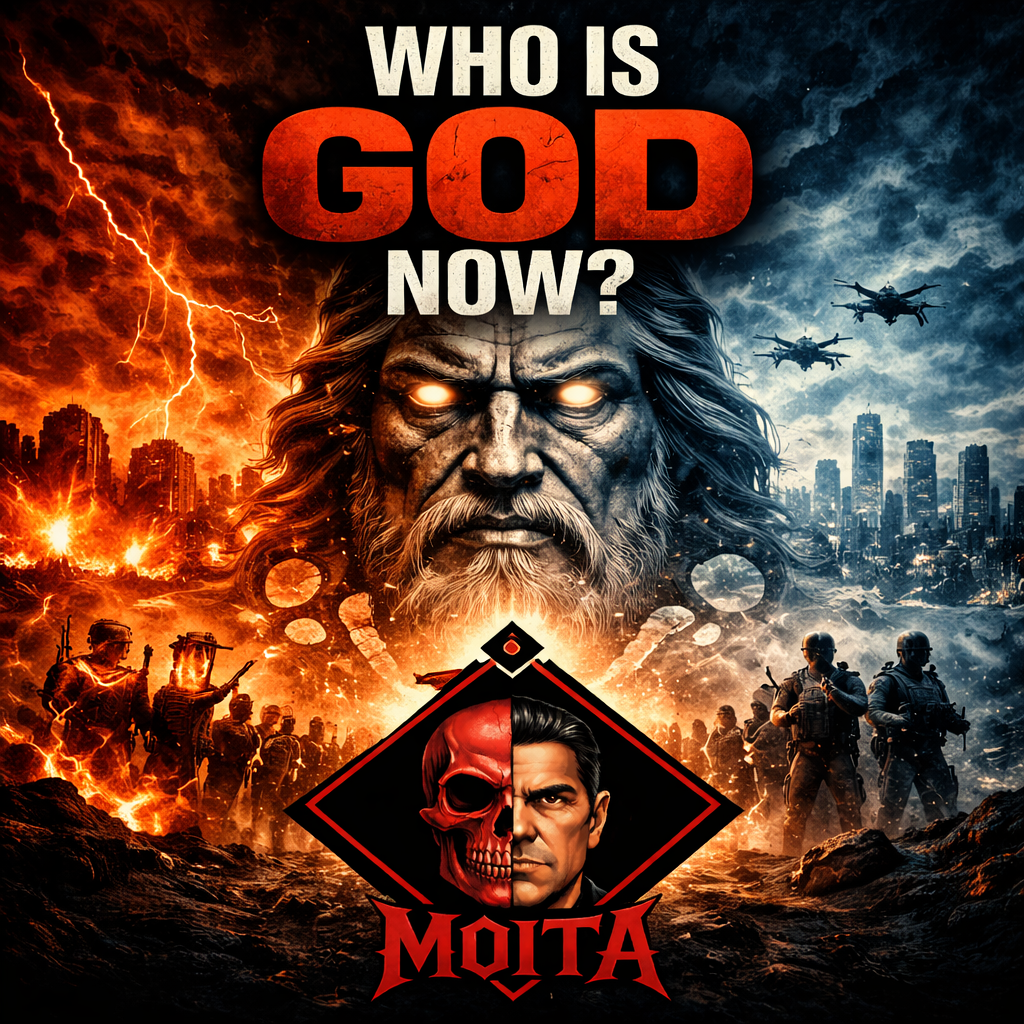
WHO IS GOD?
Category
Faith • Creation • Philosophy • History • Human Curiosity
Primary Emotion
Wonder
Also Fits
Spiritual Reflection • Human Origins • Biblical History • Personal Discovery • Documentary
What This Song Is About
Every civilization has asked the same questions in one form or another. How did everything begin? Why are we here? Is there a Creator? If there is, who is He?
This song is my way of exploring those questions through one of the most influential stories ever written—the opening chapters of the Bible. It is not written to force belief or settle every debate. It is written to invite people to stop for a few minutes and think about a story that has shaped billions of lives throughout history.
Whether you believe every word, question every word, or simply remain curious, the questions themselves have helped shape humanity for thousands of years. That alone makes them worth exploring.
The Story Behind the Song
This song came from curiosity more than certainty.
For most of my life, like many people, I had heard stories from the Bible without ever sitting down and reading much of it for myself. One day I decided to change that. I opened the Bible, read through the beginning of Genesis, compared different translations, and tried to understand the story with fresh eyes instead of relying on what I had heard from others.
As I read, something unexpected happened. I wasn’t just reading history or scripture. I started seeing images in my own mind. I imagined light appearing where there had been darkness. I imagined a lifeless world becoming full of colour, water, trees, animals, and eventually people. Those pictures became the foundation of this song.
Some of the lyrics follow the biblical account closely. Others are my own words, written to help tell the story in a way that felt natural to me. I never intended to rewrite the Bible. I wanted to create a song that reflected what I was learning while allowing my own imagination to stand beside the ancient text.
Why I Wrote This Song
I have always believed that asking questions is one of the greatest parts of being human.
Sometimes we ask questions because we doubt.
Sometimes because we believe.
Sometimes simply because we want to understand.
“Who Is God?” was born from that desire to understand.
The more I read, the more I realized that regardless of where someone stands spiritually, the creation story has influenced art, literature, music, law, philosophy, and civilization itself. It has shaped the thinking of countless generations.
That made me realize this wasn’t just a religious story.
It was part of human history.
Why This Matters To Me
I’ve spent much of my life building things with my hands, working outdoors, watching seasons change, watching life grow and disappear, and wondering how everything fits together.
Looking at the natural world has always made me curious.
Where did it all begin?
Why does everything seem connected?
Why does nature follow such remarkable patterns?
Those questions eventually led me to open the Bible for myself instead of depending on someone else’s interpretation.
This song became part of that journey.
Whether every answer is found or not, I believe the search itself has value.
Why This Song Fits MOITA
MOITA has always been about asking questions that matter.
Some songs come from personal experiences.
Some come from history.
Some come from imagination.
Some come from observations about the world around us.
This song belongs inside MOITA because it represents curiosity in its purest form. It isn’t about pretending to have every answer. It’s about being willing to explore one of the oldest and most important questions humanity has ever asked.
Sometimes understanding begins not with an answer, but with the courage to ask the question.
Read This First
Before you continue, I invite you to read this page with an open mind.
You don’t have to agree with me.
You don’t have to share my beliefs.
You don’t even have to believe in God.
All I ask is that you allow yourself to experience the journey.
This page isn’t about telling you what to think.
It’s about exploring one of history’s greatest stories, sharing why it inspired me to write this song, and encouraging every reader to keep asking questions.
The search for understanding has always been part of what makes us human.
FULL LYRICS
WHO IS GOD
God is a man that created you and me
He lives everywhere so he can hear and see
He created earth and gave it rules
A dead planet, he exposed the sun and gave it life
He made a day and named it light
He brought the darkness and named it night
He made the Earth spin and give it seasons
Everything he did was done with a reason.
God is a man the created you and me
He lives everywhere so he can hear and see
He created the Earth and gave it rules
He brought life to where there was no life
He brought trees and seeds, growth fields of leaves
He gave fruits where there was no fruits
He joined the sea and the sky and replenished everything
He rose all sorts of animals to fly, walk and swim he gave them life
Yes
God is a man he made us look like him
God created man from dust and dirt and from the ground
He breeds the breath of life Into us and we became man
God planted a garden and called it Eden
And put Man there, but he had no we equal partner
So he put MAN to sleep the sleep of sleeps
And took one of his ribs and closed him up
God made woman and man cried,
And God said this is someone like me
This one bone of my bone and flesh of my flesh she came from me, man, and I will call her woman
Who is God? He gave us life. He is our God, he’s salvation.
He is the lord
But in the garden of Eden
God said you may eat from everything else
But do not touch this one tree
If you do, you will die
But the woman was tricked by the evil serpent
She ate the fruit and gave it to MAN
And God said to the serpent, I will curse you and you will crawl on your belly and eat dust and dirt for as long as you live
And God said to woman
I will sharpen the pain of your pregnancy
And in that pain, you will give birth
You will desire to control your husband, but he will rule over you
And God said to the man
You will listen to your wife
And you ate that fruit from the tree
And so the ground will be under a curse
Because of what you did
As long as you live, you will struggle to grow enough food
Your food will be plants, but the ground will produce thorns and thistles
You will have to sweat to earn a living
You were made out of dirt and you once again you will return to the dirt where your life started from
Who is God? He gave us life. He is our God, he’s salvation.
He is the Lord
SECTION ONE
LYRIC JOURNEY
PART 1
The song begins with the question that has followed humanity for thousands of years.
“Who is God?”
Before a single answer is offered, the question itself does something important. It places every listener on equal ground. Whether someone has believed in God since childhood, lost their faith, never believed at all, or is simply curious, everyone begins in the same place. Nobody starts with an advantage. We all begin by asking the same question.
The next lines immediately answer that question from the perspective of the song.
“God is a man that created you and me He lives everywhere so he can hear and see.”
These opening lyrics establish the foundation for everything that follows. They are not trying to debate theology or compare different religions. They simply introduce the God being described throughout the song. From this point forward, the listener understands that the story being told is the biblical account of creation as I came to understand it while reading Genesis.
The following lines begin building the world itself.
“He created earth and gave it rules.”
That is an interesting way to begin describing creation because it introduces the idea of order. The universe is not presented as random. It operates according to structure. Whether we think about gravity, the movement of planets, the changing of seasons, or the cycle of life itself, nature follows patterns. Long before scientists explained many of those patterns, people recognized that the world seemed to operate according to consistent laws.
The next image expands that thought.
“A dead planet, he exposed the sun and gave it life.”
These words are partly inspired by Genesis and partly by my own imagination. While reading the creation story, I began picturing the Earth as empty and lifeless before becoming full of colour and activity. Rather than copying every biblical detail exactly, I allowed my own mental picture to become part of the song. That balance between scripture and imagination continues throughout the journey.
Then the song slows down for a moment.
“He made a day and named it light. He brought the darkness and named it night.”
These lines feel almost peaceful. There is no conflict yet. No temptation. No suffering. The world is simply taking shape one piece at a time. The rhythm reflects the gradual unfolding of creation. Instead of rushing forward, the song allows the listener to watch the world coming into existence step by step.
The next lyric quietly connects something every person experiences.
“He made the Earth spin and give it seasons.”
That line didn’t come from trying to quote the Bible. It came from observation.
I’ve spent decades working outside. Construction sites, landscaping projects, heavy equipment, railroads. When your job keeps you outdoors year after year, you begin measuring time differently. You notice spring arriving after a long winter. You notice leaves returning to trees, crops growing, birds migrating, and daylight changing throughout the year. Those rhythms become part of everyday life.
So when I imagined creation, the changing seasons naturally became part of the picture I saw.
The verse closes with a line that quietly summarizes everything that came before it.
“Everything he did was done with a reason.”
That sentence becomes the first landmark in the song.
Regardless of what someone’s personal beliefs may be, the creation story presented here is built upon purpose. Nothing appears by accident within the world of the song. Every step prepares the next one. Light prepares for life. Life prepares for growth. Growth prepares for humanity. The journey has direction.
With the foundation now established, the song is ready to move beyond the creation of the world itself and begin filling that world with life.
PART 2 SECTION ONE
LYRIC JOURNEY
PART 2
The first verse established the world.
Now the song begins filling that world with life.
“God is a man that created you and me He lives everywhere so he can hear and see He created the Earth and gave it rules.”
The opening lines return, but they are no longer introducing the story. Their purpose has changed.
The first time we heard them, they introduced the Creator.
Now they remind us who the Creator is before the next stage of creation begins.
The emotional meaning hasn’t changed, so there is no need to explain them all over again. They simply reconnect us with the foundation already laid and prepare us to continue the journey.
The next lyric immediately moves creation forward.
“He brought life to where there was no life.”
That simple sentence carries enormous weight.
Everything that follows depends on those few words.
Until now, we’ve been looking at a world taking shape.
Now we begin looking at a world beginning to breathe.
The song doesn’t slow down to explain every detail because it doesn’t need to. One sentence is enough to tell us that creation has crossed an important line. The Earth is no longer simply a place. It is becoming a living world.
The next images continue that transformation.
“He brought trees and seeds, growth, fields of leaves.”
I like that this part doesn’t focus on the spectacular.
There are no earthquakes.
No explosions.
No dramatic miracles.
Instead, the song notices the quiet things that make life possible.
Trees.
Seeds.
Growth.
Leaves.
Most people walk past these things every day without giving them much thought. Yet every forest, every crop, every flower, and every piece of fruit begins with something incredibly small.
A seed carries the possibility of an entire tree.
One tree can produce thousands more seeds.
Those seeds can become forests.
It’s one of nature’s simplest ideas and one of its most remarkable.
The journey naturally continues.
“He gave fruits where there was no fruits.”
That line reminds us that creation isn’t simply about survival.
It also provides abundance.
Fruit feeds people.
It feeds animals.
Its seeds continue the cycle of life.
The song quietly shows that creation isn’t only about making things exist.
It’s about making them continue.
The next lyric widens the picture.
“He joined the sea and the sky and replenished everything.”
This is one of those moments where imagination stands beside scripture.
While reading Genesis, I wasn’t trying to paint a scientific diagram.
I was painting the picture that formed in my own mind.
The sea below.
The sky above.
Everything connected.
Everything working together.
The word replenished gives the feeling that the world has reached a point where life can now sustain itself. Water supports life. Air supports life. Land supports life. None of them stand alone.
They work together as one complete system.
The verse reaches its destination with one final movement.
“He rose all sorts of animals to fly, walk and swim. He gave them life.”
The progression has been beautiful to watch.
First there was light.
Then the Earth.
Then the seasons.
Then plants.
Now living creatures fill every part of creation.
Birds belong to the sky.
Animals belong to the land.
Fish belong to the water.
The song doesn’t stop to describe every creature because that’s not its purpose.
Its purpose is to let us stand back and see the whole picture.
A world that began empty is now overflowing with life.
That becomes the second major landmark of the journey.
The world is complete.
Everything has been prepared.
Everything has been put into place.
Now the song is ready for the moment that changes everything.
The arrival of humanity.
Until now, creation has been about the world.
From the next lyric onward, the story becomes about us.
SECTION ONE
LYRIC JOURNEY
PART 3
The previous verse brought creation to life.
The Earth is no longer empty.
Light exists.
The seasons move.
Trees grow.
Animals fill the land, the sea, and the sky.
Everything has been preparing for the moment that comes next.
“Yes”
It is only one word.
Many listeners will hear it simply as a musical transition, and that’s exactly what it is. It doesn’t introduce a new idea. It gives the song a moment to breathe before arriving at the next landmark.
Sometimes a bridge only needs a single word.
This is one of those moments.
Now the journey reaches one of the most recognizable passages in the entire Bible.
“God is a man he made us look like him.”
This is where the story becomes deeply personal.
Until now, we’ve been observing creation from a distance.
Now humanity enters the picture.
The focus is no longer on oceans, trees, or animals.
The focus becomes people.
The idea of being created in God’s image has been discussed for thousands of years. Different people understand those words differently. Some see a physical likeness. Others believe it speaks about our ability to think, create, love, reason, imagine, choose, and build relationships.
The song doesn’t stop to debate those interpretations.
It simply continues telling the story as it unfolds.
The next lyric brings us to the creation of man.
“God created man from dust and dirt and from the ground.”
I have always found something humbling about that image.
Human beings build cities.
We invent technology.
We create music.
We send spacecraft beyond our planet.
Yet according to the Genesis account, our beginning is incredibly simple.
Dust.
Dirt.
Earth.
It reminds us that no matter how advanced we become, we remain connected to the ground beneath our feet.
The next line gives that lifeless form its most important gift.
“He breathed the breath of life into us and we became man.”
Everything changes in this moment.
Until now, the body is simply a body.
Breath transforms it into life.
Across many cultures, breath has often been associated with life itself. The first breath announces a birth.
The final breath marks the end of life.
That makes this lyric one of the emotional landmarks of the entire song because it describes the moment humanity begins.
The story continues naturally.
“God planted a garden and called it Eden.”
The song moves from creating people to preparing a home for them.
Eden is presented as more than a location.
It becomes a place of peace.
A place where the relationship between God and humanity begins without fear, conflict, or suffering.
Whether someone reads Genesis literally or symbolically, Eden has become one of the most powerful images in human history.
It represents innocence before it was lost.
The next lyrics quietly introduce the first problem in creation.
“And put man there, but he had no equal partner.”
Everything until now has been described as complete.
Now, for the first time, something is incomplete.
That change matters.
The story pauses long enough for us to recognize that human beings were never intended to experience life completely alone.
The following lines solve that problem.
“So he put man to sleep the sleep of sleeps.
And took one of his ribs and closed him up.”
The wording is simple, but the meaning is significant.
The song doesn’t focus on the miracle itself.
Instead, it treats it as another natural step in the unfolding story.
One creation prepares the next.
One need leads to its answer.
Nothing feels rushed.
Nothing feels forced.
The journey has been moving steadily from the very first line, and it continues doing exactly that here.
The next lyric brings us to one of the most human moments in the entire song.
“God made woman and man cried.”
Whether those tears are understood as joy, relief, gratitude, or overwhelming emotion is left to the listener.
I like that the lyric doesn’t explain the tears.
Sometimes emotion doesn’t need to be explained.
Sometimes it simply needs to be felt.
The final lines of this section complete the moment.
“And God said this is someone like me.
This one bone of my bone and flesh of my flesh.
She came from me, man, and I will call her woman.”
These words bring companionship into the story.
Creation is no longer only about making a world.
It is about building relationships within that world.
After all the mountains, oceans, trees, animals, and seasons, the greatest creation in this part of the journey is not another place.
It is the bond between two people.
The next landmark is waiting just ahead.
The world has been created.
Humanity has been created.
A home has been prepared.
Everything appears perfect.
But every story has a turning point.
The next lyrics introduce the choice that changes everything.
SECTION ONE
LYRIC JOURNEY
PART 4
Up to this point, the journey has been one of creation.
Every new verse has added something.
Light.
Darkness.
The Earth.
Life.
Humanity.
Companionship.
Everything has been moving toward completeness.
Now the song arrives at its first chorus.
“Who is God? He gave us life. He is our God, he’s salvation. He is the Lord.”
The chorus now carries more emotional weight than it did when the song first asked the question.
At the beginning, “Who is God?” was simply the title.
Now the listener has travelled through creation itself. The question is no longer empty because the song has already introduced the God it is describing.
The chorus becomes a moment of reflection.
It allows the listener to pause before the next chapter begins.
Its purpose is not to move the story forward.
Its purpose is to let everything we’ve just experienced settle into our minds.
Then, almost immediately, the atmosphere changes.
“But in the Garden of Eden”
That single word changes the direction of the entire song.
But.
Everything before it has been peaceful.
Everything after it will be different.
It is one of the smallest words in the song, yet it becomes one of its most important bridges.
It tells us that the perfect world we’ve been walking through is about to face its first great test.
The next lines introduce the only restriction in Eden.
“God said you may eat from everything else. But do not touch this one tree. If you do, you will die.”
I find it interesting that the story doesn’t describe hundreds of rules.
It describes one.
The simplicity of that command is part of what gives it its power.
There is freedom.
There is abundance.
There is only one boundary.
Whether someone approaches Genesis as literal history, sacred teaching, or symbolic literature, this moment introduces something every human being understands.
Choice.
Without choice there can be no obedience.
Without choice there can be no trust.
Without choice there can be no responsibility.
The story doesn’t explain why the tree exists.
It simply accepts its presence and moves forward.
The next lyric introduces another new character.
“But the woman was tricked by the evil serpent.”
Notice how quickly the mood changes.
The song doesn’t spend time describing the serpent’s appearance.
It doesn’t build suspense through long explanations.
It simply tells us that deception has entered the story.
For the first time since creation began, another influence appears.
Until now every action has come from God.
Now another voice enters the conversation.
That changes everything.
The next line is short.
“She ate the fruit and gave it to man.”
There are no dramatic speeches.
No lengthy descriptions.
Just one decision.
Sometimes history turns because of long wars.
Sometimes because of powerful leaders.
According to the Genesis account, this story turns because of one simple act of disobedience.
That simplicity is part of its lasting power.
The emotional landscape changes immediately.
The innocence that has carried the song from the opening verse quietly disappears.
The listener can almost feel the weight shifting.
Everything created so carefully now faces its first consequence.
This becomes one of the major landmarks of the entire Lyric Journey.
Creation has reached its highest point.
Now the story begins its descent.
The next verses don’t describe the beauty of creation.
They describe the cost of a decision.
And that changes the emotional direction of everything that follows.
SECTION ONE
LYRIC JOURNEY
PART 5
The decision has been made.
The fruit has been eaten.
The innocence of Eden has been broken.
The story doesn’t pause to argue whether the choice was right or wrong. It simply follows the consequences that come next. That keeps the journey moving exactly the way Genesis tells it.
The first consequence is directed toward the serpent.
“And God said to the serpent, I will curse you and you will crawl on your belly and eat dust and dirt for as long as you live.”
The song begins with the one who introduced the temptation.
That order matters.
Before addressing the man or the woman, the story first addresses the source of the deception.
The image of the serpent crawling through the dust has remained one of the most recognizable pictures in the Bible. Whether someone understands it literally or symbolically, it represents humiliation after pride and judgment after deception.
The lyric doesn’t stay here very long because the serpent isn’t the centre of the story.
Humanity is.
The journey naturally moves to the woman.
“And God said to woman”
Once again, the pace slows.
These words aren’t shouted.
They aren’t written with anger.
They are presented as the next step in the unfolding story.
The following lines describe the consequences.
“I will sharpen the pain of your pregnancy.
And in that pain, you will give birth.”
These words have been discussed and debated for centuries.
Some people read them literally.
Others understand them within a broader theological or symbolic framework.
My purpose in the song isn’t to settle those discussions.
It’s to continue walking through the biblical account that inspired me while I was reading Genesis.
The next line often creates conversation.
“You will desire to control your husband, but he will rule over you.”
Few verses in Genesis have generated as much discussion as this one.
Different Christian traditions, Jewish scholars, historians, and theologians have interpreted it in different ways throughout history.
Some see it as describing the broken relationships that resulted from the fall.
Others see it differently.
The song doesn’t stop to defend one interpretation over another.
It simply presents the story as it appears in the biblical narrative and continues moving.
That approach is important throughout this journey.
The purpose isn’t to argue.
The purpose is to understand why the story unfolds the way it does.
Now the focus shifts one final time.
“And God said to the man”
Everything has been leading toward this moment.
The story began with the creation of the world.
Now it reaches the consequences for the one who was created from the dust.
The first words are direct.
“You listened to your wife.
And you ate that fruit from the tree.”
The song reminds us that actions have consequences.
It doesn’t place all responsibility on one person.
Both people made choices.
Both become accountable.
That idea reaches far beyond Genesis.
Whether we’re talking about families, friendships, workplaces, or entire nations, every decision creates another consequence.
Some consequences appear immediately.
Others may not appear until years later.
The next lyrics describe how life itself changes.
“And so the ground will be under a curse because of what you did.
As long as you live, you will struggle to grow enough food.”
Think back to the beginning of the song.
Creation was effortless.
Light appeared.
Trees grew.
Life flourished.
Now, for the first time, work enters the picture.
The Earth that once provided freely now requires labour.
The contrast is striking.
The world itself hasn’t disappeared.
But humanity’s relationship with it has changed.
The next lines continue that thought.
“Your food will be plants, but the ground will produce thorns and thistles.
You will have to sweat to earn a living.”
Those words have connected with people for thousands of years because almost everyone understands hard work.
Whether someone farms a field, builds houses, drives trucks, teaches children, works in hospitals, operates heavy equipment, or sits behind a desk, earning a living usually requires effort.
As someone who has spent most of his life working with his hands, these verses always felt especially real to me.
Life rewards effort.
But effort often comes with exhaustion, frustration, setbacks, and perseverance.
The final lyric of this section quietly returns us to where humanity began.
“You were made out of dirt and once again you will return to the dirt where your life started from.”
The journey comes full circle.
Earlier, man was formed from the dust.
Now the story reminds us that life eventually returns there.
It is one of the most humbling moments in the entire song.
No matter who we become.
No matter what we build.
No matter how much we accomplish.
The Genesis story reminds us that human life is both precious and temporary.
The Lyric Journey has now reached its final landmark.
Only one chorus remains.
When it returns, it is no longer simply celebrating the Creator.
After everything the listener has experienced, those same words now carry the full weight of creation, choice, consequence, and the hope that still remains beyond them.
SECTION ONE
LYRIC JOURNEY
PART 6
The journey now returns to the chorus one final time.
“Who is God? He gave us life. He is our God, he’s salvation. He is the Lord.”
These words haven’t changed.
The listener has.
When the chorus first appeared, we had only witnessed creation. We had watched light replace darkness, the Earth fill with life, and humanity enter the world. At that point, the chorus celebrated the Creator.
Now we return carrying the entire journey with us.
We have walked through Eden.
We have watched temptation enter a perfect world.
We have witnessed one choice change the course of human history.
We have seen judgment, responsibility, hardship, and the reminder that life itself is temporary.
Because of everything that has happened, the chorus no longer sounds like a simple declaration.
It sounds like a conclusion.
The question “Who is God?” now has far greater depth than it did at the beginning of the song.
Within the story you’ve told, God is presented as the Creator who brings life where there was none.
He is the One who creates order from emptiness.
He is the One who gives humanity purpose.
He is also the One who allows people to make choices instead of forcing obedience.
That may be one of the most important ideas in the entire journey.
Without choice, there can be no love freely given.
Without choice, there can be no trust.
Without choice, there can be no responsibility.
The Garden of Eden reminds us that every meaningful relationship depends upon the freedom to choose.
The final lines of the chorus also introduce another important idea.
“He is our God, he’s salvation. He is the Lord.”
Earlier in the song, God was introduced through creation.
Now He is described through relationship.
The story has moved from asking where life came from to recognizing the One the song identifies as Lord and salvation.
For those who approach the song from a position of faith, those words affirm belief.
For those who approach it from curiosity, they complete the biblical narrative the song set out to tell.
For others, they may simply be the closing chapter of one of history’s most influential stories.
That is one of the things I appreciate most about this song.
It never asked me to stop thinking.
It encouraged me to start reading.
It encouraged me to compare different translations.
It encouraged me to imagine the scenes in my own way while respecting the foundation from which they came.
More importantly, it reminded me that asking honest questions is never something to be afraid of.
Sometimes questions strengthen faith.
Sometimes they challenge it.
Sometimes they simply help us understand another person’s perspective a little better.
When I finished writing this song, I realized I hadn’t written a song about having all the answers.
I’d written a song about beginning the search.
That may be the greatest lesson this journey has to offer.
Every great discovery begins with a question.
This one begins with four simple words.
Who is God?
SECTION TWO
I didn’t write this song because I wanted to become a preacher or convince anyone that my beliefs are the only ones that matter. I wrote it because one question stayed in my mind: Who is God? It’s one of those questions that has followed humanity since the beginning of recorded history. No matter where we come from or what language we speak, sooner or later most of us think about where everything came from and why we’re here.
For years I had heard stories from the Bible, just like millions of other people. I knew the names. Adam and Eve. The Garden of Eden. The serpent. Noah. Moses. They were part of everyday conversation, movies, television, and history. But hearing a story and actually reading it for yourself are two completely different experiences.
One day I decided to open the Bible and start at the beginning.
I didn’t stop with just one version. I compared two different Bibles because I wanted to see how the wording changed from one translation to another. The message remained familiar, but I found myself paying attention to the details in a way I never had before. Certain verses painted vivid pictures in my mind, while others made me stop and ask questions I had never considered.
As I read about creation, I wasn’t trying to copy the Bible word for word. My imagination naturally became part of the journey. I started describing the world the way I pictured it in my own mind. I imagined light breaking through darkness. I imagined a lifeless planet becoming filled with oceans, trees, animals, and people. I imagined the Earth beginning to turn, seasons taking shape, and life unfolding one step at a time.
That’s why parts of this song are biblical and parts are my own words. They work together rather than compete with one another. The Bible provided the foundation. My imagination provided the voice.
I’ve spent most of my life working outdoors. Construction, landscaping, heavy equipment, railroads—those jobs put me in nature every day. I watched spring replace winter, fields come alive after months of snow, leaves appear, disappear, and return again. You begin to notice patterns when you spend enough years outside. You begin to appreciate how connected everything really is.
Those experiences quietly found their way into this song.
Whether someone believes the creation story literally, symbolically, or somewhere in between isn’t the point I’m trying to make. My goal was never to settle centuries of debate. My goal was much simpler. I wanted people to step back for a few minutes and appreciate the story itself. It has inspired artists, writers, musicians, philosophers, scientists, believers, skeptics, and curious minds for thousands of years. Very few stories in human history have had that kind of influence.
As I kept writing, I realized the song wasn’t really becoming a lesson about religion. It was becoming a lesson about curiosity. The more I read, the more questions appeared. Instead of feeling frustrated by that, I found myself enjoying it. Good questions have a way of leading us toward new ideas, whether they confirm what we already believe or encourage us to look at something differently.
That’s one of the reasons this song belongs in MOITA.
MOITA has never been about pretending to have all the answers. It’s about sharing experiences, observations, imagination, and questions honestly. Sometimes the answer matters. Sometimes the journey toward the answer matters even more.
“Who Is God?” became one more chapter in that journey.
It began with an old book.
It continued with curiosity.
And it became a song because I wanted to share that curiosity with anyone willing to ask one simple question:
Who is God?
SECTION THREE
The title asks the question before the first verse ever begins.
“Who Is God?”
It doesn’t begin with an answer. It begins with curiosity. I think that’s one of the reasons this song works. Questions have a way of inviting people into a conversation. Statements often end conversations. A question encourages us to think, and this question has been asked by billions of people throughout history.
The opening verses paint a picture of creation in simple, understandable language. I wasn’t trying to sound like an ancient writer or a theologian. I wanted to describe the beginning of the world the way I imagined it while reading Genesis. Light, darkness, the Earth, seasons, trees, animals, and people all arrive one step at a time. The story unfolds almost like watching the first sunrise after endless darkness.
One of the ideas that stands out to me is the repeated sense of purpose. The song keeps moving from one creation to the next without making anything feel random. Everything exists for a reason. Whether it’s light replacing darkness or life appearing where there was none, the lyrics create the feeling that every part of creation belongs to something larger than itself.
As the song moves forward, the focus becomes more personal.
The world has been created.
Now humanity enters the story.
The creation of man and woman isn’t written simply as another event. It changes the direction of the song. Up until this point, creation has been about the world itself. Now it becomes about relationships, identity, companionship, and the beginning of human history as described in Genesis.
The description of Adam being formed from the dust and receiving the breath of life is one of the most recognizable passages in the Bible. I chose to keep that part close to the biblical account because those images have remained powerful for thousands of years. They remind us that, according to the Genesis story, human life isn’t presented as an accident but as something intentional.
The creation of woman introduces another important idea.
Human beings were never meant to experience life completely alone.
Whether someone approaches these verses from a religious, historical, literary, or symbolic perspective, companionship becomes one of the central themes. The story moves beyond creation itself and begins exploring what it means to live together.
The emotional direction changes again when the Garden of Eden appears.
Until this point, everything has been growing.
Everything has been expanding.
Everything feels peaceful.
Then one decision changes the direction of the story.
The forbidden tree represents more than fruit. It represents choice. Without choice there can be no obedience, no responsibility, and no consequences. The song doesn’t spend time debating why the tree existed. Instead, it follows the story as it has been told for generations, allowing the reader to experience the moment when innocence gives way to consequence.
The serpent becomes the turning point.
Whether readers understand the serpent as a literal being, a symbol of temptation, or something else entirely depends upon their own beliefs. The important point within the song is that temptation enters the story, and from that moment the world described in Genesis is never the same again.
The following verses become noticeably heavier.
Creation gives way to accountability.
Blessing gives way to consequence.
Comfort gives way to labour.
Life becomes more difficult.
The judgments spoken to the serpent, the woman, and the man are presented in the same order as the biblical account because that progression matters. Each consequence reflects a different part of human existence, and together they explain why life, according to the Genesis narrative, includes pain, struggle, hard work, and eventually death.
One phrase quietly carries enormous weight throughout the song.
“Who is God?”
Every time the question returns, it carries a little more meaning than before.
At the beginning it asks about the Creator.
Later it asks about the Judge.
Finally it asks about the One described as salvation and Lord.
The repeated chorus doesn’t simply create a musical hook. It marks the progression of the story itself. As the narrative unfolds, the same question invites the listener to consider another dimension of God’s relationship with humanity.
What I appreciate most about this song is that it leaves room for the listener.
Some people will hear it as an expression of faith.
Others will hear it as a retelling of one of history’s most influential stories.
Others may simply hear it as an invitation to explore a book they have never opened for themselves.
All of those responses are valid because the purpose of this song was never to force belief.
It was to encourage curiosity.
That curiosity is what inspired me to open two Bibles, compare their words, imagine the scenes in my own way, and transform one of the oldest stories ever written into a song.
In many ways, that’s what MOITA has always been about.
A song begins with a question.
The journey begins when we’re willing to search for the answer.
SECTION FOUR
When I finished writing “Who Is God?”, I realized the song wasn’t really about answering the question in its title.
It was about encouraging people to ask it.
Throughout history, people have searched for God in different ways. Some have found their answers through faith. Others through science. Others through philosophy. Others through nature. Some continue searching their entire lives, while others remain convinced there is no Creator at all.
What I find interesting is that the question never disappears.
It continues from one generation to the next.
Long before books were printed, people looked up at the night sky and wondered where everything came from. They watched the changing seasons, the birth of children, the passing of loved ones, and the incredible complexity of the natural world. They asked the same questions we still ask today.
Why are we here?
How did all of this begin?
Is there something greater than ourselves?
Those questions connect every generation.
Whether someone agrees with the biblical account or not, there is no denying its influence. The story of Genesis has inspired artists, musicians, architects, scientists, philosophers, writers, and ordinary people for thousands of years. It has shaped cultures, influenced laws, inspired masterpieces of art, and encouraged countless conversations about life, morality, responsibility, hope, and purpose.
That alone makes it worth reading.
One thing I discovered while writing this song is that reading something for yourself is very different from hearing someone else’s opinion about it.
That lesson reaches far beyond religion.
It applies to history.
It applies to politics.
It applies to science.
It applies to everyday life.
Whenever possible, go to the source.
Read.
Learn.
Compare.
Ask questions.
Think for yourself.
Even if you reach a different conclusion than someone else, you’ll know that your conclusion came from an honest search rather than someone else’s interpretation.
That’s one of the greatest gifts curiosity can give us.
I also hope this song reminds people to respect one another.
Faith is deeply personal.
Some readers will recognize these words as the foundation of their beliefs.
Others may read them simply as one of history’s most influential stories.
Both deserve respect.
Meaningful conversations rarely begin by trying to prove someone wrong.
They begin by listening.
By asking questions.
By trying to understand why another person believes what they do.
If this page inspires someone to open a Bible for the first time, to revisit it after many years, to explore another faith with respect, or simply to spend a few quiet moments thinking about life’s biggest questions, then this song has already accomplished more than I ever expected.
Thank you for taking this journey with me.
Whether you arrived here through faith, curiosity, music, or simply by accident, I appreciate that you chose to spend your time exploring one of the oldest questions humanity has ever asked.
Every song I write becomes another chapter of my own journey.
If something on this page encouraged you to think a little deeper, ask one more question, or look at an old story from a fresh perspective, then I’m grateful we shared this moment together.
MOITA
WHERE EVERY SONG TELLS A STORY
EVERY STORY TEACHES SOMETHING
SECTION FIVE
MOITA DOCUMENTARY & LEARNING CENTRE
The story behind this song may end with the closing words of Genesis, but the questions it raises continue far beyond a single chapter of the Bible. Whether you approach the creation story as history, theology, literature, or philosophy, it has influenced the development of civilization in ways that are impossible to ignore.
This Learning Centre isn’t here to tell you what to believe.
It’s here to help you understand why the story matters.
The Book of Genesis
The Book of Genesis is the first book of the Bible and serves as the foundation for much of Judaism and Christianity. Its opening chapters introduce the creation of the universe, humanity, the Garden of Eden, and the relationship between God and mankind.
The word Genesis means “beginning” or “origin,” and that is exactly what the book explores. It asks where everything started and introduces ideas that continue throughout the rest of the Bible, including creation, choice, responsibility, family, hope, and redemption.
Whether someone reads Genesis as literal history, symbolic teaching, or a combination of both, its influence on human civilization is undeniable.
Why Are There Different Bible Translations?
While writing this song, I compared two different Bibles. That made me realize something many people don’t think about.
The Bible wasn’t originally written in modern English.
Most of the Old Testament was written in ancient Hebrew, while much of the New Testament was written in Greek. Over centuries, scholars have translated those original texts into hundreds of languages so people around the world could read them.
Some translations aim to stay as close as possible to the original wording.
Others focus on making the meaning easier for modern readers to understand.
The wording may change slightly from one translation to another, but the central message often remains remarkably consistent.
Comparing translations can help readers appreciate both the beauty and the complexity of translating ancient languages.
Why Has Genesis Lasted So Long?
Very few stories survive for thousands of years.
Genesis has.
One reason is that it doesn’t simply answer questions.
It creates them.
Who are we?
Why do good and evil exist?
Why do people suffer?
Why do we make choices we later regret?
What is our responsibility toward one another?
Whether someone approaches these questions through religion, philosophy, or science, they remain part of the human experience.
That’s why Genesis continues to be studied today.
The Garden of Eden as a Human Story
The Garden of Eden is often viewed as more than a place.
For many readers, it also represents innocence.
It represents the moment before people understood guilt, fear, shame, and responsibility.
The story reminds us that every choice has consequences.
That lesson reaches far beyond religion.
Every decision we make changes something.
Sometimes the change is small.
Sometimes it lasts for generations.
Learning to make thoughtful choices remains one of life’s greatest responsibilities.
Curiosity Is Part of Learning
One of the unexpected gifts this song gave me was curiosity.
Instead of accepting someone else’s summary of the Bible, I opened it for myself.
I read.
I compared.
I imagined.
I asked questions.
That experience reminded me that learning becomes much more meaningful when we explore something firsthand.
The same principle applies to almost every subject in life.
History.
Science.
Music.
Art.
Engineering.
Medicine.
Faith.
The more we learn, the more we realize how much there still is to discover.
Continue Exploring
If this song encouraged you to learn more, these are excellent places to continue your journey:
- The Book of Genesis, beginning with Chapters 1–3, to read the creation account for yourself.
- The Bible Project, which provides accessible videos and articles explaining the structure, themes, and historical context of the Bible.
- Smithsonian Institution resources on the ancient Near East and early civilizations to better understand the world in which these stories were preserved.
- Explore the history of ancient Hebrew culture, the Dead Sea Scrolls, biblical archaeology, comparative creation narratives, and the history of Bible translation.
Whether your journey strengthens your faith, challenges your thinking, or simply leaves you with more questions than answers, keep asking.
Curiosity has always been one of humanity’s greatest strengths.
It was curiosity that led me to write this song.
Perhaps it will lead you to your next discovery.




Reviews
There are no reviews yet.