
Description
About the Song
SECTION ONE
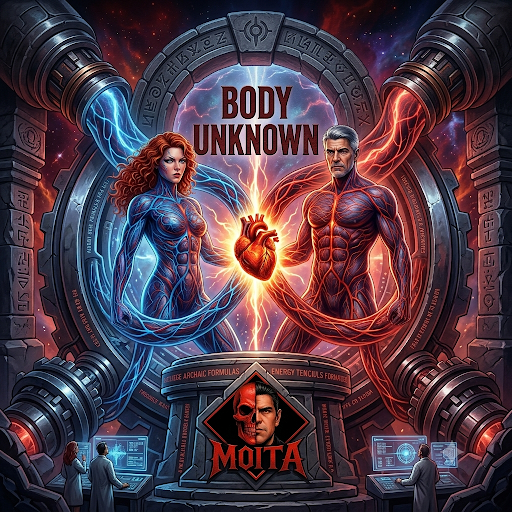
BODY UNKNOWN
CATEGORY
Human Nature
PRIMARY EMOTION
Curiosity
ALSO FITS
Identity
Desire
Attraction
Instinct
Psychology
Biology
Self-Discovery
Relationships
The Mind and Body
WHAT THIS SONG IS ABOUT
Body Unknown is about the strange relationship between the body and the mind.
We like to believe that we are always in control of ourselves. We think the brain gives the orders and the rest of the body follows. But that is not always how being human works.
Sometimes the body reacts first.
The heart starts beating faster before we understand why.
The skin becomes sensitive before we recognize what we are feeling.
Breathing changes.
Temperature rises.
Muscles tighten.
A person can feel attraction, fear, excitement, discomfort, or desire before the mind has found the words to explain any of it.
That is where this song begins.
It looks at the human body as something we live inside every day but may never completely understand. We know our own names. We recognize ourselves in a mirror. We understand many of our thoughts and choices. Yet beneath all of that is a complicated system of nerves, chemicals, instincts, memories, emotions, and physical reactions working every second.
Some of those reactions protect us.
Some warn us.
Some pull us toward another person.
Some tell us to move away.
Some feel completely natural.
Others leave us wondering where they came from.
Body Unknown is about that mystery.
It is about the space between what the mind says and what the body feels.
It is about the struggle between logic and instinct.
It is also about two people who may experience the same moment differently while still being driven by the same basic human need to feel, connect, and understand what is happening inside them.
THE STORY BEHIND THE SONG
This song did not begin with one particular relationship or one event from my life.
It began with curiosity.
I started thinking about how much control we really have over the reactions taking place inside our own bodies.
We can control many of our actions. We can decide whether to speak, walk away, reach out, or remain still. We can think about consequences. We can make rules for ourselves. We can choose what we believe is right or wrong.
But we cannot always choose the first feeling.
We do not tell our hearts when to speed up.
We do not give our skin permission to react.
We do not carefully schedule attraction.
We do not decide when a smell, a touch, a voice, or a memory will suddenly affect us.
The reaction often comes first.
Understanding comes later.
That idea interested me because it applies to almost everyone, yet we rarely stop to think about it. We spend our entire lives inside the human body, but most of us only understand a small part of what it is doing.
I was also thinking about the differences between people.
Two people can be standing in the same room, hearing the same words and sharing the same moment, but their bodies may react completely differently.
One person may feel safe.
The other may feel nervous.
One may want to move closer.
The other may pull away.
One person may show every emotion immediately.
Another may feel just as much but hide it completely.
That does not necessarily mean one person feels more than the other. It may simply mean that their bodies and minds process the experience differently.
The song moves into the connection between a man and a woman because attraction makes this conflict especially clear.
The mind may be trying to remain careful.
The body may already be reacting.
One person may feel something deeply but struggle to express it.
Another may react quickly but try not to show it.
Their rhythms may be different, but the chemistry underneath can still bring them into the same emotional space.
I wanted to write about that without pretending I had all the answers.
This is not a medical explanation.
It is not a rule for how every man or woman feels.
It is an observation about how complicated human beings are.
We are physical.
We are emotional.
We are chemical.
We are thoughtful.
We are instinctive.
We carry memories, scars, fears, desires, and experiences that continue affecting the way we respond to the world.
All of that lives inside one body.
We call it ours, but there are times when it seems to have a voice of its own.
WHY I WROTE THIS SONG
I wrote Body Unknown because I enjoy taking an ordinary part of life and looking at it from an angle people may not normally consider.
Most of us have felt our bodies react before our minds understood what was happening.
We may have called it attraction.
Fear.
Excitement.
Anxiety.
Instinct.
Chemistry.
A warning.
A connection.
Whatever name we give it, the experience reminds us that there is much more happening inside us than conscious thought alone.
I wanted to explore that conflict honestly.
The song does not say that people should blindly follow every feeling. Feelings and actions are not the same thing.
A body can react without making the final decision.
The mind still matters.
Judgment still matters.
Respect still matters.
Consent still matters.
Responsibility still matters.
The mystery is not whether we should control our actions.
The mystery is why some reactions begin before choice enters the room.
That difference is important.
We may not choose every feeling that wakes inside us, but we remain responsible for what we do with it.
That is part of what makes us human.
We are not machines operating from one simple instruction.
We are constantly negotiating between instinct, emotion, memory, thought, and consequence.
WHY THIS MATTERS TO ME
This subject matters to me because curiosity has always been part of the way I create.
I do not need every song to come from one dramatic event.
Sometimes a song begins because I notice something about life and cannot stop thinking about it.
The human body is one of those subjects.
We depend on it every second, yet most of its work happens without our permission or attention.
The heart continues beating.
The lungs continue breathing.
Nerves carry messages.
The brain sorts through information.
Hormones and chemicals influence emotion.
The skin responds to temperature, pressure, pain, comfort, and touch.
We live inside an entire world that remains mostly invisible to us.
The more I thought about that, the stronger the title became.
Body Unknown.
It describes something deeply familiar and completely mysterious at the same time.
It is our body.
It has carried us through every day of our lives.
Yet parts of it remain unknown to us.
WHY THIS SONG FITS MOITA
Body Unknown belongs inside MOITA because MOITA is built from more than personal history.
It is also built from observation, imagination, questions, and curiosity.
Some songs tell you exactly what happened to me.
Other songs begin when I look at something every human being experiences and ask why it happens.
This song is one of those chapters.
It takes something people may usually discuss only through attraction or relationships and expands it into a larger question about identity.
How much of who we are is created by thought?
How much comes from the body?
How much comes from experience?
How much comes from instinct?
How much can we control?
How much can we understand?
There may never be one perfect answer.
That does not make the question less valuable.
Sometimes the purpose of a song is not to solve the mystery.
Sometimes it is to help us recognize that the mystery exists.
That is why Body Unknown fits MOITA.
It invites people to listen to the song, but it also gives them a reason to think about their own bodies, their own reactions, and the complicated connection between feeling something and deciding what to do next.
READ THIS FIRST
As you read the lyrics, pay attention to the movement between the body and the mind.
The song begins inside one person, surrounded by reactions they did not request and do not completely understand.
It then moves deeper into the nervous system, the heart, the blood, the breath, and the signals that become harder to ignore.
From there, it expands into the connection between two people.
Different bodies.
Different emotional rhythms.
Different ways of showing what they feel.
The song eventually reaches the point where instinct, memory, attraction, logic, and responsibility all begin colliding.
This is not a song claiming that the body should make every decision.
It is a song asking us to acknowledge that the body is part of every decision, even when we try to pretend it is not.
The lyrics are about what wakes inside us.
What we fight.
What we hide.
What we misunderstand.
And what we may spend a lifetime trying to know.
FULL LYRICS
BODY UNKNOWN
I didn’t ask for this skin
Didn’t ask for these reactions
But every nerve, every pulse
keeps telling me who I am
Skin feels fire before I know the flame
Eyes take in more than I can explain
Hands reach out like they’ve got a mind
Touch something once, now it’s stuck inside
Blood runs fast when the pressure climbs
Breath gets short but I’m feeling alive
Every signal I try to deny
Comes back louder from deep inside
Nerves light up like a live wire line
Heart don’t care if it’s wrong or right
Brain says stop but it’s losing ground
To a body screaming out loud
We’re just bodies learning how to feel
Wired in ways we can’t conceal
Flesh and fire, heart and mind
Crossing every human line
We don’t choose what wakes inside
We just ride it or we fight
Every pulse we can’t outrun
Living in a body, unknown
Different rhythm, different heat
Same damn fire underneath
One pulls close, one pulls away
But both get lost in the same escape
She feels deep where words don’t go
He burns fast but won’t let it show
Two different storms in a single space
Crashing hard in the same embrace
Temperature rising skin to skin
Chemical war no one can win
Mind steps in but it’s way too late
Body already sealed the fate
We’re just bodies learning how to feel
Wired in ways we can’t conceal
Flesh and fire, heart and mind
Crossing every human line
We don’t choose what wakes inside
We just ride it or we fight
Every pulse we can’t outrun
Living in a body, unknown
Bones carry weight we never show
Scars run deeper than skin and bone
Desire builds where logic dies
Truth gets lost in alibis
Lips say no but the body leans
Caught somewhere in between
What we are, and what we hide
There’s no place left to divide
We’re just bodies learning how to feel
Breaking down what we thought was real
Flesh and fire, soul and mind
No control by design
We don’t choose what wakes inside
We just fall or we collide
Every pulse we can’t outrun
Living in a body, unknown
Every heartbeat, every breath
Every touch, every step
It’s not just life, it’s not just known
it’s something deeper
it’s the body-unknown
SECTION ONE
LYRIC JOURNEY
PART 1
I didn’t ask for this skin
Didn’t ask for these reactions
But every nerve, every pulse
keeps telling me who I am
The song begins before attraction, before another person enters the picture, and before the mind has time to explain anything.
It begins with the body itself.
“I didn’t ask for this skin” is a simple statement, but there is a lot inside it. None of us chose the body we entered this world with. We did not choose how sensitive our skin would be, how strongly our nerves would react, what would hurt us, what would comfort us, or what kinds of physical and emotional responses would become part of our lives.
We simply arrived inside ourselves.
That sounds strange when I say it that way, but it is true. The body was already working before we knew what a body was. The heart was beating. The lungs were breathing. The nerves were carrying messages. The skin was responding to warmth, cold, pressure, pain, and touch.
Long before we could explain any of it, the body was already speaking.
“Didn’t ask for these reactions” moves the thought deeper.
It is one thing to say we did not choose our appearance. It is another thing to recognize that we did not choose every reaction happening underneath it either.
We do not decide exactly when our heart will speed up.
We do not give our skin permission to become sensitive.
We do not schedule fear.
We do not plan attraction.
We do not always know why one person makes us feel comfortable while another person makes us tense.
The first reaction often arrives before the explanation.
That does not mean we have no control over ourselves. It means the beginning of a feeling and the decision that follows are not always the same thing.
That difference matters throughout this song.
The body may react.
The mind may question it.
The person still has to decide what to do.
“But every nerve, every pulse keeps telling me who I am” brings identity into the song almost immediately.
The body is not only something we carry around.
It becomes part of how we understand ourselves.
A person who has lived with pain understands life differently from someone whose body has rarely stopped them.
A person who feels everything strongly may experience relationships differently from someone whose reactions remain quieter.
A person who has been frightened, hurt, loved, protected, rejected, or comforted may carry those experiences into the way their body responds years later.
Every nerve and every pulse becomes part of that history.
I understand that from my own life.
There were years when my body did things my mind could not talk it out of doing. Pain could become overwhelming. Clothing could hurt. Touch could hurt. Remaining still could hurt. Moving could hurt.
The mind could say there was no danger in a shirt touching the skin.
The nerves could answer as though there was.
That experience taught me how much of a person’s reality can exist underneath the surface where nobody else can see it.
Someone can look normal while the body is screaming.
Someone can sit quietly while every nerve feels alive.
Someone can smile while fighting something they do not know how to explain.
BODY UNKNOWN is not directly about my illness, but I could not write honestly about the body without carrying some of what my own body taught me.
It taught me that the body can become part of identity without asking permission.
It can shape confidence.
Mood.
Patience.
Fear.
Sleep.
Movement.
Relationships.
The way a person sees the world.
That is where the song opens.
Not with an answer.
With a person recognizing that the body has been telling its own story all along.
Skin feels fire before I know the flame
Eyes take in more than I can explain
Hands reach out like they’ve got a mind
Touch something once, now it’s stuck inside
The song now begins moving through the body one part at a time.
Skin comes first because skin is where so much of the outside world reaches us.
It protects us, but it also exposes us.
It feels heat before the mind has named the source.
“Skin feels fire before I know the flame” is about that instant when the body recognizes something before conscious understanding arrives.
The fire could be attraction.
It could be fear.
It could be pain.
It could be excitement.
It could be a warning.
The body does not always tell us immediately which one it is.
It only tells us that something has changed.
You can walk into a room and feel uncomfortable before you know why.
You can meet someone and feel at ease before they have done anything to earn your trust.
A smell can bring back a memory before you remember the place it came from.
A voice can affect you before you understand what it reminds you of.
The skin feels the fire.
The mind begins searching for the flame.
“Eyes take in more than I can explain” continues that movement.
We often think seeing is simple. Light enters the eyes, the brain creates an image, and we know what is in front of us.
But people do not only see objects.
We notice expressions.
Distance.
Movement.
Attention.
Hesitation.
Comfort.
Fear.
Confidence.
Interest.
Sometimes we notice these things without consciously realizing we have noticed them.
That is why we sometimes say there was something in a person’s eyes.
We may not know exactly what it was.
We may not have proof.
But something was communicated.
The eyes take in far more than a picture.
They gather information the mind may still be trying to sort out.
That can create attraction.
It can also create caution.
The same eyes that notice beauty can notice danger.
The same body that moves toward one person may tell us to step away from another.
The song does not separate those reactions yet.
It allows them to remain mixed because that is often how they first arrive.
Then the hands move.
“Hands reach out like they’ve got a mind” gives the body a little independence.
The hand moves before the person has completed the thought.
That happens more often than we may realize.
A hand reaches out to comfort someone.
A hand moves toward another person and stops.
A hand protects the face before the mind identifies what is coming.
A hand touches an old object and brings back a memory.
Hands reveal things.
They can show tenderness.
Fear.
Nervousness.
Confidence.
Hesitation.
The line is describing impulse, but impulse is not the same as permission.
That is important.
A hand may want to reach out, but the person remains responsible for where that hand goes and whether the touch is welcome.
The body can suggest.
The person must choose.
That tension between reaction and responsibility is already beginning to grow inside the song.
“Touch something once, now it’s stuck inside” takes what could have been a passing moment and gives it a life beyond the contact itself.
Touch can last much longer than the few seconds in which it happened.
A comforting hand can remain in memory for years.
So can a painful or unwanted touch.
An embrace can become connected to love.
Safety.
Grief.
Loss.
Longing.
The physical contact ends, but the meaning does not always leave with it.
That is part of the mystery I was trying to reach.
The body does not simply experience the present.
It carries pieces of the past.
A touch can return through memory.
A person may remember not only what happened, but how their body felt when it happened.
Warmth.
Tension.
Relief.
Fear.
Desire.
That is why one small physical moment can become much larger than it appeared from the outside.
The hand touches once.
The body keeps it.
Blood runs fast when the pressure climbs
Breath gets short but I’m feeling alive
Every signal I try to deny
Comes back louder from deep inside
Now the reaction spreads.
It is no longer only at the surface.
The blood begins moving faster.
Breathing changes.
The entire body is becoming involved.
“Blood runs fast when the pressure climbs” can describe several different experiences because the body often uses similar physical responses for completely different emotions.
Fear can speed up the heart.
So can excitement.
Panic can shorten the breath.
So can attraction.
The body may prepare itself before the mind has decided whether the moment is dangerous, beautiful, or both.
Pressure is building, but the source of that pressure is still not completely named.
That uncertainty is part of the experience.
The signal is real.
The meaning remains unknown.
“Breath gets short but I’m feeling alive” brings two things together that do not seem as though they should belong in the same moment.
Struggle and excitement.
The breath shortens, but the person does not feel as though life is leaving them.
They feel more alive.
Some of the strongest moments we experience contain opposite feelings at the same time.
We can be nervous and excited.
Afraid and curious.
Overwhelmed and completely present.
Attracted and uncertain.
Feeling alive does not always feel peaceful.
Sometimes it feels like every part of the body has woken up at once.
Every sound becomes sharper.
Every movement matters.
Every second seems larger.
For that moment, nothing else exists.
The body has pulled the person completely into the present.
Then denial enters.
“Every signal I try to deny” tells us the person is not simply experiencing these reactions.
They are fighting them.
People deny feelings for many reasons.
The timing may be wrong.
The situation may be complicated.
The feeling may frighten them.
They may not trust themselves.
They may not trust the other person.
They may be ashamed of what they feel.
They may believe that admitting the reaction gives it too much power.
So they push it down.
They create explanations.
They tell themselves it means nothing.
But the body does not always accept the explanation.
“Comes back louder from deep inside” shows what happens when the reaction refuses to disappear.
Ignoring a feeling can sometimes make it seem stronger.
That does not mean the feeling should automatically be followed.
It means the feeling may need to be understood.
There is a difference.
We do not have to surrender to every reaction in order to acknowledge it honestly.
Sometimes the better question is not how to make the feeling disappear.
The better question is why it appeared in the first place.
Is it attraction?
Fear?
Loneliness?
Memory?
A warning?
An old wound?
A need for connection?
The body sends the signal.
The person has to learn the language.
Nerves light up like a live wire line
Heart don’t care if it’s wrong or right
Brain says stop but it’s losing ground
To a body screaming out loud
The song has been building toward this moment.
The signals are no longer quiet.
“Nerves light up like a live wire line” gives the body electricity.
A live wire carries power.
It can also be dangerous.
It cannot be touched carelessly.
The image fits because nerves can create an entire world inside someone that nobody else can see.
I know what it is like when nerves behave in ways that seem far beyond what is happening on the outside.
Someone may see a small movement.
The person experiencing it may feel fire.
Someone may see clothing touching skin.
The person wearing it may feel as though the nerves are being attacked.
Someone may see a body lying still.
Inside, there may be no rest at all.
That experience gave this image more than one meaning for me.
It can describe attraction.
It can describe pain.
It can describe fear.
It can describe the body becoming so electrically alive that thought begins losing its place.
“Heart don’t care if it’s wrong or right” brings feeling into direct conflict with judgment.
The heart does not hold a meeting.
It does not study consequences.
It does not ask whether the timing is wise.
It feels.
That feeling may be honest.
It may also be dangerous.
Something can feel real without every action connected to it being right.
Most people have lived through a moment when the heart wanted something the mind questioned.
The heart may say move closer.
The mind may remember what happened last time.
The heart may say trust.
The mind may see reasons not to.
The heart may say this is love.
The mind may still be trying to decide whether it is loneliness, chemistry, hope, or something deeper.
Then the brain finally speaks clearly.
“Brain says stop but it’s losing ground.”
The word stop matters.
The brain sees consequences.
It sees risk.
It remembers pain.
It understands that a strong reaction does not remove responsibility.
But the body has already become louder.
The heart is involved.
The nerves are lit.
The blood is moving.
The breath has changed.
The mind is trying to regain control after the rest of the body has already entered the moment.
That struggle can happen in seconds.
Inside those seconds, instinct, memory, desire, caution, fear, judgment, and consequence can all be fighting for the same space.
“To a body screaming out loud” completes the first major movement of the song.
The body is no longer suggesting.
It is demanding attention.
But a scream is not always an instruction.
Pain screams.
Fear screams.
Desire screams.
Trauma screams.
Excitement screams.
The volume does not tell us whether the message should be followed.
It tells us that the message cannot be ignored.
The person now has to face what is happening inside.
That is where the opening journey has brought us.
The body began as something given to us without choice.
Then it started reacting.
The skin felt.
The eyes noticed.
The hands moved.
The touch remained.
The blood accelerated.
The breath shortened.
The nerves became electrical.
The heart stopped caring about judgment.
The brain tried to stop everything.
Now the entire body is screaming.
The song is ready to move from one person’s private reaction into something larger.
It is about to stop saying “I.”
It is about to say “we.”
SECTION ONE
LYRIC JOURNEY
PART 2
We’re just bodies learning how to feel
Wired in ways we can’t conceal
Flesh and fire, heart and mind
Crossing every human line
We don’t choose what wakes inside
We just ride it or we fight
Every pulse we can’t outrun
Living in a body, unknown
The chorus changes the perspective.
Up until now, the song has been one person trying to understand what is happening inside themselves. Every line has been personal. Every reaction has belonged to one body.
Now that body becomes every body.
The word “we” is small, but it changes everything.
This is no longer only my experience or your experience. It becomes something shared by every person who has ever lived.
“We’re just bodies learning how to feel” is not meant to make human beings sound insignificant. If anything, it does the opposite.
It reminds us that no matter how intelligent, successful, experienced, or confident someone appears, they are still learning.
A child learns what safety feels like.
A teenager learns attraction, rejection, embarrassment, and excitement.
Adults continue learning trust, intimacy, grief, forgiveness, disappointment, commitment, and responsibility.
Older people continue learning as their bodies change, as relationships evolve, and as life teaches lessons they never expected.
Nobody graduates from learning how to feel.
Life keeps adding new chapters.
A person may believe they understand love until they become a parent.
They may believe they understand loss until someone irreplaceable is gone.
They may believe they understand pain until illness changes everything.
Every experience teaches the body something new.
Feeling is never finished.
“Wired in ways we can’t conceal” recognizes that every human being arrives with their own unique wiring.
Some of that wiring is biological.
Some develops through experience.
Some grows from childhood.
Some comes through joy.
Some comes through trauma.
Some people naturally trust.
Others naturally question.
Some openly express emotion.
Others protect it carefully.
None of those differences automatically make someone stronger or weaker.
They simply make them different.
People spend enormous amounts of energy trying to hide what they are feeling.
Sometimes they succeed.
Sometimes they fool everyone around them.
But the body often tells part of the story anyway.
The voice changes.
Breathing changes.
Eye contact changes.
Hands become restless.
Posture changes.
Distance changes.
The body speaks even when the mouth remains silent.
That does not mean we should assume we know exactly what another person is feeling.
Quite the opposite.
It reminds us that every person is carrying something invisible.
The body reveals hints.
The whole story still belongs to the individual living inside it.
“Flesh and fire, heart and mind” brings together every force the song has been introducing one piece at a time.
Flesh is the physical body.
Fire is intensity.
Heart is emotion.
Mind is thought.
Most people spend much of their lives believing these parts work together perfectly.
They do not.
Sometimes they cooperate beautifully.
Sometimes they argue.
Sometimes one becomes louder than the others.
Sometimes the person feels as though they are being pulled in opposite directions all at once.
The song is not trying to declare one of these voices more important than the rest.
If only the mind existed, life would become calculation.
If only the heart existed, consequences might disappear.
If only instinct existed, civilization would struggle to survive.
Human beings need all of them.
The challenge is learning how to let them work together instead of constantly fighting one another.
“Crossing every human line” can be understood in more than one way.
Every culture.
Every language.
Every generation.
Every country.
Every family.
Every person lives inside a body.
Those bodies react.
Those reactions are universal even though the details are different.
The line also reminds us that human experience refuses to stay neatly separated into little boxes.
Where does thought end and emotion begin?
Where does instinct end and conscious choice begin?
Where does memory stop influencing the present?
The lines separating these things are often far less clear than we imagine.
That uncertainty is part of what makes the song possible.
“We don’t choose what wakes inside.”
This may be the single most important sentence in BODY UNKNOWN.
Feelings often arrive without asking permission.
A memory appears.
Fear rises.
Anger grows.
Grief returns.
Attraction begins.
The first reaction is not always invited.
That truth should never become an excuse for irresponsible behaviour.
Instead, it creates compassion.
People should not automatically feel ashamed because something appeared inside them.
Thoughts happen.
Feelings happen.
Physical reactions happen.
Character is revealed by what happens next.
That distinction is the foundation beneath the entire song.
Feeling and action are not the same thing.
Reaction and decision are not the same thing.
Instinct and responsibility are not the same thing.
The body may wake first.
The person still decides how to live.
“We just ride it or we fight.”
The lyric captures the urgency most people experience.
When emotions become powerful, it often feels as though there are only two options.
Give in.
Or resist.
Real life is usually more complicated than that.
Sometimes the healthiest choice is neither surrender nor denial.
Sometimes it is understanding.
We can recognize a feeling without immediately acting on it.
We can admit attraction without assuming anything must happen.
We can acknowledge fear without allowing it to rule every decision.
We can notice pain without pretending it defines our entire future.
Understanding creates a third path.
Instead of simply riding every impulse or fighting every impulse, we can learn from it.
That learning is one of the greatest forms of self-awareness.
“Every pulse we can’t outrun.”
People spend their lives trying to outrun different parts of themselves.
Some throw themselves into work.
Some chase success.
Some chase relationships.
Some chase distraction.
Some bury themselves in entertainment.
Some avoid silence because silence allows feelings to return.
Yet the pulse remains.
The body continues.
The heart keeps beating.
The nervous system keeps speaking.
No matter where we go, we arrive there inside ourselves.
That may sound obvious, but many of us spend years trying to forget it.
There comes a point when running no longer works.
The body patiently waits.
Eventually it asks to be heard.
“Living in a body, unknown.”
The title now carries much more weight than it did when the song began.
At first, the unknown seemed to describe confusing reactions.
Now it describes the entire human experience.
We live inside something astonishing.
The body carries memories.
Protects us.
Warns us.
Connects us.
Heals.
Changes.
Learns.
Aging changes it.
Love changes it.
Loss changes it.
Illness changes it.
Hope changes it.
Every chapter of life leaves something behind.
We know this body because it has always been ours.
Yet it continues surprising us.
That is why it remains unknown.
Not because we know nothing about it.
Because there is always more to discover.
Different rhythm, different heat
Same damn fire underneath
One pulls close, one pulls away
But both get lost in the same escape
Until now, the journey has focused on one body.
Now another person enters the picture.
Immediately the song refuses to suggest that they experience the moment in exactly the same way.
“Different rhythm, different heat.”
That is true of nearly every relationship.
People rarely move at identical speeds emotionally.
One person may recognize attraction immediately.
Another may need time before trusting what they feel.
One may become emotionally connected first.
Another may notice physical attraction before understanding deeper emotions.
Some people process feelings outwardly.
Others carry them quietly.
Neither way is automatically better.
They are simply different rhythms.
One of the greatest mistakes people make is assuming another person’s rhythm should match their own.
Relationships become healthier when patience replaces expectation.
Understanding another person’s pace often matters more than convincing them to adopt ours.
“Same damn fire underneath.”
The rhythms differ.
The intensity remains.
One person may appear calm.
Inside they are experiencing exactly the same emotional storm as the person standing beside them.
Another may appear confident while privately questioning everything.
People often mistake visible emotion for stronger emotion.
That is not always true.
Some people burn silently.
Some burn loudly.
The fire exists in both.
It simply expresses itself differently.
“One pulls close, one pulls away.”
This line says a great deal with very few words.
Moving closer can come from affection.
Trust.
Curiosity.
Loneliness.
Comfort.
Pulling away can come from fear.
Uncertainty.
Past experiences.
The need for safety.
The need for time.
Neither movement automatically explains what the person is truly feeling.
Someone may step back because they care deeply and want to protect what is growing.
Someone may move closer while still carrying uncertainty.
Human beings are rarely as simple as body language alone suggests.
That is one reason communication matters so much.
The body provides clues.
Words provide understanding.
When the two work together, relationships become stronger.
When people rely only on guessing, misunderstanding grows.
“But both get lost in the same escape.”
There are moments when two people temporarily leave the rest of the world behind.
Conversation disappears.
Outside pressures disappear.
Time feels different.
For a few moments, only the connection exists.
That experience can be beautiful.
It can also become confusing.
The escape feels shared, but each person may be escaping something different.
One may be escaping loneliness.
Another may be escaping stress.
One may be discovering love.
Another may simply be searching for comfort.
They occupy the same moment without necessarily living the same experience.
That is what makes human relationships so remarkable.
Two people can stand shoulder to shoulder while carrying completely different worlds inside themselves.
The body brings them together.
Understanding still has to catch up.
SECTION ONE
LYRIC JOURNEY
PART 3
She feels deep where words don’t go
He burns fast but won’t let it show
Two different storms in a single space
Crashing hard in the same embrace
The song now moves away from what the body is doing and begins looking at how different people experience the same moment.
The important thing here is that these lines are describing these two people.
They are not trying to define every woman or every man.
Human beings are far too complicated for that.
Every person carries their own history, personality, fears, confidence, experiences, and emotional rhythm.
These two characters simply become examples of something many people have experienced.
“She feels deep where words don’t go.”
Some emotions exist long before language catches up.
Most of us have experienced moments when somebody asked us how we were feeling and the only honest answer was, “I don’t know.”
Not because nothing was happening.
Because too much was happening.
Some experiences are larger than vocabulary.
Grief can be like that.
Love can be like that.
Fear can be like that.
Relief can be like that.
Sometimes emotion grows quietly underneath the surface until we eventually understand what it has been trying to tell us all along.
Silence should never automatically be mistaken for emptiness.
Some of the deepest feelings people carry are the ones they struggle most to explain.
There are people who can speak beautifully about emotion.
There are others who feel just as deeply but cannot find the words.
Neither person’s feelings are more real.
They simply express them differently.
“He burns fast but won’t let it show.”
Now we see the opposite struggle.
His emotions arrive quickly.
The fire is already burning.
But instead of expressing it, he contains it.
Many people spend years learning how to hide emotion.
Some are taught that vulnerability makes them weak.
Others hide because previous honesty ended in rejection.
Some protect themselves because experience taught them that exposing their emotions only creates pain.
So the outside becomes calm.
The inside continues burning.
That creates one of the great misunderstandings between people.
The person who hides emotion may appear unaffected.
The truth may be exactly the opposite.
Some of the strongest feelings are carried by the quietest people.
“Two different storms in a single space.”
This is one of my favourite images in the song because it reminds us that every person arrives carrying an invisible world.
No relationship begins with two empty people.
Both arrive with memories.
Family.
Successes.
Failures.
Old wounds.
Dreams.
Regrets.
Hope.
Confidence.
Fear.
None of those disappear simply because another person enters the room.
Instead, the two worlds begin meeting each other.
That meeting can be beautiful.
It can also become complicated.
One storm may move slowly.
The other may move quickly.
One may bring calm.
The other may bring lightning.
Neither person is wrong simply because they experience the moment differently.
The challenge is learning how to understand another storm without expecting it to behave exactly like your own.
“Crashing hard in the same embrace.”
The word “embrace” normally suggests comfort.
Warmth.
Protection.
Safety.
The word “crashing” changes the picture completely.
Now the embrace carries force.
Emotion.
Collision.
Intensity.
That is often what happens when two complete human beings come together.
It is never simply two bodies meeting.
It is two histories.
Two nervous systems.
Two emotional lives.
Two sets of expectations.
Two collections of memories.
Two futures that may or may not eventually become one.
That is why relationships can become both beautiful and difficult.
Love does not erase complexity.
It introduces two complicated lives into the same space.
Temperature rising skin to skin
Chemical war no one can win
Mind steps in but it’s way too late
Body already sealed the fate
The song now reaches its highest level of physical intensity.
But even here, it refuses to become only about physical attraction.
“Temperature rising skin to skin.”
The body has travelled a long distance since the opening lyric.
The skin first reacted alone.
Now another person’s skin has entered the experience.
Two nervous systems are now influencing each other.
Two histories are meeting.
Two emotional worlds are making contact.
Skin-to-skin contact can mean many different things.
It can communicate affection.
Comfort.
Protection.
Passion.
Healing.
Grief.
Goodbye.
Welcome.
The same physical act can carry completely different emotional meaning depending on the people involved.
That is one reason human touch remains so powerful.
It speaks a language words sometimes cannot.
But it is also a language that must never replace communication.
Touch means different things to different people.
Its meaning is created together, not assumed by one person alone.
“Chemical war no one can win.”
People often use the word chemistry without thinking about what it really means.
We say there is chemistry between two people.
We say there is no chemistry.
The word has become part of everyday conversation.
Yet inside the body there truly are countless chemical processes influencing thought, emotion, attention, memory, excitement, stress, and attraction.
The song describes that invisible activity as a war because that is often how intense emotion feels.
One part of the person wants one thing.
Another part wants something else.
Desire becomes stronger.
Judgment raises questions.
Past experience offers warnings.
Hope offers possibilities.
Fear remembers old pain.
The conflict is not happening between two enemies.
It is happening inside one person.
That is why there is no easy winner.
If instinct wins every time, responsibility suffers.
If fear wins every time, connection becomes impossible.
If logic refuses to acknowledge emotion, life becomes mechanical.
The goal is not victory.
The goal is understanding.
Learning when each voice deserves to be heard.
“Mind steps in but it’s way too late.”
Almost everyone has experienced moments when they suddenly realized how emotionally involved they had already become.
The mind finally begins asking questions.
Should I be doing this?
Is this wise?
Where is this going?
What happens after today?
The questions are important.
But the emotions have already begun.
The body has already reacted.
The attraction already exists.
The feelings are already real.
That is what the lyric is describing.
It is not saying the mind becomes unimportant.
It is saying the body often begins the conversation long before the mind joins it.
The realization comes after the reaction.
Not before.
That distinction matters.
Feeling something is never the same as losing the ability to choose.
Even when emotions become incredibly strong, responsibility remains.
The song has quietly protected that truth from the very beginning.
“Body already sealed the fate.”
This is written from inside the emotional experience.
When attraction becomes powerful, it can feel as though the outcome has already been decided.
The body creates urgency.
Certainty.
Momentum.
Everything seems inevitable.
Most people know that feeling.
Yet life teaches us something important.
Feelings can feel inevitable without actually determining our choices.
The body may create the sensation that nothing can stop what has begun.
The person still has a voice.
Choice still exists.
Respect still exists.
Boundaries still exist.
Consent still exists.
Those truths become even more important when emotion becomes intense.
That is why I wanted the song to explore these powerful reactions honestly without pretending they remove responsibility.
The body is powerful.
Awareness is powerful too.
We’re just bodies learning how to feel
Wired in ways we can’t conceal
Flesh and fire, heart and mind
Crossing every human line
We don’t choose what wakes inside
We just ride it or we fight
Every pulse we can’t outrun
Living in a body, unknown
The chorus returns, but it no longer carries exactly the same meaning.
The first time we heard it, the song was introducing the mystery.
Now we have travelled through attraction, emotional difference, chemistry, hesitation, and conflict.
The same words now feel heavier.
“We’re just bodies learning how to feel” no longer speaks only about discovering sensation.
Now it includes discovering another person.
Learning patience.
Learning restraint.
Learning communication.
Learning that someone standing only inches away may still be experiencing the moment completely differently.
Feeling is no longer only physical.
It has become emotional.
Psychological.
Relational.
Human.
“Wired in ways we can’t conceal” also grows.
The wiring now includes more than biology.
It includes history.
Family.
Previous relationships.
Trust.
Betrayal.
Success.
Failure.
Illness.
Joy.
Everything life has placed inside us becomes part of how we respond.
No two people carry identical wiring because no two people have lived identical lives.
That realization should create humility.
When someone reacts differently than we expected, perhaps they are not wrong.
Perhaps they simply arrived carrying experiences we know nothing about.
The body reveals pieces of that history.
The complete story often remains hidden.
That is another reason patience matters.
The unknown is not only inside us.
It exists inside everyone we meet.
SECTION ONE
LYRIC JOURNEY
PART 4
Different rhythm, different heat
Same damn fire underneath
One pulls close, one pulls away
But both get lost in the same escape
The song returns to these lines after the chorus, but they no longer feel like simple observations.
Everything that has happened so far changes how we hear them.
The first time, we were beginning to understand that two people rarely experience the same moment in exactly the same way.
Now we understand why.
Every person arrives carrying an entire lifetime inside them.
The body has remembered things the mind may have forgotten.
The heart has collected victories and disappointments.
The nervous system has learned what feels safe and what feels threatening.
When those two people meet, they are not starting from zero.
They are continuing stories that began years before they ever knew each other.
That is why different rhythms should never surprise us.
Some people need time before trust becomes natural.
Others trust quickly because life has allowed them to.
Some people express affection openly.
Others protect it carefully until they feel emotionally safe.
The rhythm is rarely about the moment alone.
It is often about everything that came before it.
Yet underneath those differences, the fire still burns.
The need to connect.
The desire to be understood.
The hope that someone will see the real person beneath the surface.
Those things belong to all of us.
They simply appear in different ways.
One person may step forward.
Another may hesitate.
Both may be hoping for exactly the same destination.
She feels deep where words don’t go
He burns fast but won’t let it show
Two different storms in a single space
Crashing hard in the same embrace
These lines deserve another look because they reveal something that exists in many relationships.
People often believe they understand another person’s feelings because they understand their own.
That assumption creates many misunderstandings.
The woman in this song feels beyond language.
The man experiences immediate intensity but hides it.
Neither person is pretending.
Neither person is necessarily confused.
They are simply experiencing emotion through different internal pathways.
One of the greatest lessons life teaches is that people rarely love, grieve, fear, celebrate, or recover in identical ways.
Someone may need conversation.
Someone else may need silence.
Someone may cry immediately.
Someone else may cry months later.
Someone may appear completely composed while carrying enormous emotional weight.
The outside and the inside do not always match.
That is why kindness matters.
We never truly know what another person’s internal weather looks like.
We only see the sky they choose to show us.
Temperature rising skin to skin
Chemical war no one can win
Mind steps in but it’s way too late
Body already sealed the fate
As the intensity continues building, the body becomes almost impossible to ignore.
The temperature rises because every system is becoming involved.
The nervous system.
The heartbeat.
The breathing.
Attention.
Emotion.
Memory.
Expectation.
All of them begin interacting at once.
That is what makes powerful moments feel so overwhelming.
It is rarely one emotion acting alone.
The “chemical war” becomes even more interesting when we remember that human beings are never only physical or only emotional.
We are both.
Biology influences psychology.
Psychology influences biology.
Stress changes the body.
Hope changes the body.
Fear changes the body.
Love changes the body.
Grief changes the body.
We often speak as though the mind and body are separate worlds, but they spend every second communicating with one another.
The war described here is really a conversation that has become so intense it feels like conflict.
The mind arrives trying to restore order.
It asks questions.
It evaluates consequences.
It remembers previous experiences.
It tries to slow everything down.
Meanwhile the body has already accelerated.
Anyone who has ever found themselves emotionally involved before realizing how deeply involved they had become understands this moment.
Sometimes awareness arrives after emotion has already opened the door.
That realization can be unsettling.
It can also become an opportunity.
Because awareness changes everything.
The moment we become aware of what is happening inside us, we regain the ability to make thoughtful choices instead of simply reacting.
The body may begin the conversation.
Awareness decides how the conversation continues.
Bones carry weight we never show
Scars run deeper than skin and bone
Desire builds where logic dies
Truth gets lost in alibis
The song now changes direction.
Until this point, much of the journey has focused on immediate reactions.
Now it begins uncovering what people have been carrying long before the moment ever began.
“Bones carry weight we never show.”
Bones hold us upright every day.
Here they become something more.
They represent invisible burdens.
Responsibility.
Loss.
Regret.
Family expectations.
Broken dreams.
Private struggles.
Nobody can see most of those things.
A person may look completely fine while carrying enough emotional weight to exhaust them every single day.
One of the easiest mistakes to make is assuming that visible strength means life has been easy.
Often the strongest people have simply become skilled at carrying heavy things quietly.
“Scars run deeper than skin and bone.”
Physical wounds often heal faster than emotional ones.
A broken bone eventually repairs itself.
A deep emotional injury may continue influencing relationships decades later.
A betrayal can affect trust long after the people involved have disappeared.
A painful childhood can shape adult confidence.
A devastating loss can permanently change the way someone experiences joy.
The scars become part of the body’s history.
Not because they remain visible on the outside.
Because the body remembers what the person survived.
Those memories can appear unexpectedly.
A familiar voice.
A certain place.
A particular smell.
A simple touch.
The present awakens something from the past.
That is why patience matters so much in relationships.
We rarely know which invisible scars another person is carrying.
“Desire builds where logic dies.”
This line describes how powerful desire can feel from inside the experience.
Whether the desire is for love, acceptance, success, revenge, or physical closeness, intense desire has a remarkable ability to narrow our focus.
The world becomes smaller.
Consequences become quieter.
The desired outcome becomes louder.
The lyric exaggerates intentionally because powerful emotion often feels that way.
In reality, logic does not disappear.
It becomes easier to ignore.
That difference is important.
Logic is still available.
It simply requires effort to hear when emotion is shouting.
Part of maturity is learning how to listen to both.
Desire has value.
So does wisdom.
One without the other often creates unnecessary pain.
“Truth gets lost in alibis.”
Human beings have an extraordinary ability to explain themselves.
Sometimes those explanations are honest.
Sometimes they become excuses.
We blame circumstances.
Timing.
Other people.
Our emotions.
Our past.
Anything that allows us to avoid looking directly at ourselves.
The body can never become an excuse.
Neither can attraction.
Neither can pain.
Neither can fear.
They explain part of the experience.
They do not remove responsibility.
Truth becomes clearer when we stop searching for reasons to escape it.
Sometimes the hardest conversation we ever have is the honest one we finally have with ourselves.
That is where this part of the song quietly leads us.
Not toward blame.
Toward self-understanding.
Because only honest understanding allows real growth to begin.
SECTION ONE
LYRIC JOURNEY
PART 5
Lips say no but the body leans
Caught somewhere in between
What we are, and what we hide
There’s no place left to divide
These may be the most important lines in the entire song because they deal with one of the most misunderstood parts of being human.
The first thing that has to be said is simple.
If a person says no, then the answer is no.
That never changes.
The line is not questioning that.
It is not suggesting that physical movement cancels spoken words.
It is not suggesting that somebody should ignore another person’s boundaries because they believe they understand body language better than the person speaking.
That would completely miss the point of the song.
The conflict described here exists inside the individual.
Not as permission for somebody else.
Human beings are complicated.
A person can experience attraction while still deciding they do not want something to happen.
A person can love someone and still say no.
A person can want closeness while recognizing the timing is wrong.
A person can feel emotionally overwhelmed and need space even while part of them wants connection.
Those experiences are not contradictions.
They are part of being human.
The body can react automatically.
The mind can reach a different conclusion.
Character is shown by respecting that conclusion.
“Lips say no but the body leans” explores that uncomfortable space where instinct and conscious choice do not seem to agree.
Most of us have experienced moments where different parts of ourselves wanted different things.
The body moved one direction.
The mind questioned it.
The heart hoped.
Memory warned.
Fear hesitated.
Curiosity continued asking questions.
Every one of those voices belonged to the same person.
That is what makes self-awareness so valuable.
When we understand that conflict exists, we stop assuming every feeling must immediately become an action.
We begin creating space between reaction and decision.
That space protects us.
It also protects everyone around us.
“Caught somewhere in between.”
Life is rarely lived at the extremes.
Most of us spend much of our lives in between.
Between certainty and uncertainty.
Between courage and fear.
Between trust and caution.
Between moving forward and stepping back.
People often become uncomfortable with uncertainty because they want immediate answers.
Relationships do not always provide them.
Neither does personal growth.
Sometimes the most honest place we can stand is right in the middle while we continue learning.
There is nothing weak about admitting we do not yet understand everything happening inside us.
In many ways, that honesty is where wisdom begins.
“What we are, and what we hide.”
Every person carries two lives.
The visible one.
And the private one.
The visible life includes our work.
Our conversations.
Our public personality.
The private life contains fears we rarely discuss.
Dreams we protect.
Old disappointments.
Private victories.
Questions we have never spoken aloud.
People spend years becoming experts at hiding parts of themselves.
Sometimes those hidden parts deserve privacy.
Sometimes they deserve healing.
Sometimes they simply deserve to be acknowledged.
The song is not asking us to reveal every secret to every person we meet.
It is asking us to recognize that the unseen parts of ourselves often influence the visible parts much more than we realize.
“There’s no place left to divide.”
The song has spent its entire journey separating the person into pieces.
Skin.
Nerves.
Blood.
Breath.
Heart.
Brain.
Bones.
Scars.
Desire.
Logic.
Now those divisions begin disappearing.
The body cannot truly be separated from the person.
The mind cannot be separated from emotion.
Memory cannot be separated completely from the present.
Everything works together.
Sometimes beautifully.
Sometimes painfully.
But always together.
That realization changes the direction of the song.
Instead of asking which part of us should win, it begins asking how all of these parts can live honestly together.
We’re just bodies learning how to feel
Breaking down what we thought was real
Flesh and fire, soul and mind
No control by design
We don’t choose what wakes inside
We just fall or we collide
Every pulse we can’t outrun
Living in a body, unknown
The final chorus is no longer introducing an idea.
It is bringing everything together.
“We’re just bodies learning how to feel” now carries everything we have travelled through.
The mystery.
The attraction.
The hesitation.
The scars.
The responsibility.
The misunderstandings.
The discoveries.
Feeling is no longer simply about sensation.
It has become about living responsibly with everything the body experiences.
“Breaking down what we thought was real.”
That line reflects what often happens whenever we honestly examine ourselves.
Many beliefs we once accepted begin changing.
We may have believed the mind controlled everything.
The song has shown that reactions often begin before conscious thought.
We may have believed feelings should always be trusted.
The song has shown they still need understanding.
We may have believed two people always experience the same moment in the same way.
The song has shown two separate internal worlds meeting without becoming identical.
Growth often begins when old certainties become questions.
Questions are not signs of weakness.
They are often the beginning of deeper understanding.
“Flesh and fire, soul and mind.”
Earlier the chorus spoke about the heart.
Now the word changes to soul.
That change widens the entire song.
The conversation is no longer only about biology or emotion.
It reaches identity.
Values.
Conscience.
Purpose.
The kind of person we hope to become.
The body experiences life.
The mind thinks about life.
The soul asks what kind of life we want to live.
All three belong together.
None should be ignored.
“No control by design.”
At first glance this sounds as though human beings have no control at all.
But the song has quietly argued something much more balanced from beginning to end.
We do not control every heartbeat.
We do not consciously direct every nerve.
We do not choose every first emotional response.
The body was designed with automatic systems.
That is what the lyric is describing.
It is not saying we are designed without responsibility.
Quite the opposite.
The body provides the reaction.
The person provides the response.
That difference is one of the foundations of civilization itself.
Without it there would be no accountability.
No trust.
No respect.
No meaningful relationships.
“We don’t choose what wakes inside.”
Hearing the line now feels different than it did the first time.
We have travelled through the entire song.
We understand what those waking reactions can include.
Memory.
Desire.
Fear.
Joy.
Hope.
Old pain.
Curiosity.
Love.
Every one of them may appear without invitation.
The body opens the door.
The person decides who is allowed to stay.
“We just fall or we collide.”
Earlier the song spoke about riding feelings or fighting them.
Now the outcome becomes more personal.
Sometimes people fall into love.
Sometimes they fall into understanding.
Sometimes they fall into mistakes.
Sometimes they collide with another person’s fears.
Sometimes with their own.
Every meaningful relationship contains moments where two complete human beings meet carrying everything life has already placed inside them.
Sometimes those worlds fit together beautifully.
Sometimes they crash into one another.
Most relationships contain a little of both.
The song refuses to promise perfect endings because life rarely offers them.
Instead, it offers something more valuable.
Honesty.
Honesty about how complicated people really are.
“Every pulse we can’t outrun.”
No matter where life takes us, the body comes with us.
Every lesson.
Every memory.
Every scar.
Every hope.
The pulse continues.
It quietly reminds us that we are still alive.
Still learning.
Still changing.
Still discovering who we are becoming.
“Living in a body, unknown.”
By now the title no longer sounds mysterious in the same way it did at the beginning.
It feels familiar.
We understand that the unknown is not something to fear.
It is something to respect.
No matter how much science discovers, no matter how much experience teaches us, every human being remains partly unexplored.
There will always be another lesson.
Another discovery.
Another question.
Another part of ourselves waiting to be understood.
That is not a weakness.
It is one of the greatest parts of being human.
SECTION ONE
LYRIC JOURNEY
PART 6
Every heartbeat, every breath
Every touch, every step
It’s not just life, it’s not just known
It’s something deeper
It’s the body unknown
The song becomes quiet here.
After everything that has happened, after the conflict between instinct and reason, after the struggle between body and mind, after attraction, hesitation, memory, and responsibility, it no longer needs to shout.
It simply asks us to look at ourselves one more time.
“Every heartbeat, every breath.”
There is something remarkable about ending with the ordinary.
Most of us never notice our heartbeat until something changes.
We rarely think about breathing unless it becomes difficult.
The body performs these miracles every second without asking for recognition.
It never sends us a bill.
It never asks for applause.
It simply continues.
Thousands of times every day our heart contracts and relaxes.
Our lungs fill and empty.
Our blood carries oxygen.
Our nerves carry information.
Our muscles respond.
Our brain interprets countless signals.
Almost none of it requires conscious thought.
The body quietly keeps us alive while we spend our lives thinking about everything else.
Perhaps that is why we take it for granted.
Only when illness arrives
Only when pain refuses to leave
Only when breathing becomes difficult
Only when movement is lost
Do we begin to understand how extraordinary those ordinary moments really are.
Living with chronic pain changed that for me.
There were days when simply getting out of bed required determination.
Days when clothing hurt.
Days when sitting still hurt.
Days when walking hurt.
Those experiences teach you something many healthy people never have to think about.
Every comfortable breath is a gift.
Every painless step is a gift.
Every ordinary movement is far more extraordinary than it first appears.
The song began with curiosity.
It ends with appreciation.
“Every touch, every step.”
Touch connects us to the world.
It connects us to other people.
It comforts.
It reassures.
It teaches.
It warns.
Sometimes a single touch can change the direction of someone’s life.
A parent’s hand.
A friend’s embrace.
A doctor’s reassurance.
A child’s fingers wrapped around yours.
Touch carries meaning that words sometimes cannot.
The same is true of every step.
A step seems insignificant until you cannot take one easily.
A step begins every journey.
A step carries us toward people we love.
A step carries us away from danger.
A step carries us into new chapters of life.
The body performs these actions so naturally that we often forget how remarkable they really are.
The song quietly reminds us.
“It’s not just life, it’s not just known.”
This is where the title reaches its deepest meaning.
Yes, the body keeps us alive.
Science explains an enormous amount about how it works.
Medicine continues discovering more every year.
We understand muscles better.
We understand nerves better.
We understand the brain better.
We understand genetics, hormones, and countless biological processes far better than previous generations ever could.
Yet knowledge alone never fully explains experience.
A doctor can explain how pain travels through nerves.
Only the person feeling that pain truly knows what it is like.
A scientist can describe attraction chemically.
That explanation cannot fully capture why one particular person changes another person’s entire world.
A psychologist can explain grief.
The explanation never replaces living through it.
There is always a difference between understanding a process and experiencing a life.
That difference is where the song lives.
“It’s something deeper.”
I intentionally left this line open.
If I had immediately named what that “something” was, the song would have become smaller.
Every listener brings their own understanding.
Some will hear the soul.
Some will hear consciousness.
Some will hear faith.
Some will hear biology working in astonishing harmony.
Some will simply hear wonder.
None of those interpretations cancels the others.
The mystery belongs to every person listening.
Sometimes songs should answer questions.
Sometimes they should leave room for the listener to continue asking them.
This song belongs to the second group.
“It’s the body unknown.”
The title finally returns one last time.
But now it means something very different than it did in the opening verse.
At the beginning, the unknown felt confusing.
The body seemed almost like a stranger.
Its reactions appeared unpredictable.
Its signals arrived before understanding.
Now the unknown has become something to respect rather than fear.
The body is unknown because it is endlessly complex.
It carries our history.
It protects us.
It remembers.
It heals.
It changes.
It adapts.
It suffers.
It recovers.
It connects us to every person we have ever loved and every experience we have ever survived.
The more honestly we study it, the more remarkable it becomes.
The more honestly we study ourselves, the more compassionate we often become toward others.
That may be the most important discovery inside this song.
When we recognize how complicated our own bodies, minds, memories, and emotions are, it becomes much harder to judge someone else’s too quickly.
We begin listening more carefully.
We become slower to assume.
We become more patient with another person’s fears.
More respectful of another person’s boundaries.
More willing to accept that two people can experience the same moment in completely different ways.
BODY UNKNOWN begins with one person wondering why their own body reacts the way it does.
It ends by recognizing that every person walking beside us is living inside their own mystery as well.
None of us has every answer.
None of us completely understands ourselves.
And perhaps that is exactly as it should be.
If we ever believed there was nothing left to discover about being human, curiosity would disappear.
Growth would stop.
Wonder would fade.
Instead, life continues inviting us to learn.
About our bodies.
About our minds.
About each other.
That is why BODY UNKNOWN is not really a song about attraction.
It is not even primarily a song about biology.
It is a song about being human.
It reminds us that we are wonderfully complicated.
That our first reactions are not always our final decisions.
That responsibility gives meaning to freedom.
That respect gives meaning to connection.
And that the greatest journey we will ever take may not be across the world.
It may be the lifelong journey of understanding the person we have been living inside all along.
This completes the Lyric Journey for BODY UNKNOWN. Every lyric has led us from the first unexplained reaction to a deeper appreciation of the mystery, responsibility, and beauty of living inside the human body.
SECTION TWO
THE STORY
BODY UNKNOWN did not come from one particular night, one relationship, or one person.
It came from something I have thought about many times.
How much control do we really have over the body we live inside?
We can decide where to go.
We can decide what to say.
We can decide whether to reach out, pull away, stay quiet, or leave.
But before any of those decisions happen, the body may already be reacting.
The heart speeds up.
The breathing changes.
The skin becomes sensitive.
The nerves begin sending signals.
The temperature inside the body rises.
The mind may still be trying to understand what is happening, but the body has already entered the conversation.
That is what caught my attention.
We spend our entire lives inside our own bodies, yet there are moments when they almost seem separate from us. We call them ours, but they do things we never asked them to do.
They react to danger before we identify the danger.
They remember pain long after the event is over.
They become tense around certain people.
They relax around others.
They can respond to a voice, a smell, a look, a memory, or a simple touch before we have formed a complete thought.
That is a strange thing when you really stop and think about it.
I have lived through years when my own body felt like something I could not fully control. There were times when pain, pressure, movement, clothing, and even touch could create reactions far beyond what anyone looking at me could understand.
The mind can tell the body to move.
The body can refuse.
The mind can say something should not hurt.
The nerves can answer differently.
The mind can want rest.
The body can remain awake.
Experiences like that teach you that the relationship between the brain and the body is not always simple.
BODY UNKNOWN is not directly about my illness or those years of pain, but living through them gave me a deeper respect for the mystery inside the human body.
It taught me that a person can appear completely normal from the outside while an entire storm is taking place underneath the skin.
That same idea applies to many different human reactions.
Pain is one.
Fear is another.
Attraction is another.
The physical experience may be different, but the mystery remains the same.
The signal arrives.
The body responds.
The mind tries to interpret it.
Sometimes the mind understands immediately.
Sometimes it catches up later.
Sometimes it never finds a complete explanation.
That became the foundation of the song.
THE FIRST IDEA
The opening thought was simple.
I did not choose this skin.
None of us did.
We did not design our nervous systems.
We did not choose how sensitive we would be.
We did not decide which experiences would remain trapped inside our memories.
We did not choose every physical reaction that would one day appear inside us.
Yet those reactions become part of our identity.
That is why the opening does not begin with romance or attraction.
It begins with the body itself.
Before there are two people, there is one person trying to understand what is happening inside them.
That was important to me because the song is larger than physical attraction.
It is about being human.
Every person lives with reactions they did not request.
Some people feel everything deeply.
Some protect themselves by pulling away.
Some show every emotion.
Some hide almost everything.
Some people trust quickly.
Others need time.
Some move toward connection.
Others become frightened by it.
The body carries the history of everything we have experienced, including things we may not consciously think about anymore.
That history can shape the way we respond to another person.
It can influence whether we feel safe.
Whether we become uncomfortable.
Whether we move closer.
Whether we create distance.
Whether we open ourselves emotionally or protect what is inside us.
The body may be reacting to the present, but it may also be carrying information from the past.
THE BODY AND THE MIND
I wanted the song to feel like a struggle between two powerful forces.
The mind believes it is in charge.
It analyzes.
It judges.
It remembers consequences.
It creates rules.
It asks whether something is wise, dangerous, right, wrong, possible, or impossible.
The body does not always wait for that meeting to finish.
It reacts.
That does not mean the body should control every action. It does not mean that a feeling gives anyone permission to ignore responsibility, boundaries, or another person’s wishes.
That is not what I am saying.
There is an important difference between experiencing a reaction and choosing an action.
We may not control every thought, feeling, or physical signal that appears inside us.
We do control how we respond.
The song lives inside that difficult space.
The body feels something.
The mind questions it.
The person has to decide what happens next.
That struggle can take place in a few seconds, but inside those seconds there may be instinct, memory, attraction, fear, desire, judgment, and consequence all colliding.
That is a lot happening inside one human being.
TWO PEOPLE, TWO DIFFERENT STORMS
As the idea developed, I began thinking about what happens when two people bring their own unknown bodies into the same space.
They may be attracted to each other, but they will not necessarily experience that attraction in the same way.
One person may react quickly.
The other may need time.
One may express emotion physically.
The other may experience it internally.
One may move closer.
The other may step back, not because nothing is being felt, but because too much may be happening at once.
That is why the song speaks about different rhythms and different heat.
It is not trying to define all men or all women.
Human beings are far too complicated for that.
It is showing two people whose bodies and minds process the same connection differently.
One carries emotion quietly.
One burns more openly.
Both may be feeling something powerful, but neither is experiencing it in exactly the same way.
That difference can create connection.
It can also create misunderstanding.
One person may believe silence means there is no feeling.
Another may believe physical closeness means complete emotional certainty.
Neither assumption is always true.
People communicate through words, but they also communicate through posture, distance, movement, expression, hesitation, and touch.
The problem is that physical signals can be misunderstood.
A person may lean closer and still feel uncertain.
A person may pull away and still feel deeply connected.
A person may want affection but need safety first.
A person may feel desire while also recognizing that the situation is wrong for them.
That is part of the unknown.
The body can send one signal while the mind, the heart, and the person’s life are saying something more complicated.
THE CHEMISTRY WE CANNOT SEE
We use the word chemistry when two people appear naturally drawn to each other.
It is a good word because much of what is happening is invisible.
There may be changes in breathing, attention, body temperature, heart rate, tension, and awareness. The person may notice every movement the other person makes.
Time can seem to slow down.
A simple touch can feel much larger than the physical contact itself.
The body can store that moment as memory.
That is why one touch, one smell, or one familiar voice can remain with someone for years.
The event may have ended.
The body may still remember.
When I wrote about a chemical war, I was not trying to describe attraction as something evil.
I was describing the feeling of different systems inside the person competing for control.
Instinct moves one way.
Logic moves another.
Desire becomes stronger.
Experience gives warnings.
The person is caught in the middle, trying to understand which voice deserves to be followed.
That conflict can feel like a battle even when no one else can see it.
SCARS BENEATH THE SKIN
The song eventually moves beyond attraction and into the weight people carry.
Every person arrives with a history.
Past relationships.
Rejection.
Love.
Loss.
Trust.
Betrayal.
Confidence.
Shame.
Fear.
Hope.
Some experiences strengthen us.
Others leave scars.
Most of those scars are invisible.
The body may still react to them.
Someone who has been hurt may become tense when another person becomes too close.
Someone who has been abandoned may hold on tightly.
Someone who has never felt safe may struggle to relax even when no immediate danger exists.
Someone who has been loved honestly may recognize that safety in another person.
The body learns.
Sometimes it learns the wrong lesson.
Sometimes it keeps protecting us from something that is no longer happening.
Sometimes it recognizes a danger the mind is trying to excuse.
Sometimes it confuses the present with the past.
That is why understanding ourselves matters.
We should not be ashamed of every reaction, but we should become curious about where it comes from.
What is the body responding to?
What memory has been awakened?
What fear is underneath the feeling?
Is this attraction?
Is it loneliness?
Is it trust?
Is it danger?
Is it excitement?
Is it an old wound asking not to be hurt again?
Those questions do not always have quick answers.
Sometimes the body knows something.
Sometimes it is repeating something.
Learning the difference can take a lifetime.
WHY THE SONG BECAME LARGER
At first, BODY UNKNOWN could have remained a song about physical attraction between two people.
But the more I followed the idea, the more I realized it was really about identity.
We often describe ourselves through names, work, relationships, beliefs, achievements, mistakes, and memories.
But who we are is also connected to the body carrying all of those things.
Every thought travels through it.
Every experience changes it.
Every emotion affects it.
Every year leaves something behind.
The body is not simply the container holding the person.
It participates in the person’s entire life.
It can influence confidence.
Mood.
Memory.
Energy.
Fear.
Connection.
The way we see ourselves.
The way we respond to others.
The way we understand the world.
That made the title feel right.
BODY UNKNOWN is not saying that we know nothing about ourselves.
It is saying that there will always be something deeper to discover.
We can learn how the heart works.
We can study the nervous system.
We can understand hormones, chemistry, memory, and instinct.
Science can explain an enormous amount.
But knowing the name of a process is not always the same as understanding what it feels like to live through it.
A person can understand why the heart races and still be overwhelmed by the moment causing it.
A person can understand how memory works and still be surprised when the past returns through a smell or touch.
A person can know that pain comes from nerves and still be unable to explain the experience to someone who has never felt it.
Knowledge helps.
The mystery remains.
HOW THE SONG FOUND ITS DIRECTION
The song begins with one person questioning their own body.
It then travels through the physical signals: skin, eyes, hands, blood, breath, nerves, heart, and brain.
After that, it opens into something shared.
Two people.
Two rhythms.
Two different ways of feeling and reacting.
The connection becomes stronger.
The struggle between body and mind becomes more intense.
Then the song moves into the hidden weight people carry beneath attraction.
Bones.
Scars.
Desire.
Logic.
Truth.
What people say.
What they hide.
That movement was important because human connection is never only physical.
Even when attraction begins physically, every person brings their emotional history into the moment.
The body may be reacting in the present.
The heart may be protecting something from the past.
The mind may be thinking about the future.
All three can exist at once.
By the end, the song no longer tries to separate flesh, fire, heart, soul, and mind.
They are all part of the same person.
Sometimes they work together.
Sometimes they fight each other.
Sometimes they create love.
Sometimes confusion.
Sometimes they bring two people closer.
Sometimes they cause them to collide.
But they are always there.
THE QUESTION I DID NOT WANT TO ANSWER TOO EASILY
I could have written the song as though instinct always wins.
That would not have been honest.
I could also have written it as though the mind can control every reaction.
That would not have been honest either.
The truth sits somewhere between those two ideas.
We are influenced by our bodies, but we are not excused from responsibility.
We are shaped by our past, but we are not required to repeat it forever.
We experience feelings we did not choose, but we can still choose respect.
We can feel attraction without ownership.
We can desire closeness without assuming permission.
We can recognize physical signals without allowing them to make every decision.
That balance matters.
The body is powerful.
So is awareness.
The more we understand our own reactions, the more responsibly we can live with them.
That may be one of the most important things hiding underneath this song.
The unknown should create curiosity, not carelessness.
Understanding ourselves can help us understand other people.
It can teach patience.
It can teach communication.
It can help us recognize that another person may not experience the same moment exactly as we do.
It can remind us to listen not only to our own feelings, but also to the words, boundaries, and humanity of the person standing in front of us.
WHAT I DISCOVERED WHILE WRITING IT
I started with the body.
I ended up writing about the whole person.
That is often what happens when I follow an idea without deciding the answer in advance.
One question creates another.
Why does the body react?
Why do two people react differently?
How does memory affect touch?
Where does desire come from?
Why can logic become weaker in certain moments?
Why do people hide what they feel?
Why do physical scars heal while emotional ones continue shaping the body?
The song could never answer every one of those questions.
That was not its job.
Its job was to open the door.
The more honest answer is that we are still learning how to live inside ourselves.
We are learning what our bodies are telling us.
We are learning when to trust a signal.
When to question it.
When to follow it.
When to stop.
When to speak.
When to listen.
When to move closer.
When to walk away.
There is no instruction manual written specifically for each person.
We learn through experience.
Through mistakes.
Through relationships.
Through pain.
Through affection.
Through observation.
Through time.
That is the story behind BODY UNKNOWN.
It is not one event from my life.
It is a lifetime of noticing that the human body is always speaking, even when we do not completely understand the language.
It is familiar because we live inside it.
It is mysterious because we may never know all of it.
It is ours.
And parts of it will always remain unknown.
SECTION THREE
LYRIC EXPLORATION
BODY UNKNOWN begins with a person recognizing something most of us rarely stop to question.
We did not choose the body we were given.
We did not design our skin, nerves, senses, instincts, or emotional reactions. We arrived inside a body that was already capable of feeling pain, comfort, fear, attraction, pressure, warmth, and touch.
The opening words are not complaining about existence.
They are recognizing the lack of choice that exists at the beginning of every human life.
“I didn’t ask for this skin” is not only about the outside appearance of the body. Skin is also where much of our contact with the world begins. It feels temperature, pressure, pain, affection, discomfort, and closeness.
Skin can protect us.
It can also become the place where the outside world reaches us.
That makes it a powerful place to begin the song.
Before the heart, the brain, the blood, or the deeper emotions are introduced, the listener is standing at the surface of the body.
Then the song moves inward.
DIDN’T ASK FOR THESE REACTIONS
This is one of the central ideas running through the entire song.
We do not consciously request every reaction that appears inside us.
Nobody wakes up and decides exactly when their heart will begin racing.
We do not always decide when our breathing will change.
We do not choose every person who catches our attention.
We do not tell our nerves when to become sensitive.
We may be able to calm ourselves later, but the original reaction can happen before deliberate thought begins.
That does not mean we are powerless.
It means there is a difference between reaction and decision.
A reaction is what begins inside us.
A decision is what we do after recognizing it.
BODY UNKNOWN continues returning to that difference.
The body speaks first.
The mind responds.
Then the person must decide what happens next.
EVERY NERVE, EVERY PULSE
The song begins separating the body into signals.
Nerves.
Pulse.
Skin.
Eyes.
Hands.
Blood.
Breath.
Heart.
Brain.
These are not included simply because they belong to the human body.
Each one shows a different way the body communicates.
Nerves carry sensation.
A pulse reveals urgency and physical change.
Skin notices contact and temperature.
Eyes gather information.
Hands create connection.
Blood moves faster under pressure.
Breathing becomes shorter.
The heart reacts emotionally and physically.
The brain tries to make sense of everything.
By naming these parts throughout the song, the body begins to feel almost like a group of voices speaking at the same time.
One signal may say move closer.
Another may say be careful.
The heart may feel excitement.
The brain may see danger.
The hands may want contact.
The past may create hesitation.
The person becomes the place where all those messages meet.
That is why the body feels unknown.
It is not silent.
It may be speaking too loudly for us to understand every signal clearly.
SKIN FEELS FIRE BEFORE I KNOW THE FLAME
This line shows the order of events.
The body feels something before the mind identifies its cause.
The flame may represent attraction.
It may represent danger.
It may represent excitement.
It may represent pain.
The important part is that the skin recognizes the heat before the person fully understands what has created it.
That happens throughout life.
A room can feel wrong before we notice what is making us uncomfortable.
A person can create a feeling of safety before we understand why we trust them.
A familiar smell can bring emotion before the memory becomes clear.
A touch can produce a reaction before we decide what that reaction means.
The line does not force one explanation.
It leaves room for the reader’s own experience.
That is important because BODY UNKNOWN is not describing only one type of feeling.
It is describing the moment when physical awareness arrives before explanation.
EYES TAKE IN MORE THAN I CAN EXPLAIN
The eyes do more than produce a picture.
They notice expression.
Distance.
Movement.
Posture.
Attention.
Hesitation.
Confidence.
Fear.
Interest.
A person may not consciously analyze those details, but the brain continues receiving them.
We often say that we saw something in another person’s eyes.
We may not be able to prove exactly what we saw, but we recognize that something was communicated.
The eyes gather more than words can always explain.
That can become part of attraction.
It can also become part of warning.
The body is constantly reading the people and environment around it.
Some of that information reaches conscious thought.
Some remains underneath.
HANDS REACH OUT LIKE THEY’VE GOT A MIND
The hands are one of the most expressive parts of the body.
They can comfort.
Protect.
Create.
Hold.
Push away.
Welcome.
Warn.
A hand can reveal hesitation before a person speaks.
It can move toward someone instinctively.
It can stop itself halfway.
It can hold on longer than expected.
Saying the hands appear to have a mind of their own gives the body independence for a moment.
The line describes an impulse.
But an impulse is not permission.
A hand may want to reach out, but the person remains responsible for deciding whether that touch is welcomed.
That responsibility is not outside the meaning of the song.
It is one of the reasons the conflict between body and mind matters.
The body can suggest.
The person must choose.
TOUCH SOMETHING ONCE, NOW IT’S STUCK INSIDE
Touch can outlast the physical moment.
A comforting hand can remain in memory for years.
So can an unwanted touch.
A brief embrace may become connected to safety, affection, grief, or loss.
The body can remember experiences that are difficult to explain through ordinary language.
This does not mean the skin literally stores every memory by itself. It means a physical experience can become connected to emotion and memory so strongly that the reaction returns later.
A person may remember not only what happened, but how their body felt when it happened.
That is part of why human contact carries so much meaning.
A touch can disappear in seconds.
Its effect may remain for a lifetime.
BLOOD RUNS FAST WHEN THE PRESSURE CLIMBS
The song now moves beneath the surface.
The skin notices.
The eyes observe.
The hands react.
Then the blood and breathing reveal that the entire body is becoming involved.
Pressure can mean excitement.
Fear.
Attraction.
Stress.
Anticipation.
The physical reaction may look similar even when the emotional cause is completely different.
A racing heart can appear during danger.
It can also appear during joy.
Breathing can change during panic.
It can also change during desire.
The body sometimes uses similar signals for experiences the mind understands very differently.
That is another reason it can be confusing.
The signal is real.
The meaning still has to be discovered.
BREATH GETS SHORT BUT I’M FEELING ALIVE
This line brings two feelings together.
Difficulty and excitement.
The breath shortens, which might normally suggest pressure or struggle, but the person also feels more alive.
Some of the strongest human experiences contain opposing reactions.
A person can be nervous and excited.
Afraid and curious.
Uncertain and attracted.
Overwhelmed and completely present.
Feeling alive does not always mean feeling calm.
Sometimes it means every sense has become sharper.
Every second feels larger.
The body is fully awake.
That intensity can feel powerful because it temporarily removes everything else from the person’s attention.
There is only the moment.
EVERY SIGNAL I TRY TO DENY
Denial becomes another important part of the song.
People often attempt to hide physical and emotional reactions.
They may hide them from others.
They may also hide them from themselves.
A person may deny attraction because the situation is complicated.
They may deny fear because they do not want to appear weak.
They may deny pain because nobody around them understands it.
They may deny loneliness because admitting it feels uncomfortable.
The mind can create explanations.
The body may continue sending the same message.
The more the person tries not to feel something, the louder it can seem to become.
That does not prove the feeling should be followed.
It only proves that ignoring a signal does not always make it disappear.
Sometimes the better question is not, “How do I stop feeling this?”
The better question may be, “Why am I feeling this?”
Understanding does not require surrender.
It requires honesty.
NERVES LIGHT UP LIKE A LIVE WIRE LINE
A live wire carries energy.
It can also be dangerous.
That image gives the nervous system both power and unpredictability.
The nerves are not gently suggesting something.
They are alive with current.
The person feels charged from the inside.
The image can describe attraction, but it can also describe physical sensitivity, anxiety, fear, or pain.
I understand the idea of nerves behaving like live wires from my own experiences with severe pain and hypersensitivity. There were times when ordinary movement, clothing, or touch could create a reaction that seemed much greater than anything visible from the outside.
That experience is not the direct subject of BODY UNKNOWN, but it affects the way I understand the body.
It taught me that nerves can create an entire reality inside a person that nobody else can see.
Someone looking from the outside may think nothing is happening.
Inside, the body may feel electrically alive.
HEART DON’T CARE IF IT’S WRONG OR RIGHT
The heart represents feeling without judgment.
It does not study consequences.
It does not consider timing.
It does not ask whether a relationship is practical.
It does not prepare a list of reasons.
It reacts.
Human beings often use the heart as a symbol of love, but in this song it represents the part of us that feels before deciding.
That feeling may be honest.
It may also be unwise.
The fact that something feels real does not automatically make every action correct.
That is why the next conflict matters.
BRAIN SAYS STOP BUT IT’S LOSING GROUND
Now the body and mind are clearly opposing each other.
The brain sees something the heart or body may be ignoring.
It may recognize risk.
Consequences.
Boundaries.
Past experience.
The possibility of pain.
The word “stop” is important.
When the mind says stop, that warning should not simply be treated as an obstacle to desire.
Sometimes the warning exists for a reason.
The song is describing the strength of the conflict, not giving permission to ignore judgment.
A body can be loud.
That does not mean it is always correct.
A mind can be cautious.
That does not mean it is always afraid.
Wisdom comes from understanding both.
The struggle becomes difficult when one is trying to overpower the other.
TO A BODY SCREAMING OUT LOUD
The body is no longer whispering.
Every signal has become intense.
The person cannot pretend nothing is happening.
But the word “screaming” does not necessarily mean the body should win.
A scream demands attention.
It does not always provide the correct instruction.
Pain screams.
Fear screams.
Desire can scream.
Trauma can scream.
Excitement can scream.
The person still has to understand which voice is speaking and why.
That may be one of the hardest parts of being human.
Strong feelings can create certainty even when the situation remains unclear.
The louder the body becomes, the more important awareness can become.
WE’RE JUST BODIES LEARNING HOW TO FEEL
The chorus expands the song from one person to everyone.
The word “just” does not make human beings insignificant.
It removes the illusion that any of us has completely mastered ourselves.
No matter how experienced, intelligent, confident, or successful someone becomes, they are still learning.
A child learns what comfort feels like.
A teenager begins understanding attraction and identity.
An adult learns trust, heartbreak, responsibility, intimacy, loss, and recovery.
An older person continues discovering how the body changes and how emotion survives those changes.
There is no age when learning how to feel is completely finished.
New experiences create new reactions.
New relationships reveal new parts of us.
Pain can change the way we understand comfort.
Loss can change the way we understand love.
The chorus accepts that uncertainty without treating it as failure.
We are unfinished.
We are still learning.
WIRED IN WAYS WE CAN’T CONCEAL
Every person is wired differently.
Some differences come from biology.
Some come from personality.
Some come from experience.
Some come from the environments in which people were raised.
Some come from memories, including those they do not speak about.
People can hide many things, but the body often reveals pieces of what is happening.
The voice changes.
The face changes.
The posture changes.
The distance between two people changes.
The eyes stay longer or look away.
The hands become still or restless.
None of those signals should be treated as perfect proof of what another person wants.
Only clear communication can provide that understanding.
But the signals remind us that emotion is not limited to words.
The body participates in every conversation.
FLESH AND FIRE, HEART AND MIND
The chorus brings the major forces together.
Flesh is the physical body.
Fire is intensity.
Heart is feeling.
Mind is thought.
None of them exists alone.
The song does not present the body as something separate from the person forever.
It breaks the person into parts so we can see the conflict more clearly.
Then it reminds us that every part still belongs to one human being.
The goal is not to destroy instinct with logic.
It is not to destroy logic with desire.
It is to understand how these parts live together.
CROSSING EVERY HUMAN LINE
This phrase can be heard in more than one way.
It can describe the way these reactions exist across humanity.
People of different cultures, ages, backgrounds, and beliefs all live inside bodies that react.
It can also suggest the lines people create between instinct and judgment, closeness and distance, thought and action.
The song recognizes those lines.
It does not claim they should all be ignored.
Some lines protect people.
Some establish identity.
Some define respect.
Some are built from fear and may deserve to be questioned.
Part of growing is learning which lines matter and why they exist.
WE DON’T CHOOSE WHAT WAKES INSIDE
This is one of the most important statements in the song.
A feeling can appear without invitation.
A memory can return.
Attraction can begin.
Fear can rise.
Anger can arrive.
A person may not have chosen the first reaction.
That does not remove responsibility for what happens next.
The song is careful to keep both truths alive.
We should not shame ourselves simply because a thought, feeling, or physical reaction appeared.
We should also not use that reaction as an excuse to harm someone, ignore boundaries, or avoid responsibility.
What wakes inside us is information.
What we do with it becomes character.
WE JUST RIDE IT OR WE FIGHT
These words describe the two immediate responses people often have.
Follow the feeling.
Or resist it.
But real life may require more than those two choices.
Sometimes we should allow a feeling to exist without immediately acting on it.
Sometimes we need to understand it.
Sometimes we need to speak about it.
Sometimes we need distance.
Sometimes we need help.
Sometimes we need to recognize that the reaction comes from an old wound rather than the present moment.
The line captures the urgency of the experience.
When the body becomes intense, it can feel as though only two choices exist.
Go with it.
Or fight it.
The deeper understanding is that awareness can create another path.
We can listen without surrendering control.
EVERY PULSE WE CAN’T OUTRUN
Nobody escapes the body completely.
We can distract ourselves.
Suppress emotions.
Avoid relationships.
Ignore pain.
Pretend not to care.
But the pulse continues.
The body remains present.
The phrase suggests that we cannot run away from being human.
Even when we avoid one feeling, another eventually arrives.
The goal may not be to outrun every reaction.
It may be to understand ourselves well enough that the reactions no longer control us blindly.
LIVING IN A BODY, UNKNOWN
The title enters as a condition of human life.
We are not looking at an unknown body from the outside.
We are living in it.
That difference matters.
This is not a distant scientific mystery.
It is personal.
The unknown is breathing with us.
Walking with us.
Sleeping with us.
Remembering with us.
Changing as we age.
The body is the closest thing we will ever possess, yet it can still surprise us.
The title does not say the body is completely unknowable.
It says there is always more to discover.
DIFFERENT RHYTHM, DIFFERENT HEAT
The song now moves from the individual body into the space between two people.
They do not react identically.
One may become emotionally connected before physical desire becomes strong.
Another may experience physical attraction quickly but take longer to express deeper emotion.
Those differences are not absolute rules for men and women.
They are the rhythms of these two people inside this song.
Every individual has their own pace.
Their own way of recognizing attraction.
Their own comfort with closeness.
Their own history.
Their own boundaries.
Problems begin when one person assumes the other must feel exactly the same thing at exactly the same speed.
Understanding difference can create patience.
Ignoring difference can create pressure and misunderstanding.
SAME DAMN FIRE UNDERNEATH
The outward reactions differ, but the basic human capacity to feel remains shared.
One person may speak.
The other may become quiet.
One may move.
The other may hesitate.
One may look confident.
The other may appear uncertain.
Underneath those differences, both can still be experiencing intensity.
The word “fire” joins them without making them identical.
The same fire can burn differently in different people.
ONE PULLS CLOSE, ONE PULLS AWAY
This line creates tension without declaring either person right or wrong.
Pulling closer may come from attraction, trust, loneliness, or the desire for reassurance.
Pulling away may come from fear, uncertainty, the need for space, past pain, or the simple fact that the person is not ready.
Distance does not always mean rejection.
Closeness does not always mean complete permission.
That is why words matter.
The body can suggest what someone may be feeling, but it should never replace communication.
A person’s spoken boundary must always matter more than someone else’s interpretation of their movement.
BOTH GET LOST IN THE SAME ESCAPE
Connection can become an escape from ordinary life.
For a moment, people can forget responsibility, loneliness, pressure, or pain.
That does not automatically make the connection false.
But escape can become dangerous when it replaces honesty.
Two people may be seeking comfort for different reasons.
One may believe the moment represents love.
The other may believe it represents temporary relief.
They can be physically together while emotionally standing in different places.
The line recognizes the power of the shared moment while leaving questions about what it truly means.
SHE FEELS DEEP WHERE WORDS DON’T GO
Some emotions resist language.
A person can feel something strongly without knowing how to describe it.
Silence does not always mean emptiness.
It may mean the feeling is still being understood.
It may mean the person does not feel safe enough to express it.
It may mean words seem too small.
The line gives her emotional depth without pretending every woman responds this way.
She represents one person whose experience travels inward.
HE BURNS FAST BUT WON’T LET IT SHOW
His reaction is immediate, but he hides it.
That creates a different type of contradiction.
The body burns.
The outside remains controlled.
People often learn to hide emotion because they fear rejection, embarrassment, judgment, or vulnerability.
A man may have been taught that showing certain feelings makes him weak.
A woman may have been taught the same thing in a different way.
The result is that two people can both be feeling deeply while neither fully understands the other.
TWO DIFFERENT STORMS IN A SINGLE SPACE
A storm carries energy, unpredictability, and pressure.
Calling them two storms recognizes that each person has an internal world.
They are not becoming one person.
They remain two people with separate histories, reactions, fears, and desires.
They may share the same physical space, but what is happening inside each of them can be completely different.
That difference should never be forgotten.
Closeness does not erase individuality.
A relationship does not remove the need for communication.
Physical contact does not create ownership.
Two storms may meet.
Neither stops being its own force.
CRASHING HARD IN THE SAME EMBRACE
An embrace usually suggests comfort, but “crashing” gives it force.
The moment contains closeness and collision at the same time.
That is what happens when two complicated people meet.
They bring affection.
Desire.
Fear.
Expectation.
Memory.
Hope.
The embrace may feel like unity, but it can also reveal every difference between them.
The body experiences closeness.
The mind may still be searching for meaning.
TEMPERATURE RISING SKIN TO SKIN
The song returns to skin, but the context has changed.
At the beginning, one person was trying to understand their own reactions.
Now the reaction is being intensified through another person.
Skin becomes the meeting place between two nervous systems and two emotional histories.
The phrase is physical, but its meaning depends entirely on the people involved.
For one person, skin-to-skin contact may create safety.
For another, it may create uncertainty.
For both, it may create desire.
The same physical act can carry different emotional meaning.
That is why mutual understanding matters.
CHEMICAL WAR NO ONE CAN WIN
The word “war” describes internal conflict.
Hormones, nerves, memory, desire, fear, and thought can all seem to pull in different directions.
There may be no simple winner because the person cannot remove one part of themselves without affecting the rest.
If desire defeats judgment completely, consequences may follow.
If fear defeats every possibility of connection, the person may remain protected but isolated.
If the mind refuses to acknowledge the body, the feeling may return in another form.
The goal is not necessarily victory.
It may be balance.
Understanding.
Responsibility.
The ability to experience intensity without losing respect for yourself or another person.
MIND STEPS IN BUT IT’S WAY TOO LATE
This line describes the feeling of realizing that an emotional or physical reaction has already become powerful.
The mind arrives with questions after the body is already involved.
But “too late” should not be understood as meaning that someone loses the right to stop.
It is never too late to recognize a boundary.
It is never too late to change a decision.
It is never too late to listen when another person says no.
The line refers to the reaction already happening inside.
The feeling may have begun.
The attraction may exist.
The emotional consequences may already be forming.
But the presence of feeling never removes the importance of choice.
BODY ALREADY SEALED THE FATE
The body can make a moment feel inevitable.
That is the emotion inside this line.
It describes the sense that something has already been decided below the level of thought.
But feelings of inevitability are not the same as actual destiny.
The body can create urgency.
It can create certainty.
It can convince someone that resistance is impossible.
A responsible person still recognizes that fate is not an excuse.
The line belongs to the intensity of the song, while the larger story reminds us that human beings remain accountable for their actions.
BONES CARRY WEIGHT WE NEVER SHOW
The song now becomes heavier.
Bones hold the body upright.
They carry our physical weight.
Here they also represent the invisible weight people carry through life.
Grief.
Responsibility.
Shame.
Failure.
Family pressure.
Past relationships.
Things never spoken.
Someone can appear strong while carrying more than anybody realizes.
The body may continue moving, but that does not mean the burden is light.
This line moves the song beyond immediate attraction and into everything a person brings into connection.
SCARS RUN DEEPER THAN SKIN AND BONE
A physical scar can be seen.
An emotional scar may remain hidden.
The song says some wounds reach deeper than the visible body.
That does not mean they exist outside the body.
Emotional pain can affect sleep, tension, breathing, trust, appetite, attention, and physical comfort.
The separation between emotional and physical experience is not always as clear as people imagine.
A memory can create a real bodily reaction.
A past betrayal can change the way closeness feels.
A previous danger can make the body prepare for something that is not happening now.
Those scars become part of the unknown.
The person may know what happened.
They may not fully understand every way it continues affecting them.
DESIRE BUILDS WHERE LOGIC DIES
This is one of the strongest conflicts in the song.
Desire grows as careful reasoning becomes weaker.
Most people have experienced some version of that conflict.
It does not have to involve physical attraction.
People desire money, revenge, acceptance, success, escape, comfort, or attention.
Strong desire can narrow the mind until consequences become difficult to see.
The wording is intentionally dramatic because that is how desire can feel in the moment.
But logic does not truly have to die.
It may become quieter.
It may be ignored.
It may need time and distance to become clear again.
Recognizing that process can help people avoid decisions they later regret.
TRUTH GETS LOST IN ALIBIS
When people do not want to face what they feel or what they have done, they create explanations.
An alibi is usually associated with proving someone was somewhere else.
Here it represents the stories people tell to move themselves away from responsibility.
They may say the feeling meant nothing.
They may blame the other person.
They may claim they had no choice.
They may pretend the body made the decision.
The truth becomes buried beneath excuses.
BODY UNKNOWN never argues that physical reaction removes responsibility.
This line exposes what can happen when people try to use confusion as protection from honesty.
LIPS SAY NO BUT THE BODY LEANS
This is the line that requires the clearest understanding.
A spoken no means no.
A body movement never cancels a person’s words.
People may display mixed physical reactions for many reasons.
They may feel attraction and still choose not to continue.
They may lean closer and then become uncomfortable.
They may experience an automatic bodily reaction while emotionally rejecting the situation.
They may freeze, hesitate, or struggle to move.
None of those reactions creates consent.
The line is describing an internal contradiction inside the person.
It is not permission for somebody else to ignore what has been said.
A person can feel desire and still say no.
A person can love somebody and still say no.
A person can physically react and still say no.
A person can change their mind at any moment.
The body may lean.
The word remains the boundary.
That distinction is essential to understanding this part of the song responsibly.
CAUGHT SOMEWHERE IN BETWEEN
The person is caught between feeling and choice.
Between attraction and caution.
Between what the body experiences and what the person knows they want.
That middle space can be confusing, but confusion is a reason to slow down.
It is not a reason to push forward.
When somebody is caught between two responses, they need room to understand themselves.
Respect creates that room.
Pressure destroys it.
WHAT WE ARE AND WHAT WE HIDE
Human beings present one version of themselves to the world while carrying much more underneath.
We hide fear.
Desire.
Pain.
Loneliness.
Insecurity.
Past experiences.
Sometimes we hide because privacy is healthy.
Sometimes because we do not trust the person in front of us.
Sometimes because we are still trying to understand ourselves.
The body may reveal pieces of what is hidden, but nobody should assume they understand another person completely from physical signals alone.
The unknown exists inside everyone.
THERE’S NO PLACE LEFT TO DIVIDE
By this point, the song has tried separating body, mind, heart, flesh, fire, and soul.
Now those divisions begin breaking down.
The person cannot place desire in one room, memory in another, and logic somewhere else.
Every part affects the others.
The body is not separate from identity.
The mind is not separate from emotion.
Past experience is not always separate from present reaction.
The whole person has arrived.
That is where the song begins changing.
WE’RE JUST BODIES LEARNING HOW TO FEEL
When the chorus returns, the same words carry more weight.
The first time, they describe physical discovery.
Now they also contain emotional history, misunderstanding, boundaries, scars, and responsibility.
Learning how to feel is no longer only about recognizing sensation.
It is about learning how to live honestly with sensation.
How to communicate it.
How to control action without becoming ashamed of feeling.
How to respect another person whose internal experience may be completely different.
BREAKING DOWN WHAT WE THOUGHT WAS REAL
The experience has challenged old beliefs.
The person may have believed the mind controlled everything.
The song has shown otherwise.
They may have believed physical reactions always revealed truth.
The song has shown that signals can conflict.
They may have believed two people sharing a moment automatically experienced it the same way.
The song has shown two separate storms.
What seemed simple has become complicated.
That is not failure.
It is discovery.
FLESH AND FIRE, SOUL AND MIND
The heart is replaced by the soul in the final chorus.
That change expands the song.
The experience is no longer only physical and emotional.
It reaches identity.
Values.
Conscience.
The deeper sense of who the person believes they are.
The body can feel desire.
The mind can recognize consequences.
The soul can ask whether the action matches the person’s values.
All three can speak at once.
NO CONTROL BY DESIGN
This line can sound as though human beings have no control at all, but the complete song shows something more specific.
We do not control every system inside the body.
We do not manually command every heartbeat.
We do not choose every first reaction.
We are designed with automatic processes.
But we do have influence over behaviour.
We can develop self-awareness.
We can learn emotional control.
We can communicate.
We can respect boundaries.
We can change harmful patterns.
The lack of control belongs to the first signal.
Responsibility belongs to the response.
WE JUST FALL OR WE COLLIDE
Earlier, the choice was to ride the feeling or fight it.
Now the outcome becomes falling or colliding.
Falling may suggest surrender, love, emotional vulnerability, or losing balance.
Colliding suggests conflict between two people, two desires, or two parts of the same person.
Neither outcome is presented as simple.
Connection can be beautiful.
It can also create pain.
Avoidance can protect someone.
It can also prevent intimacy.
There is risk in becoming close to another person because both people arrive with unknown parts of themselves.
The song does not offer a guarantee.
It offers recognition.
EVERY HEARTBEAT, EVERY BREATH
The ending returns to the most basic signs of life.
Heartbeat.
Breath.
Touch.
Movement.
The song has travelled through desire, conflict, memory, scars, attraction, and identity.
Now it strips everything back to the body simply being alive.
Every heartbeat is familiar.
Every breath is ordinary.
But when we stop taking them for granted, they become extraordinary.
The body performs thousands of processes without conscious direction.
We live because of work happening beneath our awareness.
That is humbling.
EVERY TOUCH, EVERY STEP
Touch connects us to other people and to the physical world.
Steps move us through life.
Both seem simple until the body can no longer perform them easily.
My own experiences with severe pain taught me never to assume that movement or touch feels ordinary for everyone.
A person may take one step without thought.
Another may prepare themselves for the pain it will create.
One person may find comfort in touch.
Another may experience it as unbearable.
The same body parts exist.
The experience can be completely different.
That understanding belongs inside the meaning of BODY UNKNOWN.
There is no single way to live inside a human body.
IT’S NOT JUST LIFE, IT’S NOT JUST KNOWN
We often reduce the body to proof that we are alive.
Heartbeat means life.
Breathing means life.
Movement means life.
But the song argues that the body is more than a functioning machine.
It carries identity.
Memory.
Instinct.
Emotion.
History.
Desire.
Fear.
Connection.
It is known because it belongs to us.
It remains unknown because we cannot fully explain everything it experiences.
IT’S SOMETHING DEEPER
The pauses at the ending slow the song down.
After all the intensity, the final thought is quiet.
There is something deeper than chemistry alone.
Something deeper than physical reaction alone.
The song does not name that final mystery because naming it would make the ending smaller.
Some readers may call it consciousness.
Some may call it identity.
Some may call it the soul.
Some may see the mystery through science.
Others through faith.
The song leaves that space open.
IT’S THE BODY-UNKNOWN
The final wording joins the person and the mystery together.
The body is not unknown because nobody studies it.
Human beings have spent centuries studying anatomy, medicine, psychology, and the nervous system.
It is unknown because scientific knowledge and personal experience are not exactly the same thing.
We can understand the biological process of pain without feeling another person’s pain.
We can study attraction without knowing why one particular person changes someone’s breathing.
We can explain memory without knowing why one forgotten moment returns after decades.
We can name the systems.
The experience remains personal.
That is where the song ends.
Not with an answer.
With recognition.
We are living inside something incredibly complex.
A body that protects us and sometimes frightens us.
A body that carries pleasure and pain.
A body that remembers.
A body that reacts.
A body that changes.
A body that connects us to every moment we have ever lived.
The more we learn about it, the more impressive it becomes.
The more honestly we listen to it, the more we may understand ourselves.
But listening does not mean obeying every impulse.
Understanding the body also means understanding responsibility.
It means recognizing the difference between reaction and action.
Between attraction and permission.
Between instinct and choice.
Between what wakes inside us and what we decide to place into the world.
That is the deeper journey inside BODY UNKNOWN.
The song begins with a person feeling trapped inside reactions they never requested.
It ends with the realization that those reactions are part of something larger.
They are part of the difficult, fascinating, sometimes beautiful experience of being human.
We know the body because it is ours.
We question it because it surprises us.
We depend on it because it carries our life.
We respect it because it carries the lives of others too.
And no matter how much we discover, part of it may always remain unknown.
SECTION FOUR
REFLECTION
BODY UNKNOWN began with a simple question.
How well do we really know the body we live inside?
By the end of the song, that question has become much larger.
The body is not only skin, blood, nerves, bones, breath, and heartbeat.
It is also memory.
Instinct.
Fear.
Desire.
Pain.
Comfort.
Trust.
Warning.
Attraction.
Identity.
Everything we experience passes through it.
Every loss changes it.
Every touch reaches it.
Every year leaves something behind.
We may think of the mind as the part that defines us, but the body is there for every thought, every feeling, and every decision.
It carries the entire journey.
WHAT REMAINS AFTER THE MUSIC ENDS?
What remains for me is the realization that the body is both familiar and mysterious.
We know when we are tired.
We know when we are in pain.
We know when someone makes us feel safe.
We know when something does not feel right.
But knowing that a reaction exists is not always the same as understanding where it came from.
That is why self-awareness matters.
Sometimes the body is warning us.
Sometimes it is remembering something from the past.
Sometimes it is responding to attraction.
Sometimes to fear.
Sometimes to loneliness.
Sometimes to excitement.
Sometimes several of those reactions are happening at once.
The stronger the feeling becomes, the more important it is to slow down and understand what it is telling us.
THE DIFFERENCE BETWEEN FEELING AND ACTION
One of the most important ideas inside this song is the difference between what we feel and what we choose to do.
A person may not control every reaction that wakes inside them.
They may not choose the first thought.
They may not choose the first physical response.
They may not choose who catches their attention.
But they still remain responsible for their behaviour.
That difference protects everyone.
It protects the person experiencing the feeling.
It protects the person standing in front of them.
Attraction is not ownership.
Desire is not permission.
Chemistry is not consent.
A physical reaction is not a promise.
A person can feel something strongly and still choose to stop.
They can change their mind.
They can move away.
They can ask for space.
They can say no.
Respect begins when we understand that another person may be experiencing the same moment completely differently.
Two bodies can be close.
Two minds can still be in different places.
That is why communication matters.
THE BODY CAN SPEAK, BUT IT CAN ALSO BE MISREAD
We often believe we understand what another person is feeling by watching their movements.
Sometimes we may be right.
Sometimes we may be completely wrong.
A smile can hide discomfort.
Silence can hide fear.
Pulling away can mean uncertainty.
Moving closer can still include hesitation.
Someone may appear calm while their body is in panic.
Someone may appear distant while feeling deeply.
No one should have to depend on another person guessing correctly.
Words matter.
Clear boundaries matter.
Listening matters.
The body may give signals, but it should never be used to cancel what a person has clearly said.
That understanding is especially important when desire becomes intense.
Strong emotion can make people see only what they want to see.
Respect requires seeing the whole person.
Not only the reaction.
Not only the body.
The person.
WHAT PAIN TAUGHT ME
My own experiences with severe pain changed the way I think about the body.
There were times when movement, touch, clothing, pressure, and even remaining still could create reactions that were difficult to explain.
From the outside, someone may have seen a person sitting quietly.
Inside, there could be an entire storm.
That taught me something I carry into this song.
Never assume that you fully understand what another person is feeling simply because you can see them.
The body can hide suffering.
It can hide fear.
It can hide desire.
It can hide memories.
It can hide exhaustion.
A person may be fighting something nobody else knows exists.
That does not mean we should become suspicious of everyone.
It means we should become more patient.
More willing to listen.
Less certain that we already know the whole story.
THE BODY REMEMBERS
Some experiences leave the mind but remain in the body.
A sound can bring back fear.
A smell can return someone to childhood.
A certain place can change the heartbeat.
A touch can create comfort or tension.
Years may have passed, but the reaction can feel immediate.
That does not make the person weak.
It shows how deeply experience can become connected to the body.
Understanding that can create compassion.
People do not always know why they react the way they do.
Sometimes the answer comes through reflection.
Sometimes through honest conversation.
Sometimes through professional help.
Sometimes it takes years.
The important thing is to remain curious instead of ashamed.
A reaction may be telling us that something still needs to be understood.
THE UNKNOWN DOES NOT HAVE TO FRIGHTEN US
The word unknown can sound dangerous.
In this song, it also represents discovery.
There are things about ourselves we may not understand today but can understand better tomorrow.
We can learn our triggers.
Our fears.
Our patterns.
Our boundaries.
The situations that make us feel safe.
The situations that make us lose perspective.
The difference between loneliness and love.
The difference between desire and trust.
The difference between instinct and an old wound repeating itself.
Self-knowledge does not remove every difficult feeling.
It gives us more choice in how we respond.
That is powerful.
The body may speak first.
Awareness can still decide what happens next.
WHAT DOES YOUR BODY TELL YOU?
When do you feel most at peace?
Who makes you feel safe?
What situations create tension before you understand why?
Have you ever mistaken loneliness for connection?
Have you ever ignored a warning because you wanted something to be true?
Have you ever fought a feeling simply because you were ashamed of it?
Have you ever expected another person to feel exactly what you were feeling?
These are not easy questions.
They are not meant to create guilt.
They are meant to create understanding.
We all have reactions.
We all make mistakes.
We all misread moments.
Growth begins when we become honest enough to examine them.
THE WHOLE PERSON
BODY UNKNOWN spends much of the song separating the body into parts.
Skin.
Nerves.
Blood.
Breath.
Heart.
Brain.
Bones.
By the end, those parts come back together.
A person is not only their body.
They are not only their mind.
They are not only their history.
They are all of those things living together.
The physical, emotional, and thoughtful parts of us constantly affect one another.
Pain can change mood.
Fear can change breathing.
Love can change confidence.
Loss can change sleep.
Hope can change the way a person carries themselves.
The whole person matters.
That includes the whole person standing in front of us.
Their history.
Their boundaries.
Their fears.
Their choices.
Their right to be understood as more than a body.
WHY THIS SONG BELONGS IN MOITA
MOITA exists because every song opens a different door into life.
Some doors lead into personal memories.
Some lead into history.
Some lead into pain.
Some lead into humour.
This one leads inside the human body.
The song does not pretend to have a final answer.
That is part of why it belongs here.
Curiosity matters.
Questions matter.
The willingness to examine something we normally take for granted matters.
We live inside our bodies from the first day of life until the last.
That makes the subject personal to every reader.
We may never understand everything happening inside us.
But every piece of understanding can help us live more honestly.
It can help us become more patient with ourselves.
It can help us respect other people more completely.
It can help us recognize when a feeling deserves attention and when an impulse needs to be stopped.
It can help us understand that being human is not about having complete control over every reaction.
It is about taking responsibility for what we do with those reactions.
WHAT I HOPE YOU CARRY WITH YOU
I hope this song leaves you with curiosity about your own body rather than fear of it.
I hope it reminds you that feeling something does not make you wrong.
What matters is how honestly and responsibly you respond.
I hope it encourages you to listen when your body is warning you.
To question it when an old wound may be speaking.
To communicate clearly.
To respect the words and boundaries of others.
To recognize that nobody experiences touch, pain, fear, attraction, or connection exactly the same way.
Most of all, I hope it reminds you that the unknown parts of being human are not empty spaces.
They are opportunities to learn.
Thank you for spending your time inside this song and the questions it raises.
The body may always keep some of its secrets.
But every honest question brings us a little closer to understanding the life we are living inside.
MOITA
WHERE EVERY SONG TELLS A STORY
EVERY STORY TEACHES SOMETHING
SECTION FIVE
MOITA DOCUMENTARY & LEARNING CENTRE
BODY UNKNOWN begins with a personal question, but it quickly opens the door to one of the most fascinating subjects we will ever explore—the human body itself.
Every one of us lives inside a body.
Every one of us depends on it every second of every day.
Yet most of what it does happens without us even thinking about it.
Your heart beats without asking permission.
Your lungs breathe while you sleep.
Your nervous system sends millions of messages every moment.
Your brain constantly receives information from your eyes, ears, skin, muscles, joints, and internal organs.
The body is performing one of the most extraordinary engineering projects in the known universe, yet most of us rarely stop to appreciate it.
BODY UNKNOWN is not trying to explain every mystery of the human body.
Its purpose is to encourage curiosity.
The more we understand ourselves, the better we understand each other.
THE NERVOUS SYSTEM
The nervous system is often described as the body’s communication network.
Your brain and spinal cord constantly exchange information with billions of nerve cells throughout your body.
When you touch something hot, your hand often begins pulling away before you consciously think about doing it.
When you hear an unexpected sound, your body may react before you understand what created it.
These rapid responses help protect us.
They remind us that not every reaction begins as a conscious decision.
The nervous system is always working.
Sometimes it protects us.
Sometimes it carries memories of previous experiences.
Sometimes illness or injury changes the way those signals are interpreted.
Understanding how the nervous system works helps explain why two people can experience the same event very differently.
THE BRAIN NEVER STOPS LEARNING
Scientists once believed that the brain became relatively fixed after childhood.
Today we know something much more encouraging.
The brain continues changing throughout life.
This ability is known as neuroplasticity.
Every experience creates new pathways.
Learning a new skill changes the brain.
Recovering from injury can change the brain.
Practising kindness changes the brain.
Repeated fear can change the brain.
Hope can change the brain.
Habits can strengthen certain pathways while allowing others to weaken.
This means that people are not completely trapped by every reaction they experience today.
Growth is possible.
Understanding is possible.
Healing is possible.
THE BODY REMEMBERS
Researchers continue studying how experiences influence both the brain and the body.
Strong emotional events often become connected to physical responses.
A smell may remind someone of childhood.
A song may return them to a specific moment.
A place may immediately create comfort or anxiety.
This does not mean the body stores memories separately from the brain.
Instead, memories often include physical sensations, emotions, and environmental details that become linked together.
That is why certain experiences can feel incredibly real years after they happened.
Understanding this helps us become more patient with ourselves and with others.
Not every reaction is a choice.
Some are reminders.
Some are warnings.
Some are invitations to understand ourselves better.
THE SCIENCE OF ATTRACTION
Human attraction is far more complex than appearance alone.
Psychologists, neuroscientists, and biologists continue studying how personality, shared experiences, body language, communication, scent, confidence, familiarity, timing, and individual life experiences all influence attraction.
No single formula explains why one person is attracted to another.
That mystery is part of what inspired BODY UNKNOWN.
The song is less interested in providing answers than encouraging curiosity about the many invisible factors that influence human connection.
THE IMPORTANCE OF COMMUNICATION
One of the greatest lessons surrounding human relationships is that bodies do not communicate as clearly as words.
People can misunderstand facial expressions.
They can misunderstand silence.
They can misunderstand nervousness.
They can misunderstand physical closeness.
That is why healthy relationships depend upon honest communication.
Respecting another person’s words and boundaries is always more important than guessing what their body language might mean.
The healthiest relationships grow from trust, conversation, patience, and mutual respect.
BODY UNKNOWN reminds us that bodies may react automatically.
Respect remains a conscious choice.
WHEN THE BODY NEEDS HELP
The human body is remarkably resilient, but it is not indestructible.
Pain, illness, injury, trauma, stress, anxiety, depression, and countless medical conditions can all influence the way a person experiences life.
Sometimes people need rest.
Sometimes they need medical care.
Sometimes they need counselling.
Sometimes they simply need another human being willing to listen without judgment.
There is strength in asking for help.
There is wisdom in recognizing that we do not have to understand every struggle alone.
One of the greatest gifts we can offer another person is compassion.
A body that appears healthy may be fighting an invisible battle.
THE GREATEST UNKNOWN
Perhaps the greatest mystery is not how the heart beats or how nerves carry signals.
Science continues discovering those answers every year.
The deeper mystery may be consciousness itself.
Why do we experience love?
Why do memories carry emotion?
Why does music move us?
Why do certain people change our lives?
Why do some experiences stay with us forever while others disappear?
These questions continue inspiring philosophers, scientists, psychologists, physicians, and artists around the world.
Songs like BODY UNKNOWN exist because curiosity is one of humanity’s greatest strengths.
Sometimes asking a meaningful question is more valuable than pretending we already know every answer.
RELATED MOITA SONGS
If BODY UNKNOWN made you think about the relationship between the body, the mind, and human identity, you may also enjoy exploring these chapters within the MOITA Library:
JUST SET ME FREE — A deeply personal look at living inside a body overwhelmed by chronic pain and the emotional struggle that accompanied it.
LIFE — Inspired by my medical journey to China, reflecting on survival, hope, and the determination to keep moving forward despite physical suffering.
SO MANY FACES ONE MIND — An exploration of identity, perception, and the many different versions of ourselves that exist in everyday life.
Together, these songs continue the conversation about what it means to live inside a human body while searching to understand the person within.
CONTINUE EXPLORING
If this subject sparked your curiosity, these trusted educational resources are excellent places to continue learning:
- The National Institute of Neurological Disorders and Stroke (NINDS) for reliable information about the nervous system, the brain, and neurological research.
- The Society for Neuroscience (SfN) for educational articles explaining how the brain and nervous system function.
- The National Institute of Mental Health (NIMH) for accessible information about emotions, behaviour, stress, and mental health.
You may also enjoy exploring books, documentaries, university lectures, podcasts, and museum exhibits covering:
- Neuroscience
- Human anatomy
- Psychology
- Neuroplasticity
- Human behaviour
- Memory
- Consciousness
- Emotional intelligence
- Relationships and communication
- Chronic pain research
- The biology of attraction
- The science of touch
- The connection between the brain and the body
The more we learn about ourselves, the better we understand the people around us.
Every question opens another door.
Every discovery helps us appreciate how extraordinary it is to be human.
MOITA






Reviews
There are no reviews yet.