

Description
About the Song
SONG TITLE
THE BEAUTY OF SADNESS
CATEGORY
Primary Emotion: Reflection
Also Fits: Humanity, Compassion, Hope, Loss, Truth, Perspective, Resilience
Some songs belong to one particular moment in a person’s life.
Others belong to almost everyone.
The Beauty of Sadness is one of those songs.
It connects with people who have lived long enough to understand that life never comes wrapped in only one emotion. Happiness and pain do not wait politely for each other to leave. They often arrive together.
A family can be celebrating the birth of a child while another family is saying goodbye to someone they love.
One person can be buying their first home while someone else is packing everything they own into a single bag.
Somewhere, people are falling in love.
Somewhere else, hearts are breaking.
One house may be filled with laughter while the house next door is carrying a sadness nobody outside can see.
That is life.
It has always been that way.
This song connects with the parent who worries about their children while pretending everything is fine.
It connects with the person who watches the evening news and wonders how so much cruelty can exist at the same time as so much kindness.
It connects with the young person trying to understand why the world feels so divided.
It connects with the older person who has watched history repeat itself more times than they care to count.
It connects with anyone who has ever looked around and wondered how the world can be so beautiful and so heartbreaking at exactly the same time.
Most of us spend our lives searching for happiness.
We chase better jobs, stronger relationships, bigger dreams, security, comfort, and moments that make us feel alive.
There is nothing wrong with that.
It is part of being human.
But somewhere along the way, reality reminds us that happiness is only one part of the journey.
We cannot understand joy without knowing sorrow.
We cannot fully appreciate health without seeing sickness.
We do not always understand the value of time until we realize how quickly it can disappear.
We do not always recognize the importance of a person until we are faced with the possibility of losing them.
That has always stayed with me.
Not because I enjoy sadness.
I do not.
Nobody wakes up hoping to suffer.
Nobody wants to lose someone they love.
Nobody wants to watch children hurt, families break apart, communities struggle, or people disappear into lives they never expected.
The beauty is not found in suffering itself.
The beauty is found in what suffering can reveal.
It can reveal compassion.
It can reveal courage.
It can reveal sacrifice.
It can reveal the strength people never knew they had.
It can reveal how deeply someone loved.
It can remind us that ordinary moments were never ordinary at all.
This song is about that contradiction.
It is about the light and darkness that seem to follow each other through every part of human life.
It is about the fact that sadness does not mean life is broken.
Sadness is part of what makes us recognize the value of everything else.
WHAT THIS SONG IS ABOUT
When people first read the title The Beauty of Sadness, they may think the song is about depression, hopelessness, or giving up.
It is not.
It is about balance.
It is about recognizing that life contains opposing emotions at the same time.
Love and hate.
Peace and conflict.
Comfort and struggle.
Hope and fear.
Kindness and cruelty.
Life and death.
The world is never only one thing.
That is one of the reasons it can be so difficult to understand.
We are often encouraged to focus only on what is positive.
Think happy thoughts.
Look on the bright side.
Do not dwell on sadness.
There is value in hope, but pretending pain does not exist does not make it disappear.
Sometimes the most honest thing we can do is admit that life hurts.
People suffer.
Families lose people.
Children are born into circumstances they never chose.
Older people fade away while the world keeps moving around them.
Wars continue.
Cities struggle.
People fight private battles nobody else can see.
At the same time, people continue loving.
They continue helping.
They continue building.
They continue raising children.
They continue reaching for one another.
They continue waking up and trying again.
That is the heart of this song.
The Beauty of Sadness does not celebrate pain.
It recognizes what people become capable of when pain enters their lives.
Some people close themselves off.
Some become angry.
Some get lost.
Others become more compassionate because they understand what it means to hurt.
Some become the person they once needed.
Some reach back and help someone else because they remember what it felt like when nobody helped them.
Turn on the television.
Walk through a hospital.
Sit in an airport.
Pass through a neighbourhood late at night.
Read history.
Speak with an older person.
Listen to a child ask questions.
Everywhere you look, happiness is standing beside sadness.
The world is beautiful.
The world is heartbreaking.
Both statements are true.
This song refuses to pretend otherwise.
THE STORY BEHIND THE BEAUTY OF SADNESS
I have always believed that a song does not need to come from one dramatic personal moment to be honest.
Sometimes a song comes from paying attention.
Some of the greatest lessons I have learned did not happen to me directly.
They happened because I watched people.
I watched how quickly life could change.
I watched how one event could separate everything into before and after.
I watched people lose what they thought would always be there.
I watched others find strength they did not know they had.
When we are young, the world can appear simple.
Good people win.
Bad people lose.
Work hard.
Be kind.
Everything will somehow work itself out.
Then we grow older and realize life does not always follow those rules.
Good people suffer.
Kind people lose everything.
Selfish people sometimes succeed.
Children inherit problems they did not create.
Families fall apart.
People become sick.
Communities are damaged by disasters, violence, poverty, and fear.
At the same time, complete strangers risk their lives to save people they have never met.
Firefighters run into burning buildings.
Neighbours bring food to families who are struggling.
Volunteers rebuild homes.
People donate blood, money, time, and organs.
Someone sits beside a hospital bed because another person should not have to face the night alone.
Humanity has always carried two stories at the same time.
One is full of hope.
The other is full of heartbreak.
Neither one ever completely disappears.
You do not have to travel across the world to see it.
Walk through your own neighbourhood.
A restaurant may be filled with laughter while someone a few blocks away is sleeping in a car.
A wedding may be taking place while another family is planning a funeral.
One home may be celebrating a graduation while another is dealing with addiction.
A child may be opening birthday presents while another child is sitting in a hospital room.
Life is not divided into neat little boxes.
Everything happens together.
For years, I watched the news like everyone else.
War.
Crime.
Floods.
Fires.
Economic struggles.
Political fighting.
Families being displaced.
Acts of cruelty that are difficult to understand.
Then, in the middle of all of that, there would be a story about someone helping.
A stranger donating an organ.
A firefighter carrying someone to safety.
A community coming together after disaster.
A person giving away the little they had because someone else had even less.
That contrast stayed with me.
The worst moments in life can reveal the best parts of people.
I began asking myself questions.
If sadness disappeared tomorrow, would we recognize kindness in the same way?
If pain disappeared forever, would courage still exist?
If loss never happened, would love feel as valuable as it does?
If time never ran out, would we appreciate it?
I do not pretend to know every answer.
I only know those questions remained with me.
Eventually, they became this song.
The title itself carries the entire idea.
The Beauty of Sadness.
Those words almost seem as though they should not belong together.
How can sadness be beautiful?
It is not beautiful because people suffer.
There is nothing beautiful about a child crying.
There is nothing beautiful about war.
There is nothing beautiful about watching someone you love fade away.
The beauty comes from what sadness can uncover.
It can strip away everything that does not matter.
When life becomes serious, small arguments suddenly seem foolish.
Appearances stop mattering.
Pride becomes less important.
A phone call matters.
A shared meal matters.
A hand resting on someone’s shoulder matters.
A person sitting beside you matters.
Sadness has a way of showing us what was valuable all along.
Some of the strongest people I have met did not become strong because life was easy.
They became strong because it was not.
Some of the kindest people carry scars nobody else can see.
Some of the happiest smiles belong to people who have cried more than anyone realizes.
Those are not contradictions.
That is humanity.
This song is not trying to solve the world’s problems.
No song can do that.
It is asking us to notice what has always been in front of us.
Beauty and sadness have always existed together.
Perhaps they always will.
WHY I WROTE THIS SONG
I wrote The Beauty of Sadness because I wanted to capture something I had been noticing for years.
We live in a world filled with comfort, technology, entertainment, opportunity, and information.
At the same time, we live beside suffering that is often reduced to a headline, a short video, or an image passing across a screen.
We see war while sitting safely in our homes.
We see blood on the streets between advertisements.
We watch children crying, families grieving, and older people fading away, and then the next program begins.
For the viewer, it may be a story.
For the people living through it, it is their life.
I wanted to write about that distance.
The distance between seeing and understanding.
The distance between hearing a siren and knowing whose life it is entering.
The distance between watching pain and feeling responsible for caring about it.
I also wanted to write about the walls people build.
Not only physical walls.
Emotional walls.
Political walls.
Religious walls.
Social walls.
We surround ourselves with people who agree with us.
We avoid what makes us uncomfortable.
We convince ourselves that if a problem is not happening inside our home, it is not our problem.
None of us can carry the pain of the entire world.
I understand that.
People have their own families, worries, bills, health problems, and struggles.
But there is a difference between being unable to solve every problem and refusing to see that the problem exists.
I wrote this song because I do not want to become numb.
I do not want suffering to become just another image.
I do not want a crying child to become content.
I do not want an injured person to become entertainment.
I do not want an older person’s life to disappear without recognizing the history, memories, knowledge, and love they carried.
Feeling deeply can hurt.
It can also keep us human.
WHY THIS MATTERS TO ME
This subject matters to me because life has shown me how quickly everything can change.
A person can feel safe one moment and lost the next.
A family can be living an ordinary day and suddenly receive news that divides their life into before and after.
Pain does not always announce itself.
Sometimes it arrives through a phone call.
Sometimes through a diagnosis.
Sometimes through a knock at the door.
Sometimes through a person leaving.
Sometimes through the slow realization that someone you love is no longer the person they once were.
Once you understand that, ordinary moments begin to carry more value.
A conversation becomes important.
A meal with family becomes important.
A quiet evening becomes important.
Hearing someone’s voice becomes important.
Knowing the people you love are safe becomes important.
The sadness is not beautiful.
What it teaches us to value can be.
That distinction matters to me.
I never want this song to be misunderstood as saying suffering is necessary or good.
Pain can destroy people.
Some recover.
Some do not.
Some become stronger.
Some become lost.
The song recognizes all of them.
It does not judge the person who could not find their way back.
It does not call someone weak because life broke something inside them.
Sometimes being broken is proof that the storm was powerful, not that the person was weak.
This matters to me because people are often judged by what they became after pain, while nobody asks what happened to them before that change began.
Behind every face is a story we may know nothing about.
A little patience can matter.
A little compassion can matter.
Sometimes simply noticing another person can matter.
WHY THIS SONG FITS MOITA
The Beauty of Sadness belongs inside MOITA because MOITA has never been about escaping reality.
It is about facing it.
Sometimes with hope.
Sometimes with anger.
Sometimes with love.
Sometimes with questions.
Always honestly.
Many MOITA songs begin by looking at something people pass every day without truly seeing.
A person on the street.
A family in a hospital.
A child carrying fear.
An older person disappearing into memory.
A private battle taking place behind a closed door.
A headline that represents a real human life.
This song gathers many of those observations into one larger question.
What does sadness reveal about us?
MOITA is built from life as it is, not life as we wish it would always be.
That includes victories and failures.
Love and loss.
Strength and weakness.
Certainty and confusion.
The Beauty of Sadness belongs here because it does not offer a simple answer.
It opens a conversation.
It asks the reader to look at the world, then look inward.
It asks whether we have become numb.
It asks whether we see the person behind the headline.
It asks whether we appreciate the ordinary moments we still have.
It asks whether sadness has made us colder or more compassionate.
Those questions are part of MOITA.
Every song is another chapter.
This chapter is about seeing both sides of life and refusing to look away from either one.
READ THIS FIRST
Before you read the lyrics, forget everything you expect this title to mean.
Do not look for heroes or villains.
Do not look for a perfect answer.
Think about your own life.
Think about the people you have lost.
Think about the people who stayed.
Think about the kindness you have witnessed.
Think about the heartbreak you have seen.
Think about the ordinary moments you once overlooked and later wished you could have back.
Then read the words slowly.
The song may begin with my observations, but somewhere inside it, you may recognize your own life.
FULL LYRICS
THE BEAUTY OF SADNESS
We got all the pleasures they say life should bring
Love and hate — that push and that sting
Corner store lights glowing down the street
Late night sirens breaking up the peace
We got headlines flashing fear on the screen
While we sit at home chasing someone else’s dream
Safe inside these walls we build
Trying to ignore what the world reveals
THE BEAUTY OF SADNESS
Is what keeps this world turning around
Some get broken
Some get lost and never found
THE BEAUTY OF SADNESS
Makes me feel it deep inside
We keep on living
While the truth gets buried under lies
We got sides and colors, beliefs that divide
Different names, different gods, same tears we hide
Some rise up while others fall
Some stand proud while others crawl
We got war in cities, fights underground
Voices screaming but they don’t make a sound
Blood on the streets, pain we see
Packaged and sold on a flat-screen TV
We got children crying
And the old souls fading away
Time keeps moving
While we’re trying to survive one more day
THE BEAUTY OF SADNESS
Is what keeps this world turning around
Some get broken
Some get lost and never found
THE BEAUTY OF SADNESS
Makes me feel it deep inside
We keep on living
While the truth gets buried under lies
SECTION ONE
LYRIC JOURNEY
PART 1
“We got all the pleasures they say life should bring”
The song begins by looking at the life we are told we should want.
From the time we are young, people begin showing us what happiness is supposed to look like.
A good job.
A comfortable home.
Money in the bank.
A family.
A car.
Vacations.
Recognition.
Security.
The freedom to enjoy ourselves.
There is nothing wrong with any of those things. I have wanted many of them myself. Most people do. We work because we want to build something. We make plans because we want life to become better. We try to create comfort for ourselves and the people we love.
The word “pleasures” is not meant as criticism.
Pleasure is part of life.
Enjoyment matters.
Laughter matters.
Music matters.
A good meal matters.
Sitting with people you care about matters.
The question is not whether we should enjoy life.
The question is whether the pleasures we are promised are enough to carry us through everything life eventually brings.
People are often told that if they achieve certain things, happiness will naturally follow.
Work hard.
Earn more.
Buy more.
Become more successful.
Look successful.
Then everything will feel complete.
Life eventually teaches us that it is not that simple.
A person can own everything society says should make them happy and still feel lost.
Someone can live inside a beautiful home and feel completely alone.
A person can be surrounded by people and still believe nobody truly knows them.
Someone else may have very little and still feel rich because of the love surrounding them.
That does not mean money and security are meaningless.
Anyone who has struggled financially knows that money can remove real pressure.
It can provide food.
Shelter.
Medical care.
Education.
Safety.
Opportunity.
Those things matter.
The lyric is asking us not to confuse comfort with emotional certainty.
Comfort cannot guarantee that the phone will never ring with terrible news.
Success cannot prevent someone from becoming ill.
Money cannot force a person to stay.
Possessions cannot stop time.
The pleasures life should bring can make the journey easier, but they cannot remove sadness from it.
That is where the song begins.
Not by rejecting happiness.
By recognizing its limits.
“Love and hate, that push and that sting”
The song moves immediately from pleasure into conflict.
Love and hate are placed beside each other because human emotions rarely remain in separate rooms.
Love can lift us higher than almost anything else.
It can also make us vulnerable.
The more deeply we care, the more deeply we can be hurt.
A person who never loves may protect themselves from heartbreak, but they also protect themselves from one of the greatest parts of being alive.
Love always carries risk.
Parents understand that risk from the moment a child is born.
They feel a kind of love that immediately brings fear with it.
They want to protect that child from everything.
They know they cannot.
A person can raise a child, guide them, worry about them, stand beside them, and still be unable to control every road that child will eventually walk.
Love brings joy.
It also brings concern.
Friendship carries a similar risk.
When we trust someone, we give them the ability to affect us.
A friend can become part of our history.
They can also become part of our pain.
Relationships can bring comfort, excitement, belonging, and purpose.
They can also bring betrayal, distance, jealousy, anger, and grief.
That is the push and the sting.
The push is what moves us toward one another.
The sting is what reminds us that closeness has consequences.
Hate appears beside love because they are sometimes born from the same intensity.
People rarely hate something that means absolutely nothing to them.
Hate often grows from injury.
Rejection.
Fear.
Pride.
Humiliation.
Loss.
The feeling that something valuable was taken.
That does not excuse hatred.
It helps explain why powerful emotions can travel in opposite directions.
A person may love someone and still feel anger toward them.
They may care deeply while also feeling wounded.
They may miss someone they know they should never return to.
Human emotion is not always logical.
We like clear categories because they make life easier to understand.
Love belongs here.
Hate belongs there.
Good people feel this.
Bad people feel that.
Real life refuses to remain that simple.
The line does not try to solve the contradiction.
It allows it to exist.
That contradiction belongs to the title as well.
The Beauty of Sadness places two words together that seem as though they should resist one another.
The song begins building that idea immediately.
Pleasure beside pain.
Love beside hate.
The push beside the sting.
“Corner store lights glowing down the street”
After beginning with large emotions, the song moves into an ordinary place.
A corner store.
Nothing dramatic has happened yet.
The lights are glowing.
The street is there.
People are passing through another evening.
That image matters because most of life happens in ordinary places.
People often imagine that meaningful stories begin in extraordinary settings.
Many do not.
They begin in kitchens.
Parking lots.
Hospital hallways.
Worksites.
Coffee shops.
Bus stops.
Small stores people enter without thinking.
A corner store can become part of a neighbourhood without anyone recognizing its importance.
People stop there before work.
After work.
Late at night.
They buy milk, bread, cigarettes, lottery tickets, coffee, snacks, and whatever else they suddenly realize they need.
Children may stop there on the way home.
Workers may enter wearing dirty boots after a long shift.
Someone may be celebrating.
Someone else may be trying to delay going home.
The store remains the same while the lives passing through it constantly change.
That is what interests me about ordinary places.
The building does not know who is happy.
It does not know who is grieving.
The light shines on everyone.
A person walking underneath it may be carrying the best news of their life.
The next person may be carrying the worst.
From a distance, they are simply two figures moving along the same street.
Up close, they are two completely different worlds.
The light creates a feeling of comfort.
It gives the street familiarity.
There is something reassuring about seeing a place lit up at night.
It tells us life is still moving.
Someone is still working.
The neighbourhood has not completely gone to sleep.
That comfort prepares the next line because peace is about to be interrupted.
“Late night sirens breaking up the peace”
Almost everyone knows this sound.
You are sitting inside your home.
Maybe the television is on.
Maybe you are reading.
Maybe you are getting ready for bed.
Maybe you are talking with someone.
Then the siren appears in the distance.
At first it is faint.
It grows louder.
It passes.
Then it fades again.
For most people hearing it, the sound becomes part of the night.
They may pause for a moment.
They may wonder what happened.
Then the conversation continues.
The program returns.
The light is turned off.
Life inside that home remains almost exactly the same.
Somewhere else, the siren stops.
That is where another story begins.
An ambulance may be arriving at a home where a family has just entered the worst night of their lives.
A fire truck may be heading toward a building where people are trying to escape.
Police may be responding to violence.
Someone may be injured.
Someone may be frightened.
Someone may be alone.
The same sound that barely interrupts one person’s evening may announce the end of normal life for someone else.
That contrast is at the heart of this song.
Peace is not experienced equally.
One person can feel safe while another person only a few streets away is living through terror.
A city can look calm from the outside while thousands of private emergencies are taking place inside it.
The siren breaks the peace, but only temporarily for the listener.
For the person waiting at the other end, the peace may be gone forever.
That is one reason ordinary evenings should never be taken completely for granted.
Quiet can feel unimportant until it disappears.
A meal can feel routine until the chair across from you is empty.
A voice can feel familiar until you cannot hear it again.
The lyric does not explain what happened.
It does not need to.
The siren carries the possibility.
The listener already understands that it is going somewhere.
“We got headlines flashing fear on the screen”
The song now moves from the street into the home.
The outside world enters through a screen.
Headlines flash.
Fear arrives quickly.
That word “flashing” reflects the way information reaches people now.
One story appears.
Then another.
A photograph.
A warning.
A violent image.
A political argument.
A disaster.
A crime.
A family grieving.
Before we fully understand one event, another replaces it.
The pace can make everything feel urgent.
It can also make everything feel temporary.
People see terrible suffering for a few seconds.
Then the screen moves on.
The viewer may feel sadness.
Anger.
Fear.
Confusion.
Sometimes nothing.
That last response does not always mean the person is uncaring.
Constant exposure can exhaust emotion.
When people are shown suffering all day, every day, they may begin protecting themselves by feeling less.
The mind was never meant to carry the pain of the entire world every hour.
There was a time when news arrived at certain points in the day.
Now it can follow a person from the moment they wake up until they close their eyes.
The phone is beside the bed.
Alerts arrive while people eat.
Work.
Drive.
Rest.
Spend time with family.
Fear becomes part of the background.
That creates another contradiction.
People may be safer inside their own homes than many generations before them, yet constantly feel that danger is surrounding them.
The fear on the screen can be real.
The events are real.
The suffering is real.
The way it is packaged can still affect how people understand it.
A headline has very little room.
It has to capture attention quickly.
The life behind that headline may have taken decades to build.
A person becomes a few words.
A family becomes a photograph.
A tragedy becomes content.
That distance is one of the reasons I wrote the song.
For the viewer, the story may last two minutes.
For the people inside it, the story may never completely end.
“While we sit at home chasing someone else’s dream”
This line stays inside the home, but the focus changes.
While fear flashes across the screen, people are also being shown how life is supposed to look.
Success.
Beauty.
Wealth.
Popularity.
Perfect homes.
Perfect bodies.
Perfect families.
Perfect vacations.
People we may never meet are presented as examples of what we should want.
Without realizing it, we can begin measuring our lives against a performance.
Someone else’s dream becomes our standard.
That dream may belong to a parent.
A partner.
A teacher.
An employer.
A culture.
A stranger on a screen.
People can spend years working toward a life they never personally chose.
They may achieve it and still feel empty because the destination was never truly theirs.
This does not only happen through social media.
It has happened throughout history.
Families have always carried expectations.
Parents may want children to follow a certain path.
Society rewards some lives and ignores others.
People are told what success should mean.
The details change from one generation to the next, but the pressure remains.
The sadness is not only that people fail to reach the dream.
Sometimes the sadness is that they reach it and discover it does not belong to them.
A person can become successful at living someone else’s life.
That is a painful realization.
The line also creates a contrast with the suffering on the screen.
While real people are losing homes, families, health, and safety, others are sitting comfortably comparing themselves to manufactured images.
That does not make their struggles meaningless.
Emotional pain does not disappear simply because someone else has less.
It does show how easily attention can be directed.
We may spend more time worrying about whether our lives look impressive than asking whether they feel true.
That returns us to the opening pleasures.
Are we enjoying our own life?
Or are we chasing the appearance of someone else’s?
“Safe inside these walls we build”
Walls provide protection.
People need shelter.
A home should be a place of safety.
The line respects that.
It also asks what else the walls may be doing.
Physical walls keep weather out.
They create privacy.
They separate one home from another.
Emotional walls work differently.
They protect us from discomfort.
They allow us to decide which parts of the world we are willing to see.
Political walls surround us with people who agree with us.
Social walls separate neighbourhoods.
Economic walls allow one person to live comfortably without ever seeing the conditions supporting that comfort.
Religious and cultural walls can protect identity, but they can also become reasons to stop listening to anyone outside them.
Not every wall is harmful.
Some boundaries are necessary.
People need to protect themselves from abuse.
They need private space.
They need safety.
The problem begins when protection becomes indifference.
A person may feel safe because the suffering is happening somewhere else.
That safety is real.
It can also create distance.
The wall does not remove the suffering.
It makes it easier not to see.
“Trying to ignore what the world reveals”
This line completes the first movement of the song.
The world has been revealing itself from the beginning.
Through pleasure.
Love.
Hate.
Ordinary streets.
Sirens.
Headlines.
Fear.
Dreams.
Walls.
Now the question becomes whether we are willing to see what all of it is showing us.
The world reveals beauty every day.
A sunrise.
A child laughing.
A person helping a stranger.
Someone recovering.
Someone forgiving.
Someone starting again.
The world also reveals cruelty.
Loneliness.
Violence.
Greed.
Loss.
People being forgotten.
Children suffering through decisions they never made.
Older people fading away while everyone around them remains busy.
Both sides are visible.
Ignoring one side does not make the picture more honest.
People often tell others to focus only on the positive.
There is value in gratitude.
There is value in hope.
There is value in protecting the mind from constant darkness.
There is also danger in pretending pain is not real.
A person who is suffering does not need to be told that everything is beautiful.
They need their reality to be recognized.
They may eventually need hope.
First, they may need honesty.
The line does not say we must carry every tragedy.
Nobody can.
It says we should be careful about becoming so protected that we stop recognizing the people outside our walls.
Compassion begins by seeing.
It does not require having every solution.
Sometimes the first human act is simply refusing to look away.
“THE BEAUTY OF SADNESS
Is what keeps this world turning around”
The chorus finally names the contradiction that has been building since the first line.
The Beauty of Sadness.
Those words can sound wrong when they are first placed together.
Sadness hurts.
It can weaken people.
It can take away sleep, appetite, concentration, confidence, and the desire to keep moving.
Some sadness becomes so heavy that a person cannot carry it alone.
There is nothing beautiful about that suffering.
The chorus is not praising pain.
The beauty exists in what sadness can reveal.
When something terrible happens, people often discover what truly matters.
Arguments lose importance.
Pride becomes smaller.
Time becomes more valuable.
A familiar voice becomes precious.
A hand resting on someone’s shoulder can mean more than a hundred explanations.
Sadness strips away the illusion that everything will remain forever.
That truth can be painful.
It can also make love clearer.
The world keeps turning because people continue responding to loss.
They raise children after losing parents.
They rebuild homes after fires.
They return to work while grieving.
They help neighbours.
They create support groups.
They donate blood.
They become nurses, counsellors, firefighters, teachers, advocates, and friends because they remember what pain felt like.
Sadness does not turn the world by itself.
Human response does.
The title gives sadness the credit because sadness is often the moment that uncovers the response.
Without the darkness, certain forms of courage may never become visible.
Without need, certain acts of generosity may never be required.
That does not mean we should be grateful for tragedy.
It means we should recognize the beauty in people who refuse to let tragedy become the only story.
“Some get broken
Some get lost and never found”
The chorus refuses to pretend everyone recovers.
That honesty matters.
People like stories of resilience.
They like to hear that someone suffered, fought, and became stronger.
Those stories deserve to be told.
They can give hope.
They are not the only truth.
Some people are broken by what happens to them.
Some never return to the person they were.
Some disappear into addiction.
Isolation.
Anger.
Fear.
Mental illness.
Grief.
Some people continue physically while something inside them remains lost.
The line does not judge them.
It remembers them.
There is a habit in society of praising survivors only when they survive in an inspiring way.
People are expected to become stronger.
Wiser.
More grateful.
More successful.
Pain does not always produce a lesson that can be displayed proudly.
Sometimes pain only hurts.
Sometimes a person needs years.
Sometimes they need help that never arrives.
Sometimes they are judged for the way they adapted to something nobody else understood.
We often ask what is wrong with a person.
Why are they angry?
Why do they drink?
Why did they stop talking?
Why can they not simply move forward?
A more compassionate question may be:
What happened to them?
That question does not excuse every harmful action.
People remain responsible for how they treat others.
It changes the way we begin understanding them.
Someone can be responsible and wounded at the same time.
Someone can need boundaries and compassion at the same time.
Human beings are rarely simple.
The lyric gives only two short lines to people who are often forgotten.
Some get broken.
Some get lost and never found.
The song does not rescue them before moving on.
That would be dishonest.
It allows their absence to remain.
“The Beauty of Sadness
Makes me feel it deep inside”
The chorus now becomes personal.
Until this point, the song has been looking at the world.
The streets.
The screens.
The walls.
The people.
Now I admit that what I am observing affects me.
It makes me feel something.
That matters because observation without feeling can become cold.
A person can study suffering from a distance and never allow it to enter them.
They can understand facts without understanding human cost.
The line does not say I can fix everything I see.
I cannot.
It says I do not want to become numb to it.
Feeling deeply can be uncomfortable.
It can make people restless.
It can leave them carrying questions they cannot answer.
It can also protect compassion.
The danger is not that we fail to cry over every story.
The danger is that nothing reaches us anymore.
There needs to be room between emotional collapse and emotional indifference.
That is the place where feeling can become useful.
“We keep on living
While the truth gets buried under lies”
Life continues.
That may be one of the strangest parts of sadness.
Something can happen that completely changes one person’s world while everyone else continues their ordinary day.
Traffic moves.
Stores open.
People laugh.
Someone complains about something small.
The sun rises.
The person in pain may look around and wonder how the world can continue when theirs has stopped.
It continues because that is what life does.
People keep living.
Sometimes they live courageously.
Sometimes automatically.
Sometimes because someone depends on them.
Sometimes because they do not know what else to do.
While life continues, truth can become buried.
The truth about suffering.
The truth about inequality.
The truth about what people are carrying.
The truth about how divided we have become.
The truth about what we value.
Lies do not always arrive as completely invented stories.
Sometimes they arrive as distractions.
Half-truths.
Convenient explanations.
Images designed to make life look better than it feels.
People can also lie to themselves.
I am fine.
This does not bother me.
I have plenty of time.
That person does not matter.
Someone else will help.
The chorus ends without uncovering the truth.
It remains buried.
That prepares the song to move deeper into the divisions, pain, and human similarities that the next verse will reveal.
SECTION ONE
LYRIC JOURNEY
PART 1
“We got all the pleasures they say life should bring”
The song begins by looking at the life we are told we should want.
From the time we are young, people begin showing us what happiness is supposed to look like.
A good job.
A comfortable home.
Money in the bank.
A family.
A car.
Vacations.
Recognition.
Security.
The freedom to enjoy ourselves.
There is nothing wrong with any of those things. I have wanted many of them myself. Most people do. We work because we want to build something. We make plans because we want life to become better. We try to create comfort for ourselves and the people we love.
The word “pleasures” is not meant as criticism.
Pleasure is part of life.
Enjoyment matters.
Laughter matters.
Music matters.
A good meal matters.
Sitting with people you care about matters.
The question is not whether we should enjoy life.
The question is whether the pleasures we are promised are enough to carry us through everything life eventually brings.
People are often told that if they achieve certain things, happiness will naturally follow.
Work hard.
Earn more.
Buy more.
Become more successful.
Look successful.
Then everything will feel complete.
Life eventually teaches us that it is not that simple.
A person can own everything society says should make them happy and still feel lost.
Someone can live inside a beautiful home and feel completely alone.
A person can be surrounded by people and still believe nobody truly knows them.
Someone else may have very little and still feel rich because of the love surrounding them.
That does not mean money and security are meaningless.
Anyone who has struggled financially knows that money can remove real pressure.
It can provide food.
Shelter.
Medical care.
Education.
Safety.
Opportunity.
Those things matter.
The lyric is asking us not to confuse comfort with emotional certainty.
Comfort cannot guarantee that the phone will never ring with terrible news.
Success cannot prevent someone from becoming ill.
Money cannot force a person to stay.
Possessions cannot stop time.
The pleasures life should bring can make the journey easier, but they cannot remove sadness from it.
That is where the song begins.
Not by rejecting happiness.
By recognizing its limits.
“Love and hate, that push and that sting”
The song moves immediately from pleasure into conflict.
Love and hate are placed beside each other because human emotions rarely remain in separate rooms.
Love can lift us higher than almost anything else.
It can also make us vulnerable.
The more deeply we care, the more deeply we can be hurt.
A person who never loves may protect themselves from heartbreak, but they also protect themselves from one of the greatest parts of being alive.
Love always carries risk.
Parents understand that risk from the moment a child is born.
They feel a kind of love that immediately brings fear with it.
They want to protect that child from everything.
They know they cannot.
A person can raise a child, guide them, worry about them, stand beside them, and still be unable to control every road that child will eventually walk.
Love brings joy.
It also brings concern.
Friendship carries a similar risk.
When we trust someone, we give them the ability to affect us.
A friend can become part of our history.
They can also become part of our pain.
Relationships can bring comfort, excitement, belonging, and purpose.
They can also bring betrayal, distance, jealousy, anger, and grief.
That is the push and the sting.
The push is what moves us toward one another.
The sting is what reminds us that closeness has consequences.
Hate appears beside love because they are sometimes born from the same intensity.
People rarely hate something that means absolutely nothing to them.
Hate often grows from injury.
Rejection.
Fear.
Pride.
Humiliation.
Loss.
The feeling that something valuable was taken.
That does not excuse hatred.
It helps explain why powerful emotions can travel in opposite directions.
A person may love someone and still feel anger toward them.
They may care deeply while also feeling wounded.
They may miss someone they know they should never return to.
Human emotion is not always logical.
We like clear categories because they make life easier to understand.
Love belongs here.
Hate belongs there.
Good people feel this.
Bad people feel that.
Real life refuses to remain that simple.
The line does not try to solve the contradiction.
It allows it to exist.
That contradiction belongs to the title as well.
The Beauty of Sadness places two words together that seem as though they should resist one another.
The song begins building that idea immediately.
Pleasure beside pain.
Love beside hate.
The push beside the sting.
“Corner store lights glowing down the street”
After beginning with large emotions, the song moves into an ordinary place.
A corner store.
Nothing dramatic has happened yet.
The lights are glowing.
The street is there.
People are passing through another evening.
That image matters because most of life happens in ordinary places.
People often imagine that meaningful stories begin in extraordinary settings.
Many do not.
They begin in kitchens.
Parking lots.
Hospital hallways.
Worksites.
Coffee shops.
Bus stops.
Small stores people enter without thinking.
A corner store can become part of a neighbourhood without anyone recognizing its importance.
People stop there before work.
After work.
Late at night.
They buy milk, bread, cigarettes, lottery tickets, coffee, snacks, and whatever else they suddenly realize they need.
Children may stop there on the way home.
Workers may enter wearing dirty boots after a long shift.
Someone may be celebrating.
Someone else may be trying to delay going home.
The store remains the same while the lives passing through it constantly change.
That is what interests me about ordinary places.
The building does not know who is happy.
It does not know who is grieving.
The light shines on everyone.
A person walking underneath it may be carrying the best news of their life.
The next person may be carrying the worst.
From a distance, they are simply two figures moving along the same street.
Up close, they are two completely different worlds.
The light creates a feeling of comfort.
It gives the street familiarity.
There is something reassuring about seeing a place lit up at night.
It tells us life is still moving.
Someone is still working.
The neighbourhood has not completely gone to sleep.
That comfort prepares the next line because peace is about to be interrupted.
“Late night sirens breaking up the peace”
Almost everyone knows this sound.
You are sitting inside your home.
Maybe the television is on.
Maybe you are reading.
Maybe you are getting ready for bed.
Maybe you are talking with someone.
Then the siren appears in the distance.
At first it is faint.
It grows louder.
It passes.
Then it fades again.
For most people hearing it, the sound becomes part of the night.
They may pause for a moment.
They may wonder what happened.
Then the conversation continues.
The program returns.
The light is turned off.
Life inside that home remains almost exactly the same.
Somewhere else, the siren stops.
That is where another story begins.
An ambulance may be arriving at a home where a family has just entered the worst night of their lives.
A fire truck may be heading toward a building where people are trying to escape.
Police may be responding to violence.
Someone may be injured.
Someone may be frightened.
Someone may be alone.
The same sound that barely interrupts one person’s evening may announce the end of normal life for someone else.
That contrast is at the heart of this song.
Peace is not experienced equally.
One person can feel safe while another person only a few streets away is living through terror.
A city can look calm from the outside while thousands of private emergencies are taking place inside it.
The siren breaks the peace, but only temporarily for the listener.
For the person waiting at the other end, the peace may be gone forever.
That is one reason ordinary evenings should never be taken completely for granted.
Quiet can feel unimportant until it disappears.
A meal can feel routine until the chair across from you is empty.
A voice can feel familiar until you cannot hear it again.
The lyric does not explain what happened.
It does not need to.
The siren carries the possibility.
The listener already understands that it is going somewhere.
“We got headlines flashing fear on the screen”
The song now moves from the street into the home.
The outside world enters through a screen.
Headlines flash.
Fear arrives quickly.
That word “flashing” reflects the way information reaches people now.
One story appears.
Then another.
A photograph.
A warning.
A violent image.
A political argument.
A disaster.
A crime.
A family grieving.
Before we fully understand one event, another replaces it.
The pace can make everything feel urgent.
It can also make everything feel temporary.
People see terrible suffering for a few seconds.
Then the screen moves on.
The viewer may feel sadness.
Anger.
Fear.
Confusion.
Sometimes nothing.
That last response does not always mean the person is uncaring.
Constant exposure can exhaust emotion.
When people are shown suffering all day, every day, they may begin protecting themselves by feeling less.
The mind was never meant to carry the pain of the entire world every hour.
There was a time when news arrived at certain points in the day.
Now it can follow a person from the moment they wake up until they close their eyes.
The phone is beside the bed.
Alerts arrive while people eat.
Work.
Drive.
Rest.
Spend time with family.
Fear becomes part of the background.
That creates another contradiction.
People may be safer inside their own homes than many generations before them, yet constantly feel that danger is surrounding them.
The fear on the screen can be real.
The events are real.
The suffering is real.
The way it is packaged can still affect how people understand it.
A headline has very little room.
It has to capture attention quickly.
The life behind that headline may have taken decades to build.
A person becomes a few words.
A family becomes a photograph.
A tragedy becomes content.
That distance is one of the reasons I wrote the song.
For the viewer, the story may last two minutes.
For the people inside it, the story may never completely end.
“While we sit at home chasing someone else’s dream”
This line stays inside the home, but the focus changes.
While fear flashes across the screen, people are also being shown how life is supposed to look.
Success.
Beauty.
Wealth.
Popularity.
Perfect homes.
Perfect bodies.
Perfect families.
Perfect vacations.
People we may never meet are presented as examples of what we should want.
Without realizing it, we can begin measuring our lives against a performance.
Someone else’s dream becomes our standard.
That dream may belong to a parent.
A partner.
A teacher.
An employer.
A culture.
A stranger on a screen.
People can spend years working toward a life they never personally chose.
They may achieve it and still feel empty because the destination was never truly theirs.
This does not only happen through social media.
It has happened throughout history.
Families have always carried expectations.
Parents may want children to follow a certain path.
Society rewards some lives and ignores others.
People are told what success should mean.
The details change from one generation to the next, but the pressure remains.
The sadness is not only that people fail to reach the dream.
Sometimes the sadness is that they reach it and discover it does not belong to them.
A person can become successful at living someone else’s life.
That is a painful realization.
The line also creates a contrast with the suffering on the screen.
While real people are losing homes, families, health, and safety, others are sitting comfortably comparing themselves to manufactured images.
That does not make their struggles meaningless.
Emotional pain does not disappear simply because someone else has less.
It does show how easily attention can be directed.
We may spend more time worrying about whether our lives look impressive than asking whether they feel true.
That returns us to the opening pleasures.
Are we enjoying our own life?
Or are we chasing the appearance of someone else’s?
“Safe inside these walls we build”
Walls provide protection.
People need shelter.
A home should be a place of safety.
The line respects that.
It also asks what else the walls may be doing.
Physical walls keep weather out.
They create privacy.
They separate one home from another.
Emotional walls work differently.
They protect us from discomfort.
They allow us to decide which parts of the world we are willing to see.
Political walls surround us with people who agree with us.
Social walls separate neighbourhoods.
Economic walls allow one person to live comfortably without ever seeing the conditions supporting that comfort.
Religious and cultural walls can protect identity, but they can also become reasons to stop listening to anyone outside them.
Not every wall is harmful.
Some boundaries are necessary.
People need to protect themselves from abuse.
They need private space.
They need safety.
The problem begins when protection becomes indifference.
A person may feel safe because the suffering is happening somewhere else.
That safety is real.
It can also create distance.
The wall does not remove the suffering.
It makes it easier not to see.
“Trying to ignore what the world reveals”
This line completes the first movement of the song.
The world has been revealing itself from the beginning.
Through pleasure.
Love.
Hate.
Ordinary streets.
Sirens.
Headlines.
Fear.
Dreams.
Walls.
Now the question becomes whether we are willing to see what all of it is showing us.
The world reveals beauty every day.
A sunrise.
A child laughing.
A person helping a stranger.
Someone recovering.
Someone forgiving.
Someone starting again.
The world also reveals cruelty.
Loneliness.
Violence.
Greed.
Loss.
People being forgotten.
Children suffering through decisions they never made.
Older people fading away while everyone around them remains busy.
Both sides are visible.
Ignoring one side does not make the picture more honest.
People often tell others to focus only on the positive.
There is value in gratitude.
There is value in hope.
There is value in protecting the mind from constant darkness.
There is also danger in pretending pain is not real.
A person who is suffering does not need to be told that everything is beautiful.
They need their reality to be recognized.
They may eventually need hope.
First, they may need honesty.
The line does not say we must carry every tragedy.
Nobody can.
It says we should be careful about becoming so protected that we stop recognizing the people outside our walls.
Compassion begins by seeing.
It does not require having every solution.
Sometimes the first human act is simply refusing to look away.
“THE BEAUTY OF SADNESS
Is what keeps this world turning around”
The chorus finally names the contradiction that has been building since the first line.
The Beauty of Sadness.
Those words can sound wrong when they are first placed together.
Sadness hurts.
It can weaken people.
It can take away sleep, appetite, concentration, confidence, and the desire to keep moving.
Some sadness becomes so heavy that a person cannot carry it alone.
There is nothing beautiful about that suffering.
The chorus is not praising pain.
The beauty exists in what sadness can reveal.
When something terrible happens, people often discover what truly matters.
Arguments lose importance.
Pride becomes smaller.
Time becomes more valuable.
A familiar voice becomes precious.
A hand resting on someone’s shoulder can mean more than a hundred explanations.
Sadness strips away the illusion that everything will remain forever.
That truth can be painful.
It can also make love clearer.
The world keeps turning because people continue responding to loss.
They raise children after losing parents.
They rebuild homes after fires.
They return to work while grieving.
They help neighbours.
They create support groups.
They donate blood.
They become nurses, counsellors, firefighters, teachers, advocates, and friends because they remember what pain felt like.
Sadness does not turn the world by itself.
Human response does.
The title gives sadness the credit because sadness is often the moment that uncovers the response.
Without the darkness, certain forms of courage may never become visible.
Without need, certain acts of generosity may never be required.
That does not mean we should be grateful for tragedy.
It means we should recognize the beauty in people who refuse to let tragedy become the only story.
“Some get broken
Some get lost and never found”
The chorus refuses to pretend everyone recovers.
That honesty matters.
People like stories of resilience.
They like to hear that someone suffered, fought, and became stronger.
Those stories deserve to be told.
They can give hope.
They are not the only truth.
Some people are broken by what happens to them.
Some never return to the person they were.
Some disappear into addiction.
Isolation.
Anger.
Fear.
Mental illness.
Grief.
Some people continue physically while something inside them remains lost.
The line does not judge them.
It remembers them.
There is a habit in society of praising survivors only when they survive in an inspiring way.
People are expected to become stronger.
Wiser.
More grateful.
More successful.
Pain does not always produce a lesson that can be displayed proudly.
Sometimes pain only hurts.
Sometimes a person needs years.
Sometimes they need help that never arrives.
Sometimes they are judged for the way they adapted to something nobody else understood.
We often ask what is wrong with a person.
Why are they angry?
Why do they drink?
Why did they stop talking?
Why can they not simply move forward?
A more compassionate question may be:
What happened to them?
That question does not excuse every harmful action.
People remain responsible for how they treat others.
It changes the way we begin understanding them.
Someone can be responsible and wounded at the same time.
Someone can need boundaries and compassion at the same time.
Human beings are rarely simple.
The lyric gives only two short lines to people who are often forgotten.
Some get broken.
Some get lost and never found.
The song does not rescue them before moving on.
That would be dishonest.
It allows their absence to remain.
“The Beauty of Sadness
Makes me feel it deep inside”
The chorus now becomes personal.
Until this point, the song has been looking at the world.
The streets.
The screens.
The walls.
The people.
Now I admit that what I am observing affects me.
It makes me feel something.
That matters because observation without feeling can become cold.
A person can study suffering from a distance and never allow it to enter them.
They can understand facts without understanding human cost.
The line does not say I can fix everything I see.
I cannot.
It says I do not want to become numb to it.
Feeling deeply can be uncomfortable.
It can make people restless.
It can leave them carrying questions they cannot answer.
It can also protect compassion.
The danger is not that we fail to cry over every story.
The danger is that nothing reaches us anymore.
There needs to be room between emotional collapse and emotional indifference.
That is the place where feeling can become useful.
“We keep on living
While the truth gets buried under lies”
Life continues.
That may be one of the strangest parts of sadness.
Something can happen that completely changes one person’s world while everyone else continues their ordinary day.
Traffic moves.
Stores open.
People laugh.
Someone complains about something small.
The sun rises.
The person in pain may look around and wonder how the world can continue when theirs has stopped.
It continues because that is what life does.
People keep living.
Sometimes they live courageously.
Sometimes automatically.
Sometimes because someone depends on them.
Sometimes because they do not know what else to do.
While life continues, truth can become buried.
The truth about suffering.
The truth about inequality.
The truth about what people are carrying.
The truth about how divided we have become.
The truth about what we value.
Lies do not always arrive as completely invented stories.
Sometimes they arrive as distractions.
Half-truths.
Convenient explanations.
Images designed to make life look better than it feels.
People can also lie to themselves.
I am fine.
This does not bother me.
I have plenty of time.
That person does not matter.
Someone else will help.
The chorus ends without uncovering the truth.
It remains buried.
That prepares the song to move deeper into the divisions, pain, and human similarities that the next verse will reveal.
SECTION TWO
THE STORY
The story behind this song didn’t begin on one particular day.
There wasn’t one conversation, one event, one tragedy, or one headline that suddenly made me sit down and write it.
It came from years of paying attention.
I’ve always believed that if you’re willing to slow down and really look at the world around you, you’ll see thousands of stories taking place at the same time. Most people aren’t trying to become part of someone else’s story. They’re simply trying to get through another day.
Someone is getting married.
Someone is burying a husband or a wife.
Someone is hearing a baby’s heartbeat for the very first time.
Someone else is hearing a doctor say there is nothing more they can do.
All of that is happening while traffic moves, stores stay open, children go to school, people complain about the weather, and life keeps moving as though nothing has changed.
That has always fascinated me.
As I got older, I stopped looking at life as separate events and started seeing it as one enormous picture made up of millions of individual moments. Every person you pass is carrying something you know nothing about.
The man smiling while he orders a coffee may have just lost his job.
The woman laughing with her friends may be caring for a parent with dementia.
The teenager sitting quietly on a bus may be wondering if anyone would notice if they disappeared.
The older gentleman walking alone may have spent fifty years beside someone who is no longer there.
You don’t know.
I don’t know.
That realization changes the way you look at people.
It makes judgment a little harder and compassion a little easier.
I’ve spent my life working around people from every background imaginable.
Construction sites.
Railroad jobs.
Small towns.
Big cities.
Neighbourhoods where people knew each other.
Places where complete strangers crossed paths and never spoke.
No matter where I went, one thing never changed.
People carried invisible stories.
Some wore those stories on their faces.
Others became experts at hiding them.
I remember thinking how strange it was that we can walk past hundreds of people in a single day without realizing someone nearby may be living through the hardest week of their life.
We rarely see the whole picture.
We see the outside.
The smile.
The clothes.
The car.
The house.
The social media photograph.
We don’t see the sleepless nights.
The worry.
The fear.
The regret.
The loneliness.
The quiet courage it took just to get out of bed that morning.
That thought stayed with me for years.
Another thing that stayed with me was the way we consume sadness.
Years ago, the evening news arrived once or twice a day.
Today, it never stops.
Our phones vibrate.
Televisions run twenty-four hours a day.
News updates appear every few minutes.
Disasters happen on one side of the world while we’re eating supper on the other.
Within seconds we’re watching buildings collapse, families running, children crying, communities burning, or another act of violence.
Then an advertisement appears.
Then sports.
Then the weather.
Then another tragedy.
The pace almost forces us to move on before we’ve had time to feel anything.
That worries me.
Not because we shouldn’t stay informed.
We should.
But because constant exposure can slowly make suffering feel ordinary.
When something becomes ordinary, we stop reacting the way we once did.
That is dangerous.
Not because it makes us bad people.
Because it makes us tired.
Emotionally tired.
People begin protecting themselves by feeling less.
I understand why.
If we carried every tragedy we saw, most of us would never sleep.
But somewhere between feeling everything and feeling nothing is a place where compassion still survives.
That is the place I hoped this song might reach.
One of the images that stayed with me while writing was the sound of sirens at night.
Almost everyone has heard them.
You’re sitting inside your home.
Maybe you’re watching television.
Maybe you’re getting ready for bed.
Maybe you’re reading.
Suddenly the quiet is interrupted.
An ambulance.
A fire truck.
Police.
The sound grows louder.
Then it fades into the distance.
Within a few minutes, life inside your home returns to normal.
But somewhere, those sirens have arrived.
Somebody’s normal life has just ended.
Somebody’s world has changed forever.
That contrast has always stayed with me.
The same siren can mean almost nothing to one person and everything to another.
That is life.
Perspective changes everything.
The same thought came to me when I started thinking about the line:
“Corner store lights glowing down the street.”
Most people would never stop to think about a corner store.
It’s ordinary.
It’s familiar.
You buy milk.
Coffee.
Bread.
Maybe a newspaper.
But stand outside one long enough and you’ll see something else.
You’ll see people beginning their day.
Ending their day.
Working night shifts.
Walking home alone.
Meeting friends.
Avoiding eye contact.
Laughing.
Arguing.
Waiting.
Looking lost.
Looking hopeful.
The building hasn’t changed.
The stories have.
Every ordinary place holds extraordinary lives.
I think that’s one reason I’ve always enjoyed observing people.
Not judging them.
Observing them.
Watching how they speak.
How they treat strangers.
How they react when something goes wrong.
How quickly kindness can appear.
How quickly anger can appear too.
Human beings are complicated.
None of us are only one thing.
A good person can make a terrible decision.
Someone with a difficult past can become incredibly compassionate.
Someone who appears confident can be carrying enormous fear.
Life refuses to fit into simple categories.
That’s why I wanted this song to avoid easy answers.
It would have been simple to point fingers.
To blame one group.
One country.
One belief.
One generation.
But that wouldn’t have been honest.
Every generation has struggled.
Every generation has loved.
Every generation has failed.
Every generation has helped rebuild what another generation damaged.
Human history has always been a mixture of extraordinary beauty and heartbreaking sadness.
That’s one of the reasons I wrote:
“Different names, different gods, same tears we hide.”
When people are grieving, labels disappear very quickly.
Religion matters deeply to many people.
Culture matters.
Language matters.
Nationality matters.
But grief has a way of reminding us what we all share.
A parent losing a child hurts the same.
A husband losing a wife hurts the same.
A child frightened by war feels fear the same.
Loneliness doesn’t ask which language you speak.
Love doesn’t ask what country you were born in.
Pain has always been one of the great equalizers of humanity.
That doesn’t erase our differences.
It reminds us that beneath those differences, we’re still people.
I think we forget that too often.
One of the things I hope readers discover in this story is that I wasn’t trying to write a sad song.
I was trying to write an honest song.
There’s a difference.
An honest song allows joy and sorrow to exist together.
It doesn’t pretend one cancels out the other.
Life doesn’t work that way.
You can laugh while carrying grief.
You can celebrate while worrying about tomorrow.
You can miss someone deeply and still be grateful for the years you had together.
Those emotions are not enemies.
They’re part of the same life.
That’s why I chose the title before I fully understood it myself.
The Beauty of Sadness.
The more I thought about those words, the more I realized the beauty isn’t inside sadness.
It’s inside people.
It’s inside what people become because sadness exists.
It’s inside the neighbour who brings food to a grieving family.
The stranger who donates blood.
The firefighter who runs toward danger.
The nurse who sits beside someone who is afraid.
The teacher who notices the child everyone else overlooked.
The friend who simply stays.
Those moments don’t erase sadness.
They reveal humanity.
And maybe that’s what I’ve been trying to write about all along.
Not sadness itself.
But the incredible things ordinary people continue doing in spite of it.
SECTION THREE
WHAT I LIVED, WHAT I FELT, AND WHY THESE WORDS EXIST
One of the things I hope people understand before they begin reading this section is that I never intended to explain every single lyric.
Lyrics are meant to breathe.
They’re meant to leave room for your own experiences.
If I explained every word exactly as I saw it, there would be very little left for you to discover on your own.
Instead, I want to talk about the ideas that gave these words life.
The questions that stayed with me.
The observations that refused to leave.
The moments that made me stop and think.
If, after reading this, you hear the song a little differently the next time it plays, then this section has done exactly what I hoped it would.
“We got all the pleasures they say life should bring”
We spend a great deal of our lives chasing happiness.
From the time we’re young, we’re shown what success is supposed to look like.
A good job.
A nice home.
A loving family.
Financial security.
Vacations.
Comfort.
Recognition.
There is nothing wrong with wanting those things.
I’ve wanted many of them myself.
But life eventually teaches us something that no advertisement, movie, or motivational speech ever can.
None of those things make us immune to sadness.
A person can have everything society says should make them happy and still feel completely alone.
Someone can appear successful while quietly falling apart.
Someone else may have very little by material standards and still find genuine peace because of the people around them.
That isn’t a criticism of success.
It’s simply a reminder that happiness cannot be measured only by what we own.
Life is much deeper than that.
“Love and hate — that push and that sting”
Love is one of the greatest gifts we receive.
It is also one of the greatest risks we ever take.
The more deeply we love, the more deeply we can hurt.
If we never cared about anyone, loss would never affect us.
But what kind of life would that be?
Every meaningful relationship carries the possibility of heartbreak.
Parents know it.
Children eventually learn it.
Friends experience it.
Couples experience it.
That doesn’t make love weaker.
It makes love valuable.
The possibility of loss is part of what makes love worth protecting.
Without vulnerability, love becomes little more than convenience.
“Late night sirens breaking up the peace”
This line has always stayed with me because it reminds me how quickly ordinary life can change.
We’ve all heard sirens in the distance.
Most of the time, we continue doing whatever we were doing.
The television stays on.
The conversation continues.
Dinner goes on.
A few minutes later, the sound disappears.
But somewhere else, those sirens are arriving.
Someone’s world has changed forever.
Perhaps that family has no idea their life is about to be divided into two chapters.
Before tonight.
After tonight.
That thought has always humbled me.
It reminds me not to take quiet evenings for granted.
Peace often goes unnoticed until it disappears.
“While we sit at home chasing someone else’s dream”
I wasn’t only thinking about celebrities or wealthy people when I wrote this.
I was thinking about all the expectations people quietly inherit throughout life.
Sometimes we spend years trying to become the person someone else expected us to be.
Parents have dreams.
Teachers have dreams.
Society has dreams.
Social media creates new ones every day.
Without realizing it, we begin comparing ourselves to lives that were never meant to be ours.
While we’re busy trying to become someone else, we can lose sight of who we actually are.
That may be one of the saddest losses of all.
“Trying to ignore what the world reveals”
The world reveals something every single day.
Sometimes it reveals cruelty.
Sometimes extraordinary kindness.
Sometimes greed.
Sometimes sacrifice.
The question isn’t whether those things exist.
The question is whether we’re willing to notice them.
Ignoring suffering doesn’t make suffering disappear.
Ignoring loneliness doesn’t make lonely people less lonely.
Ignoring injustice doesn’t make injustice fair.
None of us can solve every problem.
I certainly can’t.
But I believe every one of us can choose not to become indifferent.
Compassion begins by paying attention.
“THE BEAUTY OF SADNESS”
The title is the heart of everything.
I understand why someone might read it and immediately disagree.
There is nothing beautiful about losing someone you love.
Nothing beautiful about war.
Nothing beautiful about illness.
Nothing beautiful about watching someone suffer.
I agree.
That isn’t what the title is saying.
The beauty isn’t found inside sadness.
The beauty is found inside humanity’s response to sadness.
I’ve watched families become closer because they nearly lost someone.
I’ve seen complete strangers help people they had never met.
I’ve seen communities rebuild after disasters.
I’ve seen people who had every reason to become bitter choose kindness instead.
Sadness has a strange way of removing everything that doesn’t really matter.
Suddenly the argument you had yesterday becomes unimportant.
The extra hour at work doesn’t seem as valuable as one more conversation with someone you love.
The ordinary dinner around the kitchen table becomes priceless.
Not because sadness is beautiful.
Because it reminds us that life is.
“Some get broken. Some get lost and never found.”
This may be the hardest part of the song.
We like stories with happy endings.
We like believing everyone eventually finds their way.
Sometimes they do.
Sometimes they don’t.
Some people never recover from addiction.
Some never recover from grief.
Some disappear into loneliness.
Some lose themselves so gradually that even they don’t realize it’s happening.
This lyric isn’t written to judge them.
It’s written to remember them.
Too often we ask what is wrong with a person.
We ask why they changed.
Why they became angry.
Why they withdrew.
Why they struggle.
We ask those questions without asking another one first.
What happened to them?
That single question can completely change the way we see another human being.
“Different names, different gods, same tears we hide”
This is probably one of the most important ideas in the entire song.
People have always found ways to separate themselves.
Religion.
Politics.
Nationality.
Race.
Language.
Culture.
History.
Some of those differences are beautiful.
They make the world richer.
But grief has a way of reminding us that underneath all those differences, we remain remarkably alike.
A mother cries for her child in every language.
A father worries about his family in every country.
Loneliness sounds the same no matter what accent it is spoken with.
Hope does too.
Sometimes we spend so much energy defending what makes us different that we forget what has always made us the same.
“We got children crying and the old souls fading away”
I placed children and older people together deliberately.
One represents the beginning of life.
The other reminds us that every life eventually reaches its final chapter.
Between those two moments is the entire human journey.
Children inherit the world we create.
Older people leave behind the wisdom they gathered while living in it.
If we fail either one, we fail ourselves.
I think we sometimes underestimate how much older generations still have to teach us.
Every older person carries stories that will disappear forever when they do.
Every child carries possibilities none of us can fully imagine.
Both deserve our attention.
Both deserve our protection.
“While the truth gets buried under lies”
Truth has become surprisingly fragile.
Not because truth disappeared.
Because noise became louder.
Every day we’re surrounded by opinions, advertisements, headlines, rumours, and arguments competing for our attention.
Sometimes the loudest voice isn’t the most honest one.
Sometimes the simplest answer isn’t the right one.
I’ve always believed that truth usually requires patience.
It asks us to listen a little longer.
To ask one more question.
To understand another person’s perspective before deciding we’ve already figured everything out.
That isn’t always easy.
But I think it’s necessary.
The Chorus
Every time the chorus returns, it isn’t repeating itself.
It’s asking the same question from a slightly different place.
By the time we hear it again, we’ve walked through divided communities, frightened children, forgotten older people, violence, headlines, fear, and ordinary people simply trying to survive.
The chorus becomes less of a statement and more of a reflection.
Is sadness really the enemy?
Or is our inability to learn from it the greater problem?
I don’t expect everyone to answer that question the same way.
In fact, I hope they don’t.
Songs should begin conversations, not finish them.
What I Hope You Hear
If someone listens to this song and walks away believing I’m celebrating sadness, then I haven’t communicated clearly enough.
That has never been my intention.
I’m celebrating compassion.
I’m celebrating resilience.
I’m celebrating the incredible ability human beings have to keep loving after loss, to keep hoping after disappointment, and to keep helping each other even when the world gives them every reason not to.
The beauty isn’t found in tragedy.
The beauty is found in the people who refuse to let tragedy have the final word.
That is what these lyrics have always meant to me.
And if, after hearing this song, you find yourself a little more patient with a stranger, a little more grateful for an ordinary day, or a little more aware that every person you meet is carrying a story you cannot see, then this song has already done more than I ever hoped it would.
SECTION FOUR
REFLECTION
When I finished writing The Beauty of Sadness, I didn’t feel like I had answered a question.
I felt like I had started one.
That was never a disappointment to me.
Some of the most important questions in life are not meant to have simple answers.
They’re meant to stay with us.
They’re meant to quietly return when we least expect them.
They appear while we’re sitting in traffic.
While we’re walking through a hospital.
While we’re standing at a funeral.
While we’re watching children play in a park.
While we’re looking through old photographs.
Life has a way of asking questions without using words.
This song is one of those questions.
Over the years, I’ve come to believe that one of the greatest mistakes we make is trying to separate life into good days and bad days.
If today is difficult, we convince ourselves it must be a bad day.
If everything goes our way, we call it a good day.
But life is rarely that simple.
A difficult day may contain one conversation that changes your life forever.
A wonderful day may end with news that changes everything.
Joy and sorrow often share the same twenty-four hours.
Perhaps they’ve always done that.
Maybe that’s what makes life feel so real.
I’ve also learned that people are carrying far more than we usually realize.
The person serving your coffee.
The cashier at the grocery store.
The truck driver beside you at a traffic light.
The nurse finishing a twelve-hour shift.
The elderly gentleman sitting quietly by himself.
The teenager who barely says a word.
Every one of them has a story.
Some are celebrating.
Some are grieving.
Some are exhausted.
Some are quietly fighting battles they have never spoken about.
We don’t know.
That’s why I believe kindness should never depend on whether someone has earned it.
Sometimes people need kindness the most when they appear to deserve it the least.
You may never know what one encouraging sentence means to another human being.
You may never know that one smile arrived at exactly the right moment.
You may never know that simply listening changed the direction of someone’s day.
We often underestimate the power of ordinary moments.
This song reminded me not to.
It reminded me that life isn’t measured only by major events.
It’s measured by conversations.
By quiet evenings.
By shared meals.
By laughter that arrives when nobody expected it.
By the hand someone reaches out when another person is struggling.
By the decision to stay instead of walking away.
Those moments rarely make the news.
They rarely become history.
Yet they may become the most important memories we ever leave behind.
I also hope this song encourages people to slow down once in a while.
The world moves incredibly fast.
We’re surrounded by headlines, opinions, notifications, deadlines, and distractions.
It’s easy to become so busy that we stop seeing the people around us.
We begin noticing problems more than people.
Arguments more than understanding.
Differences more than similarities.
Perhaps slowing down is one of the greatest gifts we can give ourselves.
Not because it changes the world overnight.
Because it changes the way we experience it.
If this song has one message I hope people carry with them, it isn’t that sadness is beautiful.
It’s that humanity can be.
When people choose compassion instead of indifference.
When they choose understanding instead of judgment.
When they choose forgiveness instead of bitterness.
When they choose hope after disappointment.
That is where beauty lives.
Not inside pain.
Inside the people who refuse to let pain define them.
There is another thought I hope stays with you after you’ve finished reading this page.
None of us knows how much time we have with the people we love.
We assume there will be another visit.
Another conversation.
Another birthday.
Another Christmas.
Another opportunity to say the things we forgot to say.
Most of the time we’re right.
Sometimes we aren’t.
That isn’t meant to frighten anyone.
It’s meant to remind us that ordinary moments are far more valuable than they appear while we’re living them.
One day today’s ordinary memory may become tomorrow’s greatest treasure.
If this song encourages you to make one phone call you’ve been putting off…
To spend one more evening with your family…
To forgive someone…
To thank someone…
To sit beside someone who shouldn’t have to sit alone…
Then it has already accomplished far more than simply being another song.
That’s what I hope every MOITA song does.
Not tell people what to think.
Invite them to think.
Not give every answer.
Encourage better questions.
Not change the entire world.
Perhaps change one moment inside one person’s life.
If that happens often enough, maybe the world changes a little anyway.
Thank you for spending your time with me.
There are millions of songs in the world.
The fact that you chose to spend part of your day listening to this one and reading the story behind it is something I never take for granted.
I hope you leave with more than a melody.
I hope you leave with a new perspective.
A little more compassion.
A little more gratitude.
And perhaps a reminder that every person you meet is carrying a story you cannot see.
Treat them gently.
You never know what chapter they’re living.
MOITA
WHERE EVERY SONG TELLS A STORY
EVERY STORY TEACHES SOMETHING
SECTION FIVE
MOITA DOCUMENTARY & LEARNING CENTRE
The story behind The Beauty of Sadness ended in Section Four.
If you’ve continued reading, you’ve chosen to keep exploring.
That is exactly why this part of the MOITA Library exists.
A song can make us feel something.
A story can help us understand why.
Learning helps us carry that understanding into our own lives.
This song began with a simple observation.
Every day, beauty and sadness exist side by side.
The more I thought about that idea, the more I realized it reaches into almost every part of being human.
Why do people respond differently to loss?
Why do some become more compassionate while others become withdrawn?
Why does kindness often appear during humanity’s darkest moments?
Why do complete strangers risk their lives to help people they have never met?
Those questions are much bigger than one song.
They’re part of what it means to be human.
WHY DOES SADNESS MATTER?
Nobody chooses sadness.
Nobody hopes for heartbreak.
Nobody wants to lose someone they love.
Yet sadness has always been part of every civilization, every family, every generation, and every life.
That doesn’t mean sadness is something we should seek.
It means it is something we will all eventually meet.
The important question is not whether sadness exists.
The important question is what we do when it arrives.
Some people isolate themselves.
Some become angry.
Some become stronger.
Some become more understanding.
Some discover a purpose they never expected.
Some spend the rest of their lives helping others because they remember what it felt like when they needed help themselves.
The same experience can produce very different outcomes.
That is one of the greatest mysteries of human resilience.
THE SCIENCE OF EMPATHY
Human beings are remarkable because we can be affected by another person’s experience even when it has never happened to us.
We can watch a parent crying over a child and feel our own hearts become heavy.
We can hear a stranger’s story and suddenly understand something about ourselves.
That ability is called empathy.
Empathy does not solve every problem.
It does not erase grief.
It does not remove injustice.
But it changes how we respond.
Instead of asking, “What’s wrong with that person?”
Empathy encourages us to ask, “What happened to them?”
Sometimes that single question changes everything.
WHY COMMUNITIES COME TOGETHER
One of the things that inspired this song was noticing what often happens after tragedy.
When floods destroy homes, neighbours arrive with food and blankets.
When wildfires force families to evacuate, complete strangers open their doors.
When someone becomes seriously ill, people organize fundraisers, prepare meals, and sit beside hospital beds.
None of those acts remove the sadness.
But they reveal something extraordinary.
People are capable of remarkable kindness.
The headlines often focus on the disaster.
They don’t always spend enough time telling the story of the people who quietly helped afterward.
Those people deserve to be remembered too.
THE STORIES WE NEVER SEE
Every person you meet is carrying a history.
Some stories are visible.
Many are not.
The cashier serving you may have spent the night at the hospital.
The construction worker may be worried about a parent.
The teacher may be grieving.
The older person sitting alone may have outlived everyone they grew up with.
The teenager who seems angry may actually be frightened.
We rarely know the whole story.
That is one of the reasons kindness matters so much.
It costs very little.
Yet it can arrive at exactly the moment someone needs it most.
MUSIC HAS ALWAYS HELPED PEOPLE HEAL
Long before recorded music existed, people gathered together to sing.
They sang during celebrations.
They sang while working.
They sang during war.
They sang during mourning.
They sang because music has always helped people express emotions that are difficult to explain with ordinary conversation.
Every culture has created songs about love, loss, hope, courage, family, faith, and survival.
That tells us something important.
Music is more than entertainment.
Sometimes it becomes memory.
Sometimes it becomes comfort.
Sometimes it becomes the words we could never find ourselves.
That is one of the reasons I believe songs matter.
Not because they solve life’s problems.
Because they remind us we are not facing them alone.
WHAT I HOPE YOU TAKE AWAY
If you remember only one thing from this page, I hope it is this:
Every person you meet is living a life you cannot completely see.
Some are celebrating.
Some are grieving.
Some are quietly surviving.
Some are waiting for someone to notice them.
That realization has changed the way I try to look at people.
I don’t always succeed.
None of us do.
But I think the world becomes a better place every time we replace judgment with curiosity and impatience with compassion.
The beauty isn’t that sadness exists.
The beauty is that, even in the middle of sadness, people still choose to love.
They still choose to help.
They still choose to hope.
RELATED MOITA SONGS
If this song spoke to you, you may also want to continue exploring these chapters in the MOITA Library:
- CONCRETE AND STEEL – finding strength while families face illness, fear, and uncertainty.
- JUST SET ME FREE – living with invisible pain that few people can truly understand.
- OH MOTHER – gratitude, sacrifice, and the quiet strength of a parent.
- I’M SORRY – how one unexpected moment can change countless lives forever.
Each song approaches human struggle from a different direction, but together they continue the same conversation about resilience, compassion, and what it means to keep moving forward.
CONTINUE EXPLORING
If this subject made you think, these trusted resources provide thoughtful information about grief, resilience, compassion, and mental well-being:
- World Health Organization – Mental Health
- American Psychological Association – Resilience Resources
- Canadian Centre for Caregiving Excellence
You may also enjoy exploring books, documentaries, podcasts, museums, and lectures about empathy, grief, resilience, human behaviour, the psychology of kindness, and the history of how music has helped people through difficult times.
The song may be over.
The questions do not have to end there.
Keep asking.
Keep learning.
Keep listening.
Keep seeing the people behind the headlines.
That is where understanding begins.
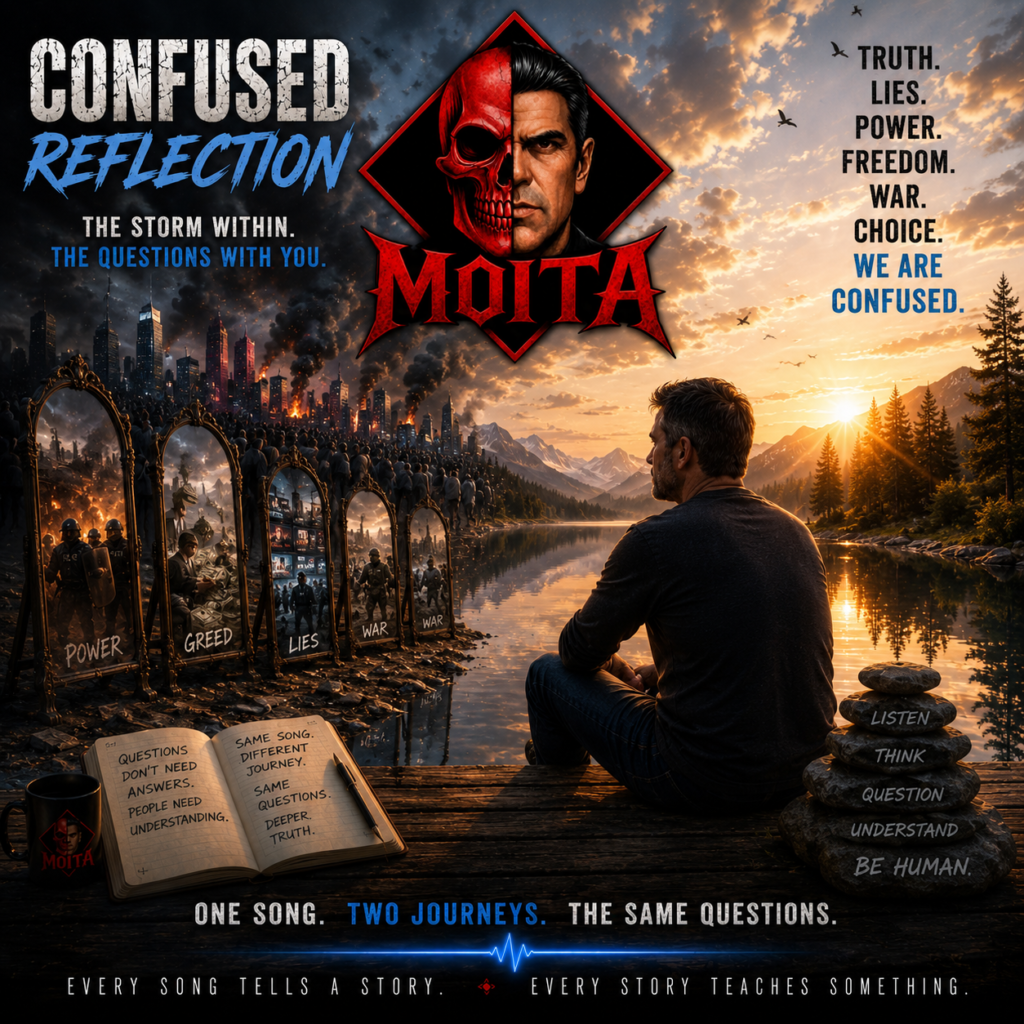






Reviews
There are no reviews yet.