
Description
About the SONG IS ABOUT
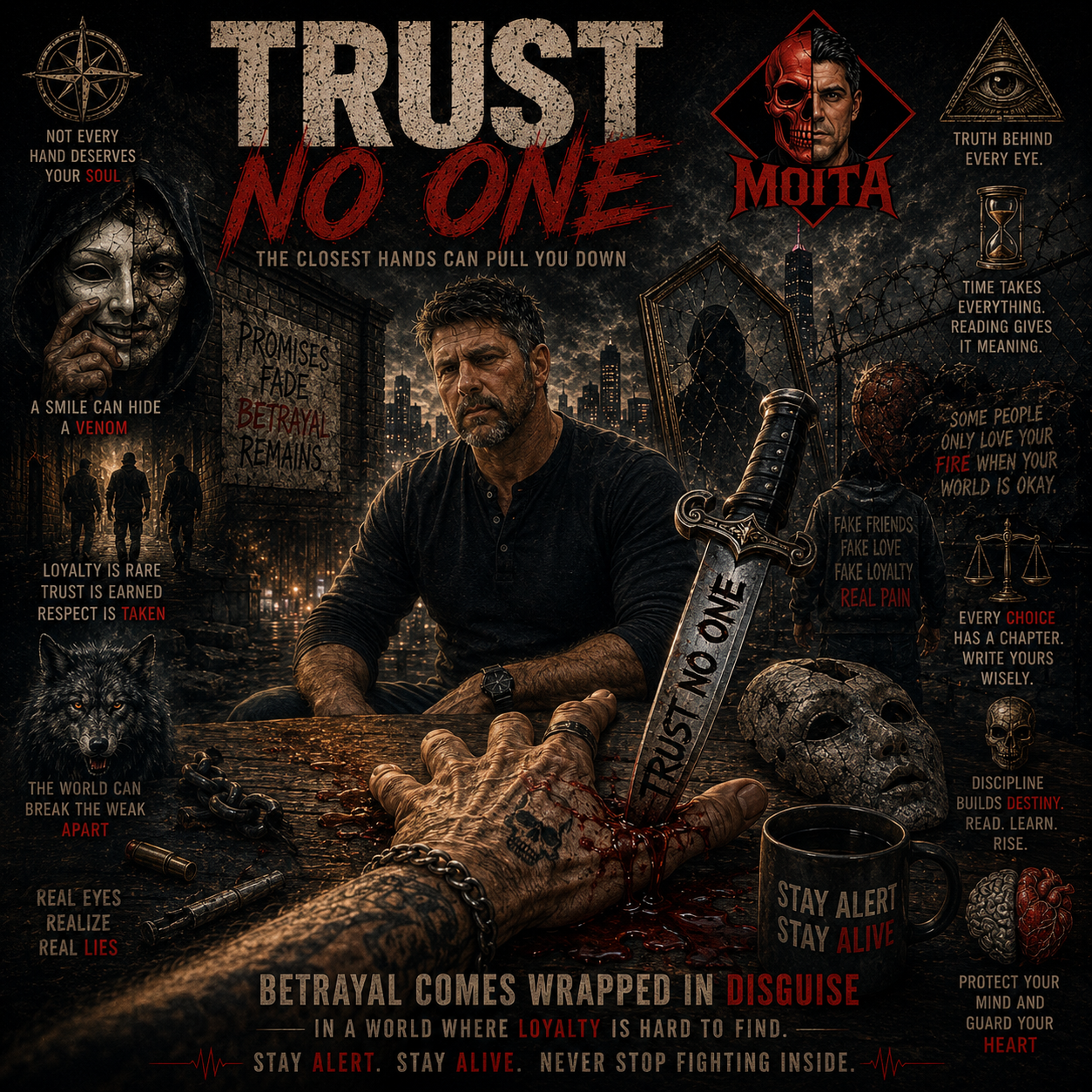
TRUST NO ONE
CATEGORY
Human Nature
PRIMARY EMOTION
Betrayal
ALSO FITS
Trust, Self-Reflection, Survival, Resilience, Personal Growth, Accountability, Relationships
WHAT THIS SONG IS ABOUT
Trust No One is about what happens when trust is broken and what happens inside us afterward.
At first, the title sounds hard.
It sounds absolute.
It sounds like I am telling people to shut everybody out and never believe anyone again.
That is not what this song is about.
The song begins with betrayal because betrayal changes the way people see the world.
When someone you trust hurts you, the damage is different than when it comes from a stranger.
A stranger can disappoint you.
A stranger can lie to you.
A stranger can even hurt you.
But betrayal comes from somebody who was already allowed close.
Somebody who knew you.
Somebody who understood enough about you to know where the weak spots were.
That is why the song begins with scars that do not come from strangers.
The real subject is not simply dishonesty.
It is the price of giving trust to the wrong person.
It is also about what happens after that trust is gone.
Do you become wiser?
Do you become suspicious?
Do you become angry?
Do you stop believing anyone?
Do you start treating good people as though they are responsible for what somebody else did?
That is where the song starts turning inward.
The title says Trust No One.
The deeper message is more complicated.
Trust carefully.
Pay attention.
Watch what people do.
Do not ignore patterns.
Do not confuse words with character.
Do not hand your deepest trust to someone simply because they ask for it.
At the same time, do not allow betrayal to turn you into the kind of person you never wanted to become.
That last part matters just as much as the warning.
I did not want to write a song that only pointed the finger at dishonest people.
That would have been too easy.
The song needed a mirror.
It needed to ask what happens when anger, resentment, disappointment, and suspicion stay inside too long.
It needed to ask whether the enemy is always the person standing in front of us.
Sometimes it is.
Sometimes the harder enemy is what we become after they are gone.
That is where Trust No One finds its real meaning.
THE STORY BEHIND THE SONG
Trust is one of those things we usually do not think about until something happens to it.
When trust is working, nobody talks about it.
You believe the person.
You believe their word.
You believe they are standing beside you for the reasons they say they are.
You relax around them.
You let them into parts of your life that strangers never see.
Then something happens.
A lie.
A broken promise.
A betrayal.
A story changes.
Something no longer adds up.
You realize the person you believed you knew may not have been exactly who you thought they were.
That is where this song begins.
Not with one particular stranger.
Not with some imaginary villain standing in the distance.
With people who were already close enough to shake your hand.
Close enough to sit at your table.
Close enough to know where to look.
That is what makes betrayal different.
Closeness gives people access.
Good people use that access carefully.
They protect what you trusted them with.
They respect your confidence.
They keep their word when keeping it becomes difficult.
Other people use access differently.
They learn what matters to you.
They learn what hurts you.
They learn what you will tolerate.
They learn what you are afraid to lose.
That knowledge can become a weapon if it ends up in the wrong hands.
I have always found that part of human behaviour interesting.
The person who can hurt you the most is often not the one who hates you openly.
Sometimes it is the one smiling beside you.
That is why the song uses images like the smile, the promise, the kiss, the handshake, the table.
Those are normally safe images.
Friendly images.
Human images.
The betrayal hides inside them.
That is what makes the danger harder to see.
There is also another side to this.
Sometimes people ignore things because they want to believe the best.
They explain away a warning sign.
Then another.
Then another.
They tell themselves it was a mistake.
They tell themselves the person did not mean it.
They remember the good moments and use those memories to explain the bad ones.
That does not always happen because someone is weak.
Sometimes it happens because they care.
Sometimes because they are loyal.
Sometimes because they believe people deserve another chance.
Sometimes because walking away means accepting something they are not ready to accept.
That is where trust becomes complicated.
The same thing that makes somebody loyal can also keep them in a situation longer than they should stay.
That is why the song does not only blame the person who betrays.
It also asks what we are willing to keep ignoring.
Not because their betrayal becomes our responsibility.
It does not.
Their choices belong to them.
But what we do after we see the truth belongs to us.
That is an important difference.
One of the biggest turning points in the song is the mirror.
Blame gets passed around easily.
People defend themselves.
They change stories.
They minimize what happened.
They point somewhere else.
They explain.
They justify.
They look for someone to carry part of the responsibility.
The mirror removes all of that.
Eventually everybody has one.
The person who caused the damage has to face what they did.
The person who was hurt may eventually have to face what the damage is doing inside them.
Those are not the same responsibility.
But both require honesty.
That is one of the reasons this song became more than a simple betrayal song.
It started outside.
It ended inside.
WHY I WROTE THIS SONG
I wrote Trust No One because trust has enormous value, yet people sometimes treat it as though it is cheap.
It is not cheap.
Trust can take years to build.
Sometimes a lifetime.
It grows through consistency.
Through keeping your word.
Through showing up.
Through honesty when honesty is uncomfortable.
Through what you do when nobody is watching.
Then one bad decision can damage everything.
Sometimes the person who caused the damage moves on quickly.
The person carrying the damage may not.
They may spend months or years trying to understand what happened.
That difference stayed with me.
I wanted the song to capture the moment when the disguise stops working.
The smile no longer convinces you.
The promise does not sound the same.
The explanation no longer covers the pattern.
Something becomes clear.
That is where daybreak comes into the song.
Daybreak is not only morning.
It is reality arriving.
It is the moment when darkness starts losing its control because you can finally see what is in front of you.
The truth may hurt.
Sometimes it hurts more than the lie.
But at least it is real.
I also wanted to write about blame.
That is another part of human behaviour I have seen over and over.
People want forgiveness.
They do not always want accountability.
They want the pressure removed.
They want the anger to disappear.
They want the person they hurt to move on.
But they may not want to admit what they actually did.
That contradiction belongs inside this song.
The finger comes out.
The story gets changed.
The name gets damaged.
Responsibility moves from one hand to another.
Nobody wants to hold it.
That is why the song keeps coming back to the mirror.
You can tell a story to other people.
You can defend yourself.
You can make excuses.
You can blame circumstances.
But eventually you still know what you did.
The mirror knows too.
The song needed that honesty.
It also needed one more thing.
I did not want the title to become the final answer.
Trust No One is the warning.
It is not the destination.
The destination is the last line.
Do not let it poison your heart.
That is why I wrote the song.
To warn people without teaching them to become cold.
To encourage boundaries without encouraging isolation.
To recognize betrayal without worshipping bitterness.
To protect yourself without losing yourself.
WHY THIS MATTERS TO ME
This matters to me because trust touches almost everything.
Family.
Friendship.
Relationships.
Business.
Work.
Community.
Even ordinary day-to-day life depends on people believing that words still mean something.
When somebody says they will do something, we expect them to do it.
When somebody says something in confidence, we expect it to stay there.
When somebody says they are loyal, we expect loyalty to remain when things become difficult.
Without trust, everything becomes harder.
Every conversation starts feeling suspicious.
Every silence gets interpreted.
Every mistake looks intentional.
Every promise gets questioned.
That is not a healthy way to live.
At the same time, blindly trusting everybody is not wisdom either.
Life teaches us to pay attention.
People reveal themselves through patterns.
One mistake may be a mistake.
Repeated behaviour becomes information.
That is where experience should help us.
Not by making us afraid of everybody.
By making us more observant.
This song matters to me because I do not want betrayal to have the final word.
I do not want one dishonest person to become the reason I stop recognizing honest people.
I do not want someone else’s lack of character to decide mine.
That is the deeper fight inside the song.
Can you be hurt and still remain yourself?
Can you become more careful without becoming cruel?
Can you learn without becoming bitter?
Can you guard your heart without closing it permanently?
Those are not easy questions.
They are real questions.
That is why they belong in MOITA.
WHY THIS SONG FITS MOITA
MOITA has never been about one subject.
It has always been about life.
The good parts.
The ugly parts.
The questions.
The contradictions.
The mistakes.
The things people do to each other.
The things we do to ourselves.
The things we learn too late.
The things we finally understand after years of getting them wrong.
Trust No One belongs inside MOITA because it deals with something almost everybody understands in some form.
Betrayal.
Not everybody experiences the same betrayal.
The details change.
A relationship.
A friendship.
Family.
Business.
Work.
Something private.
Something public.
But the feeling is recognizable.
You trusted.
Something changed.
Now you have to decide what happens next.
That is very MOITA to me.
The song does not pretend there is a perfect answer.
It does not say everybody is bad.
It does not say forgiveness is always easy.
It does not tell people to forget what happened.
It asks them to look at the whole experience honestly.
Who hurt you?
Why did you trust them?
What did you miss?
What did you learn?
What are you carrying now?
What kind of person are you becoming because of it?
That last question is where the song becomes bigger than betrayal.
It becomes about character.
MOITA has many songs that ask what happens after life knocks somebody down.
This one asks what happens after somebody breaks your trust.
Do you stay down?
Do you become like them?
Do you close yourself off forever?
Or do you learn enough to protect yourself without letting the damage own you?
That is why this song fits the library.
It begins with another person’s actions.
It ends with your own responsibility.
That is life.
READ THIS FIRST
Before reading the lyrics, forget the title for a moment.
Trust No One sounds severe.
It is supposed to.
The title comes from the wounded part of the song.
The part that has already seen what people can do.
The part that says enough.
But that is only the beginning.
The song keeps moving.
It starts with scars.
Then comes the smile.
The promise.
The kiss.
The lie.
Daybreak.
The truth.
The blame.
The mirror.
Then the song turns inward.
That is where the real journey begins.
If you have ever been betrayed, you may recognize parts of your own life in these lyrics.
You may hear a relationship.
A friendship.
Family.
Business.
Something else entirely.
You may remember somebody who earned your trust and then threw it away.
You may also hear yourself.
The times you ignored something.
The times you gave another chance.
The times you let anger stay too long.
The times you almost allowed somebody else’s behaviour to change who you were.
That is what I want you to carry into these lyrics.
Not paranoia.
Awareness.
Not hatred.
Wisdom.
Not revenge.
Character.
The title says Trust No One.
The final message says something harder.
Be careful who you trust.
Be careful what you become.
The first protects your future.
The second protects your heart.
FULL LYRICS
TRUST NO ONE
Some scars don’t come from strangers
They come from the hands you shook
The voices at your table
The ones that knew where to look
A smile can hide a venom
A promise can rot away
Some people sell your soul for nothing
Then stand there and pray
The knife don’t always come swinging
Sometimes it comes with a kiss
You learn real fast in this cold world
Trust is a dangerous risk
Daybreak
Reality cuts through the lies
Yesterday’s words still echo inside
Blame gets passed from hand to hand
But nobody wants to look in the mirror and understand
Everybody wants forgiveness
Nobody wants the blame
Everybody points the finger
While setting fire to your name
TRUST NO ONE
The truth gets buried alive
TRUST NO ONE
Most smiles wear a disguise
TRUST NO ONE
The closest hands can pull you down
TRUST NO ONE
Dark clouds still circle around
TRUST NO ONE
You better open your eyes
TRUST NO ONE
Betrayal comes wrapped in disguise
TRUST NO ONE
Sometimes the enemy lives inside your own mind
TRUST NO ONE
In a world where loyalty is hard to find
Late nights
Thinking about the damage done
Broken trust cuts deeper than a gun
Every lesson leaves another scar
Every wrong move shows you who they are
Some chase lust
Some chase greed
Some destroy everything they ever need
And when the walls come crashing down
They look for someone else to drown
But the hardest truth you ever face
Is staring back at your own face
The wars inside can’t be outrun
Sometimes your worst enemy is the one you become
TRUST NO ONE
The rain keeps falling hard
TRUST NO ONE
Protect your mind and guard your heart
TRUST NO ONE
Not every hand deserves your soul
TRUST NO ONE
Stay strong and never lose control
TRUST NO ONE
Through every storm you survive
TRUST NO ONE
But never stop fighting inside
TRUST NO ONE
The world can break the weak apart
TRUST NO ONE
But don’t let it poison your heart
SECTION TWO
THE STORY
Trust is strange when you really think about it.
You cannot hold it in your hand.
You cannot put a price on it.
You cannot look at somebody and know for certain whether they deserve it.
Yet we build enormous parts of our lives around it.
We trust people with our families.
Our relationships.
Our money.
Our businesses.
Our private thoughts.
Our weaknesses.
Our plans.
Sometimes even our future.
Most of the time, we do not stop and think about how much we have handed another person until something happens that makes us question whether we should have handed it over in the first place.
That is the territory where Trust No One was born.
This song did not come from one single event that I wanted to turn into a story.
It came from something much broader.
Years of living.
Years of watching people.
Years of seeing how differently people can behave depending on what is at stake.
I have seen enough life to know that people can surprise you in both directions.
Someone you barely know can sometimes show you incredible kindness.
Someone you thought you knew well can sometimes show you a side of themselves you never expected to see.
That contradiction fascinates me.
How can somebody sit at your table one day and work against you another day?
How can somebody ask you to trust them while hiding something from you?
How can somebody speak about loyalty and then abandon it the moment loyalty becomes inconvenient?
How can somebody hurt another person and then become more concerned about protecting their own reputation than repairing the damage they caused?
Those are human questions.
They are not limited to one relationship or one type of person.
That is why I did not want Trust No One tied to one particular story.
I wanted people to be able to hear their own story inside it.
For one person, it may be a marriage.
For another, a friendship.
For somebody else, family.
Business.
Work.
A partnership.
A promise.
The details change.
The feeling does not.
THE PEOPLE WE LET CLOSE
There is something important about the opening of this song.
I did not begin with an enemy.
I began with a handshake.
That was deliberate.
When we think about danger, we often imagine somebody coming toward us aggressively.
An obvious threat.
Someone we already distrust.
Life does not always work that way.
Sometimes the person who causes the greatest damage is somebody we once welcomed.
That is why the first verse talks about the hands you shook and the voices at your table.
Those are images of acceptance.
A handshake means something.
At least I believe it should.
It can mean agreement.
Respect.
Business.
Friendship.
Your word.
The table means something too.
People do not usually invite enemies to sit at their table.
You invite people you are comfortable around.
People you talk with.
People you eat with.
People who may hear things about your life that the rest of the world never hears.
Once somebody gets that close, they know more.
That knowledge can be used two ways.
A good person uses it to understand you better.
A dishonest person may eventually use it to hurt you better.
That is a hard lesson.
It is also one of the reasons betrayal cuts differently from ordinary conflict.
The person already knew where to look.
WHEN WORDS AND ACTIONS SEPARATE
I have always believed that words should mean something.
If I tell somebody I am going to do something, I believe that should carry weight.
That does not mean people never make mistakes.
We all do.
Plans change.
Life happens.
People fail.
I have failed.
There is a difference between making a mistake and building a pattern around excuses.
That difference becomes clearer with age.
When we are younger, words can carry enormous power.
Someone tells us they love us.
We believe them.
Someone tells us they are loyal.
We believe them.
Someone tells us they will always be there.
We want to believe that too.
Eventually life teaches us that the sentence is only the beginning.
Time tells you whether the sentence was true.
That became one of the ideas underneath Trust No One.
Anybody can say the right thing for five minutes.
Character is what happens after the conversation is over.
What happens tomorrow?
Next month?
Next year?
What happens when keeping your word costs you something?
What happens when another opportunity appears?
What happens when nobody would know if you broke the promise?
That is where character becomes visible.
A promise does not always explode.
Sometimes it rots.
I chose that image because that is how some relationships and friendships fall apart.
Slowly.
One excuse.
One lie.
One missing piece of the truth.
Another excuse.
Another contradiction.
Something begins smelling wrong long before the whole thing finally collapses.
The strange part is that the person who cares the most may be the last one willing to admit it.
WHEN LOYALTY WORKS AGAINST YOU
Loyalty is something I respect.
I do not think there is enough of it.
But even loyalty needs judgment.
That may sound strange, but I believe it.
There are times when loyalty can keep somebody standing beside a person long after that person has stopped deserving it.
You remember who they used to be.
You remember what they promised.
You remember the good years.
You remember the times they helped you.
You keep thinking maybe the person you trusted will come back.
So you give another chance.
Then another.
That is where a good quality can begin working against you.
Your loyalty becomes the reason you keep accepting disloyalty.
I think many people have experienced that without ever putting those words around it.
They are not stupid.
They are not necessarily weak.
Sometimes they simply care.
Sometimes they do not want to throw away years of history over something they hope can still be repaired.
There is nothing wrong with giving somebody a chance.
There is nothing wrong with forgiveness.
But forgiveness and blindness are not the same thing.
Eventually behaviour has to matter.
That is one of the lessons inside this song.
THE DISGUISE
One reason betrayal can be difficult to recognize is because it rarely introduces itself honestly.
Nobody walks into your life and says, I am going to earn your confidence and use it against you later.
Nobody says, believe this promise even though I have no intention of keeping it.
Nobody says, I am smiling at you while working against you.
If people announced those things, betrayal would be easy to avoid.
That is why the song keeps returning to disguises.
The smile.
The promise.
The kiss.
Even prayer.
All of those things normally carry positive meaning.
That is exactly why they work in the song.
The danger is hiding inside something that should represent safety.
I am not saying smiles are dishonest.
I am not saying affection is dangerous.
I am certainly not saying prayer itself is false.
I am talking about hypocrisy.
There is a difference.
A person can present one face to the world while living another life behind it.
That has probably existed for as long as human beings have existed.
We are complicated creatures.
We care enormously about what other people think of us.
Sometimes people care so much about appearing good that they spend more effort protecting the appearance than actually being good.
That is where hypocrisy begins.
The image matters more than the character underneath it.
Trust No One pushes against that.
I would rather know an uncomfortable truth about somebody than live comfortably inside a lie about them.
DAYBREAK
There is one word in the lyrics that I think carries much more weight than its size suggests.
Daybreak.
I could have simply continued the verse.
I wanted that word standing there because it represents the moment everything changes.
Night hides things.
Daylight reveals them.
Daybreak is when the person finally sees.
Maybe they discover the lie.
Maybe somebody tells them something.
Maybe the pieces finally connect.
Maybe nothing dramatic happens at all.
Sometimes you simply reach a moment when you can no longer explain away what has been sitting in front of you.
Reality cuts through the lies.
That moment can be painful.
People sometimes talk about discovering the truth as though truth immediately brings peace.
I do not think that is always true.
Sometimes knowing the truth hurts like hell.
The peace comes later.
First comes the shock.
Then the questions.
Then you start replaying everything.
That is why the next line talks about yesterday’s words still echoing inside.
Once new information arrives, old conversations can suddenly sound completely different.
You remember something somebody said six months ago.
At the time it seemed harmless.
Now it means something else.
You remember a promise.
A strange reaction.
A missing detail.
A story that did not quite fit.
The past starts changing because the present has given you information you did not have before.
That can drive a person crazy if they stay inside it too long.
You can spend years trying to reconstruct every conversation.
Eventually you have to ask whether understanding every detail will actually change what you already know.
Sometimes it will.
Sometimes the pattern has already told you enough.
THE SECOND BETRAYAL
There is another kind of betrayal inside this song that took it somewhere more interesting for me.
Self-betrayal.
I do not mean blaming yourself because somebody else lied to you.
That is important to make clear.
If somebody betrays you, their decision belongs to them.
Their dishonesty is theirs.
Their choices are theirs.
But after the truth becomes visible, our own choices begin.
That is where the mirror enters.
Have I been ignoring what I already know?
Have I been accepting behaviour I would tell somebody else never to accept?
Have I been betraying my own values just to avoid conflict?
Have I been making excuses because admitting the truth would force me to make a difficult decision?
Those are uncomfortable questions.
They are also useful ones.
There have been times in life when I have looked back and thought, I should have seen that sooner.
I think most people can say the same thing about something.
Looking backward gives us information we did not have while we were standing inside the situation.
That is why I try not to turn hindsight into self-punishment.
The better question is not, how could I have been so stupid?
The better question is, what can I recognize next time that I could not recognize then?
That turns regret into knowledge.
THE MIRROR
The mirror appears more than once in the thinking behind this song because I wanted responsibility to run in both directions.
The person who caused the damage needs a mirror.
So does the person carrying the damage.
Again, not for the same reason.
The betrayer needs to ask what they did.
The survivor needs to ask what they are becoming.
That distinction may be the most important one on this entire page.
If somebody hurts you, you are not responsible for their decision.
You are responsible for what you do with yourself afterward.
That can feel unfair.
Somebody else creates the wound and now you are the one who has to do the work of healing it.
Unfortunately, life does not always distribute responsibility according to fairness.
Sometimes we are left repairing damage we did not create.
The question becomes whether we repair it or allow it to keep spreading.
That is why the line about the worst enemy becoming the person you become is so important.
The song suddenly stops being about them.
Now it is about you.
Anger can change a person.
So can resentment.
So can fear.
If you carry those things long enough, they start speaking for you.
They make decisions.
They decide who gets close.
They decide how you interpret somebody else’s intentions.
They can make an innocent person pay for something another person did years earlier.
At that point, the betrayal has travelled much further than the original relationship.
I did not want that to be the ending.
WHY THE TITLE IS HARDER THAN THE MESSAGE
I like titles that make people stop.
Trust No One does that.
You see those three words and immediately understand the warning.
But I also like when a title means something slightly different after you have travelled through the whole song.
At the beginning, Trust No One sounds like fear.
By the end, I think it sounds more like experience.
Not literally trust nobody.
Trust nobody blindly.
There is a difference.
Trust should be earned.
That does not mean making everybody prove themselves as though they are standing trial.
It means allowing time to reveal character.
Listen to words.
Watch actions.
See whether they continue matching.
Pay attention to how somebody treats people when there is nothing to gain.
Pay attention to what happens when they make a mistake.
Do they admit it?
Do they repair it?
Or do they immediately begin looking for somebody else to blame?
Those things tell you something.
Experience should make us better at reading those patterns.
It should not make us hate people.
THE PART I DID NOT WANT TO LOSE
There was one thing I knew this song needed before it could be finished.
Hope.
Not soft hope.
Not pretending everything works out.
Something stronger.
The hope of remaining yourself.
That is why the song ends where it does.
Protect your mind.
Guard your heart.
Not every hand deserves your soul.
Stay strong.
Survive the storm.
Keep fighting inside.
Then finally:
“But don’t let it poison your heart”
That line is the destination.
Without it, the song would only be a warning.
With it, the song becomes a choice.
You can carry the lesson without carrying the poison.
You can remember what happened without living inside it forever.
You can become harder to fool without becoming harder to love.
You can recognize dishonesty and still appreciate honesty when you find it.
You can walk away from somebody who repeatedly betrays you without deciding the entire human race is the same.
I think that is a much harder form of strength than simply shutting everybody out.
Anybody can build a wall.
Learning where to put the door is harder.
Learning who deserves the key is harder still.
WHY THIS STORY BELONGS HERE
When I look at Trust No One as part of the larger MOITA library, I do not see it as a song about paranoia.
I see it as a song about judgment.
Character.
Boundaries.
Accountability.
And the fight to remain human after another person gives you a reason not to trust them.
That is why I cared enough to write it.
I have lived long enough to know there are dishonest people in this world.
I have also lived long enough to know there are good ones.
People who keep their word.
People who stay.
People who do not repeat what you told them in confidence.
People who could take advantage of you and choose not to.
People who help when there is nothing in it for them.
Those people matter.
If betrayal teaches us that they do not exist, then betrayal has taught us the wrong lesson.
I would rather become wiser.
I would rather know that trust is valuable precisely because not everybody deserves it.
I would rather recognize the people who earn it and make sure I never take them for granted.
And I would rather become somebody whose own word still carries weight.
That is the story behind Trust No One.
It begins with the hands you shook.
It travels through the lies, the disguises, the blame, the scars and the mirror.
Then it asks one final question.
After everything that happened, who are you going to be now?
For me, that question is bigger than betrayal.
It is one of the questions life keeps asking us in different ways.
And it is exactly why this song belongs in MOITA.
SECTION THREE
THE LYRIC JOURNEY
PART 1
The first time you hear Trust No One, the title probably tells you what you think the song is going to be about.
Betrayal.
Dishonesty.
People you cannot trust.
That is certainly where it begins, but I want to walk through these lyrics with you because the song does not stay there.
It changes as it moves.
At first, we are looking at what other people can do to us. Then we start looking at what those experiences can do inside us. Eventually the song reaches the place I really wanted it to reach.
Not revenge.
Not hatred.
Not shutting everybody out.
Character.
That journey begins with the first scar.
“Some scars don’t come from strangers”
I started there because betrayal requires something that ordinary conflict does not.
Trust.
If somebody you never trusted lies to you, you may be angry. You may be disappointed. You may even suffer because of what they did.
But betrayal has another layer.
You believed something about that person before they hurt you.
That belief is part of what gets damaged.
I think most people who have lived long enough understand that difference.
There are people in this world we expect trouble from. We know where we stand with them. Sometimes that is actually easier.
The harder situations are the ones we never saw coming.
“They come from the hands you shook”
I wanted the hand there for a reason.
Think about what a handshake represents.
Agreement.
Respect.
Introduction.
Business.
Friendship.
Sometimes a promise without anybody actually saying the word promise.
I grew up believing a handshake meant something.
Your word meant something.
If you shook somebody’s hand and agreed to something, there was supposed to be some weight behind it.
Maybe that sounds old-fashioned to some people now.
I do not think it should.
A society cannot function very well if nobody’s word means anything.
Business cannot.
Relationships cannot.
Friendships cannot.
Families cannot.
At some point, human beings have to be able to believe each other.
That is why the hand becomes such an important image.
The same hand you accepted can become connected to the scar.
“The voices at your table”
Now we move closer.
A handshake can happen anywhere.
A table is more personal.
Think about the people who have sat around your table throughout your life.
Family.
Friends.
People you worked with.
People you celebrated with.
People you argued with.
People who came into your home.
People who heard conversations that strangers never heard.
A table can become one of the most ordinary places in life, but it can also be one of the most personal.
That is where people talk.
That is where they learn things about one another.
That is where somebody may discover what matters to you.
“The ones that knew where to look”
That is the part that changes the table.
They did not accidentally find the vulnerable place.
They knew where to look because they had been close enough to learn.
That is one of the terrible contradictions of trust.
The more somebody knows you, the better they can support you.
They know when something is wrong.
They know what matters to you.
They know what makes you laugh.
They know what scares you.
They know when you need somebody beside you.
But that same knowledge can become dangerous in the wrong hands.
The person who knows how to comfort you may also know exactly how to hurt you.
That does not mean we should stop allowing people to know us.
If we did that, we would lose one of the most important parts of being human.
It means access has value.
Not everybody should receive the same amount of it.
That is something many of us learn only after giving too much access to the wrong person.
“A smile can hide a venom”
I deliberately put two things together that should not belong together.
A smile and venom.
A smile tells us everything is fine.
Venom tells us something dangerous has entered the body.
That is how deception works when it is done well.
If deception looked like deception, nobody would fall for it.
If every dishonest person walked around wearing a sign saying, Do not trust me, life would be much easier.
They do not.
Dishonest people can be charming.
Manipulative people can be friendly.
Somebody can compliment you while resenting you.
Somebody can congratulate you while hoping you fail.
That is human nature at its worst, but it exists.
The important thing is not to start believing every smile is fake.
That would take us in exactly the direction I do not want this song to go.
The point is simpler.
A smile is not evidence of character.
Time is better evidence.
Actions are better evidence.
Consistency is better evidence.
“A promise can rot away”
I could have written that a promise can break.
That would have been obvious.
I preferred rot because rot happens differently.
Something can look normal on the outside while deterioration has already started underneath.
I think promises sometimes die that way.
Not with one huge betrayal.
Slowly.
Somebody stops doing what they said they would do.
Then comes the explanation.
Then another broken promise.
Then another explanation.
Eventually you realize the words are still being spoken but they no longer have anything underneath them.
That is when I think people have to start paying attention to patterns.
We all fail.
I do.
You do.
Everybody does.
If somebody breaks one promise, that does not automatically define their entire character.
But if the same behaviour happens repeatedly, eventually we have to stop calling every repetition an accident.
There is a point where a pattern becomes information.
That is one of the lessons running underneath this entire song.
“Some people sell your soul for nothing”
This line is deliberately ugly.
There are people who will throw away something enormously valuable for something unbelievably small.
A friendship for gossip.
A relationship for one moment.
A reputation for a little advantage.
Years of trust for money.
A family for lust.
Their own integrity because they wanted something right now.
Sometimes you look at what somebody destroyed and then look at what they gained, and the two do not even seem remotely equal.
That is why I used “for nothing.”
It does not necessarily mean literally nothing.
It means nothing compared with what was thrown away.
That is something I have never completely understood about people.
We can spend years building something and minutes destroying it.
Trust is probably one of the clearest examples.
You may spend twenty years proving you are trustworthy.
One decision can make somebody question all twenty.
“Then stand there and pray”
I want to be clear about this line because it could easily be misunderstood if somebody pulled it away from the rest of the song.
I am not attacking prayer.
I am attacking hypocrisy.
There is a big difference.
Faith is personal.
I respect that.
What I am talking about is somebody using the appearance of goodness to hide behaviour that is anything but good.
We have all seen versions of that.
People who speak beautifully about morality while treating others terribly.
People who demand standards from everybody else that they do not apply to themselves.
People who want to be seen as good more than they want to do good.
Prayer in this line becomes part of the public face.
The private actions tell another story.
That contradiction bothers me.
I would rather deal with somebody who admits their faults than somebody who hides behind an image of perfection.
At least with the first person, you know where you stand.
“The knife don’t always come swinging”
Now the song becomes more dangerous.
A knife coming toward you is obvious.
You do not need somebody to explain the situation.
You know there is danger.
You react.
That kind of threat is frightening, but at least it is visible.
Betrayal usually is not.
“Sometimes it comes with a kiss”
That is the opposite image.
The kiss says come closer.
The knife says get away.
Put them together and you have the contradiction I wanted.
Something that looks like affection carrying something that can hurt you.
For one listener, that may immediately become romantic betrayal.
I understand why.
But I did not want to trap the line inside romance.
The kiss can represent any form of closeness used as cover.
False affection.
False friendship.
False loyalty.
Somebody making you comfortable because comfort lowers your guard.
Again, that does not mean closeness itself is dangerous.
The song would become ridiculous if that were the lesson.
We need closeness.
Human beings need each other.
The warning is about people who understand that need and use it.
“You learn real fast in this cold world”
Some lessons arrive faster than others.
You can spend years hearing advice and still not completely understand it.
Then life gives you one experience and suddenly you understand the advice perfectly.
That is what this line means to me.
People can tell you to be careful.
Your parents can warn you.
Friends can warn you.
You can read every book ever written about human behaviour.
Sometimes one experience teaches the lesson in a way none of those things could.
Unfortunately, those lessons can be expensive.
They can cost money.
Relationships.
Years.
Confidence.
Peace of mind.
Sometimes they cost a part of the innocence you had before.
“Trust is a dangerous risk”
At this point in the song, that statement feels true.
We have just walked through scars, hands, the table, venom, rotting promises, hypocrisy, the knife and the kiss.
Of course trust feels dangerous now.
That is exactly where I wanted the listener emotionally.
But I do not want us to accept this line as the final truth of the song.
We are still early in the journey.
Trust always involves risk because you can never completely control another human being.
You can know somebody for decades and still not own their decisions.
That uncertainty is part of trust.
But risk does not automatically mean something should be avoided.
Love is a risk.
Friendship is a risk.
Starting a business with somebody is a risk.
Believing in somebody is a risk.
Opening your life to another person is a risk.
If the answer to every risk is never take one, you may protect yourself from certain kinds of pain.
You may also protect yourself from half of life.
The better question is not whether trust contains risk.
It does.
The better question is how we learn who has earned that risk.
Then the song reaches one word.
“Daybreak”
I love what this word does here.
Everything before it has been happening in a kind of darkness.
We have been talking about things hidden behind other things.
Venom behind the smile.
Decay behind the promise.
A knife behind the kiss.
Then morning comes.
Daybreak.
Something becomes visible.
I think everybody has experienced some version of daybreak in life.
That moment when you suddenly understand something you did not understand yesterday.
Maybe somebody finally tells you the truth.
Maybe you discover something.
Maybe you connect two pieces of information.
Maybe you simply stop making excuses for what has been sitting in front of you the whole time.
Whatever causes it, the darkness changes.
“Reality cuts through the lies”
I used “cuts” because truth is not always gentle.
People say they want the truth.
We all say that.
But sometimes the lie was comfortable.
The truth may destroy something you believed in.
It may change the way you see somebody.
It may force a decision you did not want to make.
It may tell you that years of your life were not exactly what you thought they were.
That can hurt.
Reality does not ask whether you are ready.
Once you know something, you know it.
You cannot honestly return to not knowing it.
That is why daybreak can be both painful and freeing.
You finally see.
Now you have to decide what to do with what you see.
“Yesterday’s words still echo inside”
This is where betrayal starts reaching backward.
The truth arrives today.
Suddenly yesterday sounds different.
You remember conversations.
Promises.
Explanations.
Things that did not make sense at the time.
You replay them with information you did not have when they originally happened.
That can become one of the hardest parts.
The mind wants to investigate the past.
When did it begin?
Was that conversation real?
Was that promise already a lie?
Did they mean what they said then?
Was I the only person who did not know?
Those questions can keep somebody awake for a long time.
Sometimes answers exist.
Sometimes they do not.
There is a danger in believing we need every answer before we can move forward.
We may never get every answer.
The other person may never tell the complete truth.
They may not even understand themselves well enough to explain why they did what they did.
At some point, the question changes from what exactly happened then to what do I know now?
That question gives us somewhere to go.
“Blame gets passed from hand to hand”
The hands return.
I like that connection.
At the beginning, we shook the hand.
Now people are using their hands to get rid of responsibility.
Nobody wants to hold the blame.
Pass it over there.
It was because of this person.
Because of that situation.
Because I was angry.
Because I was drinking.
Because I was lonely.
Because you did something first.
Because somebody else told me to.
Human beings can become incredibly creative when we are trying not to admit we were wrong.
I include myself in that.
I do not think anybody reaches adulthood without making excuses for something.
The question is whether we eventually stop.
“But nobody wants to look in the mirror and understand”
Here is the first mirror.
We will meet it again later, and when it returns it becomes even more important.
Right now, the mirror is about accountability.
It is easy to explain yourself to somebody else.
The mirror is harder.
Why did I do that?
Why did I lie?
Why did I hurt somebody who trusted me?
Why am I blaming everybody except myself?
Those questions are uncomfortable.
They are also where change starts.
You cannot fix something you refuse to admit exists.
That applies to the person who betrayed somebody.
It also applies to all of us in different areas of life.
If every problem in my life is always somebody else’s fault, then I have also given everybody else control over whether my life improves.
There are things people do to us that absolutely are not our fault.
There are also choices afterward that belong to us.
Knowing the difference matters.
“Everybody wants forgiveness”
Of course we do.
Forgiveness feels good when we are the person asking for it.
We want the pressure removed.
We want another chance.
We want the other person to stop looking at us through the thing we did.
Sometimes we genuinely regret it.
Sometimes people want forgiveness because they have changed.
But sometimes they simply want the consequences to disappear.
“Nobody wants the blame”
That is the uncomfortable half.
Forgiveness without accountability becomes cheap.
If I hurt somebody and immediately start telling them why they should forgive me, I have made their pain about my comfort.
Real accountability has to be able to sit with what happened.
It has to admit it.
It has to understand that saying sorry does not create an obligation for the other person to immediately trust again.
An apology can happen in seconds.
Rebuilding trust happens through behaviour.
That takes time.
“Everybody points the finger”
Now blame becomes visible.
We are no longer just passing it.
We are assigning it.
You.
Him.
Her.
Them.
Anybody except me.
There is something almost automatic about pointing when people feel cornered.
The song is building toward what happens when blame is not enough.
“While setting fire to your name”
This is where betrayal can become something larger.
Now reputation enters the story.
Sometimes people do something wrong and admit it.
Sometimes they try to protect themselves by changing the way everybody sees the person they hurt.
That is a second wound.
The original betrayal happened privately.
Now the story becomes public.
A name can take a lifetime to build.
People know you through what they believe about that name.
Your work.
Your character.
Your history.
Your reputation.
Set fire to it and suddenly the person is not only defending themselves from what happened.
They are defending themselves from a story about what happened.
Rumours are powerful because they travel faster than explanations.
People hear one side.
They fill in missing pieces.
They repeat something.
By the time it reaches the fifth person, it may barely resemble the original event.
Fire works as the image because fire spreads.
Once it is moving, controlling it becomes difficult.
And that brings us to the first chorus.
By now the title is no longer just three words printed at the top of the page.
The song has earned the warning.
We have walked through the people at the table.
The smile.
The promise.
The knife.
The kiss.
Daybreak.
The echo.
The blame.
The mirror.
The burning name.
Now the chorus arrives carrying all of it.
“TRUST NO ONE”
At this moment, I want you to hear those words exactly as somebody might feel them after everything we have just walked through.
Not as philosophy.
Not as a rule for how every person should live.
As a reaction.
The wound is speaking.
And that is where the next part of the journey begins.
SECTION THREE
THE LYRIC JOURNEY
PART 2
“TRUST NO ONE”
Now the title has a history behind it.
When we first saw those words, they could have meant almost anything. Now we know what brought the person to this point.
The warning has been earned through experience.
That does not necessarily make it completely right.
Pain can tell the truth about what happened while still reaching the wrong conclusion about everybody else.
That distinction becomes important as we move through the chorus.
“The truth gets buried alive”
I like the word “alive” here because the truth has not disappeared.
It still exists.
Somebody may hide it.
Change the story.
Deny it.
Talk over it.
Convince other people of something different.
But none of those things actually kill the truth.
They bury it.
There is a difference.
I think we sometimes underestimate how much energy people can spend trying to protect a lie.
One lie needs another explanation.
That explanation creates another problem.
Now something else has to be hidden.
Eventually a person can spend more effort maintaining the false story than it would have taken to simply tell the truth in the first place.
The truth is still underneath all of it.
That is one thing I have learned about reality.
You can argue with it.
You can dislike it.
You can hide it for a while.
Reality does not need your permission to remain real.
Sometimes the truth comes out quickly.
Sometimes it takes years.
Sometimes only two people ever know exactly what happened.
That does not change what happened.
“TRUST NO ONE”
The warning returns.
“Most smiles wear a disguise”
This line comes from the wounded side of the song.
I think that matters.
If I were sitting across from you having this conversation, I would not tell you that most people who smile at you are dishonest.
I do not believe that.
But I understand why somebody who has just been betrayed might feel that way.
That is one of the things I wanted to allow the song to do.
People do not think like philosophers while they are hurting.
They think emotionally.
One false smile can make the next ten smiles look suspicious.
One person lies and suddenly you start wondering who else is lying.
One relationship collapses and somebody says they will never love again.
One business partner cheats somebody and now every future business relationship begins under suspicion.
Pain generalizes.
It takes one experience and tries to turn it into a rule because rules feel safer.
If nobody can be trusted, then I never have to take the risk of trusting the wrong person again.
There is logic in that.
There is also a terrible price.
Because the rule does not only keep dishonest people outside.
It keeps everybody outside.
We are not ready to solve that yet.
The song is still inside the warning.
“TRUST NO ONE”
“The closest hands can pull you down”
Hands return again.
By now they have almost become a character of their own.
We shook them.
They passed blame.
Now the closest ones can pull us down.
Why the closest?
Because they have reach.
Somebody far away may dislike you and have very little effect on your life.
Somebody close can change everything.
They can influence your confidence.
Your decisions.
Your family.
Your work.
Your reputation.
Your sense of what is true.
That is why choosing who stands close matters.
But there is another side to this image that I do not want to ignore.
The closest hands can also pull you up.
That is what makes trust worth protecting.
The same human closeness that creates the possibility of betrayal also creates the possibility of loyalty.
If we remove the first possibility completely, we may remove the second one too.
The song has not reached that understanding yet, but I want it sitting quietly in the background while we continue.
“TRUST NO ONE”
“Dark clouds still circle around”
The truth has already arrived.
Daybreak happened.
So why are there still dark clouds?
Because knowing the truth and recovering from the truth are not the same thing.
I think that is something people sometimes misunderstand.
They imagine that once a bad situation ends, the person should be fine.
The relationship is over.
The business partnership is finished.
The liar has been exposed.
The person walked away.
Problem solved.
Not necessarily.
The event can end before the effects end.
Dark clouds can be memories.
Suspicion.
Anger.
Questions.
Embarrassment.
Fear of repeating the same mistake.
The feeling that your own judgment cannot be trusted anymore.
That last one can be especially damaging.
When somebody fools you, you may not only stop trusting them.
You may stop trusting yourself.
How did I not see it?
How did I believe that?
Why did everybody else know before I did?
Now the damage has moved inward.
That is exactly where this song is heading.
“TRUST NO ONE”
“You better open your eyes”
This line is more direct.
It is almost somebody grabbing you by the shoulders.
Look.
Stop looking at what you want to see.
Look at what is actually happening.
There are times when hope is beautiful.
There are also times when hope keeps people trapped.
That is a difficult thing to say because we usually talk about hope as though it can only be good.
I do not think life is that simple.
If somebody repeatedly shows you the same behaviour and you keep hoping they will become somebody completely different, hope may stop protecting you.
Reality has to get a vote.
Opening your eyes does not mean becoming cynical.
It means allowing evidence to matter.
If somebody’s actions keep contradicting their words, eventually the actions deserve more attention.
That is not cruelty.
That is observation.
“TRUST NO ONE”
“Betrayal comes wrapped in disguise”
We have already seen several disguises.
The smile.
The promise.
The kiss.
Now I used the word “wrapped.”
That makes betrayal sound almost like a gift.
You see the package before you know what is inside.
I think some of the worst decisions in life arrive beautifully wrapped.
An opportunity looks perfect.
A person seems perfect.
A deal sounds perfect.
Everything we want to hear is sitting on the outside.
Then time opens the package.
That is why patience can protect us.
We live in a world that encourages quick decisions about people.
We meet somebody and decide almost immediately whether we like them.
Social media can make us feel as though we know somebody we have never met.
A photograph.
A few sentences.
A video.
A public personality.
We fill in the rest.
But character is not a photograph.
It is not a first impression.
It is not a speech.
Character needs time.
That does not mean everybody has something terrible hidden underneath.
It means time tells us things presentation cannot.
“TRUST NO ONE”
“Sometimes the enemy lives inside your own mind”
Here it is.
This is where the song turns.
Until this line, I have given you plenty of people to blame.
The dishonest person.
The false friend.
The betrayer.
The hypocrite.
The person spreading the story.
The person passing blame.
Now I remove all of them for a moment.
What if the person hurting you today is no longer in the room?
What if they have been gone for years?
What if the situation ended but the conversation never stopped inside your head?
That is an entirely different battle.
The mind is an incredible thing.
It can create.
Imagine.
Remember.
Solve problems.
Write songs.
Build things that do not exist yet.
It can also replay pain with unbelievable accuracy.
A sentence somebody said twenty years ago can suddenly return as though it happened yesterday.
A smell can bring back a room.
A song can bring back a person.
A photograph can bring back an entire period of life.
Memory is powerful.
That power can work against us when we become trapped inside the same event.
The enemy inside the mind can be fear.
Resentment.
Shame.
Revenge.
Suspicion.
The constant need to know why.
Sometimes it is the voice saying, you were stupid for trusting them.
Sometimes it says, everybody will do the same thing.
Sometimes it says, hurt them before they hurt you.
That voice can sound protective.
That is what makes it dangerous.
Not every thought that claims to protect us is helping us.
Sometimes protection becomes isolation.
Sometimes caution becomes fear.
Sometimes strength becomes hardness.
Sometimes refusing to be fooled again becomes refusing to believe anybody.
The battle has changed.
We are no longer only asking whether another person deserves our trust.
We are asking whether we can trust our own mind to respond to the damage without allowing the damage to take control.
“TRUST NO ONE”
“In a world where loyalty is hard to find”
I did not write that loyalty is impossible to find.
I wrote that it is hard to find.
There is hope inside that difference.
Loyalty exists.
I have seen it.
I think most people have if they stop and look beyond the betrayals.
Think about somebody who kept a confidence.
Somebody who stood beside you when there was nothing in it for them.
Somebody who told you an uncomfortable truth because they cared more about you than about keeping the conversation comfortable.
Somebody who had an opportunity to take advantage of you and did not.
Somebody who stayed.
Those people do not always make the biggest noise.
Dishonesty gets attention because it creates damage.
Loyalty often happens quietly.
A person simply does what they said they would do.
No drama.
No announcement.
No applause.
They show up again tomorrow.
Then again next year.
That is how trust is actually built.
Not through one enormous gesture.
Through consistency.
So when I say loyalty is hard to find, I am not saying stop looking.
I am saying recognize its value when you find it.
The chorus ends there, but the song is not finished.
We have reached an important point.
The first part looked outward.
The chorus began turning inward.
Now the music moves us somewhere quieter.
“Late nights”
Two words.
Completely different atmosphere.
Earlier we had daybreak.
Now we are back in darkness, but this darkness is different.
Daybreak was revelation.
Late night is reflection.
During the day, people can stay busy.
Work.
Responsibilities.
Phone calls.
Other people.
Noise.
There are things to do.
At night, especially when you cannot sleep, the mind gets the room to itself.
Anybody who has spent a night thinking about something they wish they could stop thinking about understands these two words.
The clock keeps moving.
The conversation in your head does not.
“Thinking about the damage done”
Not the event anymore.
The damage.
That is an important difference.
The event may have lasted five minutes.
The damage may last years.
What did it change?
Did it change how you see yourself?
Did it change how you see relationships?
Did it cost money?
A friendship?
A family?
An opportunity?
Did it make you suspicious?
Did it make you angry?
Did it cause you to pull away from people who had nothing to do with it?
Sometimes we measure damage only by what we can see.
There are forms of damage nobody else notices.
A person still goes to work.
Still smiles.
Still answers the phone.
Still handles responsibilities.
From the outside, everything looks normal.
Inside, they are replaying something at three in the morning.
That is why I wanted late nights in the song.
Betrayal does not always perform publicly.
Sometimes its longest conversations happen when nobody else is awake.
“Broken trust cuts deeper than a gun”
This is emotional language.
I want to say that clearly because I am not making a medical comparison between betrayal and a gunshot.
The line is about how invisible damage can reach deep inside somebody.
A physical wound is recognized.
People see it.
They understand something happened.
They may know exactly where the injury is.
Broken trust is harder to point at.
Where does it hurt?
In the relationship?
In memory?
In confidence?
In the ability to trust somebody new?
In the way you see yourself?
Maybe all of them.
That is why the line uses something physically violent to describe something emotionally invisible.
The body may be untouched.
The person’s entire way of relating to other people may have changed.
“Every lesson leaves another scar”
This is one of those lines where I do not want to make suffering sound beautiful.
People sometimes romanticize hardship after surviving it.
Everything happens for a reason.
Every wound makes you stronger.
I am not sure life is always that neat.
Some things simply hurt.
Some experiences teach us things we wish we never needed to learn.
A scar means something healed.
It also means something happened.
I think wisdom often looks like that.
You learn.
You move forward.
But you are not exactly the same person you were before.
The scar itself is not automatically wisdom.
What you learn from it matters.
One person gets betrayed and learns to recognize patterns.
Another gets betrayed and learns never to trust anybody.
Same wound.
Different lesson.
That difference becomes one of the biggest questions in this song.
“Every wrong move shows you who they are”
People reveal themselves through choices.
I keep coming back to that because I believe it.
Words matter.
I am a songwriter. Obviously I believe words matter.
But words without behaviour eventually become noise.
If somebody tells you they have changed, I hope they have.
Give time a chance to answer.
Change has behaviour attached to it.
So does character.
That does not mean one mistake defines somebody forever.
I would never want to be judged only by the worst mistake I ever made.
I do not think anybody would.
People can learn.
People can change.
People can repair things.
But if the wrong move becomes the same wrong move again and again, eventually the pattern deserves to be believed.
That brings us into another part of human behaviour.
“Some chase lust”
One motive.
Temporary desire.
Something wanted right now.
Lust can make people risk things they spent years building.
Relationships.
Families.
Trust.
Respect.
Sometimes the moment passes and the consequences remain.
“Some chase greed”
Another motive.
Money.
Status.
More.
Greed is interesting because it rarely knows when it has enough.
A person can have plenty and still destroy something valuable because they wanted more.
More money.
More control.
More recognition.
More advantage.
The object changes.
The hunger does not.
“Some destroy everything they ever need”
That is the tragedy.
Need and want are not the same thing.
A person may want excitement and need stability.
Want money and need integrity.
Want attention and need family.
Want victory and need peace.
Sometimes people spend years chasing what they want and only discover what they needed after they have destroyed it.
I think that is one of the saddest lessons in human behaviour.
We often understand value most clearly after something is gone.
“And when the walls come crashing down”
Eventually choices meet consequences.
Not always immediately.
That is another reason people continue bad behaviour.
Sometimes they get away with it for a while.
The lie works.
The affair stays hidden.
The dishonest deal makes money.
The manipulation succeeds.
Nothing happens.
So they do it again.
Then one day the structure cannot carry the weight anymore.
The walls come down.
The important thing is what happens next.
“They look for someone else to drown”
Instead of accepting responsibility, some people reach for another person.
Blame them.
Damage them.
Pull them into the disaster.
If I can make you look guilty, maybe I look less guilty.
If I can make you look crazy, maybe nobody asks what I did.
If I can convince everybody we were both equally responsible, maybe I do not have to face my own choices.
That is drowning.
Not literally.
Emotionally.
Socially.
Sometimes financially.
One person is going under and decides somebody else is coming with them.
The song could stay there.
It could keep talking about selfish people.
It could give us another verse full of reasons to distrust the world.
But that would avoid the hardest part.
So now we return to the mirror.
“But the hardest truth you ever face”
Harder than discovering the lie.
Harder than seeing through the disguise.
Harder than realizing somebody betrayed you.
That is a strong claim.
What could be harder than all of that?
“Is staring back at your own face”
You.
Not them.
You.
This is the moment where I think Trust No One becomes the song I actually wanted to write.
Because now I cannot spend the rest of the song comfortably talking about everybody else’s character.
I have to look at mine.
What did I learn?
What am I carrying?
What have I allowed this experience to turn me into?
Am I becoming suspicious of everybody?
Am I hurting people who never hurt me?
Am I using my past as permission for behaviour I would once have rejected?
Am I becoming so obsessed with what somebody did to me that I no longer recognize what I am doing to myself?
The mirror is uncomfortable because it removes the audience.
There is nobody left to convince.
You know what you see.
And from this point forward, the song is going somewhere much deeper.
The betrayal started the journey.
The mirror is about to decide where it ends.
SECTION THREE
THE LYRIC JOURNEY
PART 3
“The wars inside can’t be outrun”
Once the mirror appears, the whole direction of Trust No One changes.
Up to this point, there has always been somebody else in the story. Somebody who lied. Somebody who betrayed. Somebody who hid behind a smile. Somebody who passed the blame. Somebody who damaged a name.
Now there is nowhere else to look.
The war is inside.
That is a very different kind of fight because you cannot solve it simply by walking away from another person.
You can leave a relationship.
You can end a friendship.
You can quit a job.
You can close a business deal and never speak to that person again.
You can move to another city.
You can change your phone number.
You can remove somebody completely from your life.
But if what happened is still controlling your thoughts, part of the situation travelled with you.
I think most of us have discovered that at some point.
Distance can remove a person.
It does not automatically remove what the person left behind.
That is why I used the word “wars.”
Not one argument.
Not one thought.
Wars.
There can be several battles happening at the same time.
Part of you wants answers.
Part of you wants justice.
Part of you wants to forget.
Part of you wants to understand.
Part of you may still care about the person who hurt you.
That can be one of the strangest things about betrayal.
Human feelings do not always disappear simply because somebody did something wrong.
You can be angry with someone and still miss them.
You can know a relationship was unhealthy and still remember the good parts.
You can understand why you had to leave and still wonder what might have happened if things had been different.
The mind does not always give us clean endings.
That is why those wars cannot simply be outrun.
At some point, they have to be faced.
“Sometimes your worst enemy is the one you become”
For me, this is one of the most important lines in the entire song.
It would be easy to misunderstand it, so I want to stay here for a while.
I am not saying somebody is responsible for another person betraying them.
If someone lies to you, that was their decision.
If somebody breaks a promise, that belongs to them.
If somebody deliberately damages your reputation, cheats you, manipulates you, or uses your trust against you, their actions remain their responsibility.
Looking at yourself afterward does not transfer that responsibility.
The mirror is asking a different question.
What happens next?
That part eventually becomes ours.
Somebody else may have created the wound.
They do not have to be allowed to decide what kind of person grows around it.
That distinction matters to me.
I have always believed that what happens to us and what we become because of it are connected, but they are not exactly the same thing.
Life can push us.
People can influence us.
Pain can change us.
Circumstances can put us in places we never expected to be.
But somewhere inside all of that, we are still making choices.
Sometimes good ones.
Sometimes terrible ones.
Sometimes choices we understand only years later.
That is part of being human.
The danger begins when pain becomes permission.
They lied to me, so now I lie.
They cheated me, so now I cheat before somebody cheats me again.
They used me, so now I use people.
They embarrassed me, so now I destroy their name.
They broke my trust, so nobody else will ever receive it.
At that point, the original betrayal is creating another generation of betrayal.
One person’s behaviour starts reproducing itself through the person they hurt.
That is a victory I never want to hand anybody.
Think about what that would mean.
Someone treats you badly enough that years later you are treating innocent people badly because of them.
They may not even be in your life anymore.
They may have forgotten the entire situation.
Yet their actions are still influencing how you treat people who never met them.
That is an enormous amount of power to give somebody.
Sometimes your worst enemy really can become the person you are turning into.
Not because you started there.
Because you stopped noticing the change.
Bitterness rarely announces itself.
It does not knock on the door and say, I am here to take over your personality.
It arrives with reasons.
I am only protecting myself.
I am only being realistic.
I know how people are.
Nobody fools me anymore.
I do not need anybody.
Those sentences can contain some truth.
They can also hide a lot of pain.
There is a difference between wisdom and permanent suspicion.
Wisdom says, I will pay attention.
Suspicion says, everybody is guilty until they prove otherwise.
Wisdom says, trust takes time.
Fear says, trust is impossible.
Wisdom says, I learned from what happened.
Bitterness says, what happened will decide how I see everybody from now on.
Those differences may look small from the outside.
Over a lifetime, they can completely change a person.
That is why this line had to come before the final chorus.
The song cannot honestly tell us how to protect ourselves until it admits that protection itself can go too far.
Now when the title returns, it has changed.
“TRUST NO ONE”
We have heard those words many times already.
But I do not hear them exactly the same way anymore.
At the beginning, they sounded like an accusation.
Then they became a warning.
Now they almost sound like a question.
What does Trust No One actually mean after everything we have just walked through?
Does it mean shut everybody out?
I do not think so.
Does it mean assume every person has bad intentions?
No.
Does it mean never love anybody deeply?
No.
Does it mean never give anybody a second chance?
No.
The journey has made the title more complicated than that.
Now I hear it as a reminder not to hand trust away blindly.
Trust is valuable.
Anything valuable deserves care.
“The rain keeps falling hard”
The storm has not magically disappeared because we had one moment of self-awareness.
I wanted that honesty in the song.
Sometimes people talk about healing as though one realization changes everything.
You understand the lesson.
You forgive.
You move on.
Finished.
Life does not always work that way.
You can understand something and still hurt.
You can know a relationship needed to end and still grieve it.
You can forgive someone and still decide they cannot return to your life.
You can become wiser and still have nights when an old memory bothers you.
Rain can keep falling while you are learning how to walk through it.
That does not mean you are failing.
It means the storm has not finished yet.
“TRUST NO ONE”
“Protect your mind and guard your heart”
Now the chorus finally tells us what to do.
Not attack.
Not revenge.
Not destroy.
Protect.
Guard.
Those are very different words.
Protecting your mind means being careful about what you allow to live there.
Anger may enter.
That is human.
Fear may enter.
So may disappointment.
But do they get to stay permanently?
Do they get to decorate the place?
Do they get to make every decision?
That is where protection begins.
I think people sometimes protect themselves from the wrong direction.
They spend all their energy watching the person who hurt them.
What are they doing?
What are they saying?
Who are they talking to?
Did they get what they deserved?
Are they happy?
Did karma catch them yet?
Meanwhile, the person is still occupying space in their mind.
Sometimes protecting your mind means taking that space back.
Not because what happened did not matter.
Because your future matters too.
Then there is the heart.
“Guard your heart” does not mean freeze it.
A guarded heart can still love.
It simply learns that love and access are not automatically the same thing.
You can care about somebody and still have boundaries.
You can forgive somebody and still decide you cannot trust them.
You can wish somebody well from a distance.
You can understand somebody’s reasons without accepting their behaviour.
Those distinctions are part of growing older.
When I was younger, I probably saw more things as either one way or the other.
Trust or distrust.
Friend or enemy.
Stay or leave.
Forgive or never forgive.
Life teaches more complicated answers.
Sometimes the healthiest answer is somewhere in between.
I forgive you, but I learned something.
I care about you, but I cannot allow that behaviour in my life.
I understand what happened to you, but that does not excuse what you did to me.
I hope you change, but I do not have to stand beside you while I wait to find out.
That is guarding the heart without poisoning it.
“TRUST NO ONE”
“Not every hand deserves your soul”
Here we are again with hands.
I did not realize when first following this song how often the image would return and how much it would connect the journey.
We began with the hands we shook.
Then blame passed from hand to hand.
The closest hands could pull us down.
Now we finally decide what those hands are allowed to hold.
Not every hand deserves your soul.
That does not mean nobody does.
That is the important part.
Some people will hear the title and think the song says nobody deserves access.
The lyric says something different.
Not every hand.
That leaves room for the right hands.
People who have earned trust.
People who have shown consistency.
People who have stayed when staying was difficult.
People whose actions match what they say.
People who protect what you tell them.
People who do not use your weak moments as ammunition later.
People who can disagree with you without trying to destroy you.
People who tell you the truth even when a lie would be easier.
Those hands exist.
When you find them, value them.
The soul in this line represents the parts of ourselves we do not give everybody.
Our fears.
Our dreams.
Our mistakes.
Our vulnerabilities.
The things we are embarrassed about.
The things we are proud of.
The private parts of our history.
Our trust.
There is nothing wrong with being selective about who receives those things.
We lock our homes because what is inside matters.
We protect important documents because they matter.
We protect our money because it matters.
Why would we treat our deepest emotional trust as though it has no value?
The answer is not to lock the door forever.
The answer is to pay attention to who receives the key.
“TRUST NO ONE”
“Stay strong and never lose control”
I could have made strength mean aggression here.
That would have been easy in a heavy song.
Fight back.
Hit harder.
Make them pay.
But that would contradict where the journey has taken us.
Strength here is control.
Sometimes walking away takes more control than fighting.
Sometimes saying nothing takes more control than answering every accusation.
Sometimes refusing revenge requires more strength than revenge itself.
That does not mean people should never defend themselves.
Of course they should.
There are times to stand up.
Times to speak.
Times to correct a lie.
Times to protect your reputation.
Times to draw a hard boundary.
Control means choosing the response instead of allowing anger to choose it for you.
That difference can change a life.
One minute of lost control can create years of consequences.
Anybody who has ever said something in anger and wished they could pull the words back understands that.
Words do not return easily.
Actions return even less.
So strength in this song becomes the ability to remain responsible for yourself even when somebody else has behaved irresponsibly.
That is not always fair.
But fairness is not the only question.
The future matters.
I do not want somebody else’s worst decision creating mine.
“TRUST NO ONE”
“Through every storm you survive”
Survive.
That word matters.
Not win.
Not conquer.
Not defeat everybody.
Survive.
There are periods in life when surviving is enough.
You do not have to turn every painful experience into some great victory while you are still inside it.
Sometimes getting through the day is the victory.
Sometimes getting up again is enough.
Sometimes deciding not to give up on yourself is the strongest thing you can do.
Storms are temporary by nature.
When you are inside one, they do not feel temporary.
The sky can look endless.
That is true of emotional storms too.
A betrayal can feel like it changed everything permanently.
Sometimes it does change things permanently.
But permanent change does not mean permanent destruction.
You can carry a scar and still build a good life around it.
You can lose trust in one person without losing faith in humanity.
You can lose a relationship without losing the ability to love.
You can lose money without losing your values.
You can lose years without surrendering the years still ahead.
Survival does not return us to the person we were before the storm.
Maybe that is not the goal.
Maybe the goal is to come out understanding ourselves better.
“TRUST NO ONE”
“But never stop fighting inside”
Earlier, the wars inside could not be outrun.
Now we are told not to stop fighting them.
That creates an important connection.
The internal war is not something to fear.
It is something to engage honestly.
What are we fighting for?
Not revenge.
Ourselves.
Our character.
Our peace.
Our ability to recognize good people.
Our ability to love without becoming blind.
Our ability to remember without living permanently in the memory.
Our ability to say, this happened to me, but this is not everything I am.
That can be a long fight.
Some lessons do not settle in one day.
You may think you have moved beyond something and then one small event brings part of it back.
That does not erase all the progress.
Human beings are not machines.
There is no button marked DELETE MEMORY.
Maybe that is a good thing.
Memory protects us too.
The goal is not to erase the lesson.
The goal is to stop the lesson from becoming the prison.
“TRUST NO ONE”
“The world can break the weak apart”
This is a hard line.
Life can put enormous pressure on people.
Sometimes more than we realize by looking at them.
Everybody carries something.
Some carry it openly.
Others become very good at hiding it.
I do not hear “weak” here as an insult.
I hear vulnerability.
All of us have breaking points.
Nobody is made of steel every hour of every day.
People become exhausted.
They lose hope.
They make mistakes.
They reach limits.
Pretending otherwise does not make us stronger.
Knowing where we are vulnerable can actually help us protect ourselves.
That brings us to the last line.
After every warning.
Every scar.
Every lie.
Every disguise.
Every accusation.
Every night thinking about the damage.
Every internal war.
The entire song has been walking toward these words.
“But don’t let it poison your heart”
That is the ending.
And to me, that is the real meaning of Trust No One.
The greatest danger was never only that somebody might betray you.
The greatest danger was what betrayal might leave behind.
Poison works from the inside.
That is why I chose that image.
You may remove the person and still carry the poison.
Bitterness can be poison.
Hatred can be poison.
Permanent suspicion can be poison.
Revenge can be poison.
Allowing one person’s actions to decide how you treat everybody else can be poison.
The answer is not pretending the betrayal never happened.
That would not be honest.
The answer is not blindly trusting again.
That would ignore the lesson.
The answer is learning without becoming what hurt you.
That is much harder.
It is also much more valuable.
When I look back at the first lyric now, it feels different.
“Some scars don’t come from strangers”
We know that.
We walked through the scar.
We saw the hand.
The smile.
The promise.
The kiss.
The buried truth.
The blame.
The damaged name.
The late nights.
The mirror.
The internal war.
And finally the heart.
The song travelled from somebody else’s hands all the way into our own character.
That is why I do not see Trust No One as a song about giving up on people.
If anything, I think it argues against that.
It says become wiser.
Pay attention.
Watch patterns.
Believe actions.
Protect your mind.
Guard your heart.
Do not give everybody access to your deepest self.
But when you discover loyalty, recognize it.
When somebody earns your trust, value it.
When somebody places their trust in you, protect it.
Most importantly, when somebody betrays you, do not give them one final piece of yourself by allowing their behaviour to decide the person you become.
The title is the warning we hear after being hurt.
The final lyric is the wisdom we hopefully reach afterward.
Trust carefully.
Learn honestly.
Protect yourself.
But do not let it poison your heart.
SECTION FOUR
REFLECTION
When I reach the end of Trust No One, I do not hear the title the same way I did at the beginning.
At first, it sounds hard.
Almost like a command.
TRUST NO ONE.
After walking through the entire song, I think those three words become something much more complicated.
They become a warning, but they also become a question.
How do you protect yourself without shutting everybody out?
How do you learn from betrayal without becoming bitter?
How do you recognize dishonesty without becoming suspicious of every person you meet?
How do you forgive without becoming foolish?
How do you remember the lesson without carrying the anger forever?
I do not think there is one perfect answer.
I think most of us spend our lives trying to find the balance.
I know one thing for certain.
Trust is valuable.
Maybe we do not fully understand how valuable it is until somebody breaks it.
Money can be replaced.
Possessions can be replaced.
Jobs can change.
Businesses can be rebuilt.
But once you stop believing somebody’s word, the entire relationship changes.
You start listening differently.
You start noticing things you never noticed before.
A promise does not sound the same.
An explanation gets examined more carefully.
Something that once felt natural suddenly requires thought.
That is what broken trust does.
It changes the atmosphere between two people.
Sometimes it can be repaired.
Sometimes it cannot.
I do not think there should be one rule for every situation because every relationship is different.
Some people make a serious mistake, admit it, accept responsibility, change their behaviour and spend years proving that change was real.
Other people apologize only because they were caught.
There is a difference.
An apology is made with words.
Change is demonstrated through time.
I think that is one of the lessons sitting quietly underneath this entire song.
Do not only listen to what people tell you.
Watch what they repeatedly show you.
That applies to other people.
It also applies to ourselves.
If I keep saying I am going to change something but continue doing exactly the same thing, eventually I have to stop pretending the words are enough.
That mirror belongs to everybody.
It certainly belongs to me.
I have made mistakes.
I have trusted people I probably should not have trusted.
I have ignored things that, looking backward, seemed obvious.
I have made decisions I would make differently today.
I think anybody who has lived long enough can say some version of that.
The danger is pretending we knew everything all along.
We didn’t.
Sometimes we learn because somebody teaches us.
Sometimes we learn because life knocks the lesson into us.
Those are usually the expensive lessons.
The ones you remember.
I would rather admit I learned something late than spend the rest of my life pretending I never needed to learn it.
That is part of what the mirror in this song means to me.
It is not humiliation.
It is honesty.
There is another side of this song that I think matters just as much.
For every person who has broken my trust, there have also been people who did not.
That deserves to be remembered.
Pain has a way of becoming louder than loyalty.
One betrayal can occupy more space in our minds than twenty people who treated us properly.
Maybe that is human nature.
We remember the wound because the mind wants to protect us from experiencing it again.
But if we only remember the people who hurt us, we create a distorted picture of the world.
There are still people whose word means something.
There are friends who stay.
There are husbands and wives who remain faithful.
There are family members who stand beside each other when life becomes difficult.
There are businesspeople who would rather lose money than lose their integrity.
There are people who keep a confidence because it was never theirs to repeat.
There are people who help somebody when there is absolutely nothing in it for them.
Those people do not usually make headlines.
Maybe that is why we forget how many of them exist.
Dishonesty creates noise.
Integrity often works quietly.
A trustworthy person does not need to remind you every morning that they are trustworthy.
You discover it over time.
They show up.
They keep their word.
When they make a mistake, they admit it.
When they cannot keep a promise, they tell you.
When you are not in the room, they are still the same person.
That last one means a lot to me.
Who are you when the person you are talking about is not standing there?
Who are you when nobody is watching?
Who are you when keeping your word costs you something?
That is where character lives.
It is easy to have principles when principles are convenient.
The real test comes when honesty costs money.
When loyalty costs opportunity.
When telling the truth makes you look bad.
When admitting you were wrong hurts your pride.
When keeping somebody’s confidence means refusing to join a conversation everybody else wants to have.
Those are small moments.
They can reveal enormous things about a person.
Trust is built in moments like that.
Usually slowly.
That is why it can feel so devastating when it disappears quickly.
I also think we sometimes make the mistake of treating forgiveness and trust as though they are the same thing.
They are not.
You can forgive somebody and still decide they no longer belong close to you.
You can let go of anger without handing them the same access they had before.
Forgiveness may be something you do for your own peace.
Trust requires participation from both people.
If it has been broken, rebuilding it takes evidence.
Time.
Consistency.
Honesty.
Patience.
Nobody is entitled to your trust simply because they said sorry.
At the same time, I do not want to become a person who believes nobody can change.
People do change.
I have changed.
Hopefully I am still changing.
I would hate to think the worst thing I ever did or the worst decision I ever made had to define me forever.
If I want room to grow, I have to accept that other people may be capable of growth too.
That does not mean ignoring patterns.
It means leaving room for proof.
There is a big difference between believing somebody can change and pretending they already have.
Time usually tells the difference.
That is another reason the title Trust No One eventually becomes more thoughtful than it first appears.
Maybe the better lesson is not trust no one.
Maybe it is trust no one blindly.
Let people show you who they are.
Then believe what they consistently show you.
And remember that works both ways.
Other people are watching us too.
They are deciding whether our word means something.
Whether we keep promises.
Whether we can be trusted with something private.
Whether we disappear when life gets difficult.
Whether our behaviour changes depending on who is standing in the room.
We are all asking other people to trust us while deciding who deserves our own trust.
That makes trust a responsibility, not just a feeling.
If somebody gives me their trust, they have handed me something I can damage.
I have a responsibility to protect it.
That does not mean I will never make a mistake.
Nobody can promise that.
It means when I make one, I should be willing to own it.
That word matters.
Own it.
No passing it from hand to hand.
No setting fire to somebody else’s name so mine looks cleaner.
No changing the story until I become innocent.
Just look in the mirror.
I was wrong.
I hurt somebody.
I need to fix what I can.
There is strength in being able to say that.
Probably more strength than most of us realize.
Pride makes those words difficult.
Character makes them necessary.
Trust No One also makes me think about how much power we sometimes continue giving people long after they have left our lives.
Somebody hurts us once.
Then we replay it for ten years.
They may have taken one day from us.
We give them thousands more.
I understand why.
Some experiences are difficult to put down.
There are situations without clean answers.
There are apologies that never arrive.
There are questions nobody will ever answer honestly.
There are people who will go to their grave believing their version of events.
At some point, peace cannot depend on them.
That may be one of the hardest lessons in this entire subject.
Sometimes closure is not something another person gives you.
Sometimes you have to close the door yourself.
Not because everything was resolved.
Because you finally understand it may never be resolved.
That is where the final line of the song becomes so important to me.
“Don’t let it poison your heart”
I do not want somebody else’s dishonesty living inside me forever.
I do not want their betrayal deciding how I treat the next person.
I do not want one bad experience convincing me there are no good people.
I especially do not want somebody who hurt me turning me into somebody I would not respect.
If that happens, the betrayal never really ended.
It just changed owners.
That is not how I want this story to finish.
I would rather carry the scar and lose the poison.
The scar can teach me something.
The poison teaches nothing.
The scar says remember.
The poison says hate.
Those are not the same thing.
Maybe that is the simplest way I can explain what Trust No One eventually became for me.
Remember without becoming consumed.
Learn without becoming afraid.
Protect yourself without becoming cruel.
Forgive when forgiveness is right, but do not confuse forgiveness with permission.
Trust when trust has been earned.
Walk away when somebody repeatedly proves they cannot respect what you give them.
And when you look in the mirror, make sure you still recognize the person standing there.
That last part may be the most important.
Because there will always be things in life we cannot control.
We cannot control every lie somebody tells.
We cannot control every promise somebody breaks.
We cannot control every rumour.
We cannot control whether somebody appreciates loyalty.
We cannot force another person to have integrity.
What we can control, imperfectly but importantly, is what we do next.
That is where our character begins speaking.
I think that is why this song belongs so naturally inside MOITA.
I never wanted MOITA to be a collection of songs pretending I have all the answers.
I don’t.
I have questions.
I have experiences.
I have observations.
I have mistakes.
I have things I understand differently today than I did years ago.
I have lessons I learned the easy way and plenty I learned the hard way.
That is life.
These songs give me somewhere to put those thoughts.
Then the website gives us somewhere to sit with them a little longer.
Trust No One started with betrayal.
But betrayal is not where I want to leave you.
I would rather leave you thinking about trust.
Who has earned yours?
Who has protected it?
Who stayed when they could have left?
Who told you the truth when telling you what you wanted to hear would have been easier?
Maybe there is somebody in your life you have never thanked for simply being dependable.
We often thank people for gifts.
We thank them for favours.
We thank them for helping us.
Maybe once in a while we should thank somebody for being trustworthy.
For keeping our confidence.
For standing beside us.
For being the same person behind our back that they are to our face.
Those people are worth noticing.
And then there is one more question.
Are we that person for somebody else?
That question belongs beside everything else this song has asked.
It is easy to demand loyalty.
It is harder to deserve it.
It is easy to say trust matters.
It is harder to protect somebody else’s trust when doing so costs something.
If this song makes us more careful about who we trust, that is useful.
If it also makes us more careful with the trust other people place in us, then it has gone somewhere much deeper.
That is where I want to leave it.
Not with fear.
Not with revenge.
Not with everybody locked outside.
With awareness.
With boundaries.
With responsibility.
With enough wisdom to recognize that some people should never be given another opportunity to hurt us, and enough humanity to recognize that other people should not have to pay for something they never did.
Thank you for walking through Trust No One with me.
If you found somebody from your own life somewhere inside these words, I hope you found something else too.
Maybe a lesson.
Maybe a question.
Maybe a person you appreciate more now.
Maybe something about yourself you had not considered before.
That is what I hope these pages do.
The song may bring you here.
But if you leave carrying something useful into your own life, then the story became larger than the music.
And that is one of the reasons I built MOITA in the first place.
MOITA
WHERE EVERY SONG TELLS A STORY
EVERY STORY TEACHES SOMETHING
SECTION FIVE
MOITA DOCUMENTARY & LEARNING CENTRE
Trust No One began with a subject almost everybody understands on some level.
Trust.
But once you start looking at trust seriously, you realize how enormous the subject really is.
We depend on it every day without thinking about it.
When we get into a vehicle, we trust that other drivers will generally follow the rules.
When we hire somebody, we trust them to do what they agreed to do.
When we tell a friend something private, we trust them not to repeat it.
When two people build a relationship, they trust each other with parts of themselves they may not show anybody else.
Families depend on trust.
Businesses depend on trust.
Communities depend on trust.
Governments and institutions depend on public trust.
Even something as simple as buying something from another person depends on a basic belief that both sides will honour the agreement.
Trust is almost invisible when it is working.
We notice it when it disappears.
WHAT IS TRUST?
Trust is more complicated than simply believing somebody.
It involves expectation.
When I trust somebody, I am making a prediction about their future behaviour.
I believe they will probably do what they said.
I believe they will probably protect something I told them privately.
I believe they will probably behave toward me tomorrow in a way that is reasonably consistent with how they behave today.
That word “probably” matters.
Trust can never give us absolute certainty.
Nobody can know exactly what another person will do.
That means every act of trust contains some vulnerability.
We are allowing another person enough access to affect us.
That is one reason betrayal hurts differently from ordinary disappointment.
The person did not only do something harmful.
They violated an expectation that existed because of the relationship.
A stranger cannot break a promise they never made.
A stranger cannot betray a confidence they were never given.
Betrayal requires something to have existed first.
That something is trust.
WHY BETRAYAL CAN CHANGE THE WAY WE THINK
After serious betrayal, people sometimes begin questioning much more than the person who betrayed them.
They question themselves.
How did I miss it?
Why did I believe them?
Were there signs?
Was everything a lie?
Can I trust my own judgment?
That last question can become especially difficult.
The damage is no longer only between two people.
Confidence in your own ability to judge character may have been shaken.
That helps explain why one betrayal can affect future relationships.
The next person may have done absolutely nothing wrong, yet the mind remembers what happened before.
A delayed text message feels suspicious.
A changed plan creates anxiety.
A small inconsistency suddenly feels enormous.
The mind is trying to prevent another surprise.
That protective instinct can be useful.
It can also become unfair when every new person is judged through the behaviour of someone from the past.
That is the balance Trust No One keeps returning to.
Learn from experience without making every future relationship responsible for it.
TRUST AND THE BRAIN
Human beings are constantly making judgments about other people.
Is this person safe?
Are they telling the truth?
Do their actions match their words?
Can I depend on them?
Most of these judgments do not happen through one simple mental process.
Memory matters.
Previous experiences matter.
Emotion matters.
Context matters.
Body language may matter.
The person’s history matters.
Our own expectations matter.
That means human judgment is useful, but it is not perfect.
We can misread people.
We can also misread situations because of our own past experiences.
Someone who has been repeatedly deceived may become more suspicious.
Someone who desperately wants a relationship to succeed may overlook warning signs.
Someone who admires another person may give their explanations more benefit of the doubt.
That does not make people foolish.
It makes us human.
We do not experience relationships as emotionless investigators.
We care.
And caring affects judgment.
WHY WARNING SIGNS ARE SOMETIMES IGNORED
Looking backward is much easier than looking forward.
After something goes wrong, individual moments can suddenly seem obvious.
Why didn’t I notice that?
Why did I believe that explanation?
Why did I give another chance?
But when those events were actually happening, the person did not possess all the information they have now.
That is important.
We should learn from warning signs without pretending hindsight gave us knowledge we actually had at the time.
There is another reason people sometimes remain in situations longer than outsiders understand.
Relationships are rarely entirely bad.
A dishonest person may also have been kind at times.
A relationship that eventually became unhealthy may have contained years of good memories.
A friend who betrayed someone may once have genuinely helped them.
Human beings do not fit neatly into boxes marked good and bad.
That complexity can make decisions difficult.
People often hold onto the version of somebody they first knew.
They hope the old person will return.
Sometimes they do.
Sometimes they do not.
Eventually patterns matter more than promises.
That is why repeated behaviour deserves attention.
TRUST AND CONSISTENCY
If I had to choose one word connected to trust, it would probably be consistency.
Anybody can behave well once.
Anybody can make a promise.
Anybody can apologize.
Anybody can say they value loyalty.
Consistency is harder.
Does the person’s behaviour continue matching their words?
Do they remain dependable when circumstances change?
Do they treat people well when there is nothing to gain?
Do they admit mistakes without needing to be cornered first?
Do they behave the same way when the person they are talking about leaves the room?
That is where character begins becoming visible.
This does not mean trustworthy people never make mistakes.
They do.
The difference is often what happens afterward.
Do they hide the mistake?
Blame somebody else?
Change the story?
Or admit it and try to repair the damage?
Trust is not built by perfection.
It is often built by what people do when they have been imperfect.
APOLOGY AND ACCOUNTABILITY
“I’m sorry” can be two very powerful words.
They can also become meaningless when they are separated from behaviour.
A meaningful apology usually requires more than regret over consequences.
There is a difference between being sorry something happened and being sorry for what you did.
Accountability asks harder questions.
What did I do?
Who did it affect?
What part of this belongs to me?
What needs to change?
Can I repair any of the damage?
Those questions connect directly with the mirror inside Trust No One.
“Blame gets passed from hand to hand
But nobody wants to look in the mirror and understand”
Accountability stops passing the blame.
It holds it long enough to examine what actually happened.
That does not mean accepting blame that belongs to somebody else.
Healthy accountability should be accurate.
You own your part.
The other person owns theirs.
That sounds simple.
In real relationships, it can be extremely difficult.
FORGIVENESS AND TRUST ARE NOT THE SAME THING
This distinction is worth understanding.
Forgiveness and trust can exist separately.
A person may forgive someone because they no longer want to carry anger.
That does not automatically mean the relationship returns to what it was.
Trust depends on future behaviour.
If somebody repeatedly broke promises, one apology does not erase the pattern.
Rebuilding trust may require time.
Honesty.
Consistency.
Transparency.
Patience.
And sometimes trust is never completely rebuilt.
That does not necessarily mean somebody failed to forgive.
It may simply mean the relationship changed.
This is particularly important because people sometimes pressure others to prove forgiveness by immediately restoring access.
Real life is more complicated than that.
You can wish somebody well and still maintain distance.
You can release anger and keep a boundary.
You can understand why somebody behaved a certain way without agreeing to experience that behaviour again.
BOUNDARIES
The word “boundaries” is used frequently today, but the basic idea is straightforward.
A boundary identifies what you will and will not accept in your life.
It does not control another person.
It controls your participation.
There is a difference.
Telling another adult what they are allowed to think is control.
Deciding what behaviour you are willing to remain around is a boundary.
That distinction connects directly to:
“Not every hand deserves your soul”
Not everybody needs access to every part of us.
We naturally understand this in other areas of life.
We do not give everybody the keys to our home.
We do not give strangers access to our bank accounts.
We do not share every private conversation publicly.
Emotional access can be treated with the same care.
Boundaries do not have to mean hostility.
Sometimes the healthiest boundary is simply distance.
Sometimes it is saying no.
Sometimes it is refusing to continue the same argument.
Sometimes it is ending a relationship.
Sometimes it is allowing a relationship to continue while changing what access looks like.
Different situations require different answers.
WHEN DISTRUST BECOMES ITS OWN PROBLEM
Caution can protect us.
Permanent suspicion can imprison us.
That difference is one of the central ideas behind the song.
If somebody has been betrayed several times, “Trust No One” can begin feeling like the safest possible rule.
And in one sense it is.
If you trust absolutely nobody, nobody can betray your trust.
But something else happens.
Nobody can fully earn it either.
The strategy eliminates one risk by creating another.
Isolation.
Loneliness.
Difficulty building intimacy.
Constant suspicion.
The inability to accept help.
That is why healthy trust is not about choosing between trusting everybody and trusting nobody.
There is a large space between those extremes.
Trust can be gradual.
Someone can earn more of it over time.
Trust can also be specific.
You may trust someone completely in one area of life and not depend on them in another.
Human relationships are rarely all or nothing.
THE DIFFERENCE BETWEEN PRIVACY AND SECRECY
This subject naturally raises another interesting question.
Does trust mean telling somebody everything?
No.
Privacy is a normal part of being human.
Every person is entitled to thoughts, memories, conversations, and personal space that do not automatically belong to somebody else.
Secrecy becomes different when information is deliberately hidden because revealing it would expose deception or violate an agreement.
The difference often comes down to responsibility.
Privacy protects personal space.
Deceptive secrecy protects a lie.
Healthy relationships have to negotiate that difference for themselves.
Different families, friendships, and couples may draw those lines differently.
What matters is whether the expectations are understood honestly.
REPUTATION AND RUMOUR
“Everybody points the finger
While setting fire to your name”
This part of Trust No One opens another subject that has become even more complicated in the internet age.
Reputation can travel faster than truth.
A rumour once had to move through conversations.
Today a claim can move through social media in minutes.
People may encounter an accusation without context, evidence, or the other person’s perspective.
Then repetition creates its own illusion.
People begin thinking, I have heard this several times, so there must be something to it.
But several people repeating the same claim does not automatically create several independent sources of evidence.
Sometimes everybody is repeating the same original story.
That is one reason critical thinking matters.
Before accepting a serious claim, ask basic questions.
Where did this information originate?
Is there evidence?
Is the source reliable?
Is important context missing?
Am I hearing several independent accounts or one account being repeated?
Could I be helping damage somebody by spreading something I do not actually know to be true?
Those questions matter because a person’s name can take decades to build and very little time to damage.
THE MIRROR WORKS BOTH WAYS
One of the things I like most about where Trust No One eventually goes is that the mirror refuses to belong only to the villain.
It belongs to everybody.
If I expect honesty, am I honest?
If I expect loyalty, am I loyal?
If I hate gossip about myself, do I participate in gossip about somebody else?
If I expect people to admit mistakes, can I admit mine?
If I want my confidence protected, do I protect the confidence people place in me?
That does not mean every situation is equal.
It means principles become stronger when we apply them to ourselves.
It is easy to build rules for everybody else.
Character begins when the same rules follow us home.
CAN BROKEN TRUST BE REBUILT?
Sometimes.
There is no universal answer.
The circumstances matter.
The seriousness of what happened matters.
Whether it happened once or repeatedly matters.
Whether the person accepts responsibility matters.
Whether behaviour actually changes matters.
The needs and safety of the people involved matter.
One of the biggest mistakes people can make is expecting trust to return on command.
Trust usually develops through evidence.
If the evidence that supported it has been damaged, new evidence may have to accumulate.
That takes time.
A person who genuinely wants to rebuild trust may have to accept that the timetable does not belong entirely to them.
They caused uncertainty.
The other person may need time to see whether the change is real.
That can be frustrating.
It is also part of accountability.
WHY TRUST MATTERS BEYOND RELATIONSHIPS
Trust does not stop at our front doors.
Businesses depend on it.
A customer trusts that a company will provide what was promised.
An employer trusts an employee.
Employees trust employers.
Investors trust financial information.
Citizens depend on public institutions to behave responsibly.
Patients place extraordinary trust in medical professionals.
We board airplanes because we trust thousands of people we will never meet to have done their jobs properly.
Modern society could barely function without trust.
We cannot personally verify everything.
That means institutions also carry a responsibility.
Trust should never be treated as permanent simply because an organization once possessed it.
It has to be maintained.
Transparency matters.
Accountability matters.
Competence matters.
Admitting mistakes matters.
The same principles we recognize between two people appear on a much larger scale.
WHY GOOD PEOPLE MATTER
After spending so much time discussing betrayal, I think it is important to talk about the opposite.
Trustworthy people.
They rarely receive enough attention.
A betrayal becomes a story.
Reliability becomes ordinary.
The friend who keeps showing up may never become the dramatic story because nothing exploded.
The spouse who remained loyal for fifty years may simply say, that is what I promised to do.
The employee who quietly returns money that does not belong to them may never tell anybody.
The person who hears private information and keeps it private leaves no evidence because the story stops with them.
Integrity often becomes invisible precisely because it works.
That is worth remembering.
If you have trustworthy people around you, value them.
Tell them.
Do not wait until loyalty disappears before realizing what it was worth.
And try to be that person for somebody else.
THE QUESTION THE SONG LEAVES BEHIND
After everything we have explored, I think Trust No One leaves us with a better question than the title alone suggests.
Not:
Can anybody be trusted?
But:
How do we become wiser about trust without losing our ability to recognize it?
That question has no simple formula.
People are complicated.
Relationships are complicated.
We will make mistakes.
We will occasionally trust the wrong person.
We may sometimes distrust somebody who deserved better.
That uncertainty is part of living among other human beings.
The goal cannot be perfect protection.
Perfect protection would require perfect isolation.
The better goal may be judgment.
Patience.
Boundaries.
Observation.
Accountability.
And enough courage to remain open to good people after discovering that bad ones exist.
That brings us back to the final lyric.
“Don’t let it poison your heart”
Maybe that is not only advice about betrayal.
Maybe it is advice about life.
Learn what happened.
Remember what needs remembering.
Protect what needs protecting.
Walk away when you need to walk away.
Ask for help when you need it.
Admit your own mistakes when the mirror points back at you.
But do not let somebody else’s lack of character become the reason you surrender yours.
CONTINUE EXPLORING
For anyone who wants to continue learning about trust, relationships, emotional well-being, resilience, and the way difficult experiences can affect how we relate to other people, three useful places to continue are the American Psychological Association, the Centre for Addiction and Mental Health, and the Canadian Mental Health Association.
They provide educational material covering relationships, stress, mental health, resilience, communication, recovery, and many of the broader human questions that surround broken trust.
Other subjects worth exploring include the psychology of trust, rebuilding trust after betrayal, healthy boundaries, forgiveness, conflict resolution, critical thinking, reputation and misinformation, emotional resilience, accountability, communication, and how trust develops in families, workplaces, communities, and institutions.
The purpose is not to learn how to become suspicious of everybody.
It is to understand people a little better.
Including ourselves.
Trust may always involve risk.
That is part of what gives it value.
When somebody earns yours, respect what that means.
When somebody gives you theirs, protect it.
And when trust is broken, learn everything the experience can teach you without allowing the lesson to take away the best parts of who you are.
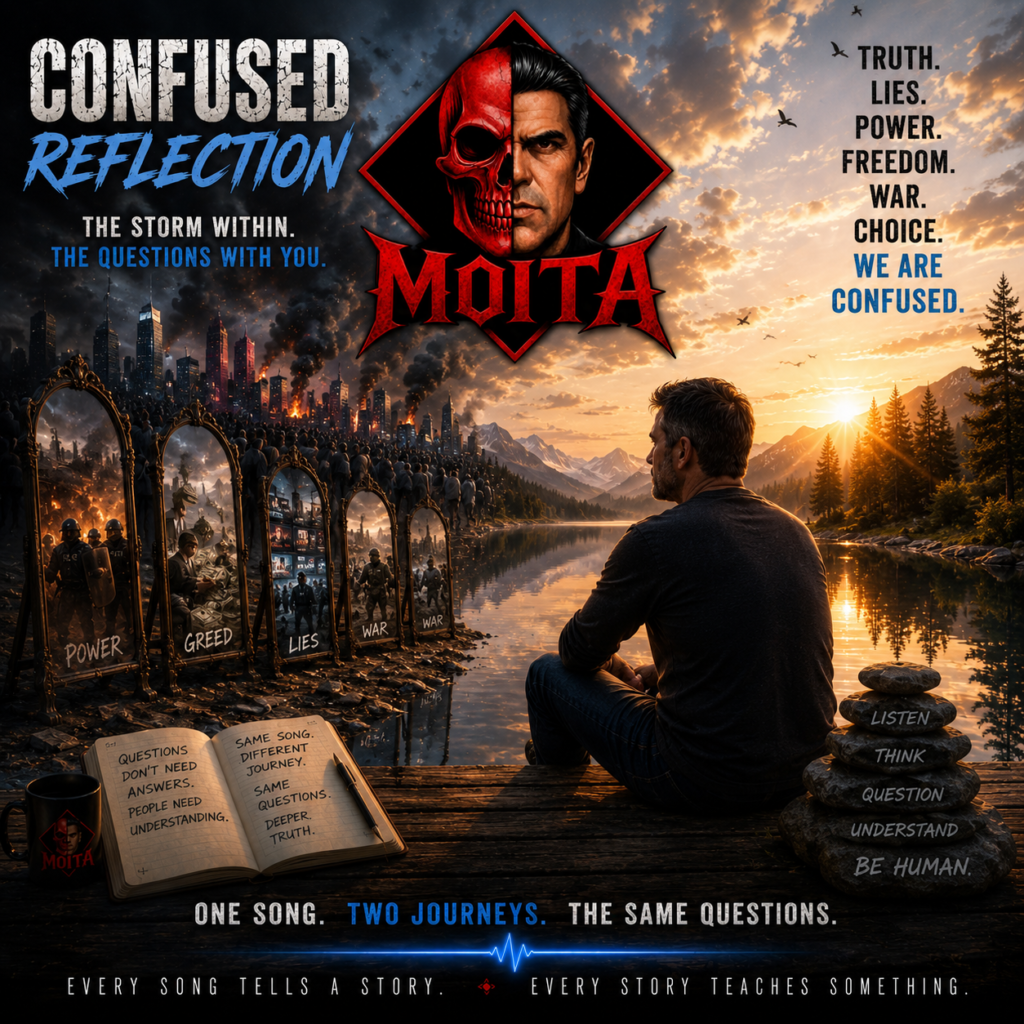


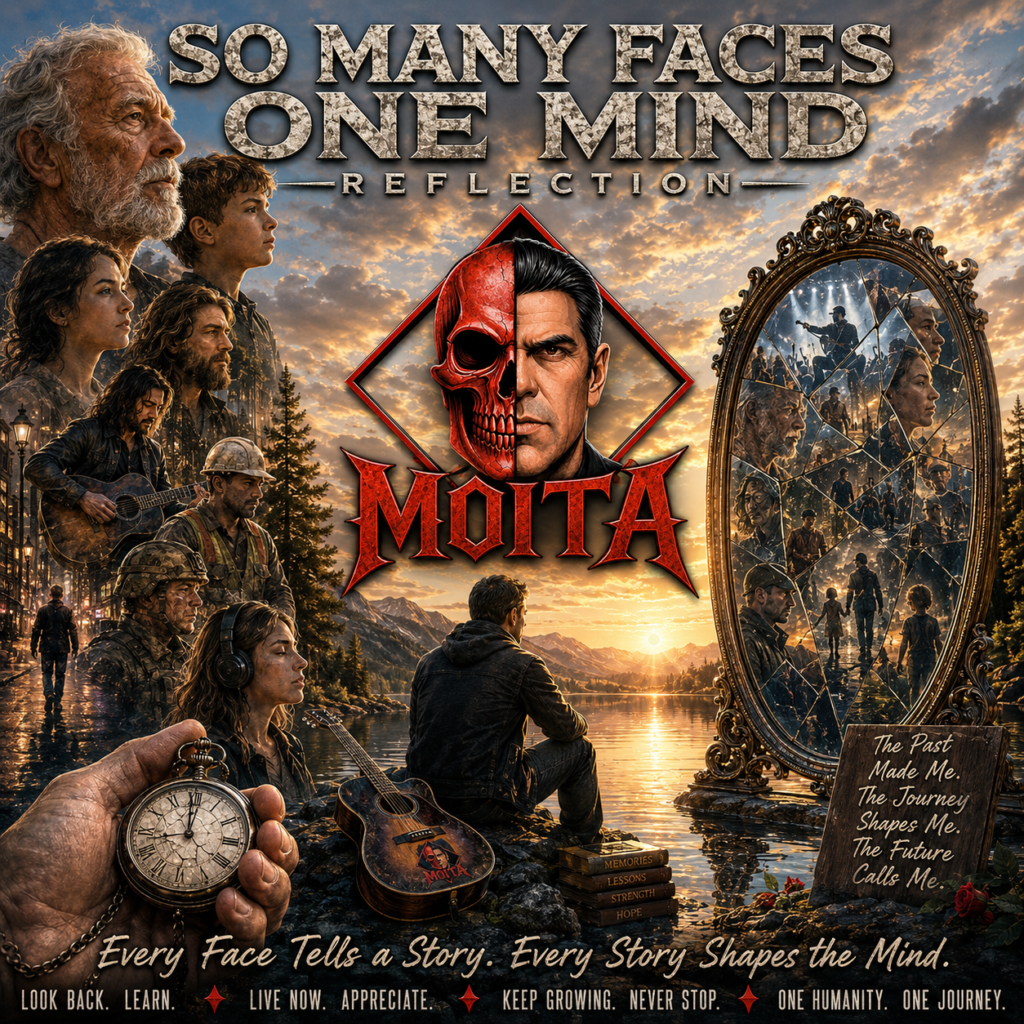



Reviews
There are no reviews yet.