Description
About the Song
SECTION ONE
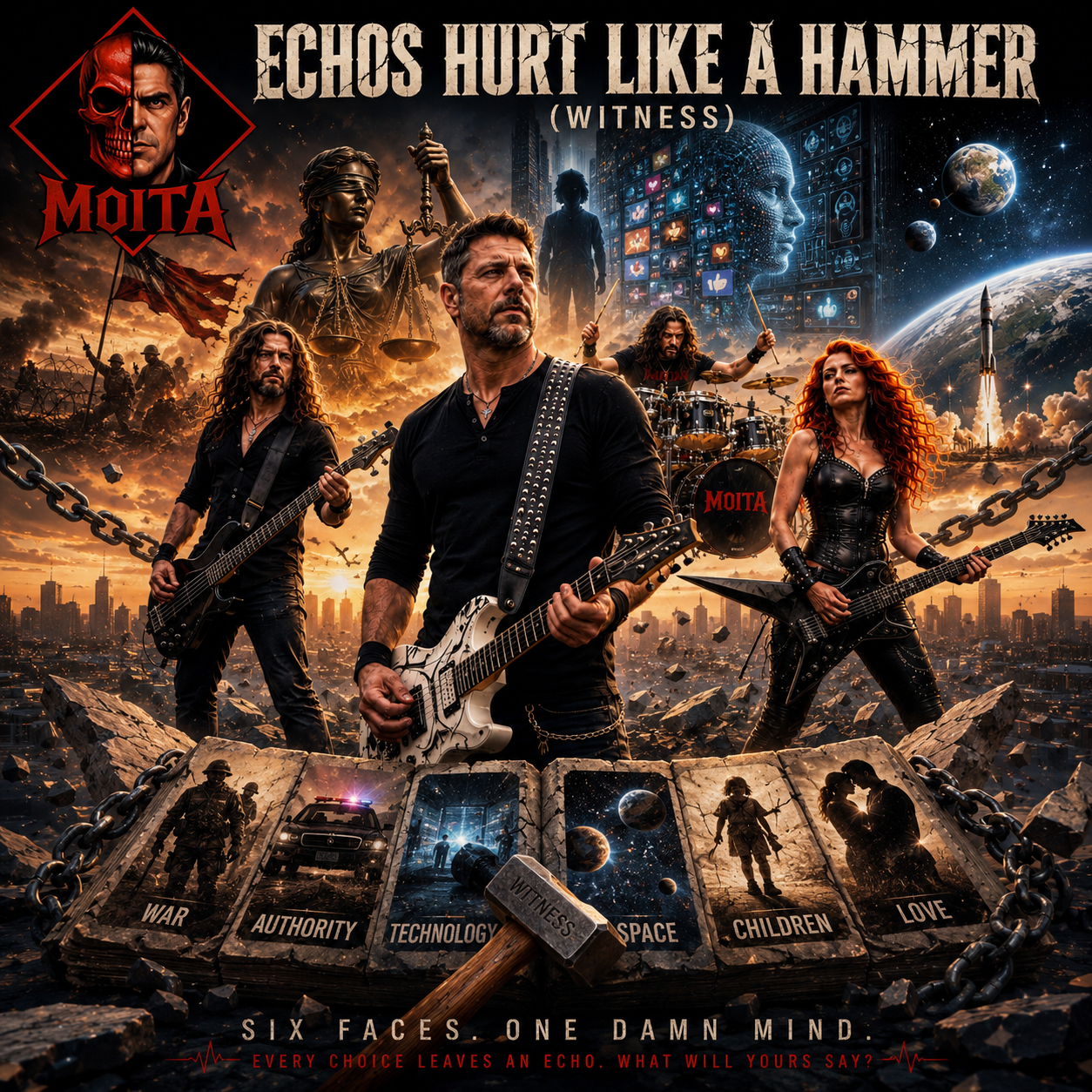
ECHOS HURT LIKE A HAMMER (WITNESS)
CATEGORY
Educational Rock
PRIMARY EMOTION
Reckoning
ALSO FITS
History, Truth, Human Nature, War, Justice, Technology, Childhood, Love, Courage, Memory, Philosophy, Social Awareness
WHAT THIS SONG IS ABOUT
Some songs begin with a single story.
This one begins with six.
At first they don’t seem connected. A battlefield. A courtroom. A machine. A child. The silence beyond our planet. Two people trying to love one another after trust has been broken.
Most people would never place those subjects inside the same song.
I couldn’t stop seeing how they belonged together.
While writing this song, I realized every one of those stories begins with human choice. Every choice creates consequences. Those consequences become memories. Memories become history. History becomes an echo.
The echo doesn’t ask permission before it returns.
Sometimes it arrives in the next generation.
Sometimes decades later.
Sometimes centuries later.
The original moment may be over, but the consequences continue travelling long after the people involved are gone.
That’s why I chose the title.
An echo isn’t always gentle.
Some echoes strike with exactly the same force they carried the first time.
They don’t whisper.
They hit.
Like a hammer.
This song isn’t asking you to choose a political side or agree with every opinion. It asks something much more important.
What kind of echoes are we creating today?
Because someone else will eventually have to live with them.
THE STORY BEHIND THE SONG
The beginning of this version isn’t a recording studio.
It isn’t a guitar.
It isn’t even the first lyric.
It begins inside a jail.
People often imagine jail as a place where life simply stops.
For me, something unexpected happened.
My body was confined.
My mind wasn’t.
Books became one of the few places where I could still travel freely.
I wasn’t reading with the idea of writing a song.
I was reading because I genuinely wanted to understand people.
One book would take me into an ancient civilization.
Another into a modern war.
Another into the life of a leader.
Another into science.
Another into psychology.
Another into exploration.
Another into ordinary people caught inside extraordinary moments.
At first, every book seemed to tell its own story.
The more I read, the more I noticed those stories quietly speaking to one another.
Different centuries.
Different languages.
Different governments.
Different inventions.
Different religions.
Different borders.
Many of the same human behaviours.
People still struggled with fear.
People still struggled with power.
People still searched for freedom.
People still dreamed.
People still loved.
People still betrayed one another.
People still hoped the next generation would somehow avoid repeating yesterday’s mistakes.
Those observations stayed with me.
Little by little they became six connected moments.
War.
Authority.
Technology.
The universe.
Children.
Love.
Six faces.
One human mind.
That line didn’t appear because it sounded dramatic.
It appeared because it described exactly what I had been discovering while turning page after page.
The more history I read, the less it felt like separate events.
It became one continuing conversation about humanity trying to understand itself.
The music needed to carry that feeling.
The first version of this song moves with urgency. It sounds as though someone is trying to warn the world before another mistake is made.
This version carries itself differently.
The Southern character in the lead vocal gives the impression that these words have travelled a long way before reaching the microphone.
They feel inherited.
Weathered.
Lived.
Then another voice arrives.
The female vocal doesn’t simply add harmony.
She changes the emotional weight of the entire song.
Sometimes she sounds like grief.
Sometimes she sounds like hope refusing to disappear.
Sometimes she feels almost like history itself stepping forward to remind us that forgotten lessons never truly disappear.
The lyrics remain exactly the same.
The journey changes completely.
That is why this version deserved its own place inside the MOITA Library.
WHY I WROTE THIS SONG
I’ve always believed history is far more interesting when you stop looking only at dates and begin looking at people.
Why did they make the choices they made?
Why did ordinary people follow extraordinary leaders?
Why did fear become stronger than reason?
Why did courage often begin with one person standing alone?
Those questions fascinated me much more than memorizing timelines.
As I kept reading, I realized I wasn’t collecting facts anymore.
I was collecting patterns.
The same questions appeared over and over again, wearing different uniforms and speaking different languages.
Eventually I stopped thinking about writing six different songs.
I realized they already belonged together.
This song became my way of connecting those discoveries into one conversation.
Not to provide every answer.
To encourage better questions.
WHY THIS MATTERS TO ME
This song reminds me that learning doesn’t always happen where we expect it.
Sometimes it happens during the hardest chapters of life.
Looking back, I don’t remember every page I read.
I remember what those pages slowly taught me.
They taught me that knowledge without reflection changes very little.
Information becomes valuable when it changes the way we see people.
The books didn’t simply teach me history.
They taught me to recognize history while it is still happening.
That lesson has stayed with me ever since.
WHY THIS SONG FITS MOITA
Every MOITA song begins with a question worth asking.
Sometimes that question comes from my own life.
Sometimes from watching other people.
Sometimes from history.
Sometimes from imagination.
Sometimes from curiosity that simply refuses to leave me alone.
This song belongs inside MOITA because it combines all of those things.
It begins with a personal experience inside a jail library.
From there it travels across centuries, across civilizations, across human achievements, failures, discoveries, heartbreaks, and hopes before returning to one simple truth.
Every generation leaves something behind.
The only part we truly control is what that inheritance will be.
That’s what Educational Rock means to me.
Not preaching.
Not choosing sides.
Helping people leave with questions that continue long after the music ends.
READ THIS FIRST
Before you begin reading these lyrics, I’d like you to do something.
Forget that you’re reading a song.
Imagine you’re opening six different history books.
Each one tells a different story.
At first they seem to have nothing in common.
Keep reading.
Slowly you’ll notice the same human fingerprints appearing in every chapter.
The names change.
The countries change.
The centuries change.
The questions remain surprisingly familiar.
This version also asks you to listen to the voices differently.
The male voice carries the memories.
The female voice carries what those memories became.
He sounds like someone who witnessed history.
She sounds like history refusing to remain silent.
By the time they sing together, the conversation no longer belongs to one person.
It belongs to all of us.
FULL LYRICS
ECHOS HURT LIKE A HAMMER (WITNESS)
Mud in his mouth iron in his hands
They fed him lies wrapped in foreign lands
A flag woven tight to a broken spine
Freedom sold as a killing line
Drums beat orders not a prayer
Names erased like they were never there
When the war was done the silence stayed
The dead still speak they just decay
Those who deny freedom to others deserve it not for themselves
Time doesn’t heal It sharpens & waits
ECHOS HURT LIKE A HAMMER MEMORIES ROT THEN SHATTER SIX LIVES BURIED IN SOUND WHEN THE TRUTH COMES BACK AROUND ECHOS HURT LIKE A HAMMER PAST & FUTURE TEAR & FRACTURE WHAT WE BURY WHAT WE FEAR COMES BACK SCREAMING EVERY YEAR
Blue lights flicker like holy fire
Hands raised high still marked a liar
Justice speaks with a loaded tone
Truth bleeds out in danger zone
Screens decide who’s right or wrong
Rage goes viral lasts too long
Fear wears badges fear wears suits
Fear pulls triggers fear recruits
The only thing we have to fear is fear itself
ECHOS HURT LIKE A HAMMER NO MERCY LEFT TOGETHER
SIX LIES DRESSED AS LAW WHEN THE MASKS BEGIN TO FALL
Children born into coded chains
Raised by ads rewarded with shame
Thots outsourced souls on lease
Love reduced to data leaks
Kings are servers gods are graphs
Empathy erased by math
2moro smiles with borrowed skin
& calls obedience winning
The future doesn’t belong to the fainthearted it belongs to the brave
WE BUILT THE MACHINE NOW IT BUILDS THE GRAVE WE FED IT OUR NAMES
AND CALLED IT SAFE ECHOS HURT LIKE A HAMMER FLESH & WIRE TOGETHER
WHAT WE MADE WILL REMAIN LONG AFTER WE’RE ERASED
Drifting past the edge of God
No sound no law no fraud
All our wars collapse to dust
In the dark nothing trusts
No heaven waits no hell below
Just endless black that seems to know
How small we are how fast we fade
How little meaning borders made
We choose to go not because it is easier but because it is hard
ECHOS HURT LIKE A HAMMER EVEN STARS DON’T MATTER ALL OUR SCREAMS DISPERSE IN A QUIET ENDLESS HEARSE
Small hands taught how to obey
Before they learn how to play
Dreams dissected trimmed & sold
In systems hungry for control
We don’t protect we prepare
For a world that doesn’t care
Innocence is just a phase
Before damage learns your name
It is easier to build strong children than to repair
BROKEN MEN
THIS IS HOW THE CYCLE BENDS
Two hearts stitched with broken trust
Love survives just enough
To hurt to haunt to leave a scar
The deepest wounds are where we are
Love isn’t clean love isn’t kind
It’s the last chain on the mind
When everything else turns to stone
Love reminds you you’re alone
Let us not be & not be enemies
ECHOS HURT LIKE A HAMMER
HISTORY CLAWING THROUGH THE MATTER
SIX FACES ONE DAMN MIND
TIME COLLAPSING LINE BY LINE
ECHOS HURT LIKE A HAMMER
WHAT YOU KILL NEVER SCATTERS
IT JUST WAITS IT JUST BURNS
UNTIL IT COMES BACK
SECTION ONE
LYRIC JOURNEY
PART 1
“Mud in his mouth iron in his hands”
That is where this journey begins.
No introduction. No explanation of who he is. No country. No uniform. No name.
Just a man already down in the mud with iron in his hands.
I wanted the opening to feel like we arrived too late to prevent whatever happened to him. By the time we meet him, the decisions have already been made somewhere else. Somebody gave the order. Somebody chose the enemy. Somebody decided what this fight was supposed to mean.
He is the one carrying it.
That matters because history is full of ordinary people carrying decisions they did not create.
The mud strips away anything glorious about war. There is nothing polished about it. Nothing clean. Nothing that looks like the speeches people make before the fighting starts.
The iron in his hands can be a weapon, but I also hear something heavier in it. He may be holding the iron, but the iron is beginning to hold him too.
Whatever happens next may remain with him long after he puts it down.
“They fed him lies wrapped in foreign lands”
The word “fed” matters to me.
A lie is not simply placed in front of him.
He is fed it.
That means somebody has already decided what he should believe.
It may be wrapped in patriotism.
It may be wrapped in fear.
It may be wrapped in revenge.
It may be wrapped in duty.
It may even be wrapped in something as powerful as freedom.
The foreign land makes the people on the other side easier to reduce into one word.
Enemy.
Once that happens, the human being can disappear behind the label.
That is one of the patterns I kept noticing while reading in jail. Different books. Different wars. Different leaders. The language would change, but the process could feel very familiar.
First explain why the other person is dangerous.
Then explain why what happens to them is necessary.
Then explain why questioning any of it means you are against your own side.
That does not mean every war is built on lies.
It means every generation has a responsibility to ask whether the words being used are true.
“A flag woven tight to a broken spine”
I respect what a flag can represent.
Home.
Family.
History.
Sacrifice.
Identity.
Belonging.
But symbols become dangerous when the symbol matters more than the person underneath it.
That is what I see here.
The spine is broken.
The flag is still wrapped around him.
The flag may honour him.
It cannot put him back together.
There is something uncomfortable about that image, and I wanted it to remain uncomfortable.
A country may call somebody a hero.
A family may still have an empty chair at the table.
Both things can be true.
“Freedom sold as a killing line”
This is where the word freedom enters the song.
For me, freedom became harder to treat casually while I was incarcerated.
It is easy to say the word.
It is different when you have lost it.
You begin thinking about who gets to define freedom.
Who receives it.
Who loses it.
Who is allowed to take it away.
Then you start reading history and see how often people were told they were fighting for freedom while somebody else was losing theirs.
That contradiction stayed with me.
Freedom is worth defending.
That is exactly why the word should never be used cheaply.
If somebody asks another person to kill in its name, the reason better be honest.
“Drums beat orders not a prayer”
The drums move us forward.
There is rhythm now.
Orders.
Marching.
Movement.
The person in the mud is no longer standing still.
Drums can bring people together in celebration.
They can make people dance.
They can announce something joyful.
They can also organize people into lines and send them toward a battlefield.
Same instrument.
Different purpose.
That contrast interested me.
The drum does not ask whether the order is right.
It simply keeps time.
That is where obedience enters the song.
Every society needs rules. Every military needs discipline. Every organization needs some kind of structure.
But there has always been another question standing beside obedience.
What happens when the order is wrong?
That question has followed humanity for a very long time.
“Names erased like they were never there”
Now the song moves away from the order and toward the cost.
Names disappear very easily when history becomes numbers.
Ten dead.
A hundred dead.
Ten thousand dead.
A million dead.
The number becomes so large that the human mind stops seeing individuals.
But every one of those numbers had a name.
Somebody knew that voice.
Somebody remembered that laugh.
Somebody knew what that person was afraid of.
Somebody expected them home.
That is why names matter.
A name pulls a person back out of the statistic.
When the name disappears, it becomes easier to forget that a real human life existed there.
“When the war was done the silence stayed”
This is one of the first places where the echo really begins.
The war is done.
On paper.
A treaty may be signed.
The soldiers may come home.
The speeches may stop.
The newspapers move on.
The silence stays.
Silence does not always mean peace.
Sometimes silence means somebody cannot explain what happened.
Sometimes they do not want to.
Sometimes the people around them do not know how to ask.
Sometimes an entire family learns to live around something nobody speaks about.
That is where the war continues without gunfire.
A child can grow up feeling the effects of something that happened before they were born.
A marriage can change.
A personality can change.
A family can learn fear without understanding where the fear came from.
The official history says the war ended.
Private history may say something completely different.
“The dead still speak they just decay”
The dead speak everywhere.
In cemeteries.
In letters.
In diaries.
In photographs.
In memorials.
In buildings.
In laws.
In family stories.
In mistakes we repeat.
In lessons we finally learn.
Their bodies are gone.
Their consequences are not.
That is why I wrote the line bluntly.
“They just decay.”
There is nothing pretty about the physical truth of death.
But the person can remain present through what they left behind.
Sometimes for hundreds of years.
That was part of what I was experiencing while reading.
I was sitting in jail listening to people who had been dead longer than I had been alive.
Their words were still reaching me.
Their choices were still making me think.
That is an echo.
“Those who deny freedom to others deserve it not for themselves”
Now history answers the verse directly.
These words are associated with Abraham Lincoln, and they belong here because the entire opening has been wrestling with freedom.
Not freedom as a slogan.
Freedom as a responsibility.
It is easy to demand freedom for ourselves.
The harder test is whether we believe another person deserves it too.
Especially somebody we dislike.
Somebody we fear.
Somebody from another country.
Another religion.
Another culture.
Another political belief.
That is where principles are tested.
If freedom belongs only to the people we approve of, then we need to ask what kind of freedom we are talking about.
“Time doesn’t heal It sharpens & waits”
People say time heals.
Sometimes it does.
Sometimes time gives a person distance.
Perspective.
A chance to forgive.
A chance to understand.
But time by itself does not guarantee anything.
Pain can sit quietly for years.
Then something brings it back.
A sound.
A smell.
A photograph.
A name.
A place.
Suddenly the years between then and now collapse.
That is why I wrote that time sharpens and waits.
Some memories do not become weaker because they are older.
They become more precise.
The person may understand them differently years later and finally realize how deeply the event changed them.
That line prepares the chorus because now we understand what kind of echo this song is talking about.
It is not simply sound returning.
It is consequence returning.
“ECHOS HURT LIKE A HAMMER”
This is the first time the title lands.
By now we have moved through war, obedience, death, freedom, and memory.
The echo has earned the hammer.
A hammer strikes once and can leave a permanent mark.
That is how some events work.
The moment itself may last seconds.
The mark can last a lifetime.
Sometimes longer than one lifetime.
That is what the song keeps returning to.
The original strike ends.
The shape of what was struck has changed.
“MEMORIES ROT THEN SHATTER”
Not every memory stays clean.
Some memories fade.
Some become distorted.
Some are buried so long that when they return, they do not return gently.
They shatter.
The word “rot” gives the memory something almost physical.
Something left unattended.
Something hidden where nobody wants to look.
Then the structure gives way.
That can happen inside one person.
It can happen inside a family.
It can happen inside a country when a story people preferred not to discuss finally comes back into public view.
“SIX LIVES BURIED IN SOUND”
This line tells the reader something important about the entire song.
There are six lives here.
Six movements.
Six different places where humanity leaves an echo.
War.
Authority.
Technology.
The universe.
Children.
Love.
We have only entered the first one.
The other five are waiting.
The sound is carrying all of them together.
That is why the song may feel enormous the first time somebody hears it.
There is a lot happening.
The journey through the lyrics allows us to separate those lives long enough to see what each one is carrying.
“WHEN THE TRUTH COMES BACK AROUND”
Truth does not always arrive when it would be most convenient.
Sometimes it is delayed.
Sometimes hidden.
Sometimes nobody believes the first person who speaks.
Sometimes records are buried.
Sometimes people are frightened.
Sometimes an entire generation has to pass before another generation begins asking the questions.
Then the truth comes back around.
It does not always bring comfort.
Sometimes truth creates another wound before it creates understanding.
But without it, nothing underneath can really heal.
“ECHOS HURT LIKE A HAMMER”
The chorus returns to the title before we have had time to get comfortable.
That is intentional.
The song does not want the first historical movement to remain safely in the past.
It brings the hammer back immediately.
We have already heard what happened.
Now we are being reminded that what happened is still moving.
“PAST & FUTURE TEAR & FRACTURE”
The past and future are not separated here.
They are pulling against each other.
What happened yesterday changes what becomes possible tomorrow.
At the same time, tomorrow can force us to look back and question what we believed about yesterday.
That relationship can be painful.
A country may discover something about its own history that does not match the story people were raised to believe.
A person may reach adulthood and understand a childhood event completely differently.
A family may finally speak about something that had been hidden for years.
The future looks backward.
The past reaches forward.
The fracture happens between them.
“WHAT WE BURY WHAT WE FEAR COMES BACK SCREAMING EVERY YEAR”
This completes the first movement.
The thing we bury and the thing we fear often become the same thing.
We bury it because we are afraid of what happens if we face it.
The problem is that burial is not resolution.
Silence is not healing.
Forgetting is not understanding.
What is buried remains underneath.
Then something brings it back.
An anniversary.
Another war.
Another injustice.
Another generation asking why.
The screaming becomes louder because the silence lasted so long.
That is where the first historical face leaves us.
We began with one nameless person in the mud.
We end with history itself screaming back.
Then the song changes location.
“Blue lights flicker like holy fire”
We have left the battlefield.
Now we are somewhere much closer to home.
Blue lights.
Authority.
Law.
Trust.
The transition matters because the song is not leaving the question of power behind.
It is changing the uniform.
The battlefield gave us one form of authority.
Now we are going to look at another.
The blue light can mean help has arrived.
For many people, that is exactly what it means.
Somebody is hurt.
Somebody is in danger.
An officer arrives.
That light represents protection.
For somebody else, the same light may immediately create fear.
That difference is where this part of the journey begins.
Calling it “holy fire” gives the blue light enormous power.
Holy things are usually treated with respect.
Sometimes unquestioned respect.
Fire can guide.
Fire can protect.
Fire can also burn.
The image carries both.
“Hands raised high still marked a liar”
The hands are up.
The person is showing surrender.
Cooperation.
No weapon.
No attack.
Yet the label is already there.
Liar.
This is what happens when judgment arrives before understanding.
Once somebody has been labelled, every action can be interpreted through that label.
If they speak, they are argumentative.
If they stay quiet, they are hiding something.
If they are frightened, they look suspicious.
If they are calm, somebody may decide they are too calm.
That is the danger of deciding who somebody is before hearing them.
The raised hands are supposed to communicate something.
The label has become louder.
“Justice speaks with a loaded tone”
Justice should not need a loaded tone.
It should have evidence.
Fairness.
Process.
Accountability.
The word “loaded” connects us back to the iron in the first verse.
A weapon can be loaded.
So can language.
A question can already contain an accusation.
A room can already make somebody feel the outcome has been decided.
A person can hear authority in a voice before the words themselves are even understood.
The song is not saying justice always fails.
It is asking what happens when justice begins sounding like something else.
“Truth bleeds out in danger zone”
Truth is wounded now.
It has not disappeared.
It is bleeding.
That means there is still time.
But something has to happen before too much is lost.
The danger zone can be a courtroom.
A police interaction.
A workplace.
A family.
A government.
Any place where telling the truth carries a cost.
People say they value honesty.
Honesty becomes more complicated when the truth threatens reputation, power, belonging, or comfort.
That is when we discover how much truth really matters to us.
The journey is now inside the second face.
War showed what happens when power becomes organized violence.
This part asks what happens when power is supposed to protect us.
The question becomes harder because the system is closer.
The people inside it are neighbours.
The consequences happen on streets we recognize.
The echo has moved from the battlefield into everyday life.
SECTION ONE
LYRIC JOURNEY
PART 2
“Screens decide who’s right or wrong”
This is where the second face of the song changes again.
We were standing underneath blue lights. We were thinking about authority, trust, accusation, justice, and what happens when a person feels judged before being heard.
Now a screen enters the room.
That changes everything.
There was a time when an event might be witnessed by the people standing there. They saw what happened, they talked about it, investigators tried to establish the facts, and eventually some version of the story reached the public.
That world is gone.
Today a few seconds can be recorded, uploaded, shared, edited, reposted, commented on, slowed down, cropped, turned into a headline, and judged by thousands or millions of people before the people directly involved have even had time to understand what happened.
That can be valuable.
Cameras have exposed things that might otherwise have remained hidden. Ordinary people can document events that deserve public attention. Institutions can be held accountable in ways that were much harder before everyone carried a camera.
But there is another side.
A screen gives us a frame.
It does not always give us the entire picture.
That difference matters.
A clip may begin ten seconds after the event actually started.
A photograph may capture one expression and make it look like an entire personality.
A headline may reduce a complicated situation into words designed to make people react before they think.
Then the judgment begins.
Guilty.
Innocent.
Hero.
Villain.
Victim.
Liar.
Sometimes before the facts have even caught up.
That is what this line is asking us to recognize.
The screen has become more than a place where we receive information.
Sometimes we allow it to become the judge.
“Rage goes viral lasts too long”
Rage travels quickly.
Careful thinking usually doesn’t.
Anger can be useful. There are moments when anger is exactly what wakes people up. Some terrible things changed because enough people became angry enough to refuse to accept them anymore.
The problem begins when anger becomes the destination instead of the beginning of thought.
Online, outrage can move faster than correction.
A false accusation can circle the world before the truth gets its boots on.
A person can become hated by thousands of strangers who have never met them.
Then the next story arrives.
The crowd moves somewhere else.
The person who was underneath that crowd still has to live with what happened.
That is another echo.
The internet can forget what it was angry about yesterday.
The person at the centre of it may never forget.
“Fear wears badges fear wears suits”
Now the song names what has been moving underneath this entire section.
Fear.
I deliberately did not give fear one uniform.
That would have made the lyric too easy.
If I had written that fear belongs only to government, only to police, only to corporations, only to politicians, only to protesters, or only to ordinary citizens, I would have missed the point.
Fear belongs to people.
A badge can be afraid.
A suit can be afraid.
A person standing across from the badge can be afraid.
A crowd can be afraid.
A leader can be afraid of losing power.
A worker can be afraid of losing a job.
A parent can be afraid for a child.
A citizen can be afraid of government.
Government can become afraid of citizens.
Fear moves in every direction.
That is why it is so powerful.
“Fear pulls triggers fear recruits”
This is where fear stops being an emotion and becomes an action.
A frightened person can make a decision in seconds that cannot be undone.
A frightened society can surrender things it would normally protect.
A frightened population can begin looking for somebody to blame.
A frightened leader can create an enemy because enemies are useful when you want frightened people to stand together.
Fear recruits because fear likes company.
If I can convince you that somebody is coming for your home, your family, your freedom, your culture, your job, or your future, I may not need to order you to act.
You may volunteer.
That pattern appeared again and again in what I was reading.
Different centuries.
Different enemies.
Different speeches.
Same human emotion.
That is why the song does not say fear belongs to them.
It says fear wears whatever it needs to wear.
“The only thing we have to fear is fear itself”
Then the song places Franklin D. Roosevelt’s famous words beside everything we have just walked through.
They were spoken in a particular historical moment, but the thought reaches far beyond that moment.
Fear itself can become the danger.
That does not mean there are no real dangers.
Of course there are.
The world contains genuine threats.
The question is whether fear helps us respond intelligently or becomes the thing making the decisions for us.
There is a difference between recognizing danger and living under fear.
One can protect you.
The other can control you.
That distinction leads directly into the next chorus.
“ECHOS HURT LIKE A HAMMER NO MERCY LEFT TOGETHER”
The hammer returns.
But it does not feel exactly the way it did after the battlefield.
The first time, the echo came through war, death, and memory.
Now it has travelled through authority, judgment, screens, public rage, and fear.
The echo is becoming larger.
The song is showing us that history does not have to repeat itself with tanks and trenches.
It can repeat through behaviour.
Through the way people use power.
Through the speed with which we decide who deserves compassion and who does not.
Through our willingness to stop listening once we believe we already know which side is right.
“No mercy left together” feels like a society losing its ability to leave room for another human being.
Once mercy disappears, disagreement becomes punishment.
Mistakes become identities.
Nobody is allowed to learn.
Nobody is allowed to change.
Everybody becomes whatever the worst accusation says they are.
That is a dangerous place for any society to reach.
“SIX LIES DRESSED AS LAW WHEN THE MASKS BEGIN TO FALL”
The six return again.
The song keeps reminding us that we are travelling through connected faces.
Here the image becomes law wearing a disguise.
That does not mean law itself is a lie.
Law is necessary.
Without law, the strongest person in the room eventually becomes the law.
The question is what happens when something unjust learns how to dress itself in legitimate language.
History gives us uncomfortable examples.
Things have been legal that were not just.
People have been denied rights legally.
People have been separated legally.
People have been imprisoned legally.
People have been treated as less than human under rules written by people with authority to write them.
That is why legality and morality cannot always be treated as the same word.
Good law should move toward justice.
When it does not, people eventually begin seeing through the mask.
That is where this movement ends.
The song does not stay there.
It turns toward the future.
“Children born into coded chains”
This line changes the atmosphere immediately.
There are no badges now.
No courtroom.
No battlefield.
A child has entered the song.
That should make everything softer.
Instead, the first thing waiting for that child is a chain.
Not iron.
Code.
That difference is important.
Previous generations understood chains because they could see them.
You knew when a door was locked.
You knew when a fence stopped you.
You knew when somebody physically took your freedom.
The new chains can be much harder to recognize.
A child can be surrounded by technology before understanding what technology is.
Before they understand privacy, information about them may already exist online.
Before they understand advertising, advertising is learning how to reach them.
Before they understand comparison, they may already be comparing themselves with hundreds of carefully selected images every day.
Before they understand attention, entire systems may already be competing for theirs.
Nobody has to physically chain them to anything.
That is what makes “coded chains” uncomfortable.
The chain can feel like entertainment.
Convenience.
Connection.
Belonging.
The question is not whether children should use technology.
Technology can educate them.
Connect them.
Help them create.
Help them communicate.
Give them access to knowledge I could never have imagined having as a child.
The question is whether we understand what we are handing them.
“Raised by ads rewarded with shame”
This is where the chain begins teaching.
Advertising has always existed.
What has changed is how personally it can reach people.
A child does not simply see an advertisement anymore.
The systems around them can learn what holds their attention.
What they watch.
What they search.
What they click.
What they return to.
What makes them insecure.
Then more arrives.
Buy this.
Look like this.
Wear this.
Become this.
Be thinner.
Be stronger.
Be richer.
Be more popular.
Be somebody else.
A child can begin receiving messages about what is supposedly wrong with them before they have had enough time to discover what is right with them.
That is where shame enters.
Shame is powerful because it can turn a person into their own jailer.
Once somebody believes they are not enough, you do not always need to pressure them from the outside anymore.
They begin doing it themselves.
“Thots outsourced souls on lease”
The language becomes harsher here because the world being described is harsher.
People can turn themselves into products.
Attention becomes currency.
Appearance becomes branding.
Private life becomes content.
The line is not about condemning one group of people.
It is about what happens when human worth becomes measured through attention.
Views.
Likes.
Followers.
Clicks.
Approval.
When those numbers begin determining how somebody feels about themselves, something deeply personal has been handed to something outside them.
That is the soul on lease.
You still possess it.
But somebody else is collecting rent.
“Love reduced to data leaks”
Now even love enters the machine.
Think about how much relationships have changed through technology.
People meet through screens.
Argue through screens.
Break up through screens.
Share intimate parts of themselves through devices.
Photographs that once belonged to two people can become permanent digital records.
Messages written in anger can survive long after the anger disappears.
Private moments can become public.
Love has always required trust.
Technology has added another layer to that trust.
Who has the photograph?
Who has the message?
Where is it stored?
Who else can see it?
What happens after the relationship ends?
The song is not saying digital relationships are less real.
The feelings can be completely real.
That is exactly why the consequences can be real too.
“Kings are servers gods are graphs”
This is one of the lines where the old world and the new world collide.
Human beings have always built things above themselves.
Kings.
Empires.
Institutions.
Religions.
Markets.
Ideologies.
Now enormous parts of daily life depend on servers most people will never see.
A server goes down and suddenly businesses stop.
Payments stop.
Communication stops.
Information becomes unavailable.
Entire systems can become dependent on something sitting in a building thousands of kilometres away.
Then come the graphs.
Numbers tell us what is successful.
What is trending.
What people want.
How they behave.
Where attention is moving.
Graphs are useful.
Data is useful.
The danger comes when measurement becomes meaning.
A graph can tell you how many people clicked on something.
It cannot tell you whether it made their life better.
A number can tell you how many followers somebody has.
It cannot tell you whether they have one person they can call at three in the morning when their world falls apart.
Data can measure behaviour.
It cannot completely measure humanity.
“Empathy erased by math”
That is where the previous line leads.
Math is not the enemy.
Without mathematics, much of the modern world would not exist.
The line is about what happens when the calculation becomes more important than the person being calculated.
A company can look at numbers and decide that eliminating hundreds of jobs improves efficiency.
The spreadsheet may be correct.
The spreadsheet does not show the conversation at the kitchen table when somebody tells their family the job is gone.
A system can determine risk using data.
The data may reveal useful patterns.
But the person standing in front of that system is still an individual.
Empathy asks us to remember what the number cannot see.
That becomes more important, not less, as technology becomes more powerful.
“2moro smiles with borrowed skin”
Tomorrow has arrived.
But it does not look completely human anymore.
Borrowed skin can mean many things here.
Digital identities.
Filters.
Artificial faces.
Avatars.
Technology learning to imitate human expression.
People presenting versions of themselves that may have very little connection to what they actually feel.
We are becoming increasingly capable of creating something that looks real.
That makes the question of what is real more important.
A face can be generated.
A voice can be copied.
An image can be altered.
A personality can be performed.
Tomorrow smiles at us.
The song asks whose face it is wearing.
“& calls obedience winning”
This is where the coded chain closes.
If a system can convince us that following it is success, it no longer needs to force us.
We will follow willingly.
We will call dependence convenience.
We will call constant attention connection.
We will call surveillance personalization.
We will call conformity belonging.
That is the danger the lyric is pointing toward.
Not machines taking over the world like some science-fiction movie.
Something much quieter.
People gradually surrendering choices because surrender has been made convenient.
That is why the next historical voice matters so much.
“The future doesn’t belong to the fainthearted it belongs to the brave”
The song refuses to leave us trapped inside the machine.
It answers fear with courage.
The future is not finished.
That matters.
Technology is not some creature that arrived from another planet and imposed itself on humanity.
We built it.
We continue building it.
That means responsibility still belongs to us.
Courage in this context does not mean rejecting technology.
It means having enough courage to ask difficult questions while everyone else is celebrating what technology can do.
Can we build it?
Maybe.
Should we?
How should we?
Who does it help?
Who might it harm?
Who controls it?
What happens if it fails?
What are we giving away in exchange for convenience?
Those are not anti-technology questions.
They are responsible questions.
Then the song reaches one of its largest landmarks.
“WE BUILT THE MACHINE NOW IT BUILDS THE GRAVE”
The first word matters.
We.
Not they.
Not the government.
Not the corporations.
Not the scientists.
Not some mysterious enemy.
We.
Human beings.
That makes the lyric harder because it removes the easiest escape.
Blame.
The machine came from us.
Our intelligence.
Our curiosity.
Our ambition.
Our desire to solve problems.
Our desire to make life easier.
Those are not bad qualities.
They have produced extraordinary things.
The warning is that creation does not remove responsibility from the creator.
If something we build begins harming people, we cannot simply point at the machine and pretend nobody is responsible.
The grave is the consequence nobody wanted to imagine while everybody was excited about the invention.
History contains many versions of that story.
Human beings become very good at asking what something can do.
We have to become equally good at asking what it might eventually cost.
“WE FED IT OUR NAMES”
Now the machine becomes personal.
Not anonymous information.
Our names.
Identity.
Who we are.
We feed systems photographs.
Locations.
Contacts.
Preferences.
Purchases.
Searches.
Conversations.
Habits.
The machine does not need to break into the house if we keep opening the door.
Again, I am part of this world too.
I use technology.
MOITA uses technology.
These songs reach people through technology.
The point is not hypocrisy.
The point is awareness.
Using something and questioning it can happen at the same time.
In fact, maybe that is exactly what responsible use requires.
“AND CALLED IT SAFE”
Those four words are where the warning lands.
Safe.
Human beings love that word.
Safe makes us lower our guard.
Safe makes us stop asking questions.
Safe allows convenience to feel harmless.
But safety should never be something we accept simply because somebody placed the word on a screen.
It should be earned.
Protected.
Tested.
Questioned.
Improved.
Because the information we hand over is not abstract.
It belongs to real people.
“ECHOS HURT LIKE A HAMMER FLESH & WIRE TOGETHER”
Now the human being and the machine are no longer standing on opposite sides.
Flesh and wire are together.
That can be extraordinary.
Medical technology can restore movement.
Machines can keep people alive.
Communication technology can connect families across the world.
Knowledge can travel instantly.
There is enormous beauty in what humanity has created.
But together also means dependent.
The closer technology becomes to our bodies, our identities, our relationships, our decisions, and our thoughts, the more carefully we have to consider the relationship.
The hammer is no longer coming only from history.
We are building future echoes right now.
“WHAT WE MADE WILL REMAIN LONG AFTER WE’RE ERASED”
This is where the technology section becomes bigger than technology.
Everything we make can outlive us.
A building.
A business.
A photograph.
A song.
A machine.
A child we influenced.
A kindness somebody remembers.
A wound somebody carries.
Something we create today may still be affecting people when nobody remembers our name.
That thought is humbling.
It is also one of the reasons I write.
We do not control how long we are here.
We do have some control over what we leave behind.
The first face showed people dying inside history.
The second showed people struggling with authority and fear.
The third shows humanity creating something that may continue after the creators themselves disappear.
Then the song does something completely different.
It leaves Earth.
“Drifting past the edge of God”
Everything we have been arguing about suddenly becomes very small.
The battlefield disappears.
The blue lights disappear.
The screens disappear.
The servers disappear.
Even Earth begins disappearing behind us.
We are moving into the fourth face now.
And for the first time in the song, humanity is no longer surrounded by its own noise.
SECTION ONE
LYRIC JOURNEY
PART 3
“No sound no law no fraud”
The silence here is almost total.
No sirens.
No speeches.
No arguments.
No courts.
No markets.
No deception.
All the human systems we spent the first part of the song examining are gone.
That does not mean they never mattered.
It means they only exist inside the human world.
The universe does not recognize our laws.
It does not care who was rich.
It does not care who won an election.
It does not care who had more followers.
It does not care who owned which piece of land.
That scale is humbling.
It forces us to ask whether some of the things we treat as permanent are actually temporary structures built by people.
“All our wars collapse to dust”
This is where the battlefield from the opening finally returns in another form.
At the beginning, war felt enormous.
Mud.
Iron.
Flags.
Orders.
Death.
Now we have travelled so far that every battlefield becomes dust.
That does not make the suffering meaningless.
It makes the reasons for some of that suffering look smaller.
Empires rise.
Empires disappear.
Borders move.
Governments change.
People die believing the line on the map must never move.
Then history moves it anyway.
That is one of the hardest perspectives in the song.
The people who suffered were real.
The argument that consumed them may eventually become a paragraph in a book.
“In the dark nothing trusts”
Trust belongs to people.
The dark does not promise anything.
It does not reassure us.
It does not explain itself.
It simply exists.
That is what makes space both beautiful and frightening.
Human beings are used to creating meaning.
We name things.
Measure them.
Categorize them.
Build systems around them.
The dark refuses all of that.
It does not tell us whether we are safe.
It does not tell us whether we are important.
It does not tell us whether anybody is listening.
The line leaves us with uncertainty.
I think uncertainty belongs here.
Not every question needs to be answered just because the song asked it.
“No heaven waits no hell below”
This line can make people stop.
That is fine.
It is supposed to.
I am not trying to tell anyone what they should believe about heaven or hell.
The song has moved beyond the familiar map.
The traveller is drifting into a place where human certainty becomes difficult to hold.
For someone with faith, the line may feel like stepping into mystery.
For someone without faith, it may feel like staring into the unknown without expecting an answer.
Both can stand here.
The point is not to settle religion.
The point is to show how small our certainty can feel when we are confronted with something far larger than ourselves.
“Just endless black that seems to know”
The word “seems” matters.
I am not saying the darkness literally knows anything.
I am describing the feeling of standing before something so old and so large that it makes human knowledge feel young.
The universe existed before every argument in this song.
Before every war.
Before every court.
Before every machine.
Before every family.
Before every song.
We look into it and try to understand.
Most of the time, it answers with silence.
That silence can feel like knowledge we do not yet have.
“How small we are how fast we fade”
This is not meant to make human life worthless.
I hear the opposite in it.
If we are small and our time is short, then what we do with that short time matters.
A person may live eighty years.
Maybe more.
Maybe less.
Against the age of the universe, that is almost nothing.
Against the life of a child who loves that person, those years can mean everything.
Both truths are real.
We are tiny in the universe.
We can be enormous in one another’s lives.
That is the balance I hear in this line.
“How little meaning borders made”
From space, there are no lines.
That fact does not erase countries.
It does not erase culture.
It does not erase history.
It does not erase the need for laws, citizenship, security, or responsibility.
It changes perspective.
A border can matter politically and still become meaningless as a measure of human worth.
A child born on one side of a line is not more human than a child born on the other.
A grieving mother does not grieve differently because of a passport.
A hungry person does not become less hungry because they are outside our country.
The line asks us to remember that the map is something we created.
The person is not.
“We choose to go not because it is easier but because it is hard”
Now courage enters the silence.
These words draw from John F. Kennedy’s Moon speech, and they belong here because the verse has been reducing humanity in size without reducing human courage.
We looked into something dangerous.
We knew people could die.
We went anyway.
That says something important about us.
The same human beings capable of war are capable of exploration.
The same species that builds weapons also builds spacecraft.
The same mind that creates fear can also create wonder.
That contradiction matters to the entire song.
Humanity is not one thing.
We are capable of terrible choices.
We are also capable of extraordinary courage.
That is why I did not want the space section to become hopeless.
It is humbling, but it is not empty.
It reminds us that courage can be one of the forces strong enough to interrupt fear.
“ECHOS HURT LIKE A HAMMER EVEN STARS DON’T MATTER”
The chorus returns, but it sounds different now.
The first time, the hammer came through war.
The second time, through law and fear.
Then through technology.
Now the hammer reaches the stars.
That does not mean stars literally do not matter.
The line is emotional.
We have travelled so far into scale and time that even stars become temporary.
Stars are born.
They change.
They die.
If something that enormous can disappear, human pride becomes very small.
That perspective can feel brutal.
It can also be freeing.
Maybe we do not need to carry every argument as though it will last forever.
Maybe some things deserve to be released.
“ALL OUR SCREAMS DISPERSE”
Everything we have said eventually becomes quiet.
The order shouted on the battlefield.
The argument in the courtroom.
The outrage online.
The warning about the machine.
The words spoken between two people.
Sound travels.
Then it becomes too weak to hear.
That is not the same as saying words do not matter.
Words matter because of the people close enough to hear them while they are alive.
A scream may disappear into space.
It can remain inside another person for decades.
Again, the song keeps playing with scale.
Huge in one place.
Nothing in another.
“A QUIET ENDLESS HEARSE”
The hearse image is severe.
I wanted it that way.
A hearse carries what has ended.
Here the darkness itself feels like something carrying everything forward.
Stars.
Planets.
People.
Civilizations.
Eventually everything moves toward disappearance.
The universe does not stop because one life ends.
That can feel cold.
But it also places responsibility back where it belongs.
If the universe is not going to create meaning for us, then maybe part of our responsibility is creating meaning for one another while we are here.
That is where the space section leaves us.
We began looking outward.
We end by being forced back toward life.
Then the song does something very important.
It brings us down from the stars and places us beside a child.
“Small hands taught how to obey”
After the scale of the universe, the hands are suddenly tiny.
That shift matters.
The song has just shown how small humanity is.
Now it shows how small a child is inside humanity.
The child did not ask to enter any of the systems we have been talking about.
They did not create the war.
They did not create the law.
They did not create the technology.
They did not draw the border.
They arrived afterward.
Then we begin teaching them how to live inside what we built.
Some obedience is necessary.
A child has to understand danger.
They have to learn limits.
They have to learn respect.
The question is whether we also teach them why.
A child who only learns obedience may become an adult who follows the wrong person simply because following feels normal.
That possibility is what gives this line its weight.
“Before they learn how to play”
Play comes second in the lyric.
That is deliberate.
Play is not meaningless.
Children learn through it.
They test ideas.
Imagine.
Fail.
Try again.
Create worlds that do not exist.
Ask questions adults think are silly until one day somebody realizes the question was actually brilliant.
If obedience comes before curiosity every time, something can be lost.
A child may become very good at following instructions and very afraid of thinking beyond them.
That is not what I want education to become.
“Dreams dissected trimmed & sold”
A child begins with a complete dream.
Then the cutting starts.
Be realistic.
Make money.
Do something safe.
Do something normal.
Do what everybody else does.
Some of that advice comes from love.
Parents want children protected.
Teachers want students prepared.
Life does require practical thinking.
The danger is cutting so much away that the dream no longer belongs to the person who had it.
The word “dissected” makes the dream feel almost like a body on a table.
Examined.
Cut apart.
Reduced into pieces.
Then it is trimmed.
Made acceptable.
Finally sold.
That is where imagination becomes a product.
“In systems hungry for control”
The system does not have to mean one school.
One government.
One family.
It can be any structure that becomes more interested in controlling people than developing them.
Systems need order.
The problem begins when the system exists to protect itself instead of the people inside it.
That is a pattern we have already seen.
The battlefield needed obedience.
Authority wanted compliance.
Technology rewarded behaviour.
Now childhood meets the same question.
How much control is necessary?
When does control begin damaging the person it claims to prepare?
“We don’t protect we prepare”
This line can sound harsh because it is.
Adults often say they are preparing children for the real world.
Sometimes that is exactly what good parenting and good education require.
Life is not always gentle.
Children need resilience.
They need responsibility.
They need to understand consequences.
But preparation can become an excuse.
Instead of asking how to make the world better, we simply teach children to expect it to hurt.
That is what the line is challenging.
Are we protecting children from unnecessary damage?
Or are we teaching them that damage is simply normal?
“For a world that doesn’t care”
This is not the final truth of the song.
There are people who care deeply.
Parents.
Teachers.
Doctors.
Friends.
Strangers.
Communities.
The world contains extraordinary compassion.
But a child can still be taught that nobody cares.
If that lesson goes deep enough, the child may begin living as though it is true.
That can shape every relationship afterward.
If nobody cares, why trust?
Why be vulnerable?
Why help?
Why expect kindness?
That is how one belief can become an echo.
“Innocence is just a phase”
The line sounds almost cynical.
That is intentional.
Adults sometimes talk about innocence as something children simply grow out of.
The song asks whether we accept that too easily.
Growing older should bring knowledge.
It does not have to require becoming hardened.
Wisdom and innocence are not exactly the same thing, but neither is wisdom the same as cynicism.
A person can understand how difficult life is and still choose kindness.
That choice matters.
“Before damage learns your name”
The name returns again.
At the beginning of the song, names were erased.
In the technology section, we fed the machine our names.
Now damage learns the child’s name.
That repetition connects the whole journey.
The name is identity.
The person.
The thing systems keep touching.
Damage becomes almost like a character here.
It waits.
It watches.
Eventually it knows who you are.
That is a frightening image, but it is also a warning.
If damage can be learned, then protection can be intentional too.
“It is easier to build strong children than to repair”
The quotation begins and then stops.
The break matters.
We know something is coming.
The sentence is not finished yet.
That pause creates space for the idea.
Building strong children does not mean creating children who never struggle.
It means giving them foundations.
Love.
Boundaries.
Confidence.
Curiosity.
Responsibility.
A sense that they matter.
The ability to fail without believing they are failures.
The ability to question without believing questioning is disrespect.
Those foundations do not guarantee an easy adulthood.
Nothing can.
They can make a difference when life becomes difficult.
“BROKEN MEN”
The words stand alone.
The child is gone.
The adult remains.
That is the consequence.
The quotation is associated with Frederick Douglass, and its power comes from how simple the contrast is.
Build early.
Repair later.
Both matter.
Adults carrying damage still deserve help.
Still deserve compassion.
Still deserve another chance.
But if some of that damage can be prevented before it begins, why would we not try?
The line is not an argument against repair.
It is an argument for responsibility before repair becomes necessary.
“THIS IS HOW THE CYCLE BENDS”
I like the word “bends.”
The lyric does not say the cycle magically disappears.
Human behaviour rarely changes that neatly.
A cycle bends through one different choice.
One parent decides not to repeat what was done to them.
One teacher sees something another ignored.
One adult apologizes to a child.
One family talks about the thing everyone used to hide.
One person gets help.
The direction changes slightly.
Then the next generation starts somewhere different.
That is how cycles change.
Not always through one enormous revolution.
Sometimes through one person deciding enough is enough.
Then the song moves into the sixth and final face.
“Two hearts stitched with broken trust”
We have travelled from war to authority, technology, space, and childhood.
Now there are only two people.
That may seem smaller.
Emotionally, it may be the largest part of the song for some listeners.
The hearts are stitched.
That means there was already a wound.
Stitching can mean repair.
It can also mean something is being held together because it cannot hold itself together anymore.
Both meanings belong here.
Broken trust changes a relationship.
Even when people decide to stay, they are not returning to exactly what existed before.
Something has to be rebuilt.
“Love survives just enough”
That is not a romantic sentence.
It is honest.
Sometimes love survives while the relationship is struggling.
People still care.
Still remember what was good.
Still hope.
But “just enough” is a dangerous place.
Enough to stay.
Not necessarily enough to heal.
Enough to try again.
Maybe not enough to trust again.
That tension carries us forward.
“To hurt to haunt to leave a scar”
This line moves through time.
Hurt is immediate.
Haunting comes later.
The scar is what remains.
That is the entire song in three movements.
Event.
Echo.
Mark.
The battlefield did it.
Authority did it.
Technology can do it.
Childhood can do it.
Love can do it.
That is why this final face belongs with the other five.
“The deepest wounds are where we are”
Some of the deepest wounds are not created by strangers.
They happen close.
Inside homes.
Inside families.
Inside relationships where people know exactly where the vulnerable places are.
The line also says “where we are.”
Not where we were.
The wound can still be present.
People often talk about pain as something they should have moved past by now.
Sometimes it is still part of the current relationship.
Still influencing the current conversation.
Still sitting at the table.
That is what makes healing difficult.
The past keeps entering the present.
“Love isn’t clean love isn’t kind”
This line can make people push back.
Good.
The song is allowed to make people disagree.
Love can absolutely be kind.
Love can be generous.
Patient.
Protective.
Beautiful.
Human beings bring other things into it too.
Fear.
Jealousy.
Pride.
Insecurity.
Control.
Old wounds.
That can make love messy.
The line is not telling anyone to accept cruelty as proof of love.
It is saying that loving someone does not automatically remove everything damaged inside either person.
That takes work.
“It’s the last chain on the mind”
The chain has returned.
Earlier it was coded.
Now it is emotional.
Love can stay in the mind long after the person is gone.
Memory can become attachment.
Hope can become attachment.
Pain can become attachment.
The need for an answer can become attachment.
Sometimes the chain holds two people together while they rebuild.
Sometimes it holds someone to something they need to release.
The song does not decide which one is happening.
It leaves room for the listener’s own life to enter.
“When everything else turns to stone”
Stone is what happens when feeling becomes too painful.
A person hardens.
Stops trusting.
Stops expecting.
Stops showing vulnerability.
That can look like strength from the outside.
Sometimes it is simply protection.
The person is trying not to be hurt again.
Then love enters that stone.
“Love reminds you you’re alone”
That is the cruelty of the final thought.
Love is supposed to answer loneliness.
Sometimes losing it makes loneliness louder.
You can be surrounded by people and still feel alone because the one connection that mattered most has changed.
You can even be inside a relationship and feel alone.
That is one of the hardest forms of loneliness.
The person is there.
The connection is not.
“Let us not be & not be enemies”
The wording is intentionally preserved in the lyric, and the thought draws from Abraham Lincoln’s appeal not to become enemies.
It fits here because the whole song has been about what happens when people turn one another into enemies.
Countries.
Institutions.
Groups.
Now two people.
The scale has become as small as possible.
The lesson has not changed.
Do not let disagreement automatically become destruction.
Do not let hurt automatically become hatred.
That does not mean every relationship should continue.
Sometimes leaving is the healthiest choice.
Not becoming enemies can simply mean refusing to let the ending destroy whatever humanity remains between two people.
Then the final chorus arrives.
And now every face we have walked through is standing behind it.
SECTION ONE
LYRIC JOURNEY
PART 4
“ECHOS HURT LIKE A HAMMER”
The title returns one final time.
But now it carries all six faces behind it.
The battlefield.
Authority.
Technology.
The universe.
Childhood.
Love.
The first time we heard the title, it belonged mostly to war and memory.
Now it belongs to everything.
That is what changes the final chorus.
The hammer is no longer one event.
It is the force of consequence itself.
Every choice in the song has left something behind.
Every system has created an echo.
Every relationship has created one too.
The title has grown with the journey.
“HISTORY CLAWING THROUGH THE MATTER”
History is not walking back politely.
It is clawing.
That word matters.
Something has been buried.
Covered.
Pressed down.
Forgotten.
History is forcing its way through.
The word “matter” can mean the physical world around us.
It can also mean the subject itself.
Either way, history keeps getting through.
Through documents.
Through graves.
Through memories.
Through photographs.
Through families.
Through the consequences nobody managed to erase.
That is why I never saw history as dead once I started reading it closely.
Dead people were still talking to me.
Dead ideas were still shaping governments.
Old inventions were still shaping daily life.
Old wounds were still shaping families.
History had never disappeared.
It had simply changed form.
“SIX FACES”
Now the structure of the song finally names itself clearly.
Six faces.
We have met them all.
War.
Authority.
Technology.
The universe.
Children.
Love.
Each one carried its own language.
Its own danger.
Its own questions.
But they were never six separate songs.
They were always six ways of looking at the same thing.
Humanity.
“ONE DAMN MIND”
This is the frustration underneath the whole song.
One mind.
The same species created all of it.
The battlefield and the hospital.
The prison and the school.
The weapon and the spacecraft.
The algorithm and the poem.
The lie and the truth.
Cruelty and compassion.
The same human mind is capable of both.
That is what makes history so difficult to simplify.
Humanity is not purely destructive.
It is not purely noble.
We are both.
Sometimes in the same generation.
Sometimes in the same country.
Sometimes inside the same person.
That is why “damn” belongs there.
There is frustration in realizing how much we already know and how often we still make the same mistakes.
“TIME COLLAPSING LINE BY LINE”
This song has moved across generations without giving you a timeline.
That is intentional.
A quotation from one century sits beside technology from another.
A battlefield sits beside an algorithm.
A child sits beside a political warning.
A relationship sits beside the history of nations.
Time collapses because the patterns connect.
When I was reading in jail, that was one of the strongest things I began noticing.
Books separate history into chapters because that is how we organize information.
The human mind does not always keep those chapters separate.
One story reminds you of another.
One leader reminds you of another.
One mistake begins looking familiar.
One warning sounds like it was written yesterday.
That is how time begins collapsing.
Not literally.
Through recognition.
“ECHOS HURT LIKE A HAMMER”
Now the title lands again after the six faces have been named.
This is the final weight of it.
We know what the echo is now.
It is not simply memory.
It is inheritance.
We inherit wars we did not start.
Systems we did not design.
Technologies already surrounding us.
Family wounds older than we are.
Ideas passed down before we were old enough to question them.
Then we create our own echoes and hand those forward.
That cycle is what gives the title its final meaning.
The hammer keeps moving because people keep passing the handle.
“WHAT YOU KILL NEVER SCATTERS”
The line sounds like death, but I do not hear it as only physical death.
You can kill a conversation.
Kill trust.
Kill a relationship.
Kill an idea publicly.
Kill somebody’s confidence.
Kill curiosity in a child.
Kill a truth by refusing to hear it.
The assumption is that killing something ends it.
The song refuses that assumption.
Consequences remain.
A destroyed relationship may shape the next one.
A buried truth may become somebody else’s investigation.
A silenced person may become a story another generation refuses to forget.
A child whose confidence was destroyed may carry that wound into adulthood.
Removal is not the same as resolution.
That is the warning.
“IT JUST WAITS”
Waiting makes the echo almost patient.
That may be the most unsettling part.
Consequences do not always arrive immediately.
If they did, people might learn faster.
Sometimes years pass.
Sometimes decades.
A decision can look successful at first.
Then the real cost appears later.
That happens in governments.
Business.
Technology.
Families.
Relationships.
The delay can fool people into believing the decision had no consequence.
The consequence may simply not have arrived yet.
“IT JUST BURNS”
Waiting sounds quiet.
Burning tells us the silence is not empty.
Something is still active underneath.
Resentment can burn.
Shame can burn.
A buried injustice can burn.
A memory can burn.
A question can burn.
People sometimes confuse silence with acceptance.
They are not the same.
Someone may stop speaking because they are exhausted.
A family may stop discussing something because nobody knows how.
A society may move on because attention has shifted.
The fire can remain.
“UNTIL IT COMES BACK”
That is where the song ends.
Not with an answer.
With a return.
I think that ending matters.
It would have been easy to finish with a statement about learning from history and building a better future.
I believe in both of those things.
But the song has been more honest than that from the beginning.
Humanity does not always learn the first time.
Sometimes it takes another generation.
Sometimes another failure.
Sometimes another person asking the same question.
The echo comes back.
What changes is whether we recognize it.
That is the choice left at the end.
When something familiar returns, do we repeat it because the clothes look different?
Or do we remember?
That is where the reader becomes part of the song.
You have walked through all six faces now.
You have seen what war leaves behind.
What fear can do to authority.
What technology can become when responsibility falls behind invention.
What the universe does to human pride.
What children inherit.
What love can heal and what it can wound.
Then the final words hand everything back to you.
“Until it comes back.”
The question is no longer what happened before.
The question is what happens when it comes back to us.
That is why this version is called “Witness.”
A witness does more than see.
A witness carries knowledge of what happened.
Once you have seen the pattern, you cannot honestly say you never knew it existed.
That creates responsibility.
The books I read gave me witnesses from different centuries.
People who recorded what happened.
People who warned.
People who failed.
People who resisted.
People who created things that changed the world.
People who suffered from decisions somebody else made.
Their stories crossed time and eventually reached me while I was sitting in jail.
I could not meet them.
I could still listen.
That is one of the strangest powers of reading.
A person can be dead for hundreds of years and still change the way somebody thinks today.
That is an echo too.
And not every echo hurts.
Some teach.
Some warn.
Some encourage.
Some give a person the courage to make a different choice.
That is the possibility I wanted to leave beside the darkness in this song.
If history only proved that humanity always fails, there would be very little reason to study it.
History also shows people changing things.
Stopping things.
Building better systems.
Correcting old wrongs.
Discovering.
Healing.
Apologizing.
Forgiving.
Starting again.
Those stories matter too.
Maybe that is why the song ends with the return instead of the destruction.
What comes back does not automatically have to win.
An echo can be recognized.
A pattern can be interrupted.
A child can be taught differently.
A person can question an order.
A technology can be designed with responsibility.
A system can be corrected.
A relationship can be rebuilt when rebuilding is healthy and wanted.
A person can walk away without becoming an enemy.
History does not give us guarantees.
It gives us evidence.
What we do with that evidence belongs to us.
By the time I reached the end of this song, that was the thought I was left carrying.
The six faces were never really about six events.
They were about one responsibility.
Ours.
We did not create every echo we inherited.
We are still responsible for deciding which ones we pass forward.
That is the second journey through “Echos Hurt Like a Hammer (Witness).”
The first time, you hear the hammer.
The second time, you begin seeing what swung it.
SECTION TWO
THE STORY
Every song has an origin, but not every song begins the same way.
Some begin with a melody that refuses to leave your head. Some start with a title scribbled on a piece of paper. Others grow out of a conversation, an argument, a memory, or something you witness that keeps returning long after everyone else has forgotten about it.
This song didn’t begin with music.
It began with questions.
Those questions followed me while I was in jail, where I found myself reading far more than I ever imagined I would. Like most people, I went in carrying certain ideas about history. I knew the names of famous wars, famous leaders, and famous events. I understood the broad outlines. What I didn’t understand was how deeply connected so many of those stories really were.
Books became one of the few places where my mind could travel freely.
One day I might be reading about the Roman Empire. The next day it could be Abraham Lincoln, Winston Churchill, Martin Luther King Jr., the Industrial Revolution, the Space Race, psychology, or the lives of ordinary people whose names history barely remembers. Every book seemed to open another door.
At first, I thought I was reading separate stories.
After a while, I realized I was reading one story told from different directions.
That realization changed everything.
The countries changed.
The centuries changed.
The religions changed.
The uniforms changed.
The technology changed.
Human nature kept showing up wearing different clothes.
That fascinated me.
It also bothered me.
How could people separated by hundreds or even thousands of years keep making so many of the same mistakes?
Why did fear keep becoming a weapon?
Why did power keep convincing itself it was different this time?
Why did ordinary people continue paying the highest price for decisions made by a relatively small number of people?
Those weren’t questions I expected a song to answer.
They were questions I wanted a song to ask.
The longer I read, the more I started making notes. Not pages of notes. Sometimes it was only one sentence. Sometimes it was just an idea that refused to leave me alone.
Eventually six subjects kept returning.
War.
Authority.
Technology.
The universe.
Children.
Love.
On paper they looked completely unrelated.
One belonged in a history book.
One belonged in a courtroom.
One belonged in a science magazine.
One belonged in an observatory.
One belonged in a classroom.
One belonged in the heart.
Yet the more I thought about them, the more impossible it became to separate them.
War begins with people.
Authority is exercised by people.
Technology is created by people.
Children learn from people.
Love exists between people.
The universe reminds people how small they really are.
Different subjects.
One species.
That’s when the line came to me.
“Six faces. One damn mind.”
It wasn’t written because it sounded dramatic.
It was written because it finally explained what I had been seeing for months.
The six faces weren’t six different stories.
They were six reflections of humanity looking back at itself.
That realization became the foundation of the entire song.
People often ask where inspiration comes from.
Sometimes inspiration arrives all at once.
This wasn’t one of those songs.
This one grew slowly.
One book would make me think about another.
One historical event would remind me of something happening today.
A quotation written two hundred years ago would suddenly sound like it belonged in a modern news broadcast.
That surprised me.
History isn’t old.
History is current.
It simply changes names.
One of the biggest lessons I learned during that time was that history rarely announces itself while you’re living through it.
When you’re inside an important moment, it usually feels ordinary.
Someone signs a document.
Someone gives an order.
Someone invents something.
Someone refuses to stay silent.
Someone decides to look the other way.
Years later, people write books about those moments.
At the time, they were simply another day.
That made me wonder how many ordinary moments happening right now will eventually become tomorrow’s history.
We never know.
That’s why every decision carries more weight than we often realize.
Being in jail also forced me to think about freedom differently.
Freedom is one of the most celebrated words in the world.
Politicians use it.
Soldiers defend it.
Citizens demand it.
Parents teach it.
Yet sitting behind locked doors gives that word an entirely different meaning.
You begin asking questions that are difficult to ignore.
What is freedom?
Who decides who deserves it?
Can someone defend freedom by taking it away from someone else?
History has wrestled with those questions for centuries.
It still does.
That isn’t a political statement.
It’s a human one.
The books also reminded me that courage rarely looks the way movies make it look.
Most courageous people didn’t know they were going to become famous.
They simply made one difficult decision when it mattered most.
Some spoke.
Some refused to obey.
Some protected strangers.
Some told the truth knowing it would cost them.
Others quietly raised children with values that would influence generations they would never live to meet.
History remembers many famous names.
It was built by millions of ordinary ones.
That thought has stayed with me ever since.
Another thing that became impossible to ignore was technology.
I’ve always admired invention.
I’ve spent much of my life trying to improve things, design better solutions, and understand how machines work.
Technology itself has never frightened me.
What concerns me is how easily people begin surrendering responsibility to the things they create.
Every generation believes its newest invention will solve problems previous generations couldn’t.
Often it does.
Then new problems appear that nobody predicted.
History has repeated that pattern over and over again.
Not because invention is wrong.
Because responsibility has to grow alongside innovation.
That idea eventually became one of the strongest parts of the song.
Then the song unexpectedly looked upward.
After writing about war, authority, and technology, I suddenly found myself thinking about space.
At first, I wondered whether it belonged.
The more I thought about it, the more important it became.
Nothing changes perspective quite like imagining Earth from far beyond its atmosphere.
From that distance there are no campaign signs.
No borders.
No arguments.
No headlines.
Just one small planet carrying every human story that has ever existed.
Sometimes perspective is the greatest teacher of all.
Finally, the song arrives somewhere every person understands.
Love.
After everything humanity builds, destroys, invents, argues over, and dreams about, we eventually come home to relationships.
Two people trying to trust one another.
Two people carrying histories neither one can completely erase.
Two people hoping tomorrow will be kinder than yesterday.
It reminded me that history doesn’t exist only in nations.
History exists inside families.
Inside friendships.
Inside marriages.
Inside conversations.
Inside promises kept.
Inside promises broken.
That’s why I wanted this version to feel different from Testament.
The first version sounds like someone sounding an alarm before another mistake is made.
Witness feels like someone who has spent time listening.
Reading.
Thinking.
Connecting pieces that didn’t seem to belong together until they suddenly formed one picture.
The Southern character in the lead vocal gives the impression of someone carrying stories handed down across generations.
Then the female voice enters.
She doesn’t answer him.
She enlarges him.
Sometimes she sounds like grief.
Sometimes she sounds like truth.
Sometimes she sounds like history refusing to remain buried.
By the end of the song, neither voice belongs to one person anymore.
They belong to humanity itself.
Looking back, that’s probably the greatest gift those books gave me.
They didn’t tell me what to think.
They taught me how to keep asking better questions.
That’s what I hope this song does for everyone who hears it.
Not provide every answer.
Simply leave them asking one better question than they were asking before the music began.
SECTION THREE
LYRIC EXPLORATION
WHAT I LIVED, WHAT I FELT, AND WHY THESE WORDS EXIST
This song is probably one of the clearest examples of how reading can change the way a person thinks.
When I was reading in jail, I wasn’t studying for an exam. Nobody was going to ask me questions afterward. I wasn’t trying to impress anyone with how much history I knew.
I was simply curious.
The more I read, the more I realized that history isn’t a collection of separate stories. It’s one conversation that has been going on for thousands of years.
Different people.
Different countries.
Different languages.
Different technology.
Many of the same human struggles.
That became the real foundation of this song.
The lyrics don’t move from one subject to another because I wanted to show how much I had read.
They move because that’s exactly how my mind was connecting everything I was learning.
Each verse became another piece of one much larger picture.
“Mud in his mouth. Iron in his hands.”
I wanted the first image to feel uncomfortable.
There’s no hero standing on a hill.
There’s no glorious speech.
There’s simply a human being already carrying the weight of someone else’s decisions.
History is filled with ordinary people placed into extraordinary situations.
Most never expected to become part of history.
Many didn’t even understand the full reasons they were fighting.
That’s one of the saddest lessons history teaches.
The people carrying the greatest burden are often the people who had the smallest voice in creating it.
While reading military history, I kept coming back to one thought.
The names of the battles change.
The suffering rarely does.
That’s why the song begins with mud and iron.
One reminds us where we came from.
The other reminds us what we’re capable of placing in our own hands.
“Freedom sold as a killing line.”
This may be one of the hardest lines in the song because freedom is one of the most respected words in any language.
It should be.
People have sacrificed everything defending it.
At the same time, history also shows us that freedom has sometimes been used as a slogan to justify actions that had very little to do with freedom itself.
That contradiction fascinated me while reading.
It wasn’t about proving one side right and another wrong.
It was about asking whether we examine powerful words carefully enough before allowing them to carry us into extraordinary decisions.
Words matter.
History proves that.
“Drums beat orders, not a prayer.”
That line isn’t really about drums.
It’s about obedience.
Every society needs order.
Without it, chaos eventually takes over.
The difficult question has always been this.
When does obedience stop serving justice and begin serving fear?
History has wrestled with that question for centuries.
People still wrestle with it today.
The answer isn’t always simple.
That’s exactly why the question matters.
“The dead still speak. They just decay.”
One of the greatest discoveries I made while reading was realizing how much the dead continue influencing the living.
Every invention.
Every constitution.
Every memorial.
Every piece of music.
Every family tradition.
Every lesson passed from one generation to another.
They’re all echoes.
The people may be gone.
Their influence isn’t.
History isn’t silent.
We simply decide whether we’ll listen.
“Blue lights flicker like holy fire.”
This section isn’t about attacking institutions.
It’s about trust.
Trust takes years to build.
Sometimes only moments to lose.
While reading history, I realized every civilization eventually depends on whether people believe their institutions deserve confidence.
Courts.
Schools.
Governments.
Police.
Families.
Communities.
Once trust begins disappearing, rebuilding it becomes one of the hardest tasks any society faces.
That’s why this verse matters.
It isn’t pointing fingers.
It’s asking what happens after trust breaks.
“Fear wears badges. Fear wears suits. Fear pulls triggers. Fear recruits.”
This became one of the central ideas in the entire song.
Fear doesn’t belong to one side.
It belongs to humanity.
Sometimes it wears authority.
Sometimes it wears rebellion.
Sometimes it hides inside confidence.
Sometimes it hides inside silence.
While reading different periods of history, I noticed something remarkable.
Fear constantly changes its appearance.
Its purpose rarely changes.
It wants people to stop thinking.
Once fear becomes stronger than reason, history usually begins preparing another lesson.
That realization stayed with me long after I finished reading.
“Children born into coded chains.”
This verse shifts toward tomorrow.
Every generation inherits a world it didn’t create.
Children don’t choose the technology waiting for them.
They don’t choose the culture surrounding them.
They don’t choose the economy.
They don’t choose political divisions.
Adults create those things first.
Children inherit the consequences.
That thought became impossible to ignore while writing.
Technology itself isn’t the villain.
Curiosity built technology.
Curiosity has always moved humanity forward.
The real question is whether we’re helping children master technology or allowing technology to quietly master them.
Those are two very different futures.
“Kings are servers. Gods are graphs.”
History has always shown people placing enormous trust in something.
Kings.
Empires.
Religions.
Money.
Governments.
Today many people place remarkable trust in information systems they barely understand.
Again, this isn’t fear of technology.
It’s a reminder that wisdom should always grow alongside innovation.
Knowledge alone has never guaranteed wisdom.
History has already proved that many times.
“We built the machine. Now it builds the grave.”
These lines aren’t really about artificial intelligence.
They’re about responsibility.
Human beings have always created powerful tools.
The challenge has never been invention.
The challenge has always been remembering who remains responsible after the invention exists.
Machines don’t create morality.
People do.
The more powerful our inventions become, the more important our own character becomes.
History has never stopped teaching that lesson.
“Drifting past the edge of God.”
This may be my favourite transition in the song.
Everything suddenly becomes quiet.
The arguments disappear.
The headlines disappear.
Humanity suddenly becomes one tiny part of an unimaginably large universe.
While reading about exploration and the Space Race, I kept thinking about perspective.
Looking outward often helps us understand ourselves more honestly.
Space doesn’t make humanity less important.
It reminds us how remarkable our small world actually is.
“How little meaning borders made.”
I knew this line would probably be interpreted in different ways.
That’s all right.
I’m not suggesting countries don’t matter.
They absolutely do.
Cultures matter.
History matters.
Communities matter.
What I’m questioning is something much older.
Whether the lines we draw should ever become more important than the people standing on either side of them.
History has shown us what happens when that balance disappears.
“Small hands taught how to obey before they learn how to play.”
This verse became deeply personal.
Children arrive full of curiosity.
They ask questions adults stopped asking years ago.
Somewhere along the way, too many stop asking.
Sometimes because they’re discouraged.
Sometimes because they become afraid of being wrong.
Sometimes because adulthood becomes so busy that curiosity slowly disappears.
I hope we never mistake obedience for education.
Education should strengthen curiosity.
Not replace it.
“It is easier to build strong children than to repair broken men.”
Few quotations have stayed with me the way this one has.
Every generation says children are the future.
The real question is whether our actions prove we believe it.
Children inherit much more than genetics.
They inherit attitudes.
Examples.
Habits.
Hope.
Fear.
The way adults solve problems.
The way adults speak to one another.
Every child becomes part of someone else’s future.
That realization alone makes childhood one of the most important investments any society can make.
“Two hearts stitched with broken trust.”
After travelling through history, governments, inventions, exploration, and childhood, the song quietly comes home.
Two people.
Because every large human story eventually becomes personal.
History doesn’t only shape nations.
It shapes marriages.
Friendships.
Families.
Trust fascinates me because it’s almost invisible while it’s strong.
People notice it most after it’s broken.
Once damaged, rebuilding it requires something history also teaches repeatedly.
Patience.
Honesty.
Consistency.
Time.
Not every relationship survives.
The ones that do usually become stronger because both people finally stop pretending they’re perfect.
“Love isn’t clean. Love isn’t kind.”
Some readers may disagree with those words.
That’s perfectly fine.
For me, love has never been simple.
Real love asks people to become vulnerable.
To trust another person with parts of themselves nobody else sees.
That’s beautiful.
It’s also frightening.
The people closest to us often possess the greatest ability to help us heal.
They also possess the greatest ability to wound us.
Recognizing both truths doesn’t weaken love.
It respects its power.
“Six faces. One damn mind.”
Everything finally comes together here.
This line existed in my head long before I knew exactly where it belonged.
War.
Authority.
Technology.
Space.
Children.
Love.
Six completely different subjects.
One continuing human story.
While reading in jail, I slowly realized I wasn’t collecting historical information anymore.
I was watching humanity trying to understand itself.
That’s what this line means to me.
Different faces.
One mind.
Different centuries.
One continuing conversation.
“What you kill never scatters. It just waits. It just burns. Until it comes back.”
The ending isn’t really about death.
It’s about consequences.
History has remarkable patience.
People bury truth.
Time uncovers it.
People ignore warning signs.
History eventually repeats them loudly enough that they can no longer be ignored.
People hope painful memories disappear.
Many simply become quieter before returning years later.
That’s why I called this song Echos Hurt Like a Hammer.
The original moment eventually ends.
Its influence often doesn’t.
When I finished writing this song, I realized something.
The books never really gave me six historical stories.
They gave me one human story.
They reminded me that every generation inherits echoes from the people who came before.
Then it becomes our turn.
Our turn to decide which echoes continue.
Our turn to decide which ones finally end.
That’s the conversation I hope continues every time someone hears this song.
SECTION FOUR
REFLECTION
When I finished writing Echos Hurt Like a Hammer (Witness), I didn’t feel like I had written a history lesson.
I felt like I had finished a conversation that had been building inside me for a long time.
That conversation didn’t begin with one event.
It began with one question after another.
Why do people keep repeating the same mistakes?
Why does fear spread faster than understanding?
Why do some people risk everything for complete strangers while others willingly sacrifice strangers for themselves?
Why do the greatest inventions often create problems nobody expected?
Why do children inherit battles they never started?
Why can love become both the safest place in our lives and the place where we’re hurt the most?
Those questions don’t belong to one country.
They don’t belong to one political belief.
They don’t belong to one century.
They belong to humanity.
One thing I learned while reading all those books is that history rarely moves in a straight line.
It circles.
Sometimes slowly.
Sometimes quickly.
Sometimes we recognize the pattern.
Sometimes we convince ourselves that this time will somehow be different.
Then another generation discovers that people are still wrestling with many of the same choices.
That realization could leave someone feeling hopeless.
It had the opposite effect on me.
If human beings have the ability to repeat mistakes, then we also have the ability to interrupt them.
Every act of courage interrupts fear.
Every honest conversation interrupts misunderstanding.
Every child encouraged to think instead of simply obey interrupts another cycle.
Every invention guided by responsibility instead of ego creates a different future.
Every person who chooses forgiveness instead of revenge changes history in ways that may never appear in a textbook.
Those changes don’t usually make headlines.
They still matter.
Maybe that’s one of the biggest lessons this song taught me.
History isn’t created only by presidents, kings, generals, judges, inventors, or famous names.
History is also created by ordinary people making ordinary decisions every single day.
A parent deciding to listen instead of shout.
A teacher encouraging curiosity instead of embarrassment.
A friend choosing honesty instead of convenience.
Someone admitting they were wrong.
Someone refusing to hate simply because everyone around them does.
Those moments become echoes too.
Not every echo hurts.
Some become the reason another person finds hope.
While writing this version, I also kept thinking about the difference between information and wisdom.
We live in a world overflowing with information.
You can learn almost anything in seconds.
That doesn’t automatically make us wiser.
Wisdom still asks us to slow down.
To question.
To listen.
To recognize that having access to knowledge isn’t the same thing as understanding it.
The books I read gave me information.
The quiet gave me time to think about it.
Both were necessary.
Without the books, I wouldn’t have discovered the connections.
Without the quiet, I might never have recognized what those connections meant.
That’s another reason this version means so much to me.
It reminds me that some of life’s most important lessons don’t arrive while we’re rushing.
Sometimes they arrive while we’re forced to stop.
If there’s one thing I hope readers carry with them after leaving this page, it isn’t agreement.
Agreement has never been my goal.
Curiosity has.
If this song encourages someone to read a history book they would never have picked up before, that’s a victory.
If it encourages someone to have a better conversation with their children, that’s a victory.
If it causes someone to think twice before allowing fear to make every decision for them, that’s a victory.
If it reminds someone that kindness creates echoes just as powerful as cruelty, that’s a victory too.
Music doesn’t have to solve every problem.
Sometimes its greatest purpose is reminding us that we’re still allowed to ask difficult questions.
I’ve always believed questions are one of the greatest gifts we have.
Questions keep us learning.
Questions keep us growing.
Questions keep us humble.
The moment we believe we’ve learned everything worth knowing is often the moment we stop discovering who we could still become.
That’s one of the reasons MOITA exists.
Not to provide perfect answers.
To create honest conversations.
Every song begins somewhere different.
Some begin with laughter.
Some begin with loss.
Some begin with anger.
This one began with books, quiet, and a growing realization that the human story is far more connected than I had ever imagined.
Now that story belongs to every person who reads these words.
You’ll find your own meaning inside it.
You’ll notice different lines than I noticed.
You’ll carry away different questions than I carried while writing it.
That’s exactly how it should be.
A song truly begins living once it reaches someone else’s life.
Thank you for spending your time with me.
Time is one of the few things none of us ever get back, and I never take that for granted.
I hope this song stays with you for a while.
More importantly, I hope it encourages you to think about the echoes you’re creating through your own words, your own choices, and your own life.
Because one day, every one of us becomes part of someone else’s history.
The only question is what kind of history we’ll leave behind.
MOITA
WHERE EVERY SONG TELLS A STORY
EVERY STORY TEACHES SOMETHING
SECTION FIVE
MOITA DOCUMENTARY & LEARNING CENTRE
WHEN HISTORY STOPS BEING THE PAST
One of the biggest ideas behind Echos Hurt Like a Hammer (Witness) is that history isn’t something trapped inside old books. It’s something we’re creating every single day.
Most people think of history as ancient civilizations, world wars, famous speeches, kings, presidents, or scientific discoveries. Those events matter, but history is also much smaller than that.
History is a father teaching his son how to treat people.
History is a teacher encouraging a student who has almost given up.
History is a neighbour helping another neighbour after a disaster.
History is a scientist making a discovery that changes medicine.
History is also a lie that spreads until people mistake it for truth.
History is built from ordinary moments repeated millions of times.
That realization changed how I looked at the world.
When I was reading during my time in jail, I stopped seeing history as separate chapters. I started seeing one continuing human conversation.
The names changed.
The language changed.
The technology changed.
The questions rarely did.
THE SIX FACES OF THE SONG
The song revolves around six connected subjects. Each one deserves to be understood on its own, but together they reveal something much larger.
War
War often begins long before the first shot is fired. It begins with fear, pride, politics, misunderstanding, competition, resources, ideology, or the belief that violence will solve a problem faster than conversation.
History also reminds us that the people who suffer most are often those who had the least power to prevent the conflict.
Understanding war doesn’t mean celebrating it.
It means learning enough from it that future generations have fewer reasons to repeat it.
Authority and Justice
Healthy societies depend upon trust.
That trust is earned through fairness, accountability, honesty, and responsibility.
Every institution is ultimately made up of human beings.
When people inside those institutions act with integrity, confidence grows.
When they fail, rebuilding trust often takes much longer than losing it.
History repeatedly reminds us that justice is strongest when it remains transparent, accountable, and open to examination.
Technology
Technology has improved nearly every part of modern life.
Medicine.
Transportation.
Communication.
Education.
Safety.
The question has never been whether technology is good or bad.
The question is whether our wisdom grows as quickly as our inventions.
Every generation faces that challenge.
Artificial intelligence, social media, algorithms, and automation simply represent the newest chapter in a conversation humanity has been having since the first tool was created.
Technology is most valuable when it serves humanity instead of quietly replacing our responsibility.
Space and Perspective
Looking toward the stars has always changed the way people see themselves.
Astronomy reminds us that Earth is incredibly small compared to the universe.
That realization can be humbling.
It can also be hopeful.
Every person who has viewed Earth from space has described seeing one planet rather than hundreds of separate arguments.
Perspective doesn’t solve problems.
It often helps us recognize which problems truly deserve our attention.
Children
Every generation inherits a world it didn’t create.
Children deserve more than information.
They deserve curiosity.
Critical thinking.
Compassion.
Resilience.
Confidence.
The habits we model today often become the values society carries tomorrow.
Investing in children has never been about preparing workers alone.
It’s about preparing thoughtful human beings.
Love
The final face of the song reminds us that the largest human struggles eventually become personal.
Every relationship contains trust.
Hope.
Fear.
Forgiveness.
Disappointment.
Growth.
The quality of our closest relationships often shapes every other part of our lives.
History begins inside families long before it reaches history books.
WHY BOOKS MATTER
People sometimes ask whether books still matter when information is available online within seconds.
I believe they matter more than ever.
Books encourage patience.
They encourage context.
They encourage following an idea from beginning to end instead of jumping from headline to headline.
While reading in jail, I wasn’t simply collecting information.
I was learning how different ideas connected across centuries.
That kind of understanding rarely comes from reading only a few paragraphs at a time.
Books taught me to slow down.
Sometimes slowing down is exactly what understanding requires.
QUESTIONS WORTH CARRYING
Rather than providing answers, I’d rather leave you with a few questions.
What ideas have you accepted simply because you’ve heard them repeated often enough?
What kind of examples are you leaving for the people closest to you?
What habits will your children, grandchildren, friends, or coworkers quietly inherit from watching you?
Are your daily choices creating echoes you’ll be proud to leave behind?
Those questions don’t require immediate answers.
Good questions often stay with us for years.
RELATED MOITA SONGS
If this song interested you, you may also enjoy exploring other songs in the MOITA Library that continue similar conversations:
- Echos Hurt Like a Hammer (Testament) — The companion version of this song, sharing the same lyrics through a different musical and emotional interpretation.
- WORD — A reflection on truth, language, and the meaning words can carry depending on where they are spoken.
- THE KNOWING — A song about understanding, memory, and the desire to leave something meaningful behind.
- I ROCK — A look at creativity, invention, technology, and why tools only become meaningful through the people who use them.
CONTINUE EXPLORING
If you’d like to explore some of the ideas behind this song further, these are excellent places to begin:
- The International Committee of the Red Cross (ICRC) for educational resources on the humanitarian impact of war.
- NASA for history, exploration, astronomy, and the enduring human drive to discover what lies beyond our world.
- UNICEF for research and resources on children’s development, education, and the challenges young people face in the digital age.
You may also enjoy exploring books, documentaries, lectures, museums, and historical archives covering:
- Leadership throughout history
- The psychology of fear and decision-making
- The history of technological innovation
- Space exploration
- Childhood development
- Human relationships and trust
- Critical thinking
- The importance of preserving historical memory
The more I read, the more I realized that history isn’t really about the past.
It’s about the choices we’re making today.
Those choices become tomorrow’s stories.
Those stories become someone else’s history.
That’s how echoes are made.
And that’s why they matter.
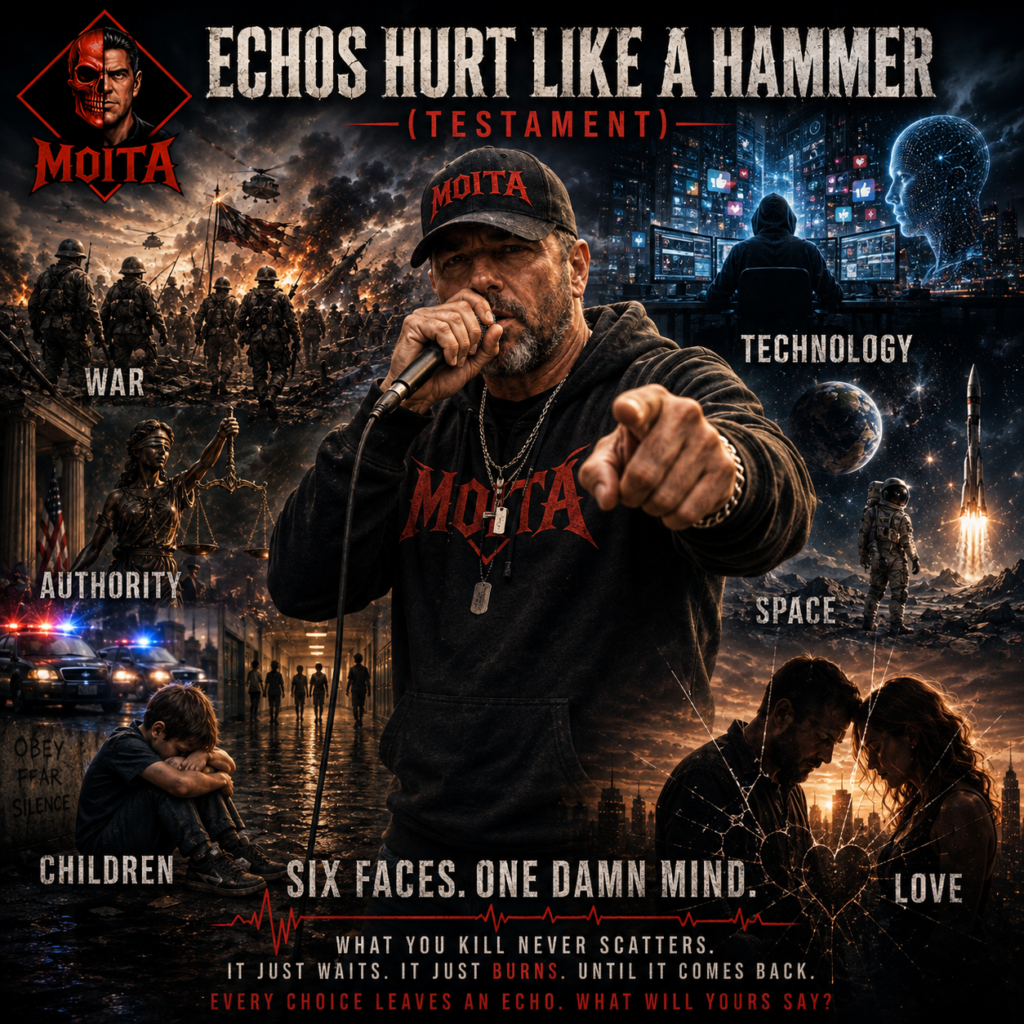
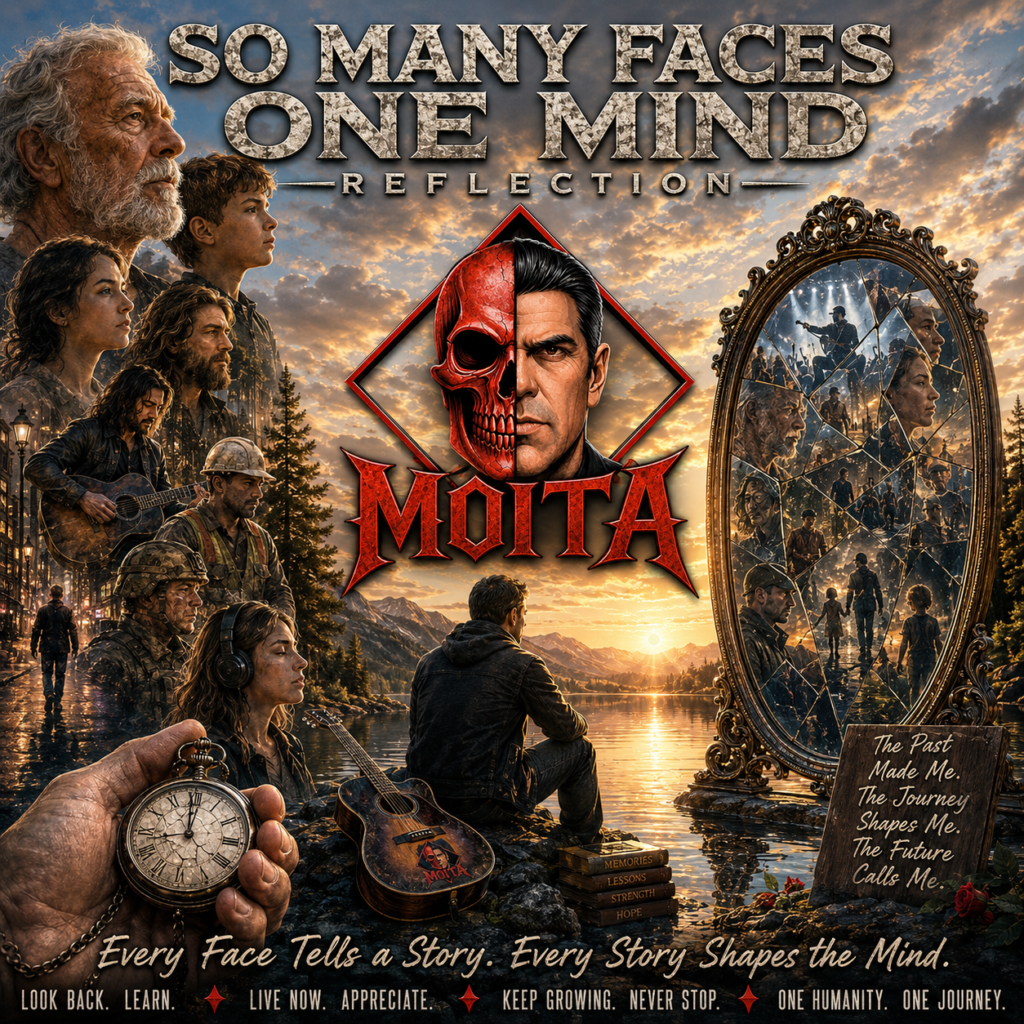



John –
There’s something about this songs that make you feel\nGrateful
John –
That’s a d*** good song