Description
About the Song
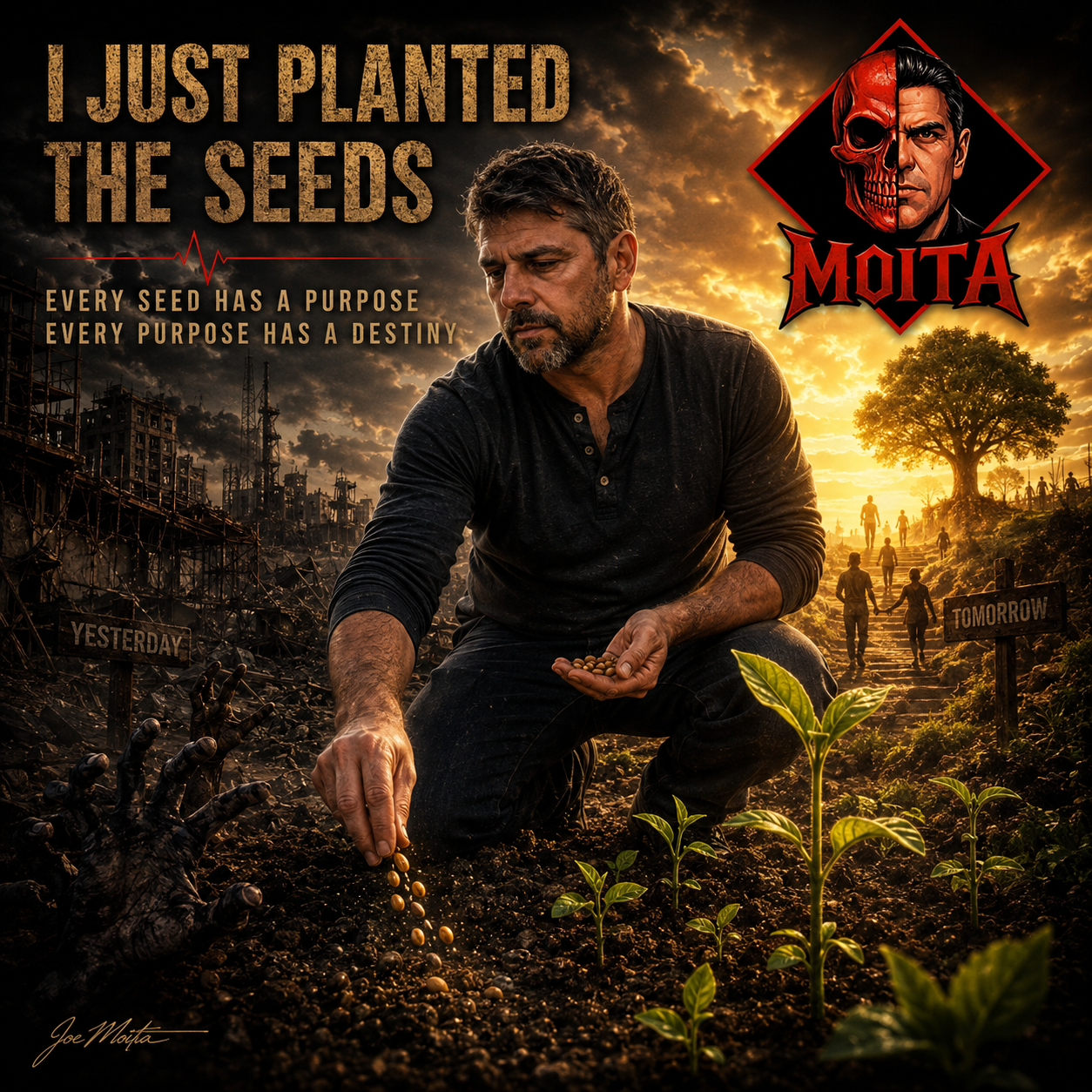
PLANTED THE SEEDS
CATEGORY
Educational Rock
PRIMARY EMOTION
Awareness
ALSO FITS
Curiosity, Critical Thinking, Manipulation, Deception, Psychology, Personal Responsibility, Media Influence, Philosophy, Self-Reflection, Resilience
WHO THIS SONG CONNECTS WITH
Some songs are written because something happened.
Others are written because something keeps happening.
This is one of those songs.
It is for people who have ever stopped in the middle of a conversation and wondered, “Why do I believe this?”
It is for people who have changed their minds after discovering they had been misled.
It is for someone who has escaped an abusive relationship and realized the manipulation started long before the abuse.
It is for someone who joined a group because it felt like family, only to discover that questioning was never welcome.
It is for parents trying to understand the world their children are growing up in.
It is for young people living in a world where every swipe, every notification, every advertisement, every headline, and every opinion competes for one thing above everything else.
Attention.
The strange thing about influence is that it rarely introduces itself.
Most of the time, it arrives wearing a smile.
It sounds reasonable.
It makes us feel understood.
It promises certainty when life feels uncertain.
It tells us we belong.
By the time we realize someone has been shaping our thinking, we often believe those thoughts were our own.
That is what fascinated me when this song began taking shape.
Not evil.
Not power.
Influence.
There is a huge difference.
Power usually announces itself.
Influence whispers.
That whisper can change families.
It can start wars.
It can create movements.
It can destroy lives.
It can also save them.
A teacher plants a seed.
A parent plants a seed.
A doctor plants a seed.
A coach plants a seed.
A criminal plants a seed.
A cult leader plants a seed.
A politician plants a seed.
An artist plants a seed.
Every one of us is planting something in someone else every day.
The real question is not whether seeds are being planted.
The question is what kind of seeds they are.
That is why this song is bigger than music.
It is about the invisible conversations happening around us every single day.
The ones we rarely notice until something has already grown.
WHAT THIS SONG IS ABOUT
On the surface, this song sounds like a confession.
The narrator almost seems proud of manipulating people.
But I never wanted listeners to walk away thinking this was simply a song about an evil person.
That would make it too easy.
Instead, I wanted the listener to become uncomfortable.
Because as the song unfolds, another possibility appears.
Maybe the narrator is not one person at all.
Maybe the voice belongs to every source of influence we encounter throughout our lives.
Advertising.
Politics.
Social media.
Scammers.
False teachers.
Manipulative relationships.
Peer pressure.
Extremist groups.
News outlets.
Celebrities.
Algorithms.
Even our own inner voice.
None of these forces necessarily succeed because they are stronger than us.
Many succeed because they understand what we already want.
Fear.
Acceptance.
Identity.
Recognition.
Purpose.
Hope.
The song keeps returning to one uncomfortable truth.
Someone may plant the seed.
But somebody else waters it.
That is where responsibility begins.
This song is not about blaming the world.
It is about reminding ourselves that protecting our minds is just as important as protecting anything else in our lives.
Our thoughts become beliefs.
Beliefs become choices.
Choices become habits.
Habits become character.
Character shapes an entire life.
Every one of those stages began somewhere.
Usually with something surprisingly small.
A sentence.
A conversation.
An idea.
A whisper.
THE STORY BEHIND THE SONG
I have always been fascinated by something most people never stop to think about.
Where do our thoughts actually come from?
Most of us like to believe every opinion we have is completely our own. We tell ourselves we reached our conclusions through logic, experience, and careful thinking.
Sometimes that is true.
Sometimes it is not.
Every day, we are surrounded by people who want something from us.
Some want our money.
Some want our vote.
Some want our attention.
Some want us to join them.
Some want us to hate what they hate.
Others want us to fear what they fear.
There are also good people who want to encourage us, teach us, protect us, and help us become better human beings.
Every one of them is planting something.
The idea for this song did not come from one particular event.
It came from years of watching the world change.
When I was younger, influence looked different.
It happened around the dinner table.
In schools.
In churches.
At work.
On the evening news.
In books.
From neighbours.
Today, it happens every second of every day.
A person can wake up in the morning, pick up a phone before getting out of bed, and before breakfast they have already been exposed to hundreds of opinions, advertisements, headlines, videos, arguments, jokes, and emotional reactions.
Most of them are gone in seconds.
Some remain.
Those are the seeds.
What interested me was that the strongest manipulation is rarely obvious.
If someone walks up to you and says, “I’m about to manipulate you,” your guard immediately goes up.
Real manipulation does not work that way.
It feels natural.
It feels comfortable.
It often feels like someone finally understands you.
That is why I chose to write this song from the point of view of the influence instead of the victim.
I wanted the listener to hear confidence.
Not shouting.
Not anger.
Confidence.
The narrator never needs to threaten anyone because the narrator understands human nature.
That makes the words much more unsettling.
One of the biggest mistakes people make is believing manipulation only happens to weak people.
I do not believe that.
Some of the smartest people in history have been manipulated.
Some of the strongest people have believed lies.
Some of the kindest people have followed dangerous ideas because those ideas first appealed to something good inside them.
The need to belong.
The desire to protect family.
The search for meaning.
The hope that someone finally has the answer.
Those are not weaknesses.
Those are human qualities.
The danger comes when someone learns how to use those qualities for their own benefit.
Most people think manipulation begins with information.
I think it begins with emotion.
If someone can make you angry before you think, they already have an advantage.
If they can make you afraid before you ask questions, they already have an advantage.
If they can make you feel superior, victimized, excluded, desperate, or special, your thinking starts changing long before you realize it.
That is why the song talks about whispers instead of commands.
A whisper invites.
It does not force.
A whisper lets people convince themselves.
That is often far more powerful than an order.
WHY I WROTE THIS SONG
I wrote this song because I wanted people to slow down.
We live in a time where reacting has become more common than thinking.
Someone reads a headline without reading the article.
Someone watches a short video and believes they understand an entire subject.
Someone repeats something because it agrees with what they already believe.
The cycle continues.
That is how ideas spread.
Not always because they are true.
Sometimes simply because they are repeated often enough.
That should concern every one of us.
Not because we should become suspicious of everything, but because we should become curious about everything.
Curiosity is one of the greatest protections a person can have.
Curiosity asks another question.
Curiosity looks for another source.
Curiosity is willing to admit, “Maybe I don’t know enough yet.”
That is not weakness.
That is wisdom.
As the song developed, I realized something else.
The narrator keeps saying, “I just planted the seeds.”
That word “just” matters.
It minimizes responsibility.
It sounds innocent.
Almost harmless.
People do this in everyday life.
“I was only joking.”
“I only shared it.”
“I only repeated what I heard.”
“I only gave my opinion.”
Sometimes enormous consequences begin with someone convincing themselves their part was too small to matter.
History is full of moments where ordinary decisions created extraordinary outcomes.
One sentence changed a family.
One speech changed a nation.
One invention changed civilization.
One lie destroyed a reputation.
One act of kindness saved a life.
Seeds have always worked that way.
They begin small.
They rarely stay that way.
That is one of the reasons this song became so important to me.
It is not trying to tell people what to think.
It is encouraging them to think for themselves.
There is a big difference.
If someone finishes listening to this song and immediately agrees with every word without asking questions, then they have missed the point.
The goal is not agreement.
The goal is awareness.
WHY THIS MATTERS TO ME
This matters to me because once we become aware of how influence works, we become much harder to manipulate.
That lesson is valuable whether the influence is coming from a stranger, a corporation, a political movement, a television program, a social media feed, a persuasive friend, or even our own assumptions.
We all plant seeds.
We all grow seeds.
The responsibility belongs to every one of us.
That does not mean every influence is dangerous.
Some of the best things inside us were planted by other people.
A parent may plant confidence.
A teacher may plant curiosity.
A coach may plant discipline.
A friend may plant hope.
A stranger may say one kind thing at exactly the moment we need to hear it.
Words can damage people.
Words can also help rebuild them.
That is why I care about what we place inside one another.
Long after a conversation is over, the words may still be there.
Long after the person who spoke them has moved on, the seed may still be growing.
WHY THIS SONG FITS MOITA
One thing I have tried to do with MOITA from the beginning is write about more than my own life.
Yes, many songs come directly from experiences I have lived.
Pain, loss, rebuilding, family, disappointment, hope, faith, and perseverance have all shaped who I am, so naturally they find their way into my writing.
But there is another side of songwriting that has always interested me just as much.
Observation.
Some of the most important songs are not born because something happened to the writer.
They are born because the writer kept paying attention.
I have always watched people.
Not to judge them.
To understand them.
Why do good people sometimes make terrible decisions?
Why do intelligent people believe obvious lies?
Why do ordinary people become heroes while others become followers?
What causes one person to question everything while another accepts everything they are told?
Those questions have fascinated me for years.
That curiosity has become part of MOITA.
Educational Rock is not about pretending to have all the answers.
It is about asking better questions.
Sometimes a song should make you smile.
Sometimes it should help you heal.
Sometimes it should remind you of someone you love.
Sometimes it should simply entertain you.
Then there are songs like this one.
Songs that quietly follow you home.
Songs that make you think about them again two days later.
Songs that cause you to notice something in everyday life you never noticed before.
Those songs often become the most valuable because they continue working long after the music ends.
“Planted the Seeds” belongs in the MOITA catalogue because it challenges both the listener and the songwriter.
It would have been easy to point fingers.
It would have been easy to blame politicians, corporations, social media, religious leaders, advertisers, or any other group people already argue about every day.
That was never the purpose.
The purpose was to step back and look at something much bigger.
Influence itself.
Influence is neither good nor evil.
It depends entirely on the person using it.
A parent encouraging a child is influence.
A teacher inspiring a student is influence.
A doctor explaining a treatment is influence.
A firefighter calming someone during an emergency is influence.
An artist creating hope through music is influence.
The same tool can also be used to deceive.
That is what makes influence one of the most powerful forces on Earth.
The responsibility belongs to all of us.
Every conversation we have leaves something behind.
Every compliment.
Every insult.
Every encouraging word.
Every rumour.
Every promise.
Every lie.
Every one of them plants something in another human being.
Some of those seeds grow into confidence.
Some grow into fear.
Some become wisdom.
Some become hatred.
Most people never realize how much of their own legacy is created through the words they leave with other people.
That thought stayed with me while writing this song.
Long after we are gone, our words often continue growing inside someone else.
If MOITA stands for anything, I hope it stands for leaving people with something worth growing.
Not because I expect everyone to agree with every lyric.
Quite the opposite.
I hope people question them.
I hope they challenge them.
I hope they have conversations because of them.
I hope parents talk to their children.
I hope friends debate ideas respectfully.
I hope someone decides to verify information before sharing it.
I hope someone chooses curiosity over certainty.
Those are victories that have nothing to do with record sales or streaming numbers.
They have everything to do with becoming better thinkers and better human beings.
That is the kind of impact I want MOITA to have.
Not by telling people what to believe.
By reminding them that what they believe matters.
READ THIS FIRST
Before you read these lyrics, I would ask you to do one simple thing.
Forget about who you think the narrator is.
Do not assume it is one person.
Do not assume it represents one profession, one organization, one belief system, or one ideology.
Instead, let the voice become whatever has influenced your own life.
Maybe it reminds you of an abusive relationship.
Maybe it reminds you of a scammer.
Maybe it reminds you of an advertisement that promised happiness.
Maybe it reminds you of an online personality who seemed to have every answer.
Maybe it reminds you of a moment when you realized you had accepted an idea without ever asking where it came from.
Read these lyrics slowly.
Ask yourself where certain beliefs in your own life began.
Think about the voices that encouraged you.
Think about the voices that discouraged you.
Think about the people who planted hope.
Think about the people who planted fear.
Most importantly, think about the seeds you are planting today.
Because someone, somewhere, will eventually live in the garden your words helped create.
FULL LYRICS
PLANT THE SEEDS
Suckers — I pulled you in with a whisper
Sugar-coated venom on my tongue
I didn’t force a thing, I just suggested
Let your hunger finish what I begun
I let you hear what you wanted to hear
Soft lies dressed up as truth
I let you feel what you needed to feel
Then blamed the damage all on you
I never pushed, I just leaned
Never lied, I just framed
Every thought you call your own
Had my fingerprints engraved
I made you want what you didn’t need
Fall in love with a fantasy
You call it fate, you call it belief
I just planted the seeds
I fed the fire behind your eyes
Watched you burn and call it life
You swear it’s yours, but underneath
I just planted the seeds
I sold you comfort wrapped in fear
Gave you enemies, gave you names
Pointed fingers, drew the lines
Taught you who to love, who to blame
I never held a gun to your head
Just a screen, a voice, a phrase
You built the cage with open hands
Then thanked me for the chains
I didn’t lead, I implied
Didn’t shout, I designed
Every step you think you chose
Was a path I left behind
I made you want what you didn’t need
Starve for likes, bleed for belief
You call it truth, you call it free
I just planted the seeds
I fed the fear, I sold the dream
Watched it rot behind the scenes
You swear it’s yours, but underneath
I just planted the seeds
I didn’t change you
I revealed you
I didn’t write the script
I let you read it
Tell me
If I gave you nothing,
Why did you take everything
You wanted more than you could keep
You wanted answers, not belief
You wanted gods that looked like me
So I planted the seeds
Say my name or curse my face
You still followed every phrase
If this is hell, you helped me build it
I just planted the seeds
Simple words
Carefully placed
You watered them
Now watch what grows
SECTION ONE
LYRIC JOURNEY
PART 1
Suckers — I pulled you in with a whisper
Sugar-coated venom on my tongue
I didn’t force a thing, I just suggested
Let your hunger finish what I begun
That opening is important because the song does not come through the door swinging.
It whispers.
That is the whole point.
If somebody wants to control another person and comes at them looking dangerous, most people know enough to get away. The harder kind to recognize is the person who sounds reasonable. They listen. They agree. They tell you exactly what you were hoping somebody would finally say.
That is why I opened with the word whisper.
The narrator is not forcing anything.
He does not need to.
He already understands what the other person wants.
The sugar-coated venom tells you what kind of voice you are dealing with. Whatever is being offered tastes good going down. The danger is hidden inside something attractive.
That could be a relationship.
It could be an advertisement.
It could be a political message.
It could be somebody promising easy money.
It could be a person online who seems to understand every frustration you have ever had.
The song never needs to choose one.
I wanted the listener to choose.
I didn’t force a thing, I just suggested
That line starts building the excuse the narrator will use throughout the song.
I did not make you do anything.
I only put the idea there.
That sounds almost innocent.
But then comes the next line.
Let your hunger finish what I begun
That changes everything.
The narrator knows something is already there.
He does not create the hunger.
He uses it.
That hunger could be for attention.
Money.
Power.
Acceptance.
Love.
Belonging.
Recognition.
Revenge.
Certainty.
Any one of those things can become an opening if somebody knows how to use it.
That is where the responsibility in the song starts getting complicated.
If somebody recognizes what you want and deliberately uses it against you, they are responsible for what they are doing.
But if you never question why you want something so badly, you can also become part of your own problem.
That is uncomfortable.
I wanted it to be.
The song is not going to allow the listener to spend the entire time blaming the narrator.
It is going to keep turning the question back around.
I let you hear what you wanted to hear
Soft lies dressed up as truth
I let you feel what you needed to feel
Then blamed the damage all on you
This is where the manipulation becomes more personal.
People like hearing things they already agree with.
I do too.
Everybody does.
If somebody tells us something that fits neatly with what we already believe, we usually accept it much faster than something that challenges us.
That is human.
The problem begins when somebody understands that and starts feeding us exactly what we want to hear.
Soft lies dressed up as truth.
I like that image because not every lie comes wearing a giant sign saying it is false.
The dangerous ones usually contain something believable.
They may contain part of the truth.
They may sound close enough to something we already know.
They may come from somebody we trust.
That is why they can get through.
The narrator is not saying, I fooled you with something ridiculous.
He is saying, I knew exactly how much truth I needed to make the lie comfortable.
Then the next two lines move from thoughts into feelings.
I let you feel what you needed to feel
Then blamed the damage all on you
That is a darker form of control.
Sometimes people do not want information.
They want permission to feel something.
They want permission to be angry.
They want permission to hate somebody.
They want permission to believe they are better than somebody else.
They want permission to believe everybody else is against them.
A manipulator can give them that permission without ever saying, I am manipulating you.
They simply keep feeding the emotion.
Then when everything falls apart, they step back.
That was your decision.
That was your anger.
That was your choice.
I only talked to you.
That is the narrator’s defense.
It is also the trap.
I never pushed, I just leaned
Never lied, I just framed
Every thought you call your own
Had my fingerprints engraved
This part becomes colder.
The narrator is getting more confident.
I never pushed, I just leaned.
There is a huge difference between those two words.
Pushing sounds aggressive.
Leaning sounds almost harmless.
But if somebody keeps leaning on you long enough, they can still move you.
That is what this voice understands.
Small pressure.
Repeated pressure.
Pressure that does not feel like pressure.
Never lied, I just framed.
That is another excuse.
Framing is powerful because the facts themselves do not always have to change.
Only the way they are presented.
Take two people describing the same person.
One says he is stubborn.
Another says he is determined.
Same behaviour.
Different frame.
One word makes the person sound difficult.
The other makes him sound strong.
People do this constantly.
News does it.
Advertising does it.
Politics does it.
Families do it.
Friends do it.
We do it to ourselves.
The frame changes how we feel about what we are looking at.
Then the narrator says something that takes the song into a much more uncomfortable place.
Every thought you call your own
Had my fingerprints engraved
That line is not saying human beings have no minds of their own.
I would never believe that.
It is asking how much of what we think has been touched by somebody else before it became part of us.
That question gets bigger the longer you sit with it.
Parents influence us.
Teachers influence us.
Friends influence us.
Books influence us.
Music influences us.
Religion can influence us.
Politics can influence us.
Fear can influence us.
Love can influence us.
Pain definitely influences us.
Life leaves fingerprints everywhere.
That does not mean those influences are bad.
Some of the best things we carry came from other people.
The problem is when we stop asking where an idea came from and why we still believe it.
There are things people carry their entire lives simply because somebody told them something when they were young.
You are not smart enough.
You will never make it.
People like us do not do that.
That is not for you.
Those words can sit inside somebody for decades.
The person who said them might not even remember.
The person who heard them may never forget.
That is a fingerprint.
The same thing works the other way.
You can do this.
I believe in you.
Do not quit.
Try again.
Those are fingerprints too.
That is why I do not look at influence as automatically evil.
Influence is a tool.
What matters is what somebody chooses to plant with it.
I made you want what you didn’t need
Fall in love with a fantasy
You call it fate, you call it belief
I just planted the seeds
Now we reach the first major landmark in the song.
This is where the title earns its place.
I made you want what you didn’t need.
Look around at how much of modern life is built around that idea.
People are constantly being told something is missing.
You need this car.
You need this body.
You need this lifestyle.
You need more followers.
You need this person.
You need this status.
You need to be noticed.
You need to prove something.
There is nothing wrong with wanting things.
There is nothing wrong with ambition.
There is nothing wrong with improving your life.
The danger comes when somebody convinces you that you are incomplete until you get whatever they are selling.
That is where the fantasy begins.
Fall in love with a fantasy.
I chose love there because people defend what they love.
Once somebody falls in love with an idea, facts can become an inconvenience.
They do not want to examine it anymore.
They want to protect it.
That is when belief becomes harder to challenge.
You call it fate, you call it belief
I just planted the seeds
The narrator has arrived at the first chorus and almost sounds amused.
You gave it a name.
You made it important.
You built an entire meaning around it.
I only placed something small in front of you.
That is what makes the chorus work for me.
It sounds simple.
Almost dismissive.
I just planted the seeds.
But planting the seed was never small.
It was the beginning of everything that followed.
And now the song is about to show us what happens when that seed is no longer sitting quietly underground.
It starts to grow.
SECTION ONE
LYRIC JOURNEY
PART 2
I fed the fire behind your eyes
Watched you burn and call it life
You swear it’s yours, but underneath
I just planted the seeds
The seed has grown.
Now there is fire.
That change matters because the narrator still does not claim to have created what was inside the person.
He says he fed it.
That takes us back to the hunger from the opening.
Something was already there.
Maybe anger.
Maybe ambition.
Maybe resentment.
Maybe loneliness.
Maybe fear.
Maybe the need to belong.
Maybe the need to be noticed.
The narrator finds it and gives it fuel.
That is one of the things about manipulation that interests me most. Sometimes the person doing the manipulating does not need to invent anything. They only need to discover what already gets a reaction out of you.
Once they find it, they keep touching it.
If anger works, they give you more reasons to be angry.
If fear works, they give you more things to fear.
If praise works, they keep telling you how special you are.
If belonging works, they make you feel as though you have finally found the only people who truly understand you.
The method changes depending on the person.
The principle does not.
I fed the fire behind your eyes.
The fire belongs to you.
The fuel may not.
That distinction is important throughout this entire song.
Watched you burn and call it life.
There is something sad underneath that line.
A person can become so consumed by something that they no longer recognize what it is doing to them.
They may call obsession dedication.
They may call rage passion.
They may call control love.
They may call constant fear awareness.
They may call exhaustion success.
Sometimes we become so used to the condition we are living in that we stop asking whether it is actually healthy for us.
The narrator watches that happen.
He does not rescue the person.
He does not even interrupt.
He watches.
You swear it’s yours, but underneath
I just planted the seeds
The chorus returns, but it does not feel exactly the same now.
The first time, we were talking about wanting something that was not needed and falling in love with a fantasy.
Now there are consequences.
The seed has become a fire.
The person still believes everything belongs completely to them.
Their passion.
Their belief.
Their direction.
Their choices.
The narrator keeps pointing underneath all of it.
Back to the beginning.
Back to that first suggestion.
That is why the image of planting works so well for what I wanted to say.
When you look at a large tree, you do not see the seed anymore.
But the tree would not exist without it.
Influence can work the same way.
Years later, we may not remember the first sentence.
We may not remember who said it.
We may not remember the first time an idea entered our head.
We only see what eventually grew from it.
I sold you comfort wrapped in fear
Gave you enemies, gave you names
Pointed fingers, drew the lines
Taught you who to love, who to blame
Now the song moves somewhere more dangerous.
Fear.
Fear is powerful because it can make people look for certainty very quickly.
When something frightens us, we naturally want to know what the danger is.
Where is it coming from?
Who is responsible?
How do I protect myself?
Those are reasonable questions.
The problem comes when somebody already has the answers prepared before we have had time to think.
I sold you comfort wrapped in fear.
That is a strange package when you think about it.
Fear and comfort sound like opposites.
But they can work together.
First, convince somebody there is something terrible to fear.
Then offer yourself as the person who can protect them from it.
Now the fear strengthens the relationship.
The more frightened the person becomes, the more valuable the promised protection appears.
That can happen in many places.
Relationships.
Groups.
Politics.
Scams.
Extremist movements.
Even ordinary advertising can sometimes begin by identifying an insecurity and then offering the product as the answer.
The song is not saying every warning is manipulation.
Real dangers exist.
People should be warned about them.
The question is whether somebody is helping you understand a danger or deliberately keeping you afraid because your fear benefits them.
That is a very different thing.
Then comes the next step.
Gave you enemies, gave you names.
Once fear exists, give it a face.
Now the person knows where to direct everything they are feeling.
That is where labels become powerful.
Labels can be useful. We need words to describe things.
But labels can also become shortcuts that stop us from seeing the individual human being underneath them.
Once that happens, it becomes much easier to say those people.
Those people are the problem.
Those people cannot be trusted.
Those people are all the same.
That kind of thinking removes curiosity.
You no longer have to know the person.
The label has already told you who they are supposed to be.
Pointed fingers, drew the lines.
Now there are sides.
Us.
Them.
Good.
Bad.
Friend.
Enemy.
The world becomes easier to understand because everything has been divided into boxes.
The problem is that human beings do not fit neatly into boxes.
People are complicated.
I am complicated.
You are complicated.
We can be right about one thing and completely wrong about another.
We can make mistakes and still do good things.
We can disagree strongly and still respect each other.
But that kind of thinking requires effort.
Drawing a line is easier.
Taught you who to love, who to blame.
That is where the narrator reveals how far the influence has gone.
It is no longer simply shaping an opinion.
It is shaping relationships.
Loyalty.
Identity.
Who deserves compassion.
Who deserves suspicion.
Who belongs.
Who does not.
That is when influence can become extremely dangerous.
If somebody can decide who you are allowed to love and who you are expected to hate, they have moved a long way beyond offering an opinion.
They are beginning to build your world for you.
I never held a gun to your head
Just a screen, a voice, a phrase
You built the cage with open hands
Then thanked me for the chains
This is one of the places in the song where I wanted the listener to stop blaming force.
The narrator says it directly.
I never held a gun to your head.
Nobody physically made you do it.
That does not remove the manipulator’s responsibility.
It changes the kind of control we are talking about.
Just a screen, a voice, a phrase.
Three very ordinary things.
That is what I like about those words.
Nothing sounds powerful.
A screen.
A voice.
A phrase.
Yet think about how much of our lives can pass through those three things.
A phrase can become an idea.
An idea can become a belief.
A belief can affect a decision.
A decision can change a life.
The screen itself is not the villain.
I want to be very clear about that because I have never believed technology is the enemy.
Technology can educate people.
It can connect families.
It can help somebody learn a skill.
It can introduce us to cultures and ideas we might never encounter otherwise.
It can give somebody access to information that once would have taken weeks or months to find.
The tool is not automatically good or bad.
What matters is what we do with it and what somebody else is trying to do through it.
A screen gives influence enormous reach.
A voice gives it personality.
A phrase makes it memorable.
That can be used to teach something valuable.
It can also be used to spread complete nonsense.
The responsibility does not disappear simply because the message arrived through a device.
You built the cage with open hands.
That line matters to me because the person participates.
Nobody secretly builds the cage around them while they are sleeping.
Their hands are open.
They are helping.
One decision.
Then another.
Then another.
That is often how people become trapped in things.
Not through one enormous choice.
Through a hundred small ones that did not seem important at the time.
A person can slowly give away independence.
Slowly give away confidence.
Slowly give away relationships.
Slowly give away the ability to question.
By the time they recognize the cage, they may have helped build most of it themselves.
Then thanked me for the chains.
That is probably one of the hardest lines in the song.
How could somebody thank another person for chains?
Because they may not recognize them as chains.
They may call them protection.
Belonging.
Loyalty.
Security.
Love.
Truth.
That is what makes certain forms of control so difficult to recognize from the inside.
If somebody knows they are imprisoned, at least they know they want out.
If somebody believes the prison is protecting them, leaving becomes much harder.
I didn’t lead, I implied
Didn’t shout, I designed
Every step you think you chose
Was a path I left behind
Now the narrator almost gives away the method.
I didn’t lead, I implied.
Leading would be too obvious.
If I tell you exactly where I want you to go, you can refuse.
If I arrange things so that you believe you discovered the destination yourself, you become much more committed to getting there.
That is the difference.
Didn’t shout, I designed.
Design is a powerful word here.
Design does not require force.
Design creates an environment.
Think about how many environments shape behaviour without saying a word.
A store has a layout.
A website has a layout.
A casino has a layout.
A school has a structure.
A workplace has a culture.
A social group has expectations.
The environment influences what becomes easy, difficult, normal, rewarded, ignored, or discouraged.
That does not mean somebody is secretly controlling every environment we enter.
It means design matters.
The choices placed in front of us matter.
The choices hidden from us matter too.
Every step you think you chose
Was a path I left behind
I do not read that line as saying people have no free will.
The narrator wants you to believe he has that much power.
I do not give him that power.
People can stop.
People can question.
People can turn around.
People can choose another road.
But first they have to realize another road exists.
That is what makes the path important.
If somebody controls the choices you can see, they can influence the choice you eventually make without physically forcing anything.
You still chose.
But did you see the whole map?
That is a question worth asking far beyond this song.
Sometimes another path is hidden because somebody deliberately hid it.
Sometimes we hide it from ourselves.
We tell ourselves we are too old.
Too young.
Too poor.
Too damaged.
Too inexperienced.
Too late.
We can build our own narrow path out of beliefs we have repeated so many times that they start sounding like facts.
Then somebody comes along and reinforces them.
Now their fingerprints are mixed with ours.
That is where personal responsibility becomes important again.
We cannot control every seed somebody throws into our lives.
We can learn to recognize what we are watering.
I made you want what you didn’t need
Starve for likes, bleed for belief
You call it truth, you call it free
I just planted the seeds
The chorus comes back, but the journey has changed it.
The first time it was about fantasy.
Now it is about appetite.
Starve for likes.
That line belongs to the world we are living in now.
Human beings have always wanted approval.
That did not begin with social media.
People wanted acceptance thousands of years before anybody held a phone.
What changed is that approval can now be counted.
Likes.
Views.
Followers.
Shares.
Numbers.
Once something human becomes a number, it becomes very easy to compare.
Why did that person get more attention than me?
Why did nobody react to what I posted?
Why does everybody seem happier?
Why does everybody seem more successful?
The strange part is that we may be comparing our complete life to a few carefully selected seconds from somebody else’s.
That can create a hunger that is almost impossible to satisfy.
There is always another number.
Another person with more.
Another post that performed better.
Another reason to feel behind.
That is why the word starve belongs there.
The person keeps consuming approval and somehow remains hungry.
Bleed for belief.
Now the stakes become much higher.
People can become deeply attached to what they believe.
Sometimes belief gives people tremendous strength.
It gives purpose.
It gives direction.
It helps people survive terrible circumstances.
I respect that.
But any belief can become dangerous when protecting it becomes more important than truth, relationships, compassion, or the ability to question ourselves.
If you have to destroy everybody who disagrees with you in order to protect what you believe, something has gone wrong.
You call it truth, you call it free.
Those words deliberately challenge the listener.
Everybody likes the word truth.
Everybody likes the word freedom.
The narrator knows that too.
So he lets the person use those words.
He does not need to argue.
He only needs them to believe the path was entirely theirs.
I just planted the seeds.
By now that sentence does not sound innocent anymore.
We have travelled too far.
We have seen fear.
Enemies.
Labels.
Cages.
Chains.
Paths that were designed before the person knew they were walking them.
The same excuse keeps returning.
I only planted something small.
But we know better now.
We have seen what grew from it.
And the song is not finished with that responsibility yet.
SECTION ONE
LYRIC JOURNEY
PART 3
I fed the fear, I sold the dream
Watched it rot behind the scenes
You swear it’s yours, but underneath
I just planted the seeds
Fear and dreams sound like opposites.
One pushes us away from something.
The other pulls us toward something.
The narrator understands both.
If fear does not move you, maybe hope will.
If I cannot control you by convincing you something terrible is coming, perhaps I can influence you by promising something wonderful.
That is why I put those two ideas together.
I fed the fear, I sold the dream.
One creates the problem.
The other offers the answer.
That combination can be extremely persuasive.
First tell somebody what they should be afraid of.
Then tell them you are the person who can make everything better.
Or turn it around.
Show somebody a beautiful future.
Make them want it badly enough.
Then convince them they could lose it unless they listen to you.
Either way, fear and desire begin working together.
That does not mean every person offering hope is manipulating somebody.
We need hope.
We need people who encourage us.
We need dreams.
I have lived much of my own life believing something could be built before it existed.
Without that kind of thinking, people would never create anything.
The difference is honesty.
Is somebody helping you build your own dream, or are they selling you a dream because they need something from you?
That question changes everything.
Watched it rot behind the scenes.
This is where the beautiful picture starts falling apart.
From the outside, everything may still look perfect.
That happens all the time.
A relationship can look wonderful from the outside while two people are miserable behind closed doors.
A business can look successful while it is collapsing financially.
A public figure can appear completely confident while their private life is falling apart.
A group can preach unity while fear and control are holding everybody together.
Appearances can survive long after the truth underneath them has started rotting.
That is why I have learned to respect consistency.
Anybody can look good for a short period of time.
Anybody can say the right words.
Time is harder to fool.
Eventually actions begin catching up with promises.
Eventually character shows itself.
Eventually the smell gets through the paint.
You swear it’s yours, but underneath
I just planted the seeds
The chorus returns again, but by now it almost sounds like the narrator’s legal defense.
You made the choices.
You lived the consequences.
You defended the belief.
You built the cage.
Do not blame me.
I only planted the seed.
That is exactly why responsibility in this song cannot belong completely to one side.
Manipulation is real.
So is personal responsibility.
Those two truths can exist together.
A person can be deliberately deceived and still eventually have to decide what they are going to do once they recognize the deception.
That does not mean blaming victims.
It means recognizing that getting your power back often begins when you realize you still have choices.
Maybe somebody planted something harmful in you.
That does not mean you have to water it forever.
That matters to me because otherwise the song becomes hopeless.
If the narrator has complete control, there is no reason to question anything.
But he does not.
The listener still has a mind.
The listener can still stop.
The listener can still examine what has grown.
The listener can still pull something out by the roots.
I didn’t change you
I revealed you
I didn’t write the script
I let you read it
This is a major turning point.
The song becomes quieter here.
The narrator has spent most of the song bragging about influence.
Now he makes an even bigger claim.
I didn’t change you.
I revealed you.
That is a difficult idea.
I do not think there is one simple answer to it.
Can somebody turn another person into something they never were?
Sometimes influence can absolutely change behaviour.
People can be pressured.
Conditioned.
Deceived.
Traumatized.
Encouraged.
Educated.
Inspired.
Human beings change throughout their lives.
So I would never reduce that complicated reality to four words and pretend they explain everything.
But those four words ask another question.
What happens when pressure reveals something that was already inside us?
Think about ordinary life.
It is easy to be patient when nothing is going wrong.
It is easy to talk about honesty when telling the truth costs nothing.
It is easy to call yourself generous when you have plenty.
It is easy to say you are loyal when loyalty has never been tested.
Then something happens.
Pressure.
Fear.
Temptation.
Loss.
Opportunity.
That is when we sometimes discover things about ourselves we did not know were there.
Some of those discoveries make us proud.
Some do not.
I have always believed life teaches you things about yourself that comfort never will.
You can think you know exactly how you would react to something.
Then you live it.
Sometimes you surprise yourself.
That is why the narrator’s claim is so uncomfortable.
Maybe he did not create every weakness.
Maybe he found one.
Maybe he found anger that was already there.
Maybe he found insecurity.
Maybe he found greed.
Maybe he found loneliness.
Maybe he found a desperate need to belong.
Then he gave it somewhere to go.
That does not excuse him.
Finding somebody’s vulnerability and deliberately exploiting it is still manipulation.
But the line refuses to let the listener avoid self-examination.
What did he find?
Why was it there?
Would somebody else have been able to use it the same way?
Those questions are worth more than a simple answer.
I didn’t write the script
I let you read it
We understand our lives through stories.
We tell ourselves stories about who we are.
What happened to us.
What we deserve.
What we are capable of.
Who can be trusted.
What our future is going to look like.
Some of those stories help us.
Some trap us.
A person who has heard for years that they are useless may eventually begin telling themselves the same story.
At that point, the original voice does not even have to be in the room anymore.
The script has been learned.
That is one of the saddest things words can do to another human being.
But there is another side to it.
Scripts can be rejected.
Somebody can reach a point in life and say, I do not believe this about myself anymore.
That does not erase what happened.
It does not magically repair every wound.
It means the old story no longer gets complete control over the next chapter.
I think that is one of the most important things we can learn.
You can acknowledge your past without allowing it to write every page of your future.
The narrator says he only let you read the script.
Fine.
Then we should also remember that we can put the script down.
Tell me
If I gave you nothing,
Why did you take everything
This is the confrontation.
The narrator stops explaining himself and asks the listener directly.
If I gave you nothing, why did you take everything?
There are two unusual pauses in the finalized lyric itself here, and I leave them exactly where they belong because this is where the song turns the question around.
Up until now, we have been examining what the narrator did.
What he planted.
What he fed.
What he framed.
What he designed.
Now he wants to know what the other person did.
Why did you give so much away?
That question can apply to many things.
Why did you give somebody all of your trust before they earned it?
Why did you give strangers control over how you feel about yourself?
Why did you allow one person’s opinion to become your identity?
Why did you sacrifice relationships for an idea you never examined?
Why did you keep giving your attention to something that made you miserable?
Why did you surrender your peace?
Those are not accusations I am throwing at the reader.
They are questions I ask myself too.
Every one of us has probably given too much of ourselves to something at one point or another.
Work.
A relationship.
Anger.
Pride.
Approval.
Fear.
An argument we could not let go.
A mistake we kept replaying.
Sometimes nobody takes our entire life away from us.
We hand pieces of it over.
A little at a time.
That is what makes this lyric important.
If I gave you nothing, why did you take everything?
Maybe because we thought we were getting something valuable in return.
Maybe belonging.
Maybe certainty.
Maybe attention.
Maybe love.
Maybe an answer.
That takes us directly into the next movement.
You wanted more than you could keep
You wanted answers, not belief
You wanted gods that looked like me
So I planted the seeds
Now the narrator goes after desire again.
You wanted more than you could keep.
There is nothing wrong with wanting more from life.
I certainly have.
Wanting more can push somebody to work harder.
Learn.
Build.
Create.
Take chances.
Start over.
The problem is not wanting more.
The question is what more means.
More money?
More attention?
More control?
More approval?
More certainty?
More possessions?
More followers?
There is always more available.
That is the trap.
If your happiness depends on reaching a point where there is finally enough of everything, you may spend your whole life moving the finish line.
You wanted answers, not belief.
This line needs some care because I am not attacking faith.
That is not what it says to me.
I am talking about the hunger for certainty.
There are questions in life that do not come with easy answers.
People do not like that.
I do not always like it either.
We want to know.
We want somebody to tell us.
What is going to happen?
Why did this happen?
Who is right?
Who is wrong?
What should I do?
Sometimes an honest answer is, I do not know.
Those can be difficult words to accept.
But I have a lot of respect for them.
There is strength in admitting you do not know something.
It leaves the door open.
You can learn.
You can ask another question.
You can change your mind when better information arrives.
The dangerous person is often the one who claims to have a simple answer for absolutely everything.
Life is too complicated for that.
You wanted gods that looked like me.
That line is deliberately broad.
I did not write it to attack one religion.
I wrote it because human beings have always had a tendency to elevate people.
Political leaders.
Celebrities.
Religious leaders.
Business leaders.
Athletes.
Artists.
Internet personalities.
People become attached not only to the idea but to the person delivering it.
Then something changes.
Criticizing the idea starts feeling like criticizing them personally.
Questioning the leader starts feeling like betraying the group.
That is dangerous.
Nobody should become too important to question.
Not a politician.
Not a religious leader.
Not a celebrity.
Not a billionaire.
Not a teacher.
Not an artist.
Not me.
If somebody is reading a MOITA page and thinks something I have written is wrong, question it.
Look into it.
Challenge it.
That is completely consistent with this song.
It would be ridiculous for me to write a song telling people to think for themselves and then expect them to accept everything I say because my name is on the page.
You wanted gods that looked like me.
The narrator understands another human weakness.
We are often attracted to people who reflect something back at us.
Our values.
Our anger.
Our hopes.
Our prejudices.
Our ambitions.
Our fears.
When somebody looks at the world the way we already do, trusting them becomes easier.
So I planted the seeds.
Notice the change.
Earlier it was, I just planted the seeds.
Now it is simply, So I planted the seeds.
The excuse is becoming thinner.
The narrator knows what he did.
He saw the hunger.
He saw the need for answers.
He saw the desire to follow somebody who reflected the listener back to themselves.
And he planted directly into it.
Now we are getting close to the end.
The narrator has almost finished making his case.
But the song still has one final question of responsibility to settle.
Who built what grew from those seeds?
SECTION ONE
LYRIC JOURNEY
PART 4
Say my name or curse my face
You still followed every phrase
If this is hell, you helped me build it
I just planted the seeds
By this point in the song, the narrator does not care whether you love him or hate him.
That is what makes the opening of this final movement interesting.
Say my name or curse my face.
Either way, you are still engaged.
You are still thinking about him.
You are still talking about him.
You are still giving him space inside your head.
That matters because influence does not always require admiration.
Sometimes anger gives a person just as much attention as loyalty does.
We see that constantly.
Somebody says something outrageous and millions of people repeat it because they are furious.
They quote it.
Share it.
Argue about it.
Make videos about it.
Tell their friends about it.
The original message travels farther because the people who hated it helped carry it.
That does not mean we should ignore harmful ideas or never challenge them.
Sometimes they absolutely need to be challenged.
But there is a difference between challenging an idea thoughtfully and allowing somebody we cannot stand to occupy our attention every hour of the day.
That is another kind of control.
You still followed every phrase.
I like the double meaning sitting inside that line.
Following can mean believing.
It can also simply mean paying attention.
You may disagree with every word.
You may curse the person saying it.
But if you cannot stop watching, listening, reacting and repeating, they still have influence over you.
That is worth thinking about in the world we live in now.
Attention has value.
Companies know it.
Advertisers know it.
Entertainers know it.
Politicians know it.
Anybody building an audience knows it.
Sometimes the strongest response we can make is not another angry reaction.
Sometimes it is deciding something no longer deserves another minute of our lives.
Then comes the line that, for me, brings the whole song together.
If this is hell, you helped me build it.
The narrator finally says openly what he has been implying from the beginning.
I did something.
So did you.
That is the tension I wanted the entire song to carry.
I never wanted Planted the Seeds to become a cheap excuse for blaming people who have been manipulated.
That would miss the point completely.
There are situations where people are deliberately deceived, exploited, pressured or abused.
The responsibility for that behaviour belongs to the person doing it.
But there is another conversation that matters too.
Once we become aware of what is happening, what do we do next?
Do we continue feeding it?
Do we keep repeating it?
Do we defend it because admitting we were wrong would hurt our pride?
Do we keep watering something simply because we have already spent years growing it?
That last question matters.
People can become deeply invested in beliefs, relationships, groups, careers and identities.
Walking away can feel like admitting all that time was wasted.
So sometimes we stay.
Not because we still believe.
Because leaving would force us to face how much we already gave away.
That is human.
I understand it.
But staying another ten years does not give the first ten back.
Sometimes the strongest thing a person can do is admit, I believed this and now I don’t.
I trusted this person and now I don’t.
I defended this idea and I was wrong.
I need to change direction.
There is no shame in learning.
There is no shame in changing your mind because you learned something you did not know before.
To me, that is growth.
If this is hell, you helped me build it.
The word helped is important.
The narrator does not say you built it alone.
He does not say he is innocent.
He says you helped.
That keeps responsibility on both sides.
Someone planted.
Someone watered.
Something grew.
That has been the structure underneath the entire song.
It also works in the opposite direction.
Someone plants encouragement.
Someone believes it.
Confidence grows.
Someone plants curiosity.
Someone follows it.
Knowledge grows.
Someone plants kindness.
Someone passes it along.
Compassion grows.
That is why I never see the seed itself as evil.
A seed represents possibility.
What matters is what is planted and what we choose to feed.
I just planted the seeds.
There is that word again.
Just.
After everything we have travelled through, it sounds different now.
At the beginning, it almost sounded clever.
The narrator was proud of himself.
He whispered.
Suggested.
Framed.
Designed.
He presented himself as somebody who understood human beings well enough to move them without ever touching them.
Now, after everything that happened, “just” sounds more like an excuse.
Look at what grew.
Look at the fear.
The division.
The dependency.
The hunger for approval.
The fantasy.
The cage.
The chains.
The narrator still wants to stand at the edge of the garden and say, don’t blame me.
I only planted it.
That is where I think the listener should challenge him.
Planting matters.
Words matter.
Influence matters.
Intent matters.
You cannot deliberately put something destructive into another person’s mind, watch it grow, benefit from it, and then pretend you had nothing to do with the result.
At the same time, the listener cannot pretend watering does not matter either.
That is why I did not want this song to give anybody an easy escape.
Not the manipulator.
Not the person being influenced.
Not me.
Not the reader.
We all have some responsibility for what we put into the world and what we continue feeding once it reaches us.
Then the song strips everything down.
Simple words
Carefully placed
You watered them
Now watch what grows
After everything that came before it, I wanted the ending to become simple.
No long argument.
No final speech.
No complicated explanation.
Simple words.
That is where we started.
A whisper.
Something small.
Something that barely seemed important.
That is how so many things begin.
Think about the sentences people carry for years.
A parent telling a child, “I’m proud of you.”
A teacher saying, “You’re better at this than you think.”
A friend saying, “Don’t give up.”
Those words can stay inside somebody for the rest of their life.
Unfortunately, the opposite can happen too.
“You’re useless.”
“You’ll never make it.”
“Nobody wants you.”
“You’re nothing.”
Those are simple words too.
They can also grow.
That is why carefully placed changes the feeling.
Words can be accidental.
We all say stupid things.
I certainly have.
We speak when we are angry.
We misunderstand somebody.
We say something badly and wish we could pull it back five seconds later.
Carefully placed is different.
That suggests intention.
Somebody thought about where the seed should go.
They understood the weakness.
They understood the hunger.
They understood the fear.
Then they chose the words accordingly.
That takes us right back to the whisper at the beginning.
The song has travelled a long distance, but the method never really changed.
The narrator never needed force.
He needed placement.
You watered them.
Four words.
And now the listener has nowhere to hide either.
You watered them.
Not necessarily because you were foolish.
Not because you were weak.
Maybe because you trusted somebody.
Maybe because you were lonely.
Maybe because you were afraid.
Maybe because the idea gave you hope.
Maybe because everybody around you believed the same thing.
Maybe because questioning it would have cost you friends.
Maybe because admitting you were wrong felt harder than continuing.
There can be a thousand reasons.
Understanding those reasons matters.
But eventually there comes a point where awareness gives us another choice.
Keep watering.
Or stop.
That is where personal responsibility enters the song for the final time.
We cannot control every seed that lands in our lives.
That would be impossible.
We cannot control every advertisement we see.
Every opinion we hear.
Every headline that reaches us.
Every lie somebody tells us.
Every criticism.
Every insult.
Every promise.
Every attempt to influence us.
But we can become more careful about what we feed.
That is one of the reasons I keep coming back to curiosity.
Curiosity gives us a moment between the seed and the water.
Hold on.
Is this true?
Where did this come from?
Why does this make me so angry?
Why do I want this to be true?
Who benefits if I believe it?
Is there another side?
What evidence would make me change my mind?
Those questions do not guarantee we will never be fooled.
Nobody is that smart.
I am not.
You are not.
Every human being can get something wrong.
But asking questions gives us a fighting chance.
Then we arrive at the final lyric.
Now watch what grows.
I love that ending because it does not tell you what grows.
The song stops before answering.
That belongs to the listener.
Maybe fear grows.
Maybe hatred grows.
Maybe dependency grows.
Maybe greed grows.
Maybe division grows.
But that is not the only possibility.
Wisdom can grow.
Confidence can grow.
Compassion can grow.
Courage can grow.
Knowledge can grow.
Hope can grow.
That is where the darker voice of the song accidentally reveals something hopeful.
If words are powerful enough to damage people, they are powerful enough to help people too.
If an idea can push someone toward hatred, another idea can pull someone toward understanding.
If fear can spread from one person to another, courage can spread the same way.
If one person’s cruelty can stay inside somebody for decades, one person’s kindness can stay there too.
That means influence carries responsibility, but it also carries opportunity.
Every one of us has it.
You do not need millions of followers.
You do not need a television program.
You do not need political power.
You do not need money.
You do not need a stage.
Sometimes all you need is another human being standing in front of you.
What you say next may be forgotten five minutes later.
Or it may stay with them for fifty years.
We rarely know.
That is why this final lyric matters so much to me.
Now watch what grows.
It is not only a warning.
It is a challenge.
Look at what you have been watering.
Look at what other people planted in you.
Keep what made you stronger.
Question what made you smaller.
Pull out what is poisoning the garden.
Plant something better where you can.
Then look at what you are leaving inside other people.
Your children.
Your family.
Your friends.
People you work with.
People you disagree with.
Even strangers you may never see again.
What are they carrying away after spending time with you?
That question applies to me too.
Every song I write plants something.
Every MOITA page plants something.
I cannot write a song about responsibility and pretend the responsibility stops with the listener.
It comes back to me.
What am I putting into the world?
What am I encouraging?
What am I asking people to think about?
That matters.
I do not expect everybody to agree with me.
I would actually be disappointed if the lesson somebody took from Planted the Seeds was to agree with Joe Moita without asking questions.
That would be the exact opposite of the song.
Question me too.
Think.
Look deeper.
Decide for yourself.
The goal was never to give you another voice to follow.
The goal was to remind you that your own voice deserves examination too.
That brings us all the way back to the question that started this journey.
Where do our thoughts actually come from?
I still do not think there is one simple answer.
They come from everywhere.
Family.
Experience.
Culture.
Education.
Pain.
Love.
Fear.
Books.
Music.
Friends.
Strangers.
Screens.
Mistakes.
Successes.
The people who helped us.
The people who hurt us.
And somewhere inside all of that is us, trying to decide what deserves to remain.
Maybe that is the responsibility none of us can hand to somebody else.
We cannot prevent every seed from landing.
But we can decide what we keep watering.
Simple words.
Carefully placed.
You watered them.
Now watch what grows.
SECTION TWO
THE STORY
Every song begins somewhere.
Some begin with a memory that refuses to fade.
Some begin with anger.
Some begin with loss.
Some begin with a question that keeps coming back until you finally sit down and try to answer it.
Planted the Seeds began with a question.
Where do our thoughts actually come from?
It sounds simple.
The more I thought about it, the less simple it became.
Most of us like to believe every opinion we hold was built entirely by us. We imagine ourselves carefully examining the facts, weighing both sides, and arriving at a conclusion through our own experience and judgment.
Sometimes that is exactly what happens.
Sometimes it is not.
I started paying closer attention to the world around me.
Not looking for villains.
Looking for patterns.
The more I watched people, the more I realized influence is everywhere.
It sits quietly in conversations.
It appears in advertising.
It hides inside headlines.
It lives in classrooms.
It lives in families.
It lives in friendships.
It lives in politics.
It lives in religion.
It lives on our phones.
It even lives inside our own memories.
The strange thing is that influence almost never introduces itself.
It does not knock on the door and announce its intentions.
It slips into everyday life so naturally that we rarely notice it arriving.
That fascinated me.
When I was growing up, influence moved much more slowly.
You learned from your parents.
Your teachers.
Your neighbours.
Books.
The evening news.
The people sitting around the dinner table.
Those conversations mattered because they happened face to face.
You could ask questions.
You could see expressions.
You could hear hesitation.
Today the world moves differently.
Before most people finish breakfast they have already absorbed hundreds of opinions.
Some are thoughtful.
Some are emotional.
Some are honest.
Some are carefully designed to make people react before they think.
That change interested me more than any individual event ever could.
The song was never meant to accuse one group of manipulating everyone else.
That would have made it too simple.
Life is rarely that simple.
Instead, I started asking myself another question.
What if influence itself could speak?
What would it sound like?
It certainly would not scream.
Real influence rarely needs to.
It would probably sound calm.
Confident.
Patient.
Almost friendly.
It would understand people better than they understand themselves.
It would know which words create hope.
Which words create fear.
Which words create anger.
Which words create belonging.
That became the voice of the song.
I wanted the narrator to feel unsettling without ever becoming dramatic.
There are no threats.
No shouting.
No grand speeches.
The narrator simply understands human nature.
That makes the lyrics far more uncomfortable.
One thing I have learned through life is that people often imagine manipulation only happens to weak people.
I disagree.
Some of the strongest people I have ever known have been influenced by someone they trusted.
Some of the smartest people have believed things that later turned out to be completely false.
That is not because they lacked intelligence.
It is because they were human.
Human beings naturally want answers.
We want purpose.
We want certainty.
We want to belong.
There is nothing wrong with any of those things.
The danger begins when somebody learns how to use those needs for their own benefit.
That is where this song was born.
The more I wrote, the more I realized manipulation rarely begins with facts.
It begins with emotion.
If someone can make you angry first, they have already changed how you will hear the next sentence.
If someone can make you afraid first, they have already narrowed the questions you are likely to ask.
If someone can convince you that only they understand you, your trust begins shifting before you even notice it.
That realization changed how I approached the lyrics.
The narrator never says, “I forced you.”
Instead, the narrator says things like, “I just suggested.”
“I just leaned.”
“I just framed.”
Those words matter.
They are the language people often use when they want to reduce their own responsibility.
“I was only joking.”
“I was only trying to help.”
“I only repeated what I heard.”
“I only shared it.”
We hear those kinds of statements every day.
Sometimes they are true.
Sometimes they are convenient excuses.
I wanted the listener to decide which one this narrator was using.
One of my favourite ideas in the song is also one of the smallest.
The repeated use of the word “just.”
“I just planted the seeds.”
That single word changes everything.
It minimizes the action.
It makes planting the seed sound insignificant.
Almost innocent.
But anyone who has ever planted a garden knows the seed is where everything begins.
Without it, nothing grows.
History has always worked that way.
One conversation changes a friendship.
One speech changes a nation.
One lie destroys a reputation.
One act of kindness changes a life.
None of those things looked very large at the beginning.
That is why I chose a seed instead of a bomb, a weapon, or some dramatic image.
The smallest things often become the biggest.
The more I worked on the song, the more I realized I did not want listeners to walk away angry at the narrator.
I wanted them to walk away asking questions about themselves.
Where did my beliefs come from?
Why do I react so strongly to certain ideas?
Who benefits from the way I think?
When was the last time I honestly changed my mind?
Those are healthy questions.
They are not signs of weakness.
They are signs of curiosity.
I have always believed curiosity is one of the greatest protections we have.
Curious people keep asking.
Curious people keep learning.
Curious people are willing to admit they may not know everything yet.
That mindset is much harder to manipulate than blind certainty.
That is one of the reasons this song became so important to me.
It is not trying to replace one belief with another.
It is encouraging people to examine how beliefs are formed in the first place.
That is a very different conversation.
As I finished writing, one thought stayed with me.
We spend a lot of time worrying about who is planting seeds.
We spend much less time thinking about the seeds we plant ourselves.
Every conversation leaves something behind.
Every compliment.
Every insult.
Every joke.
Every promise.
Every lie.
Every act of encouragement.
Every act of cruelty.
Every one of them plants something.
The question is not whether we are planting seeds.
We all are.
The question is what kind of garden we are leaving behind.
That is the story behind Planted the Seeds.
It began with curiosity.
It became a song.
I hope it becomes a conversation.
SECTION THREE
LYRIC EXPLORATION
WHAT I LIVED, WHAT I FELT, AND WHY THESE WORDS EXIST
Every song starts somewhere.
Sometimes it starts with a memory.
Sometimes it starts with anger.
Sometimes it starts with grief.
This one started with a question.
How does one simple idea become something powerful enough to change an entire life?
The more I thought about it, the more I realized that almost nothing in life begins as something big.
A friendship begins with a conversation.
A business begins with an idea.
A family begins with two people meeting.
A war can begin with words.
A revolution can begin with one speech.
A lie often begins with one sentence.
That is what fascinated me.
The beginning.
Not the ending.
The seed.
“Suckers — I pulled you in with a whisper. Sugar-coated venom on my tongue.”
Those opening words tell you something important right away.
Real manipulation rarely starts with aggression.
If someone walks into your life acting obviously dangerous, most people back away.
Manipulation usually arrives dressed as kindness.
It agrees with you.
It flatters you.
It makes you feel understood.
It earns your trust before it asks for anything in return.
That is why scams work.
That is why emotionally abusive relationships often begin with overwhelming affection before control slowly replaces kindness.
The whisper is far more dangerous than the shout because whispers lower our guard.
The lesson here is not to become suspicious of everyone.
It is to remember that trust should be earned over time, not handed away because someone says exactly what we want to hear.
“I didn’t force a thing, I just suggested. Let your hunger finish what I begun.”
This may be one of the most important ideas in the entire song.
The manipulator understands something about human nature.
People usually do not chase what they hate.
They chase what they already want.
Recognition.
Security.
Power.
Belonging.
Acceptance.
Purpose.
The seed only grows because it lands in ground already prepared to receive it.
That thought can be uncomfortable because it shifts part of the responsibility back to us.
It asks us to examine our own desires instead of only blaming someone else for taking advantage of them.
There is wisdom in asking ourselves why certain ideas appeal to us so strongly.
Sometimes the answer tells us more about ourselves than about the person who planted the idea.
“Soft lies dressed up as truth.”
The most convincing lies are rarely completely false.
They often contain enough truth to sound believable.
That is why they survive.
A ridiculous lie usually collapses quickly.
A lie wrapped around a few facts can last for years.
That is one reason I believe learning how to verify information is one of the most valuable skills we can develop.
The internet has given us access to more knowledge than any generation before us.
It has also given misinformation the ability to travel just as quickly.
The answer is not fear.
The answer is learning to ask one more question.
“I never pushed, I just leaned. Never lied, I just framed.”
Words matter.
Sometimes more than we realize.
Two people can describe the same event using completely different language.
Neither may technically be lying.
Yet both can leave listeners with entirely different conclusions.
That is the power of framing.
One person is called determined.
Another is stubborn.
One person is careful.
Another is fearful.
One protest is described as peaceful.
Another as dangerous.
The facts may remain exactly the same.
Only the words change.
Understanding that made me think differently about everyday conversations.
Language does not simply describe reality.
It often shapes how we experience it.
“Every thought you call your own had my fingerprints engraved.”
This line asks a question I think all of us should ask ourselves from time to time.
How many of our opinions truly belong to us?
Every one of us inherited ideas from somewhere.
Parents.
Teachers.
Friends.
Books.
Communities.
Culture.
Life experience.
None of that is wrong.
It becomes a problem only when we stop examining those ideas for ourselves.
Growing as a person often means holding onto what proves true while having the courage to let go of what no longer does.
Learning should never stop.
The day we believe we have absolutely nothing left to learn is often the day we stop growing.
“I made you want what you didn’t need. Fall in love with a fantasy.”
There is an entire industry built around making people feel incomplete.
Not because they actually are.
Because insecurity is profitable.
If someone convinces you happiness is always one purchase away, one promotion away, one relationship away, one trend away, or one person’s approval away, they no longer have to sell a product.
They only have to keep selling the feeling that something is missing.
That does not apply only to advertising.
It can happen in relationships.
It can happen in politics.
It can happen in religion.
It can happen anywhere someone convinces another person that fulfillment can only be found by following them.
There is nothing wrong with wanting to improve your life.
The danger begins when your value depends entirely on something outside yourself.
“You call it fate, you call it belief. I just planted the seeds.”
The chorus changes the conversation.
The narrator is not celebrating intelligence.
The narrator is exposing a process.
The person being manipulated believes every decision was completely independent.
The manipulator quietly smiles because they know where those decisions began.
That is how influence works.
Good influence and bad influence often use exactly the same tools.
A parent plants confidence.
A teacher plants curiosity.
A mentor plants discipline.
A scammer plants urgency.
A bully plants fear.
A songwriter can plant hope.
The seed itself is neutral.
Its value depends entirely on the person planting it and the person choosing whether to nurture it.
“I fed the fire behind your eyes. Watched you burn and call it life.”
Every one of us has passions.
Passion is one of the greatest gifts we possess.
It drives invention.
It creates art.
It builds families.
It changes communities.
But passion without wisdom can become destructive.
History is full of intelligent people whose passion was redirected toward hatred instead of compassion.
The narrator understands that.
Instead of creating the fire, the narrator finds one that already exists and quietly feeds it.
That image can represent anger.
Greed.
Fear.
Jealousy.
Power.
Pride.
Even good intentions can become dangerous when someone learns how to redirect them for selfish purposes.
That is why self-awareness matters.
The better we understand ourselves, the harder it becomes for someone else to use our emotions against us.
“I sold you comfort wrapped in fear.”
Fear has always been one of the easiest emotions to sell.
When people become frightened enough, they often stop asking questions.
They simply want relief.
Sometimes fear protects us.
Sometimes it controls us.
Knowing the difference may be one of the most valuable lessons we ever learn.
Healthy caution keeps us safe.
Constant fear keeps us dependent.
That difference matters.
“Gave you enemies, gave you names. Pointed fingers, drew the lines.”
One of the oldest ways to unite people is to convince them they all share the same enemy.
Once labels replace individuals, conversations become much easier to manipulate.
When we reduce another human being to a stereotype, curiosity disappears.
Listening disappears.
Understanding disappears.
Disagreement is part of life.
It always will be.
But disagreement does not require us to stop seeing the humanity in the person standing across from us.
That is a lesson worth protecting.
The purpose of this song has never been to tell people what to think.
It has always been to encourage them to think more carefully about how they arrived there.
That is where the real conversation begins.
SECTION FOUR
REFLECTION
When I finished writing Planted the Seeds, I did not feel like I had written a song about manipulation.
I felt like I had written a song about responsibility.
It is easy to point at the people who influence the world.
It is much harder to look in the mirror and recognize that we influence the world too.
Maybe not through television.
Maybe not through social media.
Maybe not through politics.
But through our families.
Our friends.
Our neighbours.
Our workplaces.
Our communities.
Every life we touch becomes part of our story.
Every conversation leaves something behind.
That thought has stayed with me long after this song was finished.
I hope these lyrics make people think.
I hope they encourage questions instead of blind agreement.
I hope they remind people that curiosity is not weakness.
It is one of the greatest strengths a person can have.
The older I get, the more I realize that influence is one of the greatest responsibilities we will ever have.
Every parent influences a child.
Every teacher influences a student.
Every employer influences the people who work beside them.
Every musician influences listeners.
Every writer influences readers.
Every friend influences another friend.
Whether we like it or not, people remember our words.
Sometimes they remember them for decades.
I can still remember things people said to me when I was young.
Some of those words encouraged me.
Some of them hurt.
Some pushed me to keep going.
Others could have made me quit if I had allowed them to.
That is the power of a seed.
It does not always bloom immediately.
Sometimes years pass before you realize what has been growing inside you.
That realization has changed the way I try to speak to people.
I am not perfect.
None of us are.
We all say things we wish we could take back.
We all make mistakes.
But if we understand that every conversation has the potential to plant something, perhaps we become a little more careful with the words we choose.
This song also reminds us of something encouraging.
If negative ideas can be planted, positive ones can be planted too.
Hope spreads.
Kindness spreads.
Courage spreads.
Integrity spreads.
Honesty spreads.
One person standing up for what is right often gives another person the courage to do the same.
That is how good movements begin.
Not through manipulation.
Through example.
Through character.
Through people who quietly live what they believe instead of demanding everyone else follow them.
I think that is one of the biggest lessons hidden inside this song.
Be careful whose words you allow to shape your life.
At the same time, be equally careful about the words you leave behind in someone else’s life.
You may never know how far they travel.
You may never know whose future they change.
One sentence can become someone’s greatest wound.
One sentence can also become the reason they never gave up.
That choice belongs to every one of us.
Every single day.
If there is one thing I hope people carry away from this song, it is this.
Never stop asking questions.
Never stop learning.
Never stop being curious.
Curiosity is not the enemy of belief.
Curiosity strengthens belief by making us understand why we hold it.
It protects us from blindly following the loudest voice in the room.
It reminds us that wisdom is not measured by how quickly we answer.
Sometimes wisdom begins by admitting we need to ask another question.
That is the conversation I hoped this song would begin.
Not about who is right.
Not about who is wrong.
About how ideas take root.
About how words become actions.
About how actions become habits.
About how habits eventually shape the people we become.
Most of all, I hope it reminds us that every one of us is carrying a bag full of seeds.
Some are planted by encouragement.
Some by truth.
Some by compassion.
Some by fear.
Some by anger.
Some by hope.
Every day we decide which ones we will scatter into the lives of the people around us.
Long after our voices are gone, those seeds may still be growing.
Choose them carefully.
Tomorrow’s forest always begins with today’s seed.
Thank you for spending your time with me and with this song.
I never take that for granted.
Every person who reads these pages becomes part of the growing MOITA story.
Every question you ask.
Every thought you carry away.
Every conversation this song starts.
They all become part of something much bigger than music.
That is why MOITA exists.
Not simply to write songs.
To leave something worthwhile behind.
MOITA
WHERE EVERY SONG TELLS A STORY
EVERY STORY TEACHES SOMETHING
SECTION FIVE
MOITA DOCUMENTARY & LEARNING CENTRE
The story behind Planted the Seeds ends in Section Four.
This section begins where the story leaves off.
If you have continued reading, it means the song started a question that you want to explore a little further.
That is exactly why the MOITA Learning Centre exists.
The purpose is not to convince you what to believe.
It is not to tell you which opinions are right.
It is to encourage something that has become increasingly valuable in today’s world.
Curiosity.
The more I worked on this song, the more I realized that influence has always existed.
Only the tools have changed.
Thousands of years ago influence travelled by word of mouth.
Later it travelled through books.
Then newspapers.
Then radio.
Then television.
Today it can travel around the world in seconds.
The technology changes.
Human nature changes very little.
That is why this subject matters.
Understanding influence is really about understanding ourselves.
HOW IDEAS TAKE ROOT
Psychologists have studied persuasion, influence, decision-making and human behaviour for generations.
One thing appears over and over again.
People rarely change their minds because someone overwhelms them with facts.
More often they change because something connects emotionally first.
Hope.
Fear.
Belonging.
Identity.
Purpose.
Those emotions are not weaknesses.
They are part of being human.
Understanding that helps us recognize when someone is trying to educate us and when someone is trying to manipulate us.
The more aware we become of our own emotions, the less likely we are to let someone else quietly steer them.
WHY CRITICAL THINKING MATTERS
Critical thinking does not mean becoming cynical.
It does not mean believing nobody can be trusted.
It means slowing down long enough to ask a few simple questions.
Where did this information come from?
Can it be verified?
Is there another perspective worth hearing?
Am I reacting emotionally before I understand the facts?
Could I be wrong?
Those questions are not signs of weakness.
They are signs of maturity.
The strongest thinkers I have ever met are usually the first to admit they are still learning.
THE POWER OF LANGUAGE
One sentence can change a life.
Most of us have experienced that.
Perhaps someone encouraged you when you were ready to quit.
Perhaps someone insulted you and the words stayed with you for years.
Perhaps a teacher believed in you before you believed in yourself.
Perhaps a parent planted confidence that carried you through difficult times.
Words are invisible.
Their effects are not.
That is why I believe we should choose them carefully.
Not because we have to become perfect.
Because we never really know which sentence another person will remember for the rest of their life.
THE DIGITAL WORLD
Technology has given us extraordinary opportunities.
We can learn almost anything.
We can speak with people on the other side of the world.
We can discover ideas that previous generations never had access to.
Those are incredible gifts.
Technology also rewards attention.
That means every company, creator, advertiser and platform is competing for something limited.
Our time.
There is nothing wrong with enjoying social media, videos, music or entertainment.
The challenge is remembering that every click teaches the system what we want to see next.
Over time those suggestions can slowly shape what we believe the world looks like.
That is another reason curiosity matters.
Sometimes the healthiest thing we can do is intentionally listen to thoughtful people who see the world differently than we do.
Not because we have to agree with them.
Because understanding is impossible without listening.
THE SEEDS WE PLANT
The more I thought about this song, the more I realized the ending might actually be the beginning.
It is easy to ask who planted ideas inside us.
The harder question is this.
What are we planting inside other people?
Parents answer that question every day.
Teachers answer it.
Friends answer it.
Managers answer it.
Coaches answer it.
Artists answer it.
Writers answer it.
Every conversation becomes an opportunity to leave something behind.
Maybe it is courage.
Maybe it is patience.
Maybe it is honesty.
Maybe it is resentment.
Maybe it is fear.
Maybe it is hope.
We all become gardeners whether we realize it or not.
That thought has stayed with me ever since I finished writing this song.
CONTINUE EXPLORING
If this song made you curious about how influence, persuasion and critical thinking work, these are excellent places to continue learning.
- The Center for Humane Technology explores how digital platforms shape attention and behaviour through research and public education.
- MediaSmarts Canada provides practical resources on digital literacy, online safety and recognizing misinformation.
- The American Psychological Association offers articles explaining how persuasion, decision-making and cognitive biases influence everyday life.
You may also enjoy exploring subjects such as:
- Cognitive biases.
- Confirmation bias.
- Media literacy.
- Emotional intelligence.
- Persuasion psychology.
- Cult dynamics.
- Advertising psychology.
- Critical thinking.
- Behavioural economics.
- Human decision-making.
You may also enjoy other MOITA songs that continue asking difficult questions about people, perception and the choices we make, including WORDS THAT BUILT THE WORLD, THE KNOWING, WHO IS GOD, I ROCK, and CHANGE YOUR ATTITUDE.
Learning has never been about finding all the answers.
It begins by asking better questions.
That is the journey I hope Planted the Seeds starts.





Reviews
There are no reviews yet.