


Description
SONG TITLE
THE JUDGE
CATEGORY
Justice / Human Judgment / Accountability / Social Commentary
PRIMARY EMOTION
Defiance
ALSO FITS
Truth / Power / Authority / Reputation / Prejudice / Justice System / Human Behaviour / Reflection / Accountability / Faith / Mortality
WHAT THIS SONG IS ABOUT
THE JUDGE came from something much more personal than people simply judging one another.
I have stood in places where another person had enormous power over what happened to my life.
Police.
Prosecutors.
Judges.
Courts.
People making decisions about guilt, innocence, credibility and consequences.
From my experience, there were times when I felt the truth was no longer the most important thing in the room.
Winning was.
Getting the conviction was.
Protecting a position was.
Moving the case forward was.
And the human being standing in the middle of all of it could start feeling like the least important part of the process.
That is where THE JUDGE really comes from.
I know there are good police officers.
I know there are prosecutors who take their responsibilities seriously.
I know judges have an incredibly difficult job.
This song is not me saying every police officer, prosecutor or judge is corrupt.
That would make me guilty of exactly what I am writing about.
I am talking about what I experienced, what I came to believe while living through those experiences, and what those experiences made me question.
What happens when somebody with authority has already decided who you are?
What happens when they believe the accusation before they hear the explanation?
What happens when winning becomes more important than understanding?
And what happens to the person whose life sits underneath that decision?
A conviction is not just a number on somebody’s record.
It can affect freedom.
Family.
Children.
Employment.
Reputation.
Housing.
Relationships.
Mental well-being.
Years of somebody’s life.
Sometimes the consequences continue long after the courtroom empties.
That is why judgment carries responsibility.
The greater the power to judge, the greater the responsibility to care about the truth.
THE STORY BEHIND THE SONG
I didn’t have to invent the feeling behind this song.
I have lived it.
There have been times in my life when I believed police officers had already judged me before they understood what had happened.
I have been arrested in situations where, from my perspective, I was the victim.
I have stood on the other side of prosecutors who I felt were more interested in establishing their case than understanding everything that had happened.
I have experienced the court system.
I have experienced incarceration.
I know what it feels like when somebody else’s decision can determine where you sleep that night, whether you go home, whether you see your family, and what the next chapter of your life may look like.
That changes the meaning of judgment.
When somebody sitting across the street judges you, it may hurt.
When somebody on social media judges you, it may damage your reputation.
When somebody with legal authority judges you, the consequences can become very real, very quickly.
That is why the opening says:
“Everybody wants to wear the robe.”
The robe is obviously connected to a judge.
But in this song, the robe becomes larger than the courtroom.
People put on invisible robes every day.
The police officer can judge.
The prosecutor can judge.
The boss can judge.
The neighbour can judge.
The stranger can judge.
Thousands of people behind computer screens can judge.
Sometimes all they need is one photograph, one allegation, one headline, one rumour or one version of a story.
Verdict delivered.
But do they know the whole story?
That question follows THE JUDGE from beginning to end.
WHY I WROTE THIS SONG
I wrote THE JUDGE because I wanted to challenge something that I have experienced personally and something I see happening everywhere.
We are incredibly quick to decide who another human being is.
My own experiences with the justice system made that question much more serious for me because I learned how much power a judgment can carry.
I have had people make decisions about me that I believed were based on incomplete information.
I have felt that my side did not matter.
I have felt that the truth I was trying to explain was competing against a system that had already decided what story it wanted to believe.
Whether somebody agrees with my interpretation of every event in my life is not really the point of this song.
The point is that I lived through those experiences.
They affected me.
They changed how I think about authority, judgment and truth.
And they made me ask a question that eventually became much larger than my own circumstances.
Who judges the judge?
Who judges the police officer?
Who judges the prosecutor?
Who judges the person behind the screen destroying somebody’s reputation?
Who judges me?
Who judges you?
At first, those questions sound like they are about authority.
Eventually they become questions about being human.
That is where the song changes.
WHY THIS MATTERS TO ME
When somebody has the power to affect another person’s freedom, I believe truth should matter more than winning.
That principle matters to me because I have been the person standing on the other side of that power.
There is a human life attached to every decision.
There is often a family attached to it.
There may be children.
There may be parents.
There may be a job.
There may be a home.
There may be a reputation that took decades to build.
There may be relationships that never recover.
There may be years that can never be returned.
That doesn’t mean people should escape responsibility for what they actually do.
I don’t believe that.
Accountability matters.
Victims matter.
Evidence matters.
Public safety matters.
The law matters.
But precisely because those things matter, truth has to matter too.
If somebody is guilty, prove it fairly.
If somebody is innocent, that matters just as much.
If evidence contradicts what we first believed, have the courage to look at it.
If another side of the story exists, hear it.
Justice cannot simply mean winning.
To me, justice has to mean caring about whether the right person is being held responsible for the right thing.
That distinction is at the heart of THE JUDGE.
WHY THIS SONG FITS MOITA
MOITA is not supposed to be a place where I pretend my life was perfect.
It wasn’t.
There are chapters I am proud of.
There are chapters I would change.
There are things I have learned.
There are things I still question.
There are experiences I can talk about calmly today that I couldn’t have talked about the same way while I was living through them.
THE JUDGE belongs inside MOITA because it takes one of those experiences and turns it into a larger conversation.
The song begins with being judged.
Then it moves into power.
Then reputation.
Then social media.
Then money.
Fame.
Colour.
Names.
Failure.
Success.
Confidence.
Weakness.
By the time we reach the bridge, I am no longer talking only about what somebody did to me.
I am questioning all of us.
Including myself.
That matters.
Because if I write a song complaining about everybody who judged me while refusing to examine the judgments I have made about other people, I haven’t learned very much.
That is why the bridge changes everything.
“Maybe life’s not asking us
To judge each other
Maybe life’s asking
Who are we
To judge at all”
Now the robe doesn’t belong only to somebody else.
It can fit any of us.
READ THIS FIRST
There are two courtrooms inside THE JUDGE.
The first is the courtroom we build on Earth.
It has police.
Prosecutors.
Judges.
Evidence.
Accusations.
Verdicts.
Badges.
Titles.
Authority.
It also has ordinary people creating their own little courtrooms every day.
At work.
At home.
Across the fence.
On social media.
Inside families.
Between friends.
Sometimes inside our own heads.
Then there is the second courtroom.
I deliberately don’t tell you exactly what it is.
The bridge says:
“Maybe heaven waits
Maybe nothing does”
That word “maybe” matters.
I am not pretending I can prove what happens when our lives are finished.
I am asking the question.
Maybe there is a God who knows everything we did and everything we intended.
Maybe there is some other form of final accountability.
Maybe there is nothing beyond this life.
People will answer that according to their own beliefs.
But one thing I do know.
Human authority does not last forever.
Badges come off.
Careers end.
Courtrooms empty.
Titles disappear.
Power changes hands.
Kings die.
Ordinary people die.
I will too.
So will every person who ever judged me.
That is why the final chorus keeps stripping human authority away:
“Every title
Every courtroom
Every badge
Every throne
Falls silent”
And then there is only:
THE JUDGE.
Who is THE JUDGE?
I want you to decide what that means.
Before you do, though, there is another question worth asking.
How would you want to be judged if somebody else held your life in their hands?
Maybe the answer to that question tells us something about how carefully we should hold theirs.
FULL LYRICS
THE JUDGE
Every day
Somebody’s got a verdict.
Too loud.
Too quiet.
Too rich.
Too broke.
Too old.
Too young.
One mistake
One rumor
One look
One opinion
Everybody wants to wear the robe.
Funny thing is
Nobody knows the whole story.
You read my face before my name
You build a sentence, stake your claim
One look, one word, one sideways stare
You swear you know how I got here
You weigh my scars without the fight
Call me wrong, then call it right
Every corner, every room
Another jury passing doom
You see the outside, never the soul
You count the pieces, not the whole
You write the ending before it begins
Convicting strangers for invisible sins
Point your finger if you must
Write your story in the dust
Every label fades away
Truth survives another day
Judge my voice
Judge my skin
Judge the places that I’ve been
Judge my rise
Judge my fall
You don’t know me,not at all
Wear the robe
Hold the grudge
Swing your hammer if you must
When the silence fills the sky
There’s only
THE JUDGE
The cop, the boss, the man in black
The ones who smile behind your back
The neighbour leaning on the fence
Everybody’s got a sentence
Social kings behind a screen
Acting righteous, acting clean
Breaking lives with one reply
Never asking who or why
Some judge money
Some judge fame
Some judge colour
Some judge names
Some judge failure
Some judge success
Some judge confidence
Some judge weakness
We’re all standing in somebody’s court
Trying to prove what can’t be taught
Every verdict has its day
Every empire fades away
Time remembers what we hide
Truth is never on our side
Judge my voice
Judge my skin
Judge the places that I’ve been
Judge my rise
Judge my fall
You don’t know me,not at all
Wear the robe
Hold the grudge
Swing your hammer if you must
When the silence fills the sky
There’s only
THE JUDGE
Maybe heaven waits
Maybe nothing does
Maybe every choice
Is already judging us
Maybe every lie
Maybe every truth
Is building something
Long before we leave this room.
Every breath we take
Every path we choose
Every promise kept
Every promise we lose
Maybe life’s not asking us
To judge each other
Maybe life’s asking
Who are we
To judge at all
Judge my failures
Judge my pride
Judge the tears I learned to hide
Judge my laughter
Judge my pain
Judge me over and again
Judge my future
Judge my past
Judge the shadows that I cast
You can judge
Until your final breath
But every voice
Will one day fade
Every title
Every courtroom
Every badge
Every throne
Falls silent
There’s only
THE JUDGE
Boom
Boom
Boom
The Judge
SECTION ONE
THE JUDGE LYRIC JOURNEY
PART 1
EVERY DAY
“Every day”
I wanted THE JUDGE to begin with those two words because this isn’t something that happens once in a while.
It happens every day.
Before anybody sings a note, before we get into police, prosecutors, judges, courtrooms, social media or anything else, I wanted to start with ordinary life.
Every day somebody looks at somebody and makes a decision about them.
I have done it.
You have probably done it.
People have done it to me.
Sometimes the judgment lasts five seconds and disappears. Sometimes it follows somebody for years. Sometimes it doesn’t matter very much. Other times the person making the judgment has enough authority to change somebody else’s life.
That difference becomes important later.
For now, the song simply opens the door.
“Somebody’s got a verdict.”
I chose “verdict” instead of “opinion” because a verdict sounds final.
An opinion can still move.
A verdict feels like the case is over.
Decision made.
That is something I have struggled with in my own life. There were times when I believed people had reached the verdict before they had heard the whole story.
Once that happens, everything changes.
You aren’t only trying to explain what happened anymore.
You are trying to get somebody to reconsider what they already believe happened.
Those are two very different conversations.
TOO MUCH, TOO LITTLE, NEVER QUITE RIGHT
“Too loud.
Too quiet.
Too rich.
Too broke.
Too old.
Too young.”
I put opposites together deliberately.
If somebody says you’re too loud, maybe you should be quieter.
Then somebody judges you for being too quiet.
If you’re rich, somebody has an opinion about how you got the money.
If you’re broke, somebody has an opinion about why you don’t have any.
If you’re young, you don’t know enough.
If you’re old, you’re out of touch.
Where exactly are you supposed to stand?
That is the point.
Sometimes there is no correct place because the problem isn’t where you’re standing. The person judging you has already decided there is something wrong with where you are.
I’ve lived through very different parts of life.
I’ve had success.
I’ve lost everything.
I’ve run businesses.
I’ve worked with heavy equipment.
I’ve worked on the railroad.
I’ve been incarcerated.
I’ve worked in a prison library.
I’ve written hundreds of songs.
Depending on which chapter somebody chooses, they can build a completely different Joe Moita.
But none of those chapters by itself is the whole man.
That is one of the things I want you to remember as we move through this song.
People usually meet a chapter.
Then sometimes they think they have read the whole book.
HOW LITTLE DOES IT TAKE?
“One mistake
One rumor
One look
One opinion”
Now the song starts removing information.
One mistake.
That’s all somebody may need.
Think about how dangerous that can become.
A person can live sixty years, do thousands of decent things, help people, work, raise a family, make sacrifices, survive things nobody knows about, and somebody can take one bad decision and use it as the definition of the entire person.
Sometimes that mistake is serious.
I am not saying mistakes shouldn’t have consequences.
I’ve made mistakes in my life and I don’t need to pretend otherwise.
What I question is whether one mistake gives somebody complete knowledge of another human being.
It doesn’t.
“One rumor”
A rumour requires even less.
Now we don’t even need the mistake.
We only need somebody to say it happened.
That is where judgment becomes frightening.
A rumour doesn’t have to prove itself before it travels.
Sometimes the more shocking the story is, the faster it moves.
Then the person hearing it adds something.
Another person repeats it.
Before long, nobody remembers where the original information came from.
But everybody remembers the accusation.
I’ve learned something about human nature.
People can remember the dirt long after they forget the correction.
That matters in ordinary life.
It matters even more when police, courts or somebody’s reputation becomes involved.
“One look”
Now we don’t even need words.
You look at somebody and decide.
Maybe it’s their clothes.
Their face.
Their skin.
Their age.
Their tattoos.
Their vehicle.
The neighbourhood they’re standing in.
The people they’re standing beside.
Their expression.
You don’t know anything yet.
But the mind has already started writing.
Then:
“One opinion”
That opinion can become the beginning of an entire story.
This is one of the reasons I wanted these four lines short.
One mistake.
One rumor.
One look.
One opinion.
They come quickly because judgment can come quickly.
The consequences may last years.
The verdict may have taken seconds.
THE INVISIBLE ROBE
“Everybody wants to wear the robe.”
This is where the title begins appearing without me saying THE JUDGE yet.
When we think about a robe in this song, obviously we think about the judge sitting in a courtroom.
But I wanted the robe to become something anybody could put on.
You don’t need to be appointed to the bench.
You don’t need a law degree.
You don’t need a courtroom.
You don’t even need evidence.
All you need is enough certainty to believe you have the right to decide who somebody else is.
I have stood in actual courtrooms.
I know there is a huge difference between somebody’s opinion on the street and a legal decision that can affect your freedom.
I’m not pretending those things are equal.
But they can begin with the same human weakness.
We decide.
Then we become attached to what we decided.
That is where the robe becomes dangerous.
Because the moment I put it on, I may stop listening.
I may stop asking questions.
I may start looking only for information that proves what I already believe.
And if I have authority over you, my certainty can become your problem.
That is something I understand personally.
NOBODY KNOWS THE WHOLE STORY
“Funny thing is
Nobody knows the whole story.”
This is where I wanted the introduction to land.
After all those verdicts, I wanted to point out the obvious thing we forget.
Nobody knows the whole story.
I don’t mean nobody can ever know what happened.
Evidence can establish facts.
People can witness events.
Investigations can uncover truth.
Courts have to make decisions.
Sometimes the evidence is overwhelming.
Sometimes somebody absolutely did what they are accused of doing.
I am not trying to erase reality.
I’m talking about something larger.
Nobody knows everything about another person’s life.
Even people who love us don’t know every thought we’ve had.
They don’t know every moment that shaped us.
They don’t know every fear.
Every mistake.
Every private victory.
Every humiliation.
Every time we nearly quit.
Every time we kept going.
Every reason we reacted the way we did.
And when it comes to a particular incident, the people who arrive afterward are immediately dealing with pieces.
That is especially important to me when I think about my own experiences with police and the courts.
There have been situations where I believed I was the victim, yet I was the person who ended up arrested.
I have explained those experiences elsewhere in the MOITA Library, and they are part of the reason THE JUDGE exists.
What stayed with me was not simply the arrest.
It was the feeling that once the story had been decided, my words were fighting against a conclusion that was already standing.
That is an awful position to be in.
You know what you experienced.
Somebody with authority believes something different.
Now what?
That question sits underneath the entire song.
THE FACE ARRIVES BEFORE THE NAME
“You read my face before my name”
Now the music moves into the first verse and the judgment becomes personal.
My face arrives first.
My name hasn’t even had a chance.
There is something very human about that.
We see before we know.
That isn’t automatically evil. Our brains notice things quickly. We recognize expressions. We look for danger. We read body language. We form first impressions.
The problem begins when the first impression becomes the final verdict.
“You read my face before my name.”
You haven’t asked who I am.
You haven’t asked where I’ve been.
You haven’t asked what happened.
You haven’t heard my side.
But you’re already reading.
And depending on where that happens, the consequences can be completely different.
A stranger can dislike my face and walk away.
A person with authority can do much more.
That is where my own history enters this line.
I know what it feels like to believe somebody has already decided something about you while you’re still trying to explain yourself.
I know what it feels like when your words don’t seem capable of catching up with the conclusion.
That feeling is difficult to explain unless you’ve been there.
You keep thinking there must be one more sentence you can say that will make somebody understand.
Sometimes there isn’t.
Sometimes they aren’t hearing the same story you’re telling.
BUILDING THE SENTENCE
“You build a sentence, stake your claim”
I like the word “sentence” here because it belongs to two worlds at the same time.
You build a sentence when you put words together.
A court imposes a sentence after a conviction.
So somebody can build the words that describe you, and those words can eventually become something with real consequences.
That connection is very personal for me.
Words matter inside a justice system.
Statements matter.
Reports matter.
How an event is described matters.
What is included matters.
What is left out matters.
Once something is written down officially, it carries weight.
The next person may read the report before ever meeting you.
Now they are not beginning with you.
They are beginning with somebody else’s description of you.
That doesn’t automatically make the description wrong.
But it means the first story can become extremely powerful.
Then:
“stake your claim”
Now somebody owns the position.
This is what happened.
This is who did it.
This is who this person is.
The stronger that commitment becomes, the harder it may become to look at information that challenges it.
That is something I think every one of us should be careful about, not only people in the justice system.
How many arguments continue because nobody wants to be the first person to say, maybe I got part of this wrong?
Sometimes pride becomes more important than truth.
When that happens in an argument between two friends, maybe they stop speaking.
When it happens inside a system with the power to imprison somebody, the consequences are on another level.
ONE LOOK, ONE WORD
“One look, one word, one sideways stare
You swear you know how I got here”
The song keeps coming back to how little information can produce so much certainty.
A look.
A word.
A sideways stare.
Then suddenly you know my history.
You know why I’m here.
You know what kind of person I am.
Except you don’t.
There is another side to this that I have had to learn myself.
Sometimes I have done the same thing.
I have looked at somebody’s reaction and thought I knew exactly what they meant.
I have heard a tone and made an assumption.
I have been angry and believed I understood somebody’s motive.
Maybe I was right.
Maybe I wasn’t.
That matters because I don’t want THE JUDGE to become a song where I stand on one side pointing at police officers, prosecutors, judges and everybody who ever misunderstood me while pretending I have never misunderstood anybody.
That would be dishonest.
The reason this song became bigger for me is because eventually the finger has to turn around.
But we’re not there yet.
Right now we are still inside that first feeling.
Somebody looks at you.
Somebody decides.
And you are left wondering how they learned your entire life without ever asking.
THE SCAR IS NOT THE STORY
“You weigh my scars without the fight”
This line can be physical, emotional or both.
A scar proves something happened.
It doesn’t tell you everything that happened.
You see the scar.
You didn’t feel the wound.
You didn’t see the fight.
You didn’t know what came before it.
You didn’t know what it cost afterward.
People carry all kinds of scars nobody can see.
Prison leaves scars.
Isolation leaves scars.
Loss leaves scars.
Betrayal leaves scars.
Pain leaves scars.
Failure leaves scars.
Sometimes success leaves scars because people don’t know what somebody sacrificed to reach it.
Then somebody meets you after all of that and judges the person standing in front of them without understanding what built that person.
Again, understanding the scar doesn’t mean approving of everything the person does because of it.
There is a difference between explanation and excuse.
That difference matters.
Understanding why somebody became angry doesn’t mean every angry action is acceptable.
Understanding why somebody doesn’t trust easily doesn’t mean they can treat everybody badly.
Understanding gives context.
Accountability deals with behaviour.
We need room for both.
CALL ME WRONG, THEN CALL IT RIGHT
“Call me wrong, then call it right”
This is one of those short lines that carries a lot of my frustration.
What happens when something you believe is wrong becomes the accepted version?
What happens when authority gives that version legitimacy?
Does authority make something true?
No.
Authority can discover truth.
Authority can defend truth.
Authority can make decisions based on truth.
Authority can also make mistakes.
That is not an attack on the idea of law.
It is the reason safeguards matter.
If judges could never be wrong, there would be no reason for appeals.
If investigations could never be wrong, there would never be wrongful convictions.
If witnesses could never be wrong, conflicting testimony wouldn’t exist.
Human systems require checks because humans are involved.
I include myself in that.
I can be wrong too.
The difference is that when somebody has authority over another person’s freedom, the cost of being wrong can become enormous.
That is why I keep returning to the same principle.
The more power you have over another human being, the more important it becomes to care whether you are right.
ANOTHER ROOM, ANOTHER JURY
“Every corner, every room
Another jury passing doom”
Now the courtroom starts following me outside the courthouse.
Every corner.
Every room.
Another jury.
I have experienced how a reputation can enter a room before the person does.
Somebody has heard something.
Somebody knows part of your past.
Somebody has an opinion.
Sometimes you can feel it without anybody saying a word.
That doesn’t happen only to people who have been incarcerated.
It happens everywhere.
The person who went bankrupt walks into a room.
The divorced person walks into a room.
The person who struggled with addiction walks into a room.
The person who was fired.
The person who became wealthy.
The person who lost everything.
The person accused of something.
The person acquitted of something.
The person who made one public mistake.
Everybody has a file somewhere in somebody else’s head.
And the strange part is that different rooms can hold completely different files on the same person.
One room loves you.
Another doesn’t trust you.
One remembers what you did twenty years ago.
Another only knows who you are today.
Which jury gets the final word?
Maybe none of them should.
THE OUTSIDE AND THE SOUL
“You see the outside, never the soul
You count the pieces, not the whole”
This is where I want to stay for a while because these two lines are one of the foundations of THE JUDGE.
You see the outside.
That part is easy.
The outside is available.
You can photograph it.
Describe it.
Record it.
Put it in a report.
You can write down where somebody was standing, what they were wearing, what they said, what they owned, where they lived, where they worked, where they had been.
But the soul is different.
By soul, I am not only talking about religion.
I am talking about the person underneath the information.
What made them.
What hurt them.
What they regret.
What they love.
What they are afraid of.
What they learned.
What they haven’t learned yet.
What they would change if they could.
What they are trying to become.
That doesn’t fit neatly into a file.
“You count the pieces, not the whole.”
That line could almost describe the entire reason I am building the MOITA Library.
A song is a piece.
A prison story is a piece.
My construction years are a piece.
My mother is a piece.
My family is a piece.
My mistakes are pieces.
My successes are pieces.
My pain is a piece.
My humour is a piece.
My anger is a piece.
My curiosity is a piece.
Put enough pieces together and maybe somebody begins understanding the man.
But even then, they won’t know everything.
Neither will I know everything about them.
That realization should create a little humility.
Not weakness.
Humility.
There is a difference.
Humility says I may know something important about you without pretending I know everything about you.
That is a much fairer place to begin.
WRITING THE ENDING BEFORE THE BEGINNING
“You write the ending before it begins
Convicting strangers for invisible sins”
Now the first verse reaches its darkest point.
The ending has already been written.
Think about what that means.
The story hasn’t begun, but somebody already knows how it finishes.
That is prejudgment in its purest form.
And then I use the word:
“Convicting.”
Now we are unmistakably back in the courtroom.
A conviction should come after evidence has been tested and a legal standard has been met.
But human beings convict each other socially all the time without anything resembling that process.
Sometimes institutions can also become convinced too early.
That possibility matters because once a theory takes hold, contradictory information can become harder to see.
“Convicting strangers for invisible sins”
You may not even know the person.
Yet you know what is wrong with them.
You know what they intended.
You know why they did it.
You know what kind of human being they are.
That is an enormous claim to make about somebody you barely know.
This is where the first verse leaves us.
The robe is on.
The jury is assembled.
The story has been written.
The stranger has been convicted.
And we still haven’t heard the whole story.
SECTION ONE
THE JUDGE LYRIC JOURNEY
PART 2
POINT YOUR FINGER IF YOU MUST
“Point your finger if you must”
Now the song changes its posture.
The first verse was about being watched, measured, labeled and sentenced by other people.
Here, I stop trying to prevent it.
Go ahead.
Point your finger if you must.
There is defiance in that line, but there is also acceptance of something I learned the hard way.
You cannot control every opinion somebody forms about you.
You can explain yourself.
You can defend yourself.
You can tell the truth as you understand it.
You can show evidence.
You can challenge what somebody says.
But eventually, some people are still going to believe what they want to believe.
That is where the next line comes in.
“Write your story in the dust”
I wanted dust because dust does not hold anything permanently.
You can write in it.
You can draw a line through it.
You can make a name in it.
Then the wind comes.
Rain comes.
Somebody walks across it.
The words disappear.
That is what happens to a lot of human judgment.
At the time, the label can feel permanent.
It can affect your life.
It can affect how people look at you.
It can affect opportunities.
It can follow you into another room.
But it still isn’t eternal.
People change.
Stories change.
Information comes out.
Reputations change.
Sometimes the person who was condemned becomes understood later.
Sometimes the opposite happens and somebody once admired is seen differently after more truth emerges.
Human judgment moves.
Truth is supposed to be something deeper than that.
EVERY LABEL FADES
“Every label fades away
Truth survives another day”
I have lived with labels.
Some came from things I actually did.
Some came from things I believe people misunderstood.
Some came from incarceration.
Some came from reputation.
Some came from people who knew one chapter and thought it was the whole story.
That is why this line matters to me.
A label can be loud.
Truth is sometimes quiet.
A label can spread in minutes.
Truth can take years.
A label can be easy to repeat.
Truth may require somebody to sit down, look carefully, ask questions and accept that the simple version was wrong.
That takes more work.
I think that is why people sometimes prefer the label.
It is easier.
Good guy.
Bad guy.
Victim.
Criminal.
Success.
Failure.
Right.
Wrong.
Those boxes make life feel organized.
Real people ruin the boxes.
They are too complicated.
I know I am.
Most people are.
“Truth survives another day” does not mean truth always wins immediately.
That would be fiction.
Sometimes truth loses in the moment.
Sometimes the wrong story becomes the official story.
Sometimes somebody never gets the apology they believe they deserved.
Sometimes the person who was wrong never admits it.
Sometimes history takes years to catch up.
Sometimes it never does.
Still, I wanted truth standing there.
Not because it is always rewarded.
Because it remains what actually happened.
THE FIRST CHORUS PUTS EVERYTHING ON ME
“Judge my voice
Judge my skin
Judge the places that I’ve been”
Now I stop speaking generally.
Judge me.
Judge my voice.
People do that quickly.
Accent.
Tone.
Volume.
Education.
The words somebody uses.
The words they do not use.
I grew up with my own challenges around speaking and reading. I know what it is like when the way somebody communicates affects how they are seen.
A voice can reveal things.
It can also make people assume things that are not there.
Then:
“Judge my skin”
That line opens another door.
People have judged other human beings by skin colour for centuries.
Entire systems have been built around it.
Wars, slavery, segregation, discrimination and exclusion have all carried that kind of judgment.
And yet skin tells you almost nothing about the content of somebody’s character.
You see colour before you hear the story.
That brings us right back to:
“You read my face before my name.”
Then:
“Judge the places that I’ve been”
That line is especially personal for me.
I have been places that change the way some people look at you.
Prison is one of them.
Once somebody knows you have been incarcerated, they may immediately start rewriting everything else they know about you.
Some will wonder what you did.
Some will decide they already know what kind of man you are.
Some may never look past that chapter.
I understand why incarceration raises questions.
It should.
But a place somebody has been does not automatically tell you the whole person who came out of it.
Prison was part of my life.
It is not all of my life.
The same principle applies elsewhere.
Where somebody grew up.
Where they worked.
Where they lived.
Who they associated with.
What neighbourhood they came from.
Where they failed.
Where they succeeded.
A place can shape a person.
It does not always define them.
THE RISE AND THE FALL
“Judge my rise
Judge my fall”
I wanted both.
It would have been easy to write only:
Judge my fall.
People understand that immediately.
Failure attracts judgment.
But success does too.
When somebody rises, people judge how they got there.
Did they deserve it?
Did somebody hand it to them?
Did they cheat?
Were they lucky?
Are they arrogant now?
Then if that person falls, the judgment changes.
I knew it.
I told you so.
He had it coming.
Life can be cruel that way.
People may resent your rise and enjoy your fall.
I have experienced large changes in my own life.
I know what success feels like.
I know what losing a great deal feels like.
I know what rebuilding feels like.
The same person can be viewed completely differently depending on where the observer enters the story.
That is why the next line is so direct.
“You don’t know me,not at all”
It isn’t saying nobody knows anything about me.
It is saying you do not know me completely because you saw the rise.
You do not know me completely because you saw the fall.
You do not know me completely because you saw prison.
You do not know me completely because you saw business.
You do not know me completely because you read one story.
You know a piece.
That difference matters.
THE ROBE RETURNS
“Wear the robe
Hold the grudge
Swing your hammer if you must”
Now the robe from the introduction comes back.
This time there is a hammer with it.
The imagery is no longer subtle.
Courtroom.
Judgment.
Authority.
Verdict.
But right between the robe and the hammer sits:
“Hold the grudge”
That is important because a grudge is personal.
A robe is institutional.
A hammer represents judgment.
A grudge represents emotion.
Putting them together asks an uncomfortable question.
How cleanly can human beings separate judgment from emotion?
In
SECTION ONE
THE JUDGE LYRIC JOURNEY
PART 3
EVERY VERDICT HAS ITS DAY
“Every verdict has its day”
The second pre-chorus changes the tone.
Earlier I wrote:
“Every label fades away
Truth survives another day”
Now I move from labels to verdicts.
A label can follow somebody socially.
A verdict carries more weight.
A verdict sounds official.
Final.
Recorded.
Something decided.
But even verdicts have their day.
That line came from thinking about how permanent human decisions can feel while we are living inside them.
A judge speaks.
A court rules.
A file closes.
A sentence is handed down.
People move on.
But history has shown us many times that decisions once treated as settled can later be questioned.
New evidence can appear.
Witnesses can change.
Mistakes can be discovered.
Science can improve.
Records can be reopened.
Appeals can succeed.
Public understanding can change.
That doesn’t mean every verdict is wrong.
It means human decisions are still human decisions.
They happen at a particular moment with the information available at that time.
That is why I wrote:
“Every verdict has its day”
A verdict can carry authority.
It does not carry immortality.
EVERY EMPIRE FADES
“Every empire fades away”
Now the song gets much bigger.
We have moved from one person being judged to entire systems of power.
Empires once looked permanent.
Kings believed their kingdoms would last.
Governments believed their systems would endure.
People in positions of authority sometimes behave as though the chair belongs to them forever.
It doesn’t.
History keeps teaching us that.
Buildings remain after people disappear.
Titles pass to somebody else.
Institutions change.
Countries change.
Laws change.
The powerful become photographs.
Names become dates.
What looked untouchable eventually becomes history.
I wanted “empire” here because it pushes the thought beyond one courtroom.
Power itself is temporary.
That applies to political power.
Legal power.
Financial power.
Social power.
And personal power.
There were times in my own life when I had more.
Times when I had less.
That taught me something.
What you have today can disappear.
What somebody holds over you today can disappear too.
Nothing human stays on top forever.
TIME REMEMBERS
“Time remembers what we hide”
This line is quieter, but I think it carries something important.
We can hide things from people.
Maybe not forever.
Documents survive.
Memories survive.
Photographs survive.
Records survive.
Stories survive.
Sometimes people speak years later about something nobody understood when it happened.
Sometimes the truth never fully comes out.
That happens too.
I don’t want to pretend time magically fixes everything.
It doesn’t.
But time can expose things power once kept buried.
History is full of examples where people, institutions and governments were eventually forced to confront things they once denied.
That is not only about courts.
It is about human behaviour.
Families hide things.
Businesses hide things.
Governments hide things.
Individuals hide things.
I have things in my own life I wish I had handled differently.
Most people do.
Time has a way of removing some of the excuses we use while we are in the middle of something.
Years later you can look back and see something more clearly.
Sometimes that is uncomfortable.
Sometimes it is necessary.
TRUTH DOESN’T BELONG TO ME
“Truth is never on our side”
This may be one of the most important lines in the whole song because I did not write:
Truth is on my side.
That would have been easy.
Especially after everything I have said about my experiences with police, prosecutors and courts.
I could have written the song as though I owned the truth and everybody else was lying.
But truth cannot belong to a team.
Truth does not wear my jersey.
It does not wear the prosecutor’s jersey.
It does not wear the police uniform.
It does not sit automatically beside the judge.
Truth is whatever actually happened.
That may support me.
It may not.
It may prove somebody else wrong.
It may prove me wrong.
If I only respect truth when it helps me, then I don’t really respect truth.
I respect winning.
That is exactly the problem I am questioning in this song.
So when I say:
“Truth is never on our side”
I mean truth is not supposed to choose sides.
We are supposed to move toward it.
That is very different.
It also asks something difficult from me.
If I want somebody with authority to admit they were wrong when the evidence changes, I have to be willing to do the same.
Otherwise I am asking them to live by a standard I refuse to live by myself.
THE CHORUS COMES BACK WITH MORE WEIGHT
“Judge my voice
Judge my skin
Judge the places that I’ve been”
The words haven’t changed.
The courtroom has.
The first time we heard the chorus, the song was still mostly about me being judged.
Now we have met:
The cop.
The boss.
The man in black.
The neighbour.
The people behind screens.
We have seen people judged by money, fame, colour, names, failure, success, confidence and weakness.
So when I say:
“Judge my voice
Judge my skin
Judge the places that I’ve been”
the list feels heavier.
There are more judges in the room now.
“Judge my rise
Judge my fall
You don’t know me,not at all”
Again, I am not saying nobody can know anything about me.
I am saying the pieces still do not equal the whole.
And now that we have reached the second chorus, that idea applies to everyone.
We are all standing in somebody’s court.
WEAR THE ROBE AGAIN
“Wear the robe
Hold the grudge
Swing your hammer if you must”
The second time, I hear these lines differently.
At first they sounded almost like pure defiance.
Go ahead.
Judge me.
Now there is more sadness in them for me.
Because the song has shown how often we do this to each other.
The robe is not rare.
The hammer is not rare.
The grudge certainly isn’t rare.
Sometimes the person swinging the hammer believes they are doing something righteous.
That may be the most dangerous version.
Because when somebody believes they are completely morally right, they can stop noticing how much damage they are causing.
I have seen that in institutions.
I have seen it online.
I have seen it in ordinary arguments.
Once somebody believes the other person is bad enough, cruelty can start feeling justified.
That is something I think we should be very careful about.
WHEN THE SILENCE FILLS THE SKY
“When the silence fills the sky
There’s only
THE JUDGE”
The second chorus leaves us in the same place as the first, but the mystery has grown.
Who is THE JUDGE?
The song is about to enter that question directly.
Up to this point, almost every judge has been human.
Now the bridge begins taking the robe away from all of us.
MAYBE HEAVEN WAITS
“Maybe heaven waits”
One word changes everything.
“Maybe.”
I wanted that word there because I did not want the song turning into a sermon.
I have thoughts about faith.
Other people have theirs.
Some people believe strongly in heaven.
Some people believe in a different understanding of what comes after death.
Some people believe there is nothing.
I wanted all of them able to walk into this bridge.
So I do not say:
Heaven waits.
I say:
“Maybe heaven waits”
That keeps the question open.
Then immediately:
“Maybe nothing does”
Now the opposite possibility enters.
Maybe there is no courtroom after this one.
No final hearing.
No final judge.
No explanation.
Nothing.
I wanted both possibilities beside each other because I think they create an interesting question.
If heaven waits, how should we live?
If nothing waits, how should we live?
You might expect completely different answers.
Maybe not.
If there is something beyond this life, then how we treat people matters.
If this life is all there is, then how we treat people may matter even more because this is the only time we have to do it.
Either way, we come back to responsibility.
MAYBE THE CHOICES ARE ALREADY THE VERDICT
“Maybe every choice
Is already judging us”
Now the word “judge” turns around.
Until here, judgment came mostly from outside.
People judged me.
Institutions judged me.
Neighbours judged.
People online judged.
Now I ask whether our own choices are already revealing something about us.
You don’t need a courtroom for that.
You make a choice.
Something changes.
You tell the truth.
Something changes.
You lie.
Something changes.
You help someone.
Something changes.
You betray someone.
Something changes.
Sometimes the consequence is immediate.
Sometimes nobody sees it.
But the choice still belongs to you.
That is why I wrote:
“Maybe every choice
Is already judging us”
Maybe judgment is not only something that happens at the end.
Maybe every action is building the evidence of who we are.
That thought makes the song much more uncomfortable for me because now I cannot stay in the position of the accused.
I have to look at what I did too.
THE LIE AND THE TRUTH
“Maybe every lie
Maybe every truth”
I separate those lines because lies and truth deserve space.
Every lie does something.
Sometimes the damage is obvious.
Sometimes it is small at first.
A lie can protect you for five minutes and cost you trust for ten years.
A lie can become another lie.
Then another.
Eventually the person may spend more energy protecting the lie than they ever would have spent admitting the truth.
Truth can be uncomfortable too.
Sometimes telling the truth costs you.
Sometimes the truth makes you look bad.
Sometimes the truth forces you to admit something you would rather hide.
That is one reason I respect it.
Truth is not always convenient.
If it were, everybody would love it all the time.
“Is building something
Long before we leave this room.”
I like “building” because our lives are built from repeated choices.
Not one giant moment.
Thousands of smaller ones.
What do you do when nobody is watching?
What do you do when telling the truth will hurt you?
What do you do when you have the advantage?
What do you do when somebody weaker than you makes a mistake?
What do you do when you discover you were wrong?
Those moments build something.
Character.
Trust.
Reputation.
Regret.
Peace.
Guilt.
Whatever word somebody wants to use, something is being built.
EVERY BREATH WE TAKE
“Every breath we take
Every path we choose”
The song slows down here.
A breath is the simplest proof that we are alive.
As long as there is another breath, there is another choice.
Another path.
That doesn’t mean every person has unlimited opportunities.
Life doesn’t work that way.
Circumstances matter.
Poverty matters.
Health matters.
Trauma matters.
Where you were born matters.
Who raised you matters.
Opportunity matters.
But within whatever circumstances we have, choices still appear.
Some are tiny.
Some change everything.
“Every path we choose”
A path usually looks clearer after we have walked it.
While you are choosing, you may not know where it leads.
I have made choices in my life that opened doors.
I have made choices that closed them.
I have made decisions I am proud of.
Others I would change.
That is being human.
A path becomes part of your story.
It does not necessarily have to become the only path you are ever allowed to walk.
That matters to me because I believe people can change direction.
PROMISES KEPT
“Every promise kept
Every promise we lose”
I could have written “every promise broken.”
I didn’t.
I wrote:
“Every promise we lose”
There is something about “lose” that feels different to me.
Sometimes a promise is broken deliberately.
Sometimes life pulls it apart.
Sometimes people make promises they genuinely mean and later discover they cannot keep them.
Sometimes weakness wins.
Sometimes circumstance wins.
Sometimes selfishness wins.
Sometimes people simply change.
I am not removing responsibility.
A promise matters.
That is why losing one matters too.
Promises are one of the places where character becomes visible.
People may not remember every word you said.
They remember whether they could depend on you.
And if you break enough promises, eventually the judgment may not come from a court.
It comes from the people who stop believing you.
That is another kind of sentence.
WHO ARE WE TO JUDGE AT ALL
“Maybe life’s not asking us
To judge each other”
This is where the song reaches the question it has been walking toward from the very first line.
We started with:
“Somebody’s got a verdict.”
Now I am asking whether we are too interested in delivering those verdicts.
Again, I am not saying nobody should evaluate behaviour.
That would make no sense.
Society needs laws.
Courts have to decide cases.
Parents need boundaries.
Employers need standards.
People have to decide whom they trust.
Sometimes somebody does something so harmful that consequences are absolutely necessary.
That is not what this line is trying to erase.
It is asking what happens when accountability becomes condemnation.
When the action becomes the entire person.
When we stop asking what happened because we have decided who happened.
Then:
“Maybe life’s asking
Who are we
To judge at all”
That question is not weakness.
It is humility.
Who am I to pretend I know the whole soul of another person?
Who are you?
Who is the police officer?
Who is the prosecutor?
Who is the judge?
Who is the person behind the screen?
Who is the neighbour leaning on the fence?
Every one of us sees from somewhere.
Every one of us has blind spots.
Every one of us carries our own history into what we see.
That doesn’t make judgment impossible.
It should make certainty more careful.
And now the song has completely changed.
I began by challenging everybody judging me.
I have reached the point where I have to challenge myself for judging them.
SECTION ONE
THE JUDGE LYRIC JOURNEY
PART 4
THE FINAL CHORUS OPENS THE LAST FILE
“Judge my failures
Judge my pride
Judge the tears I learned to hide”
By the time we reach the final chorus, the song is no longer asking you to judge only what can be seen from the outside.
Now I start handing over the parts that are harder to see.
Failures are easy to judge.
People can point to them.
Pride can be seen in the way somebody carries themselves, speaks, reacts or refuses to back down.
But:
“the tears I learned to hide”
That is different.
Now the song is telling you there are parts of a person that never make it into the public file.
You may see the anger and never see what hurt first.
You may see the stubbornness and never see what had to be survived.
You may see somebody standing tall and never know how many times they almost collapsed before they got there.
That does not make every reaction right.
It gives it context.
I have hidden pain.
Most people have.
Sometimes that is because you do not want to burden anybody.
Sometimes because you do not trust anybody with it.
Sometimes because life has trained you to keep moving.
Sometimes because showing weakness did not feel safe.
So if somebody judges only what I show them, they are judging a partial picture again.
That theme has been with us since:
“You see the outside, never the soul”
Now the final chorus brings it back in a much more personal way.
JUDGE MY LAUGHTER
“Judge my laughter
Judge my pain
Judge me over and again”
Even laughter can be misunderstood.
One person hears confidence.
Another hears arrogance.
One person sees humour.
Another thinks you are not taking something seriously.
Sometimes laughter is joy.
Sometimes it is nerves.
Sometimes it is survival.
Sometimes people laugh because the alternative is to break.
Then:
“Judge my pain”
Pain is strange because people judge that too.
They decide how much somebody should hurt.
How long they should grieve.
How quickly they should recover.
How much they should talk about it.
How little they should talk about it.
People judge visible pain and invisible pain differently too.
If they cannot see it, some people struggle to believe it.
That applies emotionally.
It applies physically.
It applies to trauma.
It applies to grief.
It applies to chronic pain.
Again, the outside is easier to measure than what is happening inside somebody.
“Judge me over and again”
That line is about repetition.
Some judgments do not happen once.
They follow you.
You can move on and somebody else brings the old story back.
You can change and somebody keeps judging the person you used to be.
You can rebuild and somebody still prefers the version of you that fell.
That kind of judgment can become exhausting because you are no longer defending what you are doing now.
You are constantly defending against a previous chapter.
THE PAST AND THE FUTURE
“Judge my future
Judge my past
Judge the shadows that I cast”
The past is real.
It happened.
There are things in everybody’s past that can be examined.
Some things we are proud of.
Some we regret.
Some were done to us.
Some we did ourselves.
But then I put:
“Judge my future”
beside it.
That is impossible.
Nobody knows my future.
I do not know it.
You do not know yours either.
And yet people constantly judge other people’s futures.
He will never change.
She will always be like that.
He will fail again.
She will never recover.
Once somebody has been placed in a category, people can start treating the future as if it has already happened.
That bothers me because it removes the possibility of growth.
If nobody can ever become different from the worst version of themselves, then what is the point of learning?
What is the point of rehabilitation?
What is the point of apologizing?
What is the point of changing your behaviour?
What is the point of getting back up?
Then:
“Judge the shadows that I cast”
A shadow is not the person.
It is something created by the person standing in relation to the light.
That image matters.
People can judge the effect we leave behind.
Our reputation.
Our history.
Our influence.
The things associated with our name.
Sometimes the shadow is accurate.
Sometimes it is distorted.
A shadow can look larger than the person creating it.
That is another reason I like the line.
Reputation can become bigger than reality.
A story can become bigger than the event.
A label can become bigger than the human being carrying it.
UNTIL YOUR FINAL BREATH
“You can judge
Until your final breath”
Now the song gives the judge permission again.
Go ahead.
Keep judging.
Keep deciding.
Keep carrying the hammer.
But there is a limit.
Your final breath.
That line equalizes everybody.
The person in the cell.
The police officer.
The prosecutor.
The judge.
The boss.
The neighbour.
The person online.
The person with money.
The person with no money.
The powerful.
The forgotten.
Everybody eventually reaches the same physical limit.
Breath stops.
Authority stops.
Argument stops.
That is why the next line matters.
“But every voice
Will one day fade”
Mine too.
I do not write myself outside of it.
My voice will fade.
The people who agreed with me will fade.
The people who judged me will fade.
The people I judged will fade.
That can sound dark, but I do not think the point is despair.
The point is proportion.
Human certainty can feel enormous while we are inside it.
Time has a way of shrinking it.
THE TITLES COME OFF
“Every title”
A title can change how somebody is treated.
Judge.
Officer.
Prosecutor.
Boss.
Doctor.
President.
CEO.
Inmate.
Convict.
Victim.
Accused.
Titles can carry authority.
Respect.
Stigma.
Responsibility.
Expectation.
But they are still titles.
They are not the entire human being.
That applies to the person with the powerful title and the person with the damaging one.
A title can tell you something about a role.
It does not tell you the whole soul.
Then:
“Every courtroom”
Courtrooms are places where decisions with enormous consequences are made.
I have stood inside that world.
I know how powerful it feels when your own life is being discussed in legal language by people who understand the process better than you do.
But even the courtroom is temporary.
The lights go off.
The doors close.
The judge leaves.
The lawyers leave.
The file moves somewhere else.
What felt like the entire world to the person standing accused becomes another workday for many people involved.
That is not an insult.
It is the nature of institutions.
They keep moving.
The person living with the result may carry it much longer.
THE BADGE
“Every badge”
This line is personal.
A badge represents authority.
It can represent service.
Protection.
Responsibility.
Law.
It can also become frightening to the person who believes that authority is being used against them unfairly.
I have experienced that feeling.
That is part of why the badge belongs here.
But I do not write:
Every bad cop.
I write:
“Every badge”
Because the point is not that every person wearing one is wrong.
The point is that the badge itself is temporary.
Eventually it comes off.
The person remains a human being underneath it.
And someday that person reaches the same ending as everybody else.
That is why power should be used carefully while it exists.
THE THRONE
“Every throne”
Now we go from badge to throne.
This is the largest image of human power in the song.
A throne represents somebody standing above others.
Kings.
Queens.
Rulers.
Absolute authority.
History has had plenty of people who believed their power made them untouchable.
Then history continued.
The throne remained empty.
Somebody else sat in it.
The kingdom changed.
The name became a chapter in a book.
Putting “courtroom,” “badge” and “throne” together strips away the illusion that any human authority is permanent.
No matter how powerful the position feels, time wins.
FALLS SILENT
“Falls silent”
Everything comes down to two words.
Not defeated.
Not destroyed.
Not punished.
Silent.
I like that because silence does not choose a side.
The courtroom is silent.
The badge is silent.
The throne is silent.
The voice is silent.
The argument is over.
Then the song leaves us with the title again.
“There’s only
THE JUDGE”
Now it feels completely different from the first chorus.
The first time, THE JUDGE was mysterious.
Now everything human has been stripped away before we hear it.
That changes the question.
If every human title is gone, who is left?
If every courtroom is empty, who is left?
If every badge is off, who is left?
If every throne is empty, who is left?
For a person of faith, the answer may be God.
For another person, the answer may be truth.
For someone else, conscience.
History.
The consequences of the life we lived.
And another person may still say there is nobody.
The bridge already allowed that.
“Maybe nothing does”
I want that uncertainty preserved because the song becomes more interesting when it does not hand the reader one required answer.
It hands them the question.
And maybe that is the real point.
You spent the whole song watching everybody judge everybody else.
Now the final question belongs to you.
THE MUSIC ALMOST DISAPPEARS
“Outro (Music almost gone)”
I wanted almost everything removed at the end.
After all the words, all the accusations, all the courtrooms and all the questions, there is very little left.
That is important.
Sometimes the strongest ending is not another explanation.
Sometimes the song has already said enough.
Then:
“(Deep bass drum…)”
One deep hit is different from another lyric.
You feel it physically.
It can sound like a heartbeat.
It can sound like a hammer.
It can sound like something final approaching.
“Boom…”
Then nothing.
The pause matters.
“(Long pause.)”
I wanted time inside the ending.
The listener has to sit there.
No words to distract them.
No argument.
No explanation.
Just the thought they have been carrying since the bridge.
Who is THE JUDGE?
Then:
“Boom”
Another hit.
The space between the hits is almost like the last pieces of human noise disappearing.
THE WHISPER
“(Whisper.)
The Judge”
I did not want those words screamed.
A scream would have turned it into a declaration.
A whisper makes you lean closer.
It becomes private.
Almost like the answer is being spoken from somewhere outside the argument we have been having.
Or maybe inside your own head.
The whisper also changes the power.
The whole song has been filled with people making loud judgments.
Now the final words are almost nothing.
“The Judge”
Two words.
No explanation after them.
THE FINAL HIT
“(One final bass hit,then silence.)”
That is the end of the song.
No appeal.
No second argument.
No one gets the last word.
Not the cop.
Not the prosecutor.
Not the judge behind the bench.
Not the boss.
Not the neighbour.
Not the person online.
Not me.
That matters.
If I had ended THE JUDGE with me giving the final speech, I would have made myself the final authority.
I did not want that.
The song needed to end with silence because silence takes the robe away from everybody.
You are left with your own answer.
Maybe your answer is faith.
Maybe your answer is accountability.
Maybe your answer is truth.
Maybe your answer is that nobody really has the right to pretend they know another person completely.
Maybe it is all of those things together.
For me, the journey begins in a courtroom where I felt judged.
It ends somewhere much larger than that courtroom.
I started by asking why other people were so quick to judge me.
I ended by asking whether any of us should become too comfortable carrying the hammer.
That is the journey inside THE JUDGE.
SECTION ONE
THE JUDGE LYRIC JOURNEY
PART 5
AFTER THE SILENCE
The final lyric has already been spoken.
“The Judge”
The final bass hit has already landed.
The song is over.
There is no hidden verse after it and there should not be another explanation pretending the lyrics have more places to go.
The Lyric Journey has reached the same silence as the song.
What remains is the reason that silence matters.
I began THE JUDGE with:
“Every day
Somebody’s got a verdict.”
By the ending, all those verdicts have disappeared.
That is the complete movement of the song.
At the beginning, everybody is certain.
At the end, nobody speaks.
Between those two places is the entire argument.
THE FIRST COURTROOM
The first courtroom in this song is the one I know personally.
Police.
Prosecutors.
Judges.
Charges.
Courtrooms.
Incarceration.
I have lived on the side of the system where somebody else’s decision could change where I slept, whether I went home and what happened next in my life.
There were situations where I believed I was the victim and still ended up arrested.
There were times when I believed the people responsible for determining what happened had already accepted a version of events that did not reflect the truth as I understood it.
There were times when I felt winning the case mattered more than asking whether the case was right.
Those are my experiences and my conclusions from living through them.
I cannot climb inside another person’s head and tell you exactly what they intended.
That would make me THE JUDGE again.
What I can tell you is what it felt like from my side.
It felt like trying to tell the truth after the verdict had already started forming.
That feeling became part of this song.
THE SECOND COURTROOM
Then the song moves outside the legal system.
The boss.
The neighbour.
The person behind the screen.
Money.
Fame.
Colour.
Names.
Failure.
Success.
Confidence.
Weakness.
Now the courtroom is everywhere.
That was important because I did not want THE JUDGE to become only a complaint about the justice system.
The justice system gave me some of the strongest personal reasons for writing it.
Human behaviour made the subject much larger.
We judge people without badges.
We sentence people without courtrooms.
We convict people without evidence.
We carry grudges for years.
We hear one side and decide we know both.
We see one chapter and decide we know the book.
Sometimes we do enormous damage without breaking a single law.
THE THIRD COURTROOM
Then comes the hardest courtroom.
The one inside ourselves.
That is where the bridge takes us.
“Maybe every choice
Is already judging us”
Suddenly I cannot hide behind what somebody else did to me.
Now I have evidence too.
My choices.
My lies.
My truths.
My paths.
My promises.
The things I kept.
The things I lost.
If I am going to ask somebody else to look honestly at their behaviour, I have to look honestly at mine.
That does not erase what happened to me.
It does not make an unfair decision fair.
It does not mean I should remain silent about something I believe was wrong.
It means another person’s wrongdoing cannot become my excuse to avoid examining myself.
That is a much harder standard.
I think it is also a better one.
THE DIFFERENCE BETWEEN BEING JUDGED AND BEING ACCOUNTABLE
There is something I want to leave very clear because THE JUDGE could easily be misunderstood.
I am not arguing for a world without consequences.
If somebody commits a crime, there should be a justice system capable of dealing with it.
If somebody hurts another person, the victim matters.
If somebody lies, steals, abuses, assaults or deliberately destroys another person’s life, saying “don’t judge me” cannot magically erase responsibility.
That is not what I mean.
Accountability asks:
What did you do?
What can be established?
Who was harmed?
What responsibility belongs to you?
What should happen now?
Condemnation can become something different.
It says:
I know what you are.
I know what you will always be.
I know everything I need to know about you.
There is no more story.
That is where I become uncomfortable.
A person may deserve consequences for an action and still remain a human being.
Those two truths can stand together.
THE RESPONSIBILITY OF THE PERSON HOLDING THE HAMMER
The hammer appears several times in this journey because it represents decision.
Once you hold enough authority to make decisions about another person’s life, the responsibility changes.
A police officer can make decisions an ordinary neighbour cannot.
A prosecutor can bring the power of the state into a courtroom.
A judge can make decisions with consequences that may follow somebody for years.
I believe those roles deserve respect when they are exercised properly.
I also believe they deserve scrutiny precisely because they are powerful.
Those ideas do not contradict each other.
If you respect justice, you should care when justice gets something wrong.
If you respect policing, you should care when police authority is misused.
If you respect courts, you should care whether the person standing in front of them receives a fair process.
Accountability does not weaken legitimate authority.
It helps legitimate authority deserve trust.
And there is another side.
The person accused also has responsibilities.
Tell the truth.
Accept responsibility for what you actually did.
Do not hide your own wrongdoing behind somebody else’s mistake.
Do not demand evidence and fairness for yourself while denying them to somebody else.
The standard has to work both ways.
Otherwise it is not a standard.
THE COST OF CERTAINTY
One of the biggest things THE JUDGE has made me think about is certainty.
Certainty feels strong.
“I know.”
“He did it.”
“She is lying.”
“That person will never change.”
“I know what kind of person he is.”
Maybe sometimes you do know.
Evidence can be strong.
Behaviour can repeat.
Patterns can become obvious.
There are people we should stay away from.
There are situations where protecting yourself is more important than giving somebody another opportunity.
Being careful is not the problem.
The problem is certainty without enough information.
Because once we become certain, curiosity dies.
We stop asking.
We stop checking.
We stop listening.
Every new piece of information gets forced into the story we already believe.
That can happen to anyone.
It can happen to me.
That is why one of the healthiest questions in this entire journey may be:
What would it take for me to admit I was wrong?
If the truthful answer is “nothing,” then the verdict came before the evidence.
THE LIFE UNDERNEATH THE DECISION
This is the part I wish more people could understand before making decisions that affect another person’s freedom.
There is a life underneath the file.
You may close the folder at the end of the day.
The person inside it does not close.
They go somewhere.
Maybe home.
Maybe a cell.
Their family goes somewhere too.
Their children still wake up the next morning.
Their parents still worry.
Their employer still makes a decision.
Their reputation still exists.
The consequences keep moving long after the people involved in the official process have gone home.
Again, if somebody is guilty, consequences may be justified.
That is not the argument.
The argument is that because the consequences are so serious, caring about accuracy is not optional.
The cost of being wrong can be measured in years of another person’s life.
That should matter.
WHAT HAPPENS WHEN WE ARE WRONG?
I have been wrong about people.
That is important for me to admit on this page.
I have probably believed things about somebody based on incomplete information.
I have reacted from anger.
I have made assumptions.
I have been stubborn.
Sometimes time gives you information you did not have when you formed the original opinion.
Then you have a choice.
Protect your pride.
Or change your mind.
I respect people who can say:
I was wrong.
Those may be three of the strongest words a person with authority can use.
Not because mistakes do not matter.
Because recognizing a mistake gives you a chance to correct what can still be corrected.
The weaker response is sometimes pretending the mistake never happened because admitting it might make you look bad.
That is where pride becomes dangerous.
Especially when somebody else is paying the price for it.
THE PERSON I WAS
There is another reason the future matters so much in THE JUDGE.
I am not exactly the same man I was at twenty.
Or thirty.
Or forty.
Or fifty.
Life changes you.
Sometimes gently.
Sometimes brutally.
You learn.
You lose people.
You make mistakes.
You succeed.
You fail.
You discover things about yourself you did not want to know.
You discover strengths you did not know you had.
If somebody had judged my entire future from one chapter of my past, they would have been judging a man who did not exist yet.
That is why:
“Judge my future
Judge my past”
belongs together.
The past can be examined.
The future cannot.
People need room to become something else.
That does not mean forgetting what happened.
It means recognizing that a human life continues moving until it stops.
THE QUESTION COMES BACK TO ME
When I began writing THE JUDGE, the easiest target was everybody who had judged me.
The police officers I believed got situations wrong.
The prosecutors I felt did not care enough about my side.
The people in the system who, from my perspective, had power over my life without understanding everything underneath it.
That anger is real.
I am not removing it from the song.
But if I stayed there, THE JUDGE would have been smaller.
Eventually I had to ask:
Joe, what about you?
Who have you judged?
Who have you misunderstood?
Whose story did you not hear?
When did you hold a grudge?
When did pride stop you from reconsidering something?
That is when the song stopped being about them.
It became about us.
“We’re all standing in somebody’s court”
That “we” may be one of the most important words I wrote.
THE FINAL JUDGE
The song never gives you a compulsory answer to who THE JUDGE is.
I want to keep it that way.
If you believe in God, you may hear the ending one way.
If you do not, you may hear it completely differently.
Maybe you believe conscience is the judge we carry every day.
Maybe truth is the judge because eventually reality does not care which story we preferred.
Maybe history is the judge because future generations sometimes see our behaviour differently than we did.
Maybe our choices judge us through their consequences.
Maybe there is something beyond death.
Maybe there isn’t.
“Maybe heaven waits
Maybe nothing does”
Both possibilities are already inside the song.
What interests me is that neither possibility removes the responsibility we have right now.
We are here.
We have choices.
We affect other people.
That is enough reason to think about what we do with the hammer.
WHEN EVERY TITLE DISAPPEARS
“Every title
Every courtroom
Every badge
Every throne
Falls silent”
I keep coming back to these lines because they strip everything down.
We spend enormous amounts of our lives concerned with status.
Who has authority?
Who has money?
Who is important?
Who is respected?
Who is feared?
Who is powerful?
Then time does what time always does.
The title goes to somebody else.
The courtroom continues without you.
The badge is handed in.
The throne becomes empty.
The world keeps moving.
That is not meant to make life meaningless.
For me, it does the opposite.
If power is temporary, then what you do with it matters.
If somebody trusted you with authority, how did you use it?
If somebody’s life was in your hands, did you care enough to get it right?
If you discovered you were wrong, did you correct it?
If you could have destroyed somebody and chose restraint instead, that says something.
If you could have listened and chose not to, that says something too.
Maybe that is what:
“Maybe every choice
Is already judging us”
was preparing us to understand.
THE LAST THING I WANT YOU TO CARRY
I don’t want you to finish THE JUDGE thinking nobody should ever make a judgment again.
That is impossible.
We have to make decisions.
We have to protect ourselves.
We have to hold people accountable.
Courts have to reach verdicts.
Police have to make decisions.
Prosecutors have to decide whether cases should proceed.
Judges have to rule.
Ordinary people have to decide who they trust.
What I hope survives the song is something simpler.
Be careful with certainty.
Listen before you decide.
Separate what you know from what you assume.
Judge behaviour without pretending one action gives you ownership of another person’s entire identity.
If you have power over somebody, remember the cost of being wrong.
If new truth appears, have enough courage to look again.
And when you are angry about somebody judging you unfairly, remember how easily you can do the same thing to somebody else.
The hammer feels very different depending on which side of it you are standing.
THE SILENCE
The song ends exactly where this journey should end.
“(One final bass hit,then silence.)”
There is nothing after silence.
That is why I chose it.
No final argument.
No victory speech.
No announcement that I was right.
No demand that you agree with me.
Just silence.
The same silence eventually waiting for the police officer.
The prosecutor.
The judge.
The boss.
The neighbour.
The person behind the screen.
The accused.
The convicted.
The powerful.
The powerless.
Me.
You.
And somewhere inside that silence sits the question I wanted THE JUDGE to leave behind.
When it was our turn to hold the hammer, what did we do with it?
SECTION TWO
THE STORY
THE COURTROOM DIDN’T BEGIN WITH THE SONG
I didn’t write THE JUDGE because I woke up one morning wondering what it might feel like to have somebody else sitting in judgment of me.
I already knew.
I have been arrested.
I have stood in court.
I have dealt with police officers and prosecutors.
I have been incarcerated.
I have spent almost three years inside, including about twenty-eight months in isolation.
So when I write about somebody wearing the robe, swinging the hammer, building a sentence or deciding who another person is, I am not trying to imagine the feeling from the outside.
I have stood on the other side of that power.
Some of my strongest feelings about the justice system come from experiences where I believed I was the victim, yet somehow I ended up being treated like the person who had done something wrong.
I have talked elsewhere in the MOITA Library about three separate encounters involving female Edmonton police officers where I say that happened to me.
Those experiences stayed with me.
Not simply because I was arrested.
What stayed with me was the feeling that once a version of events had been accepted, getting somebody to seriously reconsider it became incredibly difficult.
That is a very different kind of helplessness.
You can speak.
You can explain.
You can insist.
You can tell somebody they have it wrong.
But if you believe the people with the authority have already decided what happened, you begin wondering whether anybody is actually listening.
That feeling is all over THE JUDGE.
“Funny thing is
Nobody knows the whole story.”
Those words sound simple.
For me, they aren’t.
WHEN THE TRUTH FEELS LIKE THE UNDERDOG
There is an assumption most of us grow up with about justice.
Find out what happened.
Look at the evidence.
Listen to everyone involved.
Separate what can be proven from what cannot.
Then make the fairest decision possible.
That is what I believe justice should try to do.
My experiences left me questioning what happens when the process doesn’t feel that way from the position of the person caught inside it.
There were times when I came away believing that winning had become more important than finding the truth.
That is my experience and my interpretation of what happened to me. I am not asking somebody reading this page to accept every conclusion I reached without question.
In fact, that would contradict the entire song.
I am asking people to understand what those experiences did to my thinking.
If you believe the truth is being ignored while somebody else has the authority to affect your freedom, the courtroom feels very different.
You start noticing the imbalance.
The police investigate.
The prosecution builds its case.
The judge has authority over the proceedings.
The system has procedures, experience, resources and professionals who understand how it operates.
Then there is you.
One person.
And if you believe they have the story wrong, suddenly the most important thing in your life becomes convincing people with far more institutional power than you that they need to look again.
That experience can change the way you hear the word justice.
It changed the way I hear the word judge.
THE DIFFERENCE BETWEEN JUSTICE AND WINNING
I understand why prosecutors try to win cases.
That is part of an adversarial legal system.
I understand why police officers sometimes have to make quick decisions.
I understand why judges have to make difficult decisions using the information placed before them.
I also understand something else.
There is a human being attached to the outcome.
That person may be guilty.
That person may be innocent.
That person may have done some things wrong but not what they are currently accused of doing.
Reality doesn’t always arrive in the courtroom divided neatly into good people and bad people.
Human beings are more complicated than that.
That is exactly why the truth matters.
A conviction can become a victory on paper for one side.
For the person convicted, it can become years.
Years away from children.
Years away from parents.
Years away from work.
Years away from ordinary life.
It can change a reputation.
It can destroy relationships.
It can follow somebody after the sentence is finished.
That doesn’t mean guilty people shouldn’t face consequences.
They should.
I have never believed accountability should disappear.
But if the consequences are that serious, then getting as close to the truth as humanly possible has to matter more than somebody’s win-loss record.
That is one of the strongest beliefs sitting underneath THE JUDGE.
A life is not a trophy.
A conviction is not supposed to be the destination.
Justice is.
“I HAVE BEEN ON BOTH SIDES OF JUDGMENT”
There is another part of this story that I don’t want to hide.
I have judged people too.
It would be dishonest to write THE JUDGE as though I spent my entire life being misunderstood while I perfectly understood everybody around me.
Of course I didn’t.
I have looked at somebody and formed an opinion.
I have heard something and reacted.
I have been angry enough to believe I understood another person’s motives.
I have probably been right sometimes.
I have probably been wrong sometimes.
Most people have.
That is what makes judgment such an interesting human problem.
We hate being reduced to one mistake, but we can reduce somebody else to theirs.
We want people to hear our entire explanation, but sometimes we make up our minds before hearing theirs.
We want our circumstances considered.
We don’t always consider theirs.
We want mercy for our worst day and accountability for somebody else’s.
I don’t say that to excuse anything.
I say it because THE JUDGE became a better song when I stopped making myself innocent of the larger human behaviour I was questioning.
The courtroom isn’t only downtown.
We carry little courtrooms around inside our heads.
Sometimes the trial lasts five seconds.
THE POWER OF A LABEL
Labels can be useful.
We need words to describe things.
The problem begins when the label becomes the entire person.
Criminal.
Victim.
Successful.
Failure.
Rich.
Poor.
Old.
Young.
Troublemaker.
Good person.
Bad person.
Once the label sticks, everything else can start being interpreted through it.
That is why the introduction deliberately piles opposites together.
“Too loud.
Too quiet.
Too rich.
Too broke.
Too old.
Too young.”
There is almost something ridiculous about it.
You can be judged from either direction.
Have too much and somebody resents you.
Have too little and somebody looks down on you.
Speak and somebody wants you quiet.
Stay quiet and somebody decides you have something to hide.
Age can work the same way.
Too young to know anything.
Too old to understand anything.
We keep moving the line and then acting surprised that nobody can stand in the right place.
That is human judgment outside the legal system, but it connects directly to what I experienced inside it.
Once somebody believes they know what kind of person you are, how much harder does it become for contradictory information to get through?
That question matters far beyond my own story.
THE BADGE AND THE HUMAN BEING WEARING IT
There is a line in the second verse that brings authority directly into the song:
“The cop, the boss, the man in black”
I wanted different kinds of authority standing beside each other.
Legal authority.
Workplace authority.
Social authority.
Personal authority.
The song isn’t saying they are identical.
They aren’t.
A boss cannot sentence somebody to prison.
A neighbour leaning on the fence doesn’t have the authority of a judge.
A stranger typing on a phone doesn’t carry a police badge.
But each can make a judgment that affects another person.
The consequences are different.
The behaviour has something in common.
Somebody believes they know enough to decide.
The badge is important because a badge carries legitimate authority.
Society needs police.
I know that.
I am not interested in pretending we can have communities with no laws and no people responsible for enforcing them.
But the person wearing the badge is still a human being.
Human beings bring experience.
Instinct.
Training.
Pressure.
Fear.
Good judgment.
Bad judgment.
Assumptions.
Strengths.
Weaknesses.
That is why authority needs accountability.
The more power somebody has over another person’s life, the more carefully that power should be used.
That applies to police.
It applies to prosecutors.
It applies to judges.
It applies to employers.
It applies to me when I have power over somebody else.
Nobody stops being human because they receive a title.
THE PROSECUTOR
Prosecutors occupy a particularly interesting place in the way I think about this song.
Their job is not easy.
They deal with victims, police evidence, witnesses, defence lawyers, legal rules, heavy caseloads and serious decisions.
But from where I stood during my own experiences, there were times when I felt the prosecution was committed to its version of events and that information challenging that version wasn’t being given the importance I believed it deserved.
That feeling stayed with me.
Because what is the purpose of the process?
Is the purpose to defeat the person across the courtroom?
Or is the purpose to reach a just result?
Those can sometimes point in the same direction.
But what happens when they don’t?
That is the uncomfortable territory THE JUDGE walks into.
I am not claiming to know what was inside another person’s mind.
I can’t.
I can tell you how the process felt from where I was standing.
And from where I was standing, there were moments when I wondered whether anybody cared as much about being wrong as they cared about winning.
That is a frightening question when your own life is the one attached to the answer.
THE JUDGE BEHIND THE BENCH
Then there is the actual judge.
A judge has a responsibility I would not want.
People bring conflicting stories into a courtroom.
Witnesses can disagree.
Memories can be imperfect.
Evidence can be interpreted differently.
Law has rules that ordinary people may not understand.
Judges sometimes have to make decisions where somebody will leave believing the decision was wrong.
I recognize that.
THE JUDGE is not based on the childish idea that every decision against me must therefore have been corrupt.
That would be another form of judgment.
My concern is deeper.
What protects truth when everybody involved is human?
What happens when assumptions enter the process?
What happens when important information is missed?
What happens when the system gets something wrong?
And how willing are people inside powerful institutions to admit that possibility?
Those questions deserve to be asked precisely because the consequences can be enormous.
The title THE JUDGE eventually grew beyond the person sitting behind the bench.
The actual judge became one judge among many.
THE COURTROOM OF THE INTERNET
Then I looked outside the justice system and saw another courtroom being built everywhere.
The internet.
“Social kings behind a screen
Acting righteous, acting clean
Breaking lives with one reply
Never asking who or why”
We have created a place where a person can be accused, tried and sentenced socially before breakfast.
Sometimes serious wrongdoing is exposed online.
Sometimes people who would otherwise have no voice finally get one.
That can be valuable.
But the same technology can spread rumours, incomplete stories and outright lies at incredible speed.
People pile on.
Somebody reads ten words and becomes an expert.
Somebody watches a short clip and knows everything that happened.
Somebody sees an accusation and treats it as a conviction.
And unlike a real courtroom, there may be no rules of evidence.
No cross-examination.
No requirement to hear the other side.
No appeal.
Just thousands of hammers coming down at once.
That interested me because it brought the song back to its opening idea.
Everybody wants to wear the robe.
Now we don’t even need to leave the house to put it on.
THE VERDICT CHANGES WITH THE ROOM
Another thing life has taught me is that judgment changes depending on who is doing the judging.
One person sees confidence.
Another sees arrogance.
One sees determination.
Another sees stubbornness.
One sees somebody rebuilding.
Another sees somebody’s past.
One sees success.
Another sees something suspicious.
One sees failure.
Another sees somebody who survived.
Which one is the real person?
Maybe pieces of all of them.
That is why this lyric matters:
“You see the outside, never the soul
You count the pieces, not the whole”
Nobody sees everything.
Not the stranger.
Not the neighbour.
Not the police officer.
Not the prosecutor.
Not the judge.
Not even the people closest to us.
And I don’t see everything inside them either.
That doesn’t mean truth doesn’t exist.
It means humility should exist beside our certainty.
WHEN THE SONG TURNS ON ME
The most important decision in THE JUDGE may be the moment when the song stops allowing me to remain only the accused.
The bridge begins:
“Maybe heaven waits
Maybe nothing does”
Suddenly we aren’t talking about Edmonton.
We aren’t talking about a particular police officer.
We aren’t talking about a prosecutor.
We aren’t even talking about a courtroom anymore.
We’re talking about life.
Death.
Choice.
Truth.
Lies.
Promises.
What we do while we’re here.
I deliberately leave the door open.
Maybe heaven waits.
Maybe nothing does.
I have my thoughts, other people have theirs, but none of us comes back with courtroom evidence proving exactly what happens after the final breath.
That uncertainty makes the next question more important, not less.
If this life is all we have, how should we treat one another while we are here?
If there is something beyond it, how should we treat one another while we are here?
Interesting, isn’t it?
Two completely different beliefs can bring us to the same question.
“Maybe every choice
Is already judging us”
That line turns judgment inward.
Maybe we don’t need to wait for somebody holding a hammer.
Our choices are already showing who we are becoming.
What we do when nobody is watching matters.
How we treat somebody when we hold the power matters.
Whether we tell the truth when lying would benefit us matters.
Whether we admit being wrong matters.
Whether we destroy somebody because we can matters.
Whether we forgive matters.
Whether we listen matters.
THE LAST COURTROOM
The final chorus begins personally again.
“Judge my failures
Judge my pride
Judge the tears I learned to hide”
Now I am putting more of myself on the table.
Not only the things somebody else might accuse me of.
My pride.
My pain.
My past.
My future.
Even the parts of myself people never saw.
Then the song starts removing everybody’s authority.
One piece at a time.
“Every title
Every courtroom
Every badge
Every throne”
Think about what those four things represent.
Status.
Law.
Authority.
Power.
And then:
“Falls silent”
That is the one verdict nobody escapes.
The police officer eventually removes the badge.
The prosecutor eventually closes the file.
The judge eventually leaves the bench.
The boss eventually leaves the office.
The king eventually leaves the throne.
The prisoner eventually leaves the cell one way or another.
Our arguments stop.
Our reputations stop mattering to us.
Our titles stop protecting us.
Our possessions stay behind.
Eventually every human courtroom becomes silent.
Then the song leaves two words standing.
“THE JUDGE”
I don’t want to completely define those words for the reader.
For one person, THE JUDGE may be God.
For another, conscience.
For another, truth.
For another, history.
For another, the consequences of the life we lived.
And somebody else may believe there is absolutely nothing waiting after death.
The song allows that person into the room too.
Because the question still survives.
While we are alive, while we have influence, while our decisions can affect another human being, what are we going to do with that power?
That is where my experiences with the justice system eventually brought me.
I began with anger about being judged.
I ended with a question about judgment itself.
There is a difference.
And maybe that difference is the reason I needed to write THE JUDGE.
SECTION THREE
THE LYRIC JOURNEY
THE COURTROOM OPENS BEFORE THE MUSIC REALLY BEGINS
“Every day
Somebody’s got a verdict.”
That is where THE JUDGE begins, and I wanted it spoken rather than sung because it should feel less like a performance and more like somebody telling you something they have noticed about life.
Every day.
Not occasionally.
Not only inside a courthouse.
Every day.
Somebody has an opinion about somebody else.
Then the judgments begin arriving almost immediately.
“Too loud.
Too quiet.
Too rich.
Too broke.
Too old.
Too young.”
I deliberately put opposites beside each other.
That is important.
If the song only said “too loud,” the obvious solution would be to become quieter.
But then:
“Too quiet.”
Now where are you supposed to stand?
Too rich.
Too broke.
Too old.
Too young.
Whatever direction you move, somebody can find something wrong with it.
I have seen that throughout life.
Success can attract judgment.
Failure can attract judgment.
Confidence can attract judgment.
Weakness can attract judgment.
Sometimes people aren’t really waiting for you to become the right thing.
They have already decided they want to judge.
Then the song reduces the amount of information needed to build a verdict.
“One mistake
One rumor
One look
One opinion”
Look at how little evidence is required in this courtroom.
One mistake can become your entire identity.
One rumour can travel farther than the truth.
One look can create an assumption.
One opinion can be repeated until people begin treating it as fact.
That bothered me because I know what it feels like to believe somebody has already accepted a version of you before listening to your version of what happened.
The next line gives the entire song its visual language.
“Everybody wants to wear the robe.”
The robe belongs to the judge.
But I am not only talking about an actual judge.
I am talking about the invisible robe people put on when they decide they have enough information to deliver a verdict about somebody else’s character, intentions or life.
Then comes the line underneath the entire song:
“Funny thing is
Nobody knows the whole story.”
Not the neighbour.
Not the stranger online.
Not the boss.
Not the police officer arriving after something has happened.
Not the prosecutor reviewing a file.
Not the judge hearing evidence presented in court.
And not me looking at somebody else.
We see pieces.
Sometimes those pieces are enough to make necessary decisions.
Sometimes they aren’t.
Knowing the difference can change somebody’s life.
“YOU READ MY FACE BEFORE MY NAME”
The first sung line takes us immediately into prejudgment.
“You read my face before my name”
Before you know who I am, you have already started reading me.
My appearance.
My expression.
My age.
Maybe the clothes I’m wearing.
Maybe the way I carry myself.
Maybe something you’ve already heard.
That happens everywhere, but my experiences gave the line another meaning.
When you enter the justice system, you may arrive with a label already attached.
Accused.
Suspect.
Defendant.
Inmate.
Offender.
Those words may be necessary within particular legal circumstances, but they can become dangerous when the label replaces the human being.
“You build a sentence, stake your claim”
“Sentence” is doing two jobs.
You can build a sentence with words.
A court can impose a sentence after conviction.
I wanted both meanings sitting there.
Somebody constructs the story.
Then somebody may have to live with the consequences of that story.
“One look, one word, one sideways stare
You swear you know how I got here”
That is certainty without history.
You see the moment.
You don’t see everything before it.
That matters to me because there are chapters of my life somebody could look at by themselves and reach one conclusion.
Put those chapters beside everything else and the picture becomes much larger.
That applies to me.
It applies to almost everybody.
THE SCARS WITHOUT THE FIGHT
“You weigh my scars without the fight
Call me wrong, then call it right”
A scar tells you something happened.
It doesn’t automatically tell you what happened.
That difference matters.
You can see the damage without understanding the event that caused it.
The same is true emotionally.
You may meet somebody who is angry, defensive, quiet, suspicious or difficult.
Maybe that is simply who they are.
Maybe there is a story underneath it.
You don’t know yet.
“You weigh my scars without the fight” asks what happens when we evaluate the evidence left behind without understanding the battle that created it.
Then:
“Call me wrong, then call it right”
That line goes directly into the frustration I have felt when I believed people with authority accepted one interpretation and dismissed another.
If the wrong version becomes official, does being official automatically make it true?
No.
Truth and authority are not the same thing.
Authority can recognize truth.
Authority can protect truth.
Authority can also be mistaken.
That is precisely why systems of justice need evidence, procedures, review and accountability.
“Every corner, every room
Another jury passing doom”
The courtroom is expanding now.
Judgment isn’t confined to the courthouse.
Walk into another room and there can be another jury.
Family.
Friends.
Coworkers.
Neighbours.
Strangers.
People who have heard something about you.
People who have never spoken to you.
Somebody is always ready with an opinion.
THE PIECES AND THE WHOLE
“You see the outside, never the soul
You count the pieces, not the whole”
These are among the most important lines in THE JUDGE.
The outside is available immediately.
The whole person isn’t.
The whole person takes time.
If somebody looked only at the worst moments of my life, they would see one Joe Moita.
If they looked only at the best moments, they would see another.
If they looked only at incarceration, another.
Only business, another.
Only songwriting, another.
Only being a son, another.
Only being a father, another.
Which one is me?
All of them belong somewhere in the story.
That is the problem with judging somebody by a fragment.
The fragment may be completely real.
It still may not be the whole.
“You write the ending before it begins
Convicting strangers for invisible sins”
Now the judgment becomes conviction.
The ending is already written before the story has even had the opportunity to unfold.
“Invisible sins” doesn’t mean wrongdoing never exists.
It means we can condemn people for things we believe about them without actually knowing what happened.
That distinction becomes essential once real power enters the song.
POINT YOUR FINGER
“Point your finger if you must
Write your story in the dust”
There is defiance here.
Go ahead.
Judge me.
Write whatever story you have decided belongs to me.
But I chose dust for a reason.
Dust doesn’t hold writing forever.
Wind moves it.
Rain changes it.
Another hand can wipe it away.
Then:
“Every label fades away
Truth survives another day”
Labels can be powerful while we are living underneath them.
But a label and the truth are not automatically the same thing.
Sometimes the truth takes longer.
Sometimes it never receives the attention it deserves.
Sometimes history uncovers things people refused to see at the time.
Sometimes we never get a perfect answer.
But the song insists that truth has a life beyond somebody’s temporary label.
THE FIRST CHORUS PUTS ME ON TRIAL
“Judge my voice
Judge my skin
Judge the places that I’ve been”
Now I deliberately offer different things for the jury to examine.
Voice.
Skin.
History.
People judge accents.
They judge how somebody speaks.
They judge race and colour.
They judge neighbourhoods.
They judge where somebody has travelled.
They judge where somebody has lived.
They judge prison.
They judge poverty.
They judge wealth.
They judge association.
Sometimes the judgment begins before behaviour has even entered the conversation.
“Judge my rise
Judge my fall
You don’t know me,not at all”
This line matters because judgment doesn’t disappear when somebody succeeds.
People judge the rise.
How did he get there?
Who helped him?
Does he deserve it?
Then if the same person falls, another crowd arrives.
I have known both directions in my own life.
I have experienced success.
I have experienced losing enormously.
I have rebuilt.
I have been incarcerated.
I have been a businessman.
I have written hundreds of songs.
Which chapter gives somebody the authority to say they understand the entire book?
“Wear the robe
Hold the grudge
Swing your hammer if you must”
Now the courtroom imagery becomes unmistakable.
The robe.
The hammer.
The verdict.
But “hold the grudge” puts ordinary human resentment right beside formal judgment.
Sometimes what looks like justice from one person’s position may feel very different from the other side.
Then the music and words open into something larger.
“When the silence fills the sky
There’s only
THE JUDGE”
The first time we hear this, I don’t fully explain who THE JUDGE is.
I don’t want to.
The song isn’t ready yet.
THE PEOPLE WITH POWER ENTER THE ROOM
Verse two begins:
“The cop, the boss, the man in black
The ones who smile behind your back
The neighbour leaning on the fence
Everybody’s got a sentence”
Now I start naming the judges.
“The cop” is not accidental.
My own experiences with police are part of the DNA of this song.
I have described situations in my life where I believed I was the victim and nevertheless ended up arrested.
Those experiences affected the way I think about authority.
That doesn’t mean I believe every police officer behaves the same way.
It means I learned firsthand how frightening it can feel when somebody with the legal power to restrict your freedom sees an event differently from you.
“The boss” has another kind of power.
A boss can affect employment, income, opportunity and reputation.
“The man in black” carries the courtroom association.
Then I deliberately put those figures beside:
“The neighbour leaning on the fence”
That neighbour has nowhere near the legal authority of a police officer or judge.
But the instinct can be the same.
Observe.
Decide.
Sentence.
“Everybody’s got a sentence.”
Again, “sentence” works two ways.
Something spoken.
Something imposed.
THE SCREEN BECOMES A COURTROOM
“Social kings behind a screen
Acting righteous, acting clean”
The internet created something previous generations never experienced at this scale.
Everybody can publish a verdict.
Everybody can join the jury.
Everybody can become the prosecutor.
And everybody can do it from a distance.
That distance matters.
It is much easier to destroy a person you never have to look in the eyes.
“Breaking lives with one reply
Never asking who or why”
One reply can travel.
One accusation can be shared.
One piece of misinformation can be copied thousands of times.
That doesn’t mean criticism should disappear.
It doesn’t mean real wrongdoing shouldn’t be exposed.
It means the same principle applies online that applies everywhere else in THE JUDGE.
How much do you actually know?
Did you ask?
Did you check?
Did you listen?
Or did you enjoy swinging the hammer?
THE LIST GETS LONGER
“Some judge money
Some judge fame
Some judge colour
Some judge names”
The rhythm becomes almost like evidence being placed on a table.
Money.
Fame.
Colour.
Names.
Things people can judge before knowing much about the individual at all.
A name alone can create assumptions about family, nationality, culture, religion, class or background.
Then I turn toward circumstances and personality:
“Some judge failure
Some judge success
Some judge confidence
Some judge weakness”
Again, opposites.
Failure and success.
Confidence and weakness.
You can be condemned from either side.
That brings us to:
“We’re all standing in somebody’s court
Trying to prove what can’t be taught”
Notice the word changes.
Not “I’m.”
“We’re.”
The song is starting to move away from only my experience.
Now everybody is standing somewhere.
Everybody is trying to be understood.
Everybody has something inside them that cannot be completely demonstrated by a file, photograph, rumour, résumé, record or first impression.
You cannot teach another person your entire life in five minutes.
Some things have to be lived before they can be understood.
EVERY VERDICT HAS ITS DAY
“Every verdict has its day
Every empire fades away”
This begins removing permanence from human authority.
Verdicts can feel final.
Empires can look permanent.
Neither necessarily is.
History is full of powerful institutions that disappeared.
People once considered untouchable eventually became names in books.
Authority has an expiration date.
“Time remembers what we hide
Truth is never on our side”
That last line is deliberately uncomfortable.
I didn’t write:
Truth is always on my side.
That would have been easy.
It also would have weakened the entire song.
Truth doesn’t belong to me.
It doesn’t belong to the police.
It doesn’t belong to the prosecutor.
It doesn’t belong to the defence.
It doesn’t belong to the judge.
Truth is simply whatever actually happened.
Sometimes it supports what I believe.
Sometimes it may expose something I would rather not admit.
If I demand truth when it helps me, I also have to respect truth when it doesn’t.
That is the standard.
And it should apply to everybody in the courtroom.
THE CHORUS RETURNS, BUT THE COURTROOM HAS CHANGED
When the chorus returns, the words are the same.
The meaning isn’t.
We have now met the cop.
The boss.
The man in black.
The neighbour.
The person behind the screen.
We have watched people judge money, fame, colour, names, failure, success, confidence and weakness.
So:
“Wear the robe
Hold the grudge
Swing your hammer if you must”
now carries more weight.
We know how many people are holding hammers.
But the song still refuses to reveal completely what waits behind:
“THE JUDGE.”
That comes next.
MAYBE HEAVEN WAITS
“Maybe heaven waits
Maybe nothing does”
This is where THE JUDGE leaves every physical courtroom behind.
I could have written a religious declaration here.
I didn’t.
I wrote “maybe.”
Twice.
That leaves room for belief.
It also leaves room for doubt.
Somebody may believe absolutely in God and final judgment.
Somebody else may believe death is simply the end.
I am not trying to force either person out of the song.
Because the next question works either way.
“Maybe every choice
Is already judging us”
What if judgment isn’t only something delivered later?
What if our choices are already revealing us?
Not revealing the person somebody says we are.
Revealing the person our actions show us becoming.
“Maybe every lie
Maybe every truth
Is building something
Long before we leave this room.”
That is accountability without a courthouse.
Every lie changes something.
Every truth changes something.
Trust.
Character.
Relationships.
Reputation.
Conscience.
Sometimes consequences don’t arrive immediately.
That doesn’t mean nothing is being built.
THE EVIDENCE BECOMES OUR LIFE
“Every breath we take
Every path we choose
Every promise kept
Every promise we lose”
Look at what has happened to the evidence.
At the beginning, people were judging faces, looks, rumours and opinions.
Now the song is looking at choices.
Paths.
Promises.
Things we actually do.
That is a much more meaningful kind of accountability.
I am not arguing that nobody should ever evaluate behaviour.
I am asking us to distinguish between judging what somebody did and pretending we therefore know everything somebody is.
That difference is enormous.
Then comes the question the entire song has been travelling toward:
“Maybe life’s not asking us
To judge each other
Maybe life’s asking
Who are we
To judge at all”
I don’t read that as a demand that society abandon courts.
Obviously we need justice systems.
We need laws.
We need accountability.
We need ways to protect people from genuine harm.
The lyric is asking something at the human level.
What happens to us when we become too comfortable condemning people?
What happens when certainty becomes arrogance?
What happens when authority stops listening?
What happens when winning becomes more important than truth?
And what happens when I condemn somebody else for doing exactly what I refuse to recognize in myself?
Now THE JUDGE has turned the hammer around.
THE FINAL CHORUS PUTS EVERYTHING ON THE TABLE
“Judge my failures
Judge my pride
Judge the tears I learned to hide”
Failures are visible.
Pride can be visible.
Hidden tears are different.
Now I am asking whether somebody can really judge a life when some of its most important moments happened where nobody else could see them.
“Judge my laughter
Judge my pain
Judge me over and again”
Even laughter can be misunderstood.
People don’t always know what is underneath it.
Pain can be invisible.
People don’t always understand what somebody carries.
And judgment can repeat long after the original event.
A person can change while everybody around them continues judging an older version.
Then:
“Judge my future
Judge my past
Judge the shadows that I cast”
How do you judge somebody’s future?
You can’t know it.
Yet people do it.
He’ll never change.
She’ll always be that way.
Once a criminal, always a criminal.
Once a failure, always a failure.
Once somebody has been assigned a role, people can become uncomfortable when that person grows beyond it.
The past happened.
The future hasn’t.
A fair understanding of a human being has to leave room for both truth about the past and possibility in the future.
THE FINAL BREATH
“You can judge
Until your final breath”
There is the limit.
Judge as long as you want.
Carry the title.
Carry the badge.
Carry the grudge.
Carry the hammer.
But eventually the breath stops.
“But every voice
Will one day fade”
Mine too.
That is important.
The song isn’t promising that everybody who judged me will disappear while I somehow stand above them.
I am going to the same silence.
So are you.
So is everybody.
Then I remove human authority piece by piece.
“Every title
Every courtroom
Every badge
Every throne”
A title can make somebody important.
A courtroom can give somebody legal authority.
A badge can give somebody state power.
A throne can place somebody above an entire nation.
And still:
“Falls silent”
That may be the most equal moment in the entire song.
Death doesn’t care about the title on the office door.
It doesn’t salute the badge.
It doesn’t bow to the throne.
It doesn’t ask who won the argument.
Human power ends.
Then:
“There’s only
THE JUDGE”
I want those words left open enough that the reader has to sit with them.
Maybe THE JUDGE is God.
Maybe THE JUDGE is truth.
Maybe it is conscience.
Maybe it is history.
Maybe it is the final accounting of the choices we made.
Maybe somebody reading this believes there is nothing at all after the final breath.
The song has already made room for that possibility.
But even then, there is still something worth asking while we are alive.
What did we do with the power we had?
Did we use it carefully?
Did we listen?
Did we care whether we were right?
Could we admit when we were wrong?
Did we judge an action or condemn an entire human being?
Did we care about truth when the truth became inconvenient?
Those questions apply to police officers.
Prosecutors.
Judges.
Bosses.
Neighbours.
People behind screens.
They apply to me.
They apply to you.
THE LAST THREE SOUNDS
Then almost everything disappears.
“(Deep bass drum…)
Boom…”
The song doesn’t need another argument.
“(Long pause.)
Boom”
The space between those hits matters as much as the sound.
All the voices that spent the song judging have disappeared.
Then one whisper remains.
“(Whisper.)
The Judge”
Not shouted.
Not preached.
Whispered.
And then:
“(One final bass hit,then silence.)”
That silence is the real ending.
No prosecutor speaks after it.
No defence speaks after it.
No police officer speaks.
No judge behind a bench speaks.
No neighbour speaks.
No stranger online gets the final reply.
I don’t either.
The hammer has stopped.
The courtroom is empty.
And whatever THE JUDGE ultimately means to the person listening is left standing alone.
SECTION FOUR
REFLECTION
WHEN THE COURTROOM EMPTIES
THE JUDGE began with everybody talking.
Everybody had a verdict.
Everybody had an opinion.
Everybody seemed to know something about somebody else.
By the end, nobody is talking.
That was important to me.
Because human judgment can feel incredibly powerful while we are living underneath it.
A police officer has authority.
A prosecutor has authority.
A judge has authority.
A boss has authority.
People with money, position or influence can have authority.
Even a crowd on social media can have a strange kind of authority when thousands of people decide to attack one person at the same time.
But none of that authority lasts forever.
Eventually the courtroom empties.
The badge comes off.
The career ends.
The title belongs to somebody else.
The argument nobody could stop talking about becomes something most people have forgotten.
Eventually our own voices disappear too.
That doesn’t make what happens while we are alive unimportant.
I think it makes it more important.
Because the time we have to make choices is limited.
THE RESPONSIBILITY THAT COMES WITH POWER
One of the things I keep returning to with this song is responsibility.
I know what it feels like to believe somebody with authority has already decided who you are.
I know what it feels like to believe your explanation isn’t receiving the same weight as somebody else’s.
I know what it feels like when another person’s decisions can affect your freedom.
Those experiences made me angry.
They also made me think.
If I am asking police officers, prosecutors and judges to understand the enormous responsibility that comes with their authority, then I have to recognize the same principle whenever I hold power over somebody else.
The amount of power may be completely different.
The principle isn’t.
A business owner has power over an employee.
A parent has power over a child.
A teacher has power over a student.
Somebody with a large audience can have power over somebody’s reputation.
A group can have power over the person standing alone.
Even two people arguing can reach a point where one realizes they have information that could embarrass or hurt the other.
What do we do at that moment?
Having the ability to hurt somebody doesn’t automatically give us the right to do it.
Having authority doesn’t make us infallible.
Having a title doesn’t make every decision correct.
The greater the consequence for the other person, the more carefully I believe we should use whatever power we have.
WHAT IF YOU ARE WRONG?
This may be the simplest question in the entire song.
What if you are wrong?
Not evil.
Not corrupt.
Not stupid.
Just wrong.
Human beings get things wrong.
I do.
Police officers can.
Witnesses can.
Prosecutors can.
Defence lawyers can.
Judges can.
Juries can.
Victims can misunderstand details.
Accused people can lie.
Witnesses can remember things differently.
Two people can experience the same event and walk away describing it in ways that barely resemble each other.
That is precisely why certainty should be handled carefully.
When the consequences are small, being wrong may mean apologizing.
When somebody’s freedom, livelihood, family or reputation is involved, being wrong can cost years.
That is why truth should never become inconvenient simply because somebody has already chosen a side.
There is strength in saying:
I need to look again.
I may not have the whole story.
Something doesn’t fit.
I was wrong.
Those words don’t weaken justice.
Used honestly, they can protect it.
ACCOUNTABILITY STILL MATTERS
I don’t want anybody reading THE JUDGE to misunderstand what I am saying.
This is not a song arguing that nobody should ever be judged for anything.
People hurt people.
People lie.
People steal.
People abuse trust.
People commit serious crimes.
Victims deserve to be heard.
Communities deserve protection.
Actions have consequences.
Accountability matters.
But accountability and prejudgment are not the same thing.
There is an enormous difference between examining what somebody did and deciding what kind of human being they are before the examination even begins.
There is also a difference between seeking justice and needing to win.
That distinction matters to me.
If evidence proves somebody did something, deal honestly with what they did.
But if evidence shows the original belief may have been wrong, deal honestly with that too.
Truth cannot be valuable only when it supports our side.
Otherwise we aren’t looking for truth.
We are looking for confirmation.
THE PERSON BEHIND THE FILE
One thing I would like people working anywhere inside a justice system to remember is that a file is attached to a human being.
I understand why systems need files.
Case numbers.
Charges.
Documents.
Evidence.
Procedures.
Dates.
Deadlines.
Without organization, a justice system couldn’t function.
But the paperwork is not the person.
Behind that file may be somebody’s father.
Somebody’s mother.
Somebody’s son.
Somebody’s daughter.
Somebody’s brother.
Somebody’s sister.
There may also be a victim and a victim’s family whose lives have been changed.
They are human beings too.
Justice has to remember all of them.
When people become only files, numbers or convictions, something important can disappear.
The human cost.
I think about that because I know what it is like to be the person whose future is being discussed by other people.
They eventually go home from work.
For the person being sentenced, the decision goes home with them.
Sometimes for years.
Sometimes for the rest of their life.
THE THING I HAVE TO ADMIT TOO
There would be something wrong with this entire page if I finished it by saying everybody should stop judging me.
That would be too convenient.
The harder lesson is:
I have to be careful how I judge them too.
That includes the people I believe judged me unfairly.
That doesn’t mean I have to agree with them.
It doesn’t mean I have to pretend something didn’t happen.
It doesn’t mean I can’t criticize decisions, institutions or behaviour.
It means I have to remember that I cannot see inside another person’s mind either.
I can describe what happened to me.
I can explain what I believe.
I can challenge what I think was wrong.
I can tell people how those experiences affected my life.
But I should be careful about claiming I know every motive inside another human being.
That is one of the reasons THE JUDGE became more than an angry song.
Anger may have helped open the door.
Reflection took it somewhere better.
THE COURTROOMS WE BUILD FOR EACH OTHER
Most people reading this will never become a judge.
Most will never become a prosecutor.
Many will never wear a police badge.
But everybody understands the smaller courtroom.
Families have them.
Workplaces have them.
Schools have them.
Neighbourhoods have them.
Friendships have them.
The internet has millions of them.
Somebody makes a mistake and we remember it for twenty years.
Somebody changes and we refuse to update our opinion.
Somebody succeeds and we decide they must have cheated.
Somebody struggles and we decide they didn’t try hard enough.
Somebody is quiet and we decide they’re rude.
Somebody is outspoken and we decide they’re arrogant.
Sometimes we know what happened.
Sometimes we know half.
Sometimes we know almost nothing.
Yet the hammer comes down just as confidently.
I think THE JUDGE asks us to become a little less comfortable holding that hammer.
Not blind.
Not naïve.
Just careful.
YOU ARE MORE THAN YOUR WORST DAY
There is another thought underneath this song that matters to me.
A human being should not necessarily be reduced forever to the worst thing they ever did.
That doesn’t erase responsibility.
Some actions cause damage that cannot simply be undone.
Forgiveness cannot be demanded from somebody who was hurt.
Trust may never return.
Consequences may be necessary.
But human beings can also learn.
They can change.
They can rebuild.
They can become better than they were.
If we say nobody can ever become more than their worst chapter, then what exactly is the purpose of rehabilitation?
What is the purpose of learning?
What is the purpose of remorse?
What is the purpose of another chance?
I have lived enough chapters myself to know I wouldn’t want my entire life defined by one of them.
I doubt most people would.
Maybe that should influence the way we look at somebody else’s story.
THE QUESTION I CANNOT ANSWER FOR YOU
Then we reach the part of THE JUDGE I deliberately leave unresolved.
Who is THE JUDGE?
I can tell you what inspired the song.
I can explain every image.
I can tell you why the courtroom matters.
I can tell you what my experiences with authority did to my thinking.
But I don’t want to take this final question away from you.
Maybe you believe THE JUDGE is God.
Maybe you believe that one day every human being answers for the life they lived.
Maybe you believe our conscience is the only judge that truly follows us everywhere.
Maybe you believe history eventually judges what people and institutions did.
Maybe you believe our consequences judge our choices.
Maybe you believe death ends everything and there is nobody waiting at all.
The song allows that answer too.
“Maybe heaven waits
Maybe nothing does”
I wrote both possibilities into the same bridge because the mystery is part of being alive.
None of us gets to stand outside life and look back with every answer.
We are inside it.
Making choices.
Getting things right.
Getting things wrong.
Hurting people.
Helping people.
Learning.
Failing.
Trying again.
Whatever waits at the end, we still have to decide how we are going to behave before we get there.
IF YOU HELD SOMEBODY’S LIFE IN YOUR HANDS
This is the question I would leave with anybody who has authority over another human being.
What would you want if the positions were reversed?
If somebody could take away your freedom, wouldn’t you want them to care whether they were right?
If somebody could destroy your reputation, wouldn’t you want them to hear the whole story?
If somebody could cost you your livelihood, wouldn’t you want them to look carefully at the facts?
If somebody had evidence that could prove you were telling the truth, wouldn’t you want them to examine it?
If somebody realized they had made a mistake about you, wouldn’t you want them to have enough courage to admit it?
Then why should the person standing in front of us deserve anything less?
That doesn’t guarantee perfect justice.
Nothing run by human beings will ever be perfect.
But caring about the possibility of being wrong is a good place to begin.
WHAT I CARRY FROM THIS SONG
I began THE JUDGE with something I knew personally.
The feeling of being judged.
The frustration of believing people with authority didn’t understand the entire story.
The anger of feeling that truth sometimes mattered less than the result.
But if that were where the song ended, I don’t think it would have taught me very much.
The more important realization came later.
I don’t control every judgment somebody makes about me.
I cannot rewrite every opinion.
I cannot force everybody to understand my life.
I cannot go backward and change every decision.
But I can decide what I do with the experiences.
I can speak about them.
I can question them.
I can learn from them.
I can try not to become the same kind of judge I resented when the hammer was pointed at me.
That may be one of the hardest parts.
It is easy to demand fairness for ourselves.
The real test is whether we still believe in fairness when the person standing in front of us is somebody we don’t like.
THE SILENCE AFTER THE FINAL BOOM
At the end of THE JUDGE, there is almost nothing left.
Boom.
Silence.
Boom.
Then a whisper.
“The Judge”
And one final hit.
After that, nothing.
I like that ending because silence doesn’t argue.
It doesn’t defend itself.
It doesn’t prosecute.
It doesn’t appeal.
It doesn’t care about status.
Eventually every one of us reaches a place where the titles we carried no longer matter.
The question is what we did while they mattered.
Did we use our authority responsibly?
Did we care about truth?
Did we listen before deciding?
Did we admit mistakes?
Did we protect people when we could?
Did we destroy somebody simply because we had the power to do it?
Did we demand understanding for ourselves while refusing it to others?
Those questions don’t belong only to judges.
They belong to all of us.
THANK YOU FOR STANDING IN THIS COURTROOM WITH ME
If you have stayed with THE JUDGE this far, thank you.
This isn’t an easy subject for me because parts of it come from experiences that affected years of my life.
But I didn’t want to write a page asking you to decide that Joe Moita was right and everybody else was wrong.
That would completely miss the point.
I wanted to show you where the song came from.
I wanted you to understand why certain words carry more weight for me than they might appear to on the page.
And then I wanted to hand the question to you.
Think about somebody you have judged.
Think about somebody who judged you.
Think about the times you were right.
Think about the times you might have been wrong.
Then think about the people whose decisions can change another human being’s life.
The police officer.
The prosecutor.
The judge.
The employer.
The parent.
The person with the audience.
The person holding information.
The person holding the power.
Sometimes that person will be somebody else.
Sometimes that person will be us.
When that moment comes, remember how it felt when somebody else held the hammer.
Maybe that memory is enough to make us hold it a little more carefully.
That is something worth carrying beyond this song.
That is why THE JUDGE belongs inside MOITA.
MOITA
WHERE EVERY SONG TELLS A STORY
EVERY STORY TEACHES SOMETHING
SECTION FIVE
MOITA DOCUMENTARY & LEARNING CENTRE
THE WORLD SURROUNDING THE JUDGE
THE JUDGE began with my experiences and my questions about judgment, authority and truth.
The story itself is complete.
But the subjects surrounding it are much larger than my story.
What is justice actually supposed to accomplish?
Why do human beings form judgments so quickly?
How can investigators become convinced of one explanation and overlook another?
Why do innocent people sometimes become suspects?
Why do guilty people sometimes go free?
What safeguards exist when courts make mistakes?
What happens when prosecutors, police officers, witnesses, defence lawyers or judges get something wrong?
What is the difference between justice and winning?
And how has social media created a completely different kind of courtroom where millions of people can become judge and jury without ever seeing the evidence?
Those questions deserve more than slogans.
They deserve understanding.
That is what this Learning Centre is for.
JUSTICE IS A HUMAN SYSTEM
Courthouses can make justice look almost mechanical.
There are laws.
Rules.
Procedures.
Evidence.
Judges.
Lawyers.
Police.
Appeals.
Documents.
Deadlines.
From the outside, it can appear that if everybody follows the process, the correct answer should eventually come out.
But every part of that process involves human beings.
A witness has to remember.
A police officer has to investigate.
Evidence has to be collected and interpreted.
A prosecutor has to evaluate a case.
A defence lawyer has to respond.
Judges make legal decisions.
In some cases, jurors evaluate evidence and testimony.
Human beings are capable of extraordinary care, intelligence and fairness.
We are also capable of mistakes.
That doesn’t mean the justice system has no value.
It means a justice system should never assume that error is impossible.
In fact, many of the protections built into modern legal systems exist precisely because error is possible.
THE PRESUMPTION OF INNOCENCE
One of the most important ideas in criminal justice is easy to say and sometimes much harder to live by:
An accused person is presumed innocent unless guilt is established according to law.
That principle matters because an accusation and a conviction are not the same thing.
Being arrested does not by itself establish guilt.
Being charged does not by itself establish guilt.
Being unpopular does not establish guilt.
Having a criminal history does not automatically prove a new allegation.
Looking suspicious is not proof.
A rumour is not proof.
Public anger is not proof.
The seriousness of an accusation is not proof of the accusation.
Evidence has to matter.
The burden of proof matters.
Fair process matters.
Those protections are not inconveniences standing in the way of justice.
They are part of justice.
WHY WRONGFUL CONVICTIONS MATTER TO EVERYBODY
When an innocent person is convicted, there are at least two failures.
The innocent person suffers consequences for something they did not do.
And the actual person responsible may remain unidentified or unaccountable.
That means wrongful conviction is not simply a problem for accused people.
It can also be a problem for victims and public safety.
There is another consequence.
Trust.
A justice system depends heavily on public confidence.
People need to believe that reporting crimes matters.
Victims need confidence that they will be taken seriously.
Accused people need confidence that evidence will be evaluated fairly.
Witnesses need confidence in the process.
Communities need confidence that legal authority is being exercised responsibly.
That trust becomes harder to maintain when serious errors are discovered and institutions appear unwilling to examine how they happened.
A system capable of investigating its own mistakes can become stronger.
Pretending mistakes cannot happen accomplishes the opposite.
HOW CAN PEOPLE BECOME SO CERTAIN?
There is an interesting psychological problem behind THE JUDGE.
Human beings do not enter every situation as completely blank observers.
We notice patterns.
We use experience.
We make predictions.
Most of the time, that ability is extremely useful.
Imagine having to investigate every ordinary decision from the beginning as though you had never encountered anything similar before.
Life would become almost impossible.
Our minds use shortcuts.
The problem is that a shortcut can sometimes become a trap.
Once we believe something, we can become more attentive to information supporting that belief and less attentive to information challenging it.
That general tendency is often discussed as confirmation bias.
It doesn’t mean every strongly held conclusion is wrong.
It means confidence alone is not proof that a conclusion is right.
That is important anywhere decisions carry serious consequences.
A good question can sometimes be:
What evidence would make me reconsider what I currently believe?
If the answer is “nothing,” then we may no longer be investigating.
We may simply be defending a conclusion.
TUNNEL VISION
A related concern sometimes discussed in wrongful-conviction research is tunnel vision.
The basic idea is understandable.
Investigators develop a theory.
Evidence begins fitting into that theory.
Information supporting it receives attention.
Contradictory information may appear less important.
Ambiguous information may be interpreted in a way that supports the existing theory.
Again, this does not mean investigators deliberately decide to convict innocent people.
That distinction is important.
A person can sincerely believe they are following the evidence and still be influenced by assumptions.
That possibility is exactly why independent review, disclosure obligations, defence advocacy, appeals, careful evidence testing and institutional accountability matter.
The danger isn’t merely dishonesty.
Sometimes the danger is certainty.
MEMORY IS NOT A VIDEO CAMERA
Witnesses can be completely sincere and still make mistakes.
Human memory is remarkable, but it is not a perfect recording that can simply be replayed.
Stress can matter.
Time can matter.
The conditions under which something was seen can matter.
Later information can affect recollection.
Confidence and accuracy are not always identical.
This doesn’t mean eyewitness evidence has no value.
It means it should be evaluated carefully alongside everything else available.
Think about ordinary life.
Two friends can leave the same conversation remembering different wording.
Two drivers can describe the same collision differently.
Family members can disagree about an event they all attended.
Usually the consequences are small.
Put disputed memory inside a criminal investigation and suddenly those differences can become enormously important.
THE PROSECUTOR’S RESPONSIBILITY
THE JUDGE raises a question that matters deeply to me:
What is a prosecutor trying to win?
There is obviously an adversarial element to criminal proceedings.
Prosecution and defence present opposing positions.
But justice cannot be reduced to a scoreboard.
A conviction of the wrong person is not a meaningful victory.
A prosecutor occupies a position with considerable responsibility because the consequences of criminal proceedings can be profound.
That makes fairness, evidence and disclosure enormously important.
The goal of a healthy justice system should not be conviction at any cost.
It should be a just result reached through a fair process.
That distinction sounds simple.
For the person standing accused, it can mean everything.
THE ROLE OF THE DEFENCE
Defence lawyers are sometimes misunderstood.
People can ask:
How can somebody defend a person accused of something terrible?
The answer goes to the heart of a fair legal system.
Requiring the state to prove an allegation is not the same as approving of the alleged behaviour.
Defence counsel helps test evidence.
Challenge weaknesses.
Protect legal rights.
Present competing interpretations.
Ensure procedures are followed.
That role matters whether the accused person is guilty or innocent.
Why?
Because legal protections that exist only for people we already believe are innocent aren’t really protections.
We usually don’t know the answer at the beginning.
That is why there is a process.
THE JUDGE IS HUMAN TOO
Judges carry tremendous responsibility, but judges are human beings.
They work within law and precedent.
They evaluate arguments.
They make rulings.
They sometimes determine sentences.
Their decisions can affect freedom, families and futures.
A functioning legal system therefore needs mechanisms for reviewing judicial decisions.
That is one purpose served by appellate courts.
Review does not mean every decision below was wrong.
It means the system recognizes something fundamental:
Important decisions should sometimes be capable of being examined again.
That principle extends far beyond courtrooms.
Any institution with significant power becomes safer when meaningful accountability exists.
WHEN A SYSTEM CORRECTS ITSELF
There is something worth recognizing here.
Cases in which convictions are overturned or miscarriages of justice are acknowledged can understandably damage confidence in a justice system.
But correction can also demonstrate something important.
The ability to say:
We got this wrong.
New evidence changes what we know.
This conviction cannot safely stand.
This case needs another examination.
Those are not necessarily signs that justice has failed completely.
They can also be signs that mechanisms for correction are working.
The deeper failure would be discovering credible evidence of an error and refusing to examine it because admitting a mistake would be embarrassing.
Justice should be more important than institutional pride.
THE COST OF BEING WRONG
It is difficult to measure everything an unjust conviction can take from somebody.
Freedom is the obvious loss.
But what is a year worth?
What are five years worth?
Ten?
What is missing a child’s childhood worth?
What is losing a relationship worth?
What is losing a business or career worth?
What is having your name associated with something you maintain you didn’t do worth?
Money can sometimes compensate for certain losses.
It cannot return time.
That is one reason accuracy deserves such importance.
At the same time, we cannot forget the other side.
Victims also lose time.
Safety.
Trust.
Health.
Relationships.
Sometimes people they love.
A justice system has responsibilities in both directions.
Protect victims.
Hold responsible people accountable.
Protect accused people from unjust punishment.
Those principles do not have to be enemies.
A strong justice system should care about all three.
SOCIAL MEDIA BUILT A COURTROOM WITHOUT WALLS
Then we leave the courthouse.
THE JUDGE deliberately does that.
“Social kings behind a screen
Acting righteous, acting clean
Breaking lives with one reply
Never asking who or why”
The internet has given ordinary people extraordinary publishing power.
That has done enormous good.
People can document wrongdoing.
Victims can find communities.
Information can travel around the world instantly.
Institutions can be challenged publicly.
Voices once ignored can be heard.
But the same power can punish before facts are established.
A screenshot appears.
A short video appears.
An accusation is posted.
People choose sides.
Thousands of comments arrive.
Employers can be contacted.
Families can be targeted.
Personal information can spread.
The original allegation may eventually prove incomplete or false.
By then, the correction may never travel as far as the accusation.
There is no judge controlling evidence.
No jury instruction.
No standard of proof.
No formal appeal.
Sometimes there isn’t even an interest in discovering what actually happened.
The punishment is the attention itself.
BEFORE YOU HIT SEND
THE JUDGE isn’t asking people to stop having opinions.
That would be impossible.
It is asking whether we can create a little space between reaction and verdict.
Before sharing something damaging about another person, there are useful questions we can ask.
Do I know this is true?
Do I know where it came from?
Am I looking at the complete context?
Could there be information I haven’t seen?
Am I criticizing an action, or am I attacking an entire human being?
Am I helping somebody understand something, or am I joining a pile-on because everybody else is doing it?
Would I say this if the person were standing in front of me?
And perhaps the hardest one:
What if I’m wrong?
A few seconds of hesitation can sometimes prevent a great deal of damage.
JUDGING APPEARANCE
“Judge my voice
Judge my skin”
Those words move THE JUDGE into another enormous human subject.
Prejudice.
People have been judged throughout history because of appearance, race, ethnicity, language, accent, nationality, clothing, disability, religion, class and countless other characteristics.
Some forms of prejudice become institutional.
Others happen quietly between individuals.
Sometimes people recognize their prejudice.
Sometimes they don’t.
One way of challenging it is simple enough to understand, even if it isn’t always easy to practise:
Become curious about the person before becoming certain about the person.
Ask.
Listen.
Learn.
A human being usually becomes harder to reduce to a stereotype once we actually know something about their life.
JUDGING SUCCESS AND FAILURE
“Some judge failure
Some judge success”
I particularly like this contradiction because I have experienced dramatic changes in my own life.
People often imagine judgment belongs primarily to failure.
It doesn’t.
Success gets judged too.
Somebody succeeds and people wonder whether they deserved it.
Somebody loses everything and people decide they must have deserved that too.
The human mind likes simple explanations.
Life rarely cooperates.
Success can contain luck, work, timing, sacrifice, help from other people and opportunity.
Failure can contain mistakes, circumstances, bad decisions, bad luck, illness, betrayal, changing markets and countless other factors.
Sometimes we are responsible for what happened.
Sometimes circumstances overwhelm us.
Usually the story is more complicated than one sentence.
THE DIFFERENCE BETWEEN JUDGMENT AND DISCERNMENT
There is an important distinction worth making.
THE JUDGE is not asking anybody to abandon judgment in the sense of practical decision-making.
We have to evaluate situations.
Parents have to protect children.
Employers have to make hiring decisions.
Courts have to decide cases.
People have to decide whom they trust.
We need discernment.
We need boundaries.
We need accountability.
The danger appears when evaluating behaviour becomes claiming complete knowledge of another person’s worth.
I can say:
What you did hurt me.
I don’t trust you.
The evidence supports this conclusion.
I don’t want this person in my life.
This behaviour requires consequences.
Those are judgments about behaviour, evidence, safety or boundaries.
That is different from believing one fact gives me complete ownership of another person’s identity.
People are larger than labels.
That doesn’t erase what they did.
It keeps the human being visible while we deal with it.
CAN PEOPLE CHANGE?
This question matters enormously in criminal justice and ordinary life.
If people cannot change, rehabilitation makes very little sense.
Education inside correctional institutions makes little sense.
Addiction recovery makes little sense.
Second chances make little sense.
Forgiveness makes little sense.
Personal growth itself becomes questionable.
But people do change.
Not everybody.
Not automatically.
Not simply because we wish they would.
Real change often requires accountability, effort, support, opportunity and time.
Sometimes trust returns.
Sometimes it doesn’t.
Sometimes the person who changes still has to live with permanent consequences from what happened before.
Recognizing the possibility of change does not erase victims.
It recognizes another human truth:
A person’s past influences their future.
It does not necessarily have to become their entire future.
THE QUESTION OF FINAL JUDGMENT
Then THE JUDGE enters territory that no court can settle.
“Maybe heaven waits
Maybe nothing does”
Human beings have asked what happens after death for as long as we have been able to record our questions.
Religions offer answers.
Philosophers have debated them.
Scientists can study death and dying, but questions about an afterlife move beyond what science can presently demonstrate in the same way it demonstrates physical phenomena.
People believe different things.
THE JUDGE deliberately respects that uncertainty.
The song doesn’t require a reader to share one theology.
Instead, it asks what our uncertainty should do to the way we live.
If you believe you will one day answer to God, your choices matter.
If you believe this life is the only life you have, your choices still matter.
Either way, this is the life in which we can help somebody.
Hurt somebody.
Tell the truth.
Tell a lie.
Use power responsibly.
Abuse power.
Forgive.
Apologize.
Learn.
Change.
The mystery beyond death doesn’t remove responsibility from life.
It may make the life we know we have even more valuable.
WHO JUDGES THE JUDGE?
Maybe that is the question underneath everything.
In a legal system, judges are subject to law, ethical standards and mechanisms of review.
Police services have oversight structures.
Prosecutorial decisions operate within legal and professional frameworks.
Governments are subject to laws and democratic accountability.
Those systems differ between jurisdictions and none is perfect.
But the principle matters.
Power should not exist completely beyond accountability.
Then the question moves beyond institutions.
Who judges the person attacking a stranger online?
Who judges the parent?
Who judges the employer?
Who judges the friend?
Who judges me when I decide I know everything about somebody else?
Sometimes nobody does.
That is where conscience enters.
There are moments in life when we could probably get away with doing something unfair.
Nobody would know.
No court would hear about it.
No police officer would arrive.
No newspaper would report it.
The only person who knows exactly why we made the choice is us.
Maybe some of life’s most important judgments happen there.
Not in public.
Not beneath a robe.
Inside ourselves.
THE COURAGE TO CHANGE YOUR MIND
There is one ability I think deserves far more respect than it receives.
Changing your mind when better information appears.
We sometimes treat changing our mind as weakness.
It can be the opposite.
Imagine saying:
I believed this yesterday.
I learned something today.
Now I see it differently.
That requires more strength than defending something we privately suspect is wrong simply because our pride is attached to it.
Imagine how useful that principle becomes in justice.
In relationships.
In politics.
In business.
In families.
Online.
Everywhere.
Truth should be allowed to change our conclusion.
Otherwise the conclusion has become more important than the truth.
That is exactly the danger THE JUDGE is questioning.
WHAT THE SONG LEAVES BEHIND
I don’t expect THE JUDGE to solve the justice system.
A song cannot do that.
I don’t expect it to stop people from judging one another.
Human beings have probably been doing that for as long as human beings have existed.
But maybe a song can create hesitation.
Maybe somebody hears:
“Nobody knows the whole story”
and waits before repeating a rumour.
Maybe somebody with authority remembers there is a life attached to the decision they are making.
Maybe somebody who has been labelled by their worst moment realizes their story is not necessarily finished.
Maybe somebody who feels certain asks one more question.
Maybe somebody discovers they were wrong and says so.
That may sound small.
I don’t think it is.
A little humility in the right place can change the direction of somebody’s life.
RELATED MOITA SONGS
NO COPS ALLOWED
This song continues the conversation through my own experiences involving police encounters and the feelings those events left behind. It belongs beside THE JUDGE because it provides more of the personal history underneath my questions about authority and what happens when somebody believes they have been judged before the full story has been heard.
NO APOLOGIES
This continues another side of that history. It deals with refusing to apologize for something I maintain I did not do. Read beside THE JUDGE, it raises the difficult question of what a person should do when institutional authority and personal truth collide.
AGAINST ALL ODDS
This song comes from another side of incarceration, conflict and survival. It asks a question that fits naturally beside THE JUDGE:
“Who says I’m wrong?
Who says you’re right?”
Together, these songs don’t provide one neat answer.
They document different parts of the same larger conversation about truth, authority, perception, conflict and responsibility.
CONTINUE EXPLORING
If THE JUDGE has made you curious about how Canada’s justice system deals with wrongful convictions, miscarriages of justice and the rights of accused people, there are several places worth exploring.
The Government of Canada’s Department of Justice provides public information about Canada’s criminal justice system, the Charter, criminal law and the federal framework dealing with miscarriage-of-justice reviews. It is a useful starting point when you want to move beyond opinion and understand what Canadian law and procedure actually say.
Innocence Canada is a Canadian non-profit organization focused on wrongful convictions. Its work and educational material can help readers understand how miscarriages of justice can happen and why post-conviction review matters.
The Canadian Judicial Council provides information about Canada’s federally appointed judiciary, judicial conduct and the role of judicial independence and accountability. It is useful for understanding an important distinction raised throughout THE JUDGE: judges need independence to make decisions without improper interference, while judicial conduct must also operate within an accountability framework.
Those three perspectives are worth exploring together.
Government.
Wrongful-conviction advocacy.
Judicial institutions.
Understanding a complicated subject is usually stronger when we don’t learn from only one side.
You may also want to explore:
The presumption of innocence.
The Canadian Charter of Rights and Freedoms.
Wrongful convictions in Canadian history.
Eyewitness memory.
Confirmation bias.
Investigative tunnel vision.
The role of Crown prosecutors.
The role of defence counsel.
Appeal courts.
Post-conviction review.
Police oversight in Canada.
Judicial independence.
Judicial accountability.
Rehabilitation after incarceration.
The long-term effects of criminal records.
Online shaming and social-media pile-ons.
How misinformation spreads.
The psychology of first impressions.
The difference between accountability and condemnation.
And perhaps one question that requires no textbook at all:
When I am absolutely certain about another human being, what evidence would make me willing to admit I was wrong?
That question applies inside a courtroom.
It applies behind a badge.
It applies behind a computer screen.
It applies across a fence.
It applies across a kitchen table.
It applies to me.
It applies to you.
Because long before we ever meet THE JUDGE, every one of us will have opportunities to decide how carefully we judge each other.
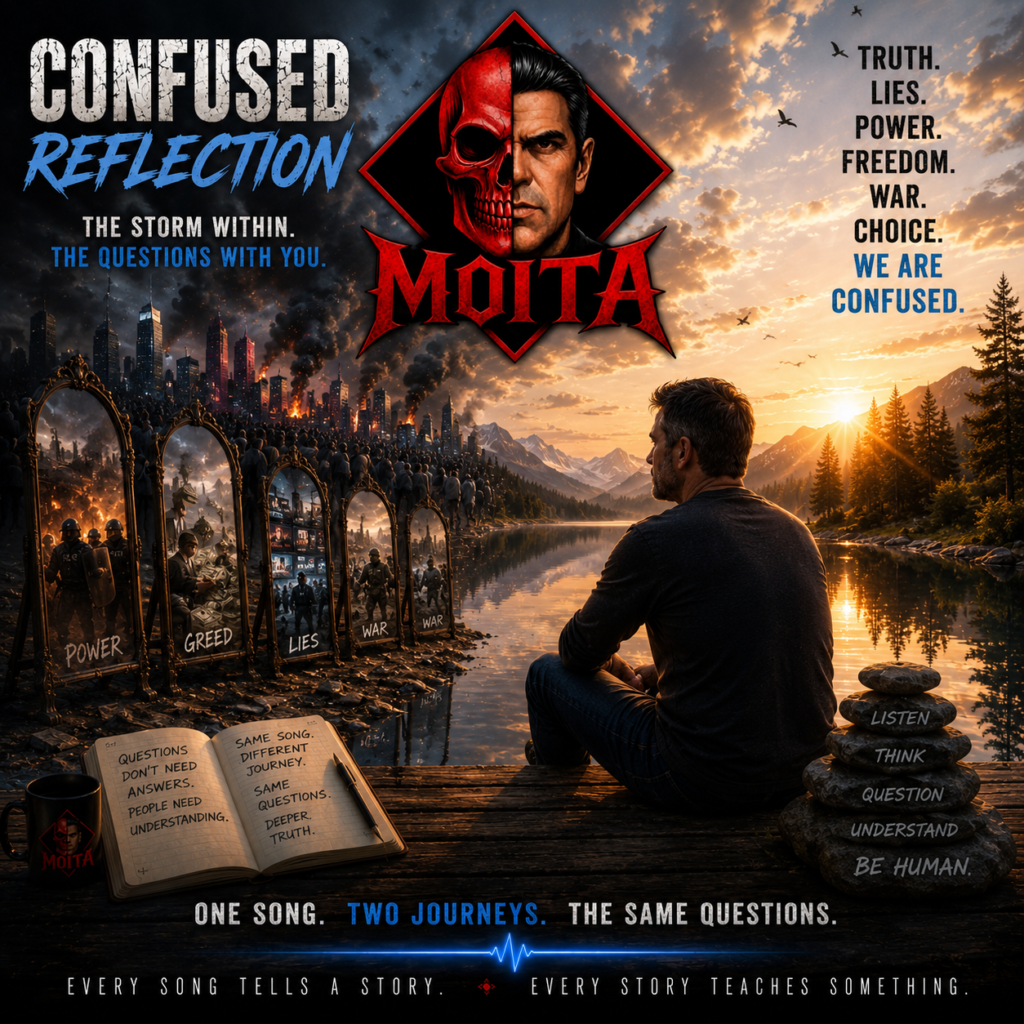






Reviews
There are no reviews yet.