
Description
About the Song
SONG TITLE
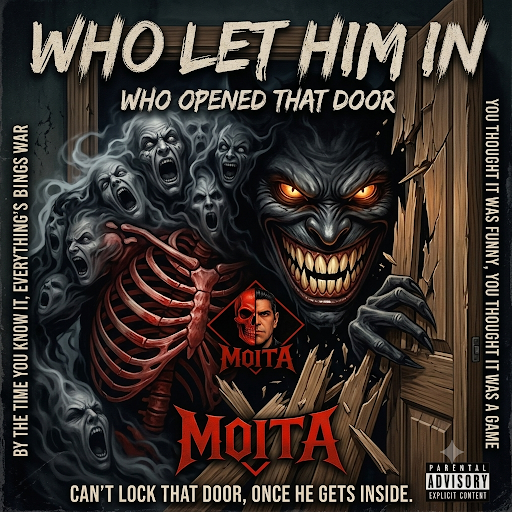
WHO LET HIM IN
CATEGORY
Primary Emotion: Temptation
Also Fits: Fear • Consequences • Curiosity • Darkness • Self-Destruction • Survival • Choice • Personal Responsibility
WHAT THIS SONG IS ABOUT
Some songs tell you exactly what they mean.
Others invite you to decide for yourself.
Who Let Him In belongs to the second group.
When people first hear this song, many will picture a dark figure crashing into a room in the middle of the night. It sounds like the beginning of a horror story. There’s a mysterious stranger, a door that should never have been opened, and a growing sense that something terrible has just entered someone’s life.
But if that’s all you hear, you’ve only heard the surface.
This song isn’t really about one person.
It isn’t even necessarily about a person at all.
The “him” in this song can become anything that slowly enters a life and begins taking control. It could be addiction. It could be hatred. It could be greed. It could be violence. It could be pride. It could be crime. It could be fear. It could even be a single bad decision that seems harmless in the beginning but eventually changes everything.
One of the things I’ve always enjoyed about songwriting is allowing people to finish part of the story themselves. I don’t always want to hand someone every answer because life rarely works that way. We all hear songs through the experiences we’ve lived, and those experiences shape what the lyrics become.
Someone recovering from addiction may hear one story.
Someone escaping an abusive relationship may hear another.
Someone struggling with anger may hear something completely different.
Someone with a strong religious faith may hear a battle between good and evil.
Every one of those interpretations can exist at the same time.
That’s what makes music so personal.
THE STORY BEHIND
WHO LET HIM IN
I’ve always believed that some of the strongest songs begin with a simple question.
Not a complicated question.
Just one that keeps coming back until it refuses to leave your mind.
For this song, that question was:
Who let him in?
The interesting thing about that question is that people usually ask it after the damage has already been done.
When someone’s life falls apart,
When a family is torn apart,
When addiction takes hold,
When violence changes a community,
When hatred spreads,
People naturally ask, “How did this happen?”
But I started thinking that maybe the better question comes much earlier.
Who opened the door?
Because very few destructive things arrive looking destructive.
If they did, we’d all stay away from them.
Instead, they usually arrive wearing a smile.
They offer excitement.
They promise relief.
They promise acceptance.
They promise power.
They promise that everything will be different this time.
Only later do we discover the price.
That idea became the foundation for this song.
The opening scene came entirely from imagination. I pictured someone sitting alone late at night in a house that felt almost frozen in time. Everything is quiet. Nothing seems unusual. Then suddenly something impossible appears from the darkness and crashes into the room.
That moment isn’t really about fear.
It’s about realization.
It’s the moment when someone understands that something has entered their life that was never meant to be there.
One decision.
One influence.
One habit.
One relationship.
One compromise.
Sometimes that’s all it takes.
I intentionally never explain exactly who “him” is because I wanted every listener to answer that question using their own experiences.
For one person, “him” may represent addiction.
For another, it may represent gambling.
For someone else, it may be jealousy, resentment, greed, or the constant temptation to become someone they never wanted to be.
The mystery is intentional because life rarely labels our greatest dangers in advance.
Many of the biggest mistakes people make don’t begin with bad intentions.
They begin with curiosity.
Or loneliness.
Or pain.
Or simply wanting to belong.
That’s what makes temptation so powerful.
It doesn’t begin by threatening us.
It begins by inviting us.
The chorus repeats the same question over and over because that’s often how regret works. We replay our decisions in our minds, wondering where everything changed. Looking back, we can usually find the moment. Looking forward, it was almost impossible to see.
One line in particular captures that idea for me.
“Laugh now, pay later.”
We’ve all watched people ignore warnings because everything still seems under control. We’ve also been that person ourselves at one time or another. Consequences rarely arrive immediately. If they did, we’d probably make far better choices.
Life usually gives us enough rope to believe we’re safe before we discover we’ve tied ourselves in knots.
The ending of the song becomes even darker because the battle has changed.
At first, something unwanted has entered the room.
By the end, it has entered the person.
That’s a frightening thought because many struggles eventually stop feeling like something outside us. They begin feeling like part of who we are.
Whether it’s addiction, anger, fear, or another destructive force, there comes a point where people start believing, “This is just who I am.”
I don’t believe that’s true.
But I do believe many people feel that way.
Recognizing the problem is often the first step toward changing it.
That’s why I wanted the ending to leave people thinking instead of simply giving them a neat conclusion.
Life doesn’t always wrap itself up that way.
Sometimes people find their way back.
Sometimes they spend years trying.
Sometimes they never realize what happened until it’s almost too late.
Those realities are far more powerful than any fictional monster.
Because the real monsters don’t always live in dark rooms.
Sometimes they live inside ordinary decisions.
WHY I WROTE THIS SONG
I wrote Who Let Him In because I’ve spent enough years watching life to understand that people are rarely destroyed all at once.
Most of the time it happens gradually.
One poor choice leads to another.
One excuse becomes easier than the last.
One compromise no longer feels like a compromise.
Eventually people wake up wondering how they became someone they never intended to become.
I wanted to write a song that captured that process without preaching.
I wasn’t interested in telling people what to think.
I wanted to ask a question that every listener could answer honestly for themselves.
Who—or what—have I allowed into my life?
That’s a question worth asking, because every one of us has doors we choose to open.
WHY THIS MATTERS TO ME
One of the things I enjoy most about writing songs is discovering that a simple idea can become much bigger than I first imagined.
This song started as an image.
It became a question.
Then it became a conversation about human nature.
Those are the kinds of songs I enjoy writing because they don’t stop when the music ends.
They stay with people.
They encourage reflection.
They invite discussion.
They remind us that the biggest battles we fight are often the ones nobody else can see.
If Who Let Him In encourages someone to stop for a moment before opening another dangerous door in their own life, then the song has already accomplished something worthwhile.
WHY THIS SONG FITS MOITA
Every song inside MOITA exists because it explores another part of what it means to be human.
Some songs celebrate.
Some remember.
Some question.
Some challenge.
This one asks us to think carefully about influence, temptation, responsibility, and choice.
It reminds us that our lives are shaped not only by the doors that open for us, but also by the doors we choose to open ourselves.
That’s a conversation worth having.
That’s why this song belongs inside the MOITA Library.
READ THIS FIRST
Before you read these lyrics, forget about horror movies.
Forget about monsters hiding in the shadows.
Instead, think about the moments in life that quietly changed everything.
The decisions that seemed small at the time.
The people who influenced you.
The habits you welcomed.
The opportunities you accepted.
The warnings you ignored.
As you read, don’t ask yourself who “he” is.
Ask yourself what “he” represents.
Your answer may be completely different from someone else’s.
That’s exactly how this song was meant to be experienced.
FULL LYRICS
WHO LET HIM IN
It was dead of night, not a sound in the place
No footsteps moving, not a shadow, not a trace
Old man gone, lost in his smoke and lies
Mama chasing ghosts in neon lights
I’m sitting there laughing, nothing feels real
Cheap buzz running through the way I feel
Then I look up, something cuts the sky
Big black shape and it’s coming down fast
No warning sign, no second chance
You don’t see it coming till it’s in your hands
WHO LET HIM IN
WHO OPENED THAT DOOR
HE DON’T BRING LIGHT
HE BRINGS WAR
WHO LET HIM IN
NOW HE’S TAKING CONTROL
LAUGH NOW, PAY LATER
HE’S COMING FOR YOUR SOUL
Hit the ground hard like a crash in the night
Laugh so loud it don’t sound right
Big wild eyes and a twisted grin
You just know you’re in deep with him
Hands full of trouble, pockets full of sin
Gives you everything just to pull you in
Promises fast, but they don’t last long
By the time you know it, everything’s gone
No turning back once you’re inside
He don’t knock, he kicks it wide
WHO LET HIM IN
WHO OPENED THAT DOOR
HE DON’T BRING LIGHT
HE BRINGS WAR
WHO LET HIM IN
NOW HE’S TAKING CONTROL
LAUGH NOW, PAY LATER
HE’S COMING FOR YOUR SOUL
You thought it was funny
You thought it was a game
Till he carved his mark
And remembered your name
Now the walls shake
And the air goes cold
Every story he tells
Has already been told
WHO LET HIM IN
WHO SET HIM FREE
NOW HE AIN’T LEAVING
HE’S PART OF ME
WHO LET HIM IN
CAN’T LOCK THAT DOOR
ONCE HE GETS INSIDE
YOU’RE NOT YOU ANYMORE
SECTION ONE
LYRIC JOURNEY
PART 1
It was dead of night, not a sound in the place
No footsteps moving, not a shadow, not a trace
The song begins in complete stillness.
Nothing is moving. Nothing is making a sound. There are no footsteps in the hallway, no shadow crossing the wall, no warning that anything is about to happen.
I wanted the opening to feel almost frozen.
There are moments in life when everything appears calm because we cannot yet see what is coming. The room looks the same. The people around us look the same. The night feels ordinary. Then one moment changes the direction of everything.
That is where this song begins.
The silence matters because it gives the listener nowhere else to look. There is no noise to distract us. No crowd. No movement. Just an empty space waiting for something to enter it.
The words “not a shadow, not a trace” push that feeling even further. There is nothing visible to explain what is about to happen. Whatever is approaching has not announced itself.
That is often how trouble begins.
Not with a great warning.
Not with a sign hanging over the door.
Sometimes it begins so quietly that nobody recognizes it until it is already inside.
Old man gone, lost in his smoke and lies
Mama chasing ghosts in neon lights
The room may be quiet, but the life surrounding it is not peaceful.
The old man is gone. Whether he is physically absent or simply lost inside his own habits and dishonesty, he is no longer providing stability. He is somewhere inside his smoke and lies, disconnected from what is happening around him.
Then there is the mother, chasing ghosts in neon lights.
That image can carry more than one meaning. She may be out searching for something she cannot find. She may be running from her own emptiness. She may be trying to hold onto a life that disappeared long ago. The neon lights suggest bars, nightlife, false brightness, and a world that glows without truly giving light.
Both parents are present in the story, but neither one is truly there.
That creates the emptiness at the centre of the opening.
A person can be surrounded by family and still feel abandoned. A house can have people connected to it and still feel empty. When the people who are supposed to provide safety become lost inside their own struggles, somebody else is left sitting in the silence.
I did not write these lines to explain one particular family.
They create a condition.
Something is already broken before the larger danger arrives.
That matters because people are often most vulnerable when the foundation beneath them is unstable. Loneliness, confusion, neglect, and the feeling that nobody is paying attention can make almost anything entering the room feel interesting.
Even something dangerous.
I’m sitting there laughing, nothing feels real
Cheap buzz running through the way I feel
Now we meet the person at the centre of the song.
He is sitting there laughing, but the laughter does not sound like happiness. It sounds disconnected. Nothing feels real. The world around him has already become blurred.
The “cheap buzz” tells us he is not fully grounded in the moment. It could be alcohol, drugs, excitement, numbness, or simply the strange feeling of being separated from reality.
The exact source matters less than the condition it creates.
He is not paying attention.
He is laughing.
He is vulnerable.
That is an important combination because some of the most serious decisions people make happen when they are not taking the moment seriously.
A cheap buzz can make someone feel brave.
It can make danger look funny.
It can make warnings feel unnecessary.
It can convince a person that whatever happens next will remain under control.
Most people do not deliberately invite destruction into their lives.
They underestimate it.
They laugh near it.
They play with it.
They believe they can walk away whenever they choose.
That feeling of unreality also prepares the listener for what comes next. When something impossible appears, the person is already unsure whether he can trust his own senses.
Then I look up, something cuts the sky
Big black shape and it’s coming down fast
This is the moment when the silence breaks.
The person looks up and sees something cutting through the sky.
I wanted the image to arrive suddenly. There is no long warning. No time to study what it is. A large black shape is already coming down fast.
At this point, the song still feels like a horror story or something supernatural.
That is intentional.
The black shape can be imagined as a creature, a force, a shadow, or something impossible falling out of the darkness. But it also represents the moment when an unseen danger becomes visible.
Before this, everything was already wrong in quieter ways.
The absent father.
The lost mother.
The laughter.
The cheap buzz.
The feeling that nothing is real.
Now all of that vulnerability has created an opening.
Something is coming.
The phrase “cuts the sky” gives the arrival violence. It does not drift gently. It tears across the darkness. Then it comes down fast enough that there is no time to prepare.
Many consequences feel exactly like that.
The choices leading toward them may have taken months or years, but the moment they finally arrive can feel immediate.
A person can spend a long time moving toward disaster without realizing it. Then one day it feels as though everything fell out of the sky at once.
No warning sign, no second chance
You don’t see it coming till it’s in your hands
These lines carry us from the image into the meaning.
There is no warning sign.
There is no second chance to return to the moment before it happened.
The person does not understand what is coming until he is already holding it.
That is one of the hardest truths inside this song.
We often believe danger will look dangerous before we touch it. We expect something harmful to make itself obvious. We imagine there will be enough time to think, step back, and change direction.
Life does not always work that way.
Sometimes the warning appears only after the choice has been made.
Sometimes the danger is already in our hands before we understand what we accepted.
That can be true of a substance.
A relationship.
A criminal opportunity.
A lie.
A shortcut.
A grudge.
An influence.
A promise that sounded too good to question.
The line does not say the danger was forced into his hands.
It says he did not see it coming until it was there.
That difference matters.
Temptation often arrives through something we willingly accept because we do not yet understand its full weight.
The hand becomes the doorway.
Once we take hold of something, it begins taking hold of us.
WHO LET HIM IN
WHO OPENED THAT DOOR
The chorus does not begin by asking what happened.
It asks who allowed it to happen.
Who let him in?
Who opened that door?
At first, the question may sound as though someone else must be responsible. Perhaps the father opened it by leaving. Perhaps the mother opened it by disappearing into another life. Perhaps the person sitting in the room opened it through carelessness.
The song does not give us one answer.
That is because many doors are opened by more than one thing.
A person may be vulnerable because of what happened around them, but there may still come a moment when they make a choice of their own.
That is where responsibility becomes complicated.
People are shaped by their circumstances, but they are not always completely controlled by them. Pain can explain why someone became vulnerable without making every later decision harmless.
The question stays open because the listener has to decide where the responsibility belongs.
Sometimes the honest answer is that several people opened the door together.
Sometimes no one recognized it as a door until it was too late.
HE DON’T BRING LIGHT
HE BRINGS WAR
This is where the song tells us that whatever entered is not coming to help.
He does not bring light.
He brings war.
Light often represents truth, understanding, safety, hope, or direction. This presence brings none of those things. It brings conflict.
The war may happen inside the house.
Inside the family.
Inside the mind.
Inside the person himself.
Not every war has soldiers.
Some wars happen when a person begins fighting against the people trying to save them.
Some begin when lies have to be protected.
Some begin when a habit becomes more important than trust.
Some happen inside a person who knows something is destroying them but still feels unable to let it go.
That is why “war” is the right word.
Once a destructive force takes control, peace becomes difficult. Every relationship around it can become another battlefield.
WHO LET HIM IN
NOW HE’S TAKING CONTROL
The question returns, but the situation has already changed.
At first, something entered.
Now it is taking control.
That movement is important.
Destruction rarely begins with complete ownership. It starts by asking for a little space. A little time. A little secrecy. A little compromise.
Then it asks for more.
The person may still believe he is in control because the change happens gradually. That belief can survive long after the evidence says otherwise.
People often say they can stop whenever they want.
They can leave whenever they want.
They can change whenever they want.
Sometimes that is true.
Sometimes it is something they need to believe because admitting the truth would mean recognizing how much control has already been lost.
The song does not wait for years to pass before showing that change. It happens inside the chorus because once the door is open, control can shift quickly.
LAUGH NOW, PAY LATER
HE’S COMING FOR YOUR SOUL
This is the price hidden inside the invitation.
Laugh now.
Pay later.
That idea reaches far beyond one kind of danger. It describes any pleasure that hides its cost until the person is already committed.
The laughter began earlier in the verse. Nothing felt real. The moment seemed harmless. Now the chorus tells us that the laughter was never free.
Payment is coming.
Not necessarily in money.
A person may pay with health.
With freedom.
With trust.
With family.
With years.
With the person they used to be.
“He’s coming for your soul” is the largest warning in the chorus.
The soul can be understood spiritually, but it can also mean the deepest part of a person. Their identity. Their values. Their conscience. Their ability to recognize themselves.
Some destructive things do not stop after taking comfort or security. They begin changing the person from the inside.
That is what makes the line frightening.
The danger is not satisfied with entering the room.
It wants the person living inside it.
SECTION ONE
LYRIC JOURNEY
PART 2
Hit the ground hard like a crash in the night
Laugh so loud it don’t sound right
The first verse ended with a warning.
Now the warning has become reality.
Whatever was falling through the darkness has arrived.
I chose the words “hit the ground hard” because there is no gentle landing. This isn’t something that quietly slips into the room unnoticed anymore. The impact is violent enough that everyone should recognize something has changed.
Then comes one of my favourite contrasts in the song.
The laughter.
Most people expect fear after a violent entrance.
Instead, they hear someone laughing.
Not ordinary laughter.
“Laugh so loud it don’t sound right.”
That line tells us something important without explaining it directly.
Real laughter has warmth behind it.
This laughter doesn’t.
It feels forced.
Distorted.
Uncomfortable.
Almost as though the sound itself belongs to something that isn’t completely human anymore.
We all recognize that feeling even outside this song.
Sometimes we hear laughter that isn’t joy at all.
It can be cruelty.
Mockery.
Manipulation.
Someone enjoying another person’s pain.
Sometimes the loudest laugh in the room belongs to the person hiding the darkest intentions.
Big wild eyes and a twisted grin
You just know you’re in deep with him
The picture becomes clearer now.
I still don’t fully describe the visitor because mystery remains part of the journey.
Instead, I focus on the details that matter.
The eyes.
The grin.
There is something unsettling about both.
Eyes often tell us more than words ever can.
Most of us have experienced meeting someone who smiled while their eyes told a completely different story.
Instinct is a remarkable thing.
Long before we can explain why something feels wrong, we often sense it.
That’s what these lyrics capture.
“You just know.”
No evidence.
No explanation.
Just that uncomfortable feeling deep inside that says this situation is becoming dangerous.
One lesson life has taught me is that we shouldn’t ignore those moments too quickly.
Instinct isn’t perfect.
But neither is logic.
Sometimes our experience notices patterns before our minds have finished putting the pieces together.
The last part of the line changes the relationship completely.
“You’re in deep with him.”
Not near him.
Not watching him.
With him.
That one word tells us the distance has disappeared.
The visitor is no longer simply present.
The connection has already begun.
Hands full of trouble, pockets full of sin
Gives you everything just to pull you in
This is one of the emotional landmarks of the song.
It slows the journey because these lines explain how so many destructive influences actually work.
Notice what doesn’t happen.
He doesn’t threaten.
He doesn’t force.
He doesn’t demand.
He gives.
That has fascinated me for years.
The things that eventually cost us the most often begin by offering us something we believe we need.
Acceptance.
Excitement.
Relief.
Confidence.
Escape.
Power.
Recognition.
Belonging.
The gift always comes first.
The bill comes later.
That’s why temptation has survived throughout human history.
If it introduced itself honestly, almost nobody would accept it.
Imagine someone saying,
“This decision will eventually cost you your health, your family, your peace of mind, and years of your life.”
Very few people would willingly say yes.
Instead, temptation whispers something completely different.
“This will make you feel better.”
“You deserve this.”
“Nobody will know.”
“Just this once.”
Those are very different conversations.
The line “gives you everything just to pull you in” isn’t really about generosity.
It’s about investment.
The destructive force invests in gaining your trust before collecting its reward.
That’s why so many people don’t recognize the trap until they’re already standing inside it.
Promises fast, but they don’t last long
By the time you know it, everything’s gone
These lines move naturally from temptation into consequence.
The promises come quickly.
That’s important.
Fast promises are attractive because they seem to solve problems immediately.
Real growth usually takes time.
Real healing takes time.
Learning takes time.
Building trust takes time.
Temptation often promises to skip all of that.
Instant happiness.
Instant confidence.
Instant escape.
Instant success.
Life rarely works that way.
Anything that promises everything immediately deserves to be questioned carefully.
Then comes one of the saddest lines in the song.
“By the time you know it, everything’s gone.”
Notice that I didn’t make a list.
I never say exactly what’s gone.
Because every listener has a different answer.
One person may lose money.
Another loses family.
Someone else loses years.
Another loses health.
Someone loses trust.
Someone loses freedom.
Someone loses themselves.
The absence of detail allows the lyric to become personal.
Each listener quietly fills in the blank using whatever loss means to them.
That’s often far more powerful than giving one specific answer.
No turning back once you’re inside
He don’t knock, he kicks it wide
These lines don’t simply continue the story.
They raise the stakes.
Until now, the song has described a gradual process.
Now we reach a point where the listener realizes that some decisions cannot simply be undone with good intentions.
“No turning back once you’re inside.”
That doesn’t mean life is hopeless.
It doesn’t mean people can’t recover.
It means that choices have consequences.
Some doors can be closed again.
But even after they’re closed, we may still have to live with what happened while they were open.
That’s true for almost every important decision in life.
The next line is one of my favourites because of how direct it feels.
“He don’t knock, he kicks it wide.”
Evil doesn’t politely wait outside forever.
Neither do addiction, bitterness, dishonesty, or many other destructive influences.
Once we stop protecting the boundaries that matter, those influences don’t remain satisfied with a small space.
They want more.
A lie usually requires another lie.
One compromise often makes the next compromise easier.
One bad habit begins asking for more time, more attention, and more control.
The door that opened a crack eventually disappears altogether.
WHO LET HIM IN
WHO OPENED THAT DOOR
The chorus returns.
But something has changed.
The first time we heard these words, we were still asking the question from a distance.
Now we’ve travelled through the consequences.
Now we understand what walked through that doorway.
The words don’t need another long explanation because the journey has changed their meaning.
The first chorus created mystery.
This chorus carries regret.
We now know the cost of opening that door.
That knowledge changes every line that follows.
HE DON’T BRING LIGHT
HE BRINGS WAR
Earlier this sounded like a warning.
Now it sounds like a description.
The war has already begun.
It isn’t coming anymore.
It’s here.
The relationships are changing.
The person is changing.
The peace that once existed has disappeared.
The chorus hasn’t changed.
We have.
That’s why repeating the same explanation would weaken the journey.
The song has already moved us somewhere new.
WHO LET HIM IN
NOW HE’S TAKING CONTROL
Control is no longer something that might happen.
It’s happening.
That’s one of the hardest realities people face when struggling with anything that slowly takes over their lives.
There is often a moment when they realize they’re no longer deciding everything.
Something else has begun making choices for them.
That realization can be frightening.
It can also become the beginning of recovery because honesty usually starts where denial ends.
LAUGH NOW, PAY LATER
HE’S COMING FOR YOUR SOUL
The warning feels heavier this time because we’ve watched the journey unfold.
The laughter isn’t funny anymore.
The payment has already begun.
And the destination is becoming clearer with every step.
The song isn’t trying to frighten us with a monster.
It’s asking us to recognize how quietly many of life’s greatest dangers first introduce themselves before they eventually demand far more than we ever expected.
SECTION ONE
LYRIC JOURNEY
PART 3
You thought it was funny
You thought it was a game
The bridge begins with honesty.
There is no accusation here.
No shouting.
No blame.
Just a simple reminder of how easily human beings can underestimate something that eventually becomes much bigger than they imagined.
Most of us can look back on our own lives and find moments where we dismissed a warning because it didn’t seem important enough to take seriously.
Maybe someone tried to give us advice.
Maybe somebody saw danger before we did.
Maybe our own instincts quietly told us to walk away.
Instead, we laughed.
Not because we wanted to destroy our lives.
Because we genuinely believed we were still in control.
That’s what makes these lines so human.
They don’t describe evil.
They describe confidence.
Sometimes too much confidence.
Almost every major mistake begins with someone believing, “Nothing bad is going to happen to me.”
That belief has existed for as long as people have existed.
Young people often feel invincible.
Adults do it too.
Experience teaches us that consequences don’t care how confident we feel.
Reality doesn’t negotiate with optimism.
The bridge slows the song because this is the moment where denial begins giving way to recognition.
The laughter that opened the song doesn’t sound the same anymore.
It’s becoming memory.
Till he carved his mark
And remembered your name
These lines are the turning point of the entire journey.
Earlier, whatever entered the room was still something outside the person.
Now it leaves a mark.
A mark changes everything because it remains after the moment has passed.
Whether it’s physical, emotional, psychological, or spiritual, a mark tells us something has happened that cannot simply be undone by pretending it never occurred.
Every one of us carries marks.
Some cannot be seen.
A betrayal leaves one.
The loss of someone we love leaves another.
Addiction leaves marks.
Violence leaves marks.
Cruel words spoken at the wrong time can leave marks that remain for decades.
The song doesn’t tell us what kind of mark this is because every listener already knows what marks they carry.
Then comes the line,
“And remembered your name.”
I like this line because it quietly changes the relationship once again.
Earlier, the person noticed something coming toward them.
Now whatever entered knows exactly who they are.
The danger has become personal.
Whether someone hears addiction, temptation, manipulation, or something spiritual, the feeling remains the same.
It has found you.
It recognizes you.
It isn’t wandering anymore.
It has become attached.
That realization carries far more weight than describing a monster.
The real fear isn’t being chased by something.
The real fear is realizing it already knows where to find you.
Now the walls shake
And the air goes cold
The room itself begins changing.
At the beginning of the song, the room was silent.
Now it feels alive.
The walls shake.
The air grows cold.
These images tell us that nothing remains untouched.
When destructive influences enter our lives, they rarely affect only one area.
Everything around them begins responding.
Families feel it.
Friendships feel it.
Work suffers.
Trust weakens.
Peace disappears.
The shaking walls aren’t only part of the scene.
They represent the foundations of a person’s life beginning to move beneath their feet.
Things they once believed were solid no longer feel secure.
The cold air works in a similar way.
Warmth often represents comfort, safety, belonging, and love.
Cold suggests distance.
Isolation.
Fear.
The emotional temperature of the song has changed completely.
We are no longer watching curiosity.
We’re watching consequences.
Every story he tells
Has already been told
These may be the quietest lines in the song.
They’re also among the saddest.
At first they almost sound mysterious.
But the more I thought about them while writing, the more universal they became.
The story has already been told because human nature hasn’t changed very much.
The details change.
The people change.
The generations change.
But the pattern repeats itself.
Someone believes they’re different.
Someone ignores the warning.
Someone thinks they’re stronger.
Someone says it won’t happen to them.
Then history quietly repeats itself once again.
That’s true of addiction.
Crime.
Power.
Greed.
Manipulation.
Broken relationships.
Even nations have repeated the same mistakes throughout history because people often believe the old lessons no longer apply.
Yet they do.
That’s why history matters.
Not because it tells us what happened.
Because it reminds us what can happen again.
One of the greatest gifts we have is the ability to learn from someone else’s story before it becomes our own.
Sometimes we listen.
Sometimes we don’t.
The song leaves that choice with the listener.
WHO LET HIM IN
WHO SET HIM FREE
The final chorus begins with one important change.
The first two choruses asked,
“Who opened that door?”
Now the question becomes,
“Who set him free?”
That isn’t a small change.
Opening a door suggests allowing something to enter.
Setting something free suggests removing every remaining restraint.
Whatever this force represents, it is no longer merely present.
It has been released.
There is nothing holding it back anymore.
That progression mirrors many real-life struggles.
People often begin believing they have complete control.
Over time, the situation reverses.
Eventually the destructive influence enjoys complete freedom while the person loses theirs.
It’s a painful reversal.
The one who thought they were in charge slowly becomes the one trapped instead.
NOW HE AIN’T LEAVING
HE’S PART OF ME
This is the emotional destination the entire journey has been moving toward.
Everything that came before prepares us for these words.
The silence.
The room.
The laughter.
The arrival.
The temptation.
The promises.
The consequences.
The mark.
Everything leads here.
“He ain’t leaving.”
Those words carry resignation.
The person no longer speaks as though this is temporary.
Then comes perhaps the darkest line in the entire song.
“He’s part of me.”
I don’t believe people are permanently defined by their worst struggles.
But I absolutely believe many people feel that way.
Someone living with addiction may believe they can never escape it.
Someone consumed by anger may believe that’s simply who they are.
Someone living with trauma may wonder whether life will ever feel normal again.
These feelings are painfully real.
The song acknowledges them honestly.
Acknowledging those feelings isn’t the same as accepting them as permanent truth.
Often the first step toward healing begins when someone is finally honest enough to say,
“This has become part of my life.”
Only then can the next chapter begin.
That next chapter isn’t part of this song.
The song ends here because this is where the question has finally reached its deepest point.
The answer belongs to the listener.
WHO LET HIM IN
CAN’T LOCK THAT DOOR
ONCE HE GETS INSIDE
YOU’RE NOT YOU ANYMORE
The final four lines don’t simply finish the story.
They leave us with responsibility.
The song began by asking who opened the door.
Now it tells us that once certain things are welcomed deeply enough into our lives, closing that door becomes far more difficult than opening it ever was.
Not impossible.
Difficult.
That’s an important distinction.
Life is full of people who have rebuilt themselves after unimaginable struggles.
I’ve seen it.
Others have too.
Recovery is real.
Forgiveness is real.
Growth is real.
But none of those journeys begin by pretending the damage never happened.
They begin with honesty.
The last line,
“You’re not you anymore,”
isn’t there to remove hope.
It’s there to remind us that every important choice shapes us.
Some choices make us wiser.
Some make us kinder.
Some make us stronger.
Others slowly move us away from the person we hoped to become.
That is why the question at the centre of this song matters so much.
Not because I’m trying to frighten anyone.
Because every one of us is constantly opening doors.
Some lead toward life.
Some lead away from it.
Learning the difference may be one of the most important journeys any of us ever takes.
By the time we reach the final lyric, the song is no longer about a dark figure crashing into a quiet room.
It’s about human nature.
It’s about influence.
It’s about responsibility.
It’s about recognizing that the greatest dangers in life rarely introduce themselves honestly.
And it’s about remembering that while we can’t always control what knocks on our door, we should never stop paying attention to what we choose to let inside.
SECTION ONE
LYRIC JOURNEY
PART 4
We’ve reached the end of the lyrics, but not the end of the journey.
One of the reasons I wanted this song to remain open to interpretation is because I never wanted the answer to become more important than the question.
The question is what gives the song its life.
Who let him in?
That question can follow someone for years.
Sometimes the answer comes immediately.
Sometimes it doesn’t arrive until much later, after enough distance allows us to look back honestly.
I’ve discovered that many of life’s biggest turning points don’t seem important while they’re happening.
Looking back, they become obvious.
Looking forward, they were almost invisible.
That’s true of the best decisions we make.
It’s also true of the worst.
Very few people wake up one morning planning to lose everything they care about.
They don’t plan to become addicted.
They don’t plan to destroy relationships.
They don’t plan to become bitter.
They don’t plan to hurt the people who love them.
Life usually changes one decision at a time.
That’s why this song never points toward one specific danger.
The moment I said, “This song is only about addiction,” it would stop speaking to someone whose greatest struggle is anger.
If I said it was only about crime, it would lose the person fighting depression.
If I said it was only about relationships, someone battling pride or resentment might never see themselves inside it.
Instead, I wanted the song to become a mirror.
Every listener stands in front of the same lyrics.
Every listener sees something different reflected back.
I think that’s one of music’s greatest gifts.
A song can remain exactly the same while meaning something completely different to thousands of people.
No two listeners arrive carrying the same life.
No two people carry the same scars.
No two people hear exactly the same story.
That’s why I enjoy leaving room inside my lyrics.
Not because I don’t know what they mean.
Because I know they can mean more than one thing.
Throughout history, storytellers have often understood that questions can be more powerful than answers.
Answers tend to close conversations.
Questions keep them alive.
This song belongs to that tradition.
It doesn’t tell people exactly what to believe.
It invites them to examine their own lives honestly.
That honesty isn’t always comfortable.
Sometimes the hardest person to face is ourselves.
It’s easy to recognize destructive choices in someone else’s life.
It’s much harder to recognize them while we’re making them ourselves.
Human beings have an incredible ability to explain away almost anything.
We tell ourselves we’ll stop tomorrow.
We’ll deal with it later.
We’re different.
We’re stronger.
We’re smarter.
We’re in control.
Sometimes those things are true.
Sometimes they’re simply the stories we tell ourselves because the alternative is too painful to admit.
That’s why the line, “Laugh now, pay later,” continues echoing long after the song ends.
Almost everyone has experienced some version of that sentence.
Not necessarily in dramatic ways.
Sometimes it’s as simple as putting off a conversation we know we need to have.
Ignoring our health.
Avoiding responsibility.
Holding onto resentment longer than we should.
Every decision carries a direction.
Some move us closer to the person we hope to become.
Others slowly move us away.
One of the things I’ve learned through writing hundreds of songs is that people often connect most deeply with the songs that leave them room to participate.
If I explain everything, the conversation ends with me.
If I leave space, the conversation continues inside the listener.
That’s where songs become personal.
That’s where they become memories instead of entertainment.
When I finished writing Who Let Him In, I didn’t feel as though I had written a horror song.
I felt as though I had written a question.
A question that would probably mean one thing to me today and perhaps something slightly different ten years from now.
Life changes us.
Experience changes us.
The songs don’t necessarily change.
We do.
That’s another reason I enjoy revisiting songs years after writing them.
Sometimes I discover things inside my own lyrics that I couldn’t fully appreciate when I first wrote them.
Not because the words changed.
Because I changed.
The older I get, the more I believe wisdom isn’t about collecting answers.
It’s about learning which questions deserve to stay with us.
For me, this song asks one of those questions.
Not once.
Not only while the music is playing.
But throughout life.
What am I allowing into my life?
What am I feeding?
What am I protecting?
What am I becoming?
Those questions aren’t meant to create fear.
They’re meant to create awareness.
Awareness gives us something incredibly valuable.
Choice.
Once we’re aware of what is happening, we can begin choosing differently.
We can choose better influences.
Better habits.
Better conversations.
Better friendships.
Better directions.
None of us will make perfect decisions.
I’ve certainly made mistakes throughout my life.
Everyone has.
The goal isn’t perfection.
The goal is remaining honest enough to recognize when we’ve opened a door that needs to be closed and courageous enough to begin walking toward a better one.
If reading this Lyric Journey leaves you wanting to listen to Who Let Him In again, then it has accomplished exactly what I hoped it would.
Maybe you’ll still hear the dark figure crashing into the room.
Maybe you’ll hear something completely different.
Maybe you’ll hear a chapter from your own life that wasn’t obvious the first time.
Whatever you hear, I hope the next time the chorus asks,
Who let him in?
you’ll pause for just a moment before answering.
Because sometimes the most important conversations we’ll ever have are the quiet ones we have with ourselves.
The song ends there.
The question doesn’t.
SECTION ONE
LYRIC JOURNEY
PART 5
The Lyric Journey comes to its natural conclusion here because the final lyric has already been explored.
When I wrote Who Let Him In, I wasn’t trying to write a song that frightened people.
I wanted to write a song that encouraged people to pay attention.
Pay attention to the influences they welcome.
Pay attention to the habits they’re building.
Pay attention to the people they’re trusting.
Pay attention to the choices that seem too small to matter.
Life is built one decision at a time.
So is character.
So is regret.
So is wisdom.
The question at the heart of this song isn’t really about a dark figure.
It’s about every doorway we face throughout our lives.
Some doors lead to opportunity.
Some lead to love.
Some lead to growth.
Some lead to knowledge.
Others lead somewhere very different.
The difficult part is that they rarely come with labels.
That’s why experience matters.
That’s why listening to people who genuinely care about us matters.
That’s why asking difficult questions before making important decisions matters.
One of the greatest lessons life has taught me is that the strongest people aren’t the ones who never make mistakes.
They’re the ones who are willing to recognize them, learn from them, and keep moving forward.
We all have moments we’d like to do over.
We all have doors we wish we’d never opened.
But we also have the ability to choose differently tomorrow than we did yesterday.
That is where hope lives.
As you’ve walked beside me through these lyrics, I hope you’ve noticed that the song slowly changed.
It began looking outward.
By the end, it was looking inward.
It began with something arriving from the darkness.
It ended by asking us to examine ourselves.
That was always the journey.
Not from one room to another.
Not from one scene to another.
From curiosity to awareness.
From awareness to responsibility.
From responsibility to reflection.
If you hear the song differently now than you did the first time, then this journey has accomplished exactly what I hoped it would.
The music invited you in.
The lyrics told the story.
The journey allowed us to walk through it together.
Now the song belongs to you again.
Listen to it one more time.
You may discover that the question sounds different now than it did when we first began.
Because sometimes the second journey reveals what the first one could not.
SECTION TWO
THE STORY
One of the things I enjoy most about writing songs is that inspiration doesn’t always arrive from my own life. Sometimes it comes from watching people. Sometimes it comes from history. Sometimes it comes from asking a question that refuses to leave my mind. Other times it begins with nothing more than a picture that appears in my imagination, and I simply follow it to wherever it wants to go.
Who Let Him In started that way.
The first thing I saw wasn’t a chorus or even a title. It was a room in the middle of the night. Everything was quiet. Nothing was moving. The kind of silence where even the smallest sound feels louder than it should. Then, without warning, something comes crashing into that peaceful moment.
At first it feels like the beginning of a horror story.
Then you realize the real horror isn’t what flew through the window.
It’s what happened after it got inside.
That became the heart of the song.
I wanted the listener to ask the same question over and over again.
Who let him in?
The more I thought about it, the more I realized that question isn’t limited to one situation. We ask it all the time in different ways.
How did this addiction start?
How did this relationship become so toxic?
How did this family fall apart?
How did someone so full of promise lose everything?
How did anger take over?
How did hatred grow so quickly?
How did I become someone I don’t even recognize anymore?
Most of us spend our time looking at the end of the story instead of the beginning. We see the damage, but we rarely stop to think about the first small decision that quietly opened the door.
Life usually doesn’t fall apart in one dramatic moment.
It happens one choice at a time.
One compromise.
One excuse.
One temptation.
One person.
One habit.
Each one seems small enough to justify. Each one feels manageable. Each one convinces us that we’re still in control.
Then one day we wake up and wonder where that control went.
That’s why I never wanted to identify exactly who “him” is.
If I had written the song about only one subject, it would have closed the door on every other possibility. By leaving that question unanswered, the song becomes more personal because every listener fills in that blank with their own experience.
Someone battling alcohol may hear addiction.
Someone trapped in gambling may hear that.
A person who escaped an abusive relationship may hear manipulation.
Someone struggling with depression may hear the darkness that slowly takes over their thinking.
Someone with a religious background may hear the presence of evil itself.
None of those interpretations are wrong.
In fact, I hoped that would happen.
I’ve always believed that when a song leaves room for people to bring part of themselves into it, the song becomes bigger than the person who wrote it.
That’s one of the reasons I enjoy writing. Once a song is finished, it no longer belongs only to me. It begins living inside other people’s lives.
The opening verse paints a picture of confusion. There’s an old man lost in smoke and lies. A mother chasing ghosts in neon lights. A young person sitting there laughing because nothing feels completely real anymore.
Those images aren’t meant to tell one literal story.
They’re meant to create an atmosphere.
An environment where stability has already begun to disappear.
When the foundation underneath us becomes unstable, we’re often far more vulnerable than we realize. That’s true for individuals, families, communities, and even entire countries. When people are hurting, lonely, frightened, or searching for something to fill an emptiness, they’re much more likely to welcome influences that promise relief without asking where those promises will eventually lead.
That’s why temptation is rarely obvious.
If danger introduced itself honestly, very few people would choose it.
Instead, it usually arrives disguised as something attractive.
Something exciting.
Something comforting.
Something that seems harmless.
That’s exactly how the line, “Hands full of trouble, pockets full of sin, gives you everything just to pull you in,” came to life.
The dangerous things in life usually begin by giving.
They give excitement.
They give confidence.
They give acceptance.
They give escape.
They give the illusion of control.
Only later do they begin taking.
They take trust.
They take relationships.
They take health.
They take peace of mind.
Sometimes they even take a person’s identity.
That gradual exchange fascinates me because it happens so quietly. Most people don’t notice it while it’s happening. They only recognize it after enough has already been lost.
The chorus became the anchor of the entire song because it refuses to let the listener escape the central question.
Who let him in?
Every time those words come back, they carry a little more weight.
At the beginning, they almost sound like an accusation.
By the end, they sound more like regret.
That change wasn’t accidental.
As the song grows darker, the question becomes less about blaming someone else and more about examining ourselves.
That’s a difficult thing to do in real life.
It’s always easier to point at someone else’s decisions than to examine our own. But growth usually begins when we’re willing to ask uncomfortable questions honestly.
Have I opened a door that should have stayed closed?
Have I ignored warnings because I believed they didn’t apply to me?
Have I mistaken temptation for opportunity?
Those questions don’t belong only inside this song.
They belong to life.
One of my favourite lines is probably the simplest.
“Laugh now, pay later.”
Almost everybody understands that idea because we’ve all lived some version of it.
Sometimes we laugh at good advice because we think we’re different.
Sometimes we dismiss someone’s concern because we don’t want to hear it.
Sometimes we believe consequences only happen to other people.
Life has a way of reminding us that consequences don’t care who we are.
They simply follow our choices.
That doesn’t mean people are beyond hope.
Far from it.
One thing I’ve learned is that recognizing a mistake is often the beginning of changing direction. The song ends in a dark place because that’s where many people first realize they’re in trouble. But endings in songs don’t have to become endings in life.
People recover.
People rebuild.
People forgive.
People change.
Sometimes the hardest part is simply recognizing that something has entered our lives that no longer belongs there.
That realization may be painful.
It can also become the first step toward opening a very different door.
SECTION THREE
LYRIC EXPLORATION
One of the things I enjoy most about songwriting is that a single lyric can mean something completely different depending on who is listening. That’s especially true with Who Let Him In.
Some people will hear a horror story.
Some will hear addiction.
Some will hear temptation.
Some will hear the influence of a dangerous person.
Others will hear an internal battle taking place inside someone’s own mind.
I never wanted to decide that for the listener.
Instead, I wanted to write a song that asks a question powerful enough for every person to answer differently.
That question is simple.
Who let him in?
At first, it sounds like we’re blaming somebody else.
By the end of the song, the question quietly turns back toward ourselves.
That’s where the real story begins.
“It was dead of night, not a sound in the place”
I wanted the song to begin in complete stillness.
Not because darkness is automatically frightening, but because important moments in life often begin when everything seems perfectly normal.
Most life-changing events don’t arrive with warning sirens.
There isn’t always a voice telling us to stop.
Sometimes everything feels ordinary until one unexpected moment changes the direction of our lives.
That opening verse creates a feeling rather than telling a complete story.
The old man lost in smoke and lies.
A mother chasing ghosts in neon lights.
Someone laughing because nothing feels completely real anymore.
These images aren’t meant to explain a particular family.
They’re meant to create an atmosphere where confusion already exists.
When people lose stability, they often become more vulnerable than they realize.
That’s true whether we’re talking about individuals, families, friendships, businesses, or entire communities.
“No warning sign, no second chance”
Those two lines are short, but they’re probably among the most important in the song.
We like to believe that life will always give us plenty of warnings before something goes wrong.
Sometimes it does.
Sometimes it doesn’t.
People often recognize danger only after they’ve already stepped into it.
That’s why experience becomes such a valuable teacher.
The older I get, the more I realize that wisdom often comes from recognizing patterns that younger versions of ourselves couldn’t yet see.
Unfortunately, some lessons arrive only after we’ve paid for them.
“WHO LET HIM IN?”
Everything in the song revolves around this one question.
Notice that I never answer it.
That wasn’t an accident.
If I had explained exactly who “him” was, the song would immediately become smaller.
Instead, I wanted every listener to supply their own answer.
For one person, “him” may be alcohol.
For another, drugs.
For someone else, gambling.
It could be anger.
Greed.
Jealousy.
Hatred.
Violence.
Manipulation.
Fear.
A destructive relationship.
Or simply one bad decision that quietly grows into many.
Life has a strange way of allowing small choices to become very large consequences.
The question stays the same.
Only the answer changes.
“He don’t bring light, he brings war”
When most people hear the word “war,” they immediately picture soldiers, tanks, explosions, and battlefields.
War certainly exists there.
But some of the hardest wars never make the evening news.
There are wars inside marriages.
Wars inside families.
Wars inside workplaces.
Wars inside addictions.
Wars inside our own thoughts.
Many people fight battles every single day that nobody around them can see.
That’s the kind of war these lyrics also leave room for.
Sometimes the greatest battlefield is the human mind.
“Hands full of trouble, pockets full of sin”
One thing that has always fascinated me about temptation is that it rarely introduces itself honestly.
If something dangerous immediately looked dangerous, very few people would choose it.
Instead, temptation usually arrives looking attractive.
It promises excitement.
Acceptance.
Relief.
Power.
Escape.
Confidence.
It offers something we believe we’re missing.
Only later do we discover the hidden cost.
That’s why the next line is so important.
“Gives you everything just to pull you in.”
Those words aren’t really about generosity.
They’re about bait.
Life is full of things that appear free in the beginning but eventually demand payment.
Sometimes that payment is money.
Sometimes it’s trust.
Sometimes it’s health.
Sometimes it’s relationships.
Sometimes it’s years that can never be recovered.
“Promises fast, but they don’t last long”
Human beings naturally like quick answers.
Quick success.
Quick happiness.
Quick solutions.
Quick relief.
Unfortunately, many of the quickest solutions become the longest problems.
That’s another reason I wanted this song to remain open to interpretation.
Whether someone hears addiction, crime, destructive relationships, or something else entirely, the pattern is often remarkably similar.
The promise comes first.
The consequences arrive later.
“He don’t knock, he kicks it wide”
I like this image because it reminds us that destructive influences rarely respect boundaries.
Once we stop protecting what matters, they don’t politely ask permission.
They simply keep moving forward.
That’s true of bad habits.
It’s true of dishonesty.
It’s true of resentment.
The longer they’re welcomed, the more comfortable they become.
Eventually they begin feeling normal.
That’s often the most dangerous stage of all.
“You thought it was funny. You thought it was a game”
Almost everyone has looked back on part of their life and realized they underestimated something.
Maybe it was a risk.
Maybe it was a habit.
Maybe it was a relationship.
Maybe it was an attitude.
Many regrets begin with confidence.
People honestly believe they can stop whenever they choose.
Sometimes they can.
Sometimes they discover too late that they’re no longer making the decisions.
Something else is.
“Now he ain’t leaving. He’s part of me”
For me, this is the emotional turning point of the entire song.
The battle has changed.
At the beginning, “him” is outside.
By the end, “him” feels like part of the person’s identity.
That’s one of the saddest realities of many struggles people face.
Whether it’s addiction, bitterness, fear, or another destructive influence, there comes a point where someone may genuinely believe, “This is just who I am.”
I don’t believe anyone is defined forever by their worst struggle.
But I do believe many people feel trapped by it.
Recognizing that feeling is important because recovery, growth, forgiveness, and change all begin with honesty.
You can’t fight something you refuse to acknowledge.
LOOKING BEYOND THE SONG
One of the reasons Who Let Him In became part of the MOITA Library is because it asks a question that reaches far beyond music.
Every day we open doors.
Some lead to opportunities.
Some lead to friendships.
Some lead to knowledge.
Some lead to better versions of ourselves.
Others lead somewhere very different.
The difficult part is that we don’t always know which is which when we’re standing at the doorway.
That’s why wisdom matters.
That’s why experience matters.
That’s why listening to people who genuinely care about us matters.
None of us will make perfect decisions.
I’ve certainly made my share of mistakes throughout my life.
Every person has.
The goal isn’t to live without ever opening the wrong door.
The goal is to recognize it before it becomes impossible to close.
When people listen to this song again after reading this page, I don’t necessarily want them to hear a monster crashing into a room.
I’d rather they hear a quiet question they can ask themselves from time to time.
What have I allowed into my life?
Sometimes that one question is enough to change the direction of the next chapter.
SECTION FOUR
Every song leaves something behind after the last note fades away.
Sometimes it’s a memory.
Sometimes it’s a feeling.
Sometimes it’s a question that stays with you far longer than the music itself.
For me, Who Let Him In has always been about that question.
Not because I expect everyone to answer it the same way, but because every one of us has a different story.
If you asked one hundred people who “he” is, you would probably hear one hundred different answers.
That’s exactly what I hoped would happen.
Life doesn’t present the same challenges to everyone.
For one person, the struggle may be addiction.
For another, it may be anger that slowly pushes away everyone they love.
For someone else, it could be greed, pride, jealousy, fear, or the influence of people who never wanted the best for them in the first place.
The important part isn’t identifying one specific enemy.
The important part is recognizing that we all have doors in our lives.
Some should be opened without hesitation.
Others deserve far more thought than we usually give them.
I’ve lived long enough to know that the biggest turning points in life are rarely announced in advance.
Sometimes they’re disguised as opportunities.
Sometimes they look like harmless fun.
Sometimes they arrive when we’re lonely.
Sometimes they appear when we’re hurting and looking for relief.
Sometimes they simply show up because we’re curious.
Curiosity isn’t a weakness.
In many ways, it’s one of humanity’s greatest strengths.
Without curiosity we wouldn’t discover new ideas, build new inventions, travel to new places, or continue learning throughout our lives.
But curiosity also needs wisdom.
Without wisdom, curiosity can lead us through doors we were never prepared to walk through.
That’s part of being human.
We all make choices that teach us something.
Some lessons come easily.
Others cost far more than we ever expected.
One of the things I never wanted this song to become was a lecture.
I’m not interested in telling people how they should live.
I’m certainly not pretending I’ve always made the right decisions myself.
None of us have.
Life has a way of humbling every one of us sooner or later.
What interests me much more is encouraging people to pause long enough to ask themselves honest questions.
What influences am I allowing into my life?
Who am I listening to?
What habits am I building?
What kind of person am I slowly becoming?
Those aren’t questions we answer once.
They’re questions worth asking throughout our lives because we’re always changing.
Hopefully we’re changing for the better.
If this song causes someone to stop before making one decision they’ll later regret, then it has already served a purpose beyond entertainment.
If it encourages someone to recognize a destructive influence before it becomes deeply rooted, that’s even better.
And if someone who already feels trapped hears this song and realizes they aren’t alone in that struggle, then maybe it offers something just as important.
Hope.
One thing I’ve learned over the years is that people are capable of remarkable change.
I’ve seen people rebuild their lives after losing almost everything.
I’ve seen relationships repaired that once seemed impossible to save.
I’ve seen individuals overcome addictions that once controlled every part of their lives.
I’ve seen people refuse to let their worst chapter become the final chapter.
That’s one of the reasons I never believe a person’s story is finished simply because they’ve fallen.
As long as we’re still breathing, another chapter can still be written.
That’s a belief you’ll find throughout the MOITA Library.
Many of my songs ask difficult questions because life asks difficult questions.
Some songs celebrate.
Some remember.
Some challenge.
Some encourage.
Some simply ask us to look at ourselves a little more honestly than we did yesterday.
Every one of them becomes another chapter in the same conversation.
That’s what MOITA has always meant to me.
It’s more than a collection of songs.
It’s a lifetime of observations, questions, experiences, imagination, mistakes, lessons, and discoveries brought together in one place.
Every page adds another piece to that story.
Every reader brings their own experiences and finishes the conversation in their own way.
Thank you for spending your time with me and allowing this song to become part of your own journey.
Whether you leave here with a new perspective, a difficult question, or simply a reminder to think a little more carefully before opening certain doors, then this song has done exactly what I hoped it would do.
MOITA
WHERE EVERY SONG TELLS A STORY
EVERY STORY TEACHES SOMETHING
SECTION FIVE
MOITA DOCUMENTARY & LEARNING CENTRE
The story behind Who Let Him In ended in Section Four.
If you’ve continued reading, you’ve chosen to go a little deeper.
That’s exactly why this part of the MOITA Library exists.
The song asked a question.
Now it’s time to explore why that question matters.
One of the reasons I enjoy writing songs like this is because they don’t point at one specific problem. They point at something much bigger that every human being experiences.
Influence.
Every one of us is influenced by something.
Parents.
Friends.
Teachers.
Books.
Music.
Television.
Social media.
Politics.
Religion.
Culture.
Success.
Failure.
Pain.
Hope.
The question isn’t whether we’ll be influenced.
The question is whether we’re paying attention to what is influencing us.
WHY DO PEOPLE MAKE DECISIONS THEY LATER REGRET?
It’s one of the oldest questions in human history.
If people know something is harmful, why do they still choose it?
The answer is usually much more complicated than simply saying someone made a bad choice.
People often make decisions while they’re hurting.
While they’re lonely.
While they’re angry.
While they’re searching for acceptance.
While they’re grieving.
While they’re trying to escape emotional or physical pain.
Sometimes they’re simply curious.
Curiosity itself isn’t dangerous.
Without curiosity we would never invent, discover, learn, or grow.
The danger comes when curiosity isn’t balanced with wisdom.
Many harmful situations begin because someone wanted to experience something just once.
Sometimes once becomes twice.
Twice becomes a habit.
The habit becomes part of a lifestyle.
Eventually it begins shaping the person’s identity.
That’s why prevention is always easier than recovery.
Recovery is possible.
But prevention usually costs far less.
THE SCIENCE OF TEMPTATION
Our brains are designed to notice things that promise pleasure, excitement, reward, or relief.
That’s completely normal.
The difficulty is that the human brain isn’t always good at recognizing long-term consequences while it’s focused on immediate rewards.
That’s why so many destructive habits begin with positive feelings.
The first experience may feel exciting.
The second feels familiar.
The third feels easier.
Eventually the behaviour becomes automatic.
This isn’t limited to drugs or alcohol.
The same patterns can appear in gambling.
Compulsive spending.
Social media.
Unhealthy relationships.
Anger.
Risk-taking.
Even the way we think about ourselves.
The more often we repeat something, the more natural it begins to feel.
That’s one reason positive habits are just as important as avoiding harmful ones.
Every good habit we build strengthens another part of who we become.
THE POWER OF ENVIRONMENT
One lesson I’ve learned throughout life is that environment matters.
The people we spend time with matter.
The conversations we have matter.
The ideas we repeatedly expose ourselves to matter.
If someone spends every day surrounded by negativity, dishonesty, violence, or hopelessness, it becomes much harder to think differently.
The opposite is also true.
When we’re surrounded by people who encourage responsibility, honesty, hard work, compassion, and personal growth, those qualities have a way of becoming part of our own lives.
That’s one reason parents, teachers, coaches, mentors, and good friends can have such a lasting impact.
Sometimes they help us recognize a dangerous door before we ever open it.
RECOGNIZING THE WARNING SIGNS
Many destructive influences follow similar patterns.
They promise quick results.
They encourage secrecy.
They isolate people from those who care about them.
They slowly replace healthy habits with unhealthy ones.
They convince people they’re still completely in control, even when that control is disappearing.
Recognizing those patterns early can prevent years of unnecessary pain.
The earlier we ask difficult questions, the easier they usually are to answer.
WHY THIS SUBJECT MATTERS
When I wrote Who Let Him In, I wasn’t interested in creating fear.
I was interested in creating awareness.
There’s a big difference.
Fear often causes people to stop thinking.
Awareness encourages people to think more carefully.
I’d much rather someone leave this page asking themselves thoughtful questions than leave feeling frightened.
Questions create curiosity.
Curiosity creates understanding.
Understanding often leads to better choices.
That’s a journey worth taking.
RELATED MOITA SONGS
If this song made you think about personal responsibility, choices, and the influences that shape our lives, you may also enjoy exploring other chapters in the MOITA Library that continue those conversations, including songs about identity, consequences, resilience, courage, and overcoming life’s darker moments.
Every song approaches those ideas from a different direction, but together they become part of one much larger story.
CONTINUE EXPLORING
If this subject interests you, consider learning more about:
- How habits are formed and changed.
- The psychology of decision-making.
- Why people are vulnerable to manipulation.
- The science of addiction and recovery.
- Protective factors that help build resilience in children and adults.
- The influence of environment, relationships, and community on personal choices.
- Practical ways to strengthen critical thinking and personal responsibility.
Trusted places to begin your own research include national public health organizations, university psychology departments, mental health organizations, addiction recovery organizations, and educational institutions that publish evidence-based information.
The purpose isn’t simply to gather more information.
The purpose is to better understand ourselves.
Sometimes the most important door we ever open is the one that leads to greater wisdom.





Reviews
There are no reviews yet.