
Description
About the Song
SONG TITLE
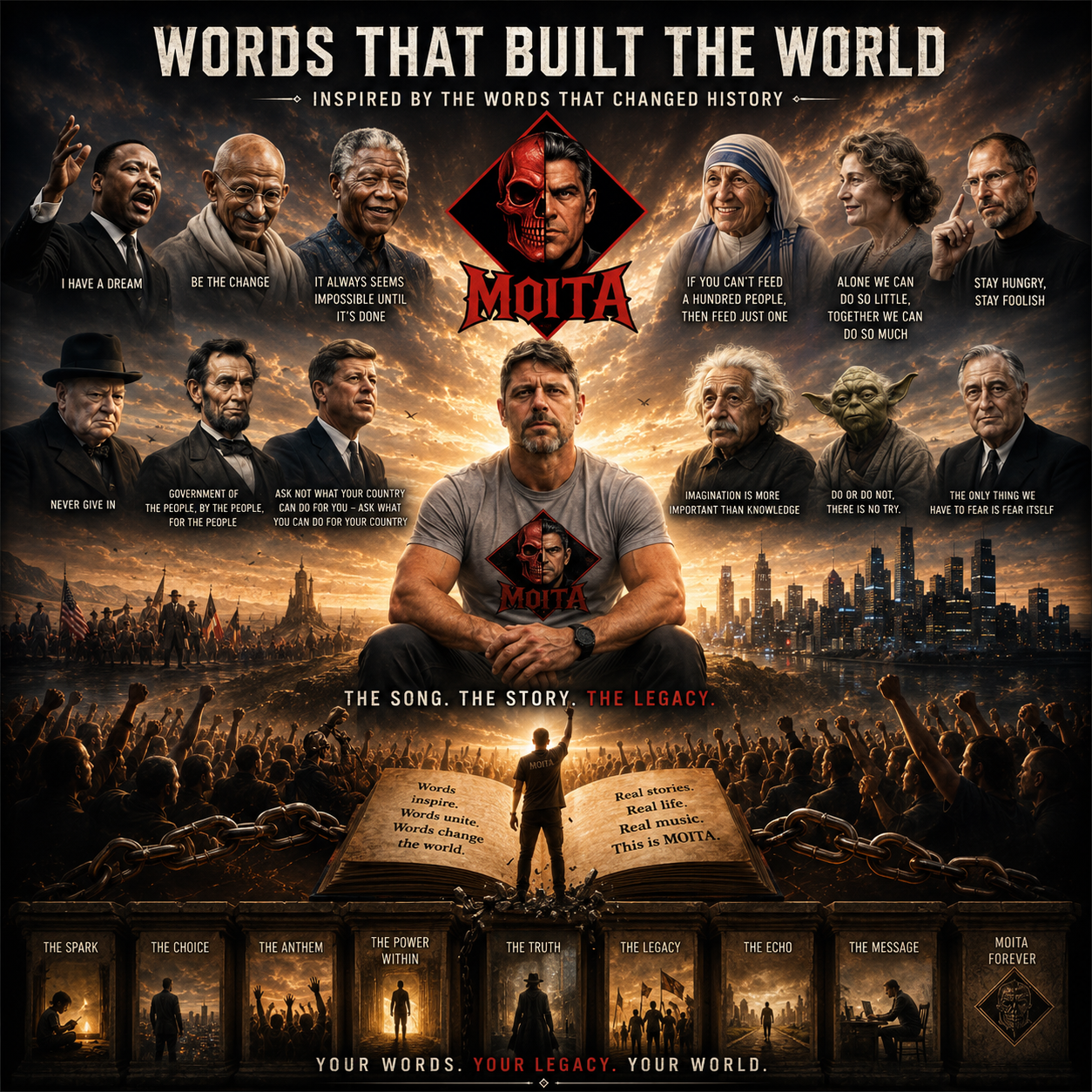
WORDS THAT BUILT THE WORLD
CATEGORY: Inspiration
PRIMARY EMOTION: Inspiration
ALSO FITS: Purpose, Courage, Hope, Wisdom, Resilience, Leadership, Truth, Legacy, Imagination
This song connects with people who understand that words are never just words.
Some people hear a sentence and forget it ten minutes later. Other people hear one sentence at the right moment in their life, and it stays with them forever.
It can come from a parent.
A teacher.
A friend.
A stranger.
A leader.
A book.
A speech.
A song.
Sometimes it is only five or six words, but those words arrive exactly when somebody needs them.
They can wake a person up.
They can make somebody change direction.
They can stop someone from giving up.
They can make people question what they have been accepting for years.
That is the kind of power this song is talking about.
There are people who will recognize themselves in this song because they have spent their lives holding onto something somebody once told them.
Maybe it was encouragement.
Maybe it was advice.
Maybe it was a warning.
Maybe it was something painful that they decided would never define them.
Words can build confidence, but they can also destroy it.
They can begin peace.
They can begin war.
They can bring people together.
They can divide families, communities, and countries.
That is why words matter.
A lot of people go through life thinking power only belongs to people with money, titles, armies, companies, governments or influence.
But when you look through history, so many of the greatest changes started with somebody speaking.
Somebody stood in front of a crowd.
Somebody wrote a sentence.
Somebody challenged an idea.
Somebody refused to remain quiet.
Somebody said the words that everyone else was afraid to say.
That is how movements begin.
That is how beliefs spread.
That is how ordinary people find the courage to stand together.
This song is for anybody who has ever found strength inside another person’s words.
It is for people who believe they have something important to say but are afraid nobody will listen.
It is for people who are still searching for the right words to explain what they feel.
It is for people who have been silenced, ignored, underestimated, laughed at or told their voice did not matter.
It is also for people who understand that saying something is not enough.
Words must eventually be followed by action.
A person can talk about change all day, but change does not happen until somebody moves.
A person can talk about courage, but courage only becomes real when fear is standing in front of them.
A person can talk about kindness, but kindness only matters when somebody actually needs it.
That is where people recognize themselves in this song.
Most of us have words we believe in.
The harder question is whether we live by them.
WHAT THIS SONG IS ABOUT
Words That Built the World is about the power of language, ideas, truth and human courage.
It is about the sentences that survived the people who first spoke them.
It is about words that crossed generations, countries, cultures, religions, classrooms, homes, prisons, battlefields, hospitals, factories, streets and stages.
Some words were spoken by famous people.
Some were spoken by people whose names were never remembered.
That does not make the words less important.
History usually remembers the person standing at the microphone, but there were always thousands of people behind every change.
There were people having conversations around kitchen tables.
There were workers talking during lunch breaks.
There were families whispering about what was happening.
There were people writing letters.
There were people passing stories from one generation to the next.
There were mothers warning their children.
There were fathers teaching lessons.
There were grandparents sharing what they had survived.
There were people who did not have a platform but still changed the lives around them.
This song is not trying to say that every powerful sentence was perfect or that every famous speaker lived a perfect life.
Nobody does.
It is looking at the idea that a single thought, spoken at the right time, can become bigger than the person who said it.
The song brings together familiar ideas about dreams, courage, change, hunger, imagination, fear, truth, compassion and action.
Those ideas have appeared in different forms throughout history because human beings keep facing the same basic struggles.
Fear is still fear.
Hunger is still hunger.
Injustice is still injustice.
Hope is still hope.
People still want freedom.
People still want dignity.
People still want to be heard.
People still want to believe their life can become something more than what it is today.
Technology changes.
Governments change.
Buildings change.
Transportation changes.
The way we communicate changes.
But the questions inside people remain familiar.
Who am I?
What do I believe?
What am I willing to stand for?
What do I do when life becomes difficult?
Do I stay quiet?
Do I move?
Do I help?
Do I turn away?
Do I become part of the problem?
Do I become part of the answer?
That is what sits underneath this song.
The title Words That Built the World does not mean words built everything by themselves.
A word cannot lift steel.
A sentence cannot pour concrete.
A speech cannot feed a hungry child unless people act on it.
But words give direction.
Words create plans.
Words carry ideas.
Words teach skills.
Words pass knowledge.
Words give orders.
Words make promises.
Words challenge systems.
Words bring people into the same purpose.
Before many things are built with hands, they are built in the mind.
Before they are built in the mind, they are often described with words.
Somebody first has to imagine something that does not exist.
Then they have to explain it.
Then they have to convince others that it can be done.
That is how a dream becomes a plan.
That is how a plan becomes work.
That is how work becomes reality.
The song is also about personal responsibility.
It asks the listener to stop thinking of history as something that only happened in the past.
History is being made every day.
Most of it does not feel important while it is happening.
People are simply living.
They are working.
They are struggling.
They are making choices.
They are saying things.
They are deciding what they will accept and what they will refuse.
Years later, somebody looks back and calls it history.
That is why the song keeps returning to the voice of the listener.
Stand up now.
Say it loud.
Let the truth be heard.
This is your turn.
Those lines bring the song out of the history books and place it directly in front of the person listening.
It is easy to admire courage after the danger is gone.
It is easy to praise people who stood up when we already know the ending.
It is much harder to stand when you do not know what will happen.
That is where real courage begins.
THE STORY BEHIND WORDS THAT BUILT THE WORLD
I have always believed that words carry more weight than people realize.
We use them every day without thinking.
We speak when we are happy.
We speak when we are angry.
We speak when we are afraid.
We speak when we want something.
We speak when we are trying to explain ourselves.
Sometimes the words come out right.
Sometimes they do not.
Sometimes we say something in five seconds that another person carries for fifty years.
That is what makes words so powerful.
You cannot always take them back.
You can apologize.
You can explain.
You can say you did not mean it.
But once words enter another person’s mind, you no longer control what happens to them.
They might disappear.
They might be misunderstood.
They might become a wound.
They might become strength.
They might become the reason somebody changes their entire life.
That idea has always interested me.
Why do some sentences stay?
Why do some words cross hundreds or thousands of years while others disappear before the day is finished?
Why can one person speak for an hour and nobody remembers anything, while another person says one line and it becomes part of history?
I think it has something to do with timing.
It has something to do with truth.
It has something to do with how many people are already feeling the same thing but do not yet know how to say it.
Sometimes a powerful sentence does not create the feeling.
The feeling is already there.
The sentence simply gives it a voice.
That is what happened with many of the words and ideas that inspired this song.
They spoke to something larger than one individual.
They reached people who were waiting to hear that they were not alone.
When somebody says, “I have a dream,” the power is not only in the word dream.
Everybody has dreams.
The power comes from where those words were spoken, why they were spoken, what people were facing and how many human beings needed to believe another future was possible.
When somebody says, “Be the change,” it takes responsibility away from the invisible person we keep waiting for.
People are always waiting for somebody else.
Somebody else should fix the government.
Somebody else should help the poor.
Somebody else should speak up.
Somebody else should clean the neighbourhood.
Somebody else should protect the environment.
Somebody else should save the family.
Somebody else should make the first move.
But who is that somebody else?
Eventually, every change reaches an individual decision.
One person decides to act.
Then another person joins.
Then another.
That is how something grows.
I wanted the song to carry that feeling from the very beginning.
It starts in darkness because many important ideas begin there.
They begin when life is unclear.
They begin when people are hurting.
They begin when something is wrong and nobody knows how to fix it.
Darkness is not always a physical place.
It can be confusion.
It can be injustice.
It can be loneliness.
It can be fear.
It can be a period in somebody’s life when they cannot see what comes next.
Then one voice rises.
That voice does not immediately solve everything.
It creates a spark.
A spark is small.
It does not look powerful at first.
But everything depends on what happens next.
Does it die?
Does somebody protect it?
Does it spread?
Do other people recognize it?
That is how ideas move through the world.
A person says something.
Another person repeats it.
Another person carries it somewhere else.
Soon the original speaker may no longer be present, but the words continue travelling.
That is why the chorus says we are the words that refuse to die.
I did not want the song to sound like it belonged only to famous leaders.
The word “we” matters.
We are the words.
We are the voice.
We turn moments into echoes.
We decide what continues.
A famous sentence survives because people keep repeating it.
A message survives because people teach it.
A truth survives because somebody refuses to let it be buried.
There are many true things that disappear because nobody protects them.
There are also many lies that grow because people repeat them.
Words do not automatically become good simply because they survive.
History has been shaped by beautiful words and dangerous words.
People have been inspired by truth, but they have also been manipulated by fear.
There were speeches that gave people courage, and there were speeches that convinced people to hate.
There were promises that created hope, and there were promises that were never intended to be kept.
That is another reason this song matters to me.
We have to listen carefully.
We have to ask who benefits from what is being said.
We have to ask whether the words are leading people toward dignity or control.
We have to ask whether the speaker is willing to live by the same standards they demand from everyone else.
Words have power, but that does not mean every powerful word should be trusted.
The truth does not always come in the most beautiful sentence.
Sometimes truth is uncomfortable.
Sometimes it is simple.
Sometimes it comes from somebody who does not speak perfectly.
Sometimes the person has no education, no title, no stage and no authority.
That does not make the truth less true.
I understand what it feels like when people judge the way someone speaks or writes before they listen to what that person is trying to say.
A lot of intelligent thoughts never receive respect because they do not arrive in the package people expect.
People look at spelling.
They look at grammar.
They look at education.
They look at status.
They look at appearance.
Then they decide whether the voice deserves attention.
But some of the greatest wisdom in the world has come from people who learned through survival.
They learned through work.
They learned through mistakes.
They learned through loss.
They learned through watching people.
They learned through raising families.
They learned through building something with their own hands.
They may not use complicated words, but they understand life.
That is one of the reasons MOITA songs are written the way they are.
I am not trying to hide behind complicated language.
I want the words to reach people.
I want them to feel natural.
I want somebody to hear a line and immediately understand the question behind it.
The song itself is built from ideas that many people have heard before, but I wanted to place them together as one journey.
Dream.
Change.
Persistence.
Compassion.
Unity.
Hunger.
Imagination.
Boldness.
Choice.
Truth.
These are not separate subjects.
They work together.
A dream without change remains imagination.
Change without persistence disappears when life becomes difficult.
Persistence without compassion can become selfish.
Compassion without action remains a feeling.
Unity without truth becomes agreement for the sake of agreement.
Boldness without wisdom becomes recklessness.
Words need balance.
Life needs balance.
The line about feeding one person if you cannot feed everyone is important because large problems can make people feel useless.
You look at poverty.
You look at war.
You look at homelessness.
You look at disease.
You look at children suffering.
You look at millions of people needing help.
The problem becomes so large that you convince yourself your small action does not matter.
But to the one person receiving that help, it matters.
You may not change the world for everybody.
You can still change the world for somebody.
That is how compassion becomes real.
It is easy to speak about humanity in general.
It is harder to help the person directly in front of you.
Sometimes we become so focused on the size of the world’s problems that we stop seeing the individual.
Every large number is made of individuals.
Every crowd is made of people.
Every statistic has families behind it.
That is why small hands can break a fall.
You do not need to be powerful to catch somebody.
You need to be present.
The song also talks about staying hungry and foolish.
I do not hear foolish as stupidity.
I hear it as the willingness to believe something can be done before everybody agrees with you.
Most new ideas look foolish at first.
A person imagines a machine that has never existed.
A person imagines crossing an ocean in a new way.
A person imagines speaking to somebody on the other side of the world.
A person imagines travelling through the air.
A person imagines curing a disease.
A person imagines a society where people once treated as inferior are recognized as equal.
Before these things become normal, somebody is told they are impossible.
That is where imagination breaks the chain.
Imagination allows people to see beyond the limits of the present.
But imagination alone is not enough.
People have to build.
They have to fail.
They have to try again.
They have to live through people laughing at them.
They have to keep working when the result is not visible.
That is where the song connects words with action again.
Words can open the door.
Somebody still has to walk through it.
The pre-choruses ask the listener direct questions because I wanted the song to turn inward.
It is easy to sing along with powerful words.
It is harder to answer them honestly.
When it is on the line, do you stand or fall behind?
There is no perfect answer because human beings are not fearless.
Everybody has moments where fear wins.
Everybody has times when they stay quiet and later wish they had spoken.
Everybody has choices they would make differently if they could go back.
The song is not demanding perfection.
It is asking for awareness.
It is asking people to recognize the moment while it is happening.
Sometimes a person’s entire direction changes in one small decision.
You answer the phone.
You ignore the phone.
You speak up.
You remain silent.
You leave.
You stay.
You forgive.
You carry the anger.
You help.
You turn away.
Life is full of these moments.
They do not always look historic.
Most of them look ordinary.
That is why the line says every second and every breath becomes a choice.
Not every choice changes the world.
But choices build a life.
A person becomes what they repeatedly choose.
The bridge brings the song into the question of what remains.
This too shall pass.
People often say that when life is painful.
It is meant to bring comfort.
The difficult moment will not last forever.
But I wanted to add another question.
What remains after it passes?
Did the experience teach you something?
Did it change you?
Did it make you colder?
Did it make you wiser?
Did you carry only the fear, or did you also carry the fight?
Pain does not automatically make people stronger.
Sometimes pain damages people.
Sometimes it confuses them.
Sometimes it takes years before they understand what happened.
I do not believe in pretending every wound becomes a gift.
Some wounds remain wounds.
But even then, a person can decide what they do next.
They can decide whether the pain will be the only voice in their life.
That is where truth becomes a key.
Fear builds a prison by telling us what we cannot do.
You cannot leave.
You cannot begin again.
You cannot speak.
You cannot survive.
You cannot become more than what people think you are.
Fear repeats those sentences until they sound like facts.
Truth asks whether they are facts at all.
Sometimes the prison is real.
Sometimes the barrier is real.
Sometimes circumstances are unfair.
Truth does not mean pretending every problem exists only in the mind.
It means seeing clearly.
It means knowing what is outside your control and what still belongs to you.
Your voice may belong to you.
Your next decision may belong to you.
Your effort may belong to you.
Your willingness to ask for help may belong to you.
Your refusal to accept somebody else’s definition of your worth may belong to you.
That is what I mean by saying what you are and setting it free.
A lot of people spend their lives waiting for permission to become themselves.
They wait for approval.
They wait for family to understand.
They wait for friends to support them.
They wait for strangers to stop judging.
That day may never come.
At some point, a person has to speak their own name inside their own life.
The final chorus changes because by the end of the song, the listener is no longer only looking backward.
The song begins with words that shaped history.
It ends with the possibility that new words are still waiting to be spoken.
We are the words that rewrite the end.
That is about refusing to accept that the current direction is the only possible ending.
A family can rewrite an ending.
A person can rewrite an ending.
A community can rewrite an ending.
Sometimes even a country can rewrite an ending.
Not easily.
Not instantly.
Not without consequences.
But change begins when people stop treating the present like destiny.
Silence and doubt bury many things.
People bury ideas because they are afraid of failure.
They bury truth because it may create conflict.
They bury dreams because life becomes busy.
They bury parts of themselves because somebody once made them feel ashamed.
The final chorus brings those buried things back.
It says this is your turn.
That does not mean every person has to become a leader in public.
Some people change the world inside one home.
Some people change the world for one child.
Some people change the world by breaking a pattern that has damaged their family for generations.
Some people change the world by telling the truth for the first time.
Some people change the world by refusing to pass their pain forward.
History is not only presidents, generals, inventors and people whose names appear in books.
History is also what happens between people.
It is what we teach.
It is what we repeat.
It is what we tolerate.
It is what we refuse.
The world we inherit was built partly by words.
The world we leave will be built the same way.
That is the story behind Words That Built the World.
It is not one quotation.
It is not one person.
It is the continuing human need to speak, listen, learn, question, imagine and act.
WHY I WROTE THIS SONG
I wrote this song because I wanted to bring together the kinds of words that have stayed alive through history and then turn them toward the person listening now.
It would have been easy to make the song only about famous quotations.
That was not enough for me.
I wanted to ask why those words survived.
I wanted to ask what made people carry them.
I wanted to ask what happened after they were spoken.
More than anything, I wanted to ask what we are doing with the words available to us today.
We all have a voice.
Not everybody has a stage.
Not everybody has an audience.
Not everybody will be remembered by history.
But everybody speaks into someone else’s life.
A parent speaks into a child.
A teacher speaks into a student.
A friend speaks into another friend.
A person speaks into their own mind every day.
That influence may seem small, but small does not mean unimportant.
Sometimes one sentence is enough to change somebody’s direction.
Sometimes one word is enough.
I wrote the song because I believe people should understand both sides of that power.
Words can inspire.
Words can also wound.
Words can unite.
Words can also manipulate.
Words can create hope.
Words can also make promises they were never meant to keep.
The responsibility belongs not only to the person speaking, but also to the person listening.
We have to question what we hear.
We have to ask whether the speaker lives by the same standards they are demanding from everyone else.
We have to ask whether the words lead toward truth, dignity and understanding or toward fear, control and hatred.
I wanted the song to carry inspiration without becoming blind encouragement.
I did not want to tell people everything is possible simply because the sentence sounds good.
Life does not work that way.
There are real barriers.
There are real losses.
There are real circumstances people cannot control.
But even in difficult situations, people often still have choices.
They may have a voice.
They may have effort.
They may have the ability to help one person.
They may have the ability to tell the truth.
They may have the ability to stop passing their pain into the next generation.
That is where this song finds its hope.
Not in pretending the world is easy.
In recognizing that a person can still decide what they add to it.
WHY THIS MATTERS TO ME
This matters to me because words have always been at the centre of what I create.
Before a song becomes music, it begins as a thought.
That thought has to find language.
Sometimes the right words arrive quickly.
Sometimes they take time.
Sometimes the feeling is clear, but the sentence is not.
One word can change the entire direction of a line.
One word can make it honest.
One word can make it false.
That process reminds me how much language matters.
I also know what it feels like when people judge the person before they listen to the idea.
They may look at education.
They may look at spelling.
They may look at grammar.
They may look at status, appearance or background.
Then they decide whether the voice deserves attention.
But intelligence does not belong only to people who speak in polished sentences.
A lot of wisdom comes from survival.
It comes from work.
It comes from loss.
It comes from raising families.
It comes from making mistakes.
It comes from watching people.
It comes from building something with your own hands and learning what happens when it fails.
That kind of knowledge may arrive in simple words, but simple does not mean empty.
I want my words to reach people.
I am not trying to hide behind language that sounds impressive.
I want somebody to hear a line and recognize the question inside it.
I want the words to feel close enough that the listener can carry them into their own life.
That is why this song matters to me.
It speaks about history, but it also speaks about the present.
It speaks about famous voices, but it also protects the importance of ordinary ones.
It speaks about the words that survived, but it also asks what we are saying now.
WHY THIS SONG FITS MOITA
This song belongs in the MOITA catalogue because MOITA has always been about more than entertainment.
The songs are not written only to fill time.
They are written to ask questions.
They are written to bring real life into music.
They are written to speak about things people recognize but do not always say out loud.
Some MOITA songs come from pain.
Some come from family.
Some come from loss.
Some come from history.
Some come from imagination.
Some come from watching the world and wondering why people do what they do.
Words That Built the World brings many of those directions together.
It looks at history, but it does not stay in history.
It looks at famous ideas, but it brings them back to ordinary people.
It looks at courage, but it does not pretend courage is easy.
It looks at hope, but it does not turn hope into an empty promise.
That matters to me.
Hope has to be honest.
People know when they are being given fake encouragement.
They know when someone says everything will be fine without understanding what they are facing.
Real hope does not deny difficulty.
Real hope looks directly at difficulty and still searches for a way forward.
That is the kind of hope this song carries.
The song also fits MOITA because the entire project depends on words.
Before there is music, there is usually a thought.
Before the thought becomes a song, it has to find language.
Sometimes the words arrive quickly.
Sometimes they take time.
Sometimes one line opens the door to the entire song.
Sometimes the feeling is clear, but the words are not.
That process reminds me why language matters.
A small change can affect everything.
One word can make a line honest.
One wrong word can make it feel false.
One simple sentence can carry more weight than a paragraph trying too hard.
That is part of the MOITA approach.
The goal is not to impress people with language.
The goal is to reach them.
The goal is to make somebody stop for a moment and think.
The goal is to create a connection between the life behind the song and the life of the person hearing it.
Words That Built the World is almost a statement about the entire MOITA catalogue.
Every song begins with the belief that words can still matter.
A song about chronic pain matters because somebody living with pain may finally hear their experience spoken.
A song about dementia matters because families watching someone disappear may feel understood.
A song about homelessness matters because people are often reduced to what we see on the street instead of who they are.
A song about betrayal matters because people carry questions they may never have been able to ask.
A song about courage matters because somebody may need that push.
A song about history matters because forgetting the past makes it easier to repeat the worst parts of it.
Different songs.
Different subjects.
The same basic belief.
Words can carry life from one person to another.
That is why this song fits.
It speaks directly to the foundation of MOITA.
Real life.
Real questions.
Real experiences.
No pretending.
No hiding behind an image.
No claiming to have every answer.
Just putting the question on the table and allowing the listener to sit with it.
The song also reflects the idea that greatness does not always begin with greatness.
Every legend started somewhere.
Before people are remembered, they are unknown.
Before an idea changes the world, it may exist only in one person’s mind.
Before a song reaches anyone, it exists in silence.
That is important for the MOITA story because the work has always come before recognition.
You create because you have something to say.
You do not wait until the world gives you permission.
You do not wait until everybody understands.
You do not wait until the path is guaranteed.
You build.
You learn.
You improve.
You keep going.
That is the same spirit inside the line about history being built over time.
Nothing meaningful appears fully formed.
It takes mistakes.
It takes doubt.
It takes stubbornness.
It takes patience.
It takes the willingness to look foolish for believing in something that does not exist yet.
MOITA is built from that same determination.
The song is also broad enough to connect with many different people without losing its purpose.
A worker can hear it one way.
A student can hear it another way.
A parent can hear it through the responsibility of what they teach their children.
A person rebuilding after failure can hear it as encouragement.
A person who has been silenced can hear it as permission to speak.
A person who already has influence can hear it as a warning to use words carefully.
That last part matters.
The more people listen to you, the more responsibility your words carry.
A leader can create courage or panic.
A parent can create confidence or shame.
A teacher can open a mind or close it.
A partner can create safety or fear.
A friend can strengthen somebody or slowly tear them down.
We all have influence, even when we do not think of ourselves as influential.
That is why the song belongs beside other MOITA songs about responsibility, identity, strength and truth.
It asks the listener not only what words built the world, but what words they are using to build the world around them today.
READ THIS FIRST
Before reading the lyrics, think about one sentence you have carried for years.
Do not search for something famous.
Think about something personal.
Maybe somebody believed in you when you did not believe in yourself.
Maybe somebody said something cruel and you have spent years trying to prove it wrong.
Maybe a parent gave you advice that only made sense after they were gone.
Maybe a stranger said something simple at exactly the right moment.
Maybe you read a few words in a book and they changed the direction of your life.
We all carry language inside us.
Some of it gives us strength.
Some of it needs to be released.
These lyrics move through ideas that have travelled across generations, but the song is not asking you to admire the past from a distance.
It is asking what you will do with your own voice.
Read the words as a conversation between history and the present.
Read them as a reminder that no sentence changes anything until somebody believes it enough to act.
Read them knowing that the next words that matter may not come from a stage, a government, a book or a famous person.
They may come from you.
WORDS THAT BUILT THE WORLD
I have a dream, it started in the dark
One voice rising, lighting up a spark
Be the change, don’t wait in line
History ain’t written, it’s built over time
Never give in, when the walls close tight
Through the fear, through the longest night
It seems impossible, until it’s done
That’s how the weak, learn how to become
Ask yourself, when it’s on the line
Do you stand, or fall behind
The truth don’t whisper, it demands your soul
And every word, comes with a toll
We are the words that refuse to die
We are the voice when the world asks why
From the fire, from the pain, from the broken past
We turn moments into echoes that forever last
Stand up now, don’t let it fade
Every legend started unafraid
Say it loud, let the truth be heard
The world was changed, by a single word
Feed just one, if you can’t feed all
Even small hands, can break a fall
Together strong, we rise as one
That’s how the greatest wars are won
Stay hungry, stay foolish inside
That’s where the fearless learn to ride
Imagination breaks the chain
Builds a world, from loss and pain
There’s a line, between fear and fight
Between giving up, and standing right
Every second, every breath you take
Is a choice you make, or a chance you break
We are the words that refuse to die
We are the voice when the world asks why
From the fire, from the pain, from the broken past
We turn moments into echoes that forever last
Stand up now, don’t let it fade
Every legend started unafraid
Say it loud, let the truth be heard
The world was changed, by a single word
This too shall pass, but what will remain
The fear you held, or the fight through pain
Fortune favors, the bold who stand
Not the ones who wait, with empty hands
Do or do not, no middle ground
That’s where the lost, are never found
Fear is the prison, truth is the key
Say what you are, and set it free
We are the words that rewrite the end
We are the truth they can’t defend
From the silence, from the doubt, from the buried deep
We are the promise the world must keep
Stand up now, this is your turn
Every scar is a lesson learned
Say it loud, let your voice be heard
History lives, in a single word
FULL LYRICS
WORDS THAT BUILT THE WORLD
I have a dream, it started in the dark
One voice rising, lighting up a spark
Be the change, don’t wait in line
History ain’t written, it’s built over time
Never give in, when the walls close tight
Through the fear, through the longest night
It seems impossible, until it’s done
That’s how the weak, learn how to become
Ask yourself, when it’s on the line
Do you stand, or fall behind
The truth don’t whisper, it demands your soul
And every word, comes with a toll
We are the words that refuse to die
We are the voice when the world asks why
From the fire, from the pain, from the broken past
We turn moments into echoes that forever last
Stand up now, don’t let it fade
Every legend started unafraid
Say it loud, let the truth be heard
The world was changed, by a single word
Feed just one, if you can’t feed all
Even small hands, can break a fall
Together strong, we rise as one
That’s how the greatest wars are won
Stay hungry, stay foolish inside
That’s where the fearless learn to ride
Imagination breaks the chain
Builds a world, from loss and pain
There’s a line, between fear and fight
Between giving up, and standing right
Every second, every breath you take
Is a choice you make, or a chance you break
We are the words that refuse to die
We are the voice when the world asks why
From the fire, from the pain from the broken past
We turn moments into echoes that forever last
Stand up now, don’t let it fade
Every legend started unafraid
Say it loud, let the truth be heard
The world was changed by a single word
This too shall pass, but what will remain
The fear you held, or the fight through pain
Fortune favors, the bold who stand
Not the ones who wait, with empty hands
Do or do not, no middle ground
That’s where the lost, are never found
Fear is the prison, truth is the key
Say what you are, and set it free
We are the words that rewrite the end
We are the truth they can’t defend
From the silence, from the doubt, from the buried deep
We are the promise the world must keep
Stand up now, this is your turn
Every scar is a lesson learned
Say it loud, let your voice be heard
History lives, in a single word
SECTION TWO
THE STORY
THE WORDS THAT STAYED WITH ME
I have always been interested in words that stay with people.
Some words disappear almost as soon as they are spoken. Other words remain for years. They follow people into adulthood. They return during difficult moments. They become part of how someone thinks, how they sees themselves and how they make decisions.
Most of us can probably remember something somebody said to us a long time ago.
It may have been a parent telling us we were capable of more.
It may have been a teacher who recognized something in us before we recognized it ourselves.
It may have been a friend who stood beside us when everybody else disappeared.
It may also have been something cruel.
A sentence that made us feel small.
A judgment that stayed longer than it deserved to stay.
That is the strange thing about words.
The person who speaks them may forget them completely.
The person who receives them may carry them for the rest of their life.
I have often thought about that.
How can five seconds of speech become fifty years of memory?
How can one sentence change the direction of a person’s life?
How can words create enough courage for someone to stand up, leave, begin again, ask for help or finally believe they are worth something?
The power is not always in how beautifully the words are spoken.
Sometimes the strongest words are simple.
Enough.
Stop.
Go.
Stay.
Believe.
Truth.
Freedom.
Home.
Sorry.
Help.
One word can become a decision.
One decision can become a turning point.
One turning point can change everything that follows.
That idea became the foundation of Words That Built the World.
A SONG BUILT FROM MANY VOICES
This song did not come from one quotation or one person.
It came from looking at the kinds of words that have travelled through history and asking why they survived.
Some sentences became famous because of the people who spoke them.
Some became famous because of the moment in which they were spoken.
Others survived because the truth inside them was larger than one person, one country or one generation.
When people hear “I have a dream,” they do not only hear four words.
They hear hope spoken during a time when millions of people needed hope to be spoken clearly.
They hear somebody imagining a future that did not yet exist.
They hear courage in public.
They hear the refusal to accept that injustice had to remain permanent.
The words became powerful because they entered a world already filled with people who understood the struggle behind them.
That is true of many statements that have survived.
The words gave shape to something people were already feeling.
They made the invisible visible.
They made private frustration public.
They made separate people realize they were not alone.
That is how a sentence can become larger than the speaker.
It begins with one voice.
Then another person repeats it.
Then another.
Eventually the words belong to everybody who carries them.
That is why I used “we” throughout the chorus.
“We are the words that refuse to die.”
I did not want the song to feel like it belonged only to famous leaders standing in front of crowds.
History is never built by one person alone.
A speech needs listeners.
An idea needs people willing to carry it.
A promise needs people willing to defend it.
A truth needs somebody who refuses to allow it to be buried.
The person standing at the microphone may be remembered, but behind every movement were ordinary people.
They talked around tables.
They worked beside each other.
They shared what they had seen.
They warned their families.
They taught their children.
They wrote letters.
They marched.
They voted.
They refused.
They helped.
They sacrificed.
Many of their names disappeared, but their participation did not.
Their lives became part of the change.
THE WORLD BEHIND THE WORDS
When we look back at history, we often reduce complicated events to a few dates and names.
A war began on this date.
A law changed on that date.
A leader gave a speech.
A country declared independence.
A movement succeeded.
But no historical change begins on the day written in the book.
The date is only the moment the world finally noticed.
Before that moment, there may have been years or generations of pressure.
There were arguments nobody recorded.
There were small acts of courage.
There were failures.
There were people who were punished.
There were people who spoke and were ignored.
There were people who continued when the result seemed impossible.
That is why I wrote:
“History ain’t written, it’s built over time.”
I wanted the word “built.”
I understand building.
Nothing meaningful is built by announcing it once.
You begin with an idea.
Then you make a plan.
You gather what is needed.
You solve problems.
Something goes wrong.
You adjust.
You keep working.
Eventually people see the finished result and forget how much happened before it stood in front of them.
History works the same way.
People see the finished change.
They do not always see the years of labour that made it possible.
A law may change in one day, but the understanding behind that change may have taken generations to grow.
An invention may be announced in one moment, but the person behind it may have spent years experimenting, failing and beginning again.
A movement may appear to rise suddenly, but the frustration may have been building quietly for decades.
History is not simply written after the fact.
It is constructed through choices.
People build justice.
People build systems.
People build resistance.
People build peace.
People also build hatred, division and destruction.
Words are part of that construction.
They tell people what to believe.
They tell people whom to fear.
They tell people what is possible.
They tell people what is acceptable.
That is why powerful language must be treated carefully.
THE GOOD AND DANGEROUS SIDES OF WORDS
It would be dishonest to speak about powerful words as though all of them made the world better.
Words have inspired courage.
They have also inspired cruelty.
They have united people around justice.
They have also united people around hatred.
They have given hope to the oppressed.
They have also been used to convince people that oppression was necessary.
History contains speeches that encouraged people to stand for human dignity.
It also contains speeches that turned neighbours against one another.
There were leaders who used words to calm fear.
There were others who created fear because fear made people easier to control.
There were promises that people lived and died trying to keep.
There were promises made only to gain power.
That is why the song says:
“The truth don’t whisper, it demands your soul
And every word, comes with a toll.”
Words have consequences.
Sometimes the cost is carried by the speaker.
Sometimes it is carried by the listener.
Sometimes it is carried by people who were never part of the original conversation.
A lie repeated often enough can become accepted.
A rumour can destroy a reputation.
A hateful sentence can turn a crowd into something dangerous.
A promise can create hope, but if the speaker never intended to keep it, that same promise can leave people more broken than they were before.
We have to listen carefully.
We have to ask questions.
Who benefits from these words?
What are they asking me to believe?
Are they leading toward understanding or toward control?
Are they asking me to think, or are they asking me to stop thinking?
Is the speaker willing to live by the same standard being demanded from everyone else?
A powerful voice is not automatically a truthful voice.
The loudest person is not always the wisest.
The most polished sentence is not always the most honest.
Sometimes truth arrives awkwardly.
Sometimes it comes from somebody who has no title, education, influence or stage.
That does not make it less true.
WHO GETS TO BE HEARD?
I know what it feels like when people judge a person’s ability before they listen to the idea.
People look at spelling.
They look at grammar.
They look at education.
They look at appearance.
They look at status.
They look at the way somebody speaks.
Then they decide whether that person deserves to be heard.
A lot of intelligent ideas are dismissed because they do not arrive in the package people expect.
Some of the wisest people I have known did not speak with complicated words.
They understood life because they lived it.
They learned through work.
They learned through responsibility.
They learned through raising children.
They learned through mistakes.
They learned through losing people.
They learned through being treated unfairly.
They learned by building, repairing and solving problems because there was nobody else to do it.
That knowledge may not come with a certificate.
It may not sound polished.
It may still be worth hearing.
I learned to read and write fluently later in life than most people.
For many years, people could have looked at the way I wrote and decided there was nothing worth listening to.
But the ideas were there.
The stories were there.
The questions were there.
The songs were there.
They needed a way out.
That is one of the reasons words mean so much to me.
I know what it is like to have something inside you and not always possess the easiest way to express it.
I know what it is like to be judged before the complete thought is understood.
That is why I do not write songs to impress people with complicated language.
I want the words to reach them.
I want somebody to hear a line and understand the feeling or question behind it.
Simple words can carry large ideas.
Sometimes they carry them better because people can remember them.
A sentence has to reach someone before it can affect them.
THE DREAM IN THE DARK
The song begins with:
“I have a dream, it started in the dark.”
I wanted the dream to begin in darkness because that is where many dreams are born.
People often imagine something better because the present is not enough.
A person dreams of peace because they know conflict.
A person dreams of freedom because they feel trapped.
A person dreams of health because illness has entered their life.
A person dreams of security because they understand uncertainty.
A person dreams of building something because nothing like it exists yet.
Darkness does not always mean tragedy.
Sometimes it means confusion.
Sometimes it means not knowing where life is going.
Sometimes it means being the only person who can see an idea that everybody else thinks is foolish.
The dream becomes the first light.
It does not solve the problem immediately.
It creates a possibility.
Then the next line says:
“One voice rising, lighting up a spark.”
A spark is small.
That matters.
Large changes are often described as though they arrived fully formed, but most began in a very small way.
One thought.
One conversation.
One refusal.
One person saying, “This cannot continue.”
The first voice carries the greatest uncertainty.
Once thousands of people are standing together, an individual can find courage inside the crowd.
The first person does not have that protection.
They do not know whether anyone will join them.
They may be laughed at.
They may be punished.
They may be ignored.
They may lose everything.
They speak anyway.
That does not mean they are without fear.
It means fear does not make the final decision.
BE THE CHANGE
“Be the change, don’t wait in line.”
People are very good at identifying what somebody else should do.
The government should fix it.
The school should fix it.
The police should fix it.
The company should fix it.
The family should fix it.
Somebody with more money should fix it.
Somebody with more time should fix it.
We can spend our entire lives waiting for the right person to arrive.
But who is that person?
Every change eventually reaches an individual.
Somebody has to make the first call.
Somebody has to speak.
Somebody has to help.
Somebody has to stop repeating the same behaviour.
Somebody has to become responsible for the standard they keep demanding from everyone else.
That is where “be the change” becomes difficult.
It sounds beautiful until it asks something from us.
It is easy to demand honesty from the world.
It is harder to be honest when the truth may cost a relationship.
It is easy to demand kindness.
It is harder to remain kind when we are tired, angry or hurt.
It is easy to talk about family.
It is harder to make time for family when life becomes busy.
It is easy to talk about helping people.
It is harder when the person needing help is directly in front of us and the help requires something real.
Words introduce the principle.
Action proves whether we believe it.
WHEN THE WALLS CLOSE IN
The next part of the song becomes more personal.
“Never give in, when the walls close tight
Through the fear, through the longest night.”
These lines are not meant to pretend people can overcome every situation by thinking positively.
I do not believe that.
There are real walls in life.
Illness is real.
Poverty is real.
Grief is real.
Injustice is real.
Abuse is real.
Some people are carrying responsibilities they cannot simply walk away from.
Some people are trapped in situations the outside world does not understand.
Telling somebody to “never give in” can sound empty when you are not standing inside their life.
For me, the line means protecting whatever part of yourself still remains.
Sometimes never giving in looks powerful.
Sometimes nobody sees it.
It can mean surviving one more night.
It can mean asking for help.
It can mean admitting you cannot continue in the same direction.
It can mean leaving.
It can mean staying long enough to finish what has to be finished.
It can mean refusing to accept that the worst thing that happened to you is the only thing you will ever become.
Persistence does not always mean continuing the same behaviour.
Sometimes persistence means changing everything while refusing to give up on yourself.
THE IMPOSSIBLE BECOMES VISIBLE
“It seems impossible, until it’s done.”
People admire finished results.
They see the building.
They hear the song.
They use the invention.
They celebrate the victory.
They rarely see every failed attempt.
They do not see the nights of doubt.
They do not see the money lost.
They do not see the arguments.
They do not see how often the person almost stopped.
After something succeeds, everybody can explain why it was possible.
Before it succeeds, the person creating it has to live with uncertainty.
That has been true throughout my life.
I have always been curious about how things work and how they might work better.
I took radios apart when I was young because I wanted to understand what was inside them.
I worked on different ideas with vehicles.
I created illuminated address signs using metal, Plexiglas, lighting and sensors because I thought the ordinary sign could be improved.
I designed tools in construction.
I designed tools while working on the railroad.
Not every idea succeeded.
Not every attempt became something people saw.
That was never the only value.
The value was also in thinking.
Trying.
Failing.
Changing direction.
Learning why something did not work.
Then trying again.
That same curiosity became part of songwriting.
A song begins as something that does not exist.
There is no guarantee it will work.
You create a line.
Then another.
You listen to what belongs and what does not.
You make changes.
Eventually the idea becomes real enough that another person can hear it.
The finished song may seem inevitable.
It never feels inevitable while it is being built.
HOW THE WEAK BECOME
“That’s how the weak, learn how to become.”
I chose the word “become” because strength is not fixed.
Nobody is strong in every situation.
A person can be strong for their family and still feel frightened when they are alone.
They can manage a business and feel helpless when illness enters the house.
They can carry other people and still reach a point where they need somebody to carry them.
Weakness is not always an identity.
Sometimes it is a condition.
Sometimes it is the beginning of growth.
Strength develops through responsibility.
It develops through failure.
It develops when people discover abilities they never had to use before.
It develops when life gives them no easy choice.
I do not believe suffering automatically makes somebody stronger.
Pain can damage people.
It can create fear.
It can make them withdraw.
It can take years before they understand what the experience did to them.
But people can sometimes build something from what happened.
They can discover a boundary.
They can learn to ask for help.
They can recognize danger sooner.
They can stop giving the same pain to somebody else.
Becoming does not mean pretending the weakness never existed.
It means it did not receive the final word.
WHEN IT IS ON THE LINE
“Ask yourself, when it’s on the line
Do you stand, or fall behind?”
Advice is easy when there is no cost.
People know what everybody else should do.
They know when somebody should leave a relationship.
They know how a grieving person should recover.
They know how somebody struggling with money should manage it.
They know what courage should look like from a safe distance.
The answer changes when something is truly on the line.
Now you may lose approval.
You may lose money.
You may lose comfort.
You may lose relationships.
You may discover that the people who supported your truth only supported it while that truth remained convenient.
That is why the line begins with “ask yourself.”
The honest answer is private.
It is not about looking brave in front of people.
It is about knowing what you do when nobody is applauding.
Everybody has moments when fear wins.
Everybody has remained silent and later wished they had spoken.
Everybody has made choices they would change if life gave them another opportunity.
The song is not demanding perfection.
It is asking people to recognize the moment while they are living it.
Sometimes one ordinary decision changes everything.
You answer the phone.
You ignore it.
You leave.
You stay.
You forgive.
You hold onto the anger.
You ask for help.
You continue pretending.
The moment may not look historical.
It is still building your life.
THE TOLL OF TRUTH
“The truth don’t whisper, it demands your soul.”
Truth may begin quietly.
You know something is wrong.
You know something has to change.
You know you are pretending.
You know the life you are living no longer fits who you are.
At first, you can ignore that knowledge.
Eventually it becomes louder.
Truth demands the soul because real truth eventually asks for alignment.
If I say family matters, how do I treat my family?
If I say honesty matters, what do I do when honesty becomes expensive?
If I say I believe in myself, why am I still allowing everybody else to define me?
Truth removes excuses.
That is why every word comes with a toll.
Speaking may cost something.
Silence may cost something too.
People often act as though silence is neutral.
It is not always neutral.
Silence may keep peace for one evening while allowing damage to continue for years.
Speaking may create conflict, but sometimes the conflict already exists.
The words only make it visible.
Not every thought needs to be spoken.
Not every argument needs to be won.
Not every truth belongs in every moment.
Judgment matters.
But when the necessary words are finally spoken, there may be consequences.
That does not automatically mean the words were wrong.
It means truth was not free.
THE WORDS THAT REFUSE TO DIE
The chorus had to feel larger than one person.
“We are the words that refuse to die
We are the voice when the world asks why.”
The world is always asking why.
Why did nobody stop it?
Why do people repeat the same mistakes?
Why do some people have opportunities that others never receive?
Why do we often wait until someone dies before we listen to what they were trying to tell us?
Why does fear continue to work so well?
Why is truth so easily buried?
Questions disturb comfortable stories.
A person who benefits from silence does not want too many people asking why.
That is why questioning matters.
Not every question has an easy answer.
Some questions may never be answered completely.
But refusing to ask guarantees that nothing will be examined.
The words refuse to die because the questions continue.
New generations recognize themselves in the same hopes and struggles.
The world changes, but human beings continue facing fear, injustice, grief, hunger, ambition, love and the need to belong.
That is why old words can still feel new.
THE FIRE, THE PAIN AND THE BROKEN PAST
“From the fire, from the pain, from the broken past
We turn moments into echoes that forever last.”
Many powerful words were spoken by people who understood suffering.
They were not observing from a comfortable distance.
They lived inside the struggle.
That gave their words weight.
Pain does not automatically create wisdom.
Sometimes it creates bitterness.
Sometimes it creates silence.
Sometimes it creates damage that never fully disappears.
But pain can also become testimony.
Somebody can say, “I know what this feels like. I do not want you to face it alone.”
That is one way a wound begins speaking beyond itself.
A moment becomes an echo when somebody preserves it.
Songs do that.
Stories do that.
Books do that.
Family memories do that.
The original moment passes.
The people grow older.
The room changes.
The crowd goes home.
But the experience remains available to somebody who was not there.
Without stories, every generation has to begin again without the understanding of those who came before.
That is one of the reasons MOITA exists.
The songs preserve more than events.
They preserve the thinking behind them.
They preserve questions.
They preserve how something felt from the inside.
FEED JUST ONE
One of the most important ideas in the song is:
“Feed just one, if you can’t feed all.”
The size of the world’s problems can make people feel powerless.
You look at hunger.
War.
Homelessness.
Disease.
Children suffering.
Millions of people needing support.
The problem becomes so large that your own contribution appears meaningless.
Then doing nothing begins to feel reasonable.
You tell yourself, “I cannot help everybody.”
That is true.
Nobody can help everybody.
But that truth can become an excuse.
You may not feed everybody.
You can feed one person.
You may not end homelessness.
You can treat one homeless person with dignity.
You may not cure a disease.
You can sit beside somebody who is afraid.
You may not repair the entire world.
You can stop adding damage to the part you touch.
The person receiving that help does not experience it as a statistic.
To them, it is real.
Sometimes people become so focused on humanity in general that they stop seeing the human being directly in front of them.
Every large number is made of individuals.
Every crowd is made of people.
Every statistic has families behind it.
That is why the next line says:
“Even small hands, can break a fall.”
You do not need to possess enormous power to help somebody.
You need willingness.
You need presence.
You may not be able to lift everything.
You can still soften the fall.
TOGETHER, BUT NOT IDENTICAL
“Together strong, we rise as one.”
Unity is powerful, but unity is not automatically good.
People can unite around hatred.
They can unite around lies.
They can unite because somebody has given them a common enemy.
Togetherness needs truth, compassion and responsibility.
Rising as one does not mean everybody has to become identical.
People can disagree and still protect one another’s humanity.
They can come from different cultures, religions, backgrounds and experiences while sharing a commitment to dignity.
Real unity is not everybody repeating the same sentence because they are afraid to disagree.
It is people choosing to work toward something worthwhile without demanding that everyone become the same person.
STAY HUNGRY, STAY FOOLISH
“Stay hungry, stay foolish inside.”
I do not hear “foolish” as stupidity.
I hear it as the willingness to consider something before everybody else approves of it.
Most new ideas appear foolish at first.
Somebody imagines a machine that does not exist.
Somebody imagines speaking to another person across the world.
Somebody imagines flying.
Somebody imagines travelling beyond the planet.
Somebody imagines curing a disease.
Somebody imagines a society where people once denied equality are finally treated with dignity.
Before those ideas become normal, the person behind them is often told they are impossible.
Hunger keeps people curious.
It keeps them learning.
It keeps them from believing success means they now know everything.
The foolish part protects imagination.
Children ask questions adults learn to stop asking.
Why?
Why not?
What if?
Could this be done another way?
Adults become afraid of looking foolish.
Then they stop experimenting.
Staying foolish inside means protecting enough freedom to try what has not yet been approved.
IMAGINATION AND CHAINS
“Imagination breaks the chain
Builds a world, from loss and pain.”
Every chain survives by convincing people it cannot be broken.
Imagination allows a person to see beyond the present.
A person raised in chaos may have to imagine peace before they know how to build it.
A person who has always lived with poverty may have to imagine opportunity before they recognize it.
A person controlled by fear may have to imagine making one independent decision.
Imagination does not complete the work by itself.
It reveals another possibility.
Then the person has to build.
They have to attempt.
They have to fail.
They have to learn.
Some of the most meaningful things in the world were created because somebody did not want another person to experience the same pain.
People created support organizations.
Treatments.
Laws.
Safety standards.
Art.
Places where others could feel understood.
That does not make the original pain good.
It does not mean every wound becomes a gift.
It means pain does not have to become the final product.
THE LINE BETWEEN FEAR AND FIGHT
“There’s a line, between fear and fight
Between giving up, and standing right.”
Sometimes that line is very thin.
One moment a person feels frozen.
The next moment they move.
It may be anger that moves them.
It may be love.
It may be the realization that remaining where they are has become more frightening than changing.
The word “fight” in this song is not limited to physical conflict.
It means persistence.
Speaking.
Protecting.
Refusing to disappear.
Continuing when giving up would be easier.
Every second becomes part of that decision.
Life is built in smaller pieces than we notice.
We pay attention to years, birthdays and milestones.
But our direction is formed inside ordinary moments.
“One day” can quietly become never.
One day I will speak.
One day I will begin.
One day I will apologize.
One day I will forgive.
One day I will become myself.
There are times when waiting is wise.
There are also times when waiting becomes avoidance.
Not every chance returns.
A person may die before the necessary words are spoken.
A door may close.
Time may change the situation.
That does not mean we should live in panic.
It means we should pay attention while life is still present.
WHAT WILL REMAIN?
The bridge begins:
“This too shall pass, but what will remain?”
People often say, “This too shall pass,” when somebody is suffering.
The words are meant to bring comfort.
The difficult moment will not last forever.
But I wanted to take the idea further.
What remains after it passes?
Did the experience leave wisdom?
Did it leave fear?
Did it make you more compassionate?
Did it make you colder?
Did it teach you how to protect yourself, or did it convince you never to trust anyone again?
Pain teaches lessons, but not all of them are healthy.
A scar proves that healing happened.
It also proves that damage occurred.
Both truths can exist.
That is why people have to examine what they learned.
Is this lesson still protecting me?
Or is it controlling me?
Can I keep the wisdom without carrying every wall?
Most people will never be remembered by the entire world.
They will be remembered by other people.
That is where legacy becomes personal.
What did your presence leave inside the people who knew you?
Did they feel smaller around you?
Did they feel safe?
Did they know you loved them?
Did your children inherit your fear or your courage?
Did your words leave wounds or direction?
The world may never know your name.
The people around you will still carry something from you.
THE BOLD WHO STAND
“Fortune favors, the bold who stand
Not the ones who wait, with empty hands.”
Boldness does not guarantee success.
Bold people fail every day.
Courage is not a promise that everything will work.
It makes the attempt possible.
If you never apply, you cannot be chosen.
If you never ask, you cannot receive an answer.
If you never show your work, nobody can discover it.
Hiding protects a person from certain kinds of failure.
It also prevents many possibilities from ever beginning.
The empty hands matter.
Waiting is sometimes necessary.
Preparation takes time.
Patience has value.
But waiting without working is something different.
Waiting for recognition without creating anything.
Waiting for luck while refusing to prepare.
Waiting for somebody to rescue you while rejecting every step that might help.
Bring something to the moment.
Bring effort.
Bring honesty.
Bring willingness.
Bring the work already completed.
That is the difference between patience and avoidance.
DO OR DO NOT
“Do or do not, no middle ground.”
Life contains uncertainty.
Not every decision is clear.
Sometimes people need time.
But every real decision eventually reaches action.
A person can plan for years.
They can make lists.
They can talk about what they are going to do.
They can continue preparing because preparation feels safer than beginning.
At some point the question becomes simple.
Will you act?
You either make the call or you do not.
You either begin the page or keep staring at it.
You either step forward or remain where you are.
Action has to enter somewhere.
FEAR AS A PRISON
“Fear is the prison, truth is the key.”
Fear creates invisible walls.
People outside may not understand them.
They may say, “Why don’t you simply leave?”
“Why don’t you speak?”
“Why don’t you begin?”
But fear can feel as solid as concrete.
It tells people what they cannot do.
You cannot survive.
You cannot start again.
You cannot succeed.
You cannot become more than what people think you are.
Fear repeats these sentences until they begin to sound like facts.
Truth opens the first door by naming what is happening.
I am afraid.
I need help.
This is hurting me.
I have been pretending.
I do not want to continue living this way.
I still have something to offer.
Naming the truth does not solve every problem.
It creates an opening.
Some barriers are real.
Some situations are unfair.
Truth does not mean pretending everything exists only inside the mind.
It means seeing clearly enough to understand what is beyond your control and what may still belong to you.
Your next decision may belong to you.
Your effort may belong to you.
Your voice may belong to you.
Your willingness to ask for help may belong to you.
Your refusal to accept another person’s definition of your worth may belong to you.
SAY WHAT YOU ARE
“Say what you are, and set it free.”
People spend years waiting for permission to become themselves.
They wait for family to understand.
They wait for friends to approve.
They wait for strangers to stop judging.
That day may never come.
Identity becomes heavy when it is hidden.
People carry dreams they never mention.
They carry beliefs they are afraid to defend.
They carry creative parts of themselves that were laughed at when they were young.
They carry pain they think will make others uncomfortable.
Saying what you are does not mean shouting at everybody.
It begins with being honest with yourself.
I am a creator.
I am afraid.
I made a mistake.
I want something different.
I am not finished.
The freedom begins when the person stops lying to themselves.
REWRITING THE END
The final chorus changes.
“We are the words that rewrite the end.”
By this point, the song is no longer looking only at people from the past.
It turns completely toward the listener.
An ending can look fixed when you are standing close to it.
A business fails.
A relationship ends.
Health changes.
A dream collapses.
People say it is over.
Sometimes a chapter truly is over.
That does not always mean the person is finished.
Rewriting the end does not mean changing what happened.
It means refusing to let one event define every page that follows.
A person can rewrite an ending.
A family can rewrite an ending.
A community can rewrite an ending.
Sometimes even a country can rewrite an ending.
Not quickly.
Not without consequences.
Not by pretending the past did not happen.
Change begins when people stop treating the present like destiny.
THE BURIED VOICE
“From the silence, from the doubt, from the buried deep.”
Silence is often mistaken for peace.
Sometimes silence is fear.
Sometimes it is survival.
Sometimes it is the period before somebody finally finds the words.
Doubt buries ideas.
It tells people the work is not good enough.
They are not educated enough.
They are too old.
They are too late.
They are not the kind of person who gets to create something meaningful.
A lot of work never reaches daylight because doubt buried it before anybody else had the opportunity to see it.
That part of the song is personal to MOITA.
Before a song reaches another person, it exists in silence.
Before the website existed, the complete idea lived in my mind.
Before people understood what I was building, I had to believe it deserved to be built.
That belief does not remove doubt.
It gives me something stronger to place beside it.
THE PROMISE THE WORLD MUST KEEP
“We are the promise the world must keep.”
Every generation inherits promises.
Freedom.
Equality.
Justice.
Peace.
Opportunity.
Human dignity.
Those promises are never permanently completed.
They have to be protected.
People can move forward and backward.
Rights can be gained and threatened.
Understanding can grow and then be replaced by fear.
The world must keep the promise, but the world is made of people.
That brings responsibility back to us.
A promise only survives when people are willing to live it.
THIS IS YOUR TURN
“Stand up now, this is your turn.”
People spend a lot of time believing their turn exists somewhere in the future.
When they have more money.
When they have more confidence.
When life becomes easier.
When everybody approves.
The perfect moment may never arrive.
Your turn may not look dramatic.
It may be a private decision nobody applauds.
It may be telling the truth.
Starting again.
Helping one person.
Ending a pattern that has damaged your family.
Using an ability you have been hiding.
Refusing to pass your pain forward.
The song cannot tell anybody what their turn is.
Only they know.
HISTORY LIVES IN A SINGLE WORD
The final line is:
“History lives, in a single word.”
Words are containers.
A single word can hold generations of experience.
Freedom contains struggles, sacrifices and lives.
War contains grief, fear, courage, destruction and families changed forever.
Home can mean safety to one person and pain to another.
Mother can contain love, protection, absence, sacrifice or loss.
Enough can become a boundary.
No can become freedom.
Yes can become a beginning.
History lives in words because language is how people pass meaning forward.
A photograph can show that something happened.
Words help explain why it mattered.
A monument can mark a place.
Words carry the voices of the people who stood there.
That is where I wanted the song to finish.
Not with a final answer.
With responsibility.
The world we inherited was built partly through words.
The world we leave will be built the same way.
The question is not only what words built the world.
The question is what we are building with ours.
SECTION THREE
LYRIC EXPLORATION
HEARING THE SONG WITH NEW EARS
Words That Built the World begins with familiar ideas, but I did not place them together simply because people recognize them.
I wanted to take ideas that have travelled through history and make them speak directly to the person listening now.
The song moves from a dream to a decision.
From inspiration to responsibility.
From admiring the courage of other people to asking what we are willing to do with our own voice.
That movement matters.
The song does not stay in the past.
It starts by looking backward, but it ends by placing the responsibility in front of us.
This is your turn.
That is the journey inside the lyrics.
The first verse opens the door.
The pre-chorus asks the question.
The chorus brings people together.
The second verse moves from large historical ideas into everyday human responsibility.
The bridge removes the protection of distance and asks what will remain after the struggle passes.
The final chorus changes the direction completely.
By then, the listener is no longer only hearing about words that once changed the world.
They are being asked what words they are prepared to carry forward.
I HAVE A DREAM, IT STARTED IN THE DARK
The opening line begins with something hopeful, but the hope does not begin in comfort.
It begins in darkness.
A dream usually exists because something is missing.
People dream about peace because they understand conflict.
They dream about freedom because they feel trapped.
They dream about health because illness has changed their life.
They dream about security because they know uncertainty.
They dream about building something because it does not yet exist.
Darkness can mean many things.
It can mean grief.
Fear.
Injustice.
Loneliness.
Confusion.
It can mean standing in a part of life where you cannot see what comes next.
That is why I wanted the dream to begin there.
Light does not mean much if there was never any darkness around it.
The dream becomes important because it gives the person a direction when the road is still invisible.
The words “I have a dream” are known around the world, but the human feeling behind them belongs to everybody.
The dream may be enormous.
It may involve justice, freedom or the future of a country.
It may also be private.
A person may dream of rebuilding their family.
They may dream of becoming healthy enough to live normally again.
They may dream of creating something nobody around them understands.
They may dream of waking up without fear.
The size of the dream changes.
The need to believe in another possibility does not.
ONE VOICE RISING, LIGHTING UP A SPARK
A spark is not a fire.
It is the possibility of one.
That is why the image matters.
The first voice does not immediately change the world.
It creates the beginning of something that may grow.
Before a movement becomes thousands of voices, one person usually has to speak without knowing whether anyone else will stand beside them.
That first voice carries the greatest uncertainty.
There is no crowd yet.
No protection.
No proof that the words will matter.
The person may be laughed at.
Ignored.
Punished.
Misunderstood.
They may speak and hear nothing in return.
They speak anyway.
That is not noise.
That is possibility beginning to take shape.
A spark also needs care.
It can disappear quickly.
An idea can die because nobody protects it.
A truth can be buried because people are afraid to repeat it.
A dream can be abandoned because the first response was laughter.
The line is not only about speaking.
It is also about what happens after the voice rises.
Does somebody listen?
Does somebody carry the thought forward?
Does the spark receive enough air to survive?
BE THE CHANGE, DON’T WAIT IN LINE
Waiting in line feels safe because everybody around you is doing the same thing.
Nobody questions you when you follow the order.
You are not responsible for deciding where the line goes.
You simply continue behind the person in front of you.
But many things remain unchanged because everybody is waiting for somebody else to move first.
People complain about dishonesty while avoiding their own difficult truths.
They demand kindness while showing little patience to the people closest to them.
They speak about helping others while walking past the person directly in front of them.
They want opportunity for themselves but laugh at somebody else who is trying something new.
“Be the change” sounds simple until it asks something personal.
Then it becomes uncomfortable.
It asks whether we are willing to live by the standard we keep demanding from everyone else.
That is why I added “don’t wait in line.”
The line represents delay.
Permission.
Safety.
It represents the idea that change is always somebody else’s responsibility.
Eventually somebody has to step out of the line.
HISTORY AIN’T WRITTEN, IT’S BUILT OVER TIME
History is often presented as a completed record.
Dates.
Names.
Wars.
Speeches.
Laws.
Discoveries.
But history is not created on the day that ends up in the book.
The date is usually only the moment the world finally notices what has been building underneath.
Before a law changes, people may have fought for generations.
Before an invention is revealed, somebody may have failed hundreds of times.
Before a movement rises, frustration may have been growing quietly for years.
That is why I used the word “built.”
Building shows labour.
It shows planning.
Mistakes.
Adjustment.
Time.
It shows that the finished result did not simply appear.
I know what it means to build something.
You begin with an idea.
You work with what is available.
Something goes wrong.
You solve it.
You change direction.
You keep going until the thing that once existed only in your mind becomes real enough for other people to see.
History is built the same way.
People build justice.
They build resistance.
They build understanding.
They build systems.
They build peace.
They also build hatred, fear and destruction.
Human decisions create both.
History is not separate from us.
We are adding something to it every day, even when our choices appear too ordinary to matter.
NEVER GIVE IN, WHEN THE WALLS CLOSE TIGHT
This line can be misunderstood if it sounds like I am telling people they should be able to overcome anything through determination alone.
That is not what I mean.
Some walls are real.
Illness is real.
Poverty is real.
Abuse is real.
Grief is real.
Injustice is real.
People can be trapped inside situations that cannot be solved by a positive sentence.
It is easy to tell somebody not to give up when you are not standing inside their life.
For me, “never give in” means protecting whatever part of yourself is still yours.
Sometimes that looks powerful.
Sometimes nobody sees it.
It may mean surviving one more night.
It may mean asking for help.
It may mean admitting that the current direction is destroying you.
It may mean leaving.
It may mean staying long enough to finish what cannot be abandoned.
Persistence does not always mean doing the same thing forever.
Sometimes it means changing everything while refusing to abandon yourself.
THROUGH THE FEAR, THROUGH THE LONGEST NIGHT
Fear and darkness return together because fear often makes time feel longer.
One difficult night can feel endless.
A period of illness can make the future disappear.
A person can become so focused on getting through the present that tomorrow stops feeling real.
The line does not say fear disappears.
It says the person moves through it.
That difference matters.
Courage is often described as if brave people do not feel fear.
I do not believe that.
Fear can remain present while somebody continues.
A person can be frightened and still speak.
They can doubt themselves and still take the next step.
They can feel exhausted and still protect somebody they love.
The fear may be real.
It does not have to become the only voice.
IT SEEMS IMPOSSIBLE, UNTIL IT’S DONE
Finished things often look obvious.
People see a building and forget there was once only empty ground.
They hear a song and do not hear the unfinished lines, wrong directions or versions that never worked.
They see a successful company and do not see the nights when the owner did not know whether it would survive.
They admire somebody who rebuilt their life and rarely understand what the rebuilding cost.
Once something is complete, people can explain why it was possible.
Before it is complete, the person trying has to live with uncertainty.
That is the part nobody can remove.
“Impossible” sometimes describes a real limit.
I am not pretending every dream can happen.
But human beings have repeatedly mistaken unfamiliar for impossible.
Many ideas looked foolish because nobody had seen them work yet.
The line speaks to that space between imagination and proof.
Somebody has to stand there first.
THAT’S HOW THE WEAK, LEARN HOW TO BECOME
The word “become” carries the meaning.
Strength is not fixed.
Nobody is strong in every part of life.
A person can lead others and still feel lost when they are alone.
They can carry a family through crisis and still have private moments when they feel they cannot continue.
They can survive one situation and feel helpless inside another.
Weakness is not always an identity.
Sometimes it is the place where growth begins.
People develop strength through responsibility.
Failure.
Loss.
Work.
Experience.
They discover parts of themselves they never needed before.
That does not mean pain automatically creates strength.
Pain can damage people.
It can create fear.
It can make them close themselves off.
It can take years before they understand what happened.
But people may still decide what happens next.
They may learn a boundary.
They may ask for help.
They may stop repeating the same damage.
They may discover that weakness was a condition, not a final definition.
ASK YOURSELF, WHEN IT’S ON THE LINE
The song turns inward here.
Advice is easy when nothing is at risk.
People know what everybody else should do.
They know when somebody should leave.
When they should forgive.
How they should grieve.
How they should handle money.
How quickly they should recover.
From a safe distance, courage looks simple.
When something is truly on the line, the answer changes.
Now there may be a cost.
You may lose money.
Approval.
Comfort.
Relationships.
You may discover that people only supported your truth while it remained convenient.
That is why the question begins with “ask yourself.”
The honest answer is private.
It is not about looking brave.
It is about knowing who you are when nobody is applauding.
DO YOU STAND, OR FALL BEHIND?
This is not a judgment against people who have moments when fear wins.
Everybody does.
Everybody has remained silent and later wished they had spoken.
Everybody has looked back at a choice and imagined a different one.
The song is not asking for perfection.
It is asking for awareness.
Can you recognize the moment while you are living it?
Sometimes an entire life changes through one ordinary decision.
You answer the call.
You ignore it.
You stay.
You leave.
You forgive.
You continue carrying the anger.
You ask for help.
You keep pretending.
Most of these moments do not look historical.
They still build the person you become.
THE TRUTH DON’T WHISPER, IT DEMANDS YOUR SOUL
Truth may begin as a whisper.
You know something is wrong.
You know something has to change.
You know you are pretending.
You know the life you are living no longer fits who you are.
At first, you may ignore that knowledge.
Eventually it becomes louder.
Truth demands the soul because real truth asks for alignment.
If I say family matters, how do I treat my family?
If I say honesty matters, what do I do when honesty costs me?
If I say I believe in myself, why am I still living entirely through other people’s approval?
Truth does not remain a comfortable idea.
It eventually asks how you live.
That is when it becomes demanding.
AND EVERY WORD, COMES WITH A TOLL
Words cost something.
Silence can cost something too.
People often treat silence like a neutral choice.
It is not always neutral.
Silence may protect peace for one evening while allowing damage to continue for years.
Speaking can also create consequences.
A person may be misunderstood.
Rejected.
Judged.
They may lose relationships or opportunities.
That does not automatically mean speaking was wrong.
It means words were not free.
At the same time, not every thought needs to be spoken.
Not every argument needs to be won.
Not every truth belongs in every moment.
Judgment matters.
The line is not permission to say anything without responsibility.
It is a reminder that necessary words may still carry a price.
WE ARE THE WORDS THAT REFUSE TO DIE
The song moves from “I” to “we” because no idea survives through one person alone.
Even the greatest speech needs listeners.
Even the strongest message needs people willing to carry it.
Words refuse to die when they continue describing something true.
They survive because new generations recognize themselves in them.
The same human needs continue.
Freedom.
Dignity.
Belonging.
Hope.
Justice.
Truth.
The world changes, but people continue facing many of the same fears and questions.
The “we” includes the listener.
All of us carry words spoken before we were born.
Our beliefs, fears, values and understanding of right and wrong came partly through language.
Somebody handed those words to us.
Now we decide what continues.
WE ARE THE VOICE WHEN THE WORLD ASKS WHY
The world is always asking why.
Why did nobody stop it?
Why are people still suffering?
Why do we repeat the same mistakes?
Why do some people receive opportunities that others never see?
Why do we wait until somebody dies before listening to what they were trying to say?
Questions disturb comfortable stories.
A person who benefits from silence does not want too many people asking why.
That is why questioning matters.
Not every question has a clean answer.
Some questions may remain open for generations.
But refusing to ask guarantees that nothing will be examined.
The voice in the chorus does not claim to possess every answer.
It refuses to stop asking.
FROM THE FIRE, FROM THE PAIN, FROM THE BROKEN PAST
Many powerful words came from people who understood suffering.
They were not observing it from a distance.
They lived inside it.
That experience gave their words weight.
Pain does not automatically create wisdom.
It can create bitterness.
Silence.
Fear.
It can damage people in ways that never fully disappear.
But pain can also become testimony.
A person can say, “I know what this feels like, and I do not want you to face it alone.”
That is one way a wound begins speaking beyond itself.
The broken past does not disappear.
It becomes part of the voice.
The question is what the person carries forward from it.
WE TURN MOMENTS INTO ECHOES THAT FOREVER LAST
A moment disappears quickly.
An echo carries it.
Songs do that.
Stories do that.
Books do that.
Family memories do that.
The original room changes.
The people grow older.
The crowd leaves.
The world continues.
But the words remain available for someone who was never there.
That is why preserving stories matters.
Without stories, every generation has to begin again without the understanding of those who came before.
This line also connects directly to MOITA.
A song preserves more than an event.
It preserves the thinking behind it.
The question.
The feeling.
The reason it mattered.
The moment becomes an echo because somebody cared enough to keep it alive.
STAND UP NOW, DON’T LET IT FADE
Ideas disappear when nobody protects them.
Truth can be buried.
Promises can be forgotten.
Lessons can be ignored.
Standing up does not always mean speaking before a crowd.
It may mean protecting a value inside one home.
Telling the truth in one relationship.
Refusing to repeat something harmful.
Helping one person.
The line carries urgency because delay can become disappearance.
If something matters, somebody has to keep it alive.
EVERY LEGEND STARTED UNAFRAID
Taken literally, this line could suggest legends never felt fear.
That is not what I mean.
Nobody truly begins without fear.
The line is about the decision that creates the beginning.
A person may be terrified.
They may doubt themselves.
They may want to turn back.
History remembers the step they took.
“Unafraid” means fear was not allowed to make the final decision.
That is a more honest kind of courage.
The fear remains.
The person moves anyway.
SAY IT LOUD, LET THE TRUTH BE HEARD
Being heard is not the same as speaking over everybody else.
A voice matters, but so do the voices around it.
The song encourages people to stop erasing themselves.
It does not encourage them to erase others.
The strongest voice is not always the loudest.
Sometimes it is the clearest.
Sometimes it is the one willing to say a simple truth after everybody else has complicated it.
Truth and cruelty are not the same thing.
A person can be direct without becoming careless.
Strength does not require arrogance.
Being heard also requires listening.
THE WORLD WAS CHANGED, BY A SINGLE WORD
One word can carry an entire direction.
Freedom.
Enough.
No.
Yes.
Peace.
Truth.
Home.
Believe.
Stop.
Begin.
A word can become a command.
A boundary.
A promise.
A movement.
A person changes their life by finally saying no.
Another changes theirs by saying yes.
Someone asks for help.
Someone says goodbye.
Someone says, “I believe you.”
The world does not always change in one dramatic public moment.
Sometimes one word changes one relationship.
That relationship changes a family.
That matters too.
FEED JUST ONE, IF YOU CAN’T FEED ALL
Large problems can make people feel useless.
Hunger.
War.
Homelessness.
Disease.
Children suffering.
Millions of people needing support.
The problem becomes so large that doing nothing starts to feel reasonable.
“I cannot help everybody.”
That is true.
Nobody can.
But truth can become an excuse.
You may not feed everybody.
You can feed one person.
You may not end homelessness.
You can treat one homeless person with dignity.
You may not cure disease.
You can sit beside somebody who is afraid.
You may not repair the entire world.
You can stop adding damage to the part you touch.
To the person receiving the help, the action is not small.
It is real.
EVEN SMALL HANDS, CAN BREAK A FALL
Help does not always come from the strongest person.
Sometimes the person who catches you has very little themselves.
Children comfort adults.
Strangers help strangers.
People who understand suffering may recognize it before anyone else does.
Small hands represent limited power.
They also represent willingness.
You may not be able to lift everything.
You can still soften the fall.
The line protects the value of small actions.
Limited ability is not the same as no ability.
TOGETHER STRONG, WE RISE AS ONE
Unity is powerful, but unity is not automatically good.
People can unite around fear.
Hatred.
Lies.
A common enemy.
Togetherness needs truth and responsibility.
Rising as one does not mean everybody becomes identical.
People can disagree and still protect each other’s humanity.
They can come from different cultures, religions and experiences while sharing a commitment to dignity.
Real unity is not forced agreement.
It is cooperation without the demand that everyone become the same person.
THAT’S HOW THE GREATEST WARS ARE WON
The word “wars” can be heard in more than one way.
It can refer to actual conflict, but inside this song it also represents the battles people face in life.
Illness.
Fear.
Injustice.
Addiction.
Poverty.
Grief.
The fight to rebuild after failure.
The greatest battles are rarely won by one person acting alone.
Even private struggles often require support.
A doctor.
A family member.
A friend.
A stranger.
A person willing to listen.
Unity does not remove the struggle.
It gives people a better chance of surviving it.
STAY HUNGRY, STAY FOOLISH INSIDE
The hunger in this line is not physical.
It is the hunger to learn, build, discover and improve.
Success can make people comfortable.
Comfort can make them stop asking questions.
The foolish part protects imagination.
Children ask questions adults learn to avoid.
Why?
Why not?
What if?
Could this be done differently?
Adults often become afraid of looking foolish.
Then they stop experimenting.
Staying foolish inside means protecting enough freedom to try what has not yet been approved.
Most new ideas look foolish before they become familiar.
THAT’S WHERE THE FEARLESS LEARN TO RIDE
Fearless does not mean without fear.
It describes people learning to move with uncertainty.
You cannot control every outcome.
You can learn how to remain present while the situation changes underneath you.
To ride means to move with something larger than yourself without pretending you control every part of it.
The fearless still fall.
They still make mistakes.
They learn balance through movement.
IMAGINATION BREAKS THE CHAIN
Every chain survives by convincing people it cannot be broken.
Imagination sees another possibility.
Before someone escapes a limitation, they often have to imagine life beyond it.
A person raised in chaos may have to imagine peace before they know how to create it.
A person controlled by fear may have to imagine one independent decision.
A person who has always been poor may have to imagine opportunity before recognizing it.
Imagination does not complete the work.
It reveals where freedom might exist.
Then action has to follow.
BUILDS A WORLD, FROM LOSS AND PAIN
Loss creates absence.
Pain creates a question.
What now?
Some meaningful work began because somebody did not want another person to suffer the same way.
They created support.
Treatment.
Laws.
Art.
Places where people could feel understood.
That does not justify the pain.
It does not turn every wound into a gift.
It shows that pain does not always have to become the final product.
People can build something beside it.
THERE’S A LINE, BETWEEN FEAR AND FIGHT
The line can be very thin.
One moment a person is frozen.
The next moment they move.
Sometimes anger pushes them.
Sometimes love.
Sometimes remaining where they are becomes more frightening than changing.
Fight does not only mean physical conflict.
It can mean persistence.
Speaking.
Protecting.
Refusing to disappear.
The line is the moment when fear stops controlling every decision.
BETWEEN GIVING UP, AND STANDING RIGHT
Standing right can mean standing for what is right.
It can also mean standing properly inside yourself.
Not collapsing under the pressure to become what everybody else demands.
Giving up may look like surrendering a dream.
It may also mean giving up your own identity to avoid conflict.
The line asks where the person stands when pressure arrives.
Not perfectly.
Honestly.
EVERY SECOND, EVERY BREATH YOU TAKE
Life is built in smaller pieces than people notice.
We pay attention to years.
Birthdays.
Anniversaries.
Milestones.
But direction is formed inside ordinary moments.
That does not mean every second has to be productive.
People need rest.
Quiet.
Time to recover.
It means we should not postpone our entire life to an imaginary future.
One day I will begin.
One day I will speak.
One day I will apologize.
One day I will become myself.
One day can quietly become never.
IS A CHOICE YOU MAKE, OR A CHANCE YOU BREAK
Not every lost chance returns.
A person may die before the necessary words are spoken.
A door may close.
Time may change the situation.
That does not mean we should live in panic.
It means choices matter.
It means paying attention while life is still present.
Some chances are broken by circumstances.
Others are broken by fear, delay or refusal.
The line asks people to recognize the difference.
THIS TOO SHALL PASS, BUT WHAT WILL REMAIN
Everything passes in some form.
Joy.
Pain.
Youth.
Power.
Success.
Failure.
People.
The question is what remains after the moment is gone.
That is the question of legacy.
Not fame.
Legacy.
What did your presence leave inside the people who knew you?
Did they feel smaller around you?
Did they feel seen?
Did your words leave wounds or direction?
Most of us will never be remembered by the world.
We will be remembered by people.
That is enough to make the question important.
THE FEAR YOU HELD, OR THE FIGHT THROUGH PAIN
People carry both.
Fear and fight can exist at the same time.
A person can be afraid and still continue.
They can be hurting and still help someone else.
They can doubt themselves and still take the next step.
That is a more honest picture of strength than pretending strong people never struggle.
The fight does not erase the fear.
It prevents fear from becoming the entire story.
FORTUNE FAVORS, THE BOLD WHO STAND
Boldness creates possibility because it places a person where opportunity can reach them.
If you never apply, you cannot be chosen.
If you never ask, you cannot receive an answer.
If you never show your work, nobody can discover it.
Standing does not guarantee success.
Bold people fail every day.
The line is not a promise.
It is a reminder that courage makes the attempt possible.
NOT THE ONES WHO WAIT, WITH EMPTY HANDS
Waiting can be wise.
Timing matters.
Preparation matters.
Patience matters.
But waiting without working is different.
Waiting for luck while refusing to prepare.
Waiting for recognition without creating anything.
Waiting for rescue while rejecting every step that might help.
Empty hands represent delay without effort.
The line says bring something to the moment.
Work.
Honesty.
Willingness.
The preparation already done.
DO OR DO NOT, NO MIDDLE GROUND
Life contains uncertainty.
Not every decision is simple.
But every real decision eventually reaches action.
A person can plan for years.
Make lists.
Talk.
Prepare.
At some point, the question becomes clear.
Will you act?
You either make the call or you do not.
You either begin the page or keep staring at it.
You either step forward or remain where you are.
Action has to enter somewhere.
THAT’S WHERE THE LOST, ARE NEVER FOUND
People can become lost inside indecision.
They remain between choices for so long that they no longer know what they wanted at the beginning.
Being lost does not always mean having no direction.
Sometimes it means refusing to choose one.
The line is not condemning people who need time.
It is warning about living permanently inside delay.
A person cannot be found if they continue hiding from themselves.
FEAR IS THE PRISON, TRUTH IS THE KEY
Fear creates invisible walls.
People outside may not see them.
They may ask why someone does not simply leave, speak or begin.
But fear can feel as solid as concrete.
It tells people what they cannot do.
You cannot survive.
You cannot start again.
You cannot succeed.
You cannot become more than what others think you are.
Fear repeats these sentences until they sound like facts.
Truth opens the first door by naming what is happening.
I am afraid.
I need help.
This is hurting me.
I have been pretending.
I do not want to continue this way.
I still have something to give.
Naming the truth does not solve everything.
It creates an opening.
SAY WHAT YOU ARE, AND SET IT FREE
Identity becomes heavy when it is hidden.
People carry dreams they never mention.
Beliefs they are afraid to defend.
Creative parts of themselves that were mocked when they were young.
Pain they think will make others uncomfortable.
Saying what you are does not mean shouting at everybody.
It begins with honesty inside yourself.
I am a creator.
I am afraid.
I made a mistake.
I want something different.
I am not finished.
The freedom begins when the person stops lying to themselves.
WE ARE THE WORDS THAT REWRITE THE END
The final chorus changes because the song has reached its turning point.
It is no longer only looking at history.
It is asking whether the present ending must remain fixed.
A business fails.
A relationship ends.
Health changes.
A dream collapses.
People say it is over.
Sometimes a chapter truly is over.
That does not always mean the person is finished.
Rewriting the end does not mean changing what happened.
It means refusing to let one event define every page that follows.
A person can rewrite an ending.
A family can rewrite an ending.
A community can rewrite an ending.
Sometimes a country can rewrite one.
Not easily.
Not instantly.
Not without consequences.
Change begins when people stop treating the present like destiny.
WE ARE THE TRUTH THEY CAN’T DEFEND
Lies survive through confusion.
Truth creates pressure because it removes places to hide.
People may still deny clear evidence.
They may attack the messenger.
They may change the subject.
But denial becomes more difficult when the truth remains visible.
This line is not about shouting louder than everybody else.
It is about a truth that continues standing after excuses collapse.
FROM THE SILENCE, FROM THE DOUBT, FROM THE BURIED DEEP
Silence is often mistaken for peace.
Sometimes silence is fear.
Sometimes survival.
Sometimes it is the period before somebody finds the words.
Doubt buries possibilities.
It tells people the work is not good enough.
They are not educated enough.
They are too old.
Too late.
Not the kind of person who gets to create something meaningful.
Those thoughts can bury ideas before anyone else has the opportunity to see them.
The line brings those hidden things back toward the surface.
WE ARE THE PROMISE THE WORLD MUST KEEP
Every generation inherits promises.
Freedom.
Equality.
Justice.
Peace.
Opportunity.
Dignity.
Those promises are never permanently completed.
They have to be protected.
People can move forward and backward.
Rights can be gained and threatened.
Understanding can grow and then be replaced by fear.
The world must keep the promise, but the world is people.
Responsibility returns to us.
A promise survives only when people are willing to live it.
STAND UP NOW, THIS IS YOUR TURN
People spend a lot of life believing their turn exists somewhere in the future.
When they have more money.
More confidence.
More approval.
When life becomes easier.
The perfect moment may never arrive.
Your turn may not look dramatic.
It may be a private decision nobody applauds.
Telling the truth.
Starting again.
Helping one person.
Ending a pattern.
Using an ability you have been hiding.
Refusing to pass your pain forward.
The song cannot tell anybody what their turn is.
Only they know.
EVERY SCAR IS A LESSON LEARNED
Not every scar teaches the right lesson.
Some people learn not to trust anyone.
Some learn to attack first.
Some learn to hide.
Pain can teach fear as easily as wisdom.
That is why people have to examine the lesson.
What did this scar teach me?
Is the lesson still protecting me?
Or is it now controlling me?
Can I keep the wisdom without carrying every wall?
A scar proves healing happened.
It also proves damage occurred.
Both truths belong.
SAY IT LOUD, LET YOUR VOICE BE HEARD
This is not permission to speak over everybody else.
Being heard and listening belong together.
A voice matters, but so do the voices around it.
The song encourages people to stop erasing themselves.
It does not encourage them to erase others.
The strongest voice is not always the loudest.
Sometimes it is the clearest.
Sometimes it is the one willing to say a simple truth after everybody else has complicated it.
HISTORY LIVES, IN A SINGLE WORD
History lives in words because language is how people pass meaning forward.
A photograph can show what happened.
Words help explain why it mattered.
A monument can mark a place.
Words carry the voices of the people who stood there.
One word can contain an entire struggle.
Freedom.
Justice.
War.
Home.
Mother.
Enough.
Every one of those words carries stories larger than itself.
That is where the song ends.
Not with a final answer.
With responsibility.
Words are containers.
What we place inside them depends on how we live.
The world we inherited was built partly through words.
The world we leave will be built the same way.
When the song ends, the question remains.
What are we building with ours?
SECTION FOUR
REFLECTION
WHAT REMAINS AFTER THE MUSIC ENDS?
Words That Built the World leaves me thinking about responsibility.
Not only the responsibility carried by leaders, teachers, parents, artists, governments or people with large audiences.
The responsibility belongs to all of us.
Every person speaks into somebody else’s life.
Sometimes we do it carefully.
Sometimes we do it without thinking.
Sometimes we remember what we said.
Sometimes we forget it almost immediately.
The person who heard us may not forget.
That is the part people often miss.
We usually think about words from the speaker’s side.
What did I mean?
Was I angry?
Was I joking?
Was I trying to help?
But the listener may carry something completely different.
A sentence can become confidence.
It can become shame.
It can become courage.
It can become fear.
It can become the reason somebody takes one more step.
It can also become the reason they stop trying.
That is why this song does not end with admiration for the words of the past.
It ends with a question about the present.
What are we building with our own?
THE WORLD AROUND US IS ALWAYS BEING BUILT
When people hear the word history, they usually think of something finished.
Old photographs.
Books.
Wars.
Leaders.
Speeches.
Events that already happened.
But history is not only behind us.
It is also happening quietly around us.
Most of the time, it does not look important while it is taking place.
It looks like ordinary life.
A parent deciding what to say to a child.
A teacher choosing whether to encourage or embarrass a student.
A friend deciding whether to listen.
A worker speaking up when something is unsafe.
A person refusing to repeat a lie.
A family choosing whether to keep passing the same damage forward.
These moments may never appear in a history book.
They still shape the future.
The world is built in public and private.
It is built through laws and conversations.
Through inventions and promises.
Through speeches and whispers.
Through the things people say when everybody is watching and the things they say when nobody else is there.
That is what remains with me after this song.
History is not only created by people whose names become famous.
It is also created by people who decide what kind of influence they will have over the few lives directly around them.
THE POWER OF ONE SENTENCE
Most of us can probably remember one sentence that stayed too long.
It may have been something encouraging.
It may have been something cruel.
It may have been advice that did not make sense until years later.
It may have been something said by a person who is no longer alive.
Sometimes the sentence becomes more important after the speaker is gone.
You hear it differently.
You understand what they were trying to tell you.
You realize they were speaking from experience you did not yet have.
Other sentences need to be released.
Some people spend years living under the weight of words spoken by somebody who did not understand them.
You are not good enough.
You will never do anything.
Nobody will listen to you.
You are too old.
You are too late.
You are not the kind of person who succeeds.
Words like that can become a prison if they are repeated long enough.
At some point, a person has to ask whether the voice inside their head still belongs to them or whether they are carrying somebody else’s judgment.
Not every sentence deserves to survive.
Some words should be remembered.
Some should be questioned.
Some should be forgiven.
Some should be left behind.
That is another part of the responsibility this song carries.
We should not only ask what words we are speaking.
We should also ask which words we are continuing to believe.
COURAGE IS NOT ALWAYS LOUD
The song uses strong language.
Stand up.
Say it loud.
Let your voice be heard.
That can sound public.
It can sound like somebody standing before a crowd.
Sometimes courage does look like that.
Sometimes it is much quieter.
Courage may be telling one person the truth.
It may be asking for help.
It may be admitting you were wrong.
It may be apologizing without making excuses.
It may be walking away from something that is damaging you.
It may be staying beside someone who is suffering when you do not know what to say.
It may be refusing to join cruelty even when everybody around you is laughing.
It may be protecting a child from words that were once used against you.
Some of the strongest decisions happen without witnesses.
There is no applause.
No speech.
No audience.
Only a person deciding that fear will not make every choice.
That kind of courage may never become history to the world.
It can still change a life.
WORDS AND ACTION
One of the most important things inside this song is the difference between saying and doing.
Words can open a door.
They cannot walk through it for us.
A person can talk about compassion and never help anybody.
They can talk about truth and lie when honesty becomes uncomfortable.
They can talk about family and never make time for the people they say matter most.
They can talk about change and continue repeating the same behaviour.
Words matter, but action gives them weight.
That is where character appears.
It is not difficult to believe in courage when courage costs nothing.
It is not difficult to support honesty when the truth benefits you.
It is not difficult to show kindness when you are comfortable.
The real test arrives when the principle becomes inconvenient.
That does not mean people have to be perfect.
Nobody is.
Everybody has failed their own values at some point.
Everybody has said one thing and done another.
The question is whether we recognize it.
Whether we learn.
Whether we correct ourselves.
Whether we continue pretending.
A word becomes meaningful when a life keeps returning to it.
THE DANGER OF BEAUTIFUL WORDS
There is also a warning inside this song.
Beautiful words are not always truthful words.
History proves that.
Some people have used language to give others courage.
Some have used it to create fear.
Some have spoken about unity while quietly creating division.
Some have made promises they never intended to keep.
Some have convinced people to surrender their judgment by giving them someone to hate.
That is why listening requires responsibility too.
We should not trust a statement only because it sounds powerful.
We should ask what follows it.
Does it lead toward dignity?
Does it ask people to think?
Does it encourage responsibility?
Or does it demand obedience?
Does it create understanding?
Or does it create an enemy?
Does the speaker live by the same standards they demand from everybody else?
A polished voice can still carry a lie.
A simple voice can still carry truth.
That matters to me because people often judge the package before listening to the idea.
They decide who deserves to be heard by looking at education, status, grammar, appearance or confidence.
But wisdom can come from work.
Survival.
Loss.
Responsibility.
Mistakes.
A person may not speak perfectly and still understand life clearly.
Truth does not become weaker because it arrives without polish.
FEED JUST ONE
The line “Feed just one, if you can’t feed all” may be one of the simplest ideas in the song, but it carries a large responsibility.
People often become overwhelmed by the size of suffering.
There are too many problems.
Too many people.
Too much need.
The scale becomes an excuse.
I cannot help everyone.
That is true.
Nobody can.
But helping one person still matters.
You may not solve homelessness.
You can still treat a homeless person like a human being.
You may not cure illness.
You can sit beside someone who is afraid.
You may not repair a family completely.
You can stop adding more damage.
You may not change the entire world.
You can change what happens in the part of it you touch.
That is where large ideas become real.
Compassion is easy in theory.
It becomes meaningful when it costs time, patience, effort or comfort.
The person receiving the help does not experience it as something small.
To them, it may be everything available in that moment.
That is how the world is often built.
Not only through enormous actions.
Through thousands of small ones that nobody records.
THE WORDS WE GIVE CHILDREN
One of the strongest questions this song leaves behind is what children hear from the adults around them.
Children carry words before they understand how deeply those words are entering them.
They hear what they are.
What they are capable of.
Whether they are wanted.
Whether they are intelligent.
Whether mistakes mean they failed or whether mistakes are how they learn.
A parent may speak in frustration and forget the sentence.
The child may build an identity around it.
That does not mean parents must speak perfectly.
No parent does.
People become tired.
Angry.
Worried.
Overwhelmed.
They make mistakes.
What matters is whether love, honesty and repair are also present.
Can an adult return and say, “I was wrong”?
Can they explain without pretending the damage did not happen?
Can they give a child words that create strength instead of fear?
Children eventually become adults, but the voices from childhood often continue.
Some people spend years trying to replace those voices with their own.
That is why words can build generations.
A sentence may not stop with one person.
It can be passed into the next family.
The good can continue.
So can the damage.
Breaking that pattern may be one of the most important ways an ordinary person changes the world.
THE WORDS WE USE AGAINST OURSELVES
Other people are not the only ones speaking into our lives.
We speak to ourselves every day.
Sometimes the voice inside us becomes harsher than anything another person would say.
I am not good enough.
I always fail.
I am too late.
Nothing will change.
Nobody cares.
People repeat these sentences until they feel like facts.
That does not mean every negative thought can be defeated with a positive slogan.
Life is more complicated than that.
Pain is real.
Illness is real.
Failure is real.
Some circumstances do not improve because somebody says the right sentence.
But language helps shape how we understand what is happening.
There is a difference between saying, “I failed,” and saying, “I am a failure.”
One describes an event.
The other turns the event into an identity.
There is a difference between saying, “I am afraid,” and saying, “Fear is all I am.”
One tells the truth.
The other gives fear the entire person.
That is where truth becomes a key.
Truth does not mean pretending everything is fine.
It means naming the situation clearly enough to see what may still be possible.
I am hurting.
I need help.
I made a mistake.
I do not know what comes next.
I am still here.
Those words do not solve everything.
They create an opening.
WHAT WILL REMAIN?
The bridge asks:
“This too shall pass, but what will remain?”
That may be the most important question in the song.
Everything passes in some form.
Pain changes.
Joy changes.
Youth changes.
Success changes.
Power changes.
People leave.
Time moves whether we are ready or not.
What remains is not always what we expected.
Sometimes a difficult experience leaves wisdom.
Sometimes it leaves fear.
Sometimes both remain together.
Pain does not automatically teach the right lesson.
A person may learn to protect themselves.
They may also learn never to trust anyone.
They may learn strength.
They may also learn to hide.
That is why scars need to be examined.
What did this experience teach me?
Is that lesson still helping me?
Is it now controlling me?
Can I keep the wisdom without keeping every wall?
A scar proves that healing happened.
It also proves that damage occurred.
Both truths can exist.
We do not honour pain by pretending it was necessary.
We honour survival by deciding the pain will not be the only thing we carry forward.
LEGACY IS NOT FAME
People often hear the word legacy and think of fame.
Buildings.
Awards.
Books.
Statues.
Names remembered by millions.
Most of us will not leave that kind of legacy.
That does not mean we leave nothing.
Legacy also exists in the way people felt around us.
Did they feel heard?
Did they feel smaller?
Did they know they mattered?
Did our children inherit confidence or fear?
Did our presence make honesty safer?
Did our words leave wounds or direction?
A person may never be remembered by the world.
They may be remembered by one family for generations.
That is still legacy.
A teacher may change the direction of one student.
A worker may teach somebody a skill that feeds a family.
A parent may end a pattern that damaged generations before them.
A friend may speak the sentence that keeps somebody alive long enough to ask for help.
These moments may remain private.
They still matter.
History lives in public records.
Human history also lives in people.
THIS IS YOUR TURN
The final chorus says:
“Stand up now, this is your turn.”
I do not hear that as a command for everyone to become public leaders.
Not everybody wants a stage.
Not everybody needs one.
Your turn may be quiet.
It may be beginning something you have delayed for years.
It may be telling somebody they matter.
It may be admitting that the life you are living is not honest.
It may be asking for help.
It may be speaking against something wrong.
It may be choosing not to repeat the cruelty you received.
It may be using an ability you have hidden because somebody once laughed.
There may never be a perfect moment.
People wait for more money.
More confidence.
More approval.
More time.
A clearer road.
Sometimes preparation is necessary.
Sometimes waiting is wisdom.
Other times waiting becomes a place to hide.
Only the person knows the difference.
That is why the song cannot tell you what your turn is.
It can only ask whether you recognize it.
THE WORLD WE ARE BUILDING NOW
We admire the words that built the world.
We should.
Some words gave people courage when courage was dangerous.
Some challenged systems that had existed for generations.
Some created knowledge.
Some protected human dignity.
Some taught people how to imagine another future.
But admiration is not enough.
The world we live in now is also being built by words.
Words travel faster than ever.
A sentence can reach millions of people within minutes.
That creates opportunity.
It also creates danger.
False information travels.
Anger travels.
Cruelty travels.
People react before they understand.
They share before they verify.
They judge before they ask.
The speed of communication has grown faster than the wisdom needed to use it.
That makes responsibility even more important.
Before repeating something, ask whether it is true.
Before attacking somebody, ask whether you know the complete story.
Before using words to destroy, ask what you are helping to build.
The world has enough voices trying to be the loudest.
It needs more people willing to be honest.
It needs people who understand that truth and cruelty are not the same thing.
It needs people who can stand firmly without losing compassion.
It needs people who can disagree without turning each other into enemies.
That is not easy.
It may be one of the hardest things people are being asked to do.
WHAT I HOPE YOU CARRY WITH YOU
I do not expect one song to answer every question about language, courage, history, truth or responsibility.
That is not its purpose.
I hope it makes people notice their own words.
I hope it makes somebody remember a sentence that gave them strength.
I hope it helps somebody question a sentence that has controlled them for too long.
I hope it reminds people that influence does not require fame.
Somebody is listening.
A child.
A partner.
A friend.
A worker beside you.
A person who is struggling quietly.
You may never know which sentence they carry.
That is why words deserve thought.
Not fear.
Thought.
We cannot control every way people interpret what we say.
We can speak honestly.
We can listen.
We can correct ourselves.
We can apologize.
We can make sure our actions do not betray every value we claim to believe.
Most importantly, we can remember that words are beginnings.
They are not the complete work.
A promise requires action.
Truth requires courage.
Compassion requires presence.
A dream requires building.
THE STORY CONTINUES
Words That Built the World begins with voices that survived history, but it does not belong only to the past.
The final word is left with us.
History is not finished.
Truth is not finished.
Your life is not finished.
There may still be words inside you that have not found their way out.
There may still be an idea you are afraid to begin.
There may still be somebody who needs to hear that they matter.
There may still be a promise you need to keep.
Use your words carefully.
Use them honestly.
Then live in a way that gives them weight.
Thank you for spending this time with the song and with the thinking behind it.
Every MOITA song begins in a different place, but they all come back to real life.
Real people.
Real choices.
Real questions.
Words That Built the World is one chapter inside that larger story.
The song ends.
The responsibility does not.
MOITA
WHERE EVERY SONG TELLS A STORY
EVERY STORY TEACHES SOMETHING
SECTION FIVE
MOITA DOCUMENTARY & LEARNING CENTRE
THE WORLD BEHIND THE WORDS
The story behind Words That Built the World ends in Section Four.
This section begins where that story leaves off.
If you have continued reading, you have chosen to explore the larger world surrounding the song.
The lyrics bring together ideas about dreams, courage, compassion, imagination, truth, action and legacy.
Those ideas are not owned by one generation.
They have travelled through speeches, books, family stories, religious teachings, political movements, classrooms, workplaces, prisons, courtrooms, hospitals, songs and ordinary conversations.
Some words became famous because they were spoken by famous people.
Others became famous because they expressed something millions of people already felt.
Many important words were never recorded at all.
A mother encouraged a child.
A worker warned others about danger.
A friend convinced somebody not to give up.
A stranger offered kindness at the exact moment it was needed.
Those sentences may never appear in a museum or history book.
They still built part of the world.
This Learning Centre explores how words become powerful, why some survive, how language can inspire or manipulate, and why every person carries responsibility for what they speak, repeat and believe.
WHAT MAKES WORDS MEMORABLE?
People hear thousands of words every day.
Most disappear.
A few remain.
Why?
There is no single answer.
Memorable words often contain several qualities working together.
They may be simple.
They may create a strong image.
They may express a truth people already understand emotionally.
They may arrive during a moment of fear, uncertainty or change.
They may be repeated until they become part of public memory.
They may also contain rhythm.
Human beings remember patterns.
That is one reason speeches, songs, prayers, proverbs and slogans often use repetition.
A sentence becomes easier to carry when its shape can be remembered.
Short phrases are especially powerful because people can repeat them without needing the original book, speech or speaker.
Freedom.
Never again.
I believe you.
Enough is enough.
We shall overcome.
These phrases carry more than their dictionary meanings.
They carry emotion, history and purpose.
The words are small.
The human experiences inside them are enormous.
THE DIFFERENCE BETWEEN A QUOTATION AND AN IDEA
People often repeat quotations without knowing exactly where they came from.
Sometimes the wording changes over time.
Sometimes a statement is shortened.
Sometimes several ideas are combined.
Sometimes a famous person receives credit for words they may never have spoken.
That does not automatically make the underlying idea worthless.
But accuracy still matters.
There is a difference between saying an idea has been associated with someone and claiming they spoke an exact sentence when the evidence is uncertain.
Before sharing a quotation as fact, it helps to ask:
Where was it first recorded?
Was it written by the person or remembered later by someone else?
Does the earliest source contain the same wording?
Has the sentence been shortened or modernized?
Are reliable archives able to confirm it?
A powerful idea does not need a false history to remain powerful.
Truth strengthens words.
False credit weakens them.
WHY QUOTATIONS CHANGE
Language changes as it travels.
One person remembers the main idea but not the exact wording.
Another person shortens it.
A writer improves the rhythm.
A speaker replaces an old expression with language a modern audience understands.
After years of repetition, the popular version may become more familiar than the original.
This happens with family stories too.
A grandparent tells a story.
A child remembers the important parts.
The next generation repeats it differently.
The meaning may remain while the wording changes.
That is part of oral tradition.
It is also why historical research matters.
Memory preserves meaning well, but it does not always preserve exact sentences.
THE POWER OF REPETITION
Repetition can make truth easier to remember.
It can also make falsehood feel familiar.
That is one of the most important lessons in the study of communication.
When people hear something repeatedly, they may begin to accept it simply because it no longer feels unfamiliar.
Familiarity is not proof.
A claim does not become true because it appears everywhere.
A rumour does not become evidence because thousands of people repeat it.
A slogan does not become a solution because it is easy to chant.
Before accepting a repeated statement, ask:
What evidence supports it?
Who first made the claim?
Are independent sources confirming it?
Is important context missing?
Is the statement designed to inform me or to create an emotional reaction before I have time to think?
Repetition is a tool.
Like every tool, its value depends on how it is used.
WORDS THAT INSPIRE ACTION
Some words become historical because people act on them.
A speech may inspire a march.
A book may challenge a law.
A song may give people the courage to speak.
A private conversation may cause one person to leave danger, seek treatment, begin an education or repair a relationship.
The words matter, but action creates the visible change.
That distinction is important.
People sometimes believe that sharing a message is the same as solving the problem.
It is not.
Awareness has value.
But awareness must eventually connect to something real.
Learning.
Voting.
Volunteering.
Donating.
Listening.
Changing behaviour.
Helping somebody directly.
Words may begin the process.
They cannot complete every part of it.
THE WORDS OF SOCIAL MOVEMENTS
Many social movements began long before the world recognized them.
The famous speech or event usually came after years of organizing.
People held meetings.
They wrote letters.
They created newspapers.
They taught one another.
They gathered evidence.
They marched.
They faced punishment.
They lost jobs.
They were arrested.
They continued.
The public often remembers one leader because a single face makes history easier to tell.
But movements are built by communities.
One voice may become a symbol.
Thousands of quieter voices make the movement possible.
This does not reduce the importance of leadership.
It places leadership inside the larger human effort that supported it.
A leader may speak the words.
People give those words life.
ORDINARY PEOPLE AND UNRECORDED HISTORY
Most human experience was never written down.
For much of history, many people could not read or write.
Others were excluded from official records because of poverty, race, gender, class, disability, geography or political power.
Their lives still mattered.
Their knowledge survived through work, family, music, storytelling and tradition.
A farmer taught a child when to plant.
A builder showed an apprentice how to recognize danger.
A midwife passed knowledge to another woman.
A grandparent taught a family how they survived hunger, war or displacement.
A community preserved its identity through songs and stories.
This is another way words built the world.
Not through fame.
Through transmission.
Knowledge passed from one person to another until it became part of a culture.
ORAL TRADITION
Before books became widely available, people carried history through speech.
Stories were repeated across generations.
Songs helped people remember.
Rhythm and rhyme preserved information.
Proverbs carried lessons in compact language.
Ceremonies protected community memory.
Oral tradition is not simply an early version of writing.
It is a complete form of preserving knowledge.
It depends on memory, participation and repetition.
The listener is not separate from the story.
The listener becomes responsible for carrying it forward.
That is closely connected to the chorus of Words That Built the World.
“We are the words that refuse to die.”
Words survive because somebody remembers them.
Somebody repeats them.
Somebody teaches them.
Without that human chain, the words disappear.
PROVERBS AND SHORT WISDOM
Every culture has proverbs.
They often use ordinary images to express larger lessons.
Weather.
Animals.
Food.
Work.
Family.
Roads.
Doors.
Seeds.
Fire.
Water.
A proverb may contain only a few words, but it can carry generations of observation.
Short wisdom survives because it is useful and portable.
People can remember it during difficult moments.
They can pass it to children.
They can apply it to many situations.
But proverbs can also contradict one another.
One proverb praises patience.
Another praises immediate action.
One warns against taking risks.
Another says fortune favours the bold.
That does not mean one must be false.
Life requires judgment.
Different situations call for different lessons.
Wisdom is not only knowing a saying.
It is knowing when that saying applies.
WORDS, MUSIC AND MEMORY
Music makes words easier to remember.
Melody gives language shape.
Rhythm creates expectation.
Repetition strengthens recall.
That is why people can remember song lyrics from decades earlier while forgetting an ordinary conversation from the previous week.
Music also connects language to emotion.
A sentence spoken plainly may be understood intellectually.
The same sentence sung may be felt physically.
Tempo, harmony, volume and vocal delivery change how the listener receives the words.
A quiet line can feel private.
A repeated chorus can feel communal.
A rising arrangement can make the listener feel movement before they have fully considered the meaning.
That is one reason songs have played important roles in religion, protest, military life, labour movements, national identity, celebration and grief.
Music helps people carry words together.
THE ANTHEM EFFECT
An anthem creates the feeling that individual voices have become one.
The chorus of Words That Built the World uses “we” for that reason.
“We” changes the relationship between the song and the listener.
The listener is no longer standing outside the message.
They are included inside it.
Anthems often use simple, direct language because the words are meant to be shared.
They may be sung by crowds who do not know one another.
For a few minutes, separate people speak as one voice.
That can create belonging.
It can create courage.
It can also create danger if the shared message encourages hatred or blind obedience.
The emotional power of an anthem does not prove the message is good.
People still have to examine what they are being asked to join.
THE RESPONSIBILITY OF THE SPEAKER
The more influence a person has, the more carefully their words should be used.
A leader’s careless sentence can create panic.
A teacher’s careless judgment can damage a student’s confidence.
A parent’s repeated criticism can become a child’s inner voice.
A public figure’s unsupported accusation can destroy a reputation.
A friend’s promise can create trust that may be difficult to rebuild if it is broken.
Responsibility does not mean silence.
It means understanding that speech has consequences.
Before speaking, it may help to ask:
Is this true?
Is it necessary?
Am I speaking to help, control, embarrass or punish?
Would I say the same thing if the person were standing in front of me?
Am I willing to accept responsibility if I am wrong?
Do my actions support what I am saying?
Nobody answers these questions perfectly every time.
The purpose is not perfection.
The purpose is awareness.
THE RESPONSIBILITY OF THE LISTENER
Listening is not passive.
A listener makes decisions too.
Do I believe this?
Do I repeat it?
Do I question it?
Do I allow it to shape how I see another person?
Do I share it before confirming whether it is true?
People often feel less responsible when they are only repeating somebody else’s words.
But repeating a false claim helps it travel.
Sharing cruelty spreads it.
Laughing at humiliation rewards it.
Remaining silent may sometimes protect it.
The listener becomes part of the life of the message.
That is why critical thinking matters.
Not because people should distrust everything.
Because trust should have a foundation.
PROPAGANDA
Propaganda is communication designed to shape public attitudes and behaviour.
It may use truth, partial truth, exaggeration, emotional images, repetition, selective facts or outright lies.
Propaganda often simplifies complicated situations.
It divides people into heroes and enemies.
It discourages questions.
It creates urgency.
It may suggest that anyone who disagrees is disloyal, dangerous or less human.
The emotional reaction comes first.
Thinking is pushed aside.
Propaganda becomes especially dangerous when it convinces people that cruelty is necessary.
Throughout history, dehumanizing language has often appeared before violence.
People are described as animals, diseases, invaders or threats.
Once a group is spoken about as less than human, mistreatment becomes easier to justify.
This is why language should never be separated from consequences.
Words may not perform the violent act.
They can prepare people to accept it.
HOW FEAR IS USED
Fear is one of the strongest tools in communication.
Fear captures attention.
It creates urgency.
It can make people react before they examine evidence.
Sometimes fear is appropriate.
A real danger may require a clear warning.
The problem begins when fear is exaggerated or manufactured to control people.
Fear-based messages often use several patterns:
Something terrible is about to happen.
Only one person or group can save you.
There is no time to ask questions.
Anyone who disagrees is part of the threat.
Complex problems are blamed entirely on one enemy.
When a message relies heavily on fear, slow down.
Ask what is known.
Ask what remains uncertain.
Ask whether the evidence matches the emotional intensity.
Fear may be present for a good reason.
It should never be allowed to replace thought completely.
THE LANGUAGE OF DEHUMANIZATION
Dehumanization happens when people are described as though they are not fully human.
It removes individuality.
A whole group becomes one insulting label.
Their suffering becomes easier to ignore.
Their rights begin to feel less important.
Dehumanizing words often appear during war, genocide, political repression, racism and organized violence.
But smaller forms also appear in ordinary life.
People reduce others to an illness.
An addiction.
A criminal record.
A disability.
A job.
A political label.
A moment of failure.
Language can hide the person underneath the category.
Responsible language does not require pretending harmful behaviour is harmless.
It means recognizing that accountability and humanity can exist together.
A person may have done something wrong.
They are still a human being.
THE LANGUAGE OF COURAGE
Courage is often described in dramatic words.
Fight.
Stand.
Rise.
Refuse.
But courage does not always look dramatic.
The language of courage can be quiet.
I need help.
I was wrong.
I am leaving.
I forgive you.
I cannot continue this way.
I believe you.
Tell me what happened.
I will stay.
These sentences may not sound like speeches.
They may require more strength than anything shouted before a crowd.
Courage depends on the cost.
A simple sentence can be brave when the person speaking it has spent years afraid to say it.
THE LANGUAGE OF APOLOGY
A real apology does more than include the word sorry.
It recognizes what happened.
It accepts responsibility.
It avoids excuses.
It does not demand immediate forgiveness.
It shows a willingness to repair what can be repaired.
An apology becomes weaker when it says:
I am sorry you felt that way.
I am sorry, but you also did something wrong.
I am sorry if anyone was offended.
These statements often protect the speaker from responsibility.
A stronger apology sounds more like:
I was wrong.
What I said hurt you.
You did not deserve that.
I cannot undo it, but I will change what I do next.
Words cannot always repair the damage.
They can begin honest accountability.
THE LANGUAGE OF FORGIVENESS
Forgiveness is often misunderstood.
It does not always mean forgetting.
It does not always mean reconciliation.
It does not require returning to danger.
It does not remove consequences.
For some people, forgiveness means releasing the hope that the past can be changed.
For others, it means refusing to allow anger to control every part of the future.
The words “I forgive you” carry different meanings depending on the situation.
They should never be forced.
Forgiveness that protects the comfort of the person who caused harm while silencing the person who was harmed is not healing.
Words of forgiveness have value only when they belong freely to the person speaking them.
THE LANGUAGE OF BOUNDARIES
“No” may be one of the most important words a person learns to use.
A boundary explains what someone will accept, what they will not accept and what they will do if the boundary is ignored.
Boundaries are not punishments.
They are not attempts to control another person.
They describe the limits of our own participation.
A boundary may sound like:
I will not continue this conversation while I am being insulted.
I cannot lend more money.
I need time before I answer.
I will leave if this behaviour continues.
Clear boundaries often feel uncomfortable at first, especially for people who learned that keeping everyone else happy was their responsibility.
The discomfort does not automatically mean the boundary is wrong.
THE LANGUAGE OF ENCOURAGEMENT
Encouragement does not need to make unrealistic promises.
Telling someone “everything will be fine” may sound hopeful, but it can feel empty when nobody knows what will happen.
Honest encouragement respects difficulty.
I do not know how this will turn out, but you do not have to face it alone.
You have survived difficult things before.
Let us take the next step together.
It makes sense that you are afraid.
You do not have to solve everything today.
These words do not deny reality.
They create companionship inside it.
That is often more valuable than false certainty.
“FEED JUST ONE” AND THE PSYCHOLOGY OF LARGE NUMBERS
People often respond more strongly to one identifiable person than to a very large number.
A single face can create connection.
Millions of unnamed people can become difficult for the mind to understand emotionally.
This does not mean people do not care.
The scale may simply become overwhelming.
When suffering is presented only as a number, individuals disappear inside it.
That is why personal stories matter.
They remind us that every statistic represents human lives.
The line “Feed just one, if you can’t feed all” speaks directly to this problem.
It gives the listener a manageable responsibility.
You are not required to solve everything.
You are asked not to use that impossibility as a reason to do nothing.
SMALL ACTIONS AND COLLECTIVE CHANGE
One small action rarely solves a large social problem.
Thousands of small actions can create pressure, culture and movement.
A person helps one neighbour.
A teacher encourages one student.
A worker reports one danger.
A family changes one harmful pattern.
A community begins one program.
Each action may seem limited.
Together they change expectations.
They show what is possible.
They create examples others can follow.
Collective change does not mean every person performs the same action.
People contribute differently.
One speaks.
One organizes.
One teaches.
One provides money.
One listens.
One documents what happened.
One protects the people doing the visible work.
Large change often depends on many forms of contribution.
IMAGINATION AS A HUMAN TOOL
Before people build something new, they must imagine what does not yet exist.
Imagination allows us to test possibilities inside the mind.
What if there were another way?
What if this tool worked differently?
What if people once excluded were given equal opportunity?
What if treatment could improve?
What if this family stopped repeating the same pattern?
Imagination is not the opposite of practical thinking.
It often begins practical change.
The idea must then meet reality.
Materials.
Cost.
Risk.
Time.
Failure.
Revision.
Imagination opens the door.
Work decides what can be built.
FAILURE AND CREATIVE LANGUAGE
People often describe failure as though it defines the person.
I am a failure.
The project failed.
These are not the same statement.
A failed attempt provides information.
Something did not work under those conditions.
That knowledge may improve the next attempt.
This does not mean every failure becomes success.
Some doors close permanently.
Some losses cannot be recovered.
But failure should be described accurately.
An event is not always an identity.
Language can either trap someone inside the result or help them understand what happened.
The words we choose affect what we believe remains possible.
“THIS TOO SHALL PASS”
“This too shall pass” has survived because it speaks to impermanence.
Pain changes.
Success changes.
Power changes.
Youth changes.
Nothing remains exactly as it is.
The phrase can bring comfort during suffering.
It can also bring humility during success.
A difficult period may not last forever.
A position of power may not last forever either.
The deeper question in the song is:
What will remain?
The experience passes.
The lesson may remain.
The fear may remain.
The relationship may remain changed.
The person may carry a scar.
Impermanence does not mean events leave no consequences.
It means life continues moving around them.
SCARS AND LESSONS
“Every scar is a lesson learned” sounds hopeful, but scars do not automatically teach wisdom.
Pain may teach a person never to trust.
Never to speak.
Always to attack first.
Always to expect abandonment.
Those lessons may once have helped the person survive.
Later they may prevent connection.
That is why healing often requires examining what the scar taught.
Is the lesson still useful?
Is it protecting me from real danger?
Is it keeping me trapped in an old situation?
Can I keep the knowledge without keeping every fear?
A scar is evidence of survival.
It is also evidence of injury.
Both deserve honesty.
THE WORDS WE INHERIT
Every person inherits language.
Family expressions.
Cultural sayings.
Religious teachings.
National stories.
Ideas about success.
Ideas about masculinity and femininity.
Ideas about who deserves respect.
Ideas about which emotions are acceptable.
Some inherited words provide strength.
Others create limits.
Growing up includes deciding which words deserve to continue.
A person may honour their family while still questioning a harmful belief.
They may respect tradition while recognizing that one part of it causes damage.
They may preserve a language, story or custom that gives people identity.
They may stop repeating words that create shame.
Inheritance is not only receiving.
It is choosing what we pass forward.
THE INNER VOICE
The way people speak to themselves often begins with the way others spoke to them.
A child hears:
You are careless.
You are difficult.
You are stupid.
You will never succeed.
Years later, the original speaker may be gone, but the words continue inside the adult.
The inner voice repeats them as though they are facts.
Changing that voice takes time.
It may require support.
Therapy.
Education.
Safe relationships.
Practice.
A person may begin by separating the event from the identity.
I made a mistake.
I am not a mistake.
I failed at this.
I am not finished.
I am afraid.
Fear is not all I am.
These sentences do not erase pain.
They create a more accurate description of the person.
ACCURATE WORDS CREATE CLEARER CHOICES
People often use absolute language when they are hurt.
Always.
Never.
Everybody.
Nobody.
Nothing will change.
I ruin everything.
Absolute words make emotions feel permanent.
Sometimes the feeling is real but the description is too broad.
A more accurate sentence can create room to think.
This situation has happened several times.
I feel alone right now.
I do not yet know what will change.
I made a serious mistake.
Accuracy does not minimize the problem.
It makes the problem easier to understand.
Clearer language can lead to clearer choices.
THE WORDS USED IN CONFLICT
Arguments often grow because people stop discussing the problem and begin attacking identity.
You did something hurtful becomes you are a terrible person.
I disagree becomes you are stupid.
One mistake becomes you always do this.
When identity is attacked, people defend themselves instead of listening.
Conflict becomes more productive when the speaker describes:
What happened.
How it affected them.
What they need.
What boundary follows.
That does not guarantee agreement.
It reduces unnecessary damage.
Strong communication can be direct.
It does not need humiliation.
LISTENING AS AN ACT OF RESPECT
People often listen while preparing their next answer.
They hear enough to defend themselves.
They do not hear enough to understand.
Real listening requires temporary humility.
The listener accepts that they may not yet know the complete story.
They ask questions.
They allow silence.
They repeat what they heard to confirm they understood.
Listening does not require agreement.
It means the other person is treated as someone worth understanding.
Some people do not need advice immediately.
They need a witness.
They need someone to say:
I hear you.
I believe that this hurt.
You do not have to explain everything at once.
Those words can create safety.
WORDS IN THE DIGITAL WORLD
Words now travel faster than at any other time in human history.
A statement can reach thousands or millions of people within minutes.
That creates opportunities for education, organizing and connection.
It also increases the speed of misinformation, cruelty and panic.
Online communication removes many signals present in face-to-face conversation.
Tone.
Facial expression.
Immediate correction.
The ability to see the human reaction.
People may write things they would never say in person.
A sentence can be copied without context.
A joke can be treated as a fact.
An old statement can be presented as though it happened today.
Before sharing, pause.
Check the date.
Look for the original source.
Read beyond the headline.
Ask whether the image or quotation has been edited.
Consider what harm may follow if the claim is false.
The ability to share something is not the same as the responsibility to share it.
THE ATTENTION ECONOMY
Online platforms compete for attention.
Strong emotion keeps people engaged.
Anger, fear and outrage often spread faster than calm explanation.
This can reward the most extreme version of a story.
A headline may be written to create a reaction before the article is read.
A short clip may remove everything that happened before or after it.
An argument may be presented as entertainment.
Attention becomes valuable.
Human conflict becomes content.
Recognizing this does not mean everything online is false.
It means people should understand the system influencing what they see.
The loudest message may be the one designed to hold attention, not the one offering the clearest truth.
HOW TO CHECK A CLAIM
When a statement seems surprising, frightening or perfectly designed to confirm what you already believe, take a moment.
Look for the original source.
Check whether several independent, reliable sources report the same thing.
Read the full context.
Check the date.
Distinguish between reporting, opinion, satire and advertising.
Look for corrections.
Be cautious with screenshots that do not show where the statement came from.
Ask whether the person sharing it has evidence or only confidence.
Confidence is not proof.
A responsible person should be willing to correct themselves when better information appears.
Changing your mind because the evidence changed is not weakness.
It is honesty.
THE RIGHT TO SPEAK AND THE DUTY TO THINK
Freedom of expression allows people to share ideas, criticism, art, beliefs and political views.
That freedom is essential.
It also comes with social and ethical responsibility.
The right to speak does not make every statement true.
It does not protect a person from disagreement.
It does not remove responsibility for threats, harassment, defamation or deliberate harm.
Healthy societies need both freedom and judgment.
People should be able to challenge power.
They should also understand the consequences of using false claims to destroy others.
The answer to dangerous speech is not always silence.
Sometimes it is better speech.
Evidence.
Education.
Context.
Clear opposition.
The goal should be understanding and accountability, not simply winning the loudest argument.
WORDS AND LEADERSHIP
Leadership is partly the management of meaning.
During uncertainty, people look to leaders for direction.
A responsible leader communicates what is known, what remains unknown and what people can do next.
They do not need to pretend certainty.
False confidence may comfort people temporarily, but it damages trust when reality exposes it.
Strong leadership language can say:
Here is what we know.
Here is what we do not yet know.
Here is what we are doing.
Here is what we need from you.
Here is when we will provide another update.
Honesty about uncertainty can create more trust than pretending every answer already exists.
WORDS AND EDUCATION
A teacher’s words can become part of a student’s identity.
You are not trying.
You are not capable.
You ask good questions.
You improved.
Let us find another way to explain this.
Education is not only the transfer of facts.
It is also the creation of confidence, curiosity and belonging.
A student may forget the lesson but remember how the teacher made them feel.
Correction is necessary.
Humiliation is not.
High standards and human respect can exist together.
WORDS AND WORK
Workplaces are also built through language.
Clear instructions protect safety.
Honest feedback improves performance.
Respect strengthens trust.
Silence around hazards can cause injury.
Humiliation creates fear.
Promises that are repeatedly broken destroy loyalty.
A workplace culture is not only what appears in policies.
It is what people hear every day.
What happens when someone makes a mistake?
What happens when someone reports a problem?
Can workers speak without retaliation?
Do leaders accept responsibility?
The answers reveal the real values of the organization.
WORDS AND FAMILY
Families create their own language.
Nicknames.
Jokes.
Warnings.
Traditions.
Stories repeated at every gathering.
These words help create identity.
They tell people where they belong and where they came from.
Family language can also carry harm.
Secrets.
Shame.
Comparisons.
Insults presented as humour.
Rules nobody is allowed to question.
Healing may require changing the language of the family.
We do not speak to each other that way anymore.
Children are allowed to ask questions.
We apologize when we are wrong.
Pain is not weakness.
Love does not require accepting abuse.
Changing the words may be the beginning of changing the pattern.
WORDS AND GRIEF
Grief often leaves people unsure what to say.
They may avoid the grieving person because they fear saying the wrong thing.
They may offer explanations that create more pain.
Everything happens for a reason.
You have to be strong.
At least they lived a long life.
The intention may be kind.
The words may make the grieving person feel they must hide what they are experiencing.
Often simpler language is better.
I am sorry.
I do not know what to say.
I am here.
Tell me about them when you are ready.
You do not have to be strong with me.
Grief does not need to be solved.
It needs room.
WORDS AND ILLNESS
People living with illness often hear advice they did not request.
Think positively.
Other people have it worse.
You do not look sick.
Have you tried this cure?
These statements can make someone feel unseen.
Supportive language begins with listening.
What do you need today?
Would you like advice, or do you need me to listen?
I believe you.
I cannot fully understand what this feels like, but I am here.
Words cannot remove illness.
They can reduce isolation.
WORDS AND JUSTICE
Justice depends on language.
Laws are written.
Testimony is spoken.
Evidence is described.
Judgments are explained.
Rights are named.
The exact meaning of a word can affect lives.
That is why legal language must be handled carefully.
Words such as guilt, responsibility, intent, consent, evidence and reasonable doubt have specific meanings.
Public discussion often removes those distinctions.
People may treat accusation as proof or uncertainty as innocence.
Responsible justice requires both compassion and accuracy.
The harmed person deserves to be heard.
The accused person deserves a fair process.
Truth deserves careful examination.
Words should not be used to replace evidence.
THE LANGUAGE OF RECONCILIATION
Reconciliation is more than saying people should move forward.
It requires truth.
Acknowledgment.
Responsibility.
Repair.
Change.
Without those elements, calls for unity may pressure harmed people to remain silent for the comfort of others.
Real reconciliation does not erase the past.
It examines it honestly enough to build a different future.
Words begin that process.
They do not complete it.
An apology without change becomes another broken promise.
A promise without accountability becomes performance.
THE LANGUAGE OF PEACE
Peace is not only the absence of open conflict.
Silence may hide fear.
A family may appear peaceful because nobody is allowed to speak.
A country may appear stable because opposition is punished.
A workplace may appear calm because employees are afraid to report problems.
Real peace requires dignity, fairness and a safe way to address conflict.
Language helps create that space.
People need words for disagreement that do not immediately become threats.
They need the ability to say:
I disagree.
This harmed me.
I need an explanation.
This must change.
Peace without truth is often only quiet pressure.
THE LANGUAGE OF HOPE
Hope becomes empty when it denies reality.
Real hope looks directly at difficulty.
It does not promise that everything will work.
It says another step may still be possible.
Hope can sound like:
This is difficult, but you are not alone.
We do not know the outcome, but we know what we can do next.
The damage is real, and repair is still worth attempting.
I cannot promise success, but I can promise effort.
Hope is not certainty.
It is the decision to search for possibility without lying about the obstacles.
WHY SIMPLE WORDS OFTEN LAST
Complicated language can express precision.
Simple language can travel.
The most lasting statements often use ordinary words arranged with unusual clarity.
People remember them because they understand them quickly.
Simple does not mean unintelligent.
It can require great thought to remove everything unnecessary while keeping the meaning.
A strong sentence often feels as though it could not have been said another way.
That simplicity allows people across different backgrounds to carry it.
The words become common property.
THE ETHICS OF USING OTHER PEOPLE’S WORDS
Writers, speakers and songwriters are influenced by language that came before them.
Ideas travel through culture.
The responsibility is to use them honestly.
Do not present another person’s exact words as your own.
Credit direct quotations when the source is known.
Acknowledge uncertainty when attribution is disputed.
Distinguish between quotation, paraphrase, inspiration and common expression.
Respecting sources does not weaken creativity.
It shows that creation belongs inside a larger human conversation.
Every writer receives language from the past.
Every writer also has the opportunity to add something new.
THE DIFFERENCE BETWEEN INFLUENCE AND COPYING
Influence happens when another idea opens a direction in your own thinking.
Copying repeats someone else’s work without meaningful transformation or credit.
Creative people are influenced by what they read, hear and live.
The question is what they do with it.
Do they simply repeat?
Or do they combine the influence with their own experience, questions, voice and purpose?
Words That Built the World gathers familiar human ideas into one journey.
The song is not asking the listener to admire a list of quotations.
It asks what happens after those ideas enter a life.
That new question becomes part of the creation.
HOW A SONG BECOMES A DOCUMENTARY
A song lasts only a few minutes.
The ideas inside it may reach across centuries.
That is why a song can become the beginning of a documentary.
One line leads into history.
Another into psychology.
Another into communication.
Another into family.
Another into justice.
The song does not contain every answer.
It creates the doorway.
The website allows the reader to keep walking.
That is the purpose of the MOITA Documentary & Learning Centre.
The music creates emotion.
The story creates connection.
Learning creates understanding.
The reader decides how far to continue.
QUESTIONS TO CARRY FORWARD
What sentence has stayed with you the longest?
Did it strengthen you or limit you?
Whose voice do you hear when you doubt yourself?
Is that voice telling the truth?
What words do the people closest to you hear most often?
Do your actions support the values you speak about?
Have you repeated something without knowing whether it was true?
Have you remained silent because speaking would have been uncomfortable?
Have you spoken when listening would have been wiser?
What promise are you still responsible for keeping?
What harmful words should end with you?
What encouraging words should continue through you?
What could you say today that might help one person?
You do not need to answer every question immediately.
Some questions need time.
The purpose is to notice them.
RELATED MOITA SONGS
WORD
WORD continues the conversation by looking at how one word can become a promise of truth, identity and credibility. It also explores the difference between saying something is true and living in a way that gives the word meaning.
ECHOES THAT REFUSE TO DIE
This song continues the idea that some voices and events remain long after the original moment has passed. It explores memory, history and the responsibility to keep important lessons alive.
THE KNOWING
THE KNOWING connects naturally to this page because it explores creation, preservation and the quiet building of a lifetime of work before anyone else understands what it may become.
I HAVE THE POWER
This song brings the responsibility back to the individual. It explores choices, personal agency and the part of life that still belongs to us even when circumstances are difficult.
CONTINUE EXPLORING
THE LIBRARY OF CONGRESS
The Library of Congress preserves speeches, recordings, manuscripts, photographs, music and historical documents. Its collections allow readers to explore original sources rather than depending only on quotations repeated online.
A useful place to begin is with collections involving historic speeches, civil rights, recorded sound, folklore and American memory.
THE UNITED NATIONS
The United Nations provides educational material on human rights, peace, international cooperation and the language used to express shared global principles.
Readers may wish to explore the Universal Declaration of Human Rights and consider how its words have influenced laws, movements and conversations about human dignity.
THE NATIONAL ARCHIVES
National archives preserve original government records, historic documents, letters, photographs and public speeches.
Archives are valuable because they allow people to examine the original material, surrounding context and exact wording rather than relying only on summaries.
ADDITIONAL SUBJECTS TO EXPLORE
The history of public speaking.
The psychology of persuasion.
Famous speeches and their historical context.
Oral traditions around the world.
The history of protest songs.
Propaganda and media literacy.
The psychology of slogans.
How memory changes quotations.
The role of language in social movements.
Communication during grief and illness.
The effects of childhood language on adult identity.
The difference between encouragement and false hope.
The history of human rights documents.
The ethics of political communication.
How misinformation spreads online.
The connection between music, rhythm and memory.
Words That Built the World began with the idea that a sentence can outlive the person who spoke it.
The deeper lesson is that survival alone does not make words worthy.
Words deserve to continue when they carry truth, dignity, courage, compassion, knowledge or a warning people still need to hear.
Every generation receives words from the past.
Every generation decides which ones to repeat.
Every person adds something to the language of the future.
The question remains the same.
What are we building with ours?
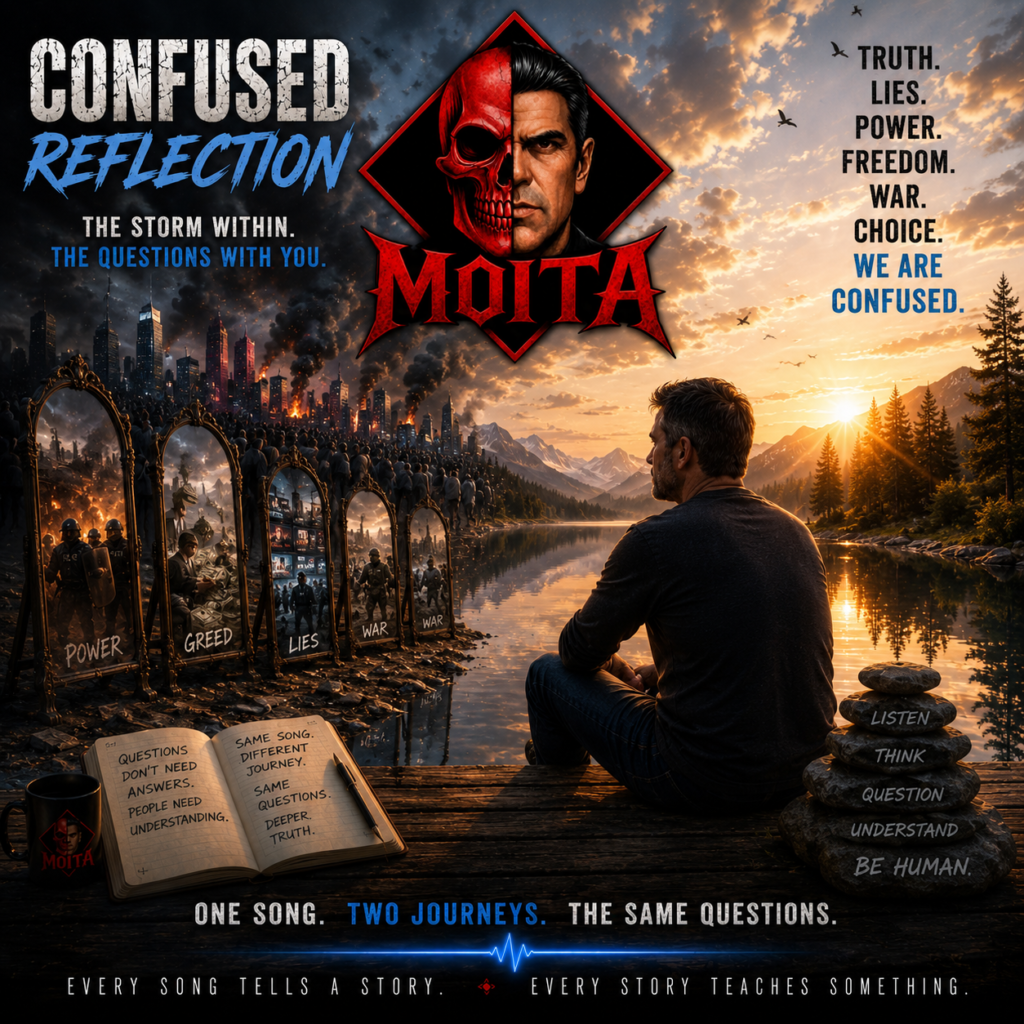


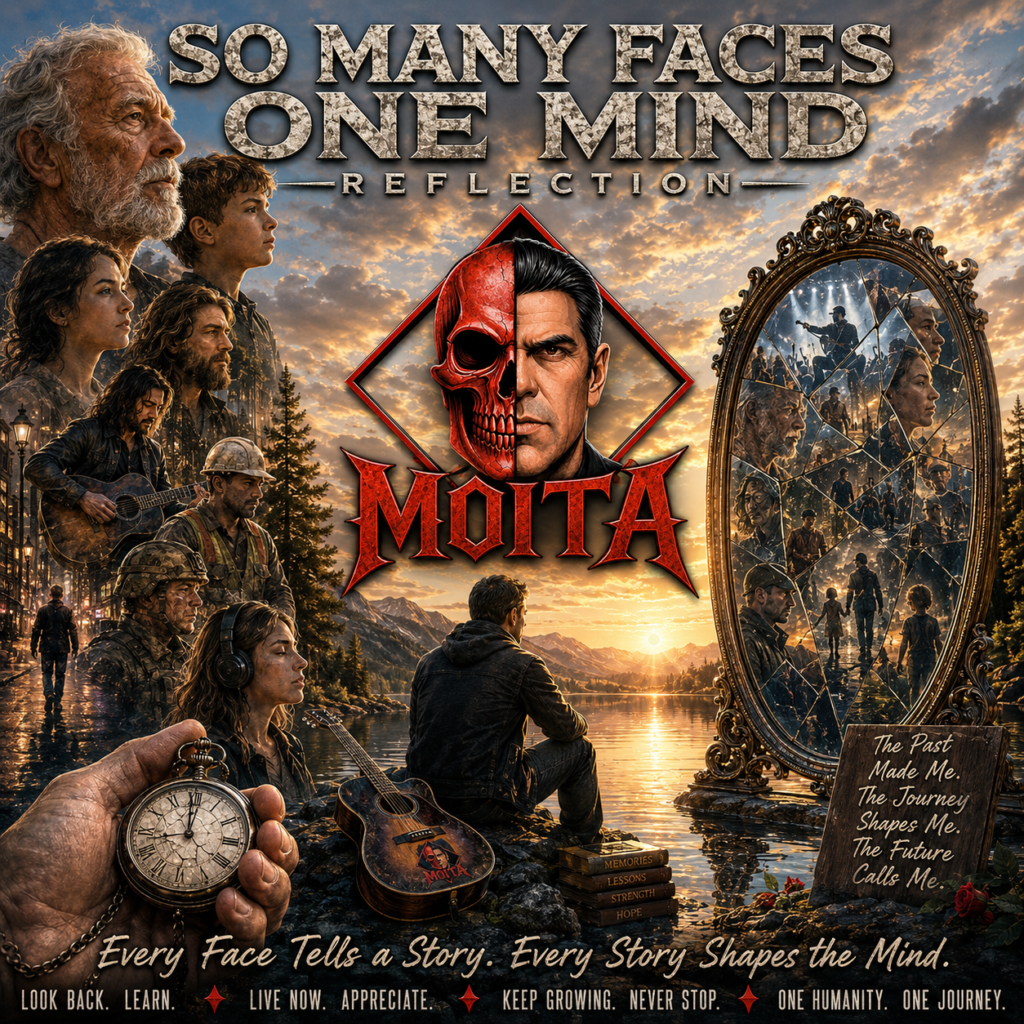



Reviews
There are no reviews yet.