
Description
About the Song
SECTION ONE
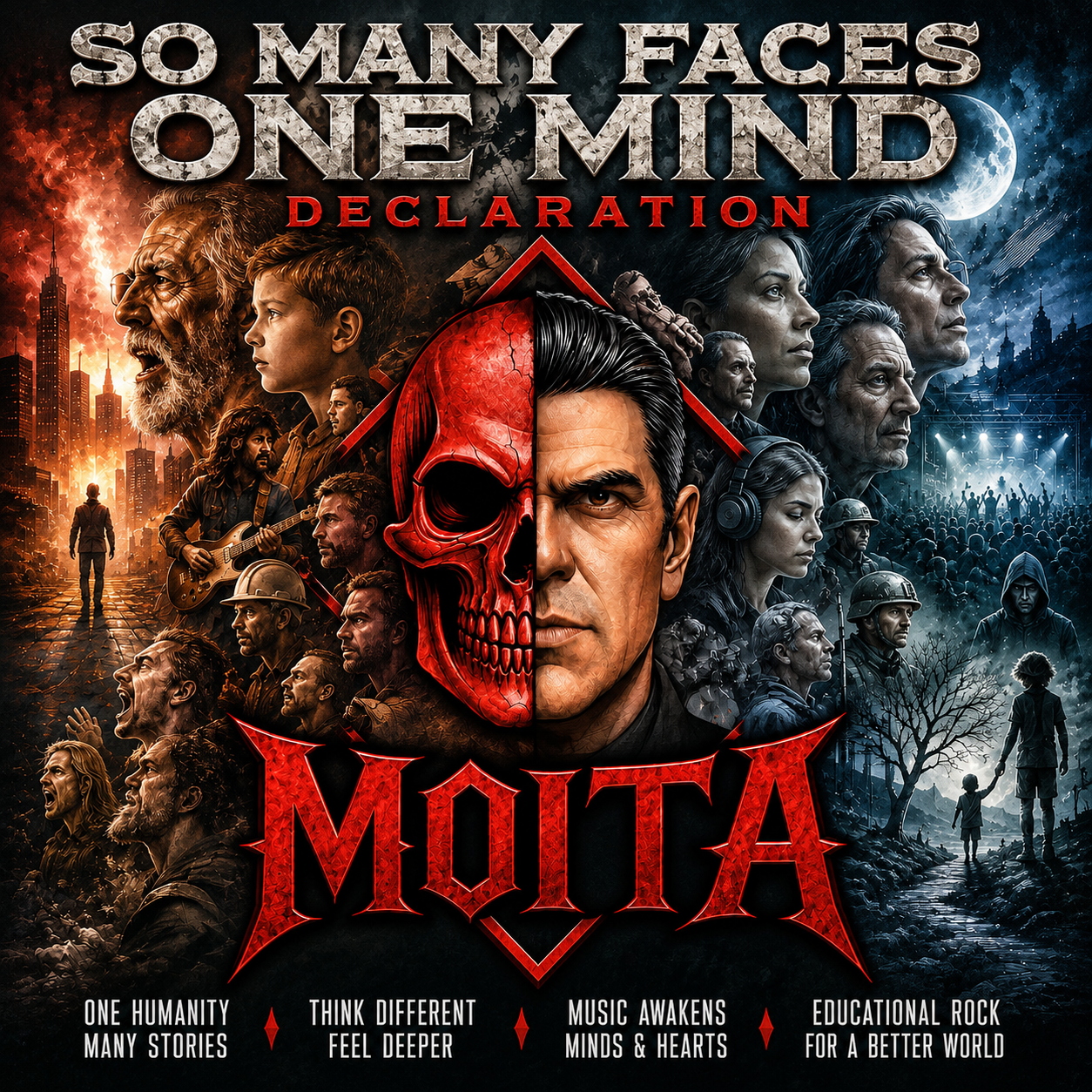
SO MANY FACES, ONE MIND — DECLARATION
CATEGORY
Identity, Humanity, Purpose, Society, Unity, Education
PRIMARY EMOTION
Awakening
ALSO FITS
Human Nature, Reflection, Personal Growth, Culture, Understanding, Creativity, Educational Rock
WHAT THIS SONG IS ABOUT
This song is about humanity.
It is about the countless faces, personalities, backgrounds, beliefs, cultures, struggles, and experiences that exist across the world, while reminding us that beneath all those differences, we are still connected by the same basic human needs.
We all want to belong.
We all want to be respected.
We all want to be understood.
We all experience love, fear, hope, disappointment, happiness, grief, uncertainty, and the need to find purpose.
The faces may be different.
The lives may be different.
The roads may be different.
But the mind behind every human life is still searching, learning, questioning, remembering, and trying to understand the world.
That is where the title came from.
So many faces.
One mind.
This version is called Declaration because it is not meant to sit quietly in the background.
It is a statement.
It introduces an idea that sits at the centre of MOITA.
People may look different, speak different languages, live in different countries, follow different traditions, or see the world from completely different directions.
That should not stop us from trying to understand one another.
Differences do not have to divide us.
They can teach us.
THE STORY BEHIND THE SONG
There are two versions of So Many Faces, One Mind.
Both versions use the same lyrics.
The difference is in how the music carries those words and how the listener is invited to receive them.
This first version is Declaration.
It is the stronger public statement.
It looks outward toward society, humanity, culture, identity, and the way people judge one another before taking the time to understand what is underneath the surface.
The second version, Reflection, turns those same words inward.
That version becomes more personal and asks the listener to think about the many versions of themselves that have existed throughout one lifetime.
I wanted the same lyrics to prove something important.
Words do not live alone.
Music changes how we feel them.
Experience changes how we interpret them.
The same sentence can become a warning, a memory, a challenge, or a moment of understanding depending on how it is delivered and where the listener is in life.
That became part of the experiment behind these two songs.
One lyric.
Two musical identities.
Two emotional journeys.
Two different ways of understanding the same human message.
WHY I WROTE THIS SONG
I wrote this song because I have spent much of my life watching people.
Not only what they say.
What they do.
How they behave when they are comfortable.
How they change when they are afraid.
How quickly they judge.
How slowly they sometimes listen.
How people can appear completely different on the outside while carrying many of the same battles inside.
I have always been curious about that.
A person can walk past us on the street and remain a complete stranger.
We do not know what they have survived.
We do not know who they have lost.
We do not know what they are building.
We do not know what they are hiding.
We do not know what they fear.
We usually see only the face.
The story remains invisible.
That is one reason misunderstanding grows so easily.
People often react to what they see before asking what they do not know.
This song is my challenge to that habit.
It asks people to slow down.
Look again.
Think again.
Listen longer.
The world does not need everyone to become identical.
It needs people to understand that difference is not automatically danger.
It can become knowledge.
WHY THIS MATTERS TO ME
This matters to me because MOITA has never been built around one subject, one emotion, one sound, or one version of life.
My songs come from many places.
Personal experience.
History.
Pain.
Humour.
Curiosity.
Anger.
Love.
Loss.
Imagination.
Observation.
Questions that stay in my head until I finally turn them into words.
Those are all different faces of the same mind.
My mind.
My life.
My library.
That is why this title reaches beyond one song.
It describes the whole purpose of MOITA.
A person is never only one thing.
A life is never only one chapter.
A songwriter should never be trapped inside one category.
I can write about war and peace.
Love and betrayal.
Faith and doubt.
Strength and weakness.
History and imagination.
Justice and failure.
Laughter and grief.
They may appear to be completely different subjects, but they all come from the same place.
A mind trying to understand life.
WHY THIS SONG FITS MOITA
This song fits MOITA because it explains what the library is becoming.
MOITA is not a collection of songs that all sound the same.
It is a collection of ideas.
Every song reveals another face.
Every story reveals another experience.
Every documentary opens another door.
Together they form one connected mind and one growing lifetime of thought.
That is why So Many Faces, One Mind — Declaration belongs near the heart of MOITA.
It does more than introduce a song.
It introduces the philosophy behind the entire project.
The music is the invitation.
The website is the destination.
The song creates emotion.
The story creates understanding.
The documentary creates curiosity.
The library brings everything together.
This is not a statement that everyone must agree on everything.
That would be unrealistic.
Human beings will always have different opinions, beliefs, values, personalities, and ways of living.
Unity does not require sameness.
Understanding does not require surrendering your identity.
Respect does not require silence.
The real challenge is learning how to disagree without forgetting that another human being is standing in front of us.
That is one of the declarations inside this song.
READ THIS FIRST
Do not listen to this song as though it is telling the world to become one identical group of people.
That is not the message.
The message is almost the opposite.
The world is powerful because it contains so many faces.
Different histories.
Different voices.
Different cultures.
Different ideas.
Different ways of creating.
Different ways of solving problems.
Different ways of seeing life.
The danger begins when difference becomes an excuse for hatred, superiority, fear, or immediate judgment.
This song asks us to remain individuals without forgetting our shared humanity.
Listen to the strength in this version.
Listen to the way the music carries the words like a public statement.
Then ask yourself a simple question.
When you look at another person, do you see only the face?
Or do you remember that an entire life exists behind it?
FULL LYRICS
SO MANY FACES, ONE MIND
One face carved from shadow and bone
Another still learning what it means to be whole
Staring back through the cracks of the glass
Every scar is a story, every breath is the past
We wear different skins, different sins
Different wars raging under our skin
But the eyes never lie when the silence speaks
There’s a thousand voices inside of me
Some are broken
Some pretend
Some are lost but won’t bend
Different masks, same fire inside
Different roads, same reason to try
So many faces, one mind
One pulse beating out of time
We don’t speak it, we don’t say
But the sound knows the way
It cuts through fear
It bends the pain
Turns the dark into something sane
What you hear is more than sound
It’s a way out, it’s a way found
Music moves where words can’t go
Through locked doors in the mind we don’t show
It rewires the hurt, it reshapes the fight
Turns dead ends into flashes of light
It makes you feel what you buried deep
Makes the strongest souls finally weep
It teaches the brain to see beyond walls
To imagine futures no one ever saw
It’s not escape
It’s not disguise
It’s truth screaming through the noise
No flags, no crowns, no chosen few
Just sound breaking through
So many faces, one mind
One signal crossing the line
We don’t name it, we don’t explain
But it changes the game
It lifts the weight
It splits the chain
Turns the loss into something gained
What you hear is a spark unbound
It’s a way forward, it’s higher ground
Half alive
Half undone
Still standing when others run
Death and life in the same design
One looks back, one looks ahead in time
This isn’t about who we are
It’s about who we become
When the sound hits the heart
And reminds us we’re not done
Think different
Feel deeper
See further than before
This is what sound was built for
So many faces, one mind
One voice breaking through time
No names carved into the stone
But you know it when you’re not alone
It makes you think
It makes you change
Turns the dark into a flame
What you hear is the future found
Written in sound
Written in sound
One face fades
One remains
But the echo stays the same
Not a symbol
Not a sign
Just a sound that rewires the mind
SECTION ONE
LYRIC JOURNEY
PART 1
SO MANY FACES, ONE MIND — DECLARATION
One face carved from shadow and bone
Another still learning what it means to be whole
This is where I wanted the journey to begin.
With a face.
Before we know somebody’s story, we see the face. Before we know where they came from, what they believe, what they have survived, what they have accomplished, what they regret, or what they are still trying to become, we see the outside.
And almost immediately, our minds start working.
We notice things.
We make little judgments.
Sometimes we do it without even realizing it.
That is human nature, but it is also where misunderstanding can begin.
Because a face can tell you something about a person, but it can never tell you the whole person.
That is why I used the word carved.
One face carved from shadow and bone.
I could have said formed or shaped, but carved feels different to me. Carving takes time. It suggests that something has been worked on, changed, cut into, and slowly given its shape.
That sounds a lot like life.
We are all being carved by something.
Childhood does some of it.
Family does some.
Culture does some.
Love certainly does.
So does disappointment.
Success can carve us.
Failure can carve us even deeper.
The people who believe in us leave marks.
So do the people who don’t.
Some experiences make us softer.
Some make us harder.
Some make us more careful.
Some make us more willing to take chances.
And some experiences do not make sense until years later, when we finally look back and understand what they changed inside us.
That is the shadow in the line for me.
Not evil.
Not darkness in some dramatic sense.
It is everything that exists behind the face that another person cannot immediately see.
Then I put bone beside it because bone is real.
It is physical.
It is underneath all of us.
Strip away all the things we use to separate ourselves and there is something very basic underneath.
A human being.
Then comes the other face.
Another still learning what it means to be whole.
I like that the song does not give us one finished person and one broken person.
That would be too easy.
The second face is learning.
There is a big difference.
I am still learning.
I think anybody being honest with themselves is still learning.
You can reach a point in life where you know a great deal more than you did when you were twenty and still realize how much you do not know.
Maybe that is one of the strange things about getting older.
When we are young, sometimes we think knowing a few things means we understand everything.
Then life gets involved.
It starts asking harder questions.
What does success actually mean?
Who can you trust?
What happens when something you believed would last forever does not?
What happens when you are wrong?
What happens when somebody you judged turns out to be nothing like the person you imagined?
What happens when you discover that you have changed?
Being whole, to me, does not mean reaching some perfect final version of yourself.
I do not think that version exists.
Being whole may simply mean becoming more willing to accept that all the pieces belong to the same life.
The victories.
The mistakes.
The confidence.
The uncertainty.
The things we are proud of.
The things we would do differently.
We keep learning what to carry and what to put down.
We keep becoming.
That is why the song begins with two faces that may seem different but are already connected.
One has been carved.
The other is still learning.
In truth, we are all both.
Staring back through the cracks of the glass
Every scar is a story, every breath is the past
Now the song brings us to the glass.
I see a mirror here, but not a perfect one.
The cracks matter.
A perfect mirror gives you one clean image.
Life rarely does.
We remember ourselves in pieces.
There are years that seem to disappear and single moments we can remember almost perfectly.
A room.
A smell.
A person’s voice.
A sentence somebody said.
A mistake.
A victory.
A goodbye.
Something funny that still makes us laugh decades later.
Something painful that can still change the mood in a room when somebody mentions it.
Memory is strange that way.
We do not carry our lives like one continuous movie.
We carry pieces.
Those are the cracks in the glass.
And when we look at somebody else, we are seeing even less.
We see the reflection they are showing us today.
We do not see every piece that created it.
That brings us directly to the scar.
Every scar is a story.
I wanted that line simple because it does not need much help.
A scar tells you that something happened.
It does not tell you what happened.
That is the difference.
You might see a scar on somebody’s body and have no idea where it came from.
An accident.
An operation.
A fight.
A childhood injury.
Something completely ordinary.
You cannot know unless the person tells you.
Emotional scars are even harder to see.
Someone can walk into a room looking perfectly fine while carrying something nobody there knows about.
Loss.
Fear.
A broken relationship.
A family problem.
A mistake they cannot forgive themselves for.
A memory they wish they could forget.
Or maybe they are carrying something wonderful.
A private victory.
A new beginning.
A dream they have not told anybody about yet.
We do not know.
That becomes important in Declaration because I do not want this song telling people to invent suffering behind every face.
That would be another kind of assumption.
The point is that the story exists whether we know it or not.
That should create curiosity before judgment.
Every breath is the past.
That line takes the journey deeper because none of us arrives in the present empty.
Everything we have lived contributes something.
The way I think today did not begin today.
Neither did yours.
We have been building ourselves for years.
Every person we have met has added something, even if it was only a small lesson.
Every mistake taught something, provided we were willing to learn from it.
Every success changed our understanding of what might be possible.
Every disappointment changed something too.
Sometimes for the better.
Sometimes not.
That is part of being human.
The past is not supposed to become a prison.
But pretending it has no influence on us would not be honest either.
Every breath carries something forward.
We wear different skins, different sins
Different wars raging under our skin
Now the song starts opening the door wider.
We are no longer looking at one face in a mirror.
We are beginning to look at everybody.
Different skins.
That can be understood literally because human beings obviously look different.
Different skin colours.
Different ages.
Different features.
Different bodies.
But I also hear skins as the different outer lives people wear.
The business suit.
The work clothes.
The uniform.
The stage clothes.
The clothes somebody wears because of their culture.
The clothes somebody wears because that is simply what they like.
We present ourselves to the world in thousands of different ways.
That is part of identity.
I do not want to erase that.
Declaration is not asking everybody to take off their differences and become some bland version of the same human being.
I would hate that.
Difference is interesting.
Difference teaches us.
Difference creates.
The second part of the line is less comfortable.
Different sins.
Nobody likes having their failures examined.
We are usually much better at noticing somebody else’s.
That is another human habit worth thinking about.
It can be very easy to reduce another person to the worst thing they ever did while allowing ourselves the luxury of explaining all the circumstances behind our own mistakes.
I knew why I did that.
I was angry.
I was young.
I did not understand.
I was under pressure.
I made a mistake.
We know our own context.
We do not always give somebody else the same consideration.
That does not mean every action should be excused.
Absolutely not.
Understanding somebody is not the same as removing responsibility.
Some choices hurt people.
Some actions have consequences.
Some things require accountability.
But if we are going to talk honestly about humanity, then imperfection belongs in the conversation.
Different skins.
Different sins.
None of us comes into this song spotless.
Then we reach the wars.
Different wars raging under our skin.
This is where appearances become almost useless.
You cannot always see a private battle.
That battle may be grief.
It may be loneliness.
It may be fear.
It may be addiction.
It may be financial pressure.
It may be somebody trying to hold a family together.
It may be somebody questioning who they are.
It may be somebody fighting desperately to keep a dream alive while everybody around them thinks they should give up.
There are countless possibilities.
Again, the important thing is not to guess which war somebody is fighting.
It is to remember that what we see is incomplete.
I have met enough people in my life to know that the loudest person in the room is not necessarily the strongest.
The quietest person is not necessarily weak.
The person laughing the hardest may be perfectly happy, or they may be using humour to get through something difficult.
You do not know until you know.
That sounds almost too simple, but I think we forget it constantly.
But the eyes never lie when the silence speaks
There’s a thousand voices inside of me
The eyes bring us back to the face, but now we are looking differently.
At the beginning of the song, the face was surface.
Now we are trying to see through it.
There are moments when somebody does not have to tell you they are hurting.
You can see something has changed.
There are also moments when happiness appears before the person says a word.
Human beings communicate constantly without speaking.
That is what silence is doing here.
It is not empty.
Sometimes silence tells you to pay attention.
Then the song does something important.
It stops talking about everybody else.
There’s a thousand voices inside of me.
Me.
That word matters.
Because I do not want to stand outside humanity pointing at everybody else.
I am in this song.
If I am asking people to look deeper at others, I also have to look deeper at myself.
The thousand voices are not literal voices.
They are all the different thoughts and reactions that can exist inside one person.
The part of me that wants to act.
The part that says think first.
Confidence.
Doubt.
Anger.
Patience.
Memory.
Curiosity.
Fear.
Hope.
The younger person I once was still influencing the older person I am.
Experiences from decades ago can still affect a decision today.
That is why one human mind can contain so much contradiction.
We want something and fear it at the same time.
We love somebody and get angry with them.
We can be confident in one part of life and completely uncertain in another.
We can forgive one thing and struggle for years with something else.
A thousand voices.
One mind.
Some are broken
Some pretend
Some are lost but won’t bend
I wanted these lines short.
The song has already done a lot of talking.
Now it gives us three quick human pictures.
Some are broken.
I do not hear that as worthless.
Broken and worthless are not the same thing.
Something can be broken and still matter.
A person can go through a terrible period without that period becoming their entire identity.
Some pretend.
That one can go in many directions.
People pretend to be stronger than they feel.
Pretend something does not bother them.
Pretend they have an answer.
Pretend they are happy.
Sometimes pretending is dishonest.
Sometimes it is survival for the day.
Sometimes somebody simply is not ready to share what is happening inside them.
Then comes the one I like most in this little movement.
Some are lost but won’t bend.
There is something stubborn in that line.
I understand stubborn.
You can be lost without surrendering.
You can have no idea how you are going to reach the next place and still refuse to lie down.
You can question the road without giving up on the destination.
That is resilience without pretending everything is fine.
Different masks, same fire inside
Different roads, same reason to try
The masks continue what pretending introduced, but they widen it.
We all have different versions of ourselves that appear in different places.
The way somebody behaves at work may not be exactly how they behave at home.
The person standing on a stage may be different from the person sitting quietly alone afterward.
That does not automatically make somebody fake.
Human beings respond to environments.
We have roles.
Parent.
Friend.
Worker.
Leader.
Student.
Partner.
Creator.
Stranger.
Different situations reveal different parts of us.
But underneath the masks is the fire.
Same fire inside.
This is where Declaration begins moving toward unity without demanding sameness.
The fire is not one belief.
It is not one religion.
It is not one political position.
It is not one culture.
It is the human desire to keep reaching for something.
Love.
Purpose.
Security.
Respect.
Family.
Achievement.
Peace.
Meaning.
Maybe simply another chance.
Then comes the road.
Different roads, same reason to try.
That is one of the most important distinctions in this song.
Your road does not have to look like mine.
Mine does not have to look like yours.
There is no single correct human life.
One person wants to build a company.
Another wants a quiet home and family.
One wants to travel.
Another is happiest close to where they were born.
One creates music.
Another builds houses.
Another teaches children.
Another works with their hands.
Another studies science.
Another spends years searching before they find what matters to them.
The roads can be completely different.
The reason underneath them is often much closer than we realize.
We want our lives to mean something to us.
That brings us to the first real declaration.
So many faces, one mind
One pulse beating out of time
We don’t speak it, we don’t say
But the sound knows the way
It cuts through fear
It bends the pain
Turns the dark into something sane
What you hear is more than sound
It’s a way out, it’s a way found
Now the title finally arrives inside the song.
By this point, I hope it cannot be mistaken for sameness.
We have already travelled through difference.
Different skins.
Different sins.
Different wars.
Different masks.
Different roads.
The song has done everything it can to establish individuality before saying one mind.
That was necessary.
One mind does not mean one thought.
It means one human capacity.
To think.
To remember.
To imagine.
To question.
To fear.
To hope.
To create.
To change.
One pulse beating out of time reminds us that even this shared humanity does not happen in perfect synchronization.
Somebody is falling in love while somebody else is saying goodbye.
Somebody is being born while somebody else is dying.
Somebody is beginning a career while somebody else is retiring.
Somebody has just discovered hope.
Somebody else is struggling to find it.
We are living beside one another without ever being at exactly the same point.
Then sound enters.
We don’t speak it, we don’t say
But the sound knows the way
This is where the song begins showing why music belongs inside the declaration.
There are things we do not know how to say.
Sometimes there are things we do not want to say.
Then music reaches the place anyway.
I have always found that remarkable.
A song can bring back somebody you have not thought about in years.
A melody can take you to another decade almost instantly.
A voice can make you feel something before you have even understood the lyric.
That is not imagination in the sense of something meaningless.
Music, memory and emotion can become deeply connected in our lives.
We attach songs to people.
Places.
Periods of our lives.
Victories.
Losses.
That is why the same song can make one person smile and another person cry.
The sound is identical.
The lives receiving it are different.
It cuts through fear
It bends the pain
Turns the dark into something sane
I was careful with the idea behind these lines.
Music is not medicine for every problem.
A song does not erase grief.
It does not fix every fear.
It does not magically remove pain.
But it can change the moment.
It can give pain somewhere to go.
It can help somebody understand what they are feeling.
It can remind somebody that another person has felt something similar.
Sometimes putting emotion into sound makes the emotion easier to face.
The darkness is still there.
But now it has shape.
Maybe words.
Maybe melody.
Maybe rhythm.
Something we can hold onto.
Then comes the line that opens the next door.
What you hear is more than sound
It’s a way out, it’s a way found
I deliberately wanted both ideas.
A way out.
A way found.
They are not the same.
Sometimes we need a few minutes away from whatever is happening.
Music can give us that.
Put on the headphones.
Turn up the song.
Let the rest of the world disappear for a little while.
There is nothing wrong with needing that space.
But the second part interests me more.
A way found.
That means we did not simply escape.
Something in the experience helped us see another direction.
Maybe we understand ourselves a little better.
Maybe we finally allow ourselves to feel something we have been pushing away.
Maybe one line gives us a thought we did not have before.
Maybe the music simply reminds us that we are still capable of feeling something.
That is where this first chorus leaves us.
We began with a face.
We travelled underneath it.
We found scars, history, private wars, contradictions, masks, resilience and purpose.
Then we discovered something capable of travelling between all those different lives without asking them to become identical first.
Sound.
And from here, the song is ready to find out just how far that sound can go.
SECTION ONE
LYRIC JOURNEY
PART 2
Music moves where words can’t go
Through locked doors in the mind we don’t show
This is where the song moves into something I have believed about music for a very long time.
There are places inside the human mind that ordinary conversation does not always reach.
We can talk all day and still avoid the one thing that is really bothering us.
We can explain what happened without explaining how it made us feel.
We can tell somebody we are fine when we know we are not.
Sometimes we do that because we do not want to talk about it.
Sometimes we are protecting ourselves.
Sometimes we are protecting somebody else.
Sometimes we honestly do not know how to explain what is happening inside us.
That is what I mean by locked doors in the mind we don’t show.
Every person has private rooms.
Memories.
Questions.
Fears.
Regrets.
Dreams.
Things we never said.
Things we wish we had said.
People we still think about.
Moments that changed us without anybody else realizing how much they changed us.
You can carry something for twenty or thirty years and then hear a piece of music that takes you straight back there.
The song did not create the memory.
The memory was already waiting.
The music simply found the door.
That has always fascinated me.
How can a collection of sounds reach somewhere that a conversation could not?
How can a melody bring back the face of somebody you have not seen in years?
How can one guitar note change the feeling in a room?
How can a voice singing somebody else’s words suddenly feel as though it knows something about your own life?
I do not think we have to understand every part of that experience to recognize that it happens.
I have experienced it as a listener.
I have experienced it as a songwriter.
Sometimes writing allows me to get somewhere in my own thinking that I was not reaching any other way.
I may start with one idea and discover another one underneath it.
That is why I wrote music moves where words can’t go.
Words matter enormously to me.
I am a lyric writer.
But words by themselves are only one part of what happens when a song becomes music.
The voice matters.
The melody matters.
The rhythm matters.
The silence between sounds matters.
The way the singer delivers one word can completely change the weight of that word.
Music gives language another way into us.
It rewires the hurt, it reshapes the fight
Turns dead ends into flashes of light
I chose words here that suggest movement and change.
Rewires.
Reshapes.
Turns.
I am not saying music magically fixes pain.
I would never make that claim.
Some things hurt because they mattered, and no song should pretend otherwise.
A song cannot bring somebody back.
It cannot erase a betrayal.
It cannot undo a mistake.
It cannot give us back lost years.
What it can sometimes do is change the way we carry those things.
That is different.
A painful experience can remain painful while our understanding of it changes.
Something that once felt like nothing but failure may eventually become the moment that forced us in another direction.
Something we once carried only as anger may eventually become a lesson.
Something we could not talk about may become something we can finally face.
The hurt has not been erased.
Our relationship with it has been rewired.
Then comes reshapes the fight.
That matters to me because there are times in life when we spend enormous energy fighting something that cannot be changed.
We fight yesterday.
We fight what somebody did.
We fight what we should have done.
We fight the fact that life did not go the way we expected.
Eventually the fight may have to become something else.
Instead of fighting what happened, we begin fighting for what happens next.
That is a completely different battle.
Then I wrote:
Turns dead ends into flashes of light
I deliberately wrote flashes.
Not a permanent light.
Not some giant answer appearing in front of us.
A flash.
Because sometimes that is all we get.
One moment when something suddenly makes sense.
One thought we had never considered.
One possibility we could not see before.
One reason to try another direction.
Sometimes that little flash is enough.
A dead end only tells us that this particular road has stopped.
It does not mean every road has stopped.
It makes you feel what you buried deep
Makes the strongest souls finally weep
There are lyrics that move the song forward.
These lines deserve to stay with us for a while.
We have strange ideas about strength.
Especially when it comes to emotion.
People are often taught that strength means holding everything inside.
Do not cry.
Do not let anyone see you hurt.
Keep going.
Handle it yourself.
Stay tough.
I understand where some of that comes from.
Life does require toughness.
There are times when we have responsibilities and cannot simply stop everything because we are hurting.
But there is a difference between strength and pretending we do not feel.
Buried emotions do not automatically disappear.
Sometimes they sit there quietly.
A person keeps working.
Keeps laughing.
Keeps functioning.
Keeps living.
Then one day a song comes on.
It might be a song they have heard a hundred times.
But this time something is different.
Maybe it reminds them of their mother.
Their father.
A brother.
A sister.
A friend.
Someone they loved.
Someone they lost.
Maybe it reminds them of a younger version of themselves.
Maybe they cannot even explain what happened.
The emotion simply arrives.
That is what these lines are about.
It makes you feel what you buried deep.
Music can sometimes get around the guard we have spent years building.
Then comes:
Makes the strongest souls finally weep
The word finally matters.
Crying is not necessarily the breaking point.
Sometimes it is the moment somebody finally stops fighting themselves.
There are tears of grief.
Tears of relief.
Tears of joy.
Tears of exhaustion.
Tears that arrive because somebody has carried something alone for too long.
The strongest person in the room can still have a heart.
Strength does not require becoming numb.
Sometimes allowing yourself to feel something takes more courage than hiding it.
It teaches the brain to see beyond walls
To imagine futures no one ever saw
Now the song begins opening outward again.
We have gone inside the mind.
We have gone into pain.
Now we move toward imagination.
This is another reason music and creativity matter so much to me.
Before anything new can exist, somebody has to imagine that it could.
That applies to music, but it reaches much farther than music.
Before a building exists, somebody sees it in their mind or on a drawing.
Before a machine exists, somebody imagines how the pieces could work together.
Before an invention exists, somebody looks at a problem and thinks there must be another way.
Before a song exists, there is silence.
Then somebody hears something that nobody else can hear yet.
Maybe it is a rhythm.
Maybe a guitar part.
Maybe a title.
Maybe one sentence.
Maybe only an emotion.
Then the work begins.
That is creativity.
Seeing something before it exists.
That is why the wall matters in this lyric.
Walls tell us where something ends.
Creativity asks whether it really has to end there.
Some walls are physical.
Others are created by circumstances.
Others are created by people.
You cannot do that.
Nobody will listen.
That idea will never work.
You are too old.
You are too young.
You do not have the education.
You do not have the money.
You came from the wrong place.
You are wasting your time.
Those sentences can become walls if we allow them to.
Sometimes the strongest wall is the one we build ourselves.
I cannot.
I am afraid.
What if I fail?
What will people think?
Then imagination asks another question.
What if I try?
That question has built a lot of things.
To imagine futures no one ever saw.
Nobody has seen tomorrow.
Everything we build for tomorrow begins with imagination.
That does not mean every idea succeeds.
Failure is part of creating.
I have tried things that worked.
I have tried things that did not.
I have changed direction.
I have learned.
I have started again.
That is part of the satisfaction.
The future does not belong only to people who already know the answer.
A lot of the time it belongs to somebody stubborn enough to keep asking the question.
It’s not escape
It’s not disguise
It’s truth screaming through the noise
I wanted these lines here because I did not want the earlier idea of music being a way out to be misunderstood.
There is a difference between getting enough distance to breathe and pretending something does not exist.
Music can give us somewhere to go without asking us to abandon reality.
Sometimes music actually brings us closer to reality.
It says things we have avoided saying.
It brings emotions to the surface.
It forces us to think.
It makes us uncomfortable.
It can challenge what we believe.
It can remind us of something we were trying to forget.
That is not escape.
And it is not disguise.
Some of the music that stays with us longest does not hide the ugly parts of life.
It walks straight into them.
Love.
Death.
War.
Fear.
Sex.
Faith.
Doubt.
Anger.
Loneliness.
Hope.
Failure.
Victory.
Music has gone into every part of human life because human beings have gone into every part of human life.
Then comes the line:
It’s truth screaming through the noise
There is a lot of noise around us.
People telling us what to think.
What to buy.
What to fear.
Who to support.
Who to hate.
What success is supposed to look like.
What kind of person we are supposed to become.
Everybody seems to have an answer.
Sometimes music cuts through all of that because it reaches us before we have time to build an argument around it.
We feel something.
Then we think about why.
That is the truth I am talking about here.
Not one official truth that everybody has to accept.
Something much more personal.
The moment when something reaches you and you recognize part of yourself inside it.
No flags, no crowns, no chosen few
Just sound breaking through
These lines bring the Declaration side of the song right back to the surface.
No flags.
I am not saying people should not love their country.
I love where I came from.
Culture matters.
History matters.
Identity matters.
But music can cross a national border without surrendering the identity of the person who created it.
A Portuguese song can move somebody who is not Portuguese.
An African rhythm can influence musicians on another continent.
American blues can help shape rock music heard around the world.
Classical music written centuries ago can still fill a room today.
Sound travels.
No crowns.
Music does not belong to kings.
No chosen few.
Creativity does not belong to an approved class of people.
Nobody owns the human desire to create.
Long before record companies existed, people made music.
Long before streaming existed, people made music.
Long before anyone knew what a chart position was, people made music.
They sang.
They drummed.
They clapped.
They built instruments.
They passed songs from one generation to another.
Music belonged to people before it became an industry.
Just sound breaking through.
Strip everything else away and that is what remains.
Sound.
One human being creates it.
Another receives it.
Something happens between them.
So many faces, one mind
One signal crossing the line
We don’t name it, we don’t explain
But it changes the game
It lifts the weight
It splits the chain
Turns the loss into something gained
What you hear is a spark unbound
It’s a way forward, it’s higher ground
When the chorus returns here, I do not hear it exactly the same way I heard it the first time.
The first chorus came after we had been looking beneath the faces.
Different skins.
Different sins.
Different wars.
Different masks.
Different roads.
That first chorus established the connection.
Now the journey has shown us one of the things capable of travelling between all those different people.
Sound.
One signal crossing the line.
That line can mean many things without needing to be forced into one definition.
A border.
A language.
A generation.
A culture.
A social class.
A belief.
A personal wall.
Even time.
That last one is worth thinking about.
A musician can record something today and somebody can hear it fifty years from now.
The creator and listener may never occupy the same room.
They may never live in the same decade.
They may come from completely different cultures.
Yet something created in one human mind can reach another human mind years later.
The face changes.
The signal continues.
That fits the title perfectly.
We don’t name it, we don’t explain
But it changes the game
There are emotional reactions that happen before explanation.
You hear something and immediately know you like it.
Or it bothers you.
Or it makes you think.
Or it takes you somewhere.
Maybe ten minutes later you can explain why.
Maybe you never can.
That does not make the reaction meaningless.
Human beings experienced music long before anybody put scientific language around what was happening in the brain.
We knew it did something because we felt it.
It lifts the weight.
Sometimes a song makes five minutes easier.
That may sound small until you are the person who desperately needs those five minutes.
It splits the chain.
That is stronger.
A chain keeps something from moving.
Fear can do that.
Shame can do that.
Grief can do that.
Other people’s expectations can do that.
Our own thinking can do it.
Sometimes the first link breaks when we realize we are allowed to imagine something different.
Turns the loss into something gained.
I do not mean that every loss contains some wonderful hidden gift.
That would be too easy to say from the outside.
Some losses are simply terrible.
What I am talking about is what human beings sometimes manage to create afterward.
A lesson.
A change.
A memory preserved.
A deeper appreciation for what remains.
A decision not to waste another opportunity.
A piece of art.
A song.
The loss does not become good.
Something meaningful can still grow beside it.
What you hear is a spark unbound.
I like the word spark because a spark is tiny compared with what it can begin.
That is creativity.
One thought.
One line.
One sound.
One question.
Nobody knows where it may eventually lead.
Once a song leaves the person who created it, it begins living in other people’s lives.
They connect it to experiences the writer never knew about.
They hear meanings the writer may never have considered.
They carry it into places the writer will never visit.
The spark becomes unbound.
It’s a way forward, it’s higher ground.
Not the finish line.
Higher ground.
There is still somewhere else to go.
There is still more to understand.
But maybe from here we can see farther.
That prepares us for the next movement because the song is about to bring everything back down to one human being.
Not humanity as an idea.
Not music as a universal force.
A person.
Half alive
Half undone
Still standing when others run
This is not a picture of perfection.
Half alive.
Half undone.
There is exhaustion in those words.
There is damage.
There is unfinished business.
There is somebody who does not have everything figured out.
I wanted that.
Because real resilience does not always look heroic.
Sometimes it looks terrible.
Sometimes the person who keeps going does not feel strong at all.
They are tired.
They are angry.
They are confused.
They may be carrying grief.
They may have no idea how everything is going to work out.
But they are still there.
Still standing when others run.
That is a different definition of strength.
Strength is not always feeling powerful.
Sometimes strength is continuing when you do not feel powerful.
Sometimes courage happens while you are afraid.
Sometimes rebuilding begins while part of you is still broken.
Sometimes you take the next step before you know where the road leads.
That is human.
And it belongs inside Declaration because if we are going to talk about humanity, we cannot talk only about humanity at its best.
We have to acknowledge the unfinished person too.
The struggling person.
The person trying.
The person who has been knocked down and has not completely recovered.
The person who is still standing anyway.
Death and life in the same design
One looks back, one looks ahead in time
These lines bring two enormous ideas together.
Death and life.
The past and the future.
Ending and beginning.
We spend our lives standing between those things.
Every day that passes becomes part of what is behind us.
Every day we have not lived yet remains somewhere ahead.
That is the strange position of being human.
We remember backward.
We imagine forward.
One looks back.
Memory does that.
History does that.
Experience does that.
We look behind ourselves because that is where everything we know has already happened.
One looks ahead in time.
That is hope.
Planning.
Curiosity.
Fear too.
Because the future is not automatically comforting.
We do not know what is there.
That uncertainty can frighten us, but it is also what makes possibility possible.
If tomorrow were already completely known, there would be nothing left to create.
The line death and life in the same design is not saying they are equal experiences.
It is recognizing that both belong to the human story.
Things end.
People leave.
Generations pass.
Ideas survive.
Children become adults.
New people arrive.
The world keeps moving.
Every person eventually becomes part of somebody else’s past.
What we did while we were here becomes part of what remains.
That thought takes the song somewhere important.
Because now we are no longer asking only what connects us.
We are beginning to ask what we are going to do with the time we have.
This isn’t about who we are
It’s about who we become
For me, this is one of the major turning points in the entire song.
Up to this point we have looked at faces.
Scars.
Hidden wars.
Masks.
Music.
Pain.
Imagination.
Difference.
Connection.
Now the song tells us why all of that matters.
This isn’t about who we are.
It’s about who we become.
Who we are today is not the final answer.
That matters to me.
People change.
People learn.
People fail.
People improve.
People disappoint us.
People surprise us.
A person can believe something at twenty and understand it completely differently at sixty.
That does not automatically make the younger person foolish.
It means life continued teaching.
If we decide somebody can never become more than the worst thing they have done, then we leave no room for growth.
If we decide we can never become more than our own worst mistake, we do the same thing to ourselves.
Becoming means there is still movement.
Still choice.
Still responsibility.
Still possibility.
That is where Declaration becomes more than a statement about accepting differences.
It becomes a challenge.
What are we doing with what we have learned?
What are we becoming because of what we have survived?
Are our experiences making us more understanding or more closed?
Are our failures teaching us?
Are our victories making us grateful or arrogant?
Are we still curious?
Are we still willing to change our minds when something teaches us better?
Those questions matter more to me than pretending any of us has arrived at some finished version of ourselves.
When the sound hits the heart
And reminds us we’re not done
That is where music returns.
After everything we have travelled through, sound comes back to the heart.
Not because music solves the journey.
Because sometimes it reminds us to continue it.
We’re not done.
Those words can mean something different to every listener.
I still have something to say.
I still have something to learn.
I still have somebody to love.
I still have something to build.
I still have a mistake to correct.
I still have a question worth asking.
I still have tomorrow.
For somebody else, it may simply mean I am still here.
That is enough.
The song began by asking us to look at faces.
Now it is asking us to look at possibility.
Human beings are unfinished.
That is not a weakness.
It may be one of the most hopeful things about us.
As long as we are still here, becoming is still possible.
SECTION ONE
LYRIC JOURNEY
PART 3
Think different
Feel deeper
See further than before
This is what sound was built for
These four lines are short, but they carry a lot of what I wanted this song to become.
Think different.
Not think like me.
That distinction matters.
I am not interested in writing songs that tell everybody they have to arrive at my conclusion.
I would rather write something that makes somebody stop long enough to arrive at their own.
Thinking differently does not automatically mean rejecting everything you already believe.
Sometimes it means testing it.
Why do I believe this?
Where did that belief come from?
Did I reach that conclusion myself, or did I simply inherit it?
Have I listened to somebody who sees it differently?
Could I be wrong about part of it?
Could they be wrong about part of it?
Could both of us understand something the other one does not?
Those are healthy questions.
I think one of the easiest traps in life is becoming so certain that we stop being curious.
Once curiosity disappears, learning becomes much harder.
That is why Think different belongs here.
The song has already taken us through different faces, different lives, different struggles and different ways music can reach people.
If we travel through all of that and still refuse to reconsider anything, then we have missed part of the journey.
Feel deeper.
That is different from simply becoming more emotional.
Feeling deeper means allowing ourselves to recognize what something actually means to us.
We can move through life very quickly.
Work.
Responsibilities.
Problems.
Appointments.
Bills.
Phones.
Messages.
News.
Noise.
There is always something demanding attention.
It becomes easy to experience everything at the surface.
Music can interrupt that.
A song can make us stay with something for four or five minutes that we might otherwise have pushed aside in four or five seconds.
That matters.
Sometimes feeling deeper means allowing ourselves to enjoy something completely.
Sometimes it means admitting something hurts.
Sometimes it means recognizing how much we love somebody while they are still here to hear us say it.
Sometimes it means hearing somebody else’s story and realizing their experience deserves more thought than we originally gave it.
Then comes:
See further than before.
To me, that is growth.
Not seeing everything.
Further.
I like that difference.
Nobody sees everything.
Nobody understands everything.
I certainly do not.
Every answer I have ever found seems to create another question.
I do not see that as a problem.
I think that is one of the reasons I have continued writing.
Curiosity keeps opening doors.
You learn something and suddenly realize how much more there is to learn.
You meet somebody from another culture and discover a way of looking at something you had never considered.
You read history and realize the simple version you once knew left out half the story.
You make a mistake and finally understand advice somebody gave you years earlier.
That is seeing further than before.
Then I make a statement that could sound very large:
This is what sound was built for.
Obviously sound was not literally built by somebody for one purpose.
I am talking about what human beings have learned to do with it.
We took vibration and rhythm and pitch and turned them into communication.
Celebration.
Warning.
Ceremony.
Memory.
Comfort.
Protest.
Love.
Storytelling.
Dance.
Grief.
Identity.
We turned sound into something capable of carrying human experience.
That is remarkable when you think about it.
A song can contain an idea.
The idea can travel.
Another person can receive it.
They can think differently because of it.
Feel something because of it.
See something they had not seen before.
That is what I mean when I say this is what sound was built for.
Not background noise.
Connection.
So many faces, one mind
One voice breaking through time
No names carved into the stone
But you know it when you’re not alone
The chorus returns again, but once more it has moved.
Earlier it was one pulse.
Then one signal.
Now it becomes one voice breaking through time.
That progression matters.
The song has been widening its understanding of connection.
A pulse is something alive.
A signal travels.
A voice communicates.
Now that voice is moving through time.
Music has always done that.
Somebody creates something in one moment, and the moment refuses to stay there.
A song survives the room where it was written.
It survives the first performance.
It can survive the people who created it.
That is one of the extraordinary things about creativity.
We are temporary.
What we create can sometimes travel farther than we do.
One voice breaking through time.
I do not hear that as one singer becoming the voice for everybody.
That would contradict the whole song.
I hear it as the human voice continuing.
Generation after generation.
People keep expressing what it means to be alive.
The instruments change.
The technology changes.
The language changes.
The styles change.
The human need underneath it remains recognizable.
People still sing about love.
Loss.
Fear.
Hope.
War.
Home.
Faith.
Heartbreak.
Freedom.
Family.
Loneliness.
Belonging.
Hundreds of years can separate two pieces of music and yet the emotions can still recognize each other.
Then:
No names carved into the stone
There is humility in that line.
Not every meaningful life becomes famous.
Not every important person gets a statue.
Not every act of kindness gets recorded in history.
Most human lives happen without the world knowing very much about them.
That does not make those lives unimportant.
Think about the people who shaped you.
Somebody who encouraged you at the right time.
A parent.
A grandparent.
A teacher.
A friend.
A co-worker.
A stranger who helped when they did not have to.
Their name may never be carved into stone.
They still changed something.
That matters to Declaration because humanity cannot be understood only by studying famous people.
Humanity is mostly ordinary people living ordinary days that become extraordinary to the people sharing those lives.
But you know it when you’re not alone.
That line brings everything back to the individual again.
Belonging does not always need an announcement.
Sometimes you simply feel it.
You walk into a room and realize somebody understands.
You hear a lyric and realize somebody else has felt something you thought belonged only to you.
You meet somebody from a completely different background and discover you have more in common than either of you expected.
That moment can be powerful.
Especially when somebody has spent a long time feeling separate.
The song does not promise that everybody will understand us.
They will not.
It says something smaller and more believable.
Sometimes one connection is enough to remind us we are not alone.
It makes you think
It makes you change
Turns the dark into a flame
We have already travelled through thinking earlier in the song.
Now thinking becomes change.
That is important.
Thinking by itself can be valuable, but eventually a thought has to affect something if it is going to matter.
Maybe it changes an opinion.
Maybe it changes how we speak to somebody.
Maybe it changes how quickly we judge.
Maybe it changes how we see ourselves.
Maybe it changes nothing today but plants something that returns years later.
Change does not always announce itself.
Sometimes one idea sits quietly until life gives it a reason to become useful.
It makes you change.
I do not mean every song changes everybody.
Of course not.
Some songs are simply enjoyable.
There is nothing wrong with that.
But every once in a while, something reaches us at exactly the right time.
A lyric becomes advice.
A melody becomes memory.
A song becomes courage.
An idea becomes action.
Then:
Turns the dark into a flame.
Earlier the song turned the dark into something sane.
Now it becomes a flame.
The darkness has not merely been made understandable.
Something has been created from it.
A flame gives light.
A flame gives heat.
A flame can spread.
That is why this image belongs so late in the song.
We are no longer simply surviving darkness.
We are doing something with it.
That can happen in life.
Pain can become empathy.
Failure can become knowledge.
Anger can become determination.
Confusion can become curiosity.
An experience we never wanted can eventually become something we use to help somebody else.
Again, that does not make the original pain good.
It means the pain does not automatically get the final word.
What you hear is the future found
Written in sound
Written in sound
This is one of my favourite ideas in the song because it connects creativity directly to possibility.
The future found.
Nobody actually finds the future sitting somewhere waiting for them.
We build toward it.
We imagine it.
We make decisions that move us closer to one possibility and farther from another.
That is why these words follow change.
If nothing changes, the future becomes more of the same.
When thinking changes, possibilities change with it.
Written in sound.
That is the song itself.
An idea about humanity has been turned into sound.
Something that existed in my thinking has become something another person can hear.
But there is another meaning here too.
Music preserves moments.
Listen to a recording from decades ago and you are hearing more than notes.
You are hearing technology from that period.
Language from that period.
Musical influences from that period.
Attitudes.
Instruments.
Production choices.
Sometimes political or social conditions.
Sometimes the sound of an entire generation trying to understand itself.
Music becomes a kind of human record.
Not a perfect historical record.
A human one.
How did people feel?
What were they afraid of?
What did they celebrate?
What did they rebel against?
What did they dance to?
What did they sing when their hearts were broken?
Those things tell us something.
Written in sound.
Then I repeat it.
Written in sound.
The repetition is intentional.
The first time is the statement.
The second time lets it settle.
Because the song itself is now becoming part of what it is describing.
This idea has been written into sound.
Whatever happens after that belongs partly to the listener.
One face fades
One remains
But the echo stays the same
Now we are approaching the end, and the song becomes quieter in its thinking.
One face fades.
People pass through our lives.
Generations pass.
We age.
The face in the mirror changes.
The people who seemed permanent when we were children eventually become memories.
That is part of life whether we like it or not.
One remains.
There is deliberately room inside that line.
It can be heard personally.
One person remains after another leaves.
One generation follows another.
One memory survives another.
One idea continues after the person who first carried it is gone.
I do not want to close that line down to one interpretation because the whole song has been asking the listener to bring their own life into it.
But then comes the part that matters most:
But the echo stays the same.
An echo exists because something happened before it.
The original sound may have stopped, but something remains.
Human lives create echoes too.
Things our parents taught us.
Words somebody said years ago.
Habits we learned from people we loved.
Warnings.
Jokes.
Recipes.
Songs.
Stories.
Values.
Mistakes we watched somebody make and decided not to repeat.
Kindness we received and later passed to somebody else.
People continue inside other people in ways they may never know.
That is one of the most human parts of the song.
We affect each other.
Sometimes deliberately.
Sometimes accidentally.
Sometimes for a moment.
Sometimes for generations.
The face fades.
The echo continues.
Not a symbol
Not a sign
Just a sound that rewires the mind
These are the final lines, and I wanted them to finish without turning the song into something bigger than it needed to be.
Not a symbol.
Not a sign.
I am not claiming some mystical answer.
I am not telling the listener that the song contains a secret code.
I am bringing everything back to where this journey has repeatedly returned.
Sound.
Just a sound that rewires the mind.
The word just almost makes it sound small.
But by now we know it is not small at all.
Sound has carried us through this entire journey.
It moved through locked doors.
It touched buried emotion.
It crossed lines.
It challenged walls.
It carried voices through time.
It helped turn darkness into something else.
It reminded us we were unfinished.
It asked us to think differently, feel deeper and see farther.
And now, at the very end, it reaches the mind.
That brings us back to the title one final time.
So Many Faces, One Mind.
At the beginning, the faces were what we noticed first.
Different appearances.
Different histories.
Different scars.
Different battles.
Different masks.
By the end, the song has spent far more time exploring what travels underneath those differences.
Thought.
Emotion.
Memory.
Pain.
Imagination.
Music.
Hope.
Change.
The face is what the world sees.
The mind is where the journey happens.
That does not mean all minds are identical.
They are not.
It means every human mind has the capacity to receive something, question something, feel something, learn something and become something it was not before.
That is the declaration.
Not that humanity should become the same.
Not that our differences should disappear.
Not that everybody should agree.
The declaration is that difference does not erase connection.
We can carry different histories and still recognize pain.
We can speak different languages and still recognize music.
We can come from different cultures and still understand grief.
We can disagree and still recognize another person’s humanity.
We can have completely different faces and still ask many of the same questions.
Who am I?
Where do I belong?
What matters?
Who do I love?
What have I lost?
What can I become?
What will remain after I am gone?
Those questions have travelled through humanity for generations.
The answers keep changing because the faces keep changing.
The questions continue.
The echo stays.
That is why I wanted the final word of the journey to return to the mind.
Because that is where change begins.
Before a person changes a behaviour, something usually changes in the way they think.
Before people understand one another, somebody has to become curious.
Before a wall comes down, somebody has to imagine what might exist on the other side.
Before a song exists, somebody has to hear something in silence.
That is what I wanted So Many Faces, One Mind — Declaration to leave behind.
Look at the faces.
Celebrate the differences.
Learn from them.
Do not be afraid of them simply because they are unfamiliar.
Then look deeper.
There is an entire human life behind every face you pass.
You will never know most of those stories.
Neither will I.
But knowing they exist can change the way we look at one another.
Maybe that is where understanding starts.
Not with agreement.
Not with everybody becoming the same.
With curiosity.
With listening.
With remembering that the person standing across from us has also been carved by life.
They have scars we cannot see.
Wars we know nothing about.
Memories we were not there for.
People they miss.
Things they fear.
Things they hope for.
A future they are still trying to imagine.
Just like us.
So many faces.
One mind.
And one sound can sometimes be enough to make us look again.
SECTION TWO
THE STORY
Some songs begin with a story I can point directly to.
A particular person.
A particular event.
A particular moment.
So Many Faces, One Mind — Declaration is different.
This one grew from years of watching people and trying to understand something that has always fascinated me.
How can human beings be so different and still have so much in common?
I have spent a lot of my life around people from different backgrounds. Work alone can put you beside people you might never have met otherwise. Then life keeps adding more. Travel. Business. Friendships. Strangers. Difficult situations. Good situations. People you agree with and people you absolutely do not.
After enough years, you begin noticing things.
The person who looks strongest may be carrying something nobody knows about.
The person who talks the loudest may not be the most confident.
The quiet person may have lived a life that would surprise everyone in the room.
The person you immediately think you understand may turn out to be completely different once you actually sit down and talk to them.
That interested me.
It still does.
THE FACE IS ONLY THE BEGINNING
We are visual creatures.
We see somebody before we know somebody.
That is unavoidable.
The problem begins when we confuse seeing somebody with understanding them.
A face can tell us certain things.
It cannot tell us a life.
It cannot tell us what happened when that person was ten years old.
It cannot tell us who encouraged them.
Who hurt them.
What they survived.
What they regret.
What they are proud of.
What they believe.
What they are questioning.
What they are afraid of losing.
What they still hope to accomplish.
An entire lifetime can be standing three feet away from us and all we have seen is the cover.
That idea became important to this song.
I did not want to write something pretending differences do not exist.
Of course they exist.
Look around.
Humanity is filled with differences.
That is part of what makes it interesting.
The mistake is believing that because somebody is different from us, we already understand who they are.
We don’t.
Sometimes we haven’t even started.
WHAT I HAVE LEARNED FROM WATCHING PEOPLE
I have seen enough life to know that human beings are complicated.
I include myself in that.
I am not a simple person.
I have different sides to me.
Different interests.
Different emotions.
Different reactions.
Different periods of my life have brought out completely different parts of who I am.
That is human.
We like simple descriptions because they are easy.
Good person.
Bad person.
Strong person.
Weak person.
Successful person.
Failure.
Those descriptions may make life easier to organize, but people rarely fit inside them for very long.
Someone can be incredibly strong in one part of life and completely vulnerable in another.
A person can make a terrible decision without every decision they ever made being terrible.
Someone can succeed for years and then lose everything.
Someone can fail repeatedly and eventually find the thing they were meant to do.
People change.
Circumstances change.
Understanding changes.
That is one reason the title works on more than one level.
So many faces can mean humanity.
It can also mean the many sides that exist within one human being.
Declaration looks primarily toward humanity, but that second meaning is always sitting underneath it.
THE DIFFERENCES ARE NOT THE PROBLEM
I want to be careful about something because this song could easily be misunderstood.
I am not arguing for a world where everybody agrees.
I would hate that.
Imagine how boring creativity would become if everybody thought the same way.
Different minds are responsible for an enormous amount of human progress.
Someone looks at a problem differently.
Someone questions an accepted idea.
Someone hears music differently.
Someone builds something differently.
Someone sees possibilities where everybody else sees a dead end.
Difference creates movement.
It creates invention.
It creates culture.
It creates art.
It creates conversation.
Sometimes it creates arguments too.
That is not automatically bad.
We should be able to disagree.
We should be able to challenge each other.
We should be able to defend what we believe.
The important part is remembering that disagreement does not automatically turn the person across from us into an enemy.
That seems simple when written on a page.
Human history tells us it has never been simple.
THE INVISIBLE WARS
One of the ideas that became increasingly important while writing the song was the difference between what we see and what people carry.
Most battles do not announce themselves.
People go to work while grieving.
They raise children while frightened about money.
They laugh while dealing with problems they have told almost nobody about.
They sit beside us while remembering people we never met.
They carry childhood experiences into adulthood.
They carry mistakes.
They carry guilt.
They carry dreams.
They carry things they are still trying to understand.
We normally do not know any of this.
That does not mean we should walk around assuming everybody is secretly suffering.
It means we should leave some room for what we do not know.
That little bit of room can change how we treat somebody.
It can change a conversation.
Sometimes it can change an entire relationship.
WHY MUSIC BECAME PART OF THE MESSAGE
Then the song moved somewhere I found even more interesting.
Music.
If this song were only about faces and human differences, it could have ended there.
But the lyrics kept moving toward sound.
That was not accidental.
Music is one of those strange human creations that can travel through barriers remarkably well.
You can hear a singer in another language and feel something before you understand a word.
You can hear sadness in an instrument.
You can hear celebration.
Tension.
Fear.
Power.
Tenderness.
Music does not erase cultural differences.
It carries them.
That is what makes it beautiful.
A Portuguese guitar should not have to stop sounding Portuguese to reach somebody in Canada.
Blues should not have to erase its history to influence rock.
Classical music does not have to become something else before a modern musician can learn from it.
Different musical traditions meet, influence each other, and sometimes create something nobody would have imagined before.
That is humanity doing exactly what this song is talking about.
Remaining different while still connecting.
THE SAME LYRICS BECAME TWO SONGS
That brings me to something I particularly like about So Many Faces, One Mind.
There are two versions.
Declaration.
Reflection.
Same lyrics.
I did not rewrite the words to make the second version work.
I wanted the words left alone.
The experiment was to see what happened when the musical identity changed.
Declaration takes the lyrics outward.
It feels like a statement being made in public.
Look around.
Look at humanity.
Look beyond the first impression.
Think about what connects us.
Reflection takes those same words and turns the mirror around.
Now the faces can become the versions of ourselves we have been throughout life.
That fascinated me because it demonstrates something about songwriting that is easy to forget.
Lyrics do not exist in isolation.
The singer changes them.
The arrangement changes them.
Tempo changes them.
Instrumentation changes them.
The listener changes them too.
A lyric you hear at twenty may mean something completely different when you hear it at sixty.
The words stayed where they were.
You moved.
That is part of the power of music.
WHY DECLARATION COMES FIRST
Declaration needed to come first because the larger idea had to be established before turning inward.
First, look at the world.
Then look at yourself.
First, recognize the complexity in other people.
Then recognize it inside your own life.
There is a relationship between those two things.
If I understand that I am complicated, changing, imperfect, influenced by my history, and still learning, it becomes harder for me to demand that everybody else fit into a simple little box.
I know I don’t fit into one.
Why should they?
That does not excuse harmful behaviour.
Understanding somebody does not mean agreeing with everything they do.
Compassion does not mean abandoning judgment completely.
There are times when we need boundaries.
There are times when we need accountability.
There are times when wrong is wrong.
But understanding gives us more information before we decide what we are looking at.
I would rather make a decision with more information than less.
That is part of what Declaration is asking for.
LOOK AGAIN
If I had to reduce the story behind this song to two words, those might be the words.
Look again.
The first look gives you the face.
The second might reveal the person.
Listen again.
The first listen gives you the sound.
The second may reveal what the words were actually carrying.
Think again.
The first reaction may come from instinct.
The second may come from understanding.
That is not weakness.
It is not indecision.
Sometimes it is simply intelligence doing its job.
THE SONG THAT STARTED DESCRIBING MOITA
There is another reason this song matters to me.
At some point, I realized I was not only describing humanity.
I was describing MOITA.
Look through the catalogue and the subjects can seem like they came from completely different writers.
History.
Love.
Anger.
Loss.
Humour.
Faith.
Politics.
Family.
Prison.
Creativity.
Technology.
Death.
Hope.
Human behaviour.
Questions that sometimes do not have clean answers.
Those are the faces.
The mind behind them is mine.
I could not create all of those different songs unless those different sides genuinely existed within me.
I know those versions of myself because I have lived with them.
The serious side.
The ridiculous side.
The angry side.
The curious side.
The person who can spend hours thinking about one question.
The person who can laugh at something completely stupid.
The person who can write about something painful and then move to a completely different subject because another idea has already arrived.
Those are not contradictions I need to remove.
They are part of the reason the library exists.
MOITA gives all those faces one home.
That realization made the title much bigger for me.
So Many Faces, One Mind stopped being only the name of a song.
It started sounding like an explanation of the entire project.
THE DECLARATION
So what exactly am I declaring?
Not that humanity is one.
That phrase is too easy if we do not explain what it means.
I am declaring that individuality and shared humanity can exist at the same time.
We can be different without automatically being divided.
We can disagree without automatically hating.
We can protect our identity without pretending somebody else’s identity threatens ours.
We can learn from people without becoming them.
We can listen without surrendering our own voice.
We can change our minds when we discover we were wrong.
We can keep our minds when we believe we are right.
And perhaps most importantly, we can admit that the person standing in front of us contains a story we have not read yet.
That is where Declaration really begins.
Not with an answer.
With enough curiosity to keep looking.
SECTION THREE
LYRIC EXPLORATION
So Many Faces, One Mind — Declaration begins with the face, but it does not stay there for long.
That was important to me.
The face gets us through the door because it is something every human being recognizes. We see another person before we know anything about them. We notice age, expression, clothing, posture, skin, eyes, maybe whether they look approachable or whether something makes us cautious.
Then life starts proving how incomplete that first picture can be.
That is where the opening lyrics begin.
“One face carved from shadow and bone
Another still learning what it means to be whole”
The word carved matters because nobody reaches adulthood untouched by life.
We are shaped over time.
Family shapes us.
Culture shapes us.
The people who encourage us leave something behind.
So do the people who hurt us.
Success can change somebody.
Failure certainly can.
Love can.
Loss can.
Sometimes one conversation changes the direction of a person’s life without anybody else ever knowing it happened.
That is why I did not want the opening face to feel finished.
None of us is finished.
“Another still learning what it means to be whole” leaves room for that.
You can be sixty years old and still discover something about yourself.
You can believe something for thirty years and one experience can make you question it.
You can carry an opinion about another group of people until you actually meet somebody from that group and realize the picture in your head was incomplete.
That is growth.
It does not mean everything you believed before was foolish.
It means you learned something else.
Then the song moves into the mirror.
“Staring back through the cracks of the glass
Every scar is a story, every breath is the past”
The cracks matter because I did not want a perfect reflection.
Perfect reflections do not interest me very much.
Real people do.
Every scar has something behind it.
Sometimes physical.
Sometimes emotional.
Sometimes both.
The scar itself never tells you the whole story.
You have to ask.
That becomes one of the central ideas of Declaration.
Ask before assuming.
Listen before deciding.
Learn before reducing somebody to whatever you noticed first.
“Every breath is the past” takes that idea further.
None of us walks into today empty.
We bring yesterday with us.
We bring childhood.
We bring the people who raised us.
We bring the neighbourhoods where we grew up.
We bring language.
Culture.
Lessons.
Mistakes.
Prejudices sometimes.
Kindness too.
Everything we have experienced has contributed something to the person standing here now.
That does not mean the past controls us forever.
It means the past helps explain us.
That distinction matters.
“We wear different skins, different sins
Different wars raging under our skin”
This is where Declaration begins opening outward.
Different skins is not asking people to pretend differences do not exist.
The entire song recognizes difference.
Different appearances.
Different backgrounds.
Different histories.
Different lives.
Then I put “different sins” beside it because nobody gets through life perfectly.
We have all made decisions we would make differently if we had another chance.
We have all misunderstood something.
We have all been wrong.
Some mistakes are small.
Some have consequences that last much longer.
That shared imperfection is part of being human too.
Then comes the part we usually cannot see.
“Different wars raging under our skin.”
That line can carry a lot.
Fear.
Grief.
Addiction.
Loneliness.
Guilt.
Pressure.
Anger.
Confusion.
Family problems.
Financial problems.
A person trying to decide what direction their life should take.
A person wondering whether anybody understands what they are going through.
I did not write the line to diagnose anybody or tell the listener what their private war must be.
The point is simpler.
You cannot see every battle.
That should make us a little more careful about believing we know somebody completely.
“But the eyes never lie when the silence speaks
There’s a thousand voices inside of me”
Now the song moves from what is hidden in other people toward what exists inside ourselves.
I like that movement because it prevents the song from becoming a lecture about everybody else.
I am part of this too.
There are a thousand voices inside me.
Not literally.
I mean the different thoughts, memories, reactions, questions and versions of myself that have accumulated over a lifetime.
The confident voice.
The doubtful one.
The angry one.
The reasonable one.
The one that wants to react immediately.
The one that says think about this first.
The younger me.
The older me.
The person I was.
The person I am.
The person I am still becoming.
That is human complexity.
“Some are broken
Some pretend
Some are lost but won’t bend”
These lines are short because they do not need much decoration.
Broken does not necessarily mean defeated.
Pretending does not always mean dishonest.
Sometimes people pretend they are okay because they do not know how to tell anybody they are not.
Sometimes somebody feels lost and still refuses to stop moving.
I have always respected that quality in people.
You may not know exactly where you are going.
You may not know how everything is going to work out.
You keep going anyway.
Then we arrive at the lines that begin pulling the entire opening movement together.
“Different masks, same fire inside
Different roads, same reason to try”
The masks are the faces we present to the world.
Work may see one version of us.
Family may see another.
Friends may see another.
Someone who meets us for five minutes sees only five minutes.
Nobody gets the complete person immediately.
But underneath all those different presentations is that fire.
The desire to live.
To matter.
To love.
To build something.
To protect something.
To become something.
To find purpose.
The road does not have to be the same.
That is the point.
One person may find purpose raising a family.
Another through a career.
Another through art.
Another through service.
Another through building a business.
Another through teaching.
Another may spend years trying to discover what their purpose even is.
Different roads.
Same reason to try.
Then the title finally arrives as the chorus.
“So many faces, one mind
One pulse beating out of time”
By this point, “one mind” should not sound like everybody thinking identically.
The verses have already established the opposite.
There are different skins.
Different sins.
Different wars.
Different masks.
Different roads.
The song is filled with difference.
One mind means the human mind.
The remarkable thing we all carry that remembers, imagines, worries, creates, questions, learns and changes.
“One pulse beating out of time” adds another idea.
We are not all at the same place in life.
Somebody is beginning while somebody else is finishing.
Somebody is celebrating while somebody else is grieving.
Somebody has just discovered what they want while somebody else has lost what they thought they would have forever.
Humanity does not move to one perfect clock.
We are out of time with one another constantly.
Yet we recognize many of the same emotions when our turn comes.
“We don’t speak it, we don’t say
But the sound knows the way”
This is where music begins taking a larger role in the song.
There are things people struggle to say directly.
Sometimes language gets in the way.
Sometimes pride does.
Sometimes fear.
Sometimes we simply do not have the right words.
Then a piece of music reaches us and somehow gets there anyway.
That has always interested me.
How can sound do that?
How can a few notes create a physical reaction?
How can a song written by somebody we have never met bring back a memory from thirty years ago?
How can music make people cry when there is nothing physically happening to them at that moment?
The sound knows the way.
“It cuts through fear
It bends the pain
Turns the dark into something sane”
I am not saying music cures everything.
It does not.
A song cannot erase every problem.
It cannot bring back somebody we lost.
It cannot undo the past.
But music can give emotion somewhere to go.
Sometimes that matters enormously.
A person can hear a song and realize somebody else has felt something similar.
They may not know the songwriter.
They may live thousands of kilometres away.
It does not matter.
For those few minutes, something connects.
“What you hear is more than sound
It’s a way out, it’s a way found”
I like the difference between those two ideas.
A way out.
A way found.
Sometimes music gives us temporary distance from something difficult.
That can be valuable.
But sometimes it does something better.
It helps us find our way through.
There is a difference between escaping something and understanding it.
That becomes important because the song immediately continues deeper into what music can do.
“Music moves where words can’t go
Through locked doors in the mind we don’t show”
That may be one of the clearest statements in the song.
People protect parts of themselves.
We all do it.
There are memories we do not discuss with everybody.
Feelings we keep private.
Questions we are not ready to say aloud.
Music can sometimes enter those places without asking us to explain them first.
You hear something.
Something moves.
A memory appears.
An emotion returns.
Maybe you finally understand why a particular experience affected you as much as it did.
The song did not force the door open.
It found its way through.
“It rewires the hurt, it reshapes the fight
Turns dead ends into flashes of light”
I chose strong language here because the effect of music can feel strong.
But I do not mean that a song literally rewrites a person’s life.
What can change is perspective.
Pain can be expressed differently.
A battle can be understood differently.
Something that felt like a dead end can become the beginning of another thought.
That little flash of light may be nothing more than realizing there is another possibility.
Sometimes that is enough to begin moving.
“It makes you feel what you buried deep
Makes the strongest souls finally weep”
Strength is often misunderstood.
People sometimes treat emotion as though it is evidence that strength has disappeared.
I have never believed that.
A strong person can cry.
A strong person can hurt.
A strong person can admit that something affected them.
Sometimes strength is exactly what allows somebody to stop pretending nothing hurts.
Music can get underneath the armour.
That is not failure.
That is human.
“It teaches the brain to see beyond walls
To imagine futures no one ever saw”
Now we move from emotion into imagination.
This is where music and creativity become connected.
Before anything new exists, somebody has to imagine something that is not there yet.
A song.
A building.
A machine.
A painting.
A business.
A different future.
An idea.
Creativity begins by seeing beyond the wall in front of you.
I have always been attracted to that way of thinking.
If something does not work, why?
Can it work differently?
Can it be improved?
Is there another way?
That is how invention happens.
It is also how people rebuild parts of their lives.
The wall may be real.
The question is whether it is the end.
“It’s not escape
It’s not disguise
It’s truth screaming through the noise”
This changes the meaning of everything that came before it.
Music is not being presented as hiding.
It is being presented as revealing.
Sometimes a song says what ordinary conversation cannot.
Sometimes it gives anger a form.
Grief a form.
Love a form.
Confusion a form.
Hope a form.
The noise can be everything competing for our attention.
The truth is whatever finally makes us stop and feel something real.
Then come four lines that are extremely important to Declaration.
“No flags, no crowns, no chosen few
Just sound breaking through”
This is not an attack on countries, traditions or identity.
It is about what happens in the moment when music reaches somebody.
The song does not ask to see your passport first.
A melody does not care whether you are rich.
A rhythm does not ask what political party you support.
A guitar does not know your religion.
Sound arrives as sound.
The listener brings the rest.
That is one of the reasons music works so beautifully inside the larger idea of this song.
Human beings create boundaries.
Music has a habit of wandering across them.
Then the chorus returns.
“So many faces, one mind
One signal crossing the line”
The first chorus established the shared human mind.
Now the context has changed.
We have travelled through music.
The “one signal” becomes the thing moving between those faces.
A song created in one mind can enter another.
Then another.
Then another.
That is extraordinary when you really think about it.
Something begins as an idea nobody else can hear.
The songwriter gives it words.
Musicians give it sound.
A singer gives it a voice.
Then somebody on the other side of the world can hear it and make it part of their own life.
That is a signal crossing a line.
“We don’t name it, we don’t explain
But it changes the game”
Not everything meaningful needs to be explained while it is happening.
Sometimes we feel first and understand later.
That is especially true with music.
You may love a song immediately and have no idea why.
Years later you understand what it was touching.
“It lifts the weight
It splits the chain
Turns the loss into something gained”
Again, I do not want to pretend every loss contains some wonderful hidden reward.
Some losses are simply terrible.
What can sometimes be gained is understanding.
Compassion.
Perspective.
A determination to live differently.
A desire to create something from what happened.
The loss remains a loss.
What we do afterward becomes another part of the story.
“What you hear is a spark unbound
It’s a way forward, it’s higher ground”
That spark is possibility.
Not certainty.
Possibility.
Sometimes that is all creativity needs.
One spark.
One question.
One idea that refuses to disappear.
Then the song changes again.
“Half alive
Half undone
Still standing when others run”
This is where the declaration becomes more vulnerable.
There is no perfect human being standing at the centre of this song.
There is somebody unfinished.
Maybe exhausted.
Maybe hurt.
Maybe uncertain.
Still standing.
That matters because resilience is not always dramatic.
Sometimes resilience is simply remaining there.
“Death and life in the same design
One looks back, one looks ahead in time”
Life always carries both directions.
We remember what is gone.
We imagine what has not happened yet.
Human beings live in that strange space constantly.
Memory behind us.
Possibility ahead.
The present sitting between them.
Then comes the turning point.
“This isn’t about who we are
It’s about who we become”
For me, this is one of the central ideas of the entire song.
Identity matters.
History matters.
Where we came from matters.
But none of those things has to become a cage.
Who we become is still being written.
That applies to an individual.
It can apply to a family.
A community.
Even society.
We inherit history.
We do not have to repeat every part of it.
“When the sound hits the heart
And reminds us we’re not done”
That is where music returns.
Not as entertainment alone.
As a reminder.
You are still here.
There is still another decision.
Another idea.
Another attempt.
Another day.
Then I reduce the next movement to three instructions.
“Think different
Feel deeper
See further than before”
I wanted those lines simple.
Think.
Feel.
See.
Use the mind.
Use the heart.
Use imagination.
Do not simply accept the first answer because it arrived first.
Do not stop at the face.
Do not stop at the label.
Do not stop at the wall.
“This is what sound was built for”
For me, that is the purpose of music at its best.
Not only to fill silence.
To move something.
To awaken something.
To make us think.
To make us feel.
Sometimes to make us uncomfortable enough to ask why.
Then the final chorus arrives.
“So many faces, one mind
One voice breaking through time”
The song has travelled far enough now that the chorus carries more than it did at the beginning.
The face became the person.
The person became humanity.
Humanity became music.
Music became a connection across lives and generations.
A voice can outlive the moment that created it.
That is one of the beautiful things about recorded music.
The moment passes.
The sound remains.
“No names carved into the stone
But you know it when you’re not alone”
Not everything meaningful becomes famous.
Most acts of kindness never become history.
Most people who change another person’s life never receive a monument.
Most songs never become anthems.
Meaning does not require fame.
Sometimes knowing you are not alone is enough.
“It makes you think
It makes you change
Turns the dark into a flame”
There is the transformation.
Not darkness disappearing.
Darkness becoming fuel.
That is a very different idea.
Some of the most meaningful things people create come from periods they never would have chosen.
Again, that does not make suffering good.
It means suffering does not get the final word automatically.
“What you hear is the future found
Written in sound
Written in sound”
I repeat that line because this is where the declaration finally points forward.
Music preserves where we have been, but creativity is always reaching toward something that does not exist yet.
The future can begin as sound.
As an idea.
As a question.
As one person imagining something differently.
Then the song closes by returning to where it began.
The face.
“One face fades
One remains
But the echo stays the same”
People do not remain forever.
Generations change.
Faces disappear.
New faces arrive.
But ideas can continue.
Stories continue.
Music continues.
What one person creates can become part of somebody else’s thinking long after the original moment has passed.
That is the echo.
“Not a symbol
Not a sign
Just a sound that rewires the mind”
I wanted the ending stripped down.
After everything the song has travelled through, it does not finish with a flag.
It does not finish with a political slogan.
It does not finish by telling the listener which group to join.
It finishes with sound and the mind.
That takes me back to the original reason I wrote Declaration.
I cannot tell another person exactly what to think.
I would not want to.
What I can do is create something that might make them think.
Maybe they look at another person differently.
Maybe they listen differently.
Maybe they question one assumption.
Maybe they become curious about a culture they knew nothing about.
Maybe they hear the companion version, Reflection, and suddenly realize the faces are their own.
That is enough for me.
The declaration was never that we should all become one.
It was that we can remain completely ourselves and still recognize something human in somebody who is nothing like us.
So many faces.
One mind.
Not one opinion.
Not one culture.
Not one belief.
One remarkable human ability to think, feel, remember, imagine, create, change and keep becoming.
SECTION FOUR
REFLECTION
When I come to the end of So Many Faces, One Mind — Declaration, I keep returning to something very simple.
How much do we really know about another person?
We can know their name.
We can know where they were born.
We can know what they do for a living.
We can know their religion, their politics, their culture, their education, their successes and maybe even some of their failures.
We can spend years around somebody and still discover something about them that we never knew.
That tells me how careful we should be about believing we understand a stranger after thirty seconds.
A face gives us an introduction.
It does not give us a life story.
That may be the biggest thought I carry away from this song.
Every person we meet arrived at that moment through a road we did not travel with them.
There were people before us.
Experiences before us.
Victories before us.
Mistakes before us.
Losses before us.
Lessons before us.
There may have been years of struggle behind a person who appears completely confident.
There may be tremendous kindness behind somebody who seems quiet.
There may be fear behind anger.
There may be pain behind humour.
There may also be absolutely nothing hidden at all.
That matters too.
We should not invent stories for people simply because we do not know them.
The point is not to assume everybody is secretly carrying some enormous tragedy.
The point is to admit that we do not know.
Those four words can change a lot.
I do not know.
I do not know what that person has lived through.
I do not know why they believe what they believe.
I do not know what shaped their opinion.
I do not know what happened yesterday before they crossed my path today.
Once I admit that, curiosity has somewhere to enter.
That is very different from pretending everybody is the same.
I do not want a world where everybody thinks the same way.
I would find that incredibly boring.
Different minds have created nearly everything we depend on.
Somebody questioned the accepted way.
Somebody imagined something that did not exist.
Somebody disagreed.
Somebody experimented.
Somebody failed.
Somebody tried again.
Somebody looked at the same problem everybody else was looking at and saw another possibility.
Human progress depends on difference.
Creativity depends on difference.
Music certainly depends on difference.
Imagine music if every songwriter wrote the same song.
Every guitarist played the same way.
Every singer had the same voice.
Every culture used the same instruments.
Every rhythm followed the same pattern.
There would be nothing left to discover.
Difference gives us possibility.
The trouble begins when we turn difference into a reason to stop seeing the person.
That is the line I wanted Declaration to walk.
I am not asking anyone to give up their identity.
Keep it.
Be proud of where you came from.
Celebrate your culture.
Protect the traditions that matter to you.
Speak your language.
Believe what you believe.
Ask questions.
Change your mind when you discover something better.
Stand behind your principles.
None of that prevents you from recognizing somebody else’s right to do the same.
We can disagree.
Sometimes strongly.
There are ideas I will never agree with.
There are behaviours I will never accept.
Understanding another human being does not mean approving of everything they do.
Respect does not mean abandoning judgment altogether.
Some actions are wrong.
Some actions hurt people.
Some decisions have consequences.
Humanity does not disappear simply because accountability exists.
That is another reason I wanted this song to be called Declaration.
It has strength in it.
Unity without honesty means very little to me.
If we are going to talk about humanity, then we have to talk about the whole thing.
The beautiful parts and the ugly ones.
The generosity and the selfishness.
The courage and the cowardice.
The love and the hatred.
The brilliance and the stupidity.
Sometimes all of those things can appear in the same lifetime.
Sometimes in the same person.
That includes me.
I have never wanted MOITA to become a place where I stand above everybody else and hand out answers.
I am part of the questions.
I have made mistakes.
I have judged people.
I have been judged.
I have changed my mind about things.
I have learned from people I never expected to learn from.
I have also reached points where I knew I had to stand behind what I believed.
That is life.
We keep learning where to bend and where not to bend.
The older I get, the more interested I become in understanding why people become who they become.
Not because every answer excuses behaviour.
It does not.
Understanding and excusing are two completely different things.
Understanding gives us information.
What we do with that information is another decision.
That brings me back to one of the most important parts of the song.
Music.
I have spent a lifetime with music, and it still amazes me that something invisible can have so much power.
You cannot hold a song in your hand.
You can hold the record.
You can hold the instrument.
You can hold the piece of paper where the lyrics were written.
But the actual experience of music happens somewhere inside us.
Sound enters.
Something responds.
Maybe memory.
Maybe emotion.
Maybe imagination.
Maybe all three at once.
A person can hear a song from another country without understanding the language and still know whether it feels joyful, mournful, aggressive, peaceful or hopeful.
That is remarkable to me.
Before we explain anything, we can already feel something.
Maybe that is one reason music belongs so naturally inside this conversation about humanity.
It gives us an example of connection without requiring sameness.
Portuguese music does not have to stop sounding Portuguese to reach somebody in Canada.
Blues does not have to stop being blues to influence rock.
Classical music does not have to abandon its identity to find its way into metal.
Different traditions can remain recognizable and still create something together.
That is much closer to the kind of unity I believe in.
Not erasing differences.
Learning what becomes possible when differences meet.
That is also MOITA.
I never wanted this library trapped inside one emotional box.
One day I may write something serious.
Another day something funny.
Another song may come from history.
Another from anger.
Another from love.
Another from something I saw.
Another from a question I cannot answer.
Another may simply come from my imagination because I wanted to see where the idea would go.
Those songs may have completely different faces.
They still come from one mind.
That is why this title means so much to me.
It describes humanity, but it also describes creativity.
It describes a lifetime.
It describes this library.
The more songs I write, the more I realize that I am not trying to create one final statement about who I am.
I am leaving behind hundreds of pieces.
Put them together and maybe they show the larger picture.
Some will contradict others because human beings change.
Some will show confidence.
Some uncertainty.
Some anger.
Some compassion.
Some will ask questions I may never answer.
I am comfortable with that.
A living mind should not look exactly the same at every age.
We are supposed to learn.
We are supposed to discover.
We are supposed to be affected by experience.
That does not mean changing ourselves every time the wind blows.
It means allowing truth, experience and understanding to continue teaching us.
Maybe that is what I mean most when I say the sound can rewire the mind.
Not control it.
Wake it up.
Make it curious.
Make it question something.
Make it remember.
Make it imagine.
Give it another angle from which to look at something familiar.
That is what I want from music.
It is also what I want from this website.
The song gives you a few minutes.
The story gives us time to sit together with the idea.
Then you decide what belongs to you.
You may agree with everything I have written.
You may disagree with part of it.
You may hear the song and find a meaning I never considered.
That is allowed.
Once music leaves the person who created it and reaches another human being, a second experience begins.
Your experience.
That is why I do not want to finish Declaration by telling you exactly what conclusion you are supposed to reach.
I would rather leave you with questions.
Who have you judged too quickly?
Who surprised you after you actually got to know them?
Who taught you something even though the two of you disagreed?
Has somebody ever completely misunderstood you because they saw one part of your life and assumed it was the whole thing?
Have you ever done the same to somebody else?
What part of your identity are you proudest of?
What have you learned from people whose lives are completely different from yours?
What belief have you changed because experience taught you something you did not know before?
And when was the last time a piece of music made you think differently about something?
Those questions are more valuable to me than pretending I have one perfect answer for humanity.
I do not.
I have an idea.
Look longer.
Listen longer.
Ask another question.
Do not surrender your identity.
Do not expect somebody else to surrender theirs.
Learn where you can.
Stand your ground where you must.
And remember that the person standing across from you has a life behind their face just as complicated as the life behind yours.
That is the declaration.
Not one world where everybody becomes identical.
A world where difference does not automatically erase humanity.
Thank you for walking through this song with me.
If you came here because you liked the music, I hope you leave understanding why I wrote it.
If you came because the title caught your attention, I hope the question stays with you.
And if you disagree with something I have said, that is all right too.
Maybe the disagreement makes you think.
Maybe it makes me think.
That is still a conversation.
For me, that is where understanding begins.
So many faces.
So many histories.
So many beliefs.
So many mistakes.
So many possibilities.
One human ability to think, question, create, learn and change.
MOITA
WHERE EVERY SONG TELLS A STORY
EVERY STORY TEACHES SOMETHING
SECTION FIVE
MOITA DOCUMENTARY & LEARNING CENTRE
So Many Faces, One Mind — Declaration began with a face.
From there, it travelled through identity, memory, hidden battles, creativity, music, difference, understanding and the extraordinary ability of the human mind to change.
The main story is finished.
This is where we can go further.
I have always believed that curiosity becomes much more valuable when we actually do something with it. Asking why people behave the way they do is interesting. Learning something about how the human mind actually works makes the question even more interesting.
Why do we form opinions about people so quickly?
Why do we naturally gather into groups?
Why can music cross barriers that ordinary conversation sometimes cannot?
Why can two people experience the same event and remember it differently?
Why do some ideas change us while others disappear almost immediately?
There is an enormous world of psychology, neuroscience, anthropology, history, music and human behaviour sitting behind those questions.
That world belongs naturally beside this song.
THE FACE COMES FIRST
Long before we know another person’s story, we see their face.
That seems obvious, but think about how much information we try to collect from that one moment.
Is this person happy?
Angry?
Interested?
Uncomfortable?
Friendly?
Distracted?
Do I recognize them?
Have I seen somebody who looks like them before?
The human brain is remarkably interested in faces.
That makes sense.
Faces carry information.
Expression helps us communicate without speaking. A smile, a raised eyebrow, tightened lips or a change in the eyes can sometimes tell us something before a word has been said.
The problem begins when observation becomes conclusion.
There is a tremendous difference between noticing something and believing we now understand the person.
That is where the opening of this song becomes important.
“One face carved from shadow and bone”
The face is only the beginning.
Behind it sits an entire history.
THE STORY WE CANNOT SEE
Imagine passing somebody in a grocery store.
The entire encounter may last three seconds.
You know almost nothing about them.
They may have received wonderful news that morning.
They may have lost somebody the week before.
They may be heading home to their children.
They may be worrying about money.
They may be thinking about supper.
They may be completely content and thinking about absolutely nothing important.
We do not know.
That uncertainty is worth remembering.
Human beings naturally look for patterns because patterns help us make sense of an incredibly complicated world.
We categorize.
We compare.
We recognize similarities.
Those abilities are useful.
Without them, ordinary life would become exhausting.
But people are more complicated than categories.
A category can tell us something about somebody.
It can never tell us everything.
That is one of the dangers of labels.
The label eventually becomes larger than the person.
Once that happens, curiosity disappears.
We stop asking who somebody is because we believe the category has already answered the question.
It hasn’t.
THE HUMAN NEED TO BELONG
There is another side to this.
People do not only categorize others.
We categorize ourselves.
Family.
Community.
Country.
Profession.
Generation.
Language.
Culture.
Music.
Sports.
Beliefs.
Interests.
All of these can become part of identity.
There is nothing automatically wrong with that.
Belonging matters.
Most people want some place where they can say, these are my people.
Problems begin when belonging requires somebody else to become less human.
There is a difference between saying, “I am proud of who we are,” and saying, “Therefore you are worth less than we are.”
Those are not the same statement.
I think that distinction matters enormously.
You can love your country without hating another one.
You can value your culture without insulting another culture.
You can believe strongly in your ideas without pretending everybody who disagrees with you is stupid.
You can belong without needing an enemy.
That sounds simple.
History shows us that human beings have struggled with it for a very long time.
US AND THEM
Throughout history, people have organized themselves into groups.
Families became communities.
Communities became settlements.
Settlements became cities.
Kingdoms, nations, religions, political movements and countless other identities developed around shared ideas, territory, ancestry, language and belief.
Groups can accomplish remarkable things.
Cooperation is one of humanity’s great strengths.
We build things together that individuals could never build alone.
We share knowledge.
We divide responsibilities.
We teach the next generation.
We protect one another.
We create culture.
But the same instinct that creates “us” can also create “them.”
Once another group becomes “them,” it becomes easier to stop seeing individuals.
That is where stereotypes become dangerous.
One person does something and an entire group gets blamed.
One experience becomes a permanent assumption.
One difference becomes the only thing we see.
Declaration pushes against that habit.
Not by pretending groups do not exist.
By bringing the individual human being back into the picture.
DIFFERENCE BUILT THE WORLD
I do not want the message of this song misunderstood.
Difference is not something humanity needs to overcome.
Difference has helped build civilization.
Imagine what would happen if everybody approached every problem exactly the same way.
Nobody would challenge anything.
Nobody would invent anything.
Nobody would create anything unexpected.
Somebody has to ask why.
Somebody has to say there might be another way.
Somebody has to take apart the accepted idea and see whether it can be rebuilt better.
That kind of thinking has always fascinated me.
It is part of creativity.
It is part of invention.
It is part of music.
It is part of MOITA.
Creativity depends on minds refusing to remain identical.
That makes human difference incredibly valuable.
The challenge is learning how to disagree without automatically becoming enemies.
FIRST IMPRESSIONS CAN BE WRONG
Most of us have experienced this.
You meet somebody and form an opinion.
Then you get to know them.
Six months later, your first impression seems almost ridiculous.
Maybe somebody you thought was unfriendly was simply shy.
Maybe somebody who seemed confident was nervous.
Maybe the person you expected to have nothing in common with becomes a close friend.
The reverse can happen too.
Somebody can make a wonderful first impression and later reveal qualities we never expected.
That teaches us something important.
First impressions are information.
They are not verdicts.
Leave room for more evidence.
That is a useful habit far beyond this song.
THE MIND IS NOT FINISHED
One of my favourite things about the human mind is that it can change.
We can learn something at sixty that changes something we believed at thirty.
We can discover that something we were taught was incomplete.
We can meet somebody who challenges an assumption.
We can read a book that opens another door.
We can travel somewhere and discover that our picture of another culture was based on almost nothing.
We can make mistakes and learn from them.
That does not mean changing our beliefs every five minutes.
There is nothing intelligent about simply following whatever opinion happens to be popular today.
Real growth requires thought.
Ask questions.
Look for evidence.
Listen.
Challenge your own assumptions occasionally.
Challenge other people’s assumptions too.
Then decide what you believe.
That is a mind doing its job.
WHY MUSIC CAN FEEL PERSONAL
The middle of Declaration moves strongly into music because music gives us a remarkable example of human connection.
Think about what happens when you hear a familiar song.
Sometimes within seconds you are somewhere else.
A school dance.
A car you owned.
A person you loved.
A concert.
A summer.
A difficult year.
A celebration.
The sound becomes connected to memory.
That is why two people can hear exactly the same song and have completely different emotional reactions.
The recording is identical.
Their lives are not.
One person hears a love song.
Another hears the song that was playing when a relationship ended.
One hears happiness.
Another hears grief.
The sound did not change.
The listener’s history changed its meaning.
That is very close to what I wanted to demonstrate by creating Declaration and Reflection from the same lyrics.
The words remain.
The experience changes.
MUSIC WITHOUT TRANSLATION
Music can also communicate before language gets involved.
You can listen to music sung in a language you do not understand and still respond to it.
You hear tension.
Energy.
Tenderness.
Celebration.
Aggression.
Sadness.
Power.
You may not know what the singer is saying, but something has already reached you.
That does not make music a magical language where everybody interprets everything identically.
Culture, memory and personal experience still matter.
But music gives us a fascinating way to connect without first requiring complete agreement or even complete understanding.
Sound arrives.
Then the mind begins doing something with it.
That is why the line matters so much to me:
“Music moves where words can’t go”
Sometimes words eventually catch up.
Sometimes they never do.
THE MUSIC WE KNOW IS ALREADY A MIXTURE
There is another reason music fits this conversation so well.
Musical traditions have never existed completely alone.
People travel.
People migrate.
Cultures meet.
Instruments travel.
Rhythms travel.
Ideas travel.
Musicians hear something they have never heard before and begin experimenting.
Rock music itself did not appear from nowhere.
Its development is tied deeply to earlier musical traditions, particularly blues, rhythm and blues, gospel, country and other forms that interacted over time.
Later generations kept adding.
Heavier amplification.
Different guitar techniques.
New recording technology.
Electronic instruments.
Music continued changing because people continued exchanging ideas.
That is what creativity does.
It absorbs.
Questions.
Experiments.
Combines.
Then somebody creates another face from everything that came before.
THE CREATOR AND THE TOOL
The lyric “It teaches the brain to see beyond walls” also opens another subject that matters to me.
Tools change.
Human curiosity does not.
A hammer is a tool.
A guitar is a tool.
Recording equipment is a tool.
A computer is a tool.
Technology can make things possible that previous generations could barely imagine.
But the interesting question remains the same.
What is the person going to do with it?
I have always enjoyed experimenting with tools and ideas because the tool itself is only the beginning.
The creativity comes from asking what else might be possible.
Can I change this?
Can I improve it?
Can I combine two things that normally do not belong together?
What happens if I try?
Sometimes the answer is failure.
Good.
Failure teaches too.
Try again.
That attitude belongs inside songwriting just as naturally as it belongs inside building or inventing.
The mind keeps searching beyond the wall.
EMPATHY DOES NOT MEAN AGREEMENT
This is worth saying clearly because conversations about understanding can easily become too soft.
Empathy does not require agreement.
You can understand why somebody believes something and still believe they are wrong.
You can understand someone’s history without excusing harmful behaviour.
You can listen respectfully and still say no.
You can have compassion and boundaries at the same time.
That matters.
Otherwise “understanding” becomes another empty word.
Real understanding should make our decisions better informed.
It should not remove responsibility.
There are times to forgive.
Times to challenge.
Times to listen.
Times to walk away.
Times to stand your ground.
Human relationships require judgment.
The goal is not to eliminate judgment.
The goal is to make sure judgment is based on more than ignorance, fear or a convenient label.
WHO DO WE BECOME?
“This isn’t about who we are
It’s about who we become”
Those lines may open the largest question in the entire song.
Who are we becoming?
Individually, that question belongs to each of us.
Collectively, it belongs to every generation.
We inherit a world built by people before us.
Some of what they built is extraordinary.
Some of it needs improvement.
The next generation will say exactly the same thing about us.
That is how history works.
We are not standing at the end of human development.
Future generations will probably look back at some things we consider normal today and wonder what we were thinking.
I think remembering that gives us a little humility.
We are still learning too.
THE VALUE OF CHANGING YOUR MIND
People sometimes treat changing an opinion as weakness.
It can be.
If somebody changes beliefs constantly just to please whoever is standing in front of them, there is not much strength in that.
But changing your mind because you learned something is completely different.
That is growth.
If better information arrives, I want the freedom to reconsider.
If experience proves one of my assumptions wrong, I would rather admit it than spend the next twenty years defending something I no longer believe simply because my pride refuses to move.
A strong mind should be capable of standing firm.
It should also be capable of learning.
Knowing when to do which one is the difficult part.
THE ECHO WE LEAVE
The closing lyrics bring us back to the face.
“One face fades
One remains
But the echo stays the same”
Every generation eventually disappears.
That is reality.
What remains is what we passed forward.
Children.
Ideas.
Stories.
Work.
Music.
Lessons.
Memories.
Kindness.
Sometimes mistakes that teach the next person what not to do.
Most of us will never have statues built in our honour.
That does not mean we leave nothing behind.
Influence is often quiet.
A sentence somebody remembers.
Something a parent taught a child.
A teacher encouraging a student.
A friend showing up when it mattered.
A song reaching somebody the writer will never meet.
Those are echoes too.
That thought matters to me because MOITA itself is built around preservation.
Not preserving a perfect person.
Preserving a life of ideas.
Questions.
Experiences.
Songs.
Mistakes.
Observations.
Humour.
Pain.
Curiosity.
The different faces of one lifetime.
That is what a library should do.
CONTINUE EXPLORING
If this song has made you curious, there are several directions worth exploring on your own.
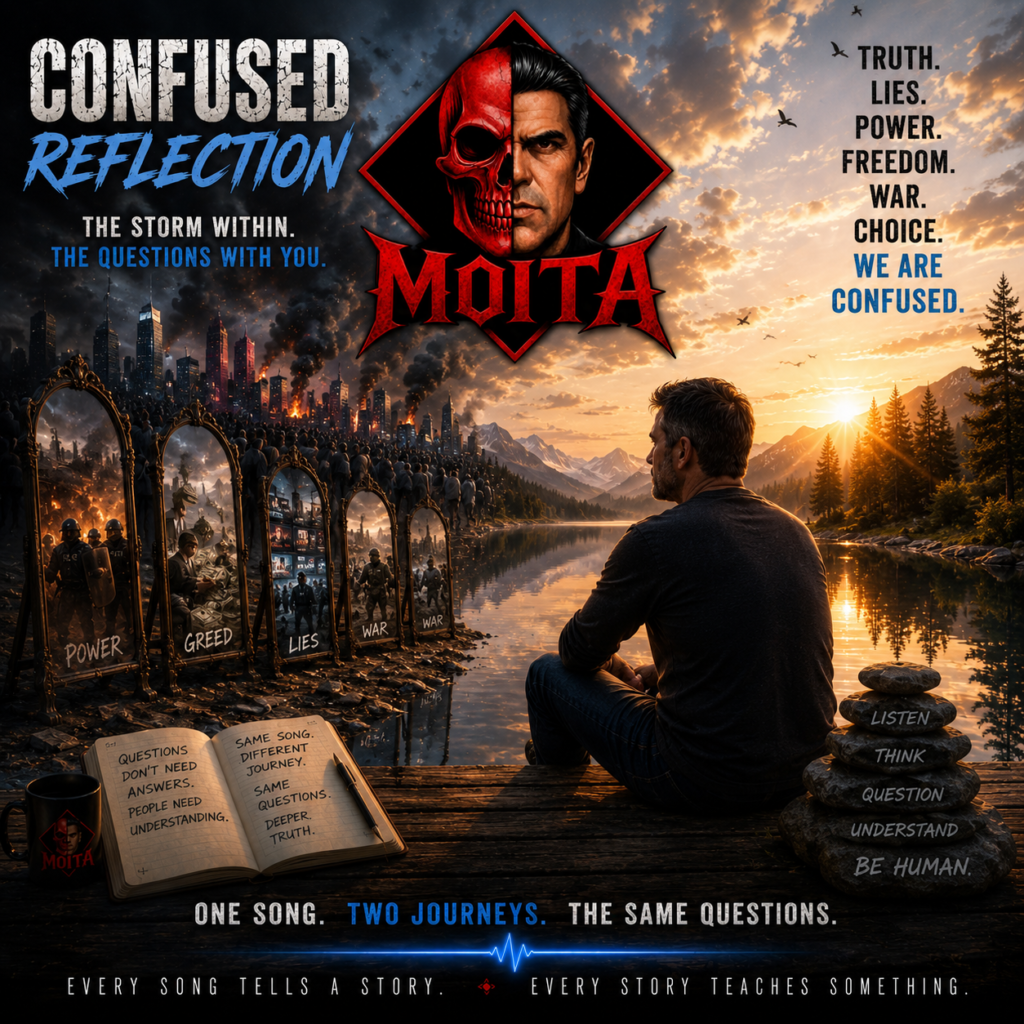

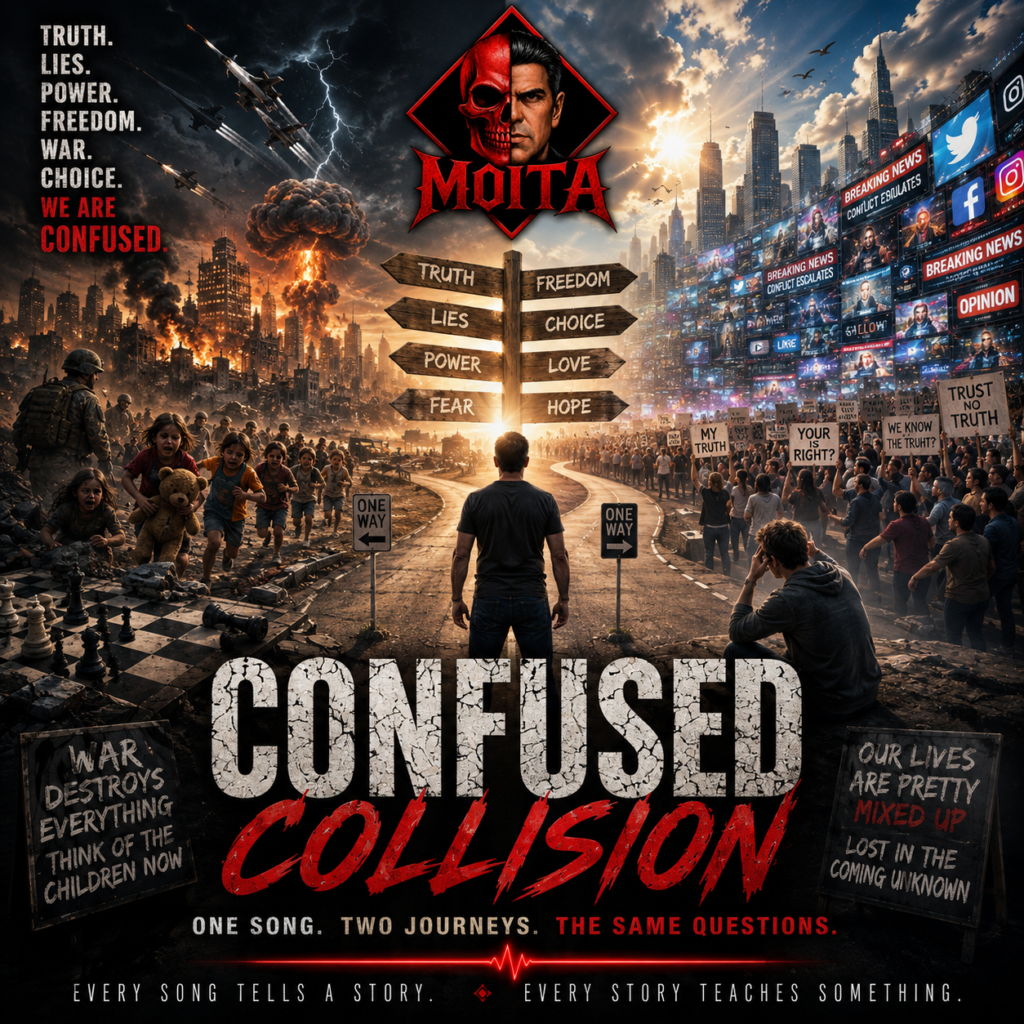




Reviews
There are no reviews yet.