Description
About the Song
SECTION ONE
I ROCK
CATEGORY
Creativity • Identity • Innovation • Personal Growth • Human Potential • Philosophy • Technology • Educational Rock • Documentary Rock
PRIMARY EMOTION
Inspiration
ALSO FITS
Purpose • Imagination • Curiosity • Problem Solving • Self-Belief • Original Thinking • Determination • Human Achievement • MOITA
WHAT THIS SONG IS ABOUT
I ROCK is a song about creativity, but not only the kind of creativity people usually think about.
It is not just about musicians.
It is not just about writers.
It is not just about inventors, painters, designers, or people who call themselves artists.
It is about the human mind.
It is about what happens before something exists.
Someone notices a problem.
Someone asks a question.
Someone imagines another way.
Someone tries.
It fails.
They change it.
They try again.
Eventually something that existed only inside one person’s mind becomes real.
I have always been fascinated by that process.
Technology is part of this song because we are living through one of the biggest technological changes I have seen in my lifetime.
Artificial intelligence can now help people create music, images, writing, ideas, designs, and information incredibly quickly.
I find that fascinating.
I am not against it.
That would make no sense considering the way I have lived my life.
I have always been interested in technology.
I took radios apart when I was young because I wanted to know what was inside them.
I experimented with automotive ideas.
I created illuminated address signs using metal, Plexiglas, lighting, and sensors.
I designed tools in construction.
I designed tools while working on the railroad.
If something could be improved, I wanted to know how.
That same curiosity eventually found its way into songwriting.
Then it became part of MOITA.
So I ROCK is not human beings against technology.
The argument is much more interesting than that.
It asks:
What happens when we confuse the tool with the creator?
A hammer can help build a house.
The hammer did not imagine the house.
A guitar can create beautiful sounds.
The guitar does not know why the person holding it is playing those notes.
Artificial intelligence can become an extraordinary creative tool.
But there still needs to be something behind it.
A thought.
A question.
An experience.
Judgment.
Curiosity.
A reason for creating something in the first place.
That is where I ROCK lives.
The song pushes hard because I wanted it to.
It challenges shortcuts.
It challenges imitation.
It challenges the idea that producing something instantly is automatically the same thing as spending years developing the thinking behind it.
But underneath all that aggression is actually a very positive belief.
I believe human creativity is extraordinary.
And I believe it belongs to everybody.
THE STORY BEHIND THE SONG
I ROCK did not really begin the day I wrote the lyrics.
It had probably been developing inside me for most of my life.
I have always collected ideas.
Sometimes I knew exactly why I was writing something down.
Other times I didn’t have a clue.
A word.
A sentence.
A question.
Something somebody said.
Something I noticed.
Something that happened years earlier that suddenly made me think differently.
I have kept thousands of notes throughout my life.
Some of them sat there for years.
Some waited decades.
Then one day I would be working on a song and suddenly realize:
That’s where that thought belonged.
That matters to I ROCK because creativity is often misunderstood as something that happens in one magical moment.
Sometimes it does.
Sometimes an idea arrives almost complete.
But often creativity is accumulation.
You spend years collecting pieces without knowing what picture they are eventually going to make.
My working life reinforced that way of thinking.
Construction taught me that plans and reality do not always agree.
You can have everything figured out on paper and then arrive at the jobsite and discover something nobody expected.
Now you have a choice.
Complain that the plan does not work.
Or start thinking.
I always liked the thinking part.
The railroad reinforced the same lesson.
Machines, steel, equipment, measurements, grades, and real physical problems do not care about excuses.
Something works or it doesn’t.
If it doesn’t, you figure out why.
Sometimes the solution is obvious.
Sometimes it takes experience.
Sometimes you invent your own answer.
Eventually songwriting gave me that same feeling.
The materials changed.
Instead of steel or machinery, I was working with words, memories, emotions, observations, questions, and ideas.
But the process felt familiar.
Something isn’t working.
Why?
That word isn’t right.
What belongs there?
The chorus isn’t strong enough.
What’s missing?
Keep going.
Keep digging.
Find it.
Then artificial intelligence arrived and added another question.
Here was an incredibly powerful new tool capable of doing things very quickly.
I wanted to understand it.
What could it do?
Where was it useful?
Where did it fail?
What happened when you pushed it?
And most importantly:
What part still belonged to the human being?
That question helped shape I ROCK.
Because I could see something important happening.
Technology could help people create faster than ever before.
That could be fantastic.
But speed also made it easier to confuse getting a result with becoming a creator.
Those are not automatically the same thing.
You can press a button and receive something impressive.
But what did you bring to it?
What question did you ask?
What experience shaped your choices?
What did you reject?
What did you change?
What did you learn?
Why does the finished thing exist?
That is the conversation behind I ROCK.
WHY I WROTE THIS SONG
I wrote I ROCK because I wanted to defend something I value deeply.
Human creativity.
Not by attacking technology.
By reminding people what technology is.
A tool.
One of the most important lyrics in the song says it plainly:
“It ain’t the tool, it’s how it’s used.”
That line is probably the clearest statement of what I believe.
A good tool can expand what a creative person is capable of doing.
It can save time.
It can open possibilities.
It can help someone explore directions they may never have considered before.
But the person still matters.
The thinking still matters.
The judgment still matters.
The experience still matters.
I also wanted to challenge the idea that creativity belongs to some special group of people.
It doesn’t.
I’ve watched mechanics solve problems that required enormous creativity.
I’ve seen operators figure out how to accomplish something when the obvious method would not work.
I’ve seen carpenters improvise.
I’ve seen parents find solutions because their families depended on them.
I’ve seen people with very little create something useful out of almost nothing.
They may never call themselves creative.
I would.
Creativity is not a job title.
It is something human beings do.
WHY THIS MATTERS TO ME
There is a particular kind of satisfaction that comes from solving something yourself.
I have felt it throughout my life.
You start with a problem.
You think.
You try something.
Maybe it doesn’t work.
You adjust.
You try again.
Then suddenly it works.
That feeling is difficult to replace because you earned it.
The finished product matters, but so does everything that happened before the finished product existed.
The mistakes.
The frustration.
The thinking.
The change of direction.
The moment when you finally saw the answer.
Songwriting gives me that same satisfaction.
That is why the line:
“You can make a song in seconds
But it takes a lifetime to mean it”
matters so much to me.
A song may be assembled quickly.
But the thinking behind a song can come from sixty years of living.
A sentence can sit in a notebook for twenty years before finding the place where it finally belongs.
An experience that made no sense when it happened can become a lyric years later.
A conversation can stay in your head.
A mistake can teach you something.
A loss can change how you understand a word.
Life keeps adding material.
That is why I believe the journey matters.
Sometimes more than the finished thing.
WHY THIS SONG FITS MOITA
I ROCK belongs very close to the centre of MOITA because it explains how I think.
MOITA is not built around one subject.
Some songs deal with pain.
Some deal with family.
Some deal with history.
Some deal with injustice.
Some are humorous.
Some come from imagination.
Some begin with a question I cannot leave alone.
The subjects change constantly.
The curiosity behind them does not.
That is the thread connecting everything.
I see something.
I wonder about it.
I start asking questions.
Sometimes those questions become notes.
Sometimes those notes sit for years.
Sometimes they become songs.
Then the songs become stories.
The stories become documentaries.
And eventually they all become part of this larger library called MOITA.
That is why I ROCK fits here so naturally.
It is not just another song in the library.
It helps explain why the library exists.
READ THIS FIRST
Before you read the lyrics, think about something from your own life.
What have you created?
Do not immediately think about money.
Do not think about fame.
Do not think about whether anybody applauded.
Think about something that exists because you cared enough to make it happen.
Maybe you built something.
Maybe you repaired something everyone else thought was finished.
Maybe you raised a family.
Maybe you started a business.
Maybe you wrote something nobody else has ever read.
Maybe you found a better way to do your job.
Maybe you helped somebody through a difficult time.
Maybe you had an idea that seemed ridiculous until it worked.
That counts.
I ROCK is intentionally confrontational in places.
The lyrics challenge quick creation, imitation, and the belief that having access to a powerful tool automatically gives someone the experience behind what they produce.
But do not mistake the challenge for hatred of technology.
Listen for the argument underneath it.
The tool matters.
But the mind holding the tool matters more.
And when you reach the end, I hope the title stops sounding like something I am saying about myself.
I hope it becomes a question you ask yourself.
What have I built?
What have I learned?
What have I lived?
What am I capable of creating that genuinely carries a piece of me?
FULL LYRICS
I ROCK
Everybody’s a creator now
Everybody’s got a sound
Type a line, press a button
Now you think you hold it down?
Nah
You type it in, you hit the key
Now it sounds like something real to me
But where’s the scar? where’s the fight?
Where’s the reason behind that line?
No sleepless nights, no pen in hand
No broken thoughts you couldn’t stand
Just quick results, instant fame
Built it fast, but it ain’t the same
You got the tool, but not the fire
You got the spark, but not desire
You got the sound, but not the soul
You play the part, but miss the role
You don’t I Rock — you generate
No truth behind what you create
You got the sound, but not the core
You got the door, but not the war
You don’t I Rock — you imitate
Built it fast but it won’t translate
No blood, no breath, no shock
You don’t live it, you don’t I Rock
I wrote in dark, I wrote in pain
I wrote through loss I can’t explain
Every word came from somewhere real
Not something random I just feel
You press repeat, I break the mold
You chase the quick, I dig the soul
You want the sound, I want the truth
That’s the line that splits us two
You can copy, you can borrow
But you can’t fake what built tomorrow
It ain’t the tool, it’s how it’s used
One creates, one gets produced
You don’t I Rock — you generate
No weight behind what you create
You got the shape, but not the force
You ride the wave, I build the source
You don’t I Rock — you fabricate
No depth inside what you translate
No scar, no truth, no shock
You don’t feel it, you don’t I Rock
You can make a song in seconds
But it takes a lifetime to mean it
You can sound like anything
But you can’t be it
You flip pages, I create them
You read lines, I became them
They follow what’s written,
I write what they follow
Not built,
Just pressed
Not lived
Just guessed
You don’t I Rock — you generate
No soul behind what you create
You got the sound, but not the core
You got the door, but not the war
This ain’t hate — this is fact
You play the game, I live the track
One mind, one truth on lock
Not everyone
I ROCKS
SECTION ONE
LYRIC JOURNEY
PART 1
Everybody’s a creator now
Everybody’s got a sound
That is where I wanted to begin because it feels like the world we are living in right now.
Creation has become easier to access than at any other time in my life. People can make music, images, writing, videos, ideas, and all kinds of things with tools that were not available to most people even a short time ago.
I do not think that is automatically bad.
I actually think it is exciting.
More people have access to tools. More people can experiment. More people can try things they may never have had the chance to try before.
But there is another side to it.
When everybody suddenly has the ability to produce something, the word creator can start getting used very loosely.
That is the tension I wanted right from the opening.
Everybody’s got a sound.
Yes.
But where did that sound come from?
What did the person bring to it?
What was behind it?
That question starts following us almost immediately.
Type a line, press a button
Now you think you hold it down?
Nah
That “Nah” is important.
It tells you the song is not going to politely circle the subject.
I am challenging the idea.
Not the person.
The idea.
You typed something.
You pressed a button.
You got a result.
Now what?
Does getting the result mean you understand what you created?
Does access automatically become experience?
Does having the tool automatically mean you know what to do with it?
That is what I am asking.
I have spent most of my life around tools.
Construction tools.
Machinery.
Equipment.
Tools I built or changed because the ones I had were not doing exactly what I needed.
The tool matters.
A better tool can make an enormous difference.
But owning the tool and knowing how to use it are two different things.
That is why I wanted that little “Nah” right there.
It is almost like stopping somebody in the middle of the sentence and saying, hold on.
We are not finished yet.
You type it in, you hit the key
Now it sounds like something real to me
I did not want to pretend the technology cannot produce something convincing.
It can.
That would be a weak argument.
If something sounds real, then say it sounds real.
The interesting part comes after that.
Because sounding real and being meaningful are not automatically the same thing.
A machine can reproduce patterns.
It can follow structure.
It can imitate style.
It can give you something impressive very quickly.
But then I start asking the questions that matter more to me.
But where’s the scar? where’s the fight?
Where’s the reason behind that line?
This is where the song really opens up.
The scar is experience.
It does not have to mean physical pain.
It can.
But it can also mean anything life left behind.
Failure.
Loss.
Embarrassment.
A mistake.
A lesson.
Something you survived.
Something you learned the hard way.
The fight is the effort behind becoming who you are.
Sometimes the fight is against another person.
Most of the time it probably is not.
Sometimes it is against yourself.
Doubt.
Fear.
Frustration.
Wanting to quit.
Not knowing the answer.
The biggest question for me is the last one.
Where is the reason behind that line?
That is what I care about when I write.
Why does this lyric exist?
Why this word?
Why this subject?
Why did I care enough to spend time on it?
Not every song I write comes from something that happened directly to me.
Some come from history.
Some from imagination.
Some from conversations.
Some from things I witnessed.
Some from questions I could not leave alone.
But there is always a reason.
Something made me care.
That reason gives the lyric weight.
No sleepless nights, no pen in hand
No broken thoughts you couldn’t stand
These lines move from the general argument into something closer to my own life.
Writing has followed me through a lot of different periods.
Some good.
Some very difficult.
There have been times when an idea would not leave me alone.
Times when one sentence was enough to keep me thinking for hours.
Times when I wrote things down without knowing what they would become.
That is another part of the creative process people do not see.
I have kept notes for years.
Thousands of them.
Some are complete ideas.
Some are one sentence.
Some are one word.
Some are questions.
Some are things I heard somebody say.
Some probably made sense only to me when I wrote them.
A lot of them sat there for years.
Some sat there for decades.
Then one day I am working on something and suddenly an old thought fits.
That is why I do not always know exactly when one of my songs began.
The song might be finished this year.
One piece of it may have started twenty years earlier.
That is what I mean when I say there were sleepless nights and pen in hand.
The finished song carries more history than the listener can hear.
Just quick results, instant fame
Built it fast, but it ain’t the same
I want to be careful with this part because I am not saying fast automatically means bad.
Sometimes great things happen quickly.
Sometimes the right idea arrives in five minutes.
Sometimes you know immediately.
There is nothing noble about struggling for six months if the answer was already there on the first day.
The problem is not speed.
The problem is confusing speed with depth.
Those are different things.
You can get a fast result.
Fine.
But what is inside it?
What did you learn?
What choices did you make?
What did you reject?
What changed because you were involved?
That is the difference I am pushing on here.
You got the tool, but not the fire
You got the spark, but not desire
This is one of the places where my background with tools really matters.
A tool can make you capable of doing something you could not do before.
That is powerful.
But the tool does not care.
The tool does not wake up early because it wants to finish something.
The tool does not stay with a problem because it is bothering it.
The tool does not get frustrated and then come back the next day with a better idea.
People do that.
The fire is curiosity.
The fire is determination.
The fire is caring enough to keep going after the first excitement is gone.
The spark gets you started.
Desire keeps you there.
That is a huge difference.
A lot of things are exciting at the beginning.
The real work usually starts after the excitement wears off.
You got the sound, but not the soul
You play the part, but miss the role
Soul is one of those words that can mean almost anything if you are not careful.
What I mean here is simple.
There is a reason behind what I am hearing.
A human reason.
Somebody cared.
Somebody made choices.
Somebody rejected other choices.
Somebody stood behind the finished thing and said, this is what I was trying to say.
That is soul to me.
It does not need to be perfect.
Actually, sometimes the imperfections are where you feel it most.
You can often tell when somebody is repeating something and when somebody actually understands what they are saying.
That is the difference in these lines.
You can play the part.
You can look like the creator.
You can sound like the creator.
But the role is bigger than the surface.
The role means you were actually there inside the process.
Then we reach the first chorus.
You don’t I Rock — you generate
No truth behind what you create
You got the sound, but not the core
You got the door, but not the war
This is where the title starts becoming something bigger than the name of the song.
“You don’t I Rock” is strange on purpose.
I wanted it to feel like I ROCK had become its own idea.
Not just a statement.
Not just saying I am good.
To I ROCK means something.
It means I brought myself into what I created.
My thinking.
My experience.
My judgment.
My mistakes.
My questions.
My willingness to change something when it did not feel right.
The door is access.
Technology can give you access.
That is valuable.
The war is everything after that.
The learning.
The frustration.
The mistakes.
The rebuilding.
The part nobody sees.
The part nobody claps for.
The part that changes you while you are creating.
That is the war.
And that is why the chorus matters so much the first time it arrives.
Up to this point, the song has been asking questions.
Now it starts giving the answer.
The difference is not the tool.
The difference is what the person brings through the door.
SECTION ONE
LYRIC JOURNEY
PART 2
You don’t I Rock — you imitate
Built it fast but it won’t translate
No blood, no breath, no shock
You don’t live it, you don’t I Rock
The chorus keeps moving, but now the word changes from “generate” to “imitate.”
That matters.
Human beings have always learned through imitation. We watch somebody who knows more than we do. We copy a technique. We study how something was built. Musicians learn other people’s songs. Writers read other writers. Tradespeople learn from people who have been doing the job longer.
There is nothing wrong with learning that way.
The problem comes when imitation becomes the destination.
At some point, you have to bring yourself into it.
That is what “Built it fast but it won’t translate” is getting at.
You may be able to reproduce the surface of something without understanding what gave the original its weight.
That happens in music all the time.
You can learn the notes.
You can learn the rhythm.
You can even reproduce the sound almost perfectly.
But there is still a difference between knowing the notes and knowing why those notes matter.
“No blood, no breath, no shock” pushes that idea harder.
I am not literally saying somebody has to bleed to create something worthwhile.
The language is aggressive because the song is aggressive.
Blood is what it cost you.
Breath is the life inside it.
Shock is the moment something actually reaches another human being.
Then comes the line that ties them together.
“You don’t live it, you don’t I Rock.”
Again, “live it” does not mean every song has to be autobiographical.
That would be ridiculous.
I write about things I have never personally experienced. I write about history. I write from imagination. I write about other people. I write because something makes me curious.
Living the creation means being present inside it.
You cared enough to investigate.
You cared enough to question.
You cared enough to make choices.
You did not simply accept the first thing placed in front of you.
Then the song turns.
I wrote in dark, I wrote in pain
I wrote through loss I can’t explain
Until this point I have mostly been challenging an idea.
Now I put myself into the argument.
If I am going to talk about experience giving words weight, then I have to acknowledge where some of my own words came from.
There have been periods of my life when writing happened in very dark places.
There have been periods of physical pain.
There have been losses that became part of me whether I wanted them to or not.
There have been experiences I understood immediately and others I am still trying to understand.
I do not believe pain automatically produces great art.
I want to make that clear.
There is nothing beautiful about suffering simply because somebody might eventually write a song about it.
Sometimes pain gives you material.
Sometimes pain takes everything out of you and leaves nothing for creativity at all.
But when you live through something, it changes what certain words mean to you.
Loss is not just a dictionary definition after you have lost somebody.
Pain is not an abstract idea when you have lived inside it.
Isolation means something different when you know what being alone really feels like.
Those experiences become part of the person writing.
That is what these lines acknowledge.
Every word came from somewhere real
Not something random I just feel
This is one of the foundations of the way I write.
“Real” does not mean factual in every case.
That distinction matters.
I can write an imaginary story and still be honest.
I can write about a historical event I never witnessed and still have a real reason for caring about it.
I can write something humorous that never happened exactly as described and still be exploring something true about people.
The reality is in the reason.
Why did I choose this?
Why did it stay in my mind?
Why did I keep thinking about it?
Why did it deserve a song?
Sometimes I know immediately.
Sometimes I understand the reason only after the song is finished.
But I do not want important words sitting there simply because they sound impressive.
I want them to earn their place.
You press repeat, I break the mold
You chase the quick, I dig the soul
This brings us back to curiosity.
I have never enjoyed doing the same thing over and over simply because it worked once.
That would probably be easier.
Find a successful formula.
Repeat it.
Stay inside what is comfortable.
But I would get bored.
I want to know what happens if I change something.
What happens if I put two musical ideas together that normally would not belong together?
What happens if I approach a subject from the opposite direction?
What happens if the song begins where another songwriter might normally end it?
That curiosity has been part of me much longer than songwriting.
It was there when I took things apart.
It was there when I worked with equipment.
It was there when I designed tools.
It was there when I looked at a problem on a jobsite and thought there had to be another way.
Songwriting simply gave that same part of my mind another place to work.
“You chase the quick, I dig the soul” is probably one of the most personal lines in the song for that reason.
I like digging.
I like finding what is underneath the obvious answer.
Sometimes that makes the process longer.
That does not bother me.
The discovery is part of the reward.
You want the sound, I want the truth
That’s the line that splits us two
Now the argument becomes very clear.
Sound matters.
I am writing songs.
Of course I want them to sound good.
But sound cannot be the only measurement.
You can have a beautifully produced song that says absolutely nothing to me.
You can also have something rough around the edges that reaches straight through me because I believe the person delivering it.
If I have to choose, I know which one stays with me.
Truth.
Not factual truth in every lyric.
Human truth.
Something I recognize.
Something I believe.
Something that makes me feel the person behind it was actually trying to communicate rather than simply trying to impress me.
“That’s the line that splits us two” is not saying there are only two kinds of creators in the world.
It is drawing the argument of the song.
One side is chasing the appearance of creation.
The other side is chasing meaning.
That is the split I care about.
You can copy, you can borrow
But you can’t fake what built tomorrow
I like these lines because they prevent the song from pretending anybody creates completely alone.
We all borrow.
We all learn from what came before us.
Every builder learned something from another builder.
Every musician has influences.
Every inventor works in a world shaped by earlier inventions.
Every writer uses a language they did not invent.
Human progress has always depended on people passing knowledge forward.
There is nothing wrong with that.
The question is what you add.
Do you simply reproduce what you received?
Or do you carry it somewhere?
That is what “built tomorrow” means to me.
Somebody learns what already exists and then asks one more question.
Can it be better?
Can it be safer?
Can it be faster?
Can it be simpler?
Can it say something nobody has said this way before?
That little question is where progress starts.
It ain’t the tool, it’s how it’s used
One creates, one gets produced
This is the centre of I ROCK.
If somebody asked me to explain the entire song using only one lyric, I would probably give them this one.
“It ain’t the tool, it’s how it’s used.”
That is my position.
It is why I ROCK is not an anti-technology song.
It cannot be.
I have spent too much of my life interested in tools and technology to suddenly pretend they are the problem.
Give two people the same hammer and you will not necessarily get the same house.
Give two operators the same machine and you will not get the same performance.
Give two people the same guitar and you will not hear the same music.
Give two people the same artificial intelligence and you will not necessarily get the same creation.
Why?
Because the person still matters.
Knowledge matters.
Experience matters.
Taste matters.
Standards matter.
Curiosity matters.
Knowing when something is wrong matters.
Knowing when to throw away an answer that looks impressive but does not belong matters.
The better the tool becomes, the more important those decisions may become.
Because powerful tools can produce convincing results very quickly.
That makes judgment even more valuable.
“One creates, one gets produced” is deliberately uncomfortable.
It asks whether you are directing the process or simply accepting what the process gives you.
That question applies far beyond artificial intelligence.
It can happen anywhere.
You can stop thinking in your job because you have always done it the same way.
You can repeat somebody else’s opinion because it is easier than examining it yourself.
You can follow instructions without ever wondering why they exist.
Or you can remain involved.
Ask questions.
Understand the tool.
Understand the problem.
Make decisions.
That is the kind of creation I am defending.
Then the chorus returns.
You don’t I Rock — you generate
No weight behind what you create
You got the shape, but not the force
You ride the wave, I build the source
We have already heard “You don’t I Rock — you generate,” but the journey has changed what surrounds it.
The first time, I talked about sound, truth, the core, the door, and the war.
Now the language becomes weight, shape, force, wave, and source.
We have moved deeper.
“You got the shape” means the outside can be right.
Everything may appear to be there.
But appearance and force are different.
Force is what makes something move another person.
That is harder to manufacture.
Then we get to a line that says a lot about the way my mind works.
“You ride the wave, I build the source.”
There is nothing wrong with riding a wave.
We all benefit from things other people created.
I do every day.
But I have always been interested in where things begin.
Who came up with it?
What problem were they trying to solve?
Why did they choose that design?
What happened before everybody else started using it?
That is the source.
And once you start looking for sources, you discover something interesting.
Almost everything around us began as somebody’s problem.
A person needed something.
Something was too slow.
Too difficult.
Too expensive.
Too dangerous.
Too inconvenient.
Or somebody simply wondered whether another way was possible.
That thought became an experiment.
The experiment became something useful.
Eventually everybody else saw the finished result and forgot there was ever a time when it did not exist.
That is creativity.
Not magic.
A human being noticing something and refusing to stop at the obvious answer.
SECTION ONE
LYRIC JOURNEY
PART 3
You don’t I Rock — you fabricate
No depth inside what you translate
No scar, no truth, no shock
You don’t feel it, you don’t I Rock
The chorus keeps evolving.
First it was “generate.”
Then “imitate.”
Now it becomes “fabricate.”
Each word moves the same argument a little further.
To fabricate something can simply mean to make it, but here I am using the word differently. I am talking about creating the appearance of depth without actually going through the process that gives something depth.
That is why the next line matters.
“No depth inside what you translate.”
You can move words around.
You can reproduce a style.
You can translate the appearance of somebody else’s creativity into another form.
But depth is harder.
Depth usually comes from understanding.
And understanding takes time.
I have learned that in almost everything I have done.
You can explain something to somebody in five minutes, but that does not give them your years of experience.
They still have to develop their own.
The explanation can help them.
The tool can help them.
Your experience can save them from mistakes you already made.
That is how people learn from each other.
But eventually they have to stand in front of their own problem and make their own decisions.
That is where knowledge starts becoming experience.
“No scar, no truth, no shock” returns us to language we have already heard, but by now the scar should mean more than pain.
The scar is what remains after experience.
Sometimes the scar is a mistake you never make again.
Sometimes it is a lesson you paid dearly to learn.
Sometimes it is simply the memory of how difficult something was before you finally understood it.
Then comes:
“You don’t feel it, you don’t I Rock.”
Feeling is another human part of the process that matters to me.
There are times when I am working on a song and something is technically fine.
The words fit.
The idea makes sense.
Nothing is obviously wrong.
But I know it is not right.
I feel it.
That does not mean there is something mystical happening.
It means judgment has been built through experience.
After you spend enough time doing something, you begin noticing things that would have escaped you earlier.
A person who has spent years around machinery may hear a sound and know something is wrong before they know exactly what it is.
A carpenter can look at something and sense it is off.
A musician hears a note that does not belong.
A songwriter reads one word and knows it is weakening the entire line.
That kind of judgment is difficult to explain because a lot of it has been built slowly.
One mistake at a time.
One success at a time.
One correction at a time.
That is another reason the journey matters.
Then the song reaches one of its biggest landmarks.
You can make a song in seconds
But it takes a lifetime to mean it
I could probably build the entire song around those two lines.
Because that is where I stop talking only about tools and start talking about time.
A song can be created quickly.
There is no argument there.
A human being can write one quickly too.
Sometimes a song comes pouring out.
Sometimes you find the right words almost immediately.
Artificial intelligence makes that speed even more dramatic because it can produce complete structures almost instantly.
But meaning works on another clock.
Meaning comes from living.
That is what “a lifetime” means.
Think about one ordinary word.
Mother.
To somebody who has never met your mother, it is simply a word with a definition.
To you, it may contain an entire lifetime.
Her face.
Her voice.
Things she taught you.
Arguments.
Laughter.
Meals.
Sacrifices.
Things you wish you had said.
Things she said that you still remember.
Maybe grief.
Maybe gratitude.
Maybe both.
The word did not change.
Your relationship with the word did.
Life gave it meaning.
That happens with thousands of words.
Love.
Pain.
Home.
Friend.
Brother.
Loss.
Freedom.
Trust.
Betrayal.
Hope.
Until you live, they are partly definitions.
Then life starts filling them.
That is why two people can sing exactly the same lyric and make you feel completely different things.
The words may be identical.
What they carry into those words is not.
This is also where all those old notes I have kept throughout my life become important.
Something I wrote years ago may have meant one thing when I wrote it.
Then life happens.
I come back to the same thought twenty years later and see something I could not see before.
The sentence stayed the same.
I changed.
That changes the sentence.
So when I say:
“You can make a song in seconds
But it takes a lifetime to mean it”
I am not measuring creativity with a stopwatch.
I am saying the finished song is only the visible part.
Behind it is the person.
And the person took a lifetime to get there.
You can sound like anything
But you can’t be it
Technology makes this line more interesting every year.
Sound is becoming easier to reproduce.
Style can be studied.
Patterns can be recognized.
Voices can be imitated.
Musical characteristics can be recreated.
That is extraordinary technology.
But sounding like something and being something are still different.
Being is identity.
Identity is not just a sound.
It is accumulated experience.
It is what you have learned.
What you believe.
What you have changed your mind about.
What embarrassed you.
What made you proud.
Who helped you.
Who hurt you.
What you lost.
What you built.
What you still regret.
What you still want to accomplish.
All of those things slowly become part of the person making the decisions.
You can reproduce characteristics.
You can imitate surfaces.
But another person cannot become the exact history that created you.
And you cannot become theirs.
That is one of the beautiful things about creativity.
We can influence each other without becoming each other.
You flip pages, I create them
You read lines, I became them
Now the song moves from identity into something deeply connected to MOITA.
I have spent a lot of my life writing things down.
Sometimes I knew I was writing a song.
Sometimes I was simply recording a thought.
Sometimes I was trying to understand something that had happened.
Sometimes I was asking a question.
Those pages accumulated.
Then life accumulated around them.
Eventually I began seeing connections I could not have seen earlier.
An experience became a thought.
The thought became a note.
The note became a lyric.
The lyric became a song.
The song became a story.
And now those stories are becoming this library.
That is why “I became them” matters.
There comes a point where the writing and the life behind the writing become difficult to separate.
Not because every song is autobiography.
They are not.
But the person choosing the subject is still me.
The person asking the question is still me.
The reason I became curious about something comes from the life I lived before I reached that question.
Even imagination is shaped by experience.
You imagine with the material your mind has collected.
That is one of the reasons I believe paying attention matters so much.
You never know what will become useful later.
A conversation that seems ordinary today may become important ten years from now.
Something you read may sit quietly in your mind until another experience suddenly connects to it.
A mistake can become knowledge.
A strange question can become an invention.
A sentence can become a song.
You do not always know what you are collecting while you are collecting it.
I certainly did not.
When I wrote many of those old notes, there was no MOITA Library waiting for them.
I did not know where all of it was going.
I just knew the thought seemed worth keeping.
Now I can look backward and understand something I could not see at the time.
I was building pages long before I knew what the book would become.
They follow what’s written,
I write what they follow
There is confidence here.
I wanted confidence here.
The song is called I ROCK.
It cannot spend the entire time apologizing for having an opinion.
But confidence only means something to me when it has something underneath it.
This line is about original thought.
There will always be an easier road.
See what works.
Follow it.
Repeat it.
Stay safely inside what people already understand.
There is nothing automatically wrong with following something good. We all do it.
But somebody had to go first.
Somebody had to write the thing everybody else eventually followed.
Somebody had to try the method before it became standard.
Somebody had to ask the question before the answer became obvious.
That is the position I am defending here.
I would rather explore.
I would rather risk finding out that an idea does not work than spend my entire life wondering whether it might have.
That does not mean every original idea is a good idea.
I have had bad ones.
Everybody who creates has bad ideas.
Probably a lot of them.
Original thinking does not guarantee success.
It guarantees only that you were willing to think for yourself.
Then reality gets a vote.
Does it work?
Does it hold up?
Does it communicate?
Does it solve the problem?
If not, change it.
That is part of creation too.
Not built,
Just pressed
Not lived
Just guessed
Everything suddenly becomes shorter.
That was deliberate.
By this point I have already made the argument.
I do not need another long verse explaining it.
Built.
Pressed.
Lived.
Guessed.
Four words carry almost the whole conflict.
Building requires involvement.
Pressing can produce a result.
Living creates experience.
Guessing can imitate the appearance of knowing.
But I also think there is another interesting side to “guessed.”
Guessing is not always bad.
A lot of creativity starts with a guess.
What if this works?
You do not know yet.
Try it.
The difference is what happens afterward.
Do you test the guess?
Do you learn from it?
Do you improve it?
Does the guess eventually become understanding?
That is the journey.
A guess can be the beginning.
I just do not want it pretending to be the destination.
SECTION ONE
LYRIC JOURNEY
PART 4
You don’t I Rock — you generate
No soul behind what you create
You got the sound, but not the core
You got the door, but not the war
The chorus returns for the final time.
I do not need to explain it all over again because we have already travelled through those words.
What matters now is what has happened since we first heard them.
The first time the chorus arrived, “the war” was still mostly an idea. Now we have walked through some of what I mean by it.
Experience.
Failure.
Pain.
Curiosity.
Years of collecting thoughts.
Learning from other people without simply becoming copies of them.
Developing judgment.
Building something instead of only pressing for a result.
Living long enough for ordinary words to gather meaning.
The chorus has not changed.
Our understanding of it has.
That is what I wanted.
“You got the door” also feels different now.
I am not telling anyone to close that door.
Walk through it.
Use the technology.
Explore it.
Learn what it can do.
I am doing exactly that myself.
The warning is not about entering.
It is about believing that entering means the journey is finished.
The door gives you access.
What you do after entering is still your responsibility.
This ain’t hate — this is fact
You play the game, I live the track
I knew I needed “This ain’t hate” near the end.
The song is aggressive.
It challenges people.
It deliberately uses language that can make somebody uncomfortable.
That is part of rock music.
Sometimes you push the thought hard enough that people have to respond to it.
But I did not want the aggression mistaken for hatred of technology or hatred of people using it.
I use technology.
I have been fascinated by technology for most of my life.
I have taken things apart because I wanted to understand them. I have experimented with ideas. I have designed tools. I have looked for better ways of doing things.
Artificial intelligence belongs inside that same curiosity for me.
I want to know what it can do.
I want to know where it helps.
I want to know where it fails.
I want to know where I fail while using it.
I want to know what becomes possible when human experience and a powerful new tool work together.
But being excited about a technology does not mean we stop questioning it.
Actually, I think curiosity demands the opposite.
If something is powerful, understand it.
If something changes the way we create, pay attention to what is changing.
If something saves us time, ask what we are going to do with the time we saved.
If something removes a difficult part of the process, ask whether that difficult part was useless or whether it was teaching us something.
Those are not anti-technology questions.
They are technology questions.
And I think we need them.
“You play the game, I live the track” brings the argument back to participation.
There is a difference between standing outside something and living inside it.
Anybody can have an opinion about songwriting.
That does not mean they have spent years carrying unfinished lines around in their head.
Anybody can look at a construction project when it is finished.
That does not mean they were there when the plan stopped matching reality.
Anybody can look at a successful invention and think the answer seems obvious.
It usually becomes obvious after somebody else figures it out.
Living the track means being there for the parts that do not make the highlight reel.
The failed attempt.
The wrong answer.
The wasted day.
The idea you were certain would work until reality proved otherwise.
The moment you have to admit you were wrong.
Then the decision to keep going.
That is where experience is built.
One mind, one truth on lock
This line tightens everything before the ending.
“One mind” is not saying one person has all the answers.
I certainly do not.
The more questions I ask, the more I realize how much there is that I do not know.
To me, one mind means responsibility.
At some point, I have to stand behind what I create.
I cannot blame the hammer.
I cannot blame the guitar.
I cannot blame the computer.
I cannot blame artificial intelligence.
If my name is attached to something, then I have a responsibility to decide whether it represents what I actually wanted to say.
That matters even more as tools become capable of doing more for us.
A powerful tool can give you ten answers.
Maybe a hundred.
Eventually somebody still has to decide.
This one.
Not that one.
Change this.
Remove that.
This is wrong.
This sounds good but says nothing.
This surprised me.
This deserves another look.
This does not belong.
Those decisions are part of authorship.
They are part of creativity.
And sometimes the most creative decision is saying no to something impressive because it is not yours.
The “truth on lock” is the standard I am trying to protect.
Not universal truth.
My truth about what I am putting my name behind.
Did I mean it?
Do I understand why it is there?
Am I willing to stand behind it?
If the answer is no, I am not finished.
Then we arrive at the last two lines.
Not everyone
I ROCKS
I wanted the ending to make you stop.
The grammar is wrong if you read I ROCK as an ordinary sentence.
That is exactly why it works for me.
By this point, I ROCK is no longer ordinary grammar.
It has become the name of an idea.
To I ROCK means something.
It means you participated.
You questioned.
You learned.
You made decisions.
You brought experience.
You brought curiosity.
You rejected what did not belong.
You accepted that sometimes you were wrong.
You kept going long enough to discover something that was actually yours.
That is why the song does not end with:
I ROCK.
That would make the entire journey point back at me.
I did not want that.
I wanted the ending to point outward.
“Not everyone I ROCKS” is a challenge.
Not everybody chooses to create this way.
Not everybody wants to.
And that is their choice.
But I also do not believe I ROCK is some exclusive club that only certain talented people are allowed to enter.
I believe almost everybody has the capacity for it.
The mechanic who refuses to give up on a problem.
The carpenter who finds another way.
The operator who understands the machine well enough to solve something the manual never anticipated.
The teacher who changes an explanation because one student still does not understand.
The parent who invents a solution because their family needs one.
The person starting a business with more determination than money.
The kid taking apart a radio because they need to know what is inside.
The songwriter carrying a sentence around for twenty years until it finally finds its home.
They are all using the same basic human ability.
They can imagine something that does not exist yet.
Then they can move toward it.
That is creativity.
Technology can help.
Education can help.
Experience can help.
Other people can help.
Artificial intelligence can help.
Every good tool can expand what we are capable of doing.
I want those tools.
I want better ones.
I want to see what comes next.
But I never want the tool to become an excuse for switching off the person using it.
That would be the exact opposite of everything that made the tool possible in the first place.
Somebody imagined it.
Somebody questioned what existed before it.
Somebody experimented.
Somebody failed.
Somebody improved the idea.
Somebody else improved it again.
Eventually the impossible became ordinary.
Then another person looked at the ordinary thing and asked the next question.
That is how we got here.
And that is why the final lyric is not really the end of the argument.
It turns the argument over to you.
You have more creative power available to you than most people in history could ever have imagined.
You have access to information, machines, computers, software, communication, and now artificial intelligence.
The door is wide open.
So what are you going to bring through it?
What are you curious about?
What problem bothers you enough to keep thinking about it?
What have you learned from getting something wrong?
What have you lived that gives your words meaning?
What idea have you been carrying around because you do not yet know what to do with it?
What can you build that contains some part of you?
That is where I wanted the journey to finish.
Not with me telling you that I ROCK.
With you deciding what I ROCK could mean in your own life.
Because the tool was never the final point.
The result was never the final point.
The human being behind it was.
And after walking through every lyric from the beginning to the end, that is the thought I hope stays with you when you listen again.
Use the tools.
Learn the technology.
Take advantage of what progress gives you.
But keep thinking.
Keep questioning.
Keep learning.
Keep creating.
And whatever you make, bring something of yourself with you.
SECTION TWO
THE STORY
Some songs arrive because of one moment.
I ROCK did not.
It grew out of a way of thinking that has followed me for most of my life.
I have always been curious about how things work.
Not just whether they work.
How.
Why.
What is happening inside?
What makes one design better than another?
What would happen if something changed?
That kind of thinking was there long before songwriting became part of my life.
As a kid, taking things apart was one of the ways I learned.
Radios were not just radios to me.
They were puzzles.
Wires.
Components.
Connections.
Something built by another human being that I wanted to understand.
Sometimes I could put things back together.
Sometimes I probably learned more from not being able to.
That is part of creativity too.
Failure teaches you where your understanding ends.
Then you decide whether you are curious enough to keep going.
That curiosity followed me into work.
Construction teaches you quickly that reality does not always care what the plan says.
You can have drawings.
Measurements.
Schedules.
Everything can look perfect.
Then you arrive and something is different.
The ground is different.
The access is different.
Something does not fit.
A machine cannot reach where you expected.
A tool will not do what you need it to do.
Now you have a choice.
You can spend the day talking about why it should have worked.
Or you can solve the problem in front of you.
I have always enjoyed that second part.
The solution.
There is something satisfying about staring at a problem that does not have an obvious answer and slowly finding one.
Sometimes it means changing the sequence.
Sometimes modifying a tool.
Sometimes inventing something simple enough that afterward everybody looks at it and says, “Why didn’t we do that before?”
Those are some of my favourite moments.
Not because I need credit.
Because something existed in my head first, and then it worked in the real world.
The railroad reinforced that way of thinking.
Heavy equipment and steel do not respond to good intentions.
Precision matters.
Planning matters.
Experience matters.
You learn to think ahead because a small mistake in the beginning can become a very large problem later.
That taught me another part of creativity.
Creativity is not always wild imagination.
Sometimes it is discipline.
Sometimes it is knowing enough about what can go wrong that you find a better way before it does.
Over the years I designed tools, experimented with ideas, improved things, and kept looking for answers.
I never considered that unusual.
That was simply how my mind worked.
Then songwriting entered my life more seriously, and something clicked.
The materials were completely different.
But the process was familiar.
I was still building.
Now instead of steel, machinery, or a physical problem, I had words.
Thoughts.
Memories.
Questions.
A line that did not fit.
A chorus that was not saying enough.
An idea that sounded good but did not feel true yet.
So I would keep working.
Move this.
Change that.
Throw something away.
Bring something back.
Look through old notes.
Find a word I had forgotten about.
Keep shaping it until the thing finally stood on its own.
That is one reason I have never believed creativity belongs only to artists.
I have seen creativity everywhere.
I have seen it in mechanics.
Operators.
Carpenters.
Business owners.
Parents.
People trying to stretch what little they had.
People solving problems because failure was not an option.
They may not call what they are doing creative.
I do.
Creativity is the ability to imagine something different and then move toward it.
Sometimes that creates a song.
Sometimes it gets a truck running.
Sometimes it saves a job.
Sometimes it keeps a family together.
The form changes.
The human ability underneath it does not.
Another important part of this story is my habit of keeping notes.
I have written down thousands of things over the years.
Some were obvious song ideas.
Many were not.
A sentence.
A strange phrase.
A question.
Something somebody said.
A thought that arrived while I was working.
An observation that seemed interesting even though I had no idea what to do with it.
I kept those things because something about them felt worth remembering.
Years later, one of those scraps can suddenly become useful.
That has happened many times.
A thought can sit quietly for ten years and then one day I am writing a song and realize it has finally found its home.
That changed the way I understand creativity.
We often talk about inspiration as though it arrives in one dramatic moment.
Sometimes it does.
But sometimes creativity is nothing more glamorous than paying attention for decades.
Collecting.
Remembering.
Learning.
Living.
Then one day the pieces connect.
That idea sits right underneath I ROCK.
By the time artificial intelligence became part of everyday conversation, I was naturally interested.
Here was one of the most powerful new tools I had ever seen.
Of course I wanted to explore it.
I wanted to know what it could do.
What it could not do.
Where it was useful.
Where it became lazy.
Where the human being still mattered.
I was not frightened by the existence of the tool.
I was curious about it.
That is much more consistent with who I am.
But the more I explored the possibilities, the more another question started bothering me.
If technology can produce something in seconds that once required hours, days, or years of learning, what happens to the value of the journey?
That is where I ROCK really began taking shape.
The concern was never:
“This tool is bad.”
The concern was:
“Do not mistake the result for everything that came before it.”
There is a difference between receiving an output and developing judgment.
There is a difference between making something sound good and knowing why it needs to exist.
There is a difference between copying the surface of something and understanding the experience underneath it.
That distinction matters to me because I know what it feels like to carry an idea for years.
I know what it feels like to write during periods when life was not easy.
I know what it feels like to look back at something painful and realize it eventually became material for a song.
I know what it feels like to have an old note suddenly become important twenty years later.
Those things cannot be measured by how long it takes to press a button.
That is why one of the central lines became:
“You can make a song in seconds
But it takes a lifetime to mean it”
That is not anti-technology.
It is pro-experience.
Meaning comes from living.
And living is slow.
You have to lose things.
Gain things.
Be wrong.
Change your mind.
Love people.
Lose people.
Work.
Fail.
Learn.
Make mistakes.
Notice things.
Ask questions.
All of that becomes part of the person creating the work.
Then technology enters that person’s hands.
That is where the tool becomes interesting.
The human being is still bringing the life.
The machine is helping with possibility.
That is the relationship I believe in.
Not replacement.
Partnership.
But partnership only works when the person does not surrender responsibility for thinking.
That idea became even more important as MOITA developed.
Because MOITA itself is built through modern technology.
I am not pretending otherwise.
I use tools.
I experiment.
I explore.
But I am also bringing decades of life into the process.
Construction.
Railroad work.
Machinery.
Family.
Pain.
Loss.
Humour.
Questions.
Books.
Conversations.
Incarceration.
Mistakes.
Curiosity.
Old notes.
New ideas.
Things I still do not understand.
That material is mine.
The tool helps me work with it.
That difference matters.
I ROCK became my way of drawing that line.
Not because I wanted to tell other people how they must create.
Because I wanted to say what creation means to me.
It means participation.
It means bringing yourself.
It means caring enough to question the first answer.
It means being willing to reject something even when it is convenient.
It means not confusing speed with depth.
And it means remembering that technology can become incredibly powerful without becoming the reason something matters.
The reason still comes from us.
That is why this song had to exist.
It is not really about machines.
It is about protecting the human part of creation while the tools around us become more powerful than ever.
SECTION THREE
LYRIC EXPLORATION
I ROCK starts with confrontation.
“Everybody’s a creator now
Everybody’s got a sound”
There is some sarcasm in that opening, but there is also an observation.
We live in a time when the doorway into creation has opened wider than at any other point I can remember. Someone can sit down with very little technical knowledge and produce music, images, writing, videos, designs, and all kinds of things that once required specialized equipment or years of training.
I don’t automatically see that as bad.
Access can be a wonderful thing.
The question underneath the opening is whether access to creation and becoming a creator are exactly the same thing.
That is where the next lines go.
“Type a line, press a button
Now you think you hold it down?
Nah”
That “Nah” matters.
It changes the attitude immediately.
The song is saying, hold on.
You got a result.
Good.
Now what did you bring to it?
That is a much harder question.
“You type it in, you hit the key
Now it sounds like something real to me”
I deliberately acknowledge that it can sound real.
There is no point pretending technology cannot produce impressive results.
It can.
The interesting conversation begins after we admit that.
If something sounds good, looks good, or reads well, is that enough?
Maybe for some people it is.
For me, there is another layer.
“But where’s the scar? where’s the fight?
Where’s the reason behind that line?”
Now we reach the first major turn in the song.
The scar is not only physical pain.
It represents experience.
The fight can be anything that made you work for what you know.
Failure.
Loss.
Doubt.
Years of learning.
Trying something that did not work.
Starting again.
The most important question is probably the last one.
Where is the reason behind that line?
That is what I care about as a songwriter.
Why does this lyric exist?
Why this word?
Why this subject?
Why did I care enough to write about it?
I do not believe every song needs to be autobiographical. I have written from history, imagination, observation, humour, faith, relationships, questions, and subjects I simply wanted to understand better.
But something has to make me care.
That is the “reason” I am talking about.
“No sleepless nights, no pen in hand
No broken thoughts you couldn’t stand”
These lines bring the song closer to my own experience.
Writing has followed me through some difficult periods.
But “pen in hand” also connects to something much larger in the way I create.
I have kept notes for years.
Thousands of them.
Some were written because I knew exactly what I wanted to do with them.
Many were not.
I simply thought, that’s interesting. Keep it.
Years later, a forgotten thought can suddenly become the missing piece of something completely different.
That is why I do not always know exactly when one of my songs began.
The finished lyric may have taken a short time to assemble.
One of the ideas inside it may be decades old.
“Just quick results, instant fame
Built it fast, but it ain’t the same”
The target here is not speed itself.
I want to make that clear.
I have had ideas come quickly.
Sometimes the right lyric appears immediately.
Sometimes you know.
There is nothing more authentic about taking six months to find something you could have discovered in six minutes.
The criticism is aimed at the belief that speed replaces depth.
It doesn’t.
A fast result can be brilliant.
A slow result can be terrible.
The real question remains:
What is behind it?
“You got the tool, but not the fire
You got the spark, but not desire”
Here is where the song starts separating equipment from motivation.
I know tools.
I have worked with them most of my life.
A great tool can make an enormous difference.
But I have never seen a tool care whether the job gets finished.
People care.
The fire is what keeps somebody going when the first excitement disappears.
The spark gets you started.
Desire makes you stay.
“You got the sound, but not the soul
You play the part, but miss the role”
“Soul” can be a dangerous word because people use it to mean almost anything.
For me, in this song, soul means there is a human reason behind what I am hearing.
Something mattered.
Someone made choices.
Someone rejected other choices.
Someone stood behind the finished result and said, this represents what I was trying to say.
That brings us into the chorus.
“You don’t I Rock — you generate
No truth behind what you create
You got the sound, but not the core
You got the door, but not the war”
The grammar of “You don’t I Rock” is intentionally unusual.
I ROCK is not being used only as the title of the song anymore.
It becomes an idea.
Almost a condition.
To “I Rock” means you brought yourself into the creation.
Your thinking.
Your judgment.
Your experiences.
Your decisions.
Your willingness to work through the problem.
The “door” is access.
Technology can open that door.
The “war” is everything that happens after you walk through it.
The mistakes.
The revisions.
The frustration.
The learning.
The part nobody applauds because nobody sees it.
“You don’t I Rock — you imitate
Built it fast but it won’t translate
No blood, no breath, no shock
You don’t live it, you don’t I Rock”
The chorus pushes the argument harder.
But “live it” does not mean every lyric must literally happen to you.
That would eliminate imagination, storytelling, history, and half the reason we create art in the first place.
Living it means being genuinely involved.
You cared.
You thought.
You made decisions.
You gave something of yourself to the process.
Then the song turns directly toward me.
“I wrote in dark, I wrote in pain
I wrote through loss I can’t explain”
Now I am no longer talking generally about creativity.
I am telling you where some of mine came from.
There have been periods of my life when writing was happening alongside pain, loss, isolation, uncertainty, and experiences I was still trying to understand.
I do not believe suffering automatically makes someone creative.
I would never romanticize pain that way.
Pain can destroy creativity just as easily as inspire it.
What I am saying is that when those experiences became part of my life, they also became part of the person holding the pen.
Eventually some of them found their way into songs.
“Every word came from somewhere real
Not something random I just feel”
“Real” is important here.
Again, real does not mean literal.
A fictional story can contain enormous truth.
A historical song can be deeply personal without me having lived through the event.
A humorous song can reveal something serious.
Real means there was a genuine reason I chose to write it.
“You press repeat, I break the mold
You chase the quick, I dig the soul”
This is probably one of the clearest descriptions of my creative personality in the song.
Repeating something successful would probably be easier.
But curiosity keeps pulling me somewhere else.
What else can I do?
What happens if I combine things that normally do not belong together?
What happens if I approach this subject differently?
That is the part I enjoy.
I don’t only want another song.
I want to discover something while I am creating it.
“You want the sound, I want the truth
That’s the line that splits us two”
This is not saying sound does not matter.
Of course it matters.
It is music.
But if I had to choose between something polished that says nothing and something imperfect that makes me feel something, I know which direction I am going.
Truth wins.
“You can copy, you can borrow
But you can’t fake what built tomorrow”
Nobody creates in complete isolation.
We learn from other people.
Musicians influence musicians.
Builders learn from builders.
Inventors improve previous inventions.
Writers absorb language from everything they have ever read and heard.
Borrowing knowledge is part of human progress.
Copying without adding anything is different.
The people who move things forward usually take what already exists and ask one more question.
Can this be better?
“It ain’t the tool, it’s how it’s used
One creates, one gets produced”
This is the centre of the song for me.
If someone wants to understand my position on technology, including artificial intelligence, start here.
It ain’t the tool.
It’s how it’s used.
That applies to a hammer.
A machine.
A computer.
A guitar.
A camera.
Artificial intelligence.
Give ten people the same tool and you can get ten completely different results because the human beings using it bring different knowledge, experiences, intentions, standards, and imagination.
That is why I have never believed the answer is rejecting technology.
Use it.
Learn it.
Push it.
Question it.
But don’t stop thinking because the tool can think through part of the problem for you.
The chorus returns:
“You don’t I Rock — you generate
No weight behind what you create
You got the shape, but not the force
You ride the wave, I build the source”
The first chorus talked about the core.
Now the language changes.
Weight.
Force.
Source.
The argument is developing.
“Ride the wave” means arriving after something is already moving.
“Build the source” means asking where the wave came from.
That is the place I naturally want to go.
I want to know what is underneath things.
Why did this happen?
Who thought of it?
What problem were they trying to solve?
Could it be done differently?
Those questions have followed me from taking things apart when I was young, through construction and railroad work, and eventually into songwriting.
“You don’t I Rock — you fabricate
No depth inside what you translate
No scar, no truth, no shock
You don’t feel it, you don’t I Rock”
“Feel” brings the argument back to human involvement.
You can understand something intellectually without having an emotional connection to it.
But when I am creating something that matters to me, there is usually a point where I know when it is wrong.
I may not immediately know how to fix it.
But I know.
That judgment came from years of doing things, making mistakes, changing my mind, and learning what feels honest to me.
Then we arrive at what I consider one of the biggest landmarks in the entire song.
“You can make a song in seconds
But it takes a lifetime to mean it”
That line is bigger than artificial intelligence.
It is about life feeding creativity.
You can write the sentence today.
But what taught you what that sentence means?
Maybe your mother did thirty years ago.
Maybe a mistake did.
Maybe losing someone did.
Maybe working beside somebody taught you something you never forgot.
Maybe a book changed the way you saw the world.
Maybe something you wrote on a scrap of paper twenty years ago finally makes sense.
The song may take seconds.
Meaning does not.
“You can sound like anything
But you can’t be it”
Technology is becoming extremely good at surfaces.
Sound.
Style.
Pattern.
Structure.
But identity is not only surface.
Identity accumulates.
It comes from where you have been, what you remember, what you believe, what you regret, what you learned, and what you still question.
That cannot simply be selected from a menu.
“You flip pages, I create them
You read lines, I became them”
This is where the song connects directly to the MOITA Library.
I have lived long enough now to look backward and see experiences turning into pages.
Things I went through became thoughts.
Thoughts became notes.
Notes became lyrics.
Lyrics became songs.
Songs became webpages.
And those webpages are becoming a library.
So when I say, “I became them,” I mean life and writing stopped being completely separate things.
One kept feeding the other.
“They follow what’s written,
I write what they follow”
There is confidence in this line.
I am not going to pretend there isn’t.
But the confidence is tied to original thinking.
I would rather take the chance of being wrong while exploring my own idea than spend my entire life safely repeating somebody else’s.
“Not built,
Just pressed
Not lived
Just guessed”
The shortness is deliberate.
By this point the song does not need another long argument.
Four little punches do the job.
Built versus pressed.
Lived versus guessed.
That is the entire tension of I ROCK reduced almost to its bones.
Then the chorus comes back one final time.
“You don’t I Rock — you generate
No soul behind what you create
You got the sound, but not the core
You got the door, but not the war”
By now, those words should mean something different than they did the first time.
At the beginning, they can sound like an attack on instant creation.
By the end, I hope the listener understands that I am defending participation.
Use the door.
Absolutely.
Just do not confuse opening it with completing the journey.
“This ain’t hate — this is fact
You play the game, I live the track”
I put “This ain’t hate” near the end because I knew how easily the song could be misunderstood.
I am challenging something.
Strongly.
But challenging an idea is not the same as hating the people using the technology.
I use technology.
I believe in technology.
I also believe we should be willing to question what it changes in us.
If a tool makes something easier, wonderful.
But if convenience slowly removes curiosity, experimentation, learning, judgment, and personal involvement, then we should at least be willing to notice.
“One mind, one truth on lock
Not everyone
I ROCKS”
And then I deliberately leave you with that strange final statement.
Not everyone I ROCKS.
The grammar almost forces you to stop.
Good.
I want you to stop.
Because by now I ROCK should no longer mean:
Look at me.
I am great.
It means something completely different.
I thought.
I questioned.
I failed.
I learned.
I lived.
I brought something of myself.
I created.
That is I ROCK.
And the final challenge is not whether you agree with everything I have said.
The better question is much more personal.
What are you going to do with the tools in your hands?
SECTION FOUR
REFLECTION
After everything I have said in I ROCK, I keep coming back to one simple thought.
I hope we never become so impressed by what our tools can do that we forget what we can do.
That is really what I want left behind when the song ends.
Technology is going to keep changing.
It should.
I want it to.
I have spent too much of my life being curious about new ideas to suddenly start wishing progress would stop.
I want to see what comes next.
I want to experiment with it.
I want to learn from it.
I want to push it until I understand what it can do.
But I also want to protect something that no technology should make us ashamed of needing.
The struggle to learn.
We have become very good at removing struggle from our lives.
Sometimes that is wonderful.
Nobody needs to make a difficult job harder simply to prove they worked for it.
If a better machine can save somebody’s back, use it.
If a computer can perform in seconds a calculation that once took hours, use it.
If artificial intelligence can help someone explore an idea they could not have explored before, use it.
Progress is supposed to make things possible.
But there is another kind of struggle that I do not want to lose.
The struggle that teaches us.
Trying.
Failing.
Wondering why.
Changing direction.
Discovering that the answer we were certain about was wrong.
Starting again with more knowledge than we had the first time.
Those moments can be frustrating while we are living them.
Later, they often become the reason we know what we know.
I have learned that in construction.
I learned it working around equipment.
I learned it on the railroad.
I learned it in business.
I learned it writing songs.
And I am still learning it building MOITA.
There is always another problem.
Another question.
Another idea that does not quite work the first time.
Good.
That means there is still something to learn.
I think one of the dangers of instant results is not that they make us lazy. That explanation is too simple.
The bigger danger is that they can sometimes rob us of the questions we would have discovered while finding the answer ourselves.
That matters.
The wrong turn sometimes teaches you something the correct turn never could.
A failed idea can introduce you to a better one.
A mistake can force you to understand something instead of simply knowing that it works.
I would hate to lose that.
I also do not want I ROCK to leave anyone thinking that creativity belongs only to people who have spent decades mastering something.
That would contradict the entire point.
You have to begin somewhere.
Every expert was once inexperienced.
Every builder once picked up a tool without knowing everything about it.
Every songwriter once wrote something that probably needed work.
Every inventor has looked at an idea that did not cooperate.
Beginning badly is still beginning.
What matters is what happens next.
Do you become curious?
Do you learn?
Do you improve?
Do you start making choices instead of simply accepting whatever comes back?
Do you eventually put enough of yourself into the process that the finished thing carries your fingerprints?
That is where creation becomes personal.
And I think everybody has experienced that feeling somewhere, even if they have never called themselves creative.
Maybe you figured out how to repair something because you could not afford to replace it.
Maybe you changed the way something was done at work.
Maybe you found a way to reach a child who was struggling.
Maybe you started a company.
Maybe you planted a garden.
Maybe you cooked something without a recipe and somehow everybody survived.
That counts too.
Creativity does not always arrive wearing a fancy title.
Sometimes it is just a person standing in at sentence has probably changed the world more times than we will ever know.
Most of the people responsible will never appear in history books.
Their inventions might have been small.
Their improvements might have helped only a few people.
Their names may have disappeared completely.
But the thinking mattered.
That is another reason I do not measure creativity by fame.
Fame tells you how many people noticed.
It does not tell you how much something mattered.
The same applies to songwriting.
A song does not have to reach millions of people to have value.
If one person hears something at exactly the right moment and it helps them understand their own life differently, something meaningful happened.
That matters to me.
It is also part of why MOITA became bigger than simply releasing songs.
I could have stopped at the music.
But I kept thinking about everything behind it.
The stories.
The questions.
The things I had learned.
The things I still did not understand.
The old notes.
The experiences that gave certain lyrics their meaning.
I wanted somewhere for all of that to live.
That became this library.
And I ROCK sits in an interesting place inside it because this song does not only tell another story.
It explains part of the machinery behind the entire thing.
Curiosity.
That may be the most important word on this page.
Curiosity is what made me take things apart.
Curiosity made me try different ways of solving problems.
Curiosity made me collect thoughts that had no obvious purpose.
Curiosity turned experiences into questions.
Questions became lyrics.
Lyrics became songs.
Songs became MOITA.
And now curiosity is probably what brought you this far down the page.
That connection means something to me.
You did not have to read this.
You could have listened to the song and moved on.
Instead, you stayed long enough to find out what was underneath it.
Thank you for that.
Your time matters.
I hope I gave you something worthwhile in return.
Maybe you agree with my argument.
Maybe you disagree with part of it.
That is fine.
I do not need every reader to leave thinking exactly the way I do.
That would be a strange message for a song celebrating original thought.
I would rather you leave thinking.
Ask yourself where technology helps you.
Ask where it might be doing too much for you.
Ask which skills you want to keep.
Ask what you still want to learn the difficult way.
Ask what experiences have shaped the things you create.
And maybe ask one question that has nothing to do with technology at all:
What is sitting inside me that I have not created yet?
Maybe it is an idea.
Maybe a business.
Maybe a song.
Maybe something you want to build.
Maybe a problem you have been avoiding because you do not know the answer.
Maybe it is simply a better way of doing something tomorrow than you did it yesterday.
Give that thought a chance.
You do not need permission.
You do not need applause.
You do not need to know exactly where it will lead.
Start thinking.
Start asking.
Try something.
If it fails, learn something.
Then try again.
Use every good tool available to you.
Use technology.
Use experience.
Use other people’s knowledge.
Use books.
Use machines.
Use computers.
Use artificial intelligence.
But somewhere inside all of that, keep using the one tool that gives every other tool its purpose.
Your own mind.
That is what I ROCK means to me.
And if this song makes you want to use yours a little more, then it has done its job.
MOITA
WHERE EVERY SONG TELLS A STORY
EVERY STORY TEACHES SOMETHING
SECTION FIVE
MOITA DOCUMENTARY & LEARNING CENTRE
CREATIVITY: THE ABILITY TO SEE WHAT ISN’T THERE YET
Long before artificial intelligence, computers, recording studios, electric tools, or modern machinery, people were creating.
Someone looked at stone and saw a cutting edge.
Someone looked at wood and imagined shelter.
Someone watched movement and eventually imagined the wheel.
Someone heard sound and turned it into music.
Someone looked at a problem and thought:
There has to be another way.
That sentence may be one of the oldest engines of human progress.
Creativity is sometimes treated as though it belongs mainly to artists.
It doesn’t.
Creativity appears anywhere people combine knowledge, experience, imagination, and problem solving to produce something new or useful.
That can happen in a laboratory.
It can happen on a construction site.
It can happen in a kitchen.
It can happen in a classroom.
It can happen in a garage.
It can happen while raising children.
It can happen while writing a song.
The finished products may look completely different.
The starting point is often remarkably similar.
A person notices something.
Then begins asking questions.
THE INVENTION WE FORGET ABOUT
When we study famous inventions, history naturally remembers the finished breakthrough.
The light bulb.
The telephone.
The airplane.
The computer.
But invention is rarely one clean moment.
It is usually a process.
People experiment.
They borrow existing knowledge.
They improve earlier designs.
They discover weaknesses.
They fail.
They try again.
Sometimes several people working independently contribute pieces to what later gets remembered as one invention.
That is worth remembering because it makes creativity more human.
The Smithsonian’s Lemelson Center for the Study of Invention and Innovation approaches invention in much the same spirit. Its work explores inventors, invention history, intellectual risk-taking, problem solving, and the idea that people can create change in their own lives and communities. (National Museum of American History)
The lesson is not that everybody needs to invent something historically important.
The lesson is that invention begins with permission to question what already exists.
WHY FAILURE CAN BE USEFUL
There is a difference between celebrating failure and learning from it.
Nobody needs to enjoy getting something wrong.
I certainly don’t.
But failure provides information.
If a design collapses, something caused it.
If the machine does not work, there is a reason.
If the lyric feels wrong, something is missing.
If an idea that looked brilliant in your head falls apart when you test it, reality just taught you something.
The creative question becomes:
What?
That is why experimentation matters.
You are not simply trying to prove yourself right.
You are discovering where you are wrong.
That can be uncomfortable.
It can also be enormously valuable.
THE DIFFERENCE BETWEEN KNOWING AND THINKING
Knowledge gives creativity material to work with.
You need to know things.
Experience matters.
Training matters.
Reading matters.
Listening to people who know more than you matters.
But knowledge and creativity are not identical.
Knowing what has already been done is one ability.
Looking at that knowledge and imagining another possibility is another.
That is where curiosity enters.
Why?
Why not?
What happens if I change this?
Has anybody tried it another way?
What am I missing?
Those questions sound simple.
They can lead almost anywhere.
Stanford’s d.school treats creative ability as something people can practice and strengthen, offering design tools intended to exercise creative thinking around real challenges. (Stanford d.school)
I like that idea because it removes creativity from the pedestal.
Creativity is not something we should only admire in other people.
It is something we can exercise ourselves.
THE PRODUCTIVE STRUGGLE
One of the ideas underneath I ROCK has become especially important as artificial intelligence grows more capable.
If technology can provide the answer immediately, what happens to everything we used to learn while searching for the answer?
That question is now being examined seriously in education.
The OECD’s 2026 Digital Education Outlook reports that generative AI can improve performance on tasks without necessarily producing equivalent learning gains. Its recommendation is not to reject AI, but to use it purposefully so that it enriches learning rather than replacing the cognitive effort involved in learning. (OECD)
That distinction connects directly with this song.
Getting the answer and understanding the answer are different achievements.
Producing something and learning how to produce something are different experiences.
Sometimes the struggle is where the education happens.
You try.
You get stuck.
You rethink the problem.
You discover what you don’t know.
You search.
You test another possibility.
By the time you finally reach the answer, you may have learned ten things you never would have discovered if someone had simply handed it to you.
That does not mean we should deliberately make every task difficult.
It means efficiency and learning are not always the same goal.
Knowing which one we need matters.
ARTIFICIAL INTELLIGENCE CHANGES THE QUESTION
Artificial intelligence makes I ROCK more complicated than a simple argument between human beings and machines.
AI can help people brainstorm.
It can help organize information.
It can help people explore alternatives.
It can assist with language.
It can support research.
It can help someone begin when a blank page has stopped them cold.
Those possibilities are real.
So are the questions.
If a tool performs more of the thinking, which skills do we still need to develop ourselves?
How do we evaluate what it gives us?
How do we recognize when it is wrong?
How do we preserve independent judgment?
How do we use assistance without surrendering agency?
These questions are becoming important enough that the OECD and European Commission released an AI literacy framework in 2026 focused not merely on operating AI systems, but on understanding them, critically evaluating their outputs, and using them ethically and creatively. (OECD)
That is a much more useful conversation than simply declaring AI good or bad.
The technology exists.
It will continue developing.
The challenge is learning how to use it without forgetting what we want human beings to remain capable of doing.
WHEN THE TOOL BECOMES A PARTNER
There is another possibility worth considering.
What if technology does not replace creativity?
What if it expands it?
A person may have an idea but lack certain technical abilities.
A tool can sometimes help close that gap.
Someone who cannot draw may still have extraordinary visual imagination.
Someone without access to a recording studio may still have musical ideas worth exploring.
Someone who struggles with writing mechanics may still have something important to say.
Technology can lower barriers.
That matters.
The important question becomes whether the person remains engaged.
Are they choosing?
Questioning?
Rejecting?
Improving?
Learning?
Bringing something of themselves?
That is where the tool can become a creative partner instead of a creative substitute.
The OECD’s current work on AI and education similarly distinguishes between simply outsourcing tasks and using generative AI in ways that preserve human agency, independent thinking, and meaningful learning. (OECD)
That distinction is likely to become increasingly important.
THE HUMAN FINGERPRINT
Two people can own identical tools and produce completely different work.
Why?
Because the tool is only part of the equation.
Each person brings different experiences.
Different knowledge.
Different tastes.
Different memories.
Different standards.
Different questions.
Different mistakes.
Different ambitions.
Different lives.
That combination becomes a kind of fingerprint.
This is one reason personal experience matters so much to creativity.
Experience gives us material that cannot be duplicated simply by giving somebody the same equipment.
A carpenter with thirty years of experience sees a piece of work differently than somebody holding the same tool for the first time.
A musician hears things a beginner may not hear yet.
An experienced operator can sometimes sense a problem before another person even realizes one is developing.
Experience changes perception.
That does not make beginners less valuable.
It tells us something encouraging.
Keep going.
Because every problem you solve becomes part of what you bring to the next one.
CURIOSITY MAY BE MORE IMPORTANT THAN TALENT
Talent helps.
Curiosity keeps moving.
A talented person who stops asking questions can become trapped inside what they already know.
A curious person keeps expanding.
What is that?
How does it work?
Why did they build it that way?
What happens if I try this?
Those questions do not require permission.
They do not require wealth.
They do not require fame.
They require attention.
One of the simplest ways to become more creative may be to start noticing more.
Look at ordinary things and ask why they are designed the way they are.
Listen to somebody from a completely different profession explain how they solve problems.
Read about something outside your normal interests.
Try something you are not immediately good at.
Keep a notebook.
Write down strange questions.
Save ideas even when you do not know what they are for.
That last one has served me particularly well.
Some ideas need time before they reveal what they are.
CREATIVITY ACROSS A LIFETIME
This may be my favourite part of the entire subject.
Creativity does not have to expire.
You can learn something at twenty that becomes useful at sixty.
You can remember a conversation from decades earlier and suddenly understand it differently.
You can return to an old idea with new experience and finally see what was missing.
That means a lifetime is not just passing time.
It is accumulating material.
Memories.
Skills.
Mistakes.
Knowledge.
Questions.
Relationships.
Successes.
Failures.
Observations.
If you keep paying attention, all of it can become creative material.
That is what happened with many of my notes.
I did not always know what I was collecting.
Now I understand that I was building a library before I knew there would ever be a MOITA Library.
BUILD SOMETHING THAT CARRIES YOU
There is one idea I would like readers to take beyond I ROCK.
Create something that carries a little of you.
It does not need to be art.
It does not need to be public.
It does not need to make money.
Build something.
Repair something.
Write something.
Teach somebody.
Improve a process.
Start a garden.
Learn an instrument.
Solve a problem.
Record a family story before it disappears.
Make something useful.
Try something difficult enough that you might fail.
Then pay attention to what the attempt teaches you.
The value may not be only in what you finish.
You may discover something about yourself while making it.
That is part of creation too.
CONTINUE EXPLORING
If the ideas behind I ROCK interested you, these are good places to continue.
Smithsonian Lemelson Center for the Study of Invention and Innovation
The Lemelson Center explores invention, inventors, creativity, problem solving, and the history of innovations that changed everyday life. It is a good place to discover how ideas develop beyond the famous finished product. (National Museum of American History)
Stanford d.school — Design Tools for Creative Thinking
Stanford’s d.school offers practical tools and exercises for developing creative thinking and approaching problems from new directions. (Stanford d.school)
OECD — Empowering Learners for the Age of AI
This 2026 OECD and European Commission framework explores AI literacy, critical evaluation, responsible use, and the skills people need to work creatively and thoughtfully with artificial intelligence. (OECD)
From there, you might want to explore the history of invention, design thinking, creative problem solving, the psychology of curiosity, technological change, AI literacy, craftsmanship, lifelong learning, and the relationship between failure and innovation.
Do not look only for famous inventors.
Look for ordinary problem solvers too.
That is where this page began.
Because creativity was never owned by a profession.
It was never owned by technology.
And it was never owned by a select few.
The tools will continue changing.
Our responsibility is to keep learning how to use them without surrendering the curiosity that made us create them in the first place.
Sometimes it is just a person standing in front of a problem saying:
There has to be another way.
MOITA
bsp;
<s
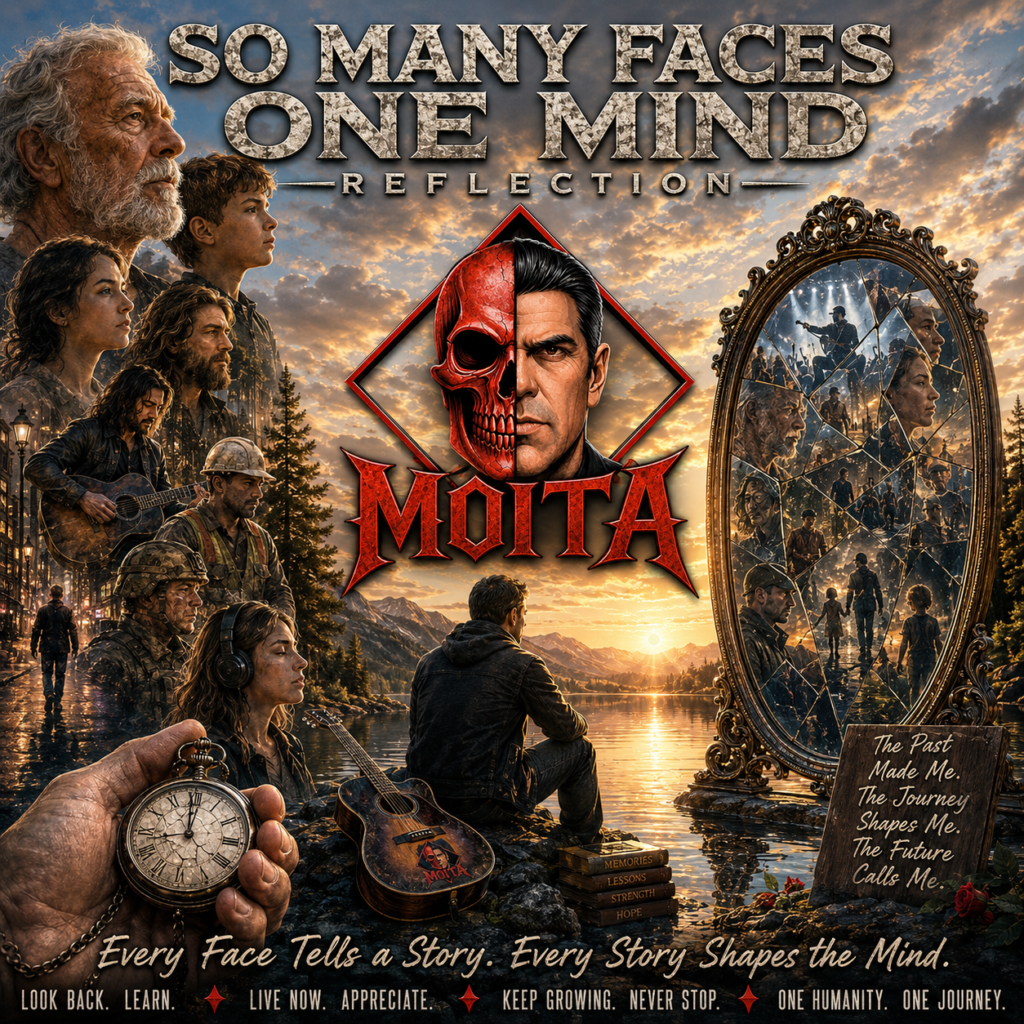



Reviews
There are no reviews yet.