Description
div style=”margin-top: 26px; font-family: Arial,sans-serif;”>
About the Song
SONG TITLE
NO PENNIES FOR ME
CATEGORY
Primary Emotion:
Strength
Also Fits:
Freedom, Growth, Purpose, Anger
WHAT THIS SONG IS ABOUT
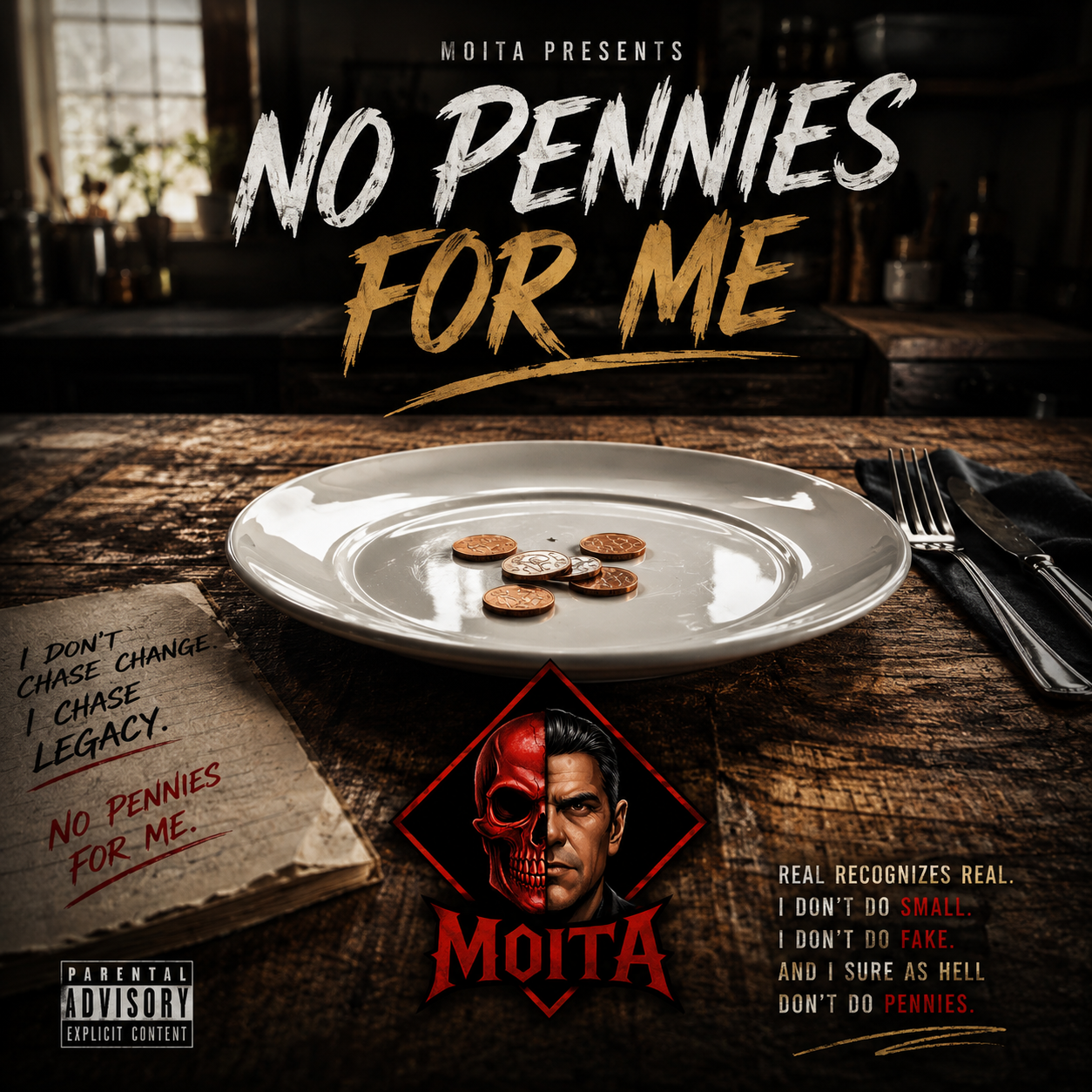
“No Pennies for Me” began with one small coin and one simple thought.
How much is a penny really worth when somebody is hungry?
I had heard the saying that a penny a day would keep the hunger away. It sounded good until I stopped and actually thought about it.
I began doing the calculation in my head.
One penny a day.
Seven cents a week.
Around thirty cents a month.
After an entire year, one penny a day adds up to only three dollars and sixty-five cents.
That was supposed to keep hunger away?
I would starve.
Three dollars and sixty-five cents would not feed someone for a year. It would not pay the rent. It would not heat a home. It would not build a future. It would barely begin to solve one small problem before it disappeared.
That calculation became the spark behind this song.
The penny started representing more than money. It became a symbol of being handed something far too small and being told it should be enough. It represented weak returns, empty promises and the frustration of working hard without moving forward.
There are times in life when people give you pennies for something that cost you dollars.
They give you a little respect after taking years of your time.
They offer a small apology after creating a large amount of damage.
They give you scraps after you helped build the table.
Then they expect you to smile and be grateful.
This song refuses that arrangement.
“Pennies for you, no pennies for me” is not about believing that I am too good for small beginnings. I understand small beginnings. Much of my life was built by starting with very little and working with whatever I had.
The difference is that a small beginning must have somewhere to go.
A seed is small, but it can grow into a tree.
A penny remains a penny.
That is why the chorus asks for something real that grows like a tree. I was not looking for instant wealth. I was thinking about progress, value and the possibility of building something that could become stronger over time.
A person can survive a difficult beginning when that beginning leads somewhere.
What destroys people is giving everything they have to something that remains broken.
THE STORY BEHIND THE SONG
I wrote “No Pennies for Me” a long time ago, before Canada stopped producing and distributing the penny.
I cannot pretend I knew exactly why the idea came to me. I was not sitting there trying to predict the future of Canadian money. I was simply frustrated by the penny and thinking about how little it could accomplish.
Something about it no longer made sense to me.
It took too many pennies to create anything useful. You could collect them, count them, roll them and carry their weight, but after all that effort, there was still very little value in your hand.
That bothered me.
The saying about a penny keeping hunger away pushed the thought further. Once I calculated what one penny a day would become after a full year, the saying collapsed.
A few dollars would not keep hunger away.
It would prove how close hunger still was.
That was the part that stayed in my mind.
Sometimes a familiar saying sounds wise because people have repeated it for years. Then somebody stops, takes it literally and asks whether it is actually true.
That is what I did.
I questioned it.
I followed the thought.
Then I turned the answer into a song.
Years after I wrote it, Canada produced its final penny on May 4, 2012, and the Royal Canadian Mint stopped distributing pennies on February 4, 2013. I had written about rejecting the penny before the country decided it no longer made sense to keep producing and distributing it. (https://www.mint.ca/en-us)
I am not claiming I predicted what the government would do.
I just find the timing interesting.
Something had already told me the penny was reaching the end of its usefulness. I had looked at it from the point of view of an ordinary person asking a practical question.
What can this actually do for me?
The answer was almost nothing.
About ten years later, the penny was on its way out.
That gave the song a second life in my mind. What began as frustration became an example of how creativity sometimes notices a problem before the full world starts talking about it.
You do not always know why an idea arrives.
Sometimes you write it because it feels right.
Only later do you understand how much truth was hiding inside it.
WHY I WROTE THIS SONG
I wrote this song because I could not accept the idea that something insignificant should be treated as though it were enough.
I have worked too hard in my life to believe that scraps are a reward.
I know what it means to build from the ground up. I know what it means to make plans, take risks, lose things and begin again. I also know that effort alone does not guarantee progress.
A person can work every day and still remain trapped if the return is too small.
That is where the anger in this song comes from.
It is not wild anger.
It is calculated anger.
I did the math.
The numbers failed.
The promise failed.
Then I made a decision.
No pennies for me.
That sentence became a boundary. It meant I would no longer confuse movement with progress. I would not keep spinning my wheels simply because somebody could point at the movement and call it success.
Real progress should take you somewhere.
Real work should build something.
Real value should have the ability to grow.
The song is not saying money is the only thing that matters. It is saying that life cannot be supported by hollow rewards.
You can replace the penny with anything.
A relationship that gives you one good day after a year of pain.
A job that demands everything but never allows you to move forward.
A promise that sounds valuable but produces nothing.
A friendship that appears only when the other person needs something.
An opportunity that keeps asking for patience but never opens a door.
Those are all pennies.
They look like something.
They sound like something.
But when you need them to carry real weight, they disappear.
WHY THIS MATTERS TO ME
This song matters to me because it represents the moment when frustration becomes a standard.
Complaining does not change much by itself.
A standard does.
A standard says this is what I will accept and this is what I will refuse.
That does not mean life owes me everything I ask for. It does not mean every effort must produce immediate success. Some of the most important things I have created took years to become what I imagined.
But there must be purpose.
There must be movement.
There must be a reason to believe that today’s work can become something stronger tomorrow.
That is the difference between a seed and a penny.
Both are small enough to hold in your hand.
One can grow.
The other can only be counted.
I wanted growth.
I wanted something real.
I wanted to build a life, not spend it counting small change and pretending the pile was getting me somewhere.
WHY THIS SONG FITS MOITA
This song fits MOITA because it began exactly where many MOITA songs begin.
With an ordinary thought that would not leave me alone.
A penny is one of the smallest objects a person can hold. Most people would look at it and see almost nothing worth writing about.
I saw a question.
What is the real value of something when it cannot do what people claim it can do?
That question opened the entire song.
MOITA is built on looking more closely at things people usually pass without noticing. Sometimes that leads into pain. Sometimes history. Sometimes humour. Sometimes anger.
This time it led to a penny, a calculation and a decision about how I wanted to live.
The subject may be small.
The meaning is not.
This song belongs in MOITA because it turns one cent into a larger conversation about hunger, work, dignity, progress and self-respect.
It also reveals something about the way my mind works.
I hear a saying.
I test it.
I question it.
I calculate it.
If it does not make sense, I do not leave it alone.
I turn it into something.
In this case, I turned it into “No Pennies for Me.”
READ THIS FIRST
Before reading the lyrics, forget about the penny as a coin for a moment.
Think about the pennies in your own life.
Think about the times you gave everything and received almost nothing back.
Think about the promises that sounded valuable until you added them up.
Think about the years spent waiting for something to grow when it never had roots.
This is not a song about becoming rich.
It is a song about refusing to remain poor in value, opportunity, respect and purpose.
There is a difference between being patient and being trapped.
There is a difference between starting small and staying small.
There is a difference between appreciating what you have and accepting what will never be enough.
Sometimes the strongest thing a person can say is not, “Give me more.”
Sometimes it is simply:
No pennies for me.
FULL LYRICS
A penny takes too long to grow
While dollars move, they steal the show
Small change in a broken hand
Won’t build a life, won’t make a stand
Keep it sharp, Keep it sharp,
Oh Keep it sharp Oh
Makes no sense, these two small cents
Can’t buy a life, don’t pay the rent
It never worked, I let it go
Spinning wheels too damn slow
I made my plans, serious
Dollars are my only friends
One thing I know for sure
I won’t live that way again
Let melody rise, this replaces crowd energy.
I won’t break my back for nothing
I won’t live on scraps again
There’s a line I won’t step under
I know exactly where I stand
Pennies for you
No pennies for me
I want something real
That grows like a tree
What is true
It won’t feed you or me
A penny won’t stop
What hunger can be
It starts with a fall
A slow decay
A wish in your hand
That fades away
Pennies for you
No pennies for me
Pennies for you
No pennies for me
Push emotion, not chaos.
Only real money lights my way
Keeps the darkness out my day
Pennies rust, they fade to dust
A hollow promise built on trust
Won’t buy food, won’t bring heat
Leaves you empty in the street
Pays no bills, feels no gain
Just a pocket full of wasted pain
I won’t bend to something broken
I won’t chase what isn’t real
I won’t bend to something broken
I won’t chase what isn’t real
I won’t bend to something broken
I won’t chase what isn’t real
I won’t bend to something broken
I won’t chase what isn’t real
You can keep your change
I want change.
I won’t break for nothing
I won’t live that lie
I won’t break for nothing
I won’t live that lie
No pennies for me
No pennies for me
No pennies for me
No pennies for me
No pennies for me
Let the riff ride out, no chant
SECTION ONE
LYRIC JOURNEY
PART 1
“A penny takes too long to grow”
The song begins with a thought that sounds simple, but it carries the whole argument inside it.
A penny does not actually grow. It stays exactly what it is. One cent. The line gives it the language of growth because that is what I was questioning when I wrote the song.
Can something this small ever become enough?
Can a person build a future by depending on something that barely moves?
Can effort still be called progress when the return is so weak that life remains exactly where it started?
That was where my mind went.
I was not attacking small beginnings. I have lived through small beginnings. I know what it means to start with almost nothing and work with whatever is available. There is nothing shameful about beginning small.
The problem comes when small never becomes more.
A seed begins small, but it has life inside it. Given time, care and the right conditions, it can become a tree.
A penny has no life inside it.
It can be saved. It can be counted. It can be added to another penny. But by itself, it does not become more valuable simply because time passes.
That difference matters throughout the song.
“While dollars move, they steal the show”
The second line immediately places movement beside stagnation.
The dollar moves.
The penny waits.
The dollar can begin solving practical problems. The penny usually becomes part of a much larger pile before it can do anything useful.
When I say dollars steal the show, I am not worshipping money. I am recognizing how the world works.
Money moves food.
Money moves heat.
Money moves rent.
Money moves tools, materials, transportation and opportunity.
A person can say that money does not matter, but that statement becomes difficult to defend when the bills arrive.
Money is not everything.
But the lack of it can affect almost everything.
That was the reality underneath the line.
“Small change in a broken hand”
This is where the song stops being only about arithmetic and begins becoming human.
A broken hand already carries a story.
Maybe it was injured through work.
Maybe it was hurt in an accident.
Maybe it represents someone who has already been pushed too far.
Maybe it is simply the image of a person who has given everything physically and now has very little left.
Then small change is placed into that hand.
The problem has not been solved.
The hand is still broken.
The person is still struggling.
The money is still not enough.
That image stayed important to me because it shows how insulting inadequate help can sometimes feel.
There are moments when people do not need a symbolic gesture.
They need something that truly changes the situation.
A person who is hungry needs food.
A person who is cold needs heat.
A person who has worked needs enough to live.
A few pennies may prove that somebody noticed the struggle, but noticing is not the same as helping.
That is the distance between a gesture and a solution.
“Won’t build a life, won’t make a stand”
The opening movement finishes by bringing the entire thought back to life itself.
This is not about buying something small.
It is about building a life.
A life requires more than survival from one moment to the next.
It requires stability.
It requires the possibility of planning.
It requires enough strength to stand when life pushes back.
A penny cannot provide that.
It cannot build a home.
It cannot create security.
It cannot give someone the power to make choices.
That does not make the penny evil.
It simply makes it inadequate.
That is an important difference.
The song is not angry at the coin.
The song is angry at the idea that something inadequate should be treated as though it is enough.
“Keep it sharp, Keep it sharp,”
This moment changes the sound and attitude of the song.
The message has already been introduced. Now the delivery becomes tighter.
“Keep it sharp” feels almost like an instruction to myself.
Do not soften the thought.
Do not lose the point.
Do not allow the message to drift.
There are times in life when a person must speak carefully because the truth deserves precision.
This is one of those moments.
The song does not need wild anger.
It needs a clean edge.
“Oh Keep it sharp Oh”
The repeated phrase helps prepare the next movement.
There is energy in it, but the energy remains controlled.
That control matters because this song is built on reasoning.
I heard the saying.
I did the calculation.
I followed the result.
The anger came after the evidence.
That is why the delivery can be powerful without becoming chaotic.
“Makes no sense, these two small cents”
This line brings the calculation directly into the song.
The wording is simple because the conclusion is simple.
Two cents does not make sense when the need is much larger.
It is a small amount being asked to carry a large responsibility.
That was the weakness I saw in the saying about a penny a day keeping hunger away.
It sounds hopeful until the numbers are added.
One penny a day becomes seven cents after a week.
After a year, it becomes three dollars and sixty-five cents.
That is not enough to keep hunger away.
It barely enters the conversation.
The line is not meant to mock every small contribution. Many small contributions can become meaningful when people come together.
The problem is pretending that a tiny amount by itself has solved something it cannot possibly solve.
That is where the words “makes no sense” come from.
“Can’t buy a life, don’t pay the rent”
Now the song moves from theory into the practical world.
Rent does not care about hopeful sayings.
Hunger does not disappear because something sounds wise.
The cost of living does not shrink simply because a person is trying hard.
These are uncomfortable truths, but they are still truths.
A person can be responsible, determined and hardworking and still struggle if the return is too small.
That is one of the most frustrating parts of life.
People sometimes speak as though hard work automatically guarantees success.
It does not.
Hard work matters.
Discipline matters.
Planning matters.
But if a person is trapped inside a situation where the return never becomes enough, effort alone may keep them exhausted without moving them forward.
That is why the line connects life and rent.
A person is not asking for luxury.
They are asking for enough stability to live.
“It never worked, I let it go”
This is the first major decision in the song.
The earlier lines studied the problem.
This line responds to it.
There are times when people hold onto something because they have already invested too much to walk away.
They have given years.
They have given energy.
They have given patience.
They keep hoping the result will change because admitting the truth would mean accepting that the earlier effort did not lead where they expected.
I understand that feeling.
But there comes a point when continuing can create a greater loss than leaving.
“It never worked” is an admission.
“I let it go” is a decision.
There is no shame in recognizing that something is broken.
The real danger is pretending it still works because the truth is difficult to accept.
“Spinning wheels too damn slow”
This line captures the frustration of effort without progress.
The wheels are moving.
There is activity.
There may even be noise.
But the movement is too slow to carry the person anywhere meaningful.
That is something many people recognize.
They work.
They plan.
They wait.
They try again.
At the end of the month, they are still in the same place.
At the end of the year, very little has changed.
Movement can create the illusion of progress.
That illusion can keep someone trapped for a long time.
They look busy, so they assume they must be getting somewhere.
But a wheel can spin endlessly while the vehicle remains stuck.
The line uses stronger language because the frustration has earned it.
The problem has been measured.
The failure has been recognized.
Patience is beginning to run out.
“I made my plans, serious”
This is where the song changes direction.
Until now, the lyrics have been describing what does not work.
Here, the focus turns toward what comes next.
Making plans means refusing to remain passive.
The word “serious” matters because this is not a fantasy.
It is not someone sitting back and hoping life will improve on its own.
It is a decision to think ahead.
To choose a direction.
To recognize that a different future requires different action.
Plans do not guarantee success.
I know that.
Life can interrupt the best plan.
People can fail.
Circumstances can change.
But planning still matters because it gives effort somewhere to go.
Without direction, hard work can become another spinning wheel.
“Dollars are my only friends”
This line can sound harsh if it is taken too literally.
It is not saying money is capable of love, loyalty or friendship.
It is saying that practical value matters.
A dollar can accomplish what a penny cannot.
It can become part of something useful much faster.
It can help create movement.
The line also carries a little bitterness.
People can make promises.
People can say they support you.
People can speak warmly when things are easy.
Then when real help is needed, their words may disappear.
Money is different.
It does not pretend.
It does exactly what its value allows it to do.
That is where the line gets its edge.
The song is not replacing people with money.
It is comparing empty promises with something that has measurable value.
“One thing I know for sure”
Certainty becomes important here.
The song has passed through calculation, disappointment and decision.
Now the writer knows something.
Not everything.
Life rarely gives us everything.
But one thing has become clear.
The old way cannot continue.
There is power in knowing what you will no longer accept.
People often believe strength means knowing exactly where life is going.
Sometimes strength begins with knowing where you refuse to remain.
“I won’t live that way again”
This closes the first large movement of the song.
It is not simply a complaint about the past.
It is a boundary for the future.
The word “again” tells us this feeling did not come from imagination alone.
Something has already been experienced.
There has already been a period of accepting too little.
There has already been a time when effort was greater than the reward.
The line does not explain every detail of that history because it does not need to.
Most readers will bring their own history to it.
Maybe they stayed too long in a job that used them.
Maybe they accepted poor treatment in a relationship.
Maybe they believed a promise that never became real.
Maybe they kept waiting for an opportunity that was never going to open.
Whatever their version may be, the line gives them something direct to stand beside.
I will not live that way again.
That is not anger without purpose.
That is experience becoming a standard.
“Let melody rise, this replaces crowd energy.”
The song now prepares to lift.
The earlier delivery was sharp and rhythmic.
This moment opens the sound.
The emotion has been held tightly until now. The melody begins carrying it upward because the song is moving toward its first open declaration.
There is no need for a crowd to tell the listener how to feel.
The words already carry enough weight.
The melody only has to give them room.
“I won’t break my back for nothing”
This is the first emotional landmark of the song.
The earlier image of the broken hand now expands into the body itself.
Breaking your back means giving everything physically.
It means labour.
Exhaustion.
Sacrifice.
The line does not reject hard work.
I have spent much of my life working physically. I understand the satisfaction that comes from building something with your own hands and seeing the result at the end.
What I reject is giving that level of effort for nothing.
Work should create something.
It should build value.
It should support life.
It should move a person forward, even if the progress is slow.
There is a difference between difficult work and pointless work.
Difficult work can strengthen you.
Pointless work drains you.
That is the line being drawn here.
“I won’t live on scraps again”
This takes the physical exhaustion from the previous line and brings it into survival.
Scraps are what remain after someone else has taken what they wanted.
They are leftovers.
They may keep a person alive for another day, but they do not build dignity or security.
The word “again” returns because the refusal comes from experience.
This is not someone imagining what scraps might feel like.
This is someone who already knows.
Scraps do not appear only as money.
People can live on scraps of affection.
Scraps of respect.
Scraps of attention.
Scraps of opportunity.
They can become so accustomed to receiving little that they forget what enough looks like.
The line pushes against that habit.
It says survival alone is not the final goal.
A person should be able to build.
“There’s a line I won’t step under”
Most people speak about crossing a line.
This lyric turns the image around.
The line is above the speaker.
To step under it would mean lowering yourself.
Accepting less.
Allowing someone else to decide how little you are worth.
That is why the wording matters.
This is not only a boundary against going too far.
It is a boundary against falling beneath your own standard.
There are moments when life forces compromise.
There are moments when pride has to be set aside.
But self-respect is different from pride.
Pride may refuse help.
Self-respect refuses humiliation.
The line is not saying I am above everyone else.
It is saying there is a level below which I will no longer place myself.
“I know exactly where I stand”
The pre-chorus finishes with certainty.
The song is ready for the chorus because the argument has been completed.
The penny was examined.
The calculation was made.
The old way was rejected.
The boundary was drawn.
Now there is no confusion left.
Knowing where you stand does not mean everyone will agree with you.
It does not mean the decision will be easy.
It means the decision belongs to you.
That certainty gives the chorus its strength.
“Pennies for you”
The chorus begins without attacking anyone.
You can choose pennies.
You can accept them.
You can believe they are enough.
The song does not try to control that choice.
It simply separates one path from another.
“No pennies for me”
This is the title, the statement and the standard.
Four words carry the whole song.
It is direct because the thought has already been tested.
There is no need for a long explanation now.
The line has earned its certainty.
No pennies for me does not mean I reject every small thing.
It means I reject smallness that has no intention of becoming more.
I reject effort that leads nowhere.
I reject promises that cannot support their own weight.
I reject the idea that I should be grateful for something that keeps me trapped.
“I want something real”
This is important because the song is not only saying no.
It is also saying what it wants.
Something real.
Real value.
Real progress.
Real commitment.
Real opportunity.
Real change.
The word “real” becomes the opposite of the hollow promise that appears later in the song.
A penny may be physically real, but the future it is being asked to represent is not.
The speaker wants something capable of supporting the promise attached to it.
“That grows like a tree”
The tree is the answer to the penny.
Both begin small enough to fit inside a hand.
But only one contains the possibility of growth.
A tree takes time.
It does not become strong overnight.
That matters because the song is not asking for instant success.
It is asking for a future.
A tree grows roots before people see its full height.
It survives seasons.
It bends in wind.
It becomes stronger because it continues living.
That is the kind of progress I wanted.
Not easy money.
Not a shortcut.
Something alive.
Something with roots.
Something that becomes more valuable because time has passed.
“What is true”
This line briefly slows the chorus and asks the listener to return to reality.
What is true?
Not what sounds encouraging.
Not what people repeat.
Not what someone wishes were true.
What survives when the numbers are added?
The truth is where the song began.
“It won’t feed you or me”
The answer is direct.
A penny will not feed either of us.
This prevents the song from sounding selfish.
It is not saying the penny is only inadequate for me.
It is inadequate for anyone facing real hunger.
The song is not claiming personal superiority.
It is pointing toward a universal need.
Food is not a luxury.
Hunger is not an abstract idea.
When the body needs food, hopeful language has limits.
“A penny won’t stop”
The line holds the thought open for the next lyric.
The penny is being placed against something much larger.
One cent against hunger.
The imbalance is obvious before the sentence even finishes.
“What hunger can be”
Hunger is not only the feeling of missing a meal.
It can become weakness.
Fear.
Shame.
Desperation.
Illness.
Hunger changes how people think.
It affects concentration.
It affects choices.
It can reduce life to the next meal because nothing else matters until that need is answered.
The song does not need to describe every consequence.
The line allows the reader to understand the size of the force being discussed.
A penny cannot stop what hunger can become.
That is the truth behind the saying that started everything.
“It starts with a fall”
Now the chorus becomes darker.
Hunger and deprivation do not always arrive all at once.
Sometimes they begin with one setback.
A lost job.
A missed payment.
An injury.
An unexpected bill.
A relationship ending.
A business failing.
A person falls behind, and the space between what they need and what they have begins growing.
The fall may look small from the outside.
To the person living through it, it may be the moment the ground begins moving.
“A slow decay”
This is what can happen when the fall is not stopped.
The damage grows gradually.
That is what makes it dangerous.
People adapt to each new loss.
They cut one expense.
Then another.
They skip one meal.
Then another.
They stop asking for help because shame begins taking over.
From the outside, the decay may be almost invisible.
Inside the person’s life, everything may be weakening.
The phrase also connects to the larger meaning of the song.
A broken job, relationship or promise may not collapse in one dramatic moment.
It may decay slowly while the person keeps hoping it will improve.
“A wish in your hand”
The penny becomes almost like a wishing coin.
People throw coins into fountains and make wishes.
The gesture is harmless and sometimes beautiful.
But a wish is not a plan.
A wish cannot feed someone by itself.
The line places hope in the hand, but the hope has no roots.
It is not the tree from earlier.
It is a small object carrying a dream too heavy for it.
“That fades away”
The wish cannot survive because nothing real is supporting it.
Hope needs action.
Growth needs conditions.
A future needs more than a symbol.
When those things are absent, the wish fades.
That does not mean hope is foolish.
It means hope must eventually connect to something practical.
The chorus began with a refusal and moved through growth, hunger, falling and decay.
By the time it returns to the title, the listener understands why the decision is so firm.
“Pennies for you”
The line returns, but now it carries everything the chorus has revealed.
This is no longer simply about preference.
The cost of accepting the penny has been shown.
“No pennies for me”
The first chorus closes with the boundary intact.
The song has not solved every problem.
It has done something equally important.
It has named what will no longer be accepted.
SECTION ONE
LYRIC JOURNEY
PART 2
“Pennies for you”
The chorus returns immediately, almost as though the song wants the decision to settle before moving forward.
Nothing new has happened yet, so the meaning does not need to be rebuilt from the beginning.
The line remains what it was the first time.
A separation.
A choice.
You may continue accepting what is small, weak or unable to grow.
I will not.
“No pennies for me”
The repetition strengthens the boundary.
Sometimes one statement is enough to explain a decision.
Sometimes it has to be repeated because the person saying it is not only speaking to someone else.
They are reminding themselves.
That matters when a person is trying to leave an old pattern.
It is easy to make a decision once.
It is harder to keep making that decision when the familiar offer returns.
No pennies for me becomes more than a chorus line.
It becomes something to remember.
“Push emotion, not chaos.”
This moment prepares the song to move into the second verse.
The emotion has already been established.
There is anger in the song, but it is not uncontrolled anger.
The words are not being thrown everywhere.
They are being aimed.
That is important because the song is not trying to create noise.
It is trying to make a point.
Chaos can sometimes hide a weak idea.
This song does not need hiding.
The idea is already strong enough.
The second verse can now increase the pressure without losing clarity.
“Only real money lights my way”
The second verse begins with a stronger statement about direction.
Earlier, money represented practical value.
Here, it becomes light.
Light allows a person to see where they are going.
It exposes obstacles.
It helps someone choose a path instead of moving blindly.
The line is not saying money creates wisdom or happiness.
It is saying that having enough resources creates choices.
Poverty can reduce those choices.
A person without enough money may know exactly what should be done and still be unable to do it.
They may know they need better housing but cannot afford the move.
They may know they need transportation but cannot buy or maintain a vehicle.
They may know education could open a door but be unable to pay the cost or give up the working hours.
Money does not create every answer.
But it can create room to act on an answer.
That is the light being described.
“Keeps the darkness out my day”
Darkness here is not about night.
It is the pressure that enters when basic needs cannot be met.
Fear of the next bill.
Fear of losing a home.
Fear of not being able to feed a family.
Fear of one emergency destroying everything.
That kind of darkness can exist in the middle of the brightest day.
The line connects money with protection from that pressure.
Again, it is not claiming wealth solves every problem.
A rich person can still experience grief, illness, betrayal and loneliness.
But a lack of money creates problems that do not disappear through positive thinking.
Enough money can keep some forms of darkness from entering.
It can pay the heat.
Buy the food.
Keep the roof overhead.
Give a person enough breathing room to think about something beyond survival.
“Pennies rust, they fade to dust”
Canadian pennies were mainly copper-plated steel in their later years, and a coin may corrode or deteriorate depending on its material and conditions.
But the lyric is not trying to become a lesson in metallurgy.
It is using rust and dust to represent decline.
The penny already had little practical power in the song.
Now even that limited value feels temporary.
It sits.
It tarnishes.
It is forgotten.
It becomes part of a jar that nobody wants to carry to the bank.
The image shows something that has stopped moving through life.
Earlier, dollars moved.
Here, pennies decay.
The contrast continues.
One creates action.
The other becomes something people leave behind.
“A hollow promise built on trust”
This is one of the more complicated lines in the song because trust is normally thought of as something solid.
Here, trust has been used to support something hollow.
A person was told to believe.
To wait.
To accept that the small return would eventually become enough.
They trusted the promise.
The promise had nothing inside it.
That is what makes betrayal difficult.
People do not usually become deeply hurt by something they never believed.
The pain comes because they trusted.
They gave the promise weight.
They built plans around it.
Then they discovered there was nothing strong enough underneath.
This can happen with money, but it can also happen anywhere trust is exchanged.
A worker trusts that loyalty will eventually be recognized.
A partner trusts that repeated promises will become changed behaviour.
A friend trusts that support will be returned when it is needed.
A person trusts an opportunity because someone keeps saying the future will be better.
When the future never arrives, the promise is revealed as hollow.
The person is left carrying the cost of believing it.
“Won’t buy food, won’t bring heat”
The song returns to basic needs.
This directness matters.
Food and heat are not symbols.
They are necessities.
A person may be able to delay buying something they want.
They cannot indefinitely delay eating.
They cannot safely ignore extreme cold.
The line strips away every argument that tries to make the penny sound meaningful.
Can it buy food?
No.
Can it bring heat?
No.
Then in a real emergency, what exactly is it doing?
This is where the song refuses sentimental thinking.
A coin may carry history.
It may carry memory.
A person may save one from a certain year because it means something to them.
That emotional value can be real.
But emotional value does not pay a heating bill.
The song keeps returning to the practical test because that is where the original saying failed.
“Leaves you empty in the street”
This line follows naturally from food and heat.
When basic needs are not met, a person can lose more than comfort.
They can lose stability.
Being empty in the street carries two meanings.
The body may be empty from hunger.
The person may also be outside with nothing.
No home.
No security.
No safe place to recover.
The song moves from a small coin to one of the most serious forms of human vulnerability.
That distance is intentional.
It shows how dangerous it can be to speak casually about survival.
A penny is small.
Hunger is not.
Homelessness is not.
Cold is not.
The lyric forces those realities into the same frame.
“Pays no bills, feels no gain”
A bill creates a deadline.
It has an amount.
It does not care how hard someone tried that month.
It does not accept intention as payment.
That is why the line feels so blunt.
The penny does not pay the bill.
The effort of collecting it does not create enough gain to change the outcome.
There is also an emotional side to “feels no gain.”
A person needs to feel that their work is producing something.
Not every day has to bring a major victory.
Not every month has to transform a life.
But over time, there must be some sign of movement.
When there is none, discouragement begins.
People can endure great difficulty when they believe their effort is leading somewhere.
It becomes much harder when every day repeats the same struggle.
No gain means no proof that tomorrow will be different.
That can wear a person down.
“Just a pocket full of wasted pain”
This line gathers the whole verse into one image.
The pocket is full.
At first, that sounds like abundance.
Then we discover what it contains.
Not value.
Pain.
The coins have weight, but the weight is useless.
They have been collected through time, effort and perhaps humiliation.
Every penny may represent another moment of working hard for almost nothing.
Another promise that failed.
Another day of being told to wait.
Another attempt to survive.
By the time the pocket is full, the person has carried all that weight and still cannot build a future with it.
That is why the pain feels wasted.
Pain can sometimes teach.
Sacrifice can sometimes build.
Hardship can sometimes make a person stronger.
But not every pain becomes meaningful simply because it was endured.
Some pain is the result of remaining too long in something that never deserved the sacrifice.
The line recognizes that difference.
The pocket may be full, but the life is still empty.
“I won’t bend to something broken”
The verse has shown the practical consequences.
Now the decision returns.
To bend means to submit.
To reshape yourself around the demands of something else.
People bend for many reasons.
Fear.
Need.
Loyalty.
Hope.
Sometimes bending is necessary.
A rigid object breaks under pressure, while something flexible survives.
But flexibility has limits.
There is no wisdom in bending yourself around a system, promise or relationship that is already broken.
If the thing demanding your sacrifice cannot support its own weight, your bending will not repair it.
It may only damage you.
That is where this line stands.
I will not reshape my life to protect something that does not work.
I will not lower my standard to make failure appear acceptable.
I will not become smaller so that something inadequate can feel larger.
“I won’t chase what isn’t real”
This line completes the thought.
The hollow promise appeared earlier.
Now the speaker refuses to chase it.
Chasing something unreal can consume years.
The person keeps moving because they believe the goal is just ahead.
One more month.
One more chance.
One more sacrifice.
One more promise.
But if the goal was never real, movement only takes them farther from where they should be.
This applies to money, but it reaches far beyond it.
People chase versions of other people that never existed.
They chase approval from someone who will never give it.
They chase success defined by people who do not know them.
They chase an opportunity that has been used to keep them obedient.
They chase apologies that may never come.
The song says there is a point where the chase must stop.
Not because desire is wrong.
Because reality matters.
“I won’t bend to something broken”
The line repeats, and now it begins functioning like a vow.
The first appearance stated the decision.
The repetition reinforces it.
Broken situations often have a way of pulling people back.
A person leaves, then remembers the good moment.
They set a boundary, then feel guilty.
They recognize the truth, then begin questioning whether they were too harsh.
Repeating the line helps hold the ground.
The situation is still broken.
The evidence has not changed.
The decision must remain.
“I won’t chase what isn’t real”
The answer returns with it.
This repetition feels like shutting the door twice to make sure it stays closed.
The song is not discovering anything new in these two lines.
It is strengthening what has already been discovered.
There is value in that.
Some truths need to be repeated until they become stronger than the habit they are replacing.
“I won’t bend to something broken”
By the third appearance, the line becomes more forceful.
The listener has now heard the refusal enough times to understand that this is not a temporary emotion.
It is becoming part of the speaker’s identity.
There is a difference between saying something while angry and living by it after the anger passes.
Repetition moves the line toward that second place.
This is not only how I feel right now.
This is how I intend to stand.
“I won’t chase what isn’t real”
The song continues pairing brokenness with illusion.
One thing does not work.
The other does not exist.
Neither deserves more sacrifice.
That pairing is important because people often confuse the two.
They believe something broken can still become what they imagined.
Sometimes it can.
People can repair relationships.
Businesses can recover.
Systems can improve.
Mistakes can be corrected.
But repair requires reality.
It requires honesty.
It requires action.
A hollow promise is not repair.
Repeated words are not change.
The song is not refusing everything imperfect.
It is refusing what remains broken while pretending to be whole.
“I won’t bend to something broken”
The fourth repetition removes any remaining doubt.
This is the final reinforcement before the breakdown.
The lyric has become almost physical.
You can feel the speaker straightening their back.
Earlier, the song said, “I won’t break my back for nothing.”
Now the back is no longer bending.
The images connect.
The body that was once being worn down is standing upright.
That is part of the emotional movement of the song.
The first half described exhaustion and inadequate reward.
This moment begins recovering posture.
“I won’t chase what isn’t real”
The final repetition closes the chase.
The song is ready for its most important play on words because the speaker has stopped moving toward the false promise.
Stopping creates space.
Once the chase ends, a different kind of change can begin.
“You can keep your change”
The breakdown arrives with very little language.
That is exactly why it works.
The word “change” still means coins at first.
You can keep the pennies.
Keep the small return.
Keep the hollow promise.
Keep the symbol that cannot carry the responsibility placed upon it.
There is no argument left.
The speaker is handing the entire old arrangement back.
This line also carries a certain calmness.
Earlier, frustration was rising.
Here, the decision is almost quiet.
Real certainty often becomes quieter after it has been fully reached.
The person no longer needs to convince anyone.
“I want change.”
The entire song turns on this sentence.
The same word now means transformation.
The first change can sit in a pocket.
The second can redirect a life.
That difference is the heart of the song.
I did not want more coins added to the same broken situation.
I wanted the situation itself to change.
That is a much larger demand.
More pennies might ease the frustration for a moment.
Real change asks why the person is being left with pennies in the first place.
More scraps might help someone survive another day.
Real change asks why they are expected to live on scraps.
Another promise might restore hope temporarily.
Real change requires the promise to become action.
This is where the song finally says openly what it has been moving toward from the beginning.
The title sounds like a rejection of money.
The breakdown reveals that it is actually a demand for transformation.
“I won’t break for nothing”
The song begins rebuilding after the breakdown.
Earlier, the lyric said, “I won’t break my back for nothing.”
Now it becomes even more direct.
“I won’t break.”
The word “back” is no longer needed.
The whole person is being protected.
Breaking can happen physically.
Emotionally.
Financially.
Spiritually.
A person can be pushed until something inside them gives way.
The line refuses to let that happen for an empty cause.
There are things worth sacrificing for.
Family.
Truth.
A meaningful dream.
A responsibility that genuinely matters.
The song is not rejecting sacrifice.
It is rejecting meaningless sacrifice.
“I won’t live that lie”
The lie is that pennies are enough.
The lie is that spinning wheels means progress.
The lie is that patience must continue forever.
The lie is that a hollow promise should still be trusted because it once sounded good.
The line also turns inward.
Sometimes the lie is not only what another person tells us.
It is what we keep telling ourselves.
Maybe next time will be different.
Maybe this small return proves things are improving.
Maybe I should be grateful.
Maybe expecting more makes me selfish.
People can remain trapped because the lie eventually begins using their own voice.
“I won’t live that lie” is the moment that voice is rejected.
“I won’t break for nothing”
The repetition strengthens the rebuilding.
The speaker has already refused to bend.
Now they refuse to break.
The body and mind are being reclaimed.
The song has moved a long way from the broken hand in the opening.
At first, the person was holding small change while already injured.
Now they are refusing further damage.
That is growth inside the song.
The situation may not yet be solved.
But the person has changed their relationship to it.
“I won’t live that lie”
The repeated line closes the old story again.
Sometimes a person must leave a lie more than once.
They leave it mentally.
Then emotionally.
Then practically.
The decision may happen in one moment, but living it can take time.
The song repeats the refusal because the new standard has to become strong enough to survive outside the music.
“No pennies for me”
The title returns without the longer chorus around it.
There is no tree.
No hunger.
No fall.
No decay.
Only the decision remains.
That simplicity shows how far the song has travelled.
At the beginning, the listener needed the argument.
Now the argument has been lived.
The title can stand alone.
“No pennies for me”
The second repetition makes the phrase feel less like a chorus and more like a declaration.
The meaning is no longer limited to money.
No empty returns.
No hollow promises.
No meaningless movement.
No staying small because someone else benefits from keeping you there.
“No pennies for me”
By the third repetition, the line begins sounding permanent.
It has become the answer to every part of the song.
What about the promise?
No pennies for me.
What about the scraps?
No pennies for me.
What about the broken system?
No pennies for me.
What about the life that never grows?
No pennies for me.
“No pennies for me”
The fourth repetition carries the strength of someone who now knows where they stand.
Earlier, that line appeared in the pre-chorus.
“I know exactly where I stand.”
This is the proof.
The speaker has not stepped under the line.
They have held it.
“No pennies for me”
The final repetition closes the lyrical journey with the title intact.
The song does not end by asking the world to agree.
It does not end by claiming every problem has been solved.
It ends with a personal standard.
That is sometimes where real change begins.
Not with a government decision.
Not with a crowd.
Not with someone else finally understanding.
With one person deciding what they will no longer accept.
“Let the riff ride out, no chant”
The words are finished, so the instruments take over.
There is no need for another speech.
The decision has already been made clearly enough.
The riff carries the remaining energy while the listener is left with the phrase that has followed the song from beginning to end.
No pennies for me.
The song started with the question of whether something small could ever become enough.
It ends with an answer.
Small beginnings are not the enemy.
Empty beginnings are.
Hard work is not the enemy.
Work that leads nowhere is.
Patience is not the enemy.
Patience used to keep someone trapped is.
The penny became the symbol because it could be held, counted and examined.
But the real journey was never about a coin.
It was about recognizing the difference between surviving and growing.
Between movement and progress.
Between change in your pocket and change in your life.
By the end, the speaker is no longer waiting for a penny to grow.
He has chosen to grow without it.
SECTION TWO
THE STORY
Some songs begin with a person.
Some begin with an event.
Some begin with pain, anger, loss or something that happens so suddenly you have no choice but to write about it.
“No Pennies for Me” began with a saying that did not make sense to me.
I had heard the words, “A penny a day will keep the hunger away.”
Maybe it was meant to teach people that even a small amount can help. Maybe it came from a time when a penny could buy more than it could when I heard it. Maybe people repeated it because it sounded hopeful.
I did not hear hope.
I heard a calculation.
That is how my mind often works. I can hear something that everyone else accepts and immediately start taking it apart.
Does it make sense?
Is it true?
What happens when you follow it all the way through?
So I did the math.
One penny every day for an entire year comes to three dollars and sixty-five cents.
That answer stopped the saying in its tracks.
Three dollars and sixty-five cents would not keep hunger away for a year.
It would not keep hunger away for a week.
Depending on where you lived and what you were trying to buy, it might not even provide one proper meal.
The saying sounded comforting until the numbers exposed it.
I remember thinking that if I had to survive on a penny a day, I would starve.
There was the song.
Not the whole song, but the reason it had to exist.
THE MOMENT THE PENNY CHANGED MEANING
Once I saw how little a penny a day became after a year, the penny stopped being only a coin.
It became a symbol.
It represented anything that looks like help but does not provide enough help to matter.
It represented promises that sound generous until you examine what they actually give.
It represented people working hard, giving their time, using their strength and still ending the day with almost nothing to show for it.
It represented being told to appreciate scraps while somebody else was walking away with the real value.
That is where the frustration came from.
The penny itself was not my enemy. It was only a piece of metal.
What bothered me was the idea behind it.
How often are people expected to survive on almost nothing?
How often are they told that a tiny return should be enough because at least it is something?
How often does somebody give a person one penny of respect after taking a dollar of dignity?
How often does an employer give the smallest possible reward while expecting the largest possible effort?
How often does a relationship survive on a few good moments while the rest of it is slowly falling apart?
The more I thought about it, the more the penny became connected to life.
That is why the song grew beyond money.
WHY THE SONG SOUNDS SO CERTAIN
There is very little hesitation in “No Pennies for Me.”
That is because the decision had already been made before the words were finished.
I was not asking whether a penny was enough.
I had calculated it.
It was not enough.
That certainty shaped the whole song.
The verses examine the problem.
The pre-chorus draws the boundary.
The chorus delivers the decision.
Pennies for you.
No pennies for me.
That does not mean I am judging anyone who starts with little. I have started with little many times. I have built things from the ground up. I understand that a beginning can be small.
But there is a difference between starting with little and being expected to remain with little forever.
A beginning should lead somewhere.
Hard work should build toward something.
Patience should not become an excuse for keeping a person trapped.
The song speaks from the moment when patience has run out because the evidence is already clear.
The wheels have been spinning.
The effort has been given.
Nothing meaningful is growing.
At that point, continuing is not determination.
It is surrender.
I did not want to surrender.
THE DIFFERENCE BETWEEN MONEY AND VALUE
Some people may hear this song and think it is simply about wanting dollars instead of pennies.
That is part of the surface, but it is not the complete story.
Money gives the song its language.
Value gives the song its meaning.
When I wrote about dollars, I was writing about something that could move, build and create choices.
I was not saying money should become a person’s only purpose.
I was saying that effort should have a real return.
A person cannot pay rent with encouragement.
They cannot heat their home with compliments.
They cannot feed their children with promises.
Words matter, but they do not replace practical responsibility.
There are times when people hide behind hopeful language because the truth is uncomfortable.
They say things will improve.
They say patience will be rewarded.
They say every little bit helps.
Sometimes that is true.
Sometimes it is a way of avoiding the fact that what is being offered is nowhere near enough.
This song challenges that kind of thinking.
It asks people to look at the actual result.
Not the promise.
Not the slogan.
Not the appearance.
The result.
If a person works for years and cannot move forward, something is broken.
If a system depends on people accepting less than they need, something is broken.
If a relationship survives only because one person keeps giving while the other gives almost nothing back, something is broken.
I did not want to bend to something broken.
That thought found its way directly into the song.
WRITTEN BEFORE THE PENNY DISAPPEARED
There is another part of the story that still interests me.
I wrote “No Pennies for Me” before the penny disappeared from everyday use in Canada.
I did not write the song because I knew the government was going to stop distributing it.
I did not have secret information.
I was not trying to predict anything.
I simply looked at the penny and felt that it no longer made sense.
It took too many of them to create meaningful value. They collected in jars, drawers, pockets, vehicles and containers. People carried them around, but often did not want to use them.
They still existed, but their practical importance was fading.
That was what I noticed.
About ten years after I wrote the song, the penny was removed from normal cash distribution in Canada.
When that happened, I thought back to the song.
It was strange to realize that I had written about refusing pennies before the country itself decided producing and distributing them no longer made practical sense.
I do not call it a prediction.
I call it an observation that arrived early.
Sometimes creativity notices a shift before we completely understand it.
A person sees something.
Feels something.
Writes it down.
Years later, the world catches up to the thought.
That is part of what makes songwriting so interesting to me. A song can preserve the way you were thinking at a particular time. Then life keeps moving, and the song begins collecting new meaning.
“No Pennies for Me” started as frustration.
Later, it became a reminder that the frustration had not been foolish.
There really was a problem with the penny.
Canada eventually reached the same conclusion from an economic and practical point of view.
I had reached it from the point of view of hunger, value and common sense.
A SMALL COIN WITH A LARGE STORY
The penny may be small, but the story behind it is not.
That is one of the things I enjoy about creativity.
You do not always need a massive event to begin writing.
You need a thought strong enough to keep pulling you forward.
A penny can lead to hunger.
Hunger can lead to survival.
Survival can lead to wages, work, dignity and the difference between getting by and building a life.
One small object can open a door into something much larger.
That is what happened here.
The penny gave me the image.
The calculation gave me the truth.
Life gave me the meaning.
Once those three things came together, the song had a reason to exist.
THE WRITING PROCESS
I do not remember every detail of where I was when every line came together.
This song was written a long time ago, and I will not invent a scene just to make the story sound more dramatic.
What I remember clearly is the thought process.
The saying came first.
The calculation challenged it.
The frustration gave it emotion.
The title turned that frustration into a statement.
“No Pennies for Me” says everything before the song even begins.
It does not ask for permission.
It does not negotiate.
It does not say pennies are bad for everyone.
It simply states my decision.
You can keep them.
I want something capable of becoming more.
From there, the words followed the argument naturally.
A penny takes too long to grow.
Small change cannot build a life.
Working hard for almost nothing becomes wasted motion.
Hunger does not disappear because somebody places a coin in your hand.
Every part of the song keeps returning to the same test.
Can this actually support a life?
If the answer is no, then I do not want to build my future around it.
YOU CAN KEEP YOUR CHANGE
The clearest moment in the entire song comes during the breakdown.
“You can keep your change.”
Then comes the answer.
“I want change.”
The same word is doing two different jobs.
The first change is money.
The second change is transformation.
That was not just a clever play on words. It expressed the exact difference I was trying to explain.
I did not want more coins.
I wanted a different result.
I wanted movement.
I wanted progress.
I wanted the kind of change that could affect the direction of a life.
That line takes the song beyond economics.
A person can have pockets full of change and still be living the same broken pattern.
Real change is not what you carry.
It is what you create.
It may mean leaving something behind.
It may mean refusing an offer.
It may mean raising your standards.
It may mean admitting that years of effort have not produced what you hoped they would.
That can be difficult because people become attached to what they have already invested.
They keep giving because they do not want the earlier effort to feel wasted.
But sometimes the greater waste is continuing.
The song refuses to continue simply because it has already started.
It says the result matters.
The direction matters.
The future matters.
THE BROKEN HAND
One of the images that carries the most weight for me is the idea of small change in a broken hand.
A broken hand cannot build properly.
It cannot hold much.
It may already be injured from working, fighting, falling or trying to survive.
Then somebody places a few coins in it and acts as though the problem has been solved.
That image shows how insulting inadequate help can feel.
It is not always the amount alone.
It is the distance between what a person needs and what they are given.
A person facing hunger needs food.
A person facing homelessness needs shelter.
A person working full time needs enough income to live.
A person giving love needs something honest in return.
When the answer is only a few symbolic pennies, the gesture can become another reminder of how little their struggle is understood.
That is where the anger in the song stays human.
It is not anger because I want everything.
It is anger because people need enough.
Enough to eat.
Enough to live.
Enough to stand.
Enough to build.
There is dignity in that word.
Enough.
WHAT THE SONG BECAME
Over time, “No Pennies for Me” became more than the story of a coin that eventually disappeared from Canadian circulation.
It became a personal rule.
Do not mistake activity for progress.
Do not mistake a promise for a result.
Do not mistake a small gesture for real commitment.
Do not remain loyal to something that has no ability to grow.
That does not mean every decision should be based only on money.
Some of the most valuable things in life cannot be purchased.
Love.
Trust.
Family.
Creativity.
Respect.
Knowledge.
Time.
But those things still require real investment.
A penny’s worth of love is not enough to hold a relationship together.
A penny’s worth of respect is not enough to create trust.
A penny’s worth of attention is not enough to raise a child.
A penny’s worth of courage is not enough when a person must finally stand up for themselves.
The message remains the same.
Give life something real.
Expect something real in return.
WHY THIS SONG HAD TO EXIST
This song had to exist because the calculation would not leave me alone.
Three dollars and sixty-five cents after an entire year.
That number exposed the weakness inside the saying.
From there, it exposed the weakness inside many other things people are expected to accept.
The song gave me a way to reject that weakness.
It allowed me to take a tiny coin and use it as a measurement for value, effort and survival.
It also allowed me to say something direct.
I will work.
I will build.
I will take risks.
I will begin with little when I have to.
But I will not pretend that nothing is enough.
That is the complete story behind “No Pennies for Me.”
It began with a penny.
It grew through a calculation.
It became a declaration about how I wanted to live.
That is how one cent found its place inside MOITA.
SECTION THREE
LYRIC EXPLORATION
Every song has a moment where the idea becomes larger than the words.
“No Pennies for Me” is one of those songs.
On the surface, it’s about a coin that has almost no value. Listen a little longer, and you realize the penny is only the symbol. The real subject is knowing when something no longer deserves your time, your effort or your belief.
The song begins with a simple image.
“A penny takes too long to grow.”
That line immediately tells the listener this is not going to be a song about money alone. Pennies do not grow. People do. Lives do. Dreams do. Opportunities do.
The penny becomes a way of measuring progress.
If something takes everything you have and gives almost nothing back, is it really helping you move forward?
That question quietly guides the entire song.
The next line raises the stakes.
“While dollars move, they steal the show.”
This is not about envying wealth. It is about understanding value.
Some things move your life forward.
Some things keep you standing still.
The song asks the listener to recognize the difference.
SMALL CHANGE IN A BROKEN HAND
One of the strongest images in the song is a broken hand holding small change.
A broken hand already tells a story.
It speaks of hard work.
Pain.
Injury.
Survival.
Struggle.
Then someone places a few pennies into that hand as though the problem has been solved.
The image is intentionally uncomfortable.
It reminds us that sometimes people confuse a gesture with a solution.
A gesture can be kind.
A solution changes a life.
The song is asking us not to mistake one for the other.
THE CALCULATION BEHIND THE SONG
Long before the lyrics were finished, there was a calculation.
I kept thinking about the old saying that a penny a day would keep the hunger away.
Instead of accepting it, I did the math.
One penny every day for a year.
Three dollars and sixty-five cents.
That number changed everything.
The song was no longer based on a feeling.
It was based on a realization.
Three dollars and sixty-five cents would never keep someone from being hungry.
That calculation exposed the difference between something that sounds good and something that actually works.
That idea flows through every verse.
The song keeps asking the same question in different ways.
What happens when people accept far less than they truly need?
WHEN THE LYRICS BECOME UNIVERSAL
Although the lyrics mention pennies, almost everyone can replace that word with something from their own life.
For one person, the penny might be a job that never leads anywhere.
For someone else, it could be a relationship where all the effort comes from one side.
It could be false promises.
Broken systems.
Empty compliments.
Opportunities that never become reality.
The penny changes, but the feeling stays the same.
That is one reason the song reaches beyond money.
It becomes a conversation about value itself.
THE FIRST VERSE
The opening verse introduces frustration, but it is controlled frustration.
There is no shouting.
No blame.
Just observation.
The words describe someone who has looked at the situation honestly and reached a conclusion.
“Makes no sense, these two small cents.”
That line matters because it marks the point where emotion gives way to logic.
The song is not built on anger alone.
It is built on evidence.
Something has been measured.
Something has been tested.
Something has failed.
From there, the decision becomes easier.
“It never worked, I let it go.”
Sometimes the hardest thing a person can do is admit that something they kept believing in was never going to become what they hoped.
The song recognizes that moment without apology.
THE PRE-CHORUS
“I won’t break my back for nothing.”
This is the emotional backbone of the song.
Everyone has limits.
Hard work has value.
Sacrifice has value.
Patience has value.
But none of those things should be endless if nothing meaningful is growing.
The line is not encouraging people to quit the first time life becomes difficult.
It is encouraging people to recognize the difference between perseverance and exploitation.
Perseverance leads somewhere.
Exploitation keeps taking.
The next line reinforces that decision.
“I won’t live on scraps again.”
That sentence reaches far beyond money.
Some people live on scraps of respect.
Some live on scraps of attention.
Some live on scraps of hope.
Some convince themselves that a little is all they deserve.
The song pushes back against that belief.
THE CHORUS
Every chorus should answer the question the verses have been building toward.
This one does it with remarkable simplicity.
“Pennies for you.
No pennies for me.”
There is no long explanation.
No debate.
No anger directed at another person.
Just a decision.
One sentence closes the old chapter.
The next sentence opens the new one.
“I want something real that grows like a tree.”
That line is one of the most important in the entire song.
Earlier, the penny represented something that never becomes enough.
Now the tree represents something completely different.
A tree begins small.
But every season it becomes stronger.
Its roots spread deeper.
Its branches reach farther.
It provides shelter.
It produces life.
That is the kind of growth the song is asking for.
Not instant success.
Real growth.
Steady growth.
Meaningful growth.
THE SECOND VERSE
The second verse becomes more practical.
Food.
Heat.
Bills.
These are no longer abstract ideas.
They are everyday realities.
The lyrics remind us that philosophy means very little if it cannot survive contact with real life.
Hope matters.
But people still need to eat.
Dreams matter.
But people still need a roof over their heads.
The song refuses to separate ideals from reality.
Both must exist together.
THE BREAKDOWN
“You can keep your change.”
Then comes one of the strongest moments in the song.
“I want change.”
The same word suddenly means two completely different things.
The first “change” is coins.
The second “change” is transformation.
That single shift carries the entire message of the song.
I was never asking for more pennies.
I was asking for a different future.
The breakdown becomes the turning point where the listener understands that this song has never really been about money.
It has always been about refusing to settle for a life that never improves.
THE FINAL CHORUS
By the time the final chorus arrives, the words have changed without changing.
The lyrics are the same.
The listener is not.
Everything that came before has given those words greater weight.
“No pennies for me.”
Now it sounds less like a lyric and more like a personal standard.
A line that cannot be crossed.
A promise made to yourself.
A refusal to keep investing your life in something that cannot return enough to build a future.
THE PENNY THAT DISAPPEARED
There is another layer that listeners may not know until they read this page.
I wrote this song years before the penny disappeared from everyday circulation in Canada.
I was not predicting what would happen.
I was simply questioning the value of something that no longer seemed practical.
Years later, Canada reached its own conclusion.
That does not make the song prophetic.
It makes it interesting.
Sometimes creativity notices changes before society acts on them.
A songwriter is often observing ordinary life.
Occasionally those observations continue gathering meaning long after the song is finished.
That is exactly what happened here.
WHY THIS SONG CONTINUES TO MATTER
The penny may no longer be part of everyday cash transactions in Canada, but the message behind this song has not disappeared.
People are still offered less than they deserve.
People are still expected to survive on promises that never become reality.
People are still told to be grateful for things that cannot possibly build a future.
That is why this song remains relevant.
It is not encouraging people to chase wealth at any cost.
It is encouraging them to examine what they are building their lives upon.
If something cannot feed your future, strengthen your character, improve your relationships, support your family or move your life in a meaningful direction, it is worth asking whether you should continue investing yourself in it.
That is the question at the heart of this song.
It began with a penny.
It became a lesson about value.
And that lesson reaches far beyond money.
When people hear “No Pennies for Me,” I hope they do more than sing along.
I hope they stop for a moment and ask themselves one simple question.
What pennies am I still holding onto that I should have let go a long time ago?
SECTION FOUR
REFLECTION
Every once in a while, life teaches us a lesson through something so ordinary that we almost miss it.
For me, it was a penny.
Most people would never stop to think about it. They would pick it up, leave it on the ground, drop it into a jar or let it disappear between the seats of their car. It was the smallest coin we carried, so it was easy to believe it was also the smallest idea.
For me, it became one of the biggest.
All because I asked a question.
Could a penny a day really keep the hunger away?
The answer wasn’t hidden. It was simple arithmetic.
Three dollars and sixty-five cents.
That number stayed with me because it represented something much larger than money. It represented the danger of accepting ideas simply because they’ve been repeated for years.
Sometimes we inherit sayings.
Sometimes we inherit beliefs.
Sometimes we inherit expectations.
But that doesn’t automatically make them true.
This song reminds me that it is healthy to ask questions.
Not to argue.
Not to complain.
But to understand.
Some of the greatest changes in history started because someone looked at something everyone else accepted and quietly asked, “Does this still make sense?”
That question has changed science.
Medicine.
Technology.
Engineering.
Business.
Music.
And it can change a person’s life.
This song is really about refusing to accept the illusion of progress.
There is a difference between moving and moving forward.
You can work every day and still be standing in the same place.
You can stay in a relationship for years without feeling loved.
You can remain loyal to something that stopped giving back a long time ago.
You can fill your pockets with pennies while your future stays empty.
Eventually, every one of us reaches a moment where we have to decide whether we are collecting change or creating change.
That decision belongs to each of us.
Nobody else can make it.
One of the things I hope readers take away from this page is that knowing your worth is not arrogance.
It is responsibility.
Your time has value.
Your effort has value.
Your honesty has value.
Your family has value.
Your dreams have value.
Protecting those things doesn’t make you selfish.
It means you’ve finally recognized that your life deserves more than surviving on scraps.
That doesn’t mean every day will be easy.
Life has taught me that success rarely arrives quickly. Most worthwhile things take patience, setbacks and hard work.
There is nothing wrong with starting small.
Every strong tree begins as a seed.
The difference is that a seed is alive.
It grows.
It reaches for sunlight.
It becomes something greater than what it was.
That is what I wanted when I wrote this song.
Not shortcuts.
Not easy money.
Growth.
Real progress.
Something that keeps becoming more tomorrow than it is today.
If this song challenges you, I hope it challenges you in a positive way.
Look honestly at your own life.
Ask yourself what is growing.
Ask yourself what has stopped growing.
Ask yourself whether you are holding onto something simply because you’ve held onto it for a long time.
Sometimes letting go isn’t giving up.
Sometimes it’s the first real step forward.
Thank you for spending your time with me and with this story.
I never expected a single penny to lead me here.
But that’s one of the things I love most about songwriting.
You never know which ordinary moment is going to reveal an extraordinary idea.
If this page made you think a little differently about value, effort, growth or even a simple coin, then this song has done exactly what I hoped it would do.
And if it encouraged you to ask one more question than you asked yesterday, then we’ve both gained something far more valuable than a penny.
MOITA
WHERE EVERY SONG TELLS A STORY
EVERY STORY TEACHES SOMETHING
SECTION FIVE
MOITA DOCUMENTARY & LEARNING CENTRE
FROM A PENNY TO A BIGGER QUESTION
Most people would never imagine that a one-cent coin could become the foundation for a song, let alone an opportunity to learn something about economics, psychology, history and human behaviour.
That is exactly why I wanted to include this Learning Centre.
The song begins with a penny.
The conversation grows into something much larger.
THE HISTORY OF THE CANADIAN PENNY
For generations, the penny was part of everyday life in Canada. It sat in our pockets, our wallets, our piggy banks and those jars almost every family seemed to have somewhere in the house.
Children counted pennies.
Parents rolled pennies.
Businesses handled thousands of them every week.
Over time, however, something changed.
The penny slowly became more expensive to produce than it was worth. At the same time, millions of pennies were no longer being used. They ended up forgotten in drawers, jars and cupholders instead of circulating through the economy.
Eventually, the Government of Canada decided it no longer made practical sense to continue distributing them.
The Royal Canadian Mint stopped distributing pennies on February 4, 2013, although existing pennies remain legal tender. The decision was based on production costs, handling costs and the fact that so many pennies were no longer being used.
When I wrote this song, none of that had happened yet.
I was simply looking at the penny from a different perspective.
Could something with so little value really make a meaningful difference?
Years later, Canada answered a similar question from an economic point of view.
THE POWER OF ASKING “WHY?”
One of the biggest lessons behind this song has nothing to do with money.
It has to do with curiosity.
We hear sayings throughout our lives.
Some are true.
Some contain a little truth.
Some made perfect sense when they were first created but no longer fit the world we live in.
The important thing is to ask questions.
When I heard the saying about a penny a day keeping the hunger away, I didn’t reject it immediately.
I tested it.
That simple act of asking, “Does this actually work?” became the beginning of an entire song.
Curiosity is often where creativity begins.
THE DIFFERENCE BETWEEN PRICE AND VALUE
Price and value are not always the same thing.
Something inexpensive can become priceless if it changes a person’s life.
Something expensive can become worthless if it serves no meaningful purpose.
This song isn’t really asking how much a penny costs.
It’s asking what it can actually accomplish.
That same question can be asked about almost anything.
How much is your time worth?
How much is trust worth?
How much is honesty worth?
How much is your health worth?
How much is a promise worth if it is never kept?
When we stop measuring life only by price and begin measuring it by value, our decisions often change.
THE PSYCHOLOGY OF “JUST ENOUGH”
Human beings are remarkably adaptable.
Sometimes that’s our greatest strength.
Sometimes it becomes our greatest weakness.
People can slowly become accustomed to accepting less than they deserve because it happens one small step at a time.
A little less respect.
A little less opportunity.
A little less hope.
Eventually, “just enough” becomes normal.
This song challenges that way of thinking.
Not because everyone deserves luxury.
But because everyone deserves dignity.
There is a difference.
THE LESSON FOR EVERYDAY LIFE
You don’t have to be talking about money to apply the message of this song.
Ask yourself a few simple questions.
Is what I’m investing my time in helping me grow?
Am I staying somewhere because it’s familiar or because it’s truly good for me?
Am I accepting less simply because I’ve become used to it?
Is my effort creating a future, or am I just staying busy?
Those questions can apply to work.
Relationships.
Friendships.
Education.
Health.
Creativity.
Almost every part of life.
Sometimes the answers are uncomfortable.
Sometimes they become the beginning of positive change.
RELATED MOITA SONGS
If this song made you think about value, effort and building a better future, you may also enjoy exploring other songs in the MOITA Library that ask similar questions from different perspectives.
I ROCK explores the value of creativity, problem-solving and building something meaningful instead of simply consuming what already exists.
NO ONE STAYS ON TOP reflects on success, failure and rebuilding after losing everything, reminding us that real value comes from perseverance rather than possessions.
SO MANY FACES ONE MIND looks at the masks people wear and encourages readers to search for authenticity instead of appearances.
Together, these songs continue the conversation from different directions while sharing the same belief that growth begins with honest self-examination.
CONTINUE EXPLORING
If this song sparked your curiosity, these are excellent places to continue learning.
The Royal Canadian Mint offers the history of Canada’s circulating coins, including the story behind the penny and why it was phased out.
The Government of Canada’s information on the penny’s phase-out explains the practical and economic reasons behind the decision to end its distribution.
You may also enjoy exploring these topics on your own:
- The history of Canadian currency.
- How inflation changes the value of money over time.
- The psychology of decision-making and perceived value.
- Behavioural economics and why people often accept less than they deserve.
- The history behind common sayings and how their meanings change over time.
- Personal finance, goal setting and building long-term value instead of chasing short-term rewards.
Every question leads somewhere.
Sometimes it leads to an answer.
Sometimes it leads to another question that changes the way you see the world.
That kind of curiosity is one of the reasons MOITA exists.
MOITA




Reviews
There are no reviews yet.