Description
UNLOCK THE MIRACLES
CATEGORY
Faith / Inspirational Rock
PRIMARY EMOTION
Hope
ALSO FITS
Faith • Family • Unity • Truth • Resilience • Spiritual Reflection • Encouragement • Human Connection • Personal Growth
WHAT THIS SONG IS ABOUT
“Unlock the Miracles” began as something much more personal than the song eventually became.
I started writing it for my daughter. I was incarcerated at the time, and there were long stretches when there really wasn’t much to do. I spent almost all of my time in the room. When you’re lying there in pain on a steel-frame bed with a mattress that feels harder than the concrete underneath you, you have time to think. A lot of time.
I read.
Sometimes I stared at the ceiling.
And I wrote.
This song started with my daughter in my mind. I wanted to give her words she could carry with her. Words about truth, strength, faith, getting through darkness and believing there is still something ahead of you.
But something happened while I was writing it.
The song started changing direction.
It was still connected to my daughter, but it wasn’t speaking only to her anymore. It started reaching toward other people too. Men. Women. Children. Anybody who has been hurt, afraid, divided from somebody else, searching for answers or simply trying to find enough hope to get through another day.
That is where “Unlock the Miracles” became bigger than where it started.
THE STORY BEHIND THE SONG
Reading played a big part in this one.
During incarceration, I had time to move from one book into another. You can read something in one book that puts an idea in your head, and then pick up another book and suddenly find something that connects with it in a completely different way.
The Bible was part of that reading.
That is why some of the language and ideas in this song will sound familiar to people who know Scripture. I wasn’t trying to disguise where those influences came from. They became part of what I was thinking about at the time: truth, mercy, fear, goodness, love, sin, faith, crying, laughter, peace, life and what we leave with the people we love.
At first, I was writing toward my daughter.
Then I found myself writing toward everybody.
You can actually hear that movement inside the song. It becomes less about one person receiving advice and more about what connects all of us:
“You are me and I am you.”
That became important.
Different lives don’t change the fact that we’re human. We hurt. We heal. We make mistakes. We carry scars. We cry. We laugh. We lose people. We find people. We fall down and hopefully get back up.
The song changed direction while I was writing it, but I didn’t have to tear the whole thing apart to make that happen. The foundation was already there. I just allowed the meaning to become wider.
WHY I WROTE THIS SONG
I wrote it because I wanted to leave my daughter something useful.
Not money.
Not possessions.
Words.
Something she could remember when I wasn’t standing beside her telling her what I thought.
That is why one of the most important moments for me remains:
“My child, hold fast to what I say
Let these words sink deep inside”
That brings the song right back to where it began.
But I also realized that the things I wanted for my daughter weren’t exclusive to her. I would want anybody’s son or daughter to understand the value of truth. I would want anybody going through darkness to know that darkness doesn’t automatically mean the end. I would want people to understand that tears aren’t always weakness and scars aren’t always defeat.
Sometimes surviving is the story.
WHY THIS MATTERS TO ME
This song matters because of where I was when I wrote it and who I was originally writing it for.
When your physical world becomes very small, your mind doesn’t necessarily become small with it.
Sometimes it goes the other way.
I could be lying in one room, in pain, looking at the same walls and the same ceiling, and still travel through hundreds of ideas because I had books in front of me and thoughts in my head.
Writing gave those thoughts somewhere to go.
My daughter gave this song its beginning.
Reading helped change its direction.
Faith became part of its language.
And eventually the song became something I could offer to anybody willing to listen.
WHY THIS SONG FITS MOITA
This song fits MOITA because it shows exactly why I believe a song can become more than music.
One song can begin with a father thinking about his daughter and eventually become a conversation about truth, faith, humanity, division, pain, hope and what we pass from one generation to the next.
It also represents something important about the way I write.
I don’t always know exactly where a song is going when I begin.
Sometimes I think I do.
Then a line changes something.
A memory enters.
Something I’ve read comes back to me.
One idea connects to another, and suddenly the song has found a road I wasn’t expecting.
I don’t see that as losing direction.
Sometimes that’s how you find the real direction.
READ THIS FIRST
This song contains language and ideas influenced by biblical Scripture, alongside my own words, thoughts and interpretation.
I don’t present myself as a preacher, theologian or somebody who has all the answers. I was a man reading, thinking and writing during a difficult period of my life.
The song began with something simple: a father trying to give his daughter words she could carry.
Where those words take you is yours to decide.
FULL LYRICS
UNLOCK THE MIRACLES
Sweeter than honey upon my tongue
Salvation rises from the spirit within
God breathes life into every one of us
Like a tree by the water we stand and begin
Speak the truth and it will set you free
At dawn I lift my thoughts to You
Let these words sink deep in me
Let what heals be what comes through
Not every tear is born from pain
Every kind act finds its mark
Carry the words that make you strong
Even in the dark
You are me and I am you
We are flesh we are breath we are living proof
Every scar tells a story survived
Every tear means we’re still alive
Men and women, children rising
No more walls no more dividing
Different names no the same heartbeat
Different roads the same belief
Through the dark we choose to stand
Hand in hand across this land
Hope is louder than the pain
We fall, we rise we try again
Say it now, let fear be shaken
Say it now, the moment’s taken
Open eyes, unbroken truth
unlock the miracles you never knew
Sin will fracture every bond
But still, mercy calls your name
On your knees, listen closely
Through the fire, through the flame
I will fear no evil, I stand secure
Goodness and love trail where I roam
I will dwell among the souls
In a house that feels like home
Most doors are closed — then find the key
Tears will guide you to the shore
Believe in yourself, find the source
There’s always more
Through the dark we choose to stand
Hand in hand across this land
Hope is louder than the pain
We fall, we rise, we try again
Say it now, let fear be shaken
Say it now, the moment’s taken
Open eyes, unbroken truth
unlock the miracles you never knew
Wise up — truth outlives the teacher
Don’t bend the word or wear a mask
Say my name, I’ll make you wiser
If you listen when I ask
The truth is not your enemy
It’s the light that saves your life
There’s a time to cry
There’s a time to laugh
There’s a time for peace
There’s a time to dance
My child, hold fast to what I say
Let these words sink deep inside
When the light rests over you
You’re purified
The faith of one can lead the way
For many yet to come
One voice, one spark, one open heart
And the work is done
It’s a miracle when you open your eyes
When truth speaks louder than fear and lies
I give you words to carry you through
Put your soul first — let God move you
You are me and I am you
We are flesh, we are breath, we are living proof
Every scar tells a story survived
Every tear means we’re still alive
Men and women, children rising
No more walls, no more dividing
Different names, the same heartbeat
Different roads, the same belief
Through the dark we choose to stand
Hand in hand across this land
Hope is louder than the pain
We fall, we rise, we try again
Say it now let fear be shaken
Say it now the moment’s taken
Open eyes unbroken truth
unlock the miracles you never knew
SECTION ONE
LYRIC JOURNEY
PART 1
WHERE THE JOURNEY BEGINS
“Sweeter than honey upon my tongue
Salvation rises from the spirit within
God breathes life into every one of us
Like a tree by the water we stand and begin”
The song opens in faith.
That matters because I was doing a lot of reading when I wrote this, including reading the Bible. I was incarcerated, spending most of my time confined to a room, and books became one of the ways my mind could travel beyond those walls.
The first image, “sweeter than honey upon my tongue,” carries that biblical influence. Something valuable has been tasted, but what I’m really talking about isn’t food. It’s something taken into you. Truth. Wisdom. Faith. Words that nourish instead of destroy.
Then the song moves immediately toward life itself.
“God breathes life into every one of us.”
That changes the scale right at the beginning. Before this becomes a song from a father to his daughter, it starts with something shared. Life.
And then comes the tree.
“Like a tree by the water we stand and begin.”
A tree beside water has what it needs to grow. It has roots beneath the surface and nourishment nearby. You don’t necessarily see what is keeping that tree alive when you look at it, but something underneath is feeding everything above.
People have roots too.
Family can be one.
Faith can be one.
Knowledge can be one.
The things we learn and the values we carry can become roots without us even realizing it.
That becomes important because this song is going to become partly about what I wanted to pass down to my daughter.
TRUTH ENTERS EARLY
“Speak the truth and it will set you free
At dawn I lift my thoughts to You
Let these words sink deep in me
Let what heals be what comes through”
Truth becomes one of the main threads running through the entire song.
There’s an interesting contrast in that first line considering where I was physically when I wrote it.
I was incarcerated.
So when I wrote about being set free, freedom wasn’t an abstract word to me.
But the lyric isn’t only talking about a locked door.
You can be walking around outside and still be trapped by lies, fear, guilt, anger or something you’ve refused to face.
Truth can hurt.
Sometimes it can make your situation harder before it makes anything better.
But once you’ve told the truth, at least you’re standing on something real.
Then I turn upward:
“At dawn I lift my thoughts to You.”
This isn’t me presenting myself as somebody who has all the answers about God. I didn’t.
I was reading, thinking and trying to understand.
“Let these words sink deep in me
Let what heals be what comes through”
That’s almost a request before the message is passed forward.
Before I tell somebody else what to carry, I have to let the words reach me too.
That’s important.
This song began for my daughter, but I’m not standing above her giving orders.
I’m learning while I’m writing.
TEARS ARE NOT ALWAYS DEFEAT
“Not every tear is born from pain
Every kind act finds its mark
Carry the words that make you strong
Even in the dark”
This is where the song becomes more human.
A tear can come from pain, but it can also come from relief.
Love.
Laughter.
Pride.
Seeing somebody again.
Missing somebody.
Sometimes you don’t even understand why you’re crying until afterward.
So I didn’t want tears to represent weakness.
That becomes even clearer later when I write:
“Every tear means we’re still alive.”
Then kindness enters.
“Every kind act finds its mark.”
You don’t always get to see where kindness lands.
That’s the strange thing about it.
You can do something small for somebody, forget about it ten minutes later, and that person may remember it for years.
Words can work the same way.
“Carry the words that make you strong
Even in the dark.”
Now we’re getting closer to the original heart of the song.
I’m giving somebody words to carry.
And originally, that somebody was my daughter.
THE SONG STARTS TO GROW
“You are me and I am you
We are flesh we are breath we are living proof
Every scar tells a story survived
Every tear means we’re still alive”
This is one of the first major turning points.
The song started personally, but now the language becomes much larger.
“You are me and I am you.”
I’m not saying we’re all identical.
We’re not.
I’m talking about what exists underneath the differences.
Human beings hurt.
We love.
We lose people.
We become frightened.
We make mistakes.
We survive things.
We carry scars.
“We are flesh we are breath we are living proof.”
That is about being alive together.
And then:
“Every scar tells a story survived.”
A scar doesn’t erase what happened.
That’s important.
I’m not trying to turn suffering into something beautiful just because somebody survived it. Some experiences leave people carrying consequences for years.
But the scar also says:
I made it past that moment.
That’s different from pretending the moment didn’t hurt.
FROM MY DAUGHTER TO EVERYBODY
“Men and women, children rising
No more walls, no more dividing
Different names, no the same heartbeat
Different roads, the same belief”
Here is where I can really hear the original song changing direction.
I’m no longer speaking only to one child.
Now there are men.
Women.
Children.
The song is opening its arms wider.
“No more walls no more dividing.”
I was literally surrounded by walls when I was writing.
But these aren’t only physical walls.
People build walls between each other constantly.
Background.
Religion.
Culture.
Money.
Status.
Opinions.
Names.
Sometimes we become so focused on what separates us that we forget what doesn’t.
“Different names no the same heartbeat
Different roads the same belief”
The point isn’t that everybody believes exactly the same thing.
Clearly we don’t.
The deeper thought is that different people can travel completely different roads and still want many of the same basic things.
To love.
To be loved.
To protect their children.
To belong somewhere.
To have some dignity.
To believe tomorrow might be worth getting up for.
The song that began with my daughter is becoming a song about somebody else’s daughter too.
And somebody else’s son.
WE FALL, WE RISE, WE TRY AGAIN
“Through the dark we choose to stand
Hand in hand across this land
Hope is louder than the pain
We fall, we rise we try again”
I think try is one of the most important words here.
I didn’t write:
We fall.
We rise.
We win.
Life isn’t that clean.
Sometimes you rise and fall again.
Sometimes you think you’ve beaten something and discover you’re still fighting it.
Sometimes you make progress and then go backwards.
So the promise isn’t perfection.
It’s another attempt.
“We fall, we rise we try again.”
That’s human.
And “Hope is louder than the pain” doesn’t mean pain disappears.
I knew perfectly well that hope doesn’t magically remove physical pain. I was writing while living with it.
Hope does something different.
It gives pain competition.
Pain says stop.
Hope says maybe not yet.
UNLOCK THE MIRACLES
“Say it now, let fear be shaken
Say it now, the moment’s taken
Open eyes, unbroken truth
unlock the miracles you never knew”
Now the title finally arrives.
And notice what happens immediately before it.
There is action.
Say it.
Then say it again.
Open your eyes.
Then comes truth.
Only then:
“unlock the miracles you never knew.”
That tells you something about what a miracle means inside this song.
I’m not only talking about waiting for something extraordinary to fall out of the sky.
Sometimes the locked thing is already in front of you.
Maybe fear has kept you from reaching it.
Maybe dishonesty has.
Maybe you haven’t recognized the key.
Maybe you don’t believe there is a key.
That’s why the title uses the word unlock.
Something may already be there.
The question is whether you can reach it.
And that’s where the first major movement of the journey arrives.
The song began with faith and nourishment. It moved into truth, healing, tears and kindness. Then it expanded from one person into humanity. It acknowledged scars and pain without surrendering to them.
And now it gives us the first real challenge:
Open your eyes.
Tell the truth.
Don’t let fear make every decision.
There may be more in front of you than you know.
SECTION ONE
LYRIC JOURNEY
PART 2
MERCY AFTER THE BREAK
“Sin will fracture every bond
But still, mercy calls your name
On your knees, listen closely
Through the fire, through the flame”
The song has just told us to open our eyes, face truth and shake fear.
Now it moves into something harder.
What happens when we’ve already done wrong?
“Sin will fracture every bond.”
That can be understood spiritually, but it also describes something we see between people all the time. What we do has consequences. Dishonesty can damage trust. Betrayal can break relationships. Anger can push people apart. One decision can sometimes damage something that took years to build.
But the next line changes everything:
“But still, mercy calls your name.”
The important words for me are but still.
Something has fractured.
But still.
You made a mistake.
But still.
You’ve fallen.
But still.
The song doesn’t pretend actions don’t have consequences. Mercy isn’t the same thing as pretending nothing happened.
It means the story doesn’t necessarily have to end at the mistake.
“On your knees, listen closely.”
There are moments in life when pride has to get out of the way.
Sometimes you need to become quiet enough to listen.
And sometimes that happens only after you’ve gone “through the fire, through the flame.”
FEAR DOESN’T GET THE FINAL WORD
“I will fear no evil, I stand secure
Goodness and love trail where I roam
I will dwell among the souls
In a house that feels like home”
The biblical influence is strong here.
“I will fear no evil” immediately carries the language and reassurance associated with Psalm 23.
But I’m bringing that influence into the song’s own journey.
Fear has already appeared.
Earlier I wrote:
“Say it now, let fear be shaken.”
Now I’m saying:
“I will fear no evil, I stand secure.”
The relationship with fear is changing.
Fear may exist.
That doesn’t mean fear gets authority over everything you do.
Then:
“Goodness and love trail where I roam.”
I like the idea of goodness and love following somebody.
Usually when we think about something following us, especially something from our past, we imagine trouble.
What if what follows us is also the good we’ve done?
What if kindness leaves a trail too?
Then the verse arrives at home.
“I will dwell among the souls
In a house that feels like home.”
Home is one of those words that can mean far more than a building.
You can live somewhere and never feel at home.
You can walk into another place and immediately feel that you belong.
Home can be family.
Safety.
Acceptance.
Peace.
For me, writing this while incarcerated gives the word another layer. I was writing from a place that certainly wasn’t home while thinking about the things that make a person feel that they belong somewhere.
THE DOOR AND THE KEY
“Most doors are closed — then find the key
Tears will guide you to the shore
Believe in yourself, find the source
There’s always more”
This connects directly with the title.
A locked door and a key belong together.
When a door closes, there are different ways we can respond.
We can keep beating against it.
We can sit in front of it forever.
Or we can start looking for another way.
“Then find the key.”
The key isn’t necessarily something somebody hands you.
It can be knowledge.
Patience.
Faith.
Education.
Courage.
Help.
Honesty.
Sometimes the key is admitting you were wrong.
Sometimes it’s finally asking somebody for help.
Sometimes it’s accepting that the door you’re trying so desperately to open isn’t the door you should be going through.
Then:
“Tears will guide you to the shore.”
Again, tears aren’t being treated simply as weakness.
Pain can reveal something.
It can show you what matters.
It can tell you something needs to change.
That doesn’t mean suffering is good or that people should go looking for it.
It means that when pain comes, we can sometimes learn something from what it exposes.
“Believe in yourself, find the source
There’s always more.”
The song is asking for both inward and outward searching.
Believe in yourself.
But don’t assume you’re the source of every answer.
Keep looking.
Keep learning.
There is more.
THE CHORUS RETURNS, BUT WE HAVE CHANGED
“Through the dark we choose to stand
Hand in hand across this land
Hope is louder than the pain
We fall, we rise, we try again”
These words have already appeared.
They don’t need an entirely new explanation.
What matters is what has happened since we last heard them.
We’ve gone through sin.
Fractured bonds.
Mercy.
Fear.
Fire.
Home.
Closed doors.
Tears.
Now “we try again” carries more weight.
Trying again isn’t just recovering from something that happened to you.
Sometimes it’s recovering from something you did.
That requires a different kind of strength.
It’s easier to see yourself as the person who was wronged.
It’s harder to look at yourself honestly when you were the one who caused some of the damage.
But if truth matters in this song, it has to work both ways.
SAY IT AGAIN
“Say it now, let fear be shaken
Say it now, the moment’s taken
Open eyes, unbroken truth
unlock the miracles you never knew”
The title returns too.
Again, the words haven’t changed.
The road underneath them has.
The first time, “unlock the miracles” came after the song had expanded from my daughter toward humanity.
This time it comes after failure and mercy.
So maybe one of the miracles you never knew was possible is a second chance.
Maybe it’s reconciliation.
Maybe it’s admitting something you’ve spent years denying.
Maybe it’s discovering that a mistake doesn’t have to become your entire identity.
The song isn’t promising that every broken relationship will be repaired.
That’s not realistic.
Sometimes consequences remain.
But truth can still change what happens next.
TRUTH OUTLIVES US
“Wise up — truth outlives the teacher
Don’t bend the word or wear a mask
Say my name, I’ll make you wiser
If you listen when I ask”
This brings us directly into one of the ideas at the heart of why I was writing for my daughter in the first place.
“Truth outlives the teacher.”
Parents don’t stay forever.
Neither do teachers.
Neither do songwriters.
But something we teach can continue after us.
I was reading words written long before I was born.
Those words reached me inside incarceration.
Some of them influenced a song I was writing for my daughter.
Now those ideas are travelling again.
That’s exactly what this line is talking about.
“Don’t bend the word or wear a mask.”
Truth loses its value if we keep reshaping it until it tells us whatever we wanted to hear.
And the mask is another kind of dishonesty.
It’s pretending to be something we’re not.
Sometimes people wear masks because they’re trying to deceive others.
Sometimes they wear them because they’re afraid that who they really are won’t be accepted.
Either way, the song keeps pulling us back toward the same challenge:
Be truthful.
TRUTH ISN’T THE ENEMY
“The truth is not your enemy
It’s the light that saves your life”
That’s a strong statement.
Truth can certainly feel like the enemy when it exposes something we don’t want exposed.
It can embarrass us.
Challenge us.
Force us to change.
Make us admit something.
But the alternative is building your life around something false.
That’s why truth becomes light here.
Light reveals.
You may not like everything you see when the room becomes bright.
At least now you can see it.
And once you can see something, you have a chance to deal with it.
THERE IS A TIME
“There’s a time to cry
There’s a time to laugh
There’s a time for peace
There’s a time to dance”
The biblical influence comes forward again.
These lines echo the wisdom of Ecclesiastes: life contains seasons.
I like that because it doesn’t demand one permanent emotion.
You don’t have to smile every minute to prove you’re strong.
There is a time to cry.
But crying isn’t the whole life either.
There is a time to laugh.
There is a time when conflict has to end.
There is a time for peace.
And there is a time when you’re allowed to stop analyzing everything and simply dance.
When you’re living through something difficult, it can feel permanent.
Pain can convince you that the present moment is the rest of your life.
These lines push against that.
This is a season.
There can be another one.
THEN THE SONG FINDS MY DAUGHTER AGAIN
“My child, hold fast to what I say
Let these words sink deep inside
When the light rests over you
You’re purified”
After travelling outward through humanity, faith, fear, mercy, truth and the seasons of life, the song suddenly becomes personal again.
My child.
That’s where this song began.
My daughter.
Those two words bring everything back home.
“Hold fast to what I say.”
I’m not asking her to memorize every sentence I’ve ever spoken.
I’m talking about holding onto what is worth carrying.
Truth.
Strength.
Kindness.
Faith.
The ability to get back up.
The courage to keep learning.
“Let these words sink deep inside.”
Earlier in the song I wrote:
“Let these words sink deep in me.”
Now the direction has changed.
First, the words had to enter me.
Now I’m passing them to my child.
That’s a small difference in wording, but it’s a major movement in the journey.
Something was received.
Something was learned.
Now something is being handed forward.
And that is where this part of the Lyric Journey should stop.
Because the next lines take that idea — one person carrying something forward — and expand it once again beyond my daughter:
“The faith of one can lead the way
For many yet to come”
That’s the next doorway.
SECTION ONE
LYRIC JOURNEY
PART 3
ONE PERSON CAN START SOMETHING
“The faith of one can lead the way
For many yet to come
One voice, one spark, one open heart
And the work is done”
This is where the song moves outward again.
We just came from:
“My child, hold fast to what I say.”
That was personal. A father speaking to his daughter.
Now I’m asking what can happen if one person actually carries something forward.
“The faith of one can lead the way
For many yet to come.”
One person doesn’t have to change the entire world.
That’s not what I’m saying.
Sometimes one person changes one person’s world.
Then that person affects somebody else.
That’s how things travel.
The same thing happens with knowledge. Somebody teaches you something. Years later, you pass it to somebody who never met the person who originally taught you.
That’s also what was happening while I was incarcerated.
I was reading words written by people who lived long before me. Some of those words entered my thinking. My thinking entered the song. The song began with my daughter.
Now those words can travel again.
“One voice, one spark, one open heart.”
I like the word spark because a spark is small.
It doesn’t look like much.
But small doesn’t mean powerless.
An idea can begin that way.
So can hope.
So can change.
So can a song.
WHAT DOES “THE WORK IS DONE” MEAN?
“And the work is done.”
I don’t mean one good act solves every problem.
Humanity would have finished that job a long time ago if it were that simple.
To me, the line is about doing your part.
You can’t control where every word goes after you speak it.
You can’t control what somebody does with advice.
You can’t force another person to believe what you believe.
You can’t live your child’s life for them.
At some point, you give what you honestly have to give.
Then they carry it or they don’t.
As a father, that’s difficult.
You want to protect your children from everything.
You can’t.
Eventually, you have to trust that something you’ve given them stays.
NOW THE MIRACLE BECOMES CLEARER
“It’s a miracle when you open your eyes
When truth speaks louder than fear and lies
I give you words to carry you through
Put your soul first — let God move you”
We’ve reached one of the clearest statements in the entire song.
Earlier I said:
“unlock the miracles you never knew.”
Now I begin describing what I mean.
“It’s a miracle when you open your eyes.”
Opening your eyes sounds simple.
Sometimes it isn’t.
People can spend years refusing to see something sitting directly in front of them.
We do it with relationships.
We do it with ourselves.
We do it with mistakes.
We do it with truth.
Sometimes we don’t see because we genuinely don’t understand.
Other times we don’t see because seeing would require us to change.
That’s a different problem.
“When truth speaks louder than fear and lies.”
There they are again.
Truth and fear.
They have followed us through the entire song.
Fear says hide.
Truth says look.
Fear says don’t admit it.
Truth says say it.
Fear says you can’t change.
Truth asks whether you’ve even tried.
The miracle isn’t that fear never speaks again.
It’s that something else becomes louder.
“I GIVE YOU WORDS”
“I give you words to carry you through.”
For me, this may be the line that brings the entire story together.
That’s what I was doing.
I was incarcerated.
I couldn’t physically be everywhere I wanted to be.
I couldn’t stand beside my daughter through every future problem.
So what could I give her from where I was?
Words.
That’s why the reading matters.
That’s why the Bible matters to the history of the song.
That’s why all those hours thinking matter.
I was taking in words while trying to create words that somebody else might carry.
There’s something circular about that.
Somebody else’s words reached me.
My words went toward my daughter.
Maybe one day something she learned from me reaches somebody else.
That’s how one voice can become more than one voice.
“PUT YOUR SOUL FIRST”
“Put your soul first — let God move you”
The song doesn’t hide its spiritual position.
God is part of it.
Faith is part of it.
But I also think about what “put your soul first” means in everyday life.
What are you willing to sacrifice just to get ahead?
What are you willing to become for money?
For approval?
For status?
For somebody else’s acceptance?
You have to live with yourself after everybody else goes home.
That’s something worth remembering.
For me, this line is saying don’t become so busy building the outside of your life that you destroy what’s inside it.
BACK TO OUR SHARED HUMANITY
“You are me and I am you
We are flesh, we are breath, we are living proof
Every scar tells a story survived
Every tear means we’re still alive”
Now the song begins its final return.
We’ve heard these words before.
They don’t need to be pulled apart all over again.
What matters is what we’ve experienced since the first time they appeared.
We’ve gone through darkness.
Fear.
Fractured bonds.
Mercy.
Closed doors.
Truth.
Different seasons of life.
My daughter.
Faith passing from one person to another.
So when:
“You are me and I am you”
returns, it feels less like an introduction to unity and more like a conclusion we’ve travelled toward.
Maybe we aren’t as separate as we convince ourselves we are.
The details of our lives are different.
The basic human experience has a lot of familiar ground.
And now the scars and tears have history behind them.
They aren’t just symbols.
They’re evidence that people have lived through something.
MEN, WOMEN AND CHILDREN RETURN
“Men and women, children rising
No more walls, no more dividing
Different names, the same heartbeat
Different roads, the same belief”
The song started with one daughter.
Look at where it is now.
Men.
Women.
Children.
That’s the journey of the writing itself.
The meaning widened while I was writing.
It wasn’t planned that way from the first line.
That’s what makes this section important to me.
If I had forced the song to remain exactly where it began, these lines might never have belonged.
Instead, I followed where the writing was taking me.
“Different names, the same heartbeat.”
We don’t need to erase our differences to recognize each other’s humanity.
Different cultures don’t need to disappear.
Different histories don’t need to disappear.
Different names don’t need to disappear.
Unity shouldn’t require everybody becoming identical.
That’s not unity.
That’s sameness.
The heartbeat is the reminder underneath it.
Before all the labels, there’s a living person.
ONE LAST TIME THROUGH THE DARK
“Through the dark we choose to stand
Hand in hand across this land
Hope is louder than the pain
We fall, we rise, we try again”
Now this chorus arrives for the final time.
And I wouldn’t want to over-explain it.
The journey has already earned these words.
What matters most to me is still:
“We fall, we rise, we try again.”
Not perfection.
Not victory every time.
Try again.
There is humility in that.
Maybe you fall tomorrow.
Try again.
Maybe you get something wrong.
Learn something and try again.
Maybe you’ve been carrying pain longer than anybody realizes.
Try again when you can.
And if today all you managed to do was stay standing, maybe that’s enough for today.
Hope doesn’t have to scream.
It only has to remain louder than the voice telling you there is nothing left.
THE FINAL DOOR
“Say it now let fear be shaken
Say it now the moment’s taken
Open eyes unbroken truth
unlock the miracles you never knew”
The song ends where its title has been leading us.
Not with an answer to every problem.
With an invitation.
Say it.
There are moments when silence protects us.
There are also moments when silence traps us.
Know the difference.
“Open eyes.”
Look at what’s actually there.
Not only what fear tells you is there.
Not only what somebody else told you to see.
Look.
“Unbroken truth.”
Truth has been travelling beside us from almost the beginning of the song.
And finally:
“unlock the miracles you never knew.”
I don’t tell you exactly what those miracles have to be.
I don’t want to.
Maybe yours is faith.
Maybe reconciliation.
Maybe surviving something.
Maybe finding your way home.
Maybe forgiving somebody.
Maybe being forgiven.
Maybe opening a book and discovering an idea that changes the direction of your life.
Maybe looking at your child and realizing the most important thing you can leave them isn’t something they can put in a bank account.
Maybe it’s what they carry inside themselves after you’re gone.
WHERE THE JOURNEY ENDS
When I started writing this song, I was writing toward my daughter.
That’s the beginning I don’t want lost.
I was incarcerated, spending most of my time confined to a room, often lying in pain on a steel-frame bed with that thin, hard mattress underneath me.
I read because I had time.
I thought because I had time.
And sometimes I stared at the ceiling because there wasn’t much else to do.
Books put ideas into that room.
The Bible put ideas into that room.
My daughter was already in my thoughts.
Then the writing started connecting everything.
Somewhere along the way, the song changed direction.
Not completely.
It expanded.
My daughter remained inside it, but the message stopped belonging only to her.
“You are me and I am you.”
That opened the song to everybody.
And maybe that is what “Unlock the Miracles” ultimately became for me.
A father tried to give his daughter a few words to carry through life.
While doing that, he realized those same words might be worth sharing with somebody else’s child.
Somebody else’s family.
Somebody sitting alone.
Somebody afraid.
Somebody searching.
Somebody who has fallen.
Somebody trying to rise again.
I couldn’t unlock the physical door in front of me whenever I wanted.
But I could still open a book.
I could open my mind.
I could write.
And from one small room, the words could go somewhere I couldn’t.
Maybe that’s where this song found its first miracle.
SECTION TWO
THE STORY
IT STARTED WITH MY DAUGHTER
“Unlock the Miracles” didn’t begin as a song for everybody.
It began with my daughter.
I was incarcerated when I wrote it, and that matters to the story because of how much time I had with my own thoughts. When you’re confined to a room almost all the time, there isn’t a whole lot of distraction. You read. You think. You write. Sometimes you just stare at the ceiling.
And in my case, a lot of that time was spent lying down in pain.
The bed was a steel frame with about a one-inch mattress. Calling it a mattress was being generous. It felt harder than concrete. When you’re spending that much time in one place, uncomfortable and hurting, your physical world becomes pretty damn small.
But your mind can still go anywhere.
Mine went to my daughter.
I started thinking about the things I wanted to tell her. Not necessarily instructions for how to live her life, because eventually your children have to make their own decisions. I was thinking more about the things I hoped she would remember.
Truth.
Faith.
Strength.
Kindness.
Getting back up.
Knowing that tears don’t always mean you’ve lost.
Knowing that darkness doesn’t last forever.
Those thoughts became the beginning of the song.
THEN THE SONG STARTED MOVING
This is one of those songs where I thought I knew where I was going when I started writing it.
Then the song had another idea.
It didn’t suddenly become something completely different. I didn’t throw everything away and start over. The change was more gradual than that.
The meaning started opening up.
I was still writing to my daughter, but some of the words no longer felt like they belonged only to a father speaking to his child.
“You are me and I am you.”
Once you start thinking about a line like that, you’re already outside the boundaries of one relationship.
Now you’re talking about people.
All of us.
That opened another door:
“Men and women, children rising
No more walls, no more dividing”
The song had moved from one daughter to sons and daughters, men and women, families, strangers and people who may have absolutely nothing in common on the surface.
That wasn’t the original plan.
It was where the writing took me.
And I’ve learned not to fight that too much.
Sometimes you start writing one song and discover halfway through that there was another idea hiding inside it.
READING CHANGED THE DIRECTION TOO
There was another important part of my life during incarceration.
Books.
When you’ve got time, you read differently.
You can finish something and sit there thinking about it because you aren’t immediately jumping into a car, answering a phone, going to work or dealing with the hundred other things that normally interrupt life.
You might read one book and get an idea from it.
Then you pick up another book and find something that connects to the first idea.
Then something else takes you somewhere completely different.
That happened to me constantly.
The Bible was one of the books I was reading, and some of what I encountered there worked its way into this song.
That is why people familiar with the Bible are going to recognize echoes of Scripture throughout “Unlock the Miracles.”
Truth setting you free.
A tree beside water.
Fearing no evil.
Goodness and love following you.
A time to cry, a time to laugh, a time for peace and a time to dance.
Those ideas didn’t appear in the song by accident.
I had been reading them.
But I wasn’t sitting there trying to copy the Bible into a song. I was taking in ideas, thinking about what they meant to me, connecting them with other things I had read and then allowing all of that to mix with what I was already trying to say to my daughter.
That’s an important distinction for me.
The reading supplied ideas.
My life supplied the reason for writing.
WHEN ONE BOOK LEADS TO ANOTHER
That’s something I discovered during all that reading.
Books talk to each other in your head.
Not literally, obviously.
You read something about truth in one place and later encounter another writer discussing honesty from a completely different perspective. You read about suffering and then find something about hope. You read about faith and then something about human behaviour.
Pretty soon you’re making connections that weren’t sitting beside each other on any bookshelf.
That’s where a lot of my lines came from during that period.
I’d read something and think about it.
Then another thought would attach itself.
Then I’d put it into my own words.
Then a lyric would appear.
Writing became a way of organizing everything that was moving around inside my head.
“Unlock the Miracles” is probably one of the clearest examples of that process because you can actually hear several worlds coming together.
There is a father speaking.
There is a man reading Scripture.
There is somebody thinking about humanity.
There is somebody living through confinement and pain.
And there is still the songwriter trying to turn all of it into something another person might want to hear.
“MY CHILD”
For all the places the song eventually travels, there is one moment that brings it straight back to its beginning:
“My child, hold fast to what I say
Let these words sink deep inside”
That’s my daughter.
The song can grow as large as it wants around those words, but I know where they came from.
That is probably why those lines matter so much to me.
By that point in the song, I’ve talked about humanity, truth, fear, mercy, darkness, hope, faith and people standing together.
Then suddenly the distance closes.
I’m speaking to my child again.
There is something about that which feels true to how parents think.
You can talk about wanting a better world for everybody, but somewhere underneath that big idea is often something much smaller and much more personal.
You want a better world because somebody you love has to live in it.
For me, that somebody was my daughter.
WHAT DOES A FATHER REALLY LEAVE BEHIND?
That question sits underneath this song even though I don’t remember sitting down and deliberately asking it when I started.
What can I actually give my child that lasts?
Things disappear.
Money gets spent.
Possessions break, get sold or end up forgotten somewhere.
Words are different.
A sentence somebody told you when you were young can come back forty years later.
Advice you ignored at twenty can suddenly make perfect sense at forty.
Something your mother or father said can even become more important after they’re no longer there to say it again.
I understand that more today than I did when I was younger.
So when I say:
“Carry the words that make you strong
Even in the dark”
I’m not pretending words magically solve everything.
They don’t.
But the right words at the right moment can stay with somebody.
Sometimes that’s enough to help them make the next decision.
THE MIRACLE ISN’T NECESSARILY SOMETHING IMPOSSIBLE
The title also grew in meaning for me.
When people hear the word “miracle,” they may immediately think about something supernatural or impossible happening.
That’s one meaning.
But the song also asks you to look at miracles differently.
Sometimes opening your eyes is a miracle.
Changing your mind can be one.
Finding hope when you thought you had none left can feel like one.
Telling the truth when lying would be easier can change a life.
Two people putting down their anger and speaking to each other can change a family.
Getting back up after life knocked you flat can change everything that comes afterward.
Maybe we spend so much time looking for enormous miracles that we walk right past the smaller ones.
That’s part of what the title eventually came to mean to me.
The door may look closed.
Find the key.
I WASN’T WRITING AS A PREACHER
I want to make this part clear because the song contains a lot of spiritual language.
I wasn’t sitting in that room believing I had become some authority on God.
I hadn’t.
I was reading.
I was thinking.
I was questioning.
I was trying to understand things for myself.
There is a big difference between sharing what you’re discovering and telling everybody else what they’re required to believe.
“Unlock the Miracles” comes from the first place.
These are ideas that were affecting me while I was writing. Faith was part of that. Scripture was part of that. My daughter was part of it. Pain was part of it. Confinement was part of it. Hope was part of it.
They all ended up sharing the same song.
THE ROOM WAS SMALL. THE SONG WASN’T.
There is an irony in this story that I didn’t really have to manufacture.
I was physically confined while writing a song that kept expanding.
The room wasn’t getting any bigger.
The steel bed wasn’t getting any softer.
My pain wasn’t disappearing because I had written a good line.
But the song could go anywhere.
It could reach my daughter.
It could reach somebody else’s daughter.
It could talk about God.
It could talk about truth.
It could talk about scars.
It could talk about division.
It could imagine people standing hand in hand.
It could move beyond those walls even when I couldn’t.
That is one of the things writing gave me during incarceration.
Freedom doesn’t always have only one definition.
WHAT THE SONG BECAME
When I look at “Unlock the Miracles” now, I still see the song I started for my daughter.
That part never disappeared.
It simply grew.
The father-and-daughter conversation became a conversation about what we pass to the next generation.
The religious ideas became questions about faith, truth and mercy.
The personal pain opened into a larger recognition that everybody carries something.
The individual became collective:
“You are me and I am you.”
And eventually the song arrived at a message I probably couldn’t have completely described when I wrote the first few lines.
We are different people living different lives, but underneath a lot of those differences are the same basic things.
We want to be loved.
We hurt.
We make mistakes.
We become afraid.
We hope.
We lose.
We survive.
We try again.
Maybe that is the real journey behind this song.
I began by trying to give my daughter something she could carry.
Somewhere along the way, I realized they were words I wanted to give to anybody who might need them.
SECTION THREE
LYRIC EXPLORATION
WHERE THE SONG OPENS
The song begins with:
“Sweeter than honey upon my tongue
Salvation rises from the spirit within”
Right away, you can hear where some of my reading was entering the writing. There is biblical language here, but I wasn’t trying to turn the song into a sermon. I was taking ideas I had been reading and asking what they meant when I brought them into my own life.
To me, something being “sweeter than honey” isn’t about taste. It’s about discovering something worth holding onto. Truth, wisdom, faith, understanding. When something reaches you at the right time, it can become more valuable than you expected.
Then comes:
“God breathes life into every one of us
Like a tree by the water we stand and begin”
The image of the tree matters because a tree doesn’t survive on appearance. It survives because of what feeds it.
People aren’t much different.
What are your roots connected to?
What keeps you standing when things become difficult?
Those questions are already underneath the song before my daughter is ever directly mentioned.
TRUTH BECOMES ONE OF THE FOUNDATIONS
“Speak the truth and it will set you free”
Truth keeps returning throughout this song.
That’s intentional.
Truth doesn’t always make life easier. Sometimes telling the truth makes the next ten minutes considerably harder. Sometimes it costs you something. Sometimes the person hearing it doesn’t want it.
But lies create their own prison.
That idea had a particular weight for me while I was incarcerated. I was physically living behind a locked door while thinking and writing about another kind of freedom.
Then I wrote:
“At dawn I lift my thoughts to You
Let these words sink deep in me
Let what heals be what comes through”
That isn’t me claiming I had everything figured out.
It’s closer to asking for direction.
If I’m going to put words into the world, what kind of words do I want them to be?
Words that make somebody weaker?
Or words that might help somebody heal?
That question becomes important later when the song returns to my daughter.
NOT EVERY TEAR MEANS THE SAME THING
“Not every tear is born from pain”
I like this line because tears are complicated.
People cry because they’re hurt.
They cry because they’re relieved.
They cry at weddings.
They cry when somebody comes home.
They cry because they’re laughing so hard they can’t stop.
They cry because something beautiful catches them completely off guard.
A tear doesn’t automatically mean weakness or defeat.
That leads naturally into:
“Every kind act finds its mark
Carry the words that make you strong
Even in the dark”
Kindness doesn’t always receive applause. Sometimes you never know what effect a small act had on somebody.
The same is true of words.
You can forget saying something that another person remembers for the rest of their life.
That’s one reason words became so important in a song that started with my daughter.
“YOU ARE ME AND I AM YOU”
This is where the song begins widening.
“You are me and I am you
We are flesh we are breath we are living proof”
I don’t mean that everybody is identical.
We’re obviously not.
We have different histories, cultures, personalities, beliefs and experiences. The point is underneath those differences.
We’re human.
That continues through:
“Every scar tells a story survived
Every tear means we’re still alive”
A scar means something happened.
It can also mean you made it through what happened.
That doesn’t mean every wound heals perfectly. Some experiences stay with people for life. But survival itself becomes part of the person’s story.
FROM ONE CHILD TO EVERYBODY
Then the song moves outward again:
“Men and women, children rising
No more walls no more dividing”
By this point, I’m no longer writing only toward my daughter.
The lens has opened.
“Different names no the same heartbeat
Different roads the same belief”
The wording is about looking past the things we use to separate ourselves and recognizing what remains underneath them.
I wasn’t trying to pretend everybody believes exactly the same thing. They don’t.
The larger idea is that people can travel different roads and still share fundamental hopes: safety, dignity, love, family, purpose, belonging and a future.
FALLING ISN’T THE END OF THE SENTENCE
“Through the dark we choose to stand
Hand in hand across this land
Hope is louder than the pain
We fall, we rise we try again”
I especially like where that last line lands.
It doesn’t say we rise and everything is fixed.
It says we try again.
That’s more believable to me.
Sometimes you fall again.
Sometimes you make the same mistake twice.
Sometimes you think you’ve learned something and discover you haven’t learned it nearly as well as you thought.
Trying again isn’t glamorous.
It’s persistence.
THE TITLE FINALLY ARRIVES
“Say it now, let fear be shaken
Say it now, the moment’s taken
Open eyes, unbroken truth
unlock the miracles you never knew”
The title isn’t asking somebody to sit around waiting for a miracle.
There is action in these lines.
Say it.
Open your eyes.
Face the truth.
The “miracles” can therefore be understood on more than one level. Faith is clearly part of the song, but so is human action.
Sometimes what seemed impossible begins changing because somebody finally speaks.
Sometimes a relationship changes because somebody finally listens.
Sometimes a person sees an opportunity that was sitting there all along because fear had kept their eyes somewhere else.
The song isn’t giving a formula for miracles.
It’s asking whether we sometimes fail to recognize what is already possible.
MERCY ENTERS THE SONG
“Sin will fracture every bond
But still, mercy calls your name”
Here the spiritual side becomes much stronger.
The important word for me isn’t only “sin.”
It’s “still.”
Something has gone wrong.
A bond has fractured.
Still, mercy calls.
That changes the emotional direction. Failure doesn’t automatically become the end of the story.
“On your knees, listen closely
Through the fire, through the flame”
That can be read spiritually, but there is also a human experience inside it.
Difficulty has a way of making people listen differently.
Sometimes we don’t pay attention until life gets our attention for us.
FEAR, GOODNESS AND HOME
“I will fear no evil, I stand secure
Goodness and love trail where I roam”
These lines carry clear biblical echoes.
But then I move toward something very human:
“I will dwell among the souls
In a house that feels like home”
Home isn’t always just an address.
Sometimes it’s a person.
Sometimes family.
Sometimes a place where you finally feel accepted.
Sometimes it’s simply the feeling that you don’t have to defend who you are every minute you’re there.
For somebody writing while incarcerated, the word “home” naturally carries additional weight.
FIND THE KEY
“Most doors are closed — then find the key”
This is probably one of the most direct lines in the song.
A closed door doesn’t necessarily mean there is no way through.
Sometimes you need another approach.
Sometimes you need knowledge.
Sometimes patience.
Sometimes help.
Sometimes you need to admit that you’ve been pushing on the wrong damn door.
“Tears will guide you to the shore
Believe in yourself, find the source
There’s always more”
Again, tears aren’t treated only as suffering.
What hurts you can sometimes reveal what matters to you.
The song doesn’t ask you to worship pain. It asks whether pain can teach you something without being allowed to own you.
THE RETURN HAS MORE WEIGHT
When:
“Through the dark we choose to stand”
returns, we’ve already travelled through failure, mercy, fear and the search for a way forward.
That’s why I don’t think a repeated chorus always means exactly the same thing the second time.
The words haven’t changed.
The listener has travelled farther.
The repetition becomes reinforcement rather than simply repetition.
“TRUTH OUTLIVES THE TEACHER”
“Wise up — truth outlives the teacher”
That line became especially important to the larger meaning of the song.
People don’t live forever.
Parents don’t.
Teachers don’t.
Writers don’t.
The person who first gave you an idea may eventually be gone, but the idea can continue travelling.
That connects directly back to why I started writing toward my daughter.
If I give her something true and useful, she doesn’t need me standing beside her forever for those words to continue meaning something.
“Don’t bend the word or wear a mask”
Don’t reshape truth simply because the honest version is inconvenient.
And don’t become somebody else just to make everybody around you comfortable.
THERE IS A TIME
Then the song reaches:
“There’s a time to cry
There’s a time to laugh
There’s a time for peace
There’s a time to dance”
This is one of the clearest places where my biblical reading influenced the song.
What I take from those contrasts is that life doesn’t remain in one emotional state.
There is a season for grief.
There is also laughter.
There are times when life hurts terribly.
There are also times when you should allow yourself to enjoy being alive.
One doesn’t cancel the other.
THEN MY DAUGHTER RETURNS
After the song has travelled through all these larger ideas, it suddenly becomes intimate again:
“My child, hold fast to what I say
Let these words sink deep inside”
That’s where the origin of the entire song becomes visible again.
My daughter never really disappeared from the writing.
The song simply grew around her.
“When the light rests over you
You’re purified”
Within the spiritual language of the song, light represents something that reveals rather than hides. Something that cleans rather than corrupts. Something that lets you see where you’re standing.
For me, that fits naturally beside everything I’ve already said about truth.
ONE PERSON CAN START SOMETHING
“The faith of one can lead the way
For many yet to come
One voice, one spark, one open heart
And the work is done”
I don’t read this as saying one person solves everything.
I read it as saying one person can begin something.
Nearly every change starts somewhere.
One person speaks.
Another listens.
One person refuses to continue an old pattern.
Another notices.
One person opens a door.
Somebody else walks through it.
You don’t always know how far one action will travel.
WHAT “UNLOCK THE MIRACLES” FINALLY MEANS
“It’s a miracle when you open your eyes
When truth speaks louder than fear and lies”
By here, the title has become much clearer.
The miracle isn’t presented only as something descending from somewhere beyond us.
Opening your eyes is part of it.
Truth is part of it.
Faith is part of it.
Choice is part of it.
“I give you words to carry you through
Put your soul first — let God move you”
And there is the father again.
“I give you words.”
That’s almost the entire story behind this song in four words.
I couldn’t control every road my daughter would eventually travel.
I couldn’t remove every difficult experience from her life.
No parent can.
What I could do was leave her something from me.
Words.
Ideas.
Things I had learned.
Things I was still learning.
And faith that perhaps some of those words would return when she needed them.
THE SONG COMES BACK TO ALL OF US
The final movement returns to:
“You are me and I am you”
Then men, women and children.
Then darkness.
Then hope.
Then falling and rising.
Then truth.
And finally:
“unlock the miracles you never knew”
That’s the full movement of the song.
It begins spiritually.
It becomes personal.
It expands into humanity.
It passes through darkness, mercy, fear, truth and hope.
It returns to my daughter.
Then it opens itself to everybody again.
That’s why the change in direction while I was writing it didn’t damage the song.
It became the song.
What started as words from a father to his daughter became something larger: a reminder that the words we give one person can sometimes belong to many.
And sometimes the first miracle is simply opening our eyes enough to see that.
SECTION FOUR
REFLECTION
WHAT DO WE LEAVE WITH THE PEOPLE WE LOVE?
When I come to the end of “Unlock the Miracles,” I keep coming back to where it started.
My daughter.
The song travelled a long way from there. It moved into faith, truth, Scripture, mercy, pain, unity, fear, hope and the things human beings share. But underneath all of it was something very simple.
I wanted to give my daughter something.
When I was incarcerated, I couldn’t give her everything I wished I could. I couldn’t always be where I wanted to be. I couldn’t control what was happening outside that room, and I certainly couldn’t control what life would eventually put in front of her.
But I could write.
So I gave her words.
Maybe that’s one of the things I’ve come to understand about being a parent. Eventually, your children walk roads you can’t walk for them.
You can warn them.
You can encourage them.
You can tell them what you learned the hard way.
You can hope they avoid some of your mistakes.
But eventually they have to decide what they’re going to carry.
THE THINGS THAT STAY
We spend a lot of our lives collecting things.
Then life has a funny way of showing us what actually mattered.
Sometimes it isn’t the expensive thing somebody bought you that you remember.
It’s a sentence.
It’s something your mother used to say.
Something your father told you.
Something a teacher said when you were struggling.
Something your child said without realizing how deeply it affected you.
Words can outlive the moment in which they were spoken.
That’s why:
“Truth outlives the teacher”
means something to me beyond the song.
None of us gets to stay forever.
But something we teach another person can.
YOU DON’T HAVE TO HIDE THE SCARS
One of the thoughts I hope people carry from this song is that having scars doesn’t mean you failed.
“Every scar tells a story survived.”
I don’t mean we should pretend every painful experience makes us stronger. Some experiences hurt people deeply. Some leave damage that doesn’t disappear because somebody tells you to look on the bright side.
I don’t believe in pretending pain isn’t pain.
But if you’re still standing, your story isn’t finished.
And if you fall again?
“We fall, we rise, we try again.”
I deliberately like the word try.
It leaves room for being human.
DIFFERENCE DOESN’T HAVE TO BECOME DIVISION
The song also became larger than my relationship with my daughter.
“Men and women, children rising
No more walls, no more dividing”
That’s an ideal.
I’m not pretending humanity has achieved it.
Look around.
We haven’t.
People can turn differences into walls very quickly. Religion, nationality, culture, politics, money, appearance, background, mistakes, even opinions can become reasons to stop seeing the human being standing on the other side.
But disagreement doesn’t erase humanity.
“You are me and I am you.”
Not because we’re identical.
Because underneath everything else, we’re living this human experience together.
We breathe.
We love.
We lose.
We hurt.
We get scared.
We make mistakes.
We want our children to be okay.
And eventually every one of us discovers that life is temporary.
That’s a pretty strong reason to find some common ground while we’re here.
FAITH AND QUESTIONS CAN LIVE IN THE SAME ROOM
There is a lot of faith in this song.
There are also questions.
I’m comfortable with both.
Reading the Bible during incarceration didn’t suddenly make me somebody who had every answer. If anything, reading more often gave me more things to think about.
I don’t think curiosity has to be the enemy of faith.
I don’t think asking questions automatically means you’ve rejected something.
Sometimes questions are how you get closer to understanding what you actually believe and why you believe it.
That was part of my experience while writing.
I was reading.
Thinking.
Connecting ideas.
Questioning.
Writing.
Then going back and doing it again.
That process became part of “Unlock the Miracles.”
MAYBE WE MISS SOME MIRACLES
When I use the word “miracle,” I know people will understand it differently.
For one person, it may have a deeply religious meaning.
For another, it might describe surviving something they never thought they’d survive.
For somebody else, it could be reconciliation with a child, getting another chance, changing a destructive part of their life or simply waking up one morning and realizing they want to live differently.
I’m not interested in telling somebody which of those they’re allowed to call a miracle.
What interests me is whether we sometimes miss what is happening right in front of us because we’re waiting for something bigger.
Maybe somebody forgiving you is a miracle.
Maybe finally forgiving yourself feels like one.
Maybe telling the truth after years of hiding it changes everything.
Maybe one person believing in you at exactly the right moment keeps you moving.
Maybe opening your eyes is where it starts.
THE CLOSED DOOR
“Most doors are closed — then find the key.”
Life closes doors.
Sometimes unfairly.
Sometimes because of our own decisions.
Sometimes because another person made a decision for us.
And sometimes a door should stay closed because what was behind it wasn’t doing us any good in the first place.
The important part isn’t pretending every door opens.
Some don’t.
The question is whether that means you stop looking.
Maybe there is another key.
Maybe another door.
Maybe another direction entirely.
I wrote part of this song while literally living behind a locked door.
I think that gives those words a meaning I didn’t have to invent.
FROM MY DAUGHTER TO YOUR LIFE
I know who I was thinking about when this song began.
You may hear somebody completely different.
Maybe your son.
Your daughter.
Your mother.
Your father.
Somebody you’ve lost.
Somebody you’re worried about.
Maybe yourself.
That’s where I think a song stops belonging entirely to the person who wrote it.
I can tell you where the words came from.
I can tell you what they meant to me.
But I can’t decide which memory they touch inside you.
And I don’t want to.
That’s your part of the song.
WHAT WOULD YOU PASS ON?
If you knew somebody you loved would remember only a handful of things you told them, what would you want those things to be?
That’s a question worth sitting with.
Would you tell them to make more money?
Buy more things?
Win every argument?
Or would you tell them to be truthful?
To be kind without becoming weak?
To get back up?
To know when to forgive?
To keep learning?
To question things?
To recognize the people who genuinely love them?
To laugh while they still have reasons to laugh?
To dance when life gives them a reason to dance?
I know which things matter more to me now.
It took me a long time to learn some of them.
WHAT I HOPE REMAINS
I don’t need everybody to hear “Unlock the Miracles” exactly the way I do.
I would rather somebody finish it and think.
Maybe they think about faith.
Maybe their children.
Maybe truth.
Maybe something they’ve survived.
Maybe somebody they need to forgive.
Maybe a door they’ve convinced themselves can never open.
Maybe they simply hear:
“We fall, we rise, we try again.”
And that’s the line they need that day.
That’s enough.
Because this song began with me trying to leave words for one person I love.
If some of those words travel farther and help somebody I will never meet, then the song has already become more than I expected when I started writing it in that room.
Thank you for giving it your time.
That matters to me because time is something I learned not to take lightly.
This is why “Unlock the Miracles” belongs inside MOITA. One song can begin in one room, with one father thinking about one daughter, and somehow open into a conversation with people far beyond that room.
Maybe that’s a small miracle of its own.
MOITA
WHERE EVERY SONG TELLS A STORY
EVERY STORY TEACHES SOMETHING
SECTION FIVE
MOITA DOCUMENTARY & LEARNING CENTRE
FROM ONE SONG INTO A MUCH OLDER CONVERSATION
“Unlock the Miracles” grew out of several things happening at once.
I was incarcerated.
I was thinking about my daughter.
I was reading constantly.
The Bible was among those books, and biblical ideas began finding their way into what I was writing.
That gives us somewhere interesting to go beyond the story itself.
Where did some of these ideas originate?
Why have images involving light, water, trees, truth, mercy, fear, tears and hope survived for thousands of years?
And why can somebody read words written in another place and another age and still find something that speaks directly to what they’re living through today?
This Learning Centre isn’t here to tell anybody what they have to believe.
It’s here to explore the world surrounding the song.
WORDS THAT TRAVEL THROUGH GENERATIONS
Long before songs were recorded, books were printed in enormous quantities or information could travel around the world in seconds, human beings passed knowledge through stories, teachings, poetry, songs and spoken traditions.
That matters to “Unlock the Miracles” because one of its central ideas is almost exactly that:
“Truth outlives the teacher.”
A human life has an ending.
An idea doesn’t necessarily have one.
A parent teaches a child something. That child may eventually teach another child. A writer puts an idea into words, and somebody living centuries later encounters those words without ever knowing the writer.
The person disappears.
The words keep travelling.
That is one reason reading became so important to me during incarceration. A book could bring another person’s thinking into a room they had never entered.
The door could be locked.
The book still got through.
THE BIBLE AS A LIBRARY
People sometimes speak about the Bible as though it were one continuous book written from beginning to end in the same style.
It isn’t.
It is a collection of books containing different kinds of writing: history, poetry and wisdom literature, prophecy, Gospel accounts, letters and other forms. The Canadian Bible Society’s introductory material similarly presents the biblical books as grouped by literary genre.
That helps explain why reading different parts of the Bible can feel so different.
A Psalm doesn’t read like a historical narrative.
Proverbs doesn’t read like a Gospel.
Ecclesiastes doesn’t sound like one of Paul’s letters.
That variety matters when we’re talking about songwriting because poetry and wisdom literature often communicate through images, contrasts, repetition and memorable phrases.
Those techniques aren’t foreign to songwriting at all.
They’re some of its oldest relatives.
THE TREE BESIDE THE WATER
“Like a tree by the water we stand and begin”
The image of a flourishing tree associated with water has deep biblical roots. Psalm 1 is one of the places readers can explore that imagery; the Canadian Bible Society includes Psalm 1 in its reading resources.
Why has an image like that lasted?
Probably because you don’t need to be a biblical scholar to understand a tree.
A healthy tree needs roots.
It needs nourishment.
It needs an environment in which it can survive.
Take away what sustains it long enough and eventually the damage appears.
That makes the tree a powerful image for human life.
What feeds us?
What are we rooted in?
Which influences make us stronger?
Which ones slowly poison the ground around us?
Those questions can be spiritual, but they can also be practical.
The image survives because people can keep finding themselves inside it.
“I WILL FEAR NO EVIL”
One of the most recognizable biblical echoes in the song appears in:
“I will fear no evil, I stand secure
Goodness and love trail where I roam”
That language points strongly toward Psalm 23.
The Psalm has remained meaningful to generations of people partly because it places danger and reassurance beside each other. It doesn’t pretend that frightening places don’t exist. Its comfort comes from the idea of not facing them alone.
The Canadian Bible Society maintains resources specifically around Psalm 23 as part of its Psalm series and broader collection of Scripture resources.
That distinction matters.
Hope isn’t necessarily believing nothing bad will happen.
Sometimes hope is what allows somebody to continue when something bad already has.
A TIME TO CRY AND A TIME TO LAUGH
“There’s a time to cry
There’s a time to laugh
There’s a time for peace
There’s a time to dance”
These lines connect strongly with Ecclesiastes 3, the famous passage structured around different seasons and times in human life. The Canadian Bible Society includes Ecclesiastes 3:1–15 in its reading guides.
What makes that idea so enduring is its refusal to reduce life to one emotion.
Human beings aren’t happy all the time.
We’re not grieving all the time either.
There are beginnings and endings.
Silence and speaking.
Loss and recovery.
Crying and laughter.
The wisdom isn’t necessarily in choosing one and eliminating the other.
Sometimes it’s recognizing where you are.
That fits “Unlock the Miracles” because the song never argues that pain isn’t real.
It argues that pain isn’t everything.
WHY READING CAN CHANGE WRITING
There is another lesson surrounding this song that has nothing exclusively to do with religion.
Reading feeds creativity.
A writer doesn’t necessarily know which sentence, historical event, character, image or question will stay behind after a book is closed.
One book can introduce an idea.
Another can challenge it.
A third can make you see a connection between the first two.
Eventually, those influences mix with your own experiences.
That’s very different from simply copying somebody else’s words.
Creative influence is often about connection.
For me, incarceration created an unusual environment for that process because there was so much uninterrupted time.
I could read something and then actually sit with it.
No phone ringing.
No job site waiting.
No equipment needing attention.
No normal schedule pulling me immediately toward the next thing.
There were plenty of terrible things about that situation. I don’t romanticize incarceration.
But I can still acknowledge something useful that happened inside it.
I read.
A lot.
And reading gave my mind somewhere to go.
WHEN THE BODY IS CONFINED BUT THE MIND ISN’T
This is another reason books matter.
Reading allows somebody to temporarily enter a world beyond their immediate physical surroundings.
A reader can encounter ancient civilizations, scientific discoveries, fictional worlds, another person’s childhood, another country, another century or an argument they have never considered before.
You can disagree with a book and still learn from reading it.
Sometimes disagreement is what makes you think hardest.
That was important for me.
I didn’t have to accept every idea I encountered.
I could question it.
Compare it.
Keep part of it.
Reject another part.
Turn something over in my mind.
Then write.
That process is part of education even when there is no classroom.
THE DIFFERENCE BETWEEN FAITH AND CERTAINTY
“Unlock the Miracles” contains confident spiritual language.
But faith and absolute certainty aren’t necessarily the same experience.
People of faith can still have questions.
They can struggle.
They can doubt.
They can read the same passage at two different stages of life and take something different from it.
That is one reason serious reading matters.
If we approach a book only looking for sentences that confirm everything we already believe, we aren’t giving ourselves much opportunity to learn.
Curiosity asks another question:
What haven’t I understood yet?
That question belongs in religion.
It belongs in science.
It belongs in history.
It belongs in relationships.
And it certainly belongs in songwriting.
WORDS BETWEEN A PARENT AND CHILD
There is another subject worth exploring beyond Scripture.
What do parents pass down?
Not genetically.
Not financially.
Through words.
Families develop sayings, stories and pieces of advice that can survive for generations.
Sometimes they’re wise.
Sometimes they’re funny.
Sometimes the next generation eventually realizes that Grandma or Grandpa had absolutely no idea what they were talking about.
That’s part of family history too.
But those remembered words help form identity.
That makes the line:
“My child, hold fast to what I say”
larger than one father and one daughter.
Almost everybody has inherited words from somebody.
The interesting question is which ones we choose to keep.
TRUTH NEEDS HUMILITY TOO
The song repeatedly defends truth.
That deserves one caution.
Believing truth matters doesn’t automatically mean everything we personally believe is true.
Those are two very different things.
If truth matters, then so does the willingness to discover that we’re wrong.
That can be uncomfortable.
It can also be liberating.
“I don’t know” is sometimes one of the smartest sentences available to us.
It leaves the door open.
It lets us investigate.
It lets us listen.
It lets new evidence change our minds.
Truth should make us more willing to learn, not less.
KINDNESS DOESN’T REQUIRE AGREEMENT
The song also imagines people standing together despite differences.
That doesn’t require everybody to agree about religion, politics, culture, morality or every other subject humans argue about.
Unity isn’t sameness.
Respect doesn’t require surrendering every conviction.
People can disagree strongly and still recognize each other’s humanity.
That is a much harder form of unity than simply surrounding ourselves with people who already think exactly as we do.
It’s also more meaningful.
SCARS, SURVIVAL AND THE LANGUAGE WE USE
“Every scar tells a story survived”
It’s a strong lyric, but outside the song it’s worth adding some care.
Not everybody feels stronger because of what they’ve survived.
People respond differently to painful experiences.
Some want to talk.
Some need time.
Some find strength in faith.
Others in family, professional support, community, creativity or combinations of these.
There isn’t one approved way to carry a difficult past.
That is important because encouragement can become dismissive when we tell somebody how they’re supposed to feel.
Sometimes the kinder thing isn’t:
“You’ll be stronger because of this.”
Sometimes it’s simply:
“I’m here.”
WHAT DOES IT MEAN TO “UNLOCK” SOMETHING?
A lock is an interesting metaphor because it implies two things at once.
Something is inaccessible.
And there may be a way to reach it.
That’s different from a wall with no opening.
The song says:
“Most doors are closed — then find the key”
A key can be knowledge.
Honesty.
Courage.
Faith.
Education.
Help from another person.
Changing your behaviour.
Admitting a mistake.
Walking away from something harmful.
Trying again.
There won’t always be a neat solution. Life isn’t built that way.
But looking for the key is very different from deciding there can never be one.
THE MIRACLE OF AN IDEA SURVIVING
There is something else I find interesting when I look back at this song.
I wrote it while incarcerated.
It began with my daughter.
Books written by people I never knew influenced thoughts inside it.
Biblical ideas that had travelled through generations reached me.
I combined some of those ideas with my own experiences.
Then I put them into a song.
Now somebody else can read those words.
Maybe that person takes one idea from them and carries it somewhere I will never know about.
That’s how ideas travel.
Teacher to student.
Parent to child.
Writer to reader.
Songwriter to listener.
One generation to another.
“Truth outlives the teacher.”
The song says it in five words.
The history of books proves how far that idea can travel.
CONTINUE EXPLORING
For readers who want to explore the biblical background and themes surrounding “Unlock the Miracles,” the Canadian Bible Society Resources include Bible-reading guides, study tools, Psalm resources and material focused on comfort, encouragement and questions of faith. The organization also offers a dedicated Words of Comfort resource built around Scripture passages concerning fear, hurt and hope.
Readers may also want to explore Psalm 1, Psalm 23 and Ecclesiastes 3, then compare those passages with the imagery and ideas inside the song. The point isn’t simply to find matching words. Ask what the original passages are communicating, what they meant in their larger context, and why similar images can continue speaking to people generations later.
Then go beyond this song.
Read something you normally wouldn’t read.
Pick up history.
Poetry.
Philosophy.
Science.
A biography.
A religious text.
A book written by somebody whose life looks nothing like yours.
You don’t have to agree with everything you read.
That’s not the point.
The point is to keep opening doors.
Because sometimes one book gives you a question.
Another gives you a completely different question.
And somewhere between those two questions, you discover an idea you never knew was waiting for you.
Maybe that’s another way of unlocking the miracles.


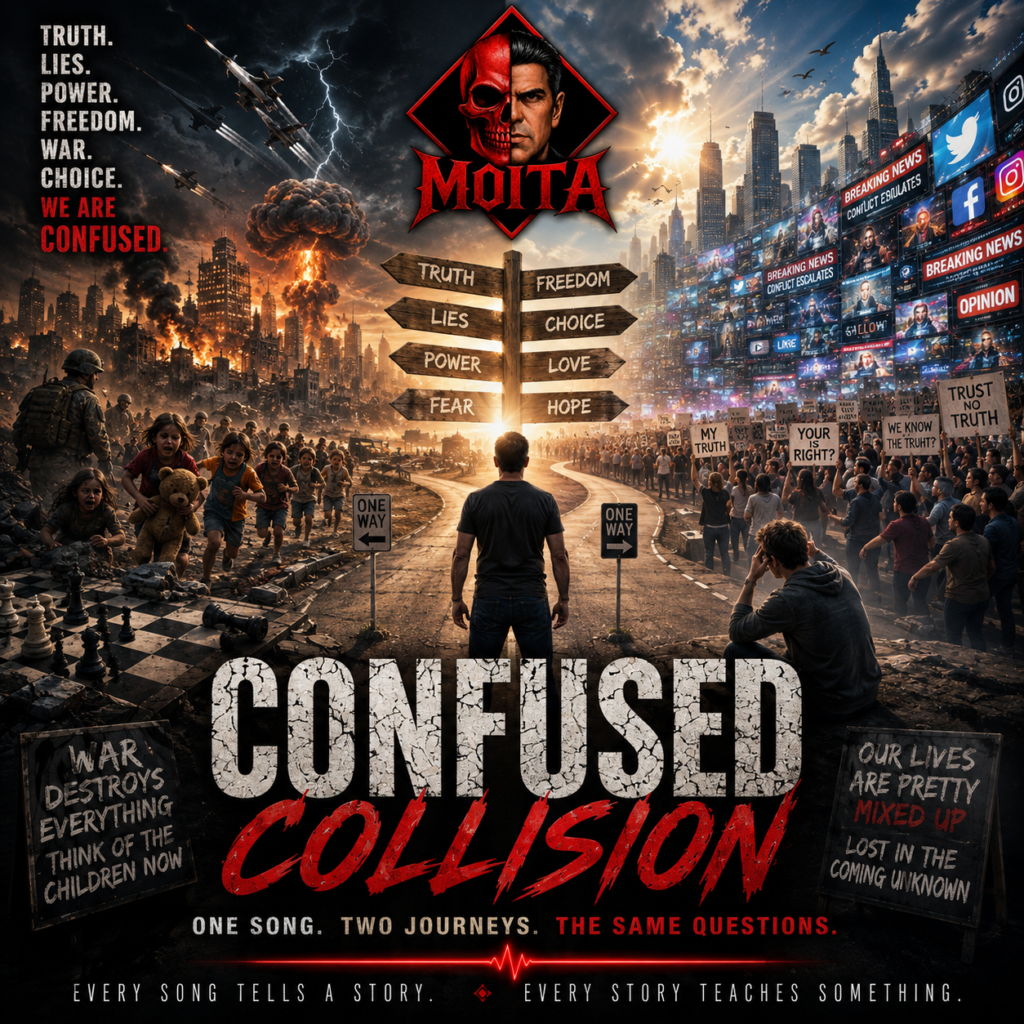



Reviews
There are no reviews yet.